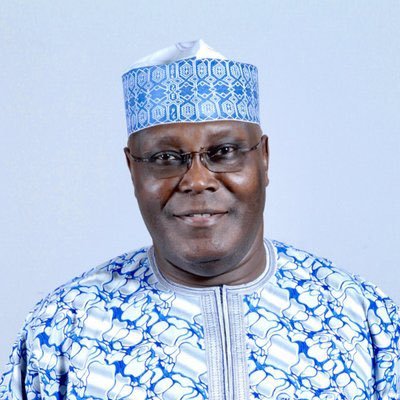
Former Vice President Atiku Abubakar has said ex-President Olusegun Obasanjo swiftly ended Boko Haram’s activities when the group first emerged during their administration.
Speaking in Abuja on Wednesday during a visit by stakeholders from Kogi East Senatorial District, led by former Kogi State Deputy Governor, Simon Achuba, Atiku attributed the early success against the insurgents to strong political will.
Atiku, in a video shared on his Facebook page from the meeting, said Boko Haram first appeared in Yobe State in 2002, prompting Obasanjo to consult him on how to respond.
Atiku said, “You remember when the Boko Haram started in Yobe? It was actually in 2002. We were in the office. The president sent for me. ‘VP, what do we do about this?’ Then I said, ‘Mr President, let’s call the Service Chiefs and give them a deadline. If they can’t put it down, then they should put down their uniform and go away. We will get some other people.
“And he called the Service Chiefs; I was there, and gave them marching orders, and within a few weeks, they put down the insurgency in Yobe. It never came up again until we left office.”
Atiku blamed the group’s later resurgence on the failure of successive leaders to act decisively.
“So, I will say there’s a lack of political will on the leaders. When they’re killing your citizens, how can you even eat? They’re killing your citizens and you don’t give a damn; that is the greatest irresponsibility by any political leader, anywhere.
“So I hold our leadership responsible for all the insecurity that is going on all over the place,” he added.
Atiku served as Vice President of Nigeria from 1999 to 2007 under President Olusegun Obasanjo, during the Fourth Republic, following the end of military rule.
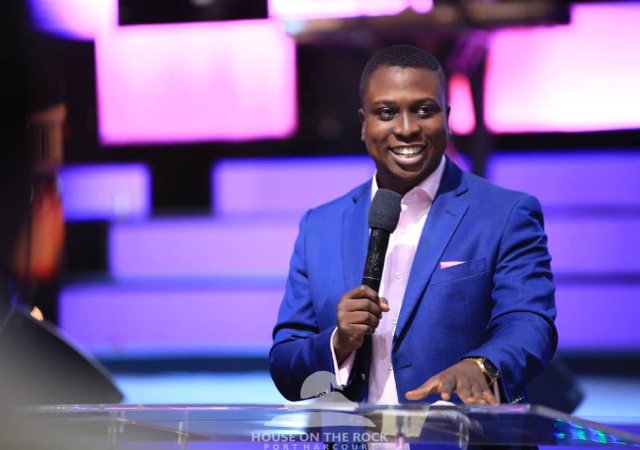
The lead pastor of Harvesters International Christian Centre, Bolaji Idowu, has advised individuals to refrain from entering romantic relationships while unemployed.
He emphasised that financial instability can impair one’s judgment and lead to unwise decisions in matters of the heart.
Speaking during a recent sermon which started trending on X (formerly Twitter) on Thursday, Idowu explained that unemployment often narrows one’s options and may cause a person to settle for relationships they would not consider if they were financially stable.
“Don’t date when you are jobless.
“There are some relationships that are attractive not because they are attractive, it’s because you have no money.
“When you have your own money, you will be surprised how you should have not fallen in love with some people. It’s not love induced; it was hunger induced,” he said.
He cautioned his audience against making important life decisions under financial duress, warning that desperation can lead to unfavourable outcomes.
“Never negotiate on an hungry stomach, you will get a bad deal. Crumbs mentality – when you are poor, small things satisfy you easily.
“One of the signs of crumbs mentality is that you settle for less so easily,” he stated.
Idowu encouraged a shift in mindset, urging individuals to adopt a broader, more ambitious perspective not limited by current circumstances.
“Shift in your thinking. I’m saying you need to think in abundance. I hang around people and when I hear the things that they used to talk about – ‘if I can just travel to America’. How can traveling to America be a goal?” he asked.
Wema Bank Training Institute, Purple Academy Shines At GlobalCCU Awards, Pari
…Confirmed Winner of the 2025 GlobalCCU Award for ‘Best Corporate University Culture’
Wema Bank, Nigeria’s oldest indigenous bank, most innovative and pioneer of Africa’s first fully digital bank, ALAT, has been announced the gold winner of the 2025 Global Council of Corporate Universities Awards (GlobalCCU) Award for ‘Best Corporate University Culture’. Held in Paris, on May 12, 2025, the awards recognized the bank’s training institute, Purple Academy, for its excellence and strategic impact in driving learning culture.
Hosted every two years and considered the gold standard for corporate education, the GlobalCCU Awards played host to the world’s most innovative and high-impact corporate universities, evaluating nominees through a rigorous multi-phase process led by an international jury. The award also celebrates corporate universities that demonstrate measurable value for people, business, society, and the planet.
For the 2025 edition, Wema Bank’s Training Institute, Purple Academy was shortlisted alongside leading institutions from across the world, standing out for its transformative work in human capital development, strategic business alignment, and learning innovation.
Coming in the same year the bank celebrated its 80th anniversary, this recognition reinforces Wema Bank’s legacy as a forward-thinking institution committed to building people, pioneering innovation, and redefining the future of work in Nigeria and beyond. “This win is more than just a global recognition of our learning strategy as a bank, it’s a powerful validation of what we have stood for over the past 80 years,” said Moruf Oseni, Managing Director/CEO of Wema Bank.
“At Wema, our transformation has always started with our people. Purple Academy is one of our promises in motion to equip every member of our workforce with the tools to grow, lead, and innovate as we evolve and adapt to our environment. To be globally recognized in this milestone year is a proud moment for us and everyone who has believed in our journey,” He concluded,
Speaking on why Purple Academy deserves the award, the Founder and Chairman of the GlobalCCU Awards, Annick Renaud-Coulon, shared, “Purple Academy is an outstanding Corporate University that is clearly the Best Corporate University Globally for driving a Learning Culture. It is a Corporate University that transmits, respects and preserves the Wema Bank cultural heritage and effectively evolves it as a principle which drives efficient actions. The diversity of its employees generates a high level of empathy among its stakeholders. The way it honors diversity and inclusion is brilliant to see and their leaders are so engaging when featured in internal videos. They are not only representing a great company, but also the culture of their country in the best possible way.”
Wema Bank’s Training Institute, Purple Academy, launched as a corporate university in 2022, has a beacon of learning excellence and innovation, that empowers employees at every stage of their career. The corporate university offers a dynamic blend of immersive learning experiences, personalized development paths, and forward-thinking content that addresses the evolving demands of work, life, and leadership. Through structured programs across its five key schools, including Culture, Leadership, Banking, Business, and the SME Business School, Purple Academy nurtures talent with a future-ready approach. From onboarding new hires through the Bankers-in-Training School to shaping high-impact leaders, the Academy remains committed to investing in people, promoting growth, and fostering a vibrant workplace culture aligned with Wema Bank’s legacy of innovation and excellence.
As Purple Academy continues to scale new heights and expand its influence across sectors and borders, this GlobalCCU recognition signals yet another bold chapter in Wema Bank’s story. It tells a story of a bank rooted in people, purpose, and the pursuit of excellence .
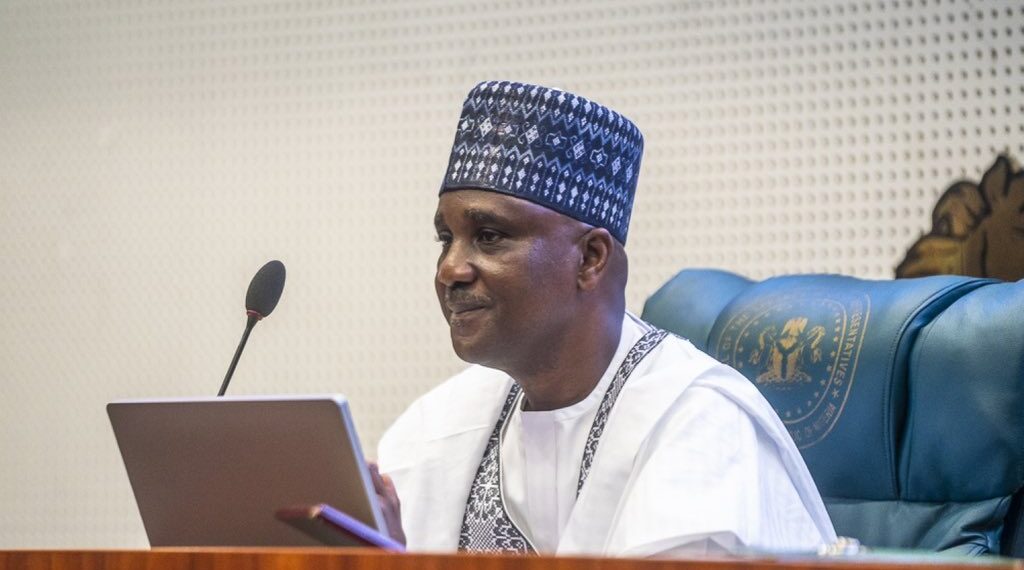
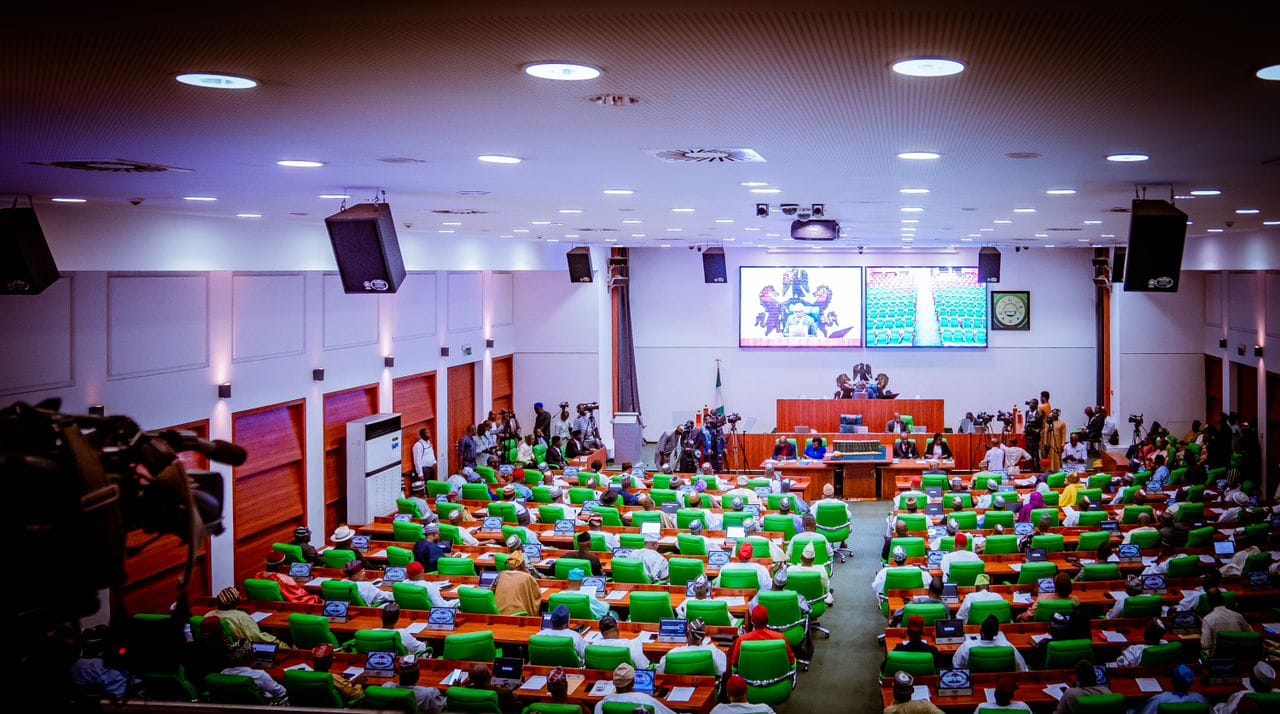
A bill to amend the Electoral Act 2022 to make voting compulsory for Nigerians of voting age has passed second reading in the House of Representatives.
The proposed legislation was sponsored by the Speaker, Tajudeen Abbas, and Daniel Ago.
Leading the debate during plenary on Thursday, Ago said the bill aimed to encourage citizens’ participation in the electoral process, noting that voter apathy during elections would be addressed if the bill scales legislative scrutiny.
Although the bill passed second reading, a member of the Peoples Democratic Party from Akwa Ibom State, Mark Esset, said enacting a law to make voting compulsory is not enough to sanitise the electoral system.
“Let us not put something on nothing. If citizens have lost confidence in the electoral system, there is a lot of work to be done.
“Many Nigerians do not vote during elections because they believe that their votes will not count. If we must make a law to make voting compulsory, we must also make another one to make their votes count,” he said.
Delta State Governor Sheriff Oborevwori has stated that his administration’s recent political realignment is aimed at advancing the state’s development, not destroying the Peoples Democratic Party.
Speaking through the Commissioner for Works (Rural Roads) and Public Information, Mr. Charles Aniagwu, during a press briefing in Asaba, Oborevwori said the decision to defect to the All Progressives Congress was informed by the political realities ahead of the 2027 general elections.
“Our desire is not to kill PDP but to move Delta forward, and so we changed our driving pattern.
“It was obvious that PDP won’t make headway in the forthcoming 2027 election, and so [there was] need to move to APC,” Aniagwu said.
Highlighting the administration’s performance, Aniagwu added, “In almost two years, we can see very bold and remarkable achievements by Governor Oborevwori and his team.
“We have provided roads in various communities, reducing travel time from Asaba to Ughelli to just one hour and forty-five minutes.”
He dismissed concerns raised by critics about the government’s capacity to deliver, stating, “Anyone suggesting that the administration is losing grip is far from the truth.
“We remain committed to delivering results.”
Aniagwu also revealed plans to mark the administration’s second anniversary with the commissioning of several completed projects, though the governor may not be able to personally inaugurate all of them due to the volume.
“Some of the key projects include the Beneku Bridge, Ishiagu-Ewulu Road and Bridge, Upper and Lower Erejuwa Roads in Warri, erosion control in Okpanam, Olomoro-Igbide Road, Otolokpo to Boji-Boji Owa, Akumazi-Owere-Olubor Road, and Obi-Ibabu Road, among others.
“We have also installed medical equipment at Asaba Specialist Hospital, Warri Central Hospital, and Delta State University Teaching Hospital in Oghara, all aimed at improving healthcare delivery and reducing medical tourism,” he said.
On security, Aniagwu stated that the state government has taken proactive steps. “The Inspector General of Police was in the state recently to commission operational vehicles.
“We have also improved street lighting across urban centres,” he said.
Addressing concerns about rising house rents in Asaba and other towns, the commissioner said the state government is implementing a housing scheme to expand livable spaces.
He noted that 50 residential units are being constructed in each local government area, with the pilot phase ongoing in Ozoro, Owa-Oyibu, and Kwale.
The scheme features 30 three-bedroom flats and 20 two-bedroom flats.
Two opposition lawmakers on Thursday raised concerns over a bill seeking to amend the Electoral Act, 2022, to make voting compulsory for Nigerians of voting age in all national and state elections.
The bill, sponsored by Speaker of the House of Representatives, Tajudeen Abbas, and Daniel Asama (Plateau), scaled second reading during plenary.
Leading the debate on the general principles of the bill, Asama said the proposed legislation aims to enhance democratic participation by mandating eligible Nigerians to vote during elections.
Asama said, “Voting is not only a right but a civic responsibility, and in many democracies across the world, it is treated as such.
“This bill proposes to introduce mandatory voting for all Nigerians of voting age in general elections, both at the national and state levels. It seeks to amend the relevant provisions of the Electoral Act, 2022, to reflect this obligation, while also allowing for limited and justified exemptions where necessary.”
He pointed to low voter turnout as a major concern, noting, “In the 2023 general elections, less than 30% of registered voters participated.
“This trend undermines the legitimacy of elected governments and weakens democratic institutions.”
The lawmaker argued that mandatory voting would foster greater civic engagement.
“By making voting a legal obligation, it will instil in citizens a sense of civic duty and shared responsibility in the governance process.
“Several democracies, including Australia, Belgium, and Brazil, have adopted mandatory voting with positive outcomes in terms of political participation and public accountability,” Asama said.
Asama also stated that the bill would help reduce electoral malpractice. “Mandatory voting can significantly reduce the influence of vote-buying, as more citizens will be participating,” he added.
He highlighted other objectives of the bill, including:
Amending the Electoral Act, 2022, to introduce compulsory voting for all citizens aged 18 and above.
Providing a legal framework for enforcing mandatory voting, including appropriate sanctions for unjustified failure to vote and valid grounds for exemption such as illness, religious objection, or residency outside the country.
Empowering the Independent National Electoral Commission to develop systems for tracking voter compliance and managing exemption requests without infringing on fundamental rights.
Promoting electoral education and awareness to deepen democratic participation.
Asama also noted that INEC’s dual role in regulating political parties and conducting elections creates structural inefficiencies.
“This challenge is not merely administrative; it is structural.
“When a single body is tasked with both organising elections and regulating the participants in those elections, questions arise about the independence, neutrality, and operational capacity of that institution,” Asama said.
Opposition Lawmakers Raise Concerns
Members of the Peoples Democratic Party (PDP), Mark Esset (Akwa Ibom) and Awaji-Inombek Abiante (Rivers), questioned the practicality and fairness of enforcing compulsory voting.
Esset said, “We are trying to put something on nothing. When citizens have lost confidence in voting, there is a lot of work to be done. If we make a law to make voting compulsory, we should make another law to make the votes count.”
Abiante added, “I agree that every adult man and woman should participate in deciding their leaders, but there are certain questions we need to ask. What are the incentives to make them go out and vote? Have they been assured of their security? We are talking of a country where the name Mike Tyson is still on the voter register. Do we have an authentic voter register?
“If you make voting compulsory, there are Nigerians in Ghana, the United States, and everywhere. How do you bring them back to vote?”
Support from Other Lawmakers
The bill received support from Deputy Speaker Benjamin Kalu, Tijani Ghali (NNPP, Kano), and Amadi Akarachi (APC, Imo), who echoed the need for reforms to boost civic participation.
The bill has been referred to the House Committee on Electoral Matters for further legislative action.
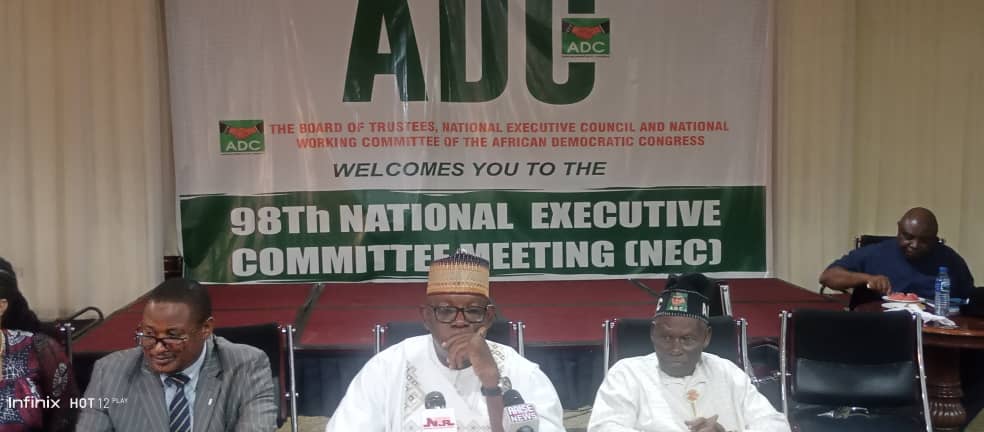
The National Chairman of the African Democratic Congress, Ralph Nwosu, has announced ADC as Nigeria’s coalition party in preparation for the 2027 election.
Nwosu also voiced his worries about the nation’s ongoing decline, highlighting the growing difficulties of daily life and stressing that good governance is crucial for enhancing citizens’ well-being.
ADC National Chairman also voiced his concern while speaking to journalists in Abuja on Thursday during the party’s National Executive Committee meeting, expressing distress over the sharp rise in the number of Nigerians living in poverty.
On March 20, 2023, presidential candidates Atiku of the Peoples Democratic Party, Peter Obi of the Labour Party, and former Kaduna State Governor Nasir El-Rufai of the Social Democratic Party unveiled a coalition formed to challenge President Bola Tinubu in the 2027 election.
This move has ignited an ongoing debate about whether opposition parties should unite and the best platform to use in confronting President Tinubu’s administration, with various political leaders expressing differing opinions.
Speaking through the Chairman of the ADC, Board of Trustees, Mani Ahmed, Nwosu stated, “This consensus building, though very painstaking, has taken some time in the pipeline. I can categorically today, by the grace of God, inform you that the African Democratic Congress is the coalition party in Nigeria. What remains to be done is nothing other than dotting the I’s and crossing the G’s.
“For us, this is a momentous occasion. This is a great opportunity for the party to involve and accommodate all Nigerians. And by this gesture, we are inviting every Nigerian that has the love of this country in their heart to join us in this new crusade to bring about an enduring democratic change in our country by coming into our party, the African Democratic Congress, which can easily be seen as the African Democratic Coalition.”
He assured that ADC will remain dedicated to the development of Nigeria as a unified and indivisible nation, where every citizen has the right to live in any part of the country and pursue lawful economic activities.
Nwosu stated, “We have watched over the years how things have gradually deteriorated to the extent that normal existence is becoming more and more difficult.
“Statistics have indicated that about 5 million Nigerians have been added to the list of poverty-stricken people in the world on an annual basis. Now this is sad for a country that is richly endowed with enormous resources.
“There cannot be any other way to bring about change in the lives of our people that is better than providing good governance. And this governance can only happen when you have the right people playing their part in the political process. ADC has over the years remained a formidable platform in the process of re-engineering Nigeria.
“Within the past 20 years of our existence, we have shown commitment to national growth. We have exhibited the highest levels of nationalism and patriotism. And we have made several sacrifices to ensure that we bequeath to our next generation a country better than the one we have met.”
He lamented that the ADC has never had the chance to lead the country but expressed optimism that 2027 will bring better prospects for the party.
ADC National Chairman stated, “The journey that created this opportunity started a very long time ago. And we have had several meetings at the party in order to open up the party, re-engineer our processes, and be able to accommodate the teeming members of the political class that are willing and have lined up to join our great party, the African Democratic Congress.
“Within this month that we are discussing, the party has gone through lots of transformational phases, part of which has resulted in what we are going to actualise today, which is the final phase of the opening up of our party to accommodate the new people that are coming in.”
Nwosu acknowledged that politicians alone cannot change Nigeria’s course and called on civil society organisations to actively participate in the nation-building process.
He continued, “The politicians can’t do it alone and as such, in this process and this journey, we have also involved the civil society organisations as well as grassroots organisations. Because ADC strongly believes that all politics is grassroots politics.
“And we are happy that most of our grassroots and civil society partners are here with us and they’ve been part of this journey and they have exhibited great commitment and resilience over the months. And that has certainly reassured that the objective is very much achievable. We are building consensus.”
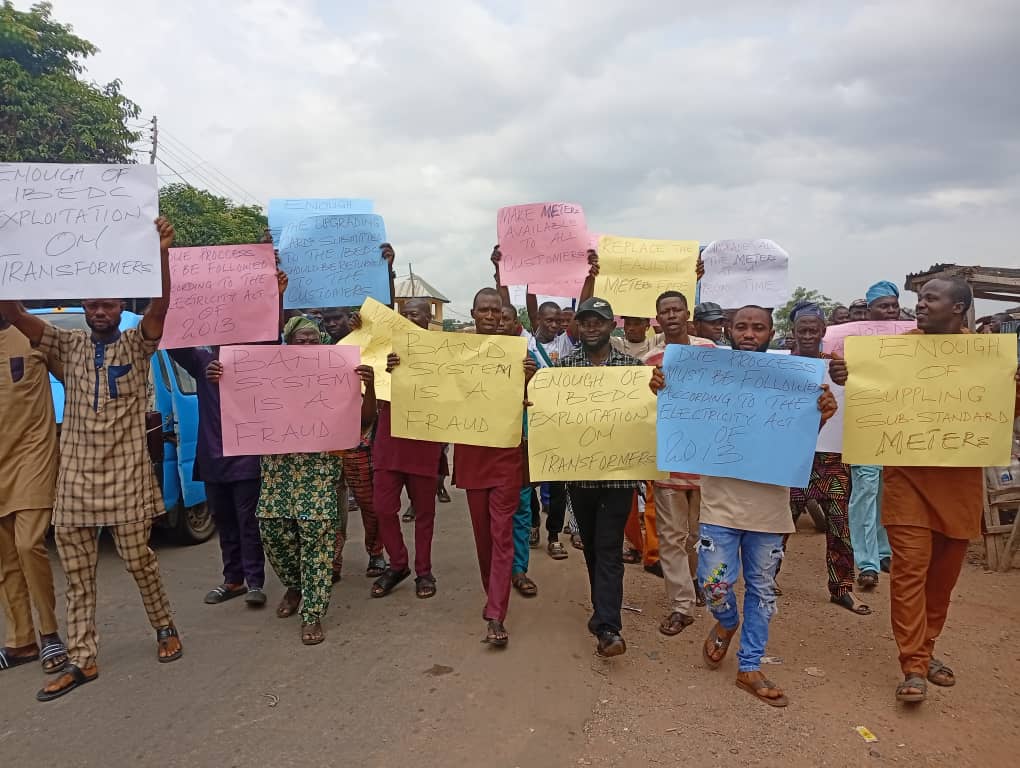
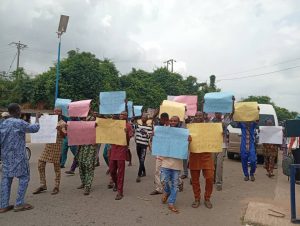
Members of the Licensed Electrical Contractors Association of Nigeria, Osun State chapter, on Thursday took to the streets in protest over alleged unethical practices by staff of the Ibadan Electricity Distribution Company, accusing them of exploiting customers and hijacking their professional duties.
Chanting protest songs and carrying placards with inscriptions such as ‘Band is a fraud’, ‘Enough of IBEDC Exploitation on Transformers’, and ‘Make meters available to all customers’, the protesters marched through Osogbo/Ibokun road to press their demands.
Addressing journalists, the state chairman of LECAN, Kayode Adebayo, accused IBEDC staff of flouting the Electricity Act of 2013 and usurping the responsibilities of licensed contractors.
“First, the Electricity Act of 2013 stipulates the roles of DISCO workers, electrical contractors and consumers. Unfortunately, IBEDC workers have usurped the responsibility of licensed contractors only to turn into tormentors who wickedly exploit residents/customers,” Adebayo said.
“As ordinary residents, we are now at the mercy of IBEDC workers to get an electricity metre, which ordinarily should be the duty of licensed contractors. IBEDC workers have become a barrier to residents joining the grid through excruciating conditions. They have made ordinary account generation a problem in a bid to exploit innocent and unsuspecting customers.
“IBEDC fraudulently exploits customers as those given new accounts are usually charged a minimum debit of N100,000 on newly created accounts—even before joining the grid. This unknown debt would even be transferred into the customer’s prepaid meters, thereby making them pay for services never rendered, contrary to the Electricity Act.”
He also claimed that IBEDC fails to replace faulty meters, often forcing customers to either buy new ones or be subjected to estimated billing.
“Also, some customers whose electricity meters required that their cards be submitted for upgrade have not had them returned by IBEDC. This is illegal,” Adebayo said. “We are also of the opinion that the Band system is not working; therefore, the concept of Band A is a fraud.”
He further alleged that IBEDC staff were involved in extorting residents under the guise of helping them acquire, replace, or repair transformers.
“In some cases, installed transformers are not powered because IBEDC workers are not given adequate ‘PR’ to connect them to the national grid. We thereby declare that this act of fraud is enough and demand that it must stop,” he added.
Responding, IBEDC’s Osogbo Regional Communication Officer, Kikelomo Owoeye, denied the allegations and reiterated the company’s commitment to transparency and regulatory compliance.
“Contrary to some claims, customers are not billed before connection. However, instances where electricity is used during building construction may result in billing after the customer consents to connection through the submitted form. Such cases can be addressed through available resolution and adjustment windows,” Owoeye said.
On metering issues, she added, “IBEDC continues to meter customers with verified proof of payment. We encourage customers with genuine documentation to come forward. Unfortunately, there have been attempts to fraudulently use a single receipt for multiple meters, which are being thoroughly investigated.”
Addressing concerns about the discontinued card reconfiguration program, Owoeye explained, “It was an amnesty initiative with a clearly communicated deadline. That window has since closed.”
She added that faulty meters are replaced by IBEDC depending on the cause. “If it results from customer misuse, the customer is responsible for replacement. If due to a manufacturing defect, IBEDC replaces the meter within a given timeline. To maintain electricity supply during the replacement process, the customer’s billing is temporarily based on NERC-approved capping.”
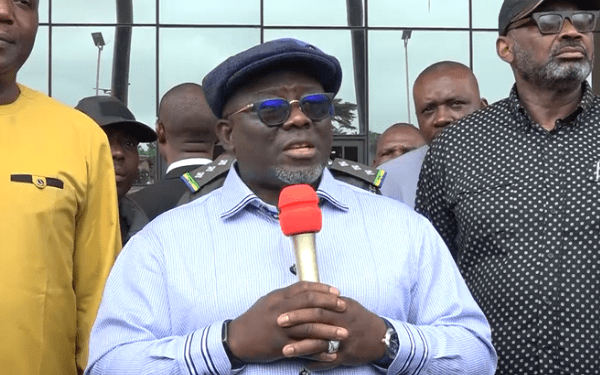
The chairman of the Lagos State Independent Electoral Commission, Justice Bola Okikiolu-Ighile (retd.), has said that there are three factions of the Labour Party in Lagos.
She made this known during a stakeholders forum in Ikeja on Thursday.
She said three factions of the party invited LASIEC to observe their primaries in respect to the upcoming July 12 local government elections in the state.
“Three factions of the Labour Party in Lagos invited us to observe their primaries,” the chairman said.
According to her, LASIEC officials did not honour the invitation due to the perceived division in the party.
Ighile said the state electoral body would be waiting for the advice of the Independent National Electoral Commission on the next step in the development of the LP.
US President Donald Trump said Thursday that he did not expect progress on Ukraine until he meets his Russian counterpart, Vladimir Putin, who did not show up to talks with Kyiv in Turkey.
“I don’t believe anything’s going to happen, whether you like it or not, until he and I get together,” Trump told reporters on Air Force One as he flew from Qatar to the United Arab Emirates.
“But we’re going to have to get it solved because too many people are dying.”
Ukrainian President Volodymyr Zelensky flew to Ankara on Thursday after daring Putin to show up and negotiate directly to prove he was serious about peace.
Putin had proposed direct talks, the first since the immediate aftermath of his invasion of Ukraine in February 2022, but Russia sent a lower-level delegation.
Asked if he was disappointed about the Russian level of attendance, Trump said: “I haven’t even checked.”
“Obviously, he wasn’t going to go,” Trump said of Putin.
“He was going to go, but he thought I was going to go. He wasn’t going if I wasn’t there.”
Trump has repeatedly said he was willing to travel to Turkey to join the talks but has not done so, although Secretary of State Marco Rubio headed there.
Trump’s insistence on the importance of meeting Putin, for whom he has voiced admiration in the past, stands in sharp contrast to the stance of previous US President Joe Biden, who insisted only Ukraine itself should negotiate on its future.



















![[JUST IN] Lagos LG election: Three LP factions invite LASIEC to monitor primaries](https://www.societygazetteng.com/wp-content/uploads/2025/05/Labour-Party-1.jpeg)


