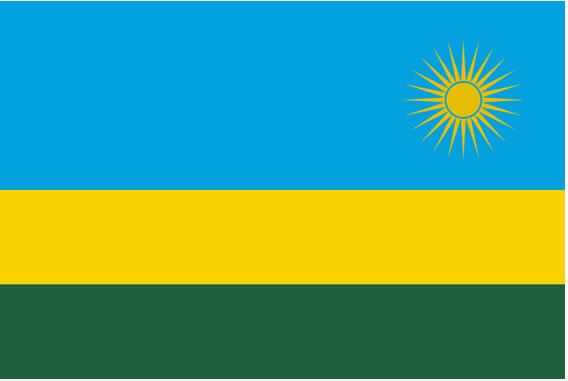
Rwanda has arrested three top officials from the country’s Mines, Petroleum and Gas Board along with four businessmen suspected of corruption and abuses of power, the investigation bureau said on Sunday.
Rwanda’s Investigation Bureau said the trio — Augustin Rwomushana, John Kanyangira and Richard Niyongabo — were being jailed in the capital, Kigali, without giving a date for their arrests.
It was unclear whether the officials were linked to the illicit traffic in minerals from the resource-rich eastern Democratic Republic of Congo, where Rwanda is accused of backing anti-government fighters to syphon off its neighbour’s rich veins of key minerals.
Kanyangira was in charge of traceability at the board, which is tasked with regulating mining activities, while Niyongabo was in charge of mining and Rwomushana took responsibility for strategy and the minerals market.
“They were arrested along with four business men suspected to be accomplices in crimes of corruption, abusing power entrusted to them by using their offices for their personal interests, unlawful amassing of wealth and money laundering,” the bureau’s statement said.
The announcement comes after the European Union in March slapped sanctions on the board’s head, Francis Kamanzi, over Rwanda’s backing for the M23 armed group.
Kamanzi, accused of using the conflict to engage in the illicit exploitation and trade of the eastern DRC’s mineral resources, has had his assets frozen and has been banned from travelling to the EU.
A report by United Nations experts found that Kigali exerts de facto control over the M23 and has maintains 4,000 Rwandan troops in the DRC to support the armed group.
The DRC has accused Rwanda of backing the M23 as a way of stealing the valuable minerals including gold and coltan present in the country’s restive east.
Rwanda denies offering the M23 military backing.
But it insists that it faces a persistent threat from armed fighters present in the DRC’s east linked to ethnic Hutus involved in the 1994 Rwandan genocide of Tutsis and moderate Hutus.
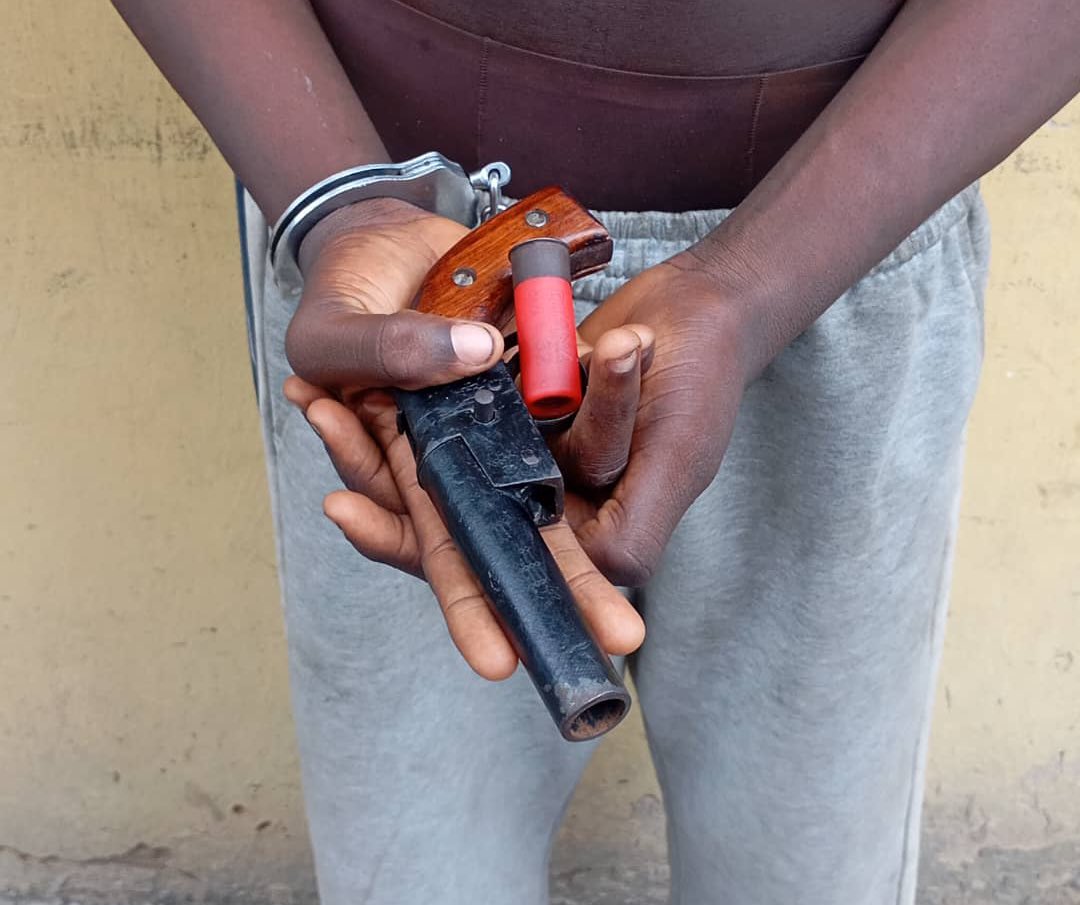
The Lagos State Police Command has arrested a 16-year-old boy, Solomon Ibiwoye, after he was found in possession of a firearm in the Ebute-Ero area of the state.
Police spokesperson, SP Benjamin Hundeyin, disclosed this in an X post on Sunday, commending vigilant residents whose alert led to the arrest.
“Kudos to observant Lagosians who noticed 16-year-old Solomon Ibiwoye with a firearm and discreetly alerted Ebute-Ero Police Division,” Hundeyin wrote.
He added that a subsequent search of the teenager’s residence led to the recovery of a locally fabricated firearm and an unexpended cartridge.
One more firearm off the streets,” he said, assuring all that investigations into the matter are ongoing.
The police spokesperson also reiterated the importance of public vigilance in crime prevention.
“See something, say something!” he stated.
Hundeyin did not disclose the circumstances under which the teenager came into possession of the weapon or whether he was linked to any criminal gang, but assured that the matter was being thoroughly investigated.
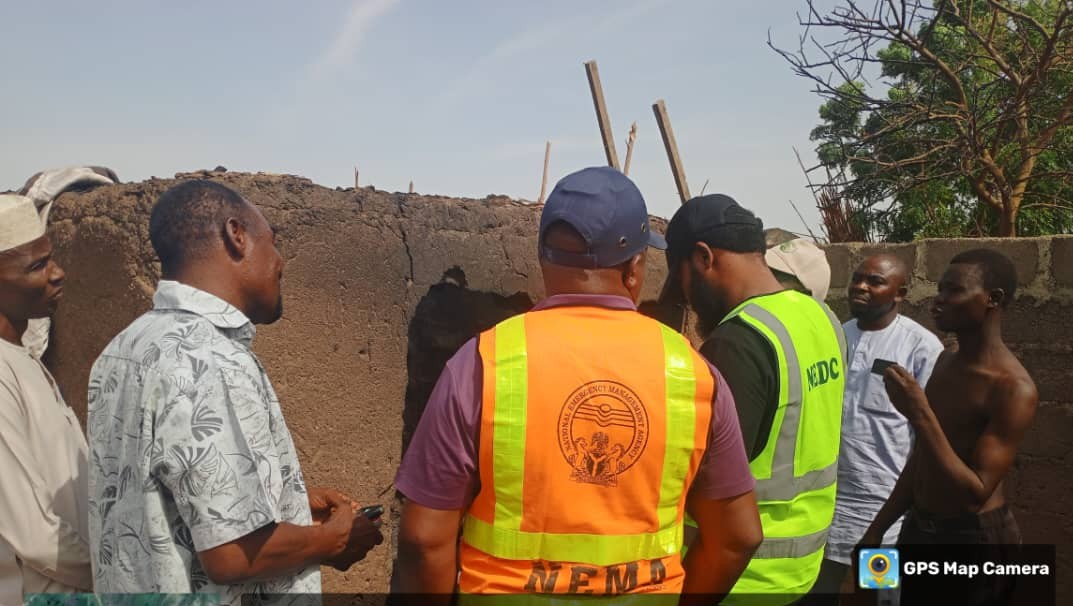
The National Emergency Management Agency, in collaboration with the Adamawa State Emergency Management Agency, the North East Development Commission, and the Chairperson of Song Local Government Area, has conducted an on-the-spot assessment of communities affected by recent windstorm and fire incidents in Adamawa State.
According to a statement posted on X by NEMA on Sunday, the assessment, which took place on Saturday, covered Ndubande, Angwan Madaki, and Sabo Geri communities in Song LGA, where residents were left counting their losses after the natural disasters destroyed homes and livelihoods.
Leading the delegation, Mr. Musa Yakubu of the Planning, Search and Rescue Operations (PSARO) said the evaluation aimed to determine the extent of damage and gather data to guide emergency response efforts.
“We are here to see things for ourselves and ensure that the appropriate authorities get firsthand information about what the people have suffered.
“The disasters led to the loss of livelihoods, including the destruction of residential buildings, food items, food banks, and motorcycles,” Yakubu said.
He assured the affected communities that relief would follow.
“NEMA sympathises with the affected victims and assures the residents that their plight will be promptly reported to the appropriate authorities for immediate support and intervention,” he added.
The visit also had in attendance officials from ADSEMA and NEDC, who jointly inspected the affected sites and interacted with community members impacted by the disaster.
The assessment is expected to pave the way for a coordinated distribution of relief materials in the coming days.
An 80-room new hotel in Victoria Island Lagos used as cover for distributing illicit substances has been raided by operatives of the National Drug Law Enforcement Agency who after hours of combing the rooms recovered 589 bags of Canadian Loud, a strong strain of cannabis with a total weight of 417.3Kg kilograms worth ₦1,042,500,000 in street value.
At least, three suspects: Eze Ayitu; Ofuokwu Samuel; and Emmanuel Ameh were arrested in the course of the operation at the five-storey hotel building between April 25 and 26, 2025 while two other suspects: Noble Philip and his partner Kenneth are currently at large.
In a statement on Sunday, the Director, Media and Advocacy, NDLEA Headquarters Abuja, Femi Babafemi, said items suspected to be proceeds of illicit drug trade recovered from the premises housing The Hook Hotel also known as Caesar Hotel and Caesar Lounge located at 16 Waziri Ibrahim Street, off Elsie Femi Pearse street, Victoria Island, Lagos, include: Toyota Prado Landcruiser Jeep (Lagos AKD 472 OZ); Toyota Sienna Vehicle (Lagos KJA 79 HJ); Volkswagen Delivery Van (Lagos AAA 525 JE); Kia Ceranto Car (Lagos BDG 860 GQ); Grand Caravan Dodge (Lagos APP 847 YF); 74 new TV sets; 10 used TV sets; and 13 refrigerators, among others.
In another major interdiction in Jigawa State with a follow up operation in Kano, NDLEA operatives acting on intelligence on April 23 seized consignments of opioids being moved from Kano to Niger Republic and Yobe State through Jigawa.
The psychoactive substances were being moved in a Toyota Sienna vehicle marked ABJ 182 NW at about 2:30am on Wednesday along Kano- Ringim road, Gumel town, when anti-narcotic officers on patrol intercepted them with two suspects: Abba Ibrahim, 28, and Shuaibu Umar, 29, arrested.
Recovered from the Sienna vehicle were 200,000 pills of tramadol 250mg and 217,500 capsules of pregabalin. A swift follow up operation in Kano led to the arrest of the supplier, 41-year-old Jamilu Muhammad, at his residence located at Mil Tara, Layin Technical area of Kano while additional 1,584,000 pills of tramadol 250mg stacked inside a Nissan 18-seater bus marked DAL 372 XA and a room in his house were discovered and evacuated.
This brings the total number of recovered opioids to 2,001,500 pills.
According to Babafemi, a total of 3,814.9kg skunk was destroyed on two farms in Ugbodu community, Ovia North East LGA, Edo state on Thursday April 24 when NDLEA operatives raided the plantations where three suspects: Samuel Samson, 26; Daniel Peter, 20; and Abel Edah, 31, were arrested.
He said the War Against Drug Abuse, social advocacy activities by NDLEA Commands, equally continued across the country in the past week.
“Some of them include: WADA sensitisation lecture delivered to students and staff of Dan-Doro Community Arabic Secondary School, Doro, Katsina; St. James Anglican School, Badariya, Kebbi; Federal Government Girls College, Tambuwal, Sokoto; and members of Oganiru age grade, Onitsha, Anambra, while the Lagos State Strategic Command of NDLEA paid WADA advocacy visit to the Ayangburen of Ikorodu, HRM Oba Kabir Adewale Shotobi, among others,” he added.
While commending the officers and men of DOGI, Lagos, Kano, Jigawa, Edo and Seme Commands of the Agency for the arrests and seizures of the past week, Chairman/Chief Executive Officer of NDLEA, Brig. Gen. Buba Marwa (Rtd) equally praised their counterparts in all the commands across the country for ensuring a fair balance between their drug supply reduction and drug demand reduction efforts.
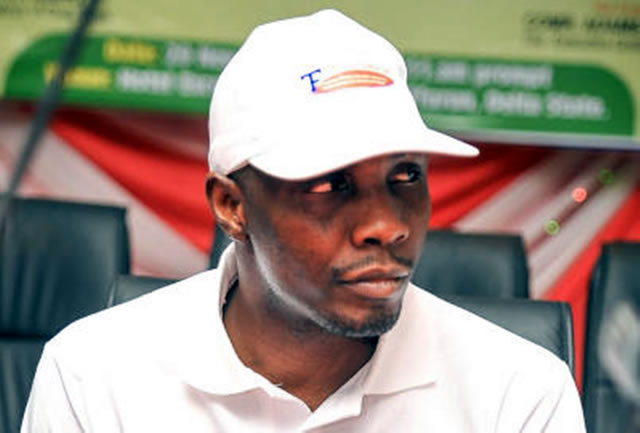
Chairman of Tantita Security Services Nigeria Limited, Chief Government Ekpemupolo, popularly known as Tompolo, has declared support for President Bola Tinubu’s re-election bid in 2027.
Speaking in an interview with Arise Television on Saturday, the ex-militant leader said it would be unfair to demand a power shift to the North after former President Muhammadu Buhari’s eight-year tenure.
The Niger Delta chieftain disclosed this during an interview on Arise Television.
He said, “We don’t want anybody to cause problems. He should be allowed to complete his two constitutional terms, then we will vote for another person to take over in 2031.
“Tinubu is a good person. He has the experience to do everything and carry this country to a higher level.”
Tompolo appealed that Tinubu’s four-year mandate, with the possibility of re-election for another four years, should be respected.
While describing Tinubu as a seasoned leader who can elevate Nigeria to greater heights, he also revealed plans to embark on a nationwide campaign, including visits to northern states, to garner support for his second term.
“We will do our part, even go out of our boundary to the northern part of Nigeria to talk to our brothers and compatriots so that he will get a second tenure,” he stated.
Tompolo added that traditional rulers across the region have endorsed Tinubu’s re-election bid, expressing confidence that widespread support will ensure the president’s continued leadership.
He added, “We are appealing to everybody, and by the grace of God, everybody will support us.”
When asked on his position concerning the Rivers State political crisis, Tompolo expressed optimism about the resolution of the ongoing rift between Governor Siminalayi Fubara and his predecessor, Nyesom Wike.
According to him, their relationship was not different from that of “Oga and his boy,” signalling Fubara’s return to the office with the help of the President.
“The duly elected governor of Rivers State is coming back. Our president is someone who has been protecting democracy for a very long time. There is no way he will truncate it,” he assured.
The monthly statutory allocations to state governments from the federation account may decline in the coming months following an official request by the Nigeria Sovereign Investment Authority to boost the nation’s residual funds with the support of N100bn monthly.
The request, which was presented by the Managing Director and Chief Executive Officer of NSIA, Aminu Umar-Sadiq, is aimed at unlocking large-scale investments to drive Nigeria’s economic growth.
He made the request at the March revenue-sharing meeting of the Federation Account Allocation Committee held between April 14 and 15, 2025. Our correspondent obtained a copy of his presentation during the meeting on Friday.
Umar-Sadiq appealed to the committee, which includes state commissioners of finance, to consider and approve the request, with funding proposed to commence from the March FAAC allocation.
The presentation was titled, “Activating Residual Funding for the Nigeria Sovereign Investment Authority – Unlocking Opportunities for Large-Scale Investments to Drive Nigeria’s Economic Growth.”
According to the document, the NSIA is requesting a structured monthly disbursement of N100bn from Residual Funds—revenues in the Federation Account beyond projected hydrocarbon income—to establish a Naira-based investible capital pool.
The move, the authority says, will enhance its capacity to finance critical domestic infrastructure projects.
The MD said, “The funding would position the authority as a leading sovereign wealth fund globally, promoting responsible and strategic investments for Nigeria’s economic development and enhancing its threefold mandate to build a savings base for the country, enhance the development of infrastructure, and provide stabilisation support.”
He explained that residual funds are a legitimate source of funds transferred to the authority, provided that the derivation portion of the revenue allocation formula shall not be included as part of this funding.
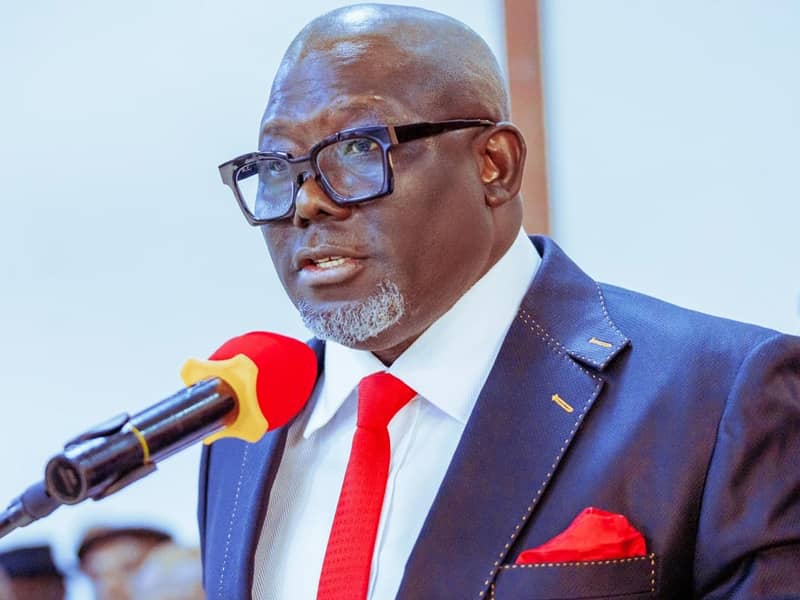
Delta State Governor, Sheriff Oborevwori, has called on private organisations to partner with the state government to address infrastructural needs in the state-owned universities.
Making the call at the 17th Convocation ceremony of Delta State University, Abraka, on Saturday, Oborevwori noted that the government alone could not tackle the challenges, hence the need to adopt the Public Private Partnership system to deliver a university that could compete globally.
He acknowledged the recurring issues of infrastructural gap in the university but assured that the State Government would do everything within the limit of available resources to address some of the challenges.
Oborevwori said, “We shall continue to tackle the recurring issues of infrastructural gap within the limit of our resources.
“We call on private organisations to partner with us in this regard.
“With the increasing need for infrastructure in our universities, there is a need for stakeholders to collaborate with the government to address the challenges.
“Government cannot do it alone; with an effective PPP, we shall deliver the university of our dream.”
Speaking further, Oborevwori assured that the state government would redouble its efforts to complement that of the university’s authority to continually support research, teaching excellence, and enhanced learning for the students.
He commended the Vice Chancellor of DELSU, Prof. Samuel Asagba for the development he had brought into the university within a short time in office.
“Within a short period in office, you have constructed a kilometre road in the campus. The University has made a series of researches, staff welfare, and enhanced learning planning under your tutelage,” Oborevwori said.
He also lauded the Governing Council of the University for their focus, dedication, and unwavering commitment to building a first-class university.
Earlier in his address, the Vice Chancellor of DELSU, Prof. Asagba, disclosed that a total of 6,401 graduates from the various programs in the 2023/2024 academic session participated in the Convocation.
“Our graduands have been known to have proven their mettle wherever they are found.
“It is important to state that, through continuous rejig and review of our curricula, we are in the forefront of exposing our students to the current tertiary education that is of international standard,” the Vice Chancellor said.
He listed some of the projects funded and built through the Internally Generated Revenue (IGR) of the University including the Construction of a kilometre road from the Faculty of Basic Medical Sciences to the Faculty of Arts in Site III; the Construction of the Faculty of Agriculture, Site III, which groundbreaking ceremony has been performed today by Gov. Oborevwori; the Construction of 500 capacity lecture theatre, Faculty of Arts. Site III (on-going); and the Construction of a block of five classrooms and offices for DELSU, among others.
The Pro-Chancellor and Chairman of DELSU Governing Council, Gen. Alexander Ogomudia (Rtd), noted with concern that the University was facing numerous challenges, including inadequate staffing, infrastructure deficit, such as lack of essential and current equipment in some laboratories, water supply and power amongst others.
He, however, assured that the Governing Council would continue to fashion out policies to facilitate the growth and development of academic standards and social relations in the institution.
The Nigerian Meteorological Agency has said that thunderstorms and hazy weather will affect many parts of the country between Sunday and Tuesday.
In a weather update shared on Saturday in Abuja, NiMet said, “There will be moderate dust haze in states like Katsina, Sokoto, Zamfara, Borno, Kano, Yobe, and Jigawa.”
The agency also said that Adamawa and Taraba States would likely see isolated thunderstorms during the forecast period in a post on its X handle on Saturday.
For the North-Central region, NiMet said people should expect partly cloudy skies in the morning.
In the afternoon and evening, there could be isolated thunderstorms over places like the Federal Capital Territory, Plateau, Kogi, Nasarawa, and Benue States.
In the South, morning thunderstorms are likely in Lagos, Cross River, Rivers, Bayelsa, and Akwa Ibom States, with more thunderstorms later in the day across other southern states.
On Monday, NiMet expects mostly sunny skies in the northern part of the country, although some areas like Taraba and Adamawa may have morning thunderstorms.
Later in the day, thunderstorms could spread to parts of Kaduna, Bauchi, and Gombe States.
For the North-Central area on Monday morning, thunderstorms are expected in Plateau, Nasarawa, and Benue States, while more storms could happen in the afternoon and evening across the region.
In the South, Bayelsa, Cross River, Akwa Ibom, Rivers, and Edo States could experience morning thunderstorms, with more rain expected later in the day across many southern states.
By Tuesday, NiMet forecasts “sunny weather with some clouds in the North, along with morning thunderstorms in parts of Adamawa and Taraba States”.
Later on Tuesday, thunderstorms might also hit parts of Kaduna, Adamawa, and Taraba States.
The North-Central area is expected to have partly cloudy mornings, but thunderstorms could follow in the afternoon and evening in places like the Federal Capital Territory, Kogi, Kwara, Benue, and Niger States.
In the South, early morning thunderstorms are likely in Akwa Ibom, Cross River, and Bayelsa States, with more thunderstorms expected later in the day across the region.
NiMet advised people to be careful, especially because strong winds could come before the rain in areas where thunderstorms are expected.
It also warned those living in the North to be cautious due to dust particles in the air.
Airline operators were also advised to get up-to-date weather information from NiMet for safe flight planning.
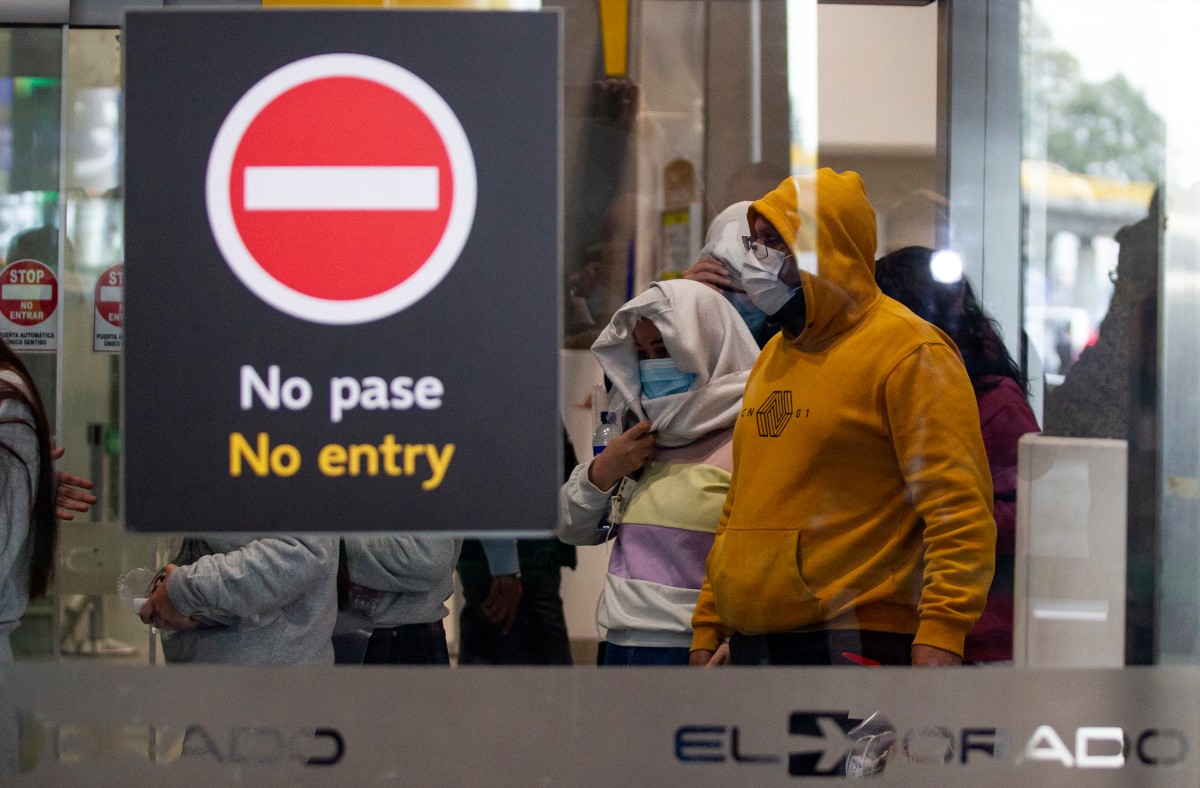
The United States Immigration and Customs Enforcement has expelled 902 Nigerians since the start of fiscal year 2019, according to data from the agency’s 2024 Annual Report.
This is as 3,690 more remain in limbo with removal orders hanging over them.
Although removals fell from 286 Nigerians in 2019 to 138 in 2024, reflecting a 51.7 per cent decline over the six years, ICE’s country-by-country deportation ledger showed Nigerians removals spiked during Donald Trump’s first two full years in office, 2018 and 2019, and may spike in 2025 under renewed crackdown.
Across Africa, Nigeria still accounts for the largest share of U.S. deportations.
Senegal was in second place with 716 removals, with 410 of those in 2024 alone.
Ghana sits third with 582 removals, followed closely by Mauritania with 491 removals.
Removals to Mauritania rose from 58 in 2023 to 353 in 2024.
The report attributed the spike to the Electronic Nationality Verification expansion programme, which shortened the paperwork cycle by allowing consular officers to clear identity checks electronically rather than in person. Officials say the ENV cut manifest-approval times from weeks to days and allowed weekend-chartered flights to countries such as Mauritania, Senegal and Ghana.
Other African countries on the list were Egypt (467), Somalia (406), Democratic Republic of Congo (395), Liberia (379), Kenya (335), and Guinea (294). The rest were scattered among Angolans (293), Cameroonians (288), The Gambia (22), Sierra Leone (165), Morocco (161) and Ethiopia (141), amongst others with smaller caseloads.
Outside Africa, the highest removals are to America’s near neighbours.
Mexico topped the deportation chart with 434,827 removals between fiscal 2019 and 2024, more than double that of any other nationality on the agency’s books.
Analysts say enforcement activity remained high in the Northern Triangle, with Guatemala recording 185,713 expulsions and Honduras 142,349, while El Salvador logged 65,268 during the same period.
Colombia accounted for 30,724 returns and Ecuador 26,847 due to a surge in charter flights in 2023. Peru followed with 11,554. Caribbean and Bolivarian states recorded smaller but still significant totals: the Dominican Republic saw 13,904 deportations, Nicaragua 13,350 and Venezuela 4,962 over the six-year period. ICE reports attributed this to a mix of travel-document diplomacy and a surge in border encounters.
Together, the 10 countries accounted for almost three-quarters of the 271,484 people ICE says it deported in 2024, the agency’s busiest year since before COVID-19 .
According to ICE, legal authority for such removals rests on the Immigration and Nationality Act.
It said foreign nationals might be expelled for unlawful entry, overstaying visas, fraud, certain criminal convictions or national-security grounds.
In January 2017, President Donald Trump signed Executive Order 13768, which broadened ICE’s enforcement to include anyone without lawful status.
ICE arrest numbers jumped 30 per cent that year as Nigerian removals rose accordingly.
In 2019, ICE carried out 267,258 removals, the highest yearly total in nearly a decade.
That year, Nigerian removal numbers rose to 286. This was part of a long list of 3,690 Nigerians whom ICE had identified and placed on its non-detained docket by late 2020, as revealed in January 2025.
Nigeria had the second-highest number of nationals facing deportation in Africa then, after Somalia’s 4,090 cases.
In 2021, President Joe Biden directed ICE to prioritise the most serious criminals and recent entrants for removal, leading to a sharp drop in deportation numbers.
ICE removals fell to about 59,000 in 2021, the lowest in decades, and Nigerian removals dropped to 78 that year.
The following year, even fewer Nigerians (49) were sent home amid pandemic-related travel restrictions and continued cautious enforcement. But a Supreme Court ruling in July 2024 allowed the Department of Homeland Security to fully reinstate those guidelines, prioritising public safety and national security cases.
ICE defines “removal” as the confirmed compulsory movement of a non-citizen out of the United States following an order of removal. This often follows a final removal order by an immigration judge or administratively via mechanisms like expedited removal at the border.
ICE says the journey from arrest to repatriation typically runs through a patchwork of local jails, immigration courts and consular clearances.
Once an order of removal is final, ICE’s Enforcement and Removal Operations division must secure travel documents, field medical clearances and book a commercial seat or, more commonly for West-African returns, a dedicated charter flight.
The agency says electronic verification has shaved days off that timeline, which is one reason the 2024 total dwarfs the previous two pandemic-ridden years.
In carrying out Trump’s recent deportation order, Immigration and Customs Enforcement agents have raided several establishments suspected of harbouring illegal immigrants and made arrests.
At a meeting with US Ambassador to Nigeria, Richard Mills Jr., in February, Nigeria’s Minister of State for Foreign Affairs, Ambassador Bianca Odumegwu-Ojukwu, called on the United States to ensure a humane deportation process for Nigerians.
“We are asking as a country whether they will be given ample time to handle their assets or will they just be bundled into planes and repatriated?” she queried, highlighting concerns over the emotional and financial impact on deportees and their families.
She argued that deportations, particularly for persons with no history of violent crime, should not be traumatic or abrupt.
The Nigerians in Diaspora Commission had earlier said it was ready to welcome Nigerians deported from the US.
“The Federal Government has set up an inter-agency committee, comprising the Ministry of Foreign Affairs, NiDCOM, Ministry of Humanitarian Affairs and Office of the National Security Adviser, should there be mass deportation of Nigerians from the US,” NiDCOM’s Director of Media and Corporate Affairs, Abdur-Rahman Balogun, said in an interview.
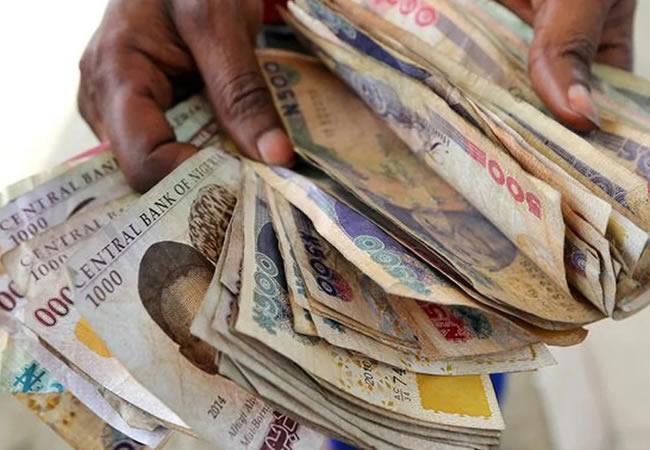
The Federal Government generated N84.05bn from the Electronic Money Transfer Levy in the first quarter of 2025, according to data obtained from a Federal Inland Revenue Service document seen by Sunday PUNCH.
The figure represents a 76 per cent year-on-year increase compared to the N47.74bn collected during the same period in 2024, reflecting stronger enforcement and the expanding use of digital payment platforms across Nigeria.
A breakdown of the figures showed that in January 2025, EMTL collections stood at N21.40bn, a 29.1 per cent rise from the N16.59bn recorded in January 2024.
February collections recorded the most significant jump, rising to N36.64bn from N15.79bn in February 2024 — more than doubling year-on-year with an increase of 132 per cent.
In March 2025, EMTL revenues were N26.01bn, up by 69.2 per cent from the N15.37bn earned in March 2024.
Month-on-month, February’s N36.64bn was 71 per cent higher than January’s N21.40bn.
However, March saw a 29 per cent drop from February’s peak, although it still outperformed March 2024 by a wide margin.
The EMTL, introduced under the Finance Act 2020 and implemented in 2021, imposes a N50 levy on electronic receipts or transfers of N10,000 and above.
Proceeds from the levy are shared among the three tiers of government based on an approved revenue-sharing formula, providing a supplementary revenue source that has grown in importance amid Nigeria’s push for increased non-oil revenues.
Usually, the proceeds are shared among the three tiers of government, with 15 per cent to the Federal Government and 85 per cent to states and local governments.
Sunday PUNCH further learnt that only about 96 per cent of the total EMTL revenue was shared among the three tiers of government.
An analysis of statements from the Office of the Accountant General of the Federation showed that the Federation Account Allocation Committee disbursed a total of N80.69bn from Electronic Money Transfer Levy collections to the Federal Government, state governments, and local government councils in the first quarter of 2025.
This figure represents a significant increase from the N46.45bn shared in the corresponding period of 2024.
From this amount, the Federal Government received N3.082bn, state governments received N7.192bn, while local government councils were allocated N10.274bn.
In February 2025, the levy’s contribution rose sharply to N35.171bn.
Of this figure, the Federal Government received N5.276bn, states received N17.585bn, and local governments collected N12.310bn.
In March 2025, N24.971bn was shared from EMTL receipts, with the Federal Government taking N3.746bn, states N12.485bn, and local councils N8.740bn.
The distribution pattern in the first quarter of 2025 was different from that of the first quarter of 2024.
In January 2024, FAAC disbursed N15.922bn in EMTL collections, with N2.388bn going to the Federal Government, N7.961bn to states, and N5.573bn to local government councils.
In February 2024, from N15.157bn collected, the Federal Government received N2.274bn, the states got N7.578bn, and local governments, N5.305bn.
March 2024 EMTL collections stood at N15.369bn, with N2.213bn allocated to the Federal Government, N7.377bn to states, and N5.164bn to local governments.
On a year-on-year basis, the total EMTL shared in the first quarter of 2025 rose by 73.7 per cent compared to the corresponding period of 2024.
The Federal Government’s total EMTL allocation increased from N6.875bn in Q1 2024 to N12.104bn in Q1 2025, reflecting a growth of approximately 76 per cent.
For state governments, the amount rose from N22.916bn in the first three months of 2024 to N37.262bn in the same period of 2025, representing a 62.6 per cent increase.
Local government councils recorded the highest growth rate among the three tiers, with EMTL receipts rising by about 88 per cent from N16.659bn in Q1 2024 to N31.325bn in Q1 2025.