
FG stops TETFund support for institutions with less than 2,000 students


The Minister of Education, Mr. Tunji Alausa, has announced that tertiary institutions with fewer than 2,000 students will no longer be eligible for funding from the Tertiary Education Trust Fund.


Speaking on Friday at a one-day engagement with heads of institutions, bursars, and procurement directors in Lagos, Alausa said the Federal Government was repositioning the funding framework to ensure public resources are used efficiently.


“We are re-evaluating how institutions benefit from TETFund. We can no longer incentivise poor performance or underutilisation,” the minister said.


He noted the inefficiency of allocating equal resources to underpopulated schools as those with significantly higher student numbers.

He stated, “Several polytechnics established as far back as 2019 have only between 350 to 550 students enrolled, yet receive the same level of funding as institutions with over 18,000 students.


“This is inefficient and unsustainable. Therefore, we have set a new benchmark: any institution that, after five years of operation, still has fewer than 2,000 students may be deemed ineligible for TETFund support until they scale up their capacity.”


Alausa said the engagement with institutions from the southern zone was aimed at reviewing the 2024/2025 intervention guidelines and fostering transparency.


“There’s no doubt that TETFund has greatly benefited our tertiary institutions through numerous interventions and improvements.


“However, under the directive of President Bola Ahmed Tinubu, our focus now is to ensure maximum value from every naira spent in our institutions,” he further stated.


He also raised concerns about the unchecked proliferation of satellite campuses, calling it “unsustainable and counterproductive.”


On foreign scholarships, Alausa revealed a shift in policy, explaining that more funds would now be invested in building local capacity.


He continued, “Our evidence-based analysis showed that 85 per cent of Nigerian students sent abroad on government scholarships never returned to contribute to national development.

“Many of the programmes they studied could have been handled effectively within our own institutions.”


To address this, he said 28 Centres of Excellence have been established across public and private institutions to offer postgraduate programmes, enhance research and create jobs.

In his remarks, the Executive Secretary of TETFund, Sonny Echono, said the agency is moving towards a more sustainable and performance-driven funding model.


Echono stated, “The Fund has been moving toward a more sustainable model of funding. This is in line with the broader objective to reduce institutions’ reliance on government subvention and to encourage Public-Private Partnerships, particularly in areas such as hostel development, innovation parks and service facilities.”


Echono warned that underperforming institutions risk being removed from the list of TETFund beneficiaries.


“Institutional expansion must be checked, and we must avoid unnecessary duplication of mandates.


“Institutions that consistently fail to access, utilise, or retire funds appropriately, or that fall short of enrolment and academic performance thresholds, risk being delisted,” he warned.


He added that the goal of these new measures was not to punish, but to enhance the credibility and impact of TETFund.


He declared, “This policy is not meant to punish but to safeguard the credibility and impact of TETFund interventions. We want to ensure that the Fund’s resources are directed toward institutions committed to high standards of governance, transparency and accountability.”


He concluded by calling for deeper accountability and reform across the tertiary education sector.


“This engagement is a call to action. It is a platform to learn, reflect and commit to best practices in governance, project management and compliance,” he concluded.


NPA, Lagos unveil operation to clear port corridor congestion


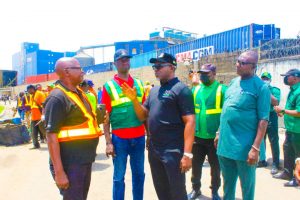
Determined to clear the port corridor of congestion, the management of Nigerian Ports Authority, in collaboration with the Lagos State Government and other relevant agencies, recently embarked on a three-day clean-up and sensitisation operation at the Lagos Port Corridors.


In a statement on Friday, the NPA disclosed that the exercise themed, ‘NPA security clearance operations 2025′, would eliminate security threats and environmental hazards, which have long plagued the Nigerian ports.


“It aims to tackle the issues hindering smooth operations at the ports and pave the way for greater port efficiency.


“The scope of this extensive clean-up operation covers all entry approaches to the Tincan Island Complex, Lagos Port Complex, Kirikiri Lighter Terminals I & II, and the port environs,” the statement read in part.


It was reiterated that the goal of the exercise is to flush out criminal elements, miscreants, hoodlums, remove shanties, kiosks, and containers that obstruct the free flow of traffic, and “pose a threat to the safety of personnel, cargo, and vessels.”


The statement stressed that the initiative also aligns with the International Ship and Port Facility Security Code measures developed by the International Maritime Organisation to ensure the safety and security of ports worldwide.


Speaking during the flag-off of the exercise, the Managing Director of NPA, Abubakar Dantsoho, emphasised that the ports’ access roads and environs are international corridors.


The MD, who was represented at the event by the General Manager, Security at NPA, Anthony Edosomwan, maintained that the ports are the gateway to the national economy and the NPA has a responsibility to collaborate with relevant agencies to ensure that sanity is maintained.


“The operations will not only improve the safety and security of the ports but also contribute to the economic growth of the nation.

“The congestion and delays caused by these issues have been a major hindrance to the efficient functioning of ports, affecting trade facilitation and ultimately, the nation’s Gross Domestic Product,” Dantsoho said.


Dantsoho said to ensure the success of the operation, the NPA’s security division had previously carried out enlightenment campaigns to sensitise the public on the importance of the exercise.


“This is a crucial step in gathering support and cooperation from all stakeholders, including port users, traders, and residents in the surrounding areas,” he stressed.


He reiterated that the NPA remains unwavering in its commitment to achieving environmental sustainability and maintaining a clear and safe port environment.


“Indeed, the negative impact of pollution and encroachment on the ports cannot be ignored.

“This clean-up operation is not only beneficial to the ports’ operations but also to the surrounding communities and the environment as a whole,” he added.


The NPA boss noted that the operation is part of the broader initiative aimed at tackling congestion issues and paving the way for a more efficient and sustainable future for Nigeria’s ports.


He stated that by collaborating with relevant agencies and carrying out necessary awareness campaigns, the NPA is also calling for public collaboration.

Lagos council chair backs Obasa’s son as successor


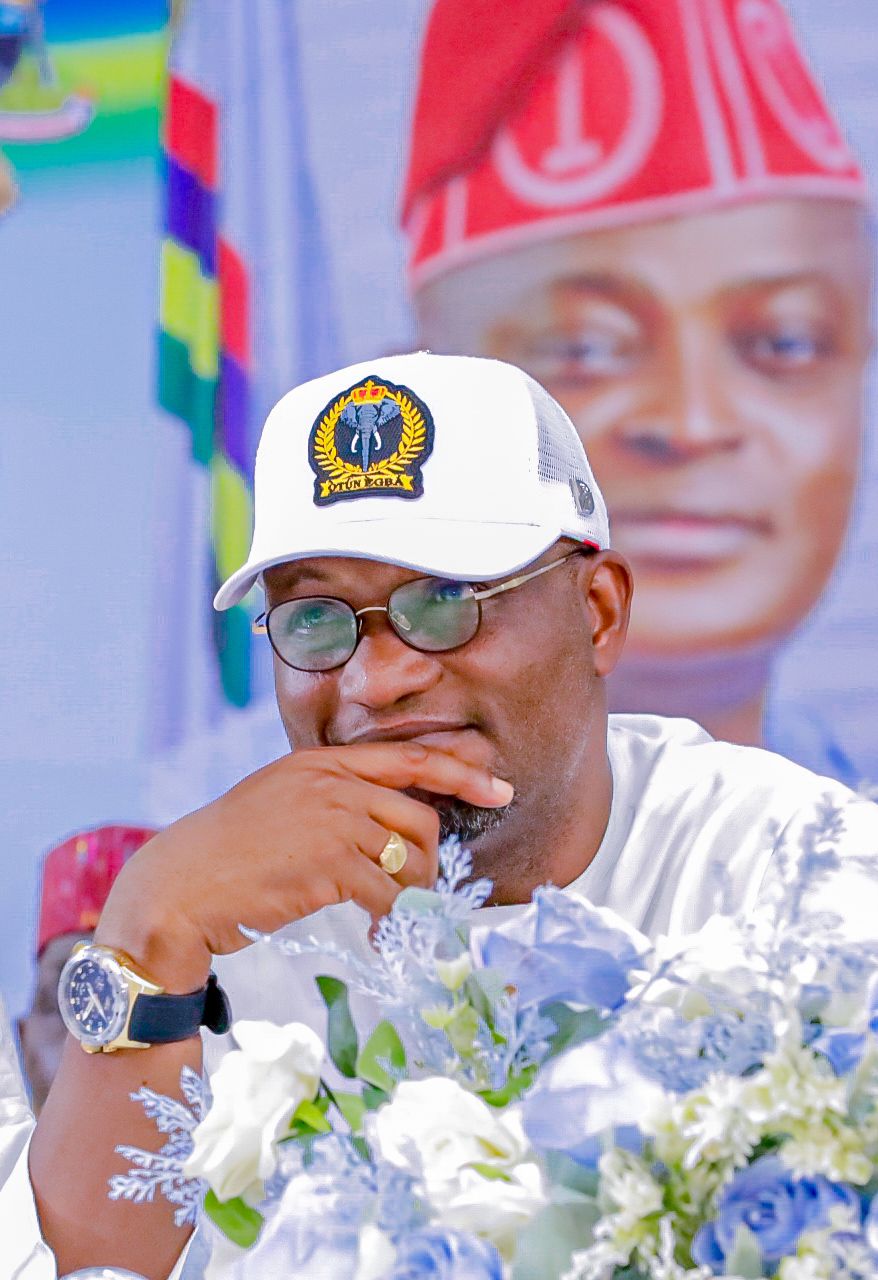
The Executive Chairman of Agege Local Government Area of Lagos State, Ganiyu Egunjobi, has thrown his weight behind the emergence of Lagos Assembly Speaker Mudashiru Obasa’s son as the All Progressives Congress chairmanship candidate for the upcoming council polls, declaring that the young man “deserves to succeed me.”


Egunjobi, in an interview with select journalists, addressed the mounting controversy that followed the May 10 APC primaries, dismissing claims of imposition and defending the legitimacy of the process that produced candidates across local government areas.


“I think the reactions in those quarters where they are shouting ‘imposition’ is in the character of politicians in our clime,” Vanguard quoted him as saying on Friday.


“I’m sure if the results had gone their way, they would be lavishing praise on the electoral process. The election committee put up a good show and should be commended, same with the leadership of the party in the state.”


Tensions had risen after a protest in Agege and Orile-Agege by some APC members who accused Speaker Obasa of planting loyalists and family members, including his son (Abdulganiyu), as flagbearers in the upcoming July 12 council elections.


But Egunjobi dismissed the demonstration as a charade sponsored by political desperadoes.


“I watched the video of the so-called protest and I was amazed to see those who led it. A political neophyte, who is a charge-and-bail lawyer, anchored it.


“For your information, this man until recently was gushing about the Speaker, thinking singing the praise of Obasa would get him the party chairmanship ticket for Orile-Agege,” he said.


He added that some of the aggrieved aspirants, including Sola Osolana and Bukola Sofidiya, only returned to the party shortly before the primaries and lacked the moral and constitutional right to contest.

“We know some of their paymasters in the persons of a certain serving senator from Ogun State and a three-time House of Assembly member in our area, to mention but a few,” he hinted, without naming names.


Addressing the controversy over the candidacy of Obasa’s son, who is reportedly running as a vice-chairmanship candidate in Agege, Egunjobi defended the Speaker’s son as eminently qualified, drawing comparisons to political dynasties in the United States and Nigeria.


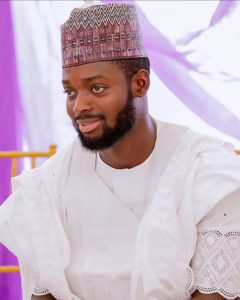
Obasa’s son, Abdulganiyu

“This is someone that is well-read, a PhD student for that matter, who has been touching lives in Agege long before now. In fact, he deserves to succeed me.


“People blabbing ‘imposition’ in respect of the Speaker’s son’s matter are not fair to the young man and Agege,” he declared.


Highlighting his own tenure, which ends in about two months, Egunjobi reeled out achievements including the construction of roads, health centres, public school infrastructure, vocational training, youth empowerment programmes, and local job creation.

“We built a CBT centre for JAMB candidates, upgraded our vocational training institute, and even created a deradicalisation programme for louts post-EndSARS,” he said.


“Over 700 staff, including security personnel under ‘Paramole’, are on our payroll, receiving stipends to maintain peace and order.”


When asked about the perennial Awori versus non-indigene divide in Agege politics, the chairman responded with a rebuke of identity politics.


“We are all born and bred in Agege. Come to think of it, no Awori person in Agege is more Agege than me. The dichotomy doesn’t hold water and is inconsequential,” he concluded.

Nigeria to partner Australia, Rwanda on mining, gender reforms


The Deputy Speaker of the House of Representatives, Ben Kalu, has sought partnerships with Australia and Rwanda to enhance women’s representation in governance, security, and mining, among other areas.


Kalu made the call in separate meetings on Thursday with both countries’ embassies’ delegation led by Leilani Bin-Juda from Australia and Christopher Bazivamo from Rwanda, at the National Assembly, Abuja.


He told the delegation that Nigeria is rich in natural resources, and the mining sector offers huge potential for growth and development.


Acknowledging Australia’s mining expertise, Kalu sought collaboration to share best practices, technology, and sustainable methods for responsible resource extraction.


He urged Australian partners to support Nigeria’s constitution review, focusing on gender equality and human rights.


The deputy speaker also informed the delegation that discussions are ongoing regarding re-evaluating capital punishment within Nigeria’s legal framework. He informed the delegation that Nigeria is currently discussing the review of capital punishment in its laws.


He stressed that the issue is complex and needs thorough discussion and consideration.


He also spoke about the importance of creating a conducive environment that attracts foreign investment in Nigeria’s mining sector.


He said that the environment should not only appeal to investors but also ensure that local communities derive tangible benefits from mining activities thereby promoting mutual growth and development.


“By advancing partnerships with Australian mining companies, we can enhance job creation, boost local economies, and ensure that our natural resources contribute to the overall development of Nigeria.


“The Constitution Review Committee is currently engaged in significant constitutional amendments that seek to address pressing issues within our society.

“Among these are the Gender Bills, specifically HB.1349, which addresses the reservation of seats for women in our legislative bodies.


“This initiative is crucial for enhancing women’s representation in governance, which is essential for a balanced and equitable society,” Kalu concluded.


The Australian High Commissioner, Leilani Bin-Juda, reiterated her country’s interest in Nigeria’s mining, trade, and investment sectors.

She also commended Nigeria, noting fruitful discussions with the Ministry of Foreign Affairs in January, and plans for a joint mining project with the Ministry of Mines and Steel in the coming weeks.


While addressing the Rwanda delegation, Kalu sought stronger ties between Nigeria and Rwanda, citing shared goals of peace, stability, and development.


He said, “The bonds we have forged over the years are proof of our mutual respect and understanding, and I am optimistic about the potential that lies ahead.”


He stressed the importance of inter-parliamentary collaboration in deepening bilateral relations and driving regional development.


“Legislative bodies in our countries are instrumental in shaping policies that promote economic growth, social development, and cultural exchange. By enhancing dialogue between our parliaments, we can ensure that our legislative frameworks align with our shared goals and aspirations.


“In particular, as Nigeria embarks on a significant constitutional review process, we seek collaboration and insights from Rwanda, especially in key thematic areas such as gender and security.


“Your nation’s exemplary progress in gender representation, with women holding 63.75% of seats in the Chamber of Deputies and 53.8% in the Senate, the highest in the world, provides a valuable model for us to learn from,” the deputy speaker said.


In his remarks, Rwandan Ambassador, Christophe Bazivamo, aims to strengthen institutional ties between Nigeria and Rwanda’s legislative bodies, proposing cooperation in oversight, law drafting, parliamentary technology, and a parliamentary friendship group.

Army kills bandits, recovers 1,000 rustled cattle in Taraba


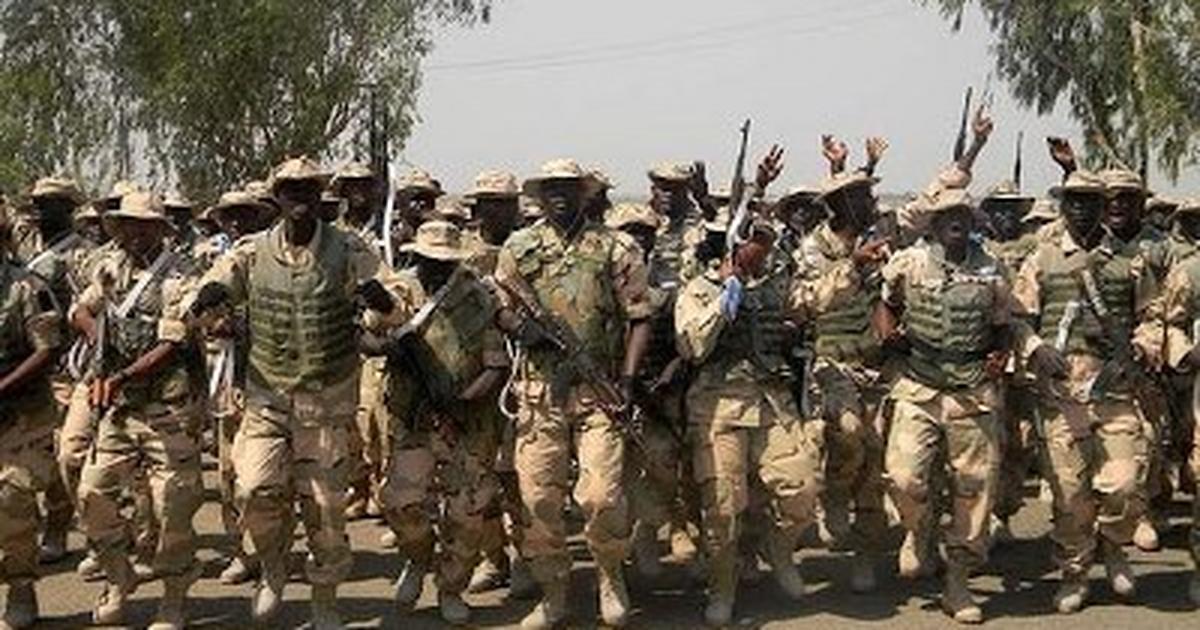
Troops of the 6 Brigade, Nigerian Army, operating under Sector 3 of Operation Whirl Stroke, in collaboration with personnel from Operation Safe Haven, have neutralised two suspected bandits and recovered about 1,000 rustled cattle during a counter-banditry operation in Taraba State.


This is contained in a statement released on Friday by the Acting Assistant Director, Army Public Relations, 6 Brigade, Captain Olubodunde Oni.


The operation, according to the statement, took place near Jebjeb village in Karim Lamido Local Government Area, following a coordinated response to a bandit attack that saw over 30 armed men on motorcycles cross into Taraba from neighbouring Plateau State.


Oni said the troops, on getting the credible intelligence regarding the movement of the bandits, who had attacked a Fulani settlement and rustled a large number of cattle, swung into action, leading to the recovery of the cattle.


The statement read partly, “In a prompt and coordinated response, troops of 6 Brigade, in conjunction with their counterparts from Operation Safe Haven deployed in Kampani area of Wase LGA, Plateau State, mobilised and projected forces toward Komodoro village in Karim Lamido Local Government Area of Taraba State.


“Upon contact, the bandits who had already fled across the river boundary into Daji Madam Forest in Plateau State were engaged in a fierce firefight.

“During the encounter, troops neutralised two of the bandits and successfully recovered about one thousand rustled cattle.”


Captain Oni added that the recovered livestock had been herded to safety and relocated to the Jebjeb community, while verification procedures are underway to ensure the rightful owners are identified and the cattle returned.


Commenting on the operation, the Commander, 6 Brigade Nigerian Army, Brigadier General Kingsley Chidiebere Uwa, lauded the swift and coordinated response of the troops and praised the synergy between security agencies.


“This operation once again demonstrates our resolve to maintain pressure on criminal elements and ensure the safety and security of our communities,” Brigadier General Uwa stated.


Uwa called on residents of Taraba and surrounding areas to continue providing timely and accurate information to the military, stressing that civilian cooperation remains crucial to the ongoing efforts to end banditry and insecurity in the two states.

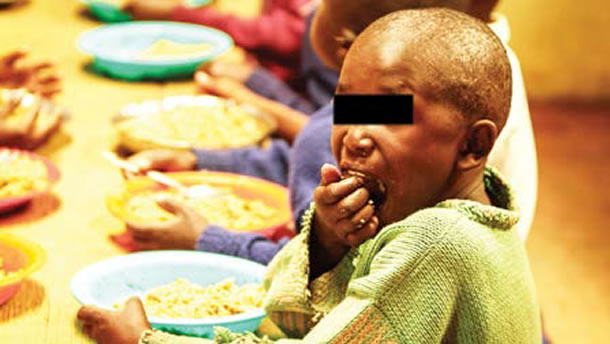
Borno Assembly to criminalise diversion of malnourished children’s food


The Borno state House of Assembly has said it will criminalise the diversion and reselling of malnourished children’s food following the disturbing alarm raised by the United Nations Children’s Fund


The House pledged on Friday when UNICEF visited its committee on health to discuss possible collaborations on the Federal government’s N-774 project, which focused on addressing issues of malnutrition in the country


While expressing grievances over the reselling and diversion of malnourished children’s food, the Chairman of the state’s House of Assembly Committee on Health, Maina Mustapha, assured UNICEF of collaboration to deliver its mandate of protecting children’s health through stringent regulations that will deter the selling of healthcare donated items


“We will criminalise the issue of selling out, taking, or theft of nutrition products that is being supplied by donor partners.


“We claim we are poor and resort to selling whatever has been given to us by donor partners.


“Instead for us to use it for our children, we choose to use it for our personal gain,” Mustapha frowned.


Speaking on the N-774 initiative, Mustapha appreciated UNICEF’s involvement, while stating that it is ready to carry it along in all the planning and strategies.

The UNICEF Chief of Maiduguri Field Office, Joseph Senesie, commended the partnership, saying with the right political will through the N-774 initiative, children in grassroots areas will enjoy access to good nutrition


He said, “N-774 is an initiative, launched by the government of Nigeria, headed by the Vice President, and the N-774 represents all the local governments in Nigeria, meaning it’s for the whole country, where nutrition will go right down to the grassroots level.


“The agenda is to bring down issues relating to malnutrition.


“In Borno state, we are meeting here at the House of Assembly to ensure that the initiative that started at the national level is coming down to the sub-national level.


“This is why we are calling ours the end N-27, since that is the number of LGAs in the state. We want to have committee members and form the committee that will represent all these LGAs so that nutrition is taken down to the grassroots,”


He commended the house for the bold step to criminalise the diversion of products meant for malnourished children, while describing it as the right step in the right direction


PUNCH had recently reported that UNICEF raised the alarm over the diversion and reselling of RUTF, a product meant for over half a million malnourished children in Borno, Adamawa, and Yobe states.

Davido credits Bright Chimezie’s ‘because of English’ as inspiration for new song ‘With You’


Nigerian Afrobeats superstar David Adeleke, popularly known as Davido, has shown appreciation to legendary highlife maestro Bright Chimezie, crediting his timeless track ‘Because of English’ as the inspiration behind his new song “With You” featuring Omah Lay.


In a video call that quickly circulated on social media, Davido was seen in a video call with Chimezie. With visible admiration, he told the veteran that his decades-old classic planted the creative seed for “With You”, a standout track from his fifth studio album.


“The latest hit I just did with Omah Lay, I used inspiration from your song, ‘Because of English,’” Davido told the highlife icon during the call. Chimezie responded with interest, to which Davido added, “I will tell them to play it for you. It’s trending everywhere, the whole world.”


Reacting in a video posted on his Instagram page on Thursday, the music legend Bright Chimezie praised Davido and Omah Lay for their hit single ‘With You’, which samples his iconic track ‘Because of English’.


In the video, Chimezie was seen dancing joyfully to the song while applauding the artists for creatively drawing inspiration from his classic.


“You can see I am vibing to the song already. It’s a beautiful piece of work, very wonderful. I appreciate the fact that you said you picked the inspiration from this song I recorded many years ago; I appreciate you for that,” he said


Davido, in turn, replied with deep respect, switching to the Igbo language to honour the icon:

He wrote, “Ihe di ka gi akokwala m. Chief Sir Bright Chimezie, Ezigbote Onye Egwu,” meaning, “People like you inspire me. Chief Sir Bright Chimezie, a true music legend.”


“With You”, produced by the talented beatmaker Tempoe, fuses the lush groove of highlife with modern Afrobeats and a sprinkle of funk, a sound that echoes Nigeria’s 70s and 80s musical golden age, where artists like Chimezie laid the foundation.


Watch the video below:


𝐕𝐈𝐃𝐄𝐎: 𝐃𝐚𝐯𝐢𝐝𝐨 𝐂𝐫𝐞𝐝𝐢𝐭𝐬 𝐁𝐫𝐢𝐠𝐡𝐭 𝐂𝐡𝐢𝐦𝐞𝐳𝐢𝐞’𝐬 ‘𝐁𝐞𝐜𝐚𝐮𝐬𝐞 𝐨𝐟 𝐄𝐧𝐠𝐥𝐢𝐬𝐡’ 𝐀𝐬 𝐈𝐧𝐬𝐩𝐢𝐫𝐚𝐭𝐢𝐨𝐧 𝐅𝐨𝐫 𝐍𝐞𝐰 𝐒𝐨𝐧𝐠 ‘𝐖𝐢𝐭𝐡 𝐘𝐨𝐮’


Nigerian Afrobeats superstar David Adeleke, popularly known as Davido, has shown appreciation to… pic.twitter.com/hPajWSWJ3Z


— Punch Newspapers (@MobilePunch) May 16, 2025

Don’t scrap TETFund for NELFUND, OOU VC urges FG


The Vice-Chancellor, Olabisi Onabanjo University, Ago-Iwoye, Prof. Ayodeji Agboola, has passionately appealed for the continued existence of the Tertiary Education Trust Fund to support the development of tertiary education in Nigeria.


Prof. Agboola noted that TETFund had become inevitable as a significant intervention agency for universities and other tertiary education institutions and should not be scrapped or underfunded due to the birth of the Nigerian Education Loan Fund.


In a statement on Thursday

, the Vice-Chancellor made this call when he received the Chairman, South-West Zone of TETFund Board of Trustees. Sunday Adepoju, who led a delegation on a familiarisation and project inspection visit to the University recently.


The Vice-Chancellor said both TETFund and NELFUND should run simultaneously rather than allowing one to kill the other.


According to him, the TETFund is a force to reckon with in Nigeria’s educational landscape, and its various interventions have been instrumental in addressing key challenges facing the country’s tertiary institutions.


He faulted the calls in certain quarters for the scrapping of TETFund as a result of the emergence of NELFUND, arguing that such would be counterproductive in the long run.


Prof. Agboola contended that with the existence of both agencies, the attrition rate of students in universities would be reduced, while infrastructural development in those institutions would also be increased.


He said, “I want to say that without TETFund, maybe many universities would not be in existence. TETFund has been very significant in virtually all the development of this University, they also train academic staff for their PhDs.


“I’m one of the beneficiaries of TETFund because my PhD was sponsored by TETFund at the University of Nottingham.”


“I am also aware that a couple of our colleagues make use of TETFund for conference’ attendance and training. Virtually all the buildings we have and in all our satellite campuses, if you take away the philanthropists and the alumni donations, the rest are TETFund and Needs Assessment.


“My plea is that NELFUND should not replace TETFund, and the funds being allocated to TETFund should also not be reduced.”

“If you give more money to NELFUND for student loans and the student does not have anywhere to sit, it would be another kettle of fish. In this University, you can have 35,000 students applying every year, and there is only a quota of 7,000.


“Most of the teaching aids that we have come from interventions from TETFund. So, if the government decides to reduce the funds being allocated to TETFund and give them to NELFUND, I think the government needs to look at it again.”


“No nation will develop better than the products of its universities. If we bring more students into the university and there are no facilities, it won’t be a good development. So, it will be better for us to have the two agencies simultaneously.”

The Vice-Chancellor noted that OOU had judiciously utilised funds allocated for TETFund projects in the institution, calling for more interventions of the agency to move the University forward.


Prof. Agboola also used the opportunity of the visit to appeal to the Federal Government for urgent reconsideration of its stance on the cancellation of overseas training for Nigerian scholars.


Speaking during the visit, Adepoju said his visit was aimed at familiarising the Board of Trustees with some of the ongoing and completed projects of TETFund in the University.


Adepoju commended OOU and its Management for adequate utilisation of funds and implementation of TETFund projects, stressing that taxpayers’ money had been put into good use in the state-owned institution.


He said, “We have come, we have seen, and we will make our informed decision. With what we have seen so far, TETFund has done greatly for you in this University, and you are making effective use of the physical infrastructure given to you. We are very pleased, and if there is an opportunity for TETFund to do more, it will be done.


“You have shown that taxpayers’ money is being put to use, and by the grace of God, it would be the beginning of more to come from TETFund. I am happy that you are not having any abandoned projects and you are not having any unaccessed funds.


“That shows the quality of the Management this University has. As we have been told, some Managements of institutions delay the payment of money to contractors, thereby causing inflation to the projects. That has not been the case in OOU.”

UN warns of fragile global economy amid rising trade tensions


The United Nations Department of Economic and Social Affairs has said that the global economy stands at a fragile turning point amid escalating trade tensions and growing policy uncertainties.


UN DESA, in a report published on Thursday, stated that tariff-driven price pressures were adding to inflation risks, leaving trade-dependent economies particularly vulnerable.


It stated that higher tariffs and shifting trade policies were threatening to disrupt global supply chains, raise production costs, and delay key investment decisions – all of which would weaken the prospects for global growth.


The economic slowdown is widespread, affecting both developed and developing economies around the world, according to the report.


For instance, in the United States, growth is projected to slow “significantly”, as higher tariffs and policy uncertainty are expected to weigh on private investment and consumer spending.


Several major developing economies, including Brazil and Mexico, are also experiencing downward revisions in their growth forecasts.


China’s economy is expected to grow by 4.6 per cent this year, down from 5.0 per cent in 2024. This slowdown reflects a weakening in consumer confidence, disruptions in export-driven manufacturing, and ongoing challenges in the Chinese property sector.


By early 2025, inflation had exceeded pre-pandemic averages in two-thirds of countries worldwide, with more than 20 developing economies experiencing double-digit inflation rates.

This comes despite global headline inflation easing between 2023 and 2024.


Food inflation remained especially high in Africa and in South and Western Asia, averaging above six per cent. This continues to hit low-income households hardest.


Rising trade barriers and climate-related shocks are further driving up inflation, highlighting the urgent need for coordinated policies to stabilise prices and protect the most vulnerable populations.


“The tariff shock risks hitting vulnerable developing countries hard,” Li Junhua, UN Under-Secretary-General for Economic and Social Affairs, said in a statement.


As central banks try to balance the need to control inflation with efforts to support weakening economies, many governments, particularly in developing countries, have limited fiscal space. This makes it more difficult for them to respond effectively to the economic slowdown.


For many developing countries, this challenging economic outlook threatens efforts to create jobs, reduce poverty, and tackle inequality, the report underlines.

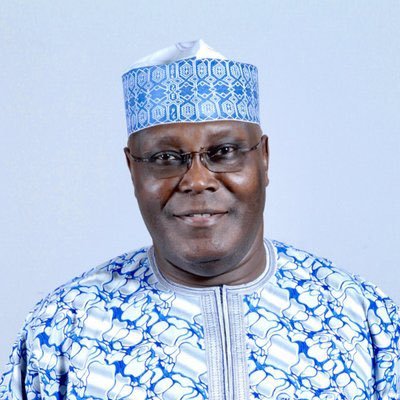
Presidents after Obasanjo to blame for growing Boko Haram menace – Atiku


Former Vice President Atiku Abubakar has said ex-President Olusegun Obasanjo swiftly ended Boko Haram’s activities when the group first emerged during their administration.


Speaking in Abuja on Wednesday during a visit by stakeholders from Kogi East Senatorial District, led by former Kogi State Deputy Governor, Simon Achuba, Atiku attributed the early success against the insurgents to strong political will.


Atiku, in a video shared on his Facebook page from the meeting, said Boko Haram first appeared in Yobe State in 2002, prompting Obasanjo to consult him on how to respond.


Atiku said, “You remember when the Boko Haram started in Yobe? It was actually in 2002. We were in the office. The president sent for me. ‘VP, what do we do about this?’ Then I said, ‘Mr President, let’s call the Service Chiefs and give them a deadline. If they can’t put it down, then they should put down their uniform and go away. We will get some other people.


“And he called the Service Chiefs; I was there, and gave them marching orders, and within a few weeks, they put down the insurgency in Yobe. It never came up again until we left office.”

Atiku blamed the group’s later resurgence on the failure of successive leaders to act decisively.


“So, I will say there’s a lack of political will on the leaders. When they’re killing your citizens, how can you even eat? They’re killing your citizens and you don’t give a damn; that is the greatest irresponsibility by any political leader, anywhere.


“So I hold our leadership responsible for all the insecurity that is going on all over the place,” he added.


Atiku served as Vice President of Nigeria from 1999 to 2007 under President Olusegun Obasanjo, during the Fourth Republic, following the end of military rule.

Exit mobile version