
Latin America mourns ‘world’s poorest president’ Mujica


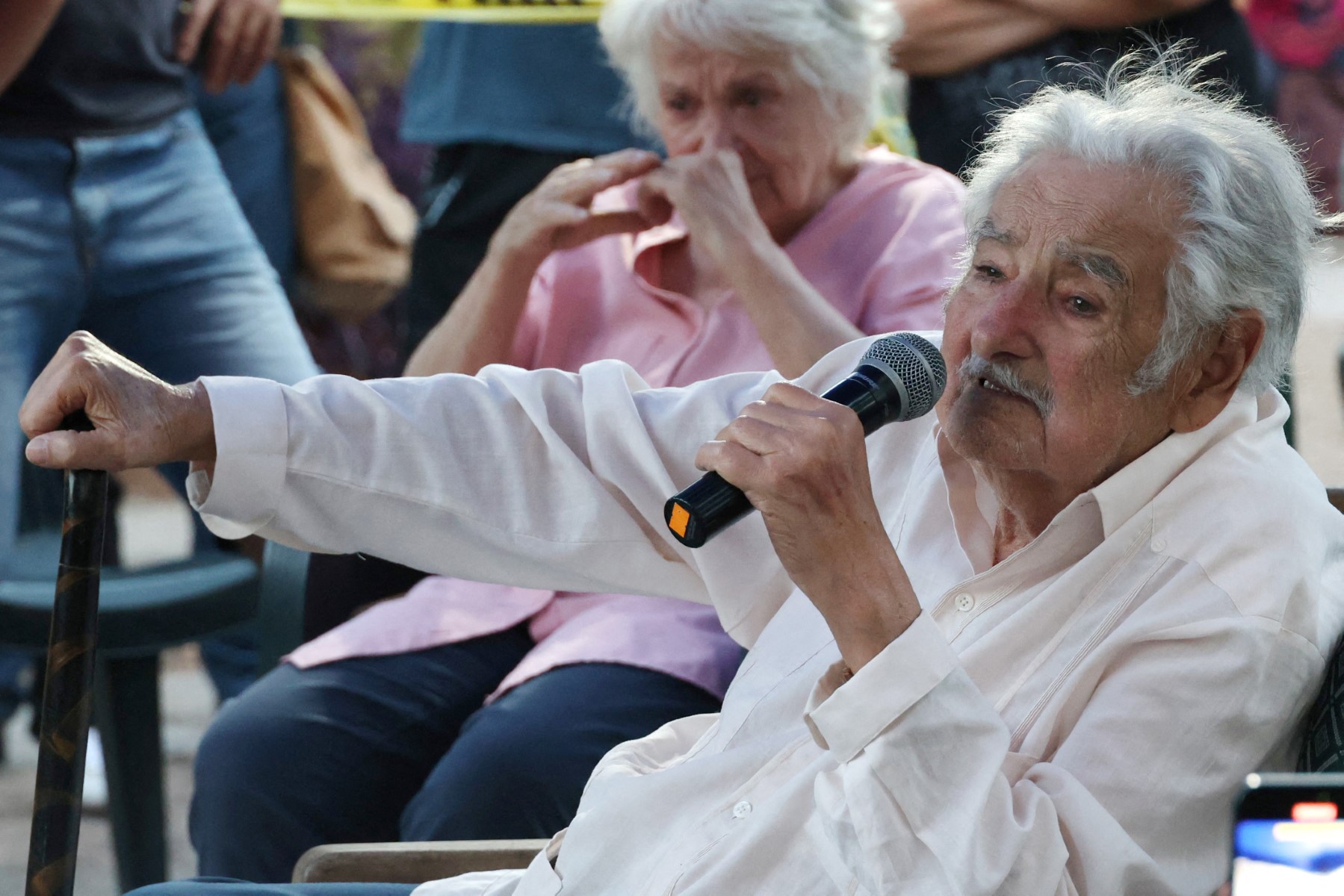
Tributes poured in from across Latin America on Tuesday following the death of Uruguay’s former president Jose “Pepe” Mujica, an ex-guerrilla fighter revered by the left for his humility and progressive politics.

The 89-year-old, who spent a dozen years behind bars for revolutionary activity, lost his battle against cancer after announcing in January that the disease had spread and he would stop treatment.

“With deep sorrow, we announce the passing of our comrade Pepe Mujica. President, activist, guide and leader. We will miss you greatly, old friend,” Uruguay’s current leader, Yamandu Orsi, posted on X.

“Pepe, eternal!” a cyclist shouted out minutes later, while passing government buildings.

Mujica earned the moniker “world’s poorest president” during his 2010-2015 presidency for giving away much of his salary to charity and living a simple life on his farm, with his fellow ex-guerrilla wife and three-legged dog.

The government announced three days of national mourning and said his body would be taken to the legislative palace on Wednesday to lie in state.

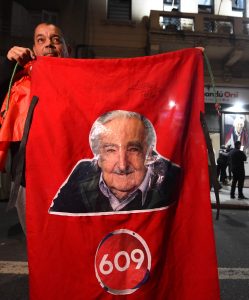
Activists from Mujica’s Movement of Popular Participation (MPP) gathered outside the party’s headquarters to make giant banners marked “Hasta siempre, viejo querido” (Until forever, old friend).

Leftist leaders from across Latin America and Europe paid tribute to the man described by Mexican President Claudia Sheinbaum as an “example for Latin America and the entire world.”

Brazilian President Luiz Inacio Lula da Silva echoed that message.

A supporter carries a red falg with the image of late Uruguay’s President Jose Mujica at the Frente Amplio party headquarters in Montevideo on May 13, 2025. Uruguay’s former president (2010-2015) Jose Mujica, a former guerrilla fighter and icon of the left in Latin America, died at the age of 89 on May 13, 2025, the government announced. The farmer dubbed the “world’s poorest president” during his presidency for his modest lifestyle had been diagnosed with cancer of the esophagus in May 2024. (Photo by DANTE FERNANDEZ / AFP)


“His human greatness transcended the borders of Uruguay and his presidential mandate. The wisdom of his words formed a true song of unity and fraternity for Latin America,” Lula said in a statement.


– ‘Like ordinary people’ –


At the Madison, an unassuming corner cafe in central Montevideo, waiter Walter Larus recalled Mujica popping in for a steak shortly after winning office.


“He felt and lived like ordinary people, not like today’s politicians who seem rich,” the 53-year-old said.


In a 2012 AFP interview, Mujica denied being poor, saying his was, rather, a life of “austerity.”

“I need little to live,” he said.


He transformed Uruguay, a prosperous country of 3.4 million people best known for football and ranching, into one of Latin America’s most progressive societies.


In later life, he was disappointed at the authoritarian drift of some left-wing governments, accusing repressive leaders in Venezuela and Nicaragua of “messing things up.”


He was diagnosed with cancer of the esophagus in May last year, and it spread to his liver.


His wife Lucia Topolansky said this week he was receiving palliative care.

Over the course of five years in power, Mujica legalised abortion and gay marriage and made Uruguay the first country to legalise the use of recreational cannabis.


He continued to campaign for the left after his cancer diagnosis, working fervently on the successful election campaign of history teacher Orsi, his political heir.

Former Bolivian president Evo Morales hailed his “experience and wisdom,” while Brazil’s government bid farewell to “one of the most important humanists of our time.”


Spanish Prime Minister Pedro Sanchez said Mujica had lived for “a better world,” while Guatemala’s Bernardo Arevalo held him up as “an example of humility and greatness.”


China’s foreign ministry spokesperson Lin Jian hailed Mujica as a “renowned leader” and a “good friend of the Chinese people.”


– From prison to politics –


The blunt-spoken, snowy-haired farmer was a fierce critic of consumerism.


He attended official events in sandals and continued living on his small holding on the outskirts of Montevideo, where his prized possession was a 1987 Volkswagen Beetle.

In the 1960s, he co-founded the Marxist-Leninist urban guerrilla movement Tupamaros, which started out robbing from the rich to give to the poor but later escalated its campaign to kidnappings, bombings and assassinations.


During those years, Mujica lived a life of derring-do. He sustained multiple gunshot wounds and took part in a mass prison breakout.


But when the Tupamaros collapsed in 1972, he was recaptured and spent all of Uruguay’s 1973-1985 dictatorship in prison, where he was tortured and spent years in solitary confinement.


After his release, he threw himself into politics and in 1989 founded the MPP, the largest member of the leftist Broad Front coalition.


Elected to congress in 1995, he became a senator in 2000 and then agriculture minister in Uruguay’s first-ever left-wing government.


As president, he was praised for his fight against poverty but criticised for failing to rein in public spending.


He is survived by his wife, Topolansky. They had no children.


Mujica asked to be buried on his farm, next to his dog.


AFP

83.4m people displaced globally – IOM report


The International Organisation for Migration has said that a record 83.4 million people have been forced to flee from their homes, fuelled by an increase in disasters and conflict.


The UN migration agency, in its 2025 Global Report on Internal Displacement, on Tuesday, said the number of people living in internal displacement had more than doubled since 2018.


Internally displaced people are those who have been forced to flee their homes as a result of conflict, violence, or disasters and who have not crossed an internationally recognised State border.


IOM said the 83.4 million IDPs were scattered across 117 countries and territories at the end of 2024.

“These figures are a clear warning: without bold and coordinated action, the number of people displaced within their own countries will continue to grow rapidly,” IOM Director-General, Amy Pope, said.


The report said the recent rise in conflicts worldwide, particularly in Sudan, the Republic of the Congo, Lebanon, Ukraine and Palestine, had pushed millions more into displacement.


It added to the tens of millions who already lived in protracted displacement in countries such as Afghanistan, Colombia, Syria and Yemen.


The report showed that the number of people displaced due to disasters had risen massively, climbing from 26.8 million in 2023 to 45.8 million in 2024.


“The number of disaster displacements in 2024 was nearly double the annual average of the past decade,” IOM said in a new report issued by the internal displacement monitoring centre (IDMC).

Almost 30 countries and territories have reported unprecedented disaster displacement, with cyclones accounting for more than one in two people forced from their homes.


The United States alone made up about one in four of those displaced globally by disasters.


With the frequency, intensity and duration of weather hazards continuously worsening owing to climate change, there was little to suggest that the trend would not continue, IOM said.


“This report is a call for preventive action, to use data and other tools to anticipate displacement before it happens and for the humanitarian and development sectors to work together with governments to develop longer-term solutions to prevent displacement,” Ms Pope stressed.


Displacement caused by conflict and violence remains high and continues to be a major cause for displacement, although it did decrease slightly in 2024, compared to the previous 12 months, according to the report.

More than 20 million conflict-related displacements have been recorded, and almost half of these stem from Sudan and the Democratic Republic of the Congo.


“These latest numbers prove that internal displacement is not just a humanitarian crisis; it’s a clear development and political challenge that requires far more attention than it currently receives,” Alexandra Bilak, an IOM official, said.


“The cost of inaction is rising, and displaced people are paying the price,” Bilak, who is IOM’s Director of Internal Displacement Monitoring Centre, added.


NAN

Lamido and I would’ve confronted Tinubu if we were govs – Amaechi


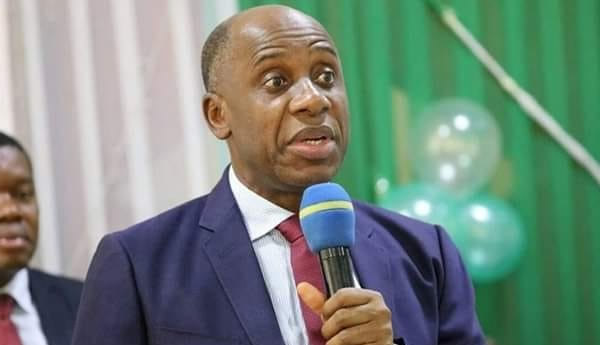
A former Minister of Transportation, Rotimi Amaechi, has said he and a former Governor of Jigawa State, Sule Lamido, would have challenged President Bola Tinubu over the nation’s current state of affairs if they were still serving as governors.


The former governor of Rivers State stated this in Abuja on Tuesday at the public presentation of Lamido’s autobiography, ‘Being True to Myself’.


Amaechi, who is also a former Chairman of the Nigeria Governors Forum, said their era was marked by bold opposition and a commitment to holding the Federal Government accountable.


He said, “I asked you (Lamido) this morning, what is going on currently in the country, in Nigerian politics — would it have happened when we were governors? You said no. And the answer is no.


“We would have confronted the government, confronted the president. That’s how radical you were. That’s how our Governors Forum operated. That’s how determined we were to change things.”

Amaechi also reflected on his political relationship with Lamido, noting that they were allies during their time in government.


The former minister, however, said their paths diverged over strategy in opposing then-President Goodluck Jonathan.


“We were quite good friends in government. We had our bad times when we disagreed. I made the mistake of assuming he was as radical as I was. So, he was one of the governors I clung to when it came to radical decisions.


“The last one before we broke ranks was when we all agreed to go against President Jonathan. We formed a committee of governors and others. At the end of the day, he went to find a new party, the SDP. We said, ‘If we go to the SDP, we will lose the election. Let’s hang on to this one called the APC.’ He disagreed and left us. That’s where we parted ways,” he said.

PICTORIAL: Sanwo-Olu hosts Guinness World Record holder, Ayelabola Ololade


Lagos State Governor, Babajide Sanwo-Olu, on Tuesday hosted Ayelabola Ololade, a model and final-year Computer Science student at the University of Lagos, in recognition of her Guinness World Record achievement.


Ololade recently made headlines after walking an astonishing 130.62Km on a catwalk, setting a new world record for the longest distance walked on a runway by a model.

Sanwo-Olu Hosts Guinness World Record Holder Ayelabola Ololade

The feat, completed in 2,058 laps at the Indoor Sports Centre of UNILAG, broke a 41-year-old record.


The governor received Ololade at the Lagos House, Marina, and lauded her determination, describing her as a shining example of Lagos’ vibrant, driven youths.

Sanwo-Olu Hosts Guinness World Record Holder Ayelabola Ololade

Sanwo-Olu Hosts Guinness World Record Holder Ayelabola Ololade

In a post shared on his official X handle, Sanwo-Olu wrote, “Today, I received Ayelabola Ololade #thelade_wonder, the official Guinness World Record holder for the longest distance walked on a catwalk by a model, at Lagos House, Marina.


“Ololade, a model and final-year Computer Science student at the University of Lagos, recently made history with her groundbreaking feat, walking an astonishing 130.62 km on a catwalk.

Sanwo-Olu Hosts Guinness World Record Holder Ayelabola Ololade

Sanwo-Olu Hosts Guinness World Record Holder Ayelabola Ololade

“Her record-setting achievement, completed through 2,058 laps at the Indoor Sports Centre of the University of Lagos, surpasses a milestone that stood for 41 years.


“Her dedication and talent exemplify the incredible potential of our youth and the creative spirit that thrives in Lagos. I look forward to seeing how her achievements inspire others to pursue their passions and dreams.”


Osun Assembly passes vote of confidence on Adeleke


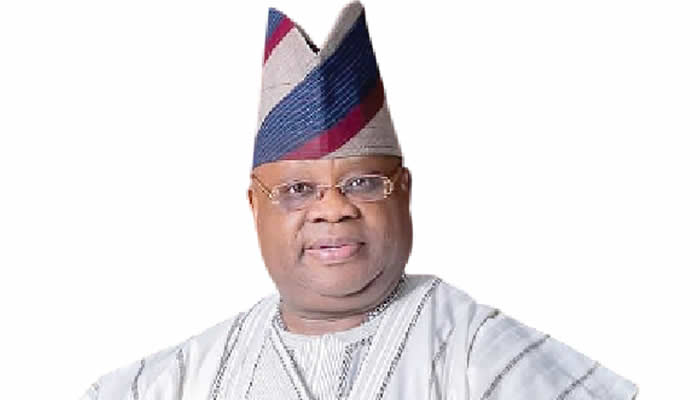
Osun State House of Assembly on Tuesday passed vote of confidence on the State Governor, Ademola Adeleke, and subsequently endorsed him for another term in office.


Adeleke will, by November 2026, complete his current term and will be expected to seek second term in office before then.


A statement by the Chief Press Secretary to the Speaker, Osun State House of Assembly, Olamide Tiamiyu, said all the 25 members that attended the plenary unanimously agreed on the continued support for Adeleke.


“During a plenary session on Tuesday, the 26-member Assembly, comprised of 25 members from the Peoples Democratic Party and one from the All Progressives Congress, expressed their full support for the governor,” the statement read.


In his remarks, the Speaker, Mr Adewale Egbedun, commended Adeleke’s achievements and congratulated him on the celebration of his 65th birthday.

Egbedun, who noted the governor’s dedication to the development of Osun, highlighted positive impacts already made on the people through the administration’s five-point agenda.


The speaker further said, “Lawmakers, as representatives of the people, take pride in the governor’s leadership, and we urge him to continue striving for even greater accomplishments.”


In his contributions, the lawmaker representing Boripe/Boluwaduro State Constituency, Mr Simeone Popoola said, “Politics aside, Mr. Governor is a plain-minded personality, loving and genuine. These attributes have greatly assisted him in his performance.”


The statement further read, “The motion for the vote of confidence was initiated by Hon. Adewumi Adeyemi, representing the Obokun State Constituency and seconded by Hon. Taofiq Olayiwola from Ede South State Constituency.


“Following the motion, the Speaker called for a vote, and the chamber resonated with enthusiastic “Ayes,” solidifying the Assembly’s endorsement of Governor Adeleke.”

Senate amends S’South, S’West, N’Central development commissions establishment acts


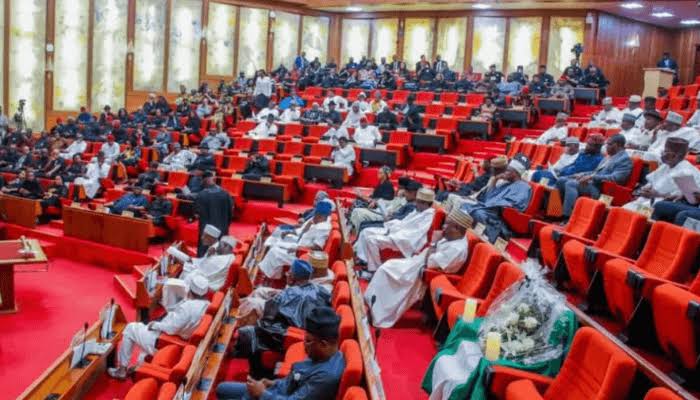
The Senate, on Tuesday, amended the Acts establishing the South-South, South-West, and North-Central Development Commissions, to provide for the appointment of more executive directors to enhance efficient administration in the regional bodies.


This was sequel to the presentation of three bills sponsored by the Senate Leader, Opeyemi Bamidele (APC, Ekiti Central), considered during plenary.


They included “A Bill for an Act to Amend the South South Development Commission Act, 2025 (SB. 781);” “a Bill for an Act to Amend the North Central Development Commission Act, 2025 (SB. 782)” and “a Bill for an Act to Amend the South West Development Commission Act, 2025 (SB. 783).”


The proposed legislation successfully passed through the three stages and passed.


Explaining the need to amend the Acts, the Senate Leader said the amendments were aimed at resolving administrative gaps within the Acts, particularly concerning the appointment of Executive Directors.

He argued that the existing structure lacked uniformity when compared to other regional bodies like the North West and South East Development Commissions.


“The bills seek to amend the respective provisions to reconcile the lacuna that exists in the Act relating to the appointments of the Executive Directors of the respective Commissions to ensure uniformity,” Bamidele stated.


He recalled that the first versions of the Acts were passed earlier in 2025, ans assented to by President Bola Tinubu.


He also noted that the implementation of the law revealed that more executive directors were necessary to head various departments within the commissions to meet their developmental mandates effectively.


“With the benefit of hindsight, it was observed that there is a need to make provision for more executive directors to head the various Departments of the Commission,” Bamidele added.

June 12: Lamido asks Tinubu to pay Abiola family N45bn debt


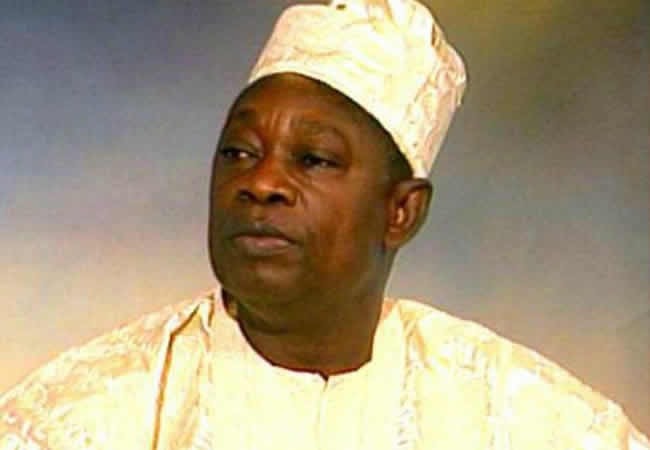
Former National Secretary of the defunct Social Democratic Party and ex-Governor of Jigawa State, Sule Lamido, has urged President Bola Tinubu to bring closure to the June 12, 1993 saga by settling the N45 billion debt owed to the family of the late 1993 presidential election winner, Chief MKO Abiola.


Speaking at the presentation of his autobiography, “Being True to Myself”, in Abuja, on Tuesday, Lamido said paying the debt would offer symbolic and moral closure to the June 12 struggle and Abiola’s unjust treatment.


Lamido said, “When (General) Murtala (Muhammed) died, Abiola came in with a claim that he was owed, I think, about N45bn for contracts executed by International Telephone and Telecommunication for the Ministry of Communications.


“The military high command at that time said no. He went round the emirs in the North to lobby, and the emirs asked that they (military) please pay the money.


“They (military) said they cancelled the June 12 elections because if they made him President, he would take his money and the country would become bankrupt. Those who were close to Abacha should know this, because Abacha was then one of the big shots; they were all aware.

“Before I end my remarks, I want to appeal to President Tinubu to finally close the chapter of June 12.


“In his book, General Ibrahim Babangida acknowledged that Abiola won the election. When I visited him, he also confirmed that Abiola is owed N45 billion. He was doubly punished: first, denied the presidency; second, denied what is owed to him.”


Lamido urged the Minister of Information and National Orientation, Muhammad Idris Malagi—who attended the event on behalf of Tinubu—to convey the message to the president.


“Please tell the president to pay the Abiola family the N45 billion. Once this is done, the June 12 chapter will be closed. It is very important,” he emphasised.

Funke Akindele named among most influential women in international film


Nigerian actress and filmmaker, Funke Akindele, has been named one of The Hollywood Reporter’s “Most Influential Women in International Film,” a prestigious global list celebrating 46 visionary women making a significant impact on the international film industry.


Reacting to the recognition, Akindele took to her Instagram page on Friday to express her excitement and gratitude for the honour.


She described the moment as not just a personal celebration but a motivation to continue creating and uplifting others in the film industry.


“I’m deeply honoured and truly grateful to be featured in The Hollywood Reporter’s ‘The Most Influential Women in International Film. To be recognised among 46 powerful, visionary women from around the world is more than a moment of celebration—it’s a call to keep building, creating boldly, and lifting others as we rise,” she wrote.

The announcement, which was made on Friday, May 9 marks a significant milestone for Akindele, who has carved a niche for herself in Nollywood with her record-breaking films such as Omo Ghetto: The Saga and A Tribe Called Judah, as well as her contributions to television through the hit series Jenifa’s Diary.


Her consistent success has cemented her as one of the most bankable and influential figures in the Nigerian entertainment scene.


Akindele also used the opportunity to celebrate fellow Nigerian media mogul and honoree, Mo Abudu, describing her as a source of inspiration and a major contributor to the growth of the creative industry in Nigeria and Africa.


“A heartfelt congratulations to Aunty MO @moabudu who has also been featured in this great piece. Thank you so much, Ma, for your invaluable contribution to the creative industry. It’s an honor to be featured alongside someone who has been such a powerful source of inspiration,” Akindele added.

Court to deliver judgment on Natasha’s suspension case June 27


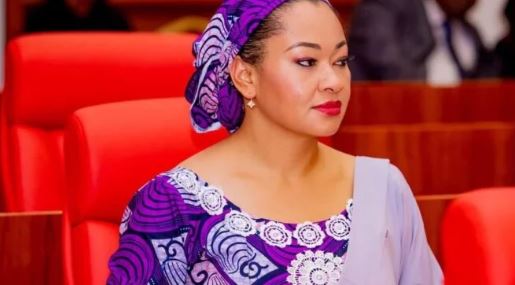
Justice Binta Nyako of the Federal High Court in Abuja has set June 27 to give a final judgment in the case filed by suspended Kogi Central senator, Natasha Akpoti-Uduaghan.


Akpoti-Uduaghan is challenging her suspension from the Senate.


She took the matter to court after the Senate, led by Senate President Godswill Akpabio, suspended her over claims of misconduct.


She believed the action was unfair and influenced by bias.


In her case, she included the National Assembly, the Senate, the Senate President, and Senator Neda Imasuem, who chairs the Senate Committee on Ethics, Privileges, and Code of Conduct, as the defendants.


The case was originally handled by Justice Obiorah Egwuatu, but he stepped down, and it was reassigned to Justice Binta Nyako.


When the case came up on Monday, Akpoti-Uduaghan’s lawyer, Jibrin Okutekpa, told the court that they had submitted all the documents they planned to use, as the court had earlier directed.

Lawyers for the Senate and the Senate President, Paul Daudu and Ekwo Ejembi, also said they had filed their documents.


However, they pointed out that Akpoti-Uduaghan had gone against a court order.


They accused her of disobeying the court by posting a satirical apology to the Senate President on her Facebook page on March 27 and publishing it in some newspapers.


“The plaintiff had responded to our motion,” the lawyers said, referring to the steps she took after being accused of contempt.


Akpoti-Uduaghan’s other lawyer, Michael Numan, said they had received the motion accusing her of disobeying the court.


He also reminded the judge that they had filed a similar motion earlier, accusing the defendants of disobeying the court.


He said, “The alleged statement credited to the plaintiff had no connection with her,” and insisted that “the alleged contemptuous statement had no nexus with the plaintiff.”

Reps reject bill on rotational presidency among six geopolitical zones


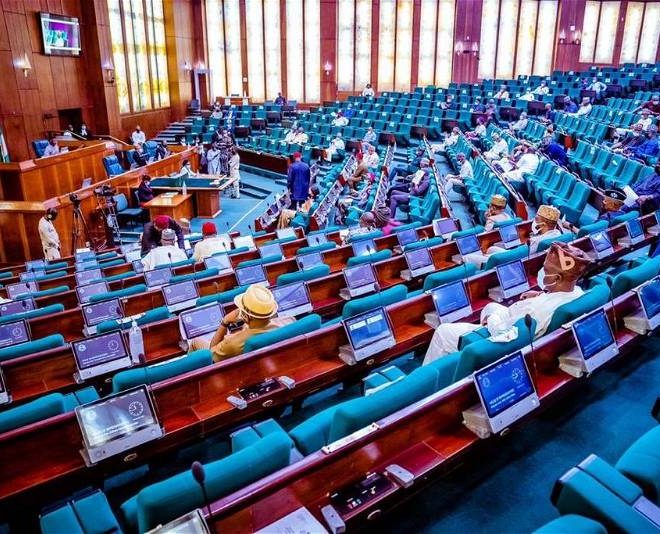
The House of Representatives, on Tuesday, rejected a constitutional amendment bill seeking to rotate the office of the president and vice president among the six geopolitics zones of the country.


In addition, the House rejected six other constitutional alteration bills listed in the order paper of the House for consideration.


It, however, resolved to bring back the bills on Wednesday and consider them on their individual merit.


The House had at the commencement of debate set aside its rules to allow it take the constitutional alteration bills simultaneously, while allowing members to choose any of the seven listed on which they wish to debate on.

However, most members chose the bill seeking to rotate the office of the President and Vice President among the six geopolitical zones, with many members opposing the idea and warning against setting a dangerous precedent with it.


Deputy Minority Leader, Aliyu Madaki, led the opposition to the bill, saying that issues the bill intend to cure has been addressed by the Federal Character Commission, warning that the issue of rotation should not be included in the constitution, but allowed to remain the way it is.


Madaki argued that the existing political parties already have mechanism to ensure fair representation in the sharing of offices at every given electoral period.


Sada Soli (APC, Katsina) described the proposed alteration as ingenuous, but wondered whether it will work against the issue of quality.


He stressed that adopting the rotation principle will not be in the interest of the country as it will promote regional and ethnic rivalry among the various zones of the country.


In his debate, Shina Oyedeji (PDP, Oyo) said if the rotational principle is included in the constitution, every state and tribe in the various zones will begin another round of agitation for fairness and justice.


He believe that everybody in the country should be given equal opportunity to aspire to the office of the President and Vice President, saying “if you adopt zoning and it’s comes to the South West for example, which state will take the position? Is it Ogun or Oyo.

Also reacting, Bello Mohammed El-Rufai wondered what will happen if the President dies while in office like it happened when former President Umaru Musa Yar’adua died in office.


He argued that adopting the provision will also infringe on the right of all Nigerians to contest for any office of their choice, adding that even if the rotation principle is allowed, there will always be mistrust among the people.


He sai, “Whatever you do in Nigeria, there will always be a cry of marginalisation. We should not engage in a dangerous precedent by putting it in the Constitution”.

Olumide Osoba (APC, Ogun) said even though the amendment might be a unique one, it will be out of place to force the political parties on where to choose their candidates during elections.


However, Minority Whip, Ali Is a said the six geopolitical zones should be allowed to have a shut at the Presidency and also extended to the state level so that governorship is rotated among the three senatorial zones.


He argued that all geopolitical zones in the country have well qualified persons who can manage the affairs of the country and even the West African subregion, adding that even the Federal Character principle provides that there should be fairness among all states of the country.


He commended the Deputy Speaker for acknowledging the fact that there is the need to allow fairness, saying “in 2027, we should allow the Presidency go to the North East for the sake of fairness and allow all zones to produce the President”.


In his debate, Clement Jimbo (APC, Akwa Ibom) said the bill seeks to cure the age long injustice metted on the minority groups in the country, adding that a proviso be included in the Constitution that will ensure that after all zones has had a shut at the Presidency, the principal be brought to an end.


However, the bill on rotational presidency and other Constitution Alteration bills failed to scale through second reading after a voice vote which was preceded by a debate on the issue among lawmakers.


Other bills rejected are the bills are a bll for an Act to Alter the Constitution of the Federal Republic of Nigeria, 1999 to remove from Independent National Electoral Commission, the Powers of Registration and Regulation of political Parties in Nigeria and Transfer same to the Office of the Registrar General of Political Parties, and a Bill for an Act to Alter the Constitution of the Federal Republic of Nigeria, Cap. C23, Laws of the Federation of Nigeria, 2004 to Provide for the Principle of Rotation of the Offices of the President and the Vice President of the Federal Republic of Nigeria among the Six Geopolitical Zones of the Country, Namely: North Central, North East, North West, South East, South South, and South West.


Others are bill for an Act to Alter the Constitution of the Federal Republic of Nigeria, Cap. C23, Laws of the Federation of Nigeria, 2004 to provide for Establishment, Independence, and Functions of the Office of the State Auditors-General for Local Governments and the Federal Capital Territory Area Councils, to Strengthen Fiscal Oversight, Promote Accountability and enhance Good Governance at the Grassroots and a bill for an Act to Alter the Provisions of the Constitution of the Federal Republic of Nigeria, 1999 to Create Ughelli East Local Government Area in Delta State.

Exit mobile version