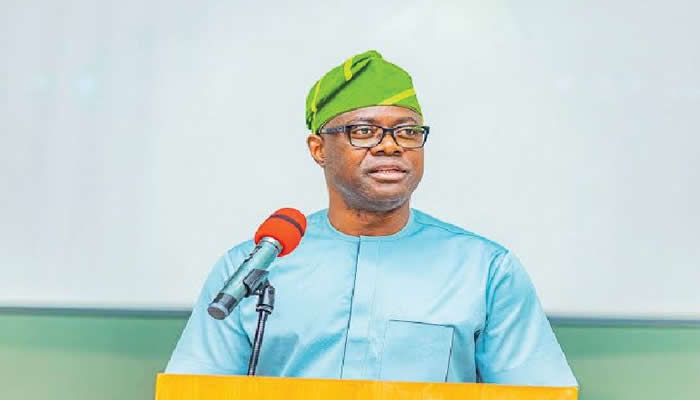
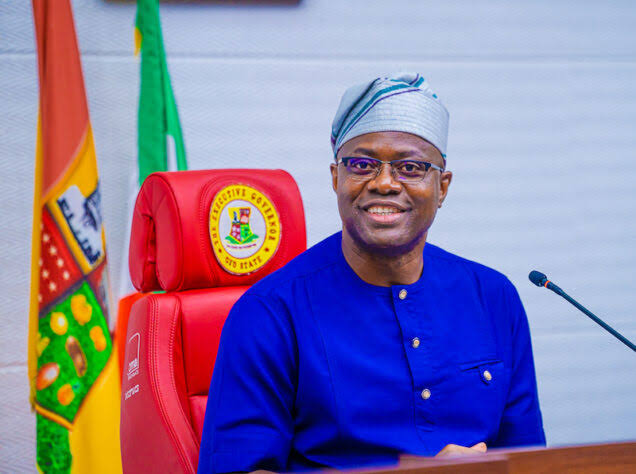
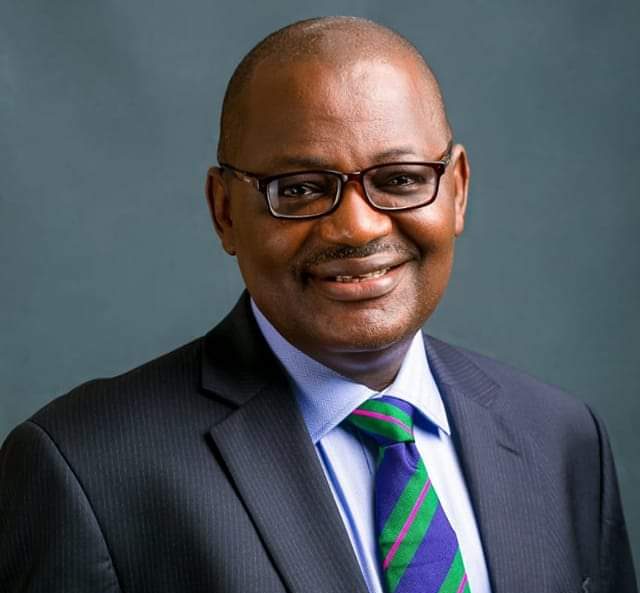
The Oyo State Governor, Seyi Makinde, on Monday, carried out a cabinet reshuffle.
A statement by his Special Adviser on Media, Sulaimon Olanrewaju, said the governor announced this in a letter signed by his Chief of Staff, Segun Ogunwuyi, in Ibadan, the state capital.
The letter stated, “The reshuffle will see the Commissioner for Energy and Mineral Resources, Seun Ashamu, move to the Ministry of Environment and Natural Resources, while the current Commissioner for Environment and Natural Resources, Abdulmojeed Mogbonjubola, will move to the Ministry of Public Works, Infrastructure and Transport.
“The Commissioner for Public Works, Dahud Shangodoyin, has been moved to the Ministry of Energy and Mineral Resources. Similarly, the Commissioner for Education, Science and Technology, Solihu Adelabu, has been moved to the Ministry of Establishments and Training, while the current Commissioner for Establishments, Segun Olayiwola, will now man the Ministry of Education, Science and Technology.”
Makinde said the movements are with immediate effect, urging them to continue to discharge their duties with utmost loyalty and commitment to the state.
The Oyo State Government has signed contracts worth N3.5bn for the first phase of upgrading and remodelling three rural markets across the state.
The initiative, under the Oyo State Rural Access and Agricultural Marketing Project, aims to modernise rural markets to support agricultural productivity and improve market access for farmers and traders.
The markets selected for the first phase include Aare-Alasa Market in Akanran, Ona-Ara Local Government Area; Oja-Agbe Market in Iseyin Local Government Area; and Oja-Oba Market in Ibarapa Central Local Government Area.
The Commissioner for Agriculture and Rural Development, Olasunkanmi Olaleye, disclosed this in a statement issued by the state’s Commissioner for Information and Orientation, Dotun Oyelade, in Ibadan on Sunday.
Olaleye reiterated the government’s commitment to transforming rural markets into functional and modern hubs equipped with upgraded infrastructure, improved storage facilities, and enhanced access roads.
“These markets will undergo comprehensive modernisation, including upgraded infrastructure, enhanced storage facilities, improved access roads, and other critical features aimed at streamlining agricultural logistics and supporting both farmers and traders,” he said.
In her remarks, the Permanent Secretary of the Ministry, Abosede Owoeye, described the contract signing as a significant milestone in the state’s agricultural transformation efforts.
She noted that the initiative aligns with Governor Seyi Makinde’s vision of ensuring food security and economic empowerment in rural communities.
The Coordinator of OY-RAAMP, Adeola Ekundayo, stated that the N3.5bn allocation covers N1,227,196,608.81 for the Aare-Alasa Market in Ona-Ara LGA, N1,219,954,792.90 for the Oja-Agbe Market in Iseyin LGA, and N1,042,800,042.63 for the Oja-Oba Market in Ibarapa Central LGA.
Ekundayo explained that the Agro-Logistics component of RAAMP is designed to improve rural market infrastructure, reduce post-harvest losses, and boost rural road linkages, thereby enhancing the accessibility and profitability of agricultural produce.
She also announced that Quicbond Nigeria Ltd will handle the Aare-Alasa Market upgrade, Lee Fakino Nigeria Ltd will oversee the Oja-Agbe Market project, and AB-Bond Habitat Ltd has been awarded the contract for Oja-Oba Market.
Ekundayo urged the contractors to collaborate with host communities to ensure smooth implementation and long-term sustainability of the projects.
Kaduna State Governor, Uba Sani, has praised traditional leaders for their crucial role in maintaining peace and security in the state.
Speaking at an event where 23 vehicles were distributed to traditional leaders, held at the Sir Kashim Ibrahim House, Kaduna, on Sunday, the governor attributed the success of the state’s non-kinetic approach to tackling insecurity to the collaboration between traditional leaders and security agencies.
He emphasised that without the support of traditional leaders, the state would not have achieved security and stability.
“They have been working day and night, sharing intelligence with security agents and ensuring that they are always close to our people at the community level. That is the reason why our non-kinetic approach towards addressing insecurity is working.
“Without the support of our traditional leaders, we would not have achieved security and stability in Kaduna State. That is why today, we are not only supporting but encouraging you,” he said.
The governor commended the Speaker of the House of Representatives, Tajudeen Abbas, for facilitating the distribution of vehicles to traditional leaders.
“This is to motivate you, because we cannot achieve much without synergy between the traditional institution, religious leaders, community leaders, and the relevant security agencies in Kaduna State,” he said.
Sani noted that Kaduna State has been peaceful for the past two years, with no record of ethno-religious or communal clashes. “Kaduna State is now one of the most peaceful sub-nationals in the country,” he said.
The governor highlighted his past achievements as a senator, including bringing interventions worth over ₦20 billion to the state.
Notably, the Faculty of Engineering at Kaduna State University, valued at over ₦12 billion, is nearing completion through the efforts of the Deputy Governor of the Central Bank, Mohammed Sani Abdullahi Dattijo, and Speaker Tajudeen Abbas.
The governor stressed that synergy between government officials and influential figures is crucial for the state’s progress. “That is the synergy we are talking about,” he said, referencing the collaboration on the university project.
“Despite the fact that we couldn’t complete it before we left the Senate, one of the sons of Kaduna State, Deputy Governor of the Central Bank, Mohammed Sani Abdullahi Dattijo, is working closely with the Right Honourable Speaker to ensure that the project is completed. That is the synergy we are talking about,” he added.
Earlier, Speaker Abbas stated that the distribution of vehicles was part of a broader collaboration with the governor to strengthen the role of traditional rulers in peacebuilding and governance.
“These vehicles are not just for ceremonial purposes; they are meant to serve as essential working tools to aid our traditional rulers in reaching every part of their chiefdoms and emirates,” he said.
The Speaker announced plans to extend vehicle support and the renovation of palaces across all three senatorial districts in the state, captured in the 2025 federal budget.
He also disclosed that the ongoing constitution amendment will include provisions to grant traditional rulers a formal role in Nigeria’s governance structure.
“I want to assure you that the National Assembly will do everything humanly possible to carve out a prominent role for our traditional rulers beginning from 2026,” he said.
A viral video making the rounds online has shown officers of the Nigeria Police Force assaulting an unidentified young man.
The video, shared by X user Somto Okonkwo who identifies as #General_Somto, shows the moment the victim is harassed and hit by uniformed personnel.
In response, the Police Complaint Response Unit (NPF-CRU) acknowledged the video and called on Okonkwo to provide more information to aid their investigation.
Their post on X reads: “Dear #General_Somto, kindly provide exact location of this incident or better still provide the details of the victim via DM for necessary action. Thank you for contacting NPF-CRU. #NoToImpunity.”
Details including the identities of the officers involved and the location of the incident on remain unknown at this time.
Technology advisor at TMB Tech, Akin Ibitoye, has issued a stern warning to Nigerians about the health and safety risks of sleeping with mobile devices under their pillows or beside their beds.
Speaking on the Morning Brief on Channels Television on Monday, Ibitoye highlighted the dangers posed by mobile gadgets, ranging from disrupted sleep patterns to potential explosions caused by overheating lithium-ion batteries.
“Do not sleep with your gadget under your pillow. When you sleep with your devices under your pillow, it actually affects you. You don’t know,” Ibitoye cautioned.
According to him, beyond the popular blue light emissions that interfere with the body’s circadian rhythm, an internal biological clock that regulates sleep-wake cycles and other physiological processes over a 24-hour period, influenced by light and other environmental cues, the physical presence of a mobile phone in the bedroom can reduce sleep quality, increase irritability, and in extreme cases, pose safety hazards.
“These gadgets disrupt our circadian rhythm. That’s how, when it’s dark, your body gets the signal it needs to sleep. When you don’t get enough sleep, there are quite a number of things that even the medical practitioners have said could result negatively back to your body,” he explained.
He also raised concerns about the psychological effects of constant connectivity, warning against “doomscrolling”; a habit where users go online for a quick check but end up spending hours.
“We spoke about doomscrolling, where you just want to check Instagram for about five minutes, but you end up spending two hours,” he said.
Ibitoye urged Nigerians to return to using alarm clocks instead of relying on their phones to wake up.
“Before mobile phones, we had alarm clocks. The alarm clock would only sound when the time is right,” he noted, adding that phones attract unnecessary distractions at night with pop-ups and vibrations.
Addressing those who claim they need their phones nearby for work or emergencies, he said, “Unless it’s absolutely tied to your work, you can do without your phone.”
Beyond sleep concerns, Ibitoye warned of physical hazards such as overheating and potential fire risks. He cited past incidents involving phone batteries that exploded due to heat buildup, especially when left under pillows or bedcovers.
“These batteries, lithium-ion batteries, you notice they don’t allow them on airplanes for good reasons. This tiny marvel of technology can explode anytime. If you keep your phone under your pillow, your phone actually gets heated up,” he said.
He referenced a viral video of a woman whose phone exploded while she was making a call.
“Sleeping with your phone or your tablet under your pillow is actually a huge risk that you do not want to take.”
On the subject of radiation, Ibitoye said that even when a phone appears off, it can still send and receive signals.
“These electromagnetic devices being so close, actually affect the electrical signals in our brain,” he explained, urging frequent phone users to opt for wired or wireless earphones and keep phones away from their heads.
For those living in tight spaces or unable to switch off their phones, Ibitoye advised using airplane mode at night.
“If you cannot afford to switch it off, put it in airplane mode. No call will come in, no SMS, no notification, but your alarm will still go off.”
He concluded with a reminder: “As ubiquitous as technology is, it can be harmful to our bodies with extended usage.”
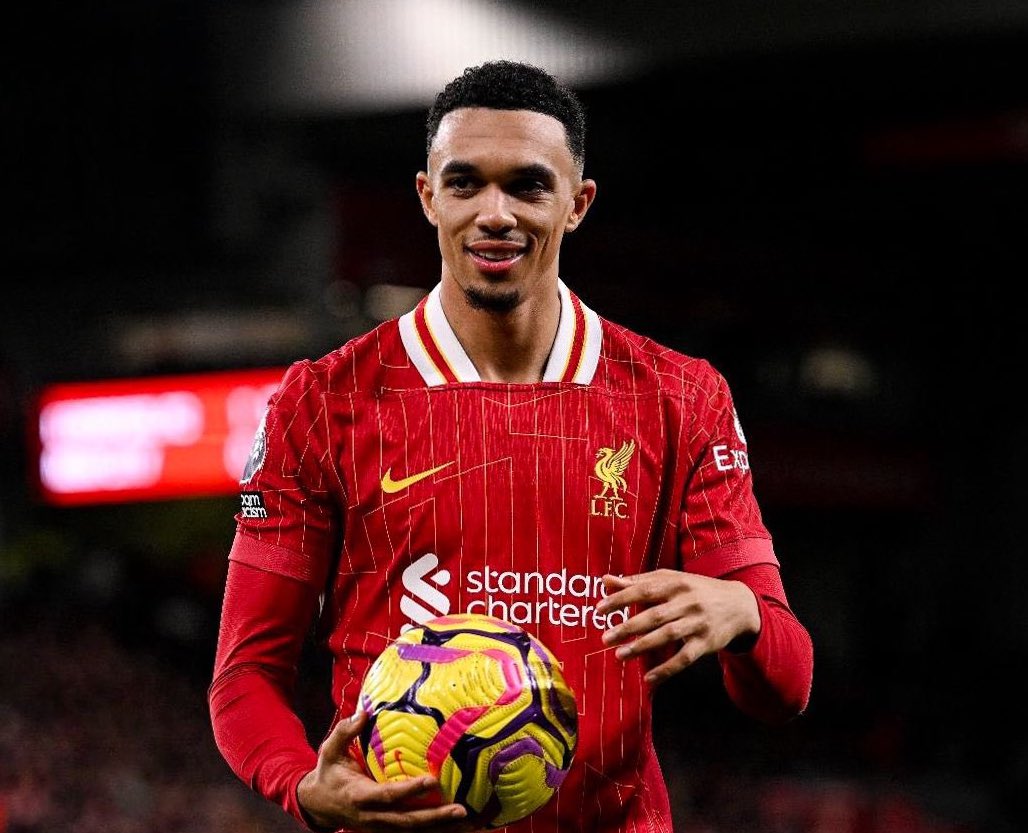
Trent Alexander-Arnold is set to join Real Madrid on a five-year contract, marking the end of a remarkable 20-year journey with Liverpool.
According to transfer expert Fabrizio Romano in a post on Monday via X, the deal is in place with a verbal agreement already reached.
“Trent Alexander-Arnold to Real Madrid, here we go,” Romano reported. “Documents being prepared for Trent to join Real Madrid on a five-year contract.”
The move comes shortly after Alexander-Arnold publicly confirmed his decision to leave Liverpool at the end of the season.
The club’s vice-captain made the emotional announcement following Liverpool’s successful campaign to secure a 20th Premier League title.
“After 20 years at Liverpool Football Club, now is the time for me to confirm that I will be leaving at the end of the season,” the 26-year-old said. “This is easily the hardest decision I’ve ever made in my life.”
Alexander-Arnold, who rose through Liverpool’s academy to become one of the club’s most influential players, said he delayed speaking out to remain fully focused on the team’s title ambitions.
“I know many of you have wondered why or been frustrated that I haven’t spoken about this yet, but it was always my intention to keep my full focus on the team’s best interests, which was securing No.20,” he explained.
The England international now looks set to begin a new chapter in Spain with the European giants, Real Madrid.
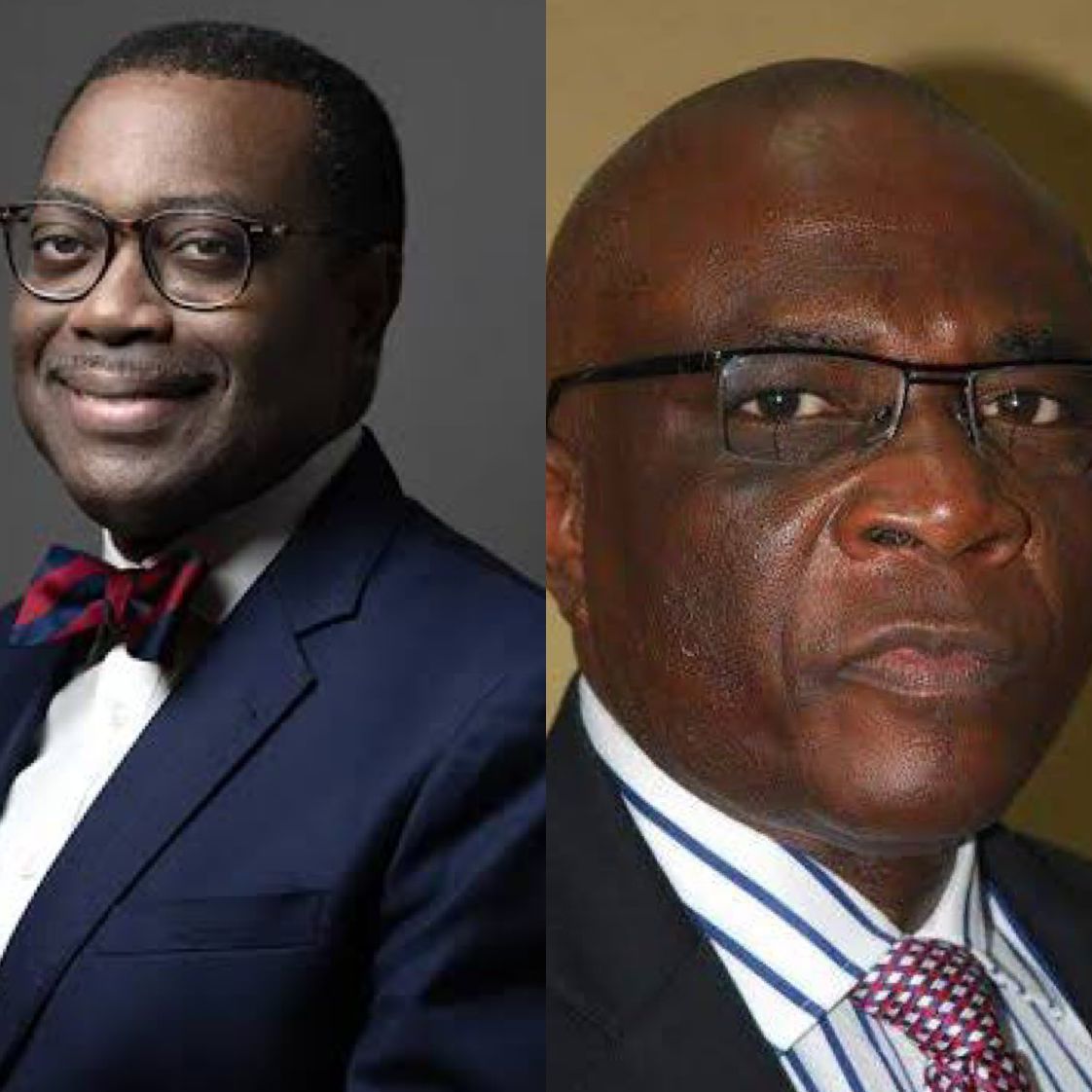
Presidential aide Bayo Onanuga has faulted recent claims by outgoing African Development Bank President Akinwumi Adesina that Nigerians are worse off today than they were in 1960, describing the assertion as “based on figures that do not align with available data.”
In a post on X (formerly Twitter) on Monday, Onanuga argued that Adesina’s comparison of Nigeria’s GDP per capita in 1960 and 2025 was flawed and misleading.
“According to Nairametrics, he claimed that Nigeria’s GDP per capita in 1960 was $1,847 and that it is $824 today. The quoted figures are not correct,” he wrote.
He cited data showing that Nigeria’s GDP in 1960 was $4.2 billion, with a population of 44.9 million, putting per capita income at just $93. “Ninety-three, not even one hundred dollars,” he emphasised.
Onanuga further noted that Nigeria’s economic growth only began to rise significantly in the 1970s due to oil revenue.
“Our country’s GDP did not rise remarkably until the 1970s, when crude earnings ballooned. In 1970, our GDP rose to $12.55 billion. In 1975, it was $27.7 billion, $64.2 billion in 1980, and $164 billion in 1981. Up until 1980, per capita income did not exceed $880. It rose to $2187 in 1981 and dropped to $1844 in 1982,” he said, adding that it reached a peak of $3,200 in 2014 after a GDP rebasing.
He questioned Adesina’s data sources, stating, “These facts raise questions about the source of Dr. Adesina’s figures.”
Beyond the figures, Onanuga said the real issue was the conclusion drawn from them.
“GDP per capita is not the only criterion used to determine whether people live better lives now than in the past. Indeed, it is a poor tool for assessing living standards,” he stated.
He argued that GDP masks economic realities such as wealth distribution, informal economic activity, and quality of life indicators.
“GDP per capita is silent on whether Nigerians in 2025 enjoy better access to healthcare, education, and transportation, such as rail and air transport than in 1960,” he added.
Highlighting the digital revolution, Onanuga recalled that in 1960, Nigeria had only 18,724 telephone lines for about 45 million people.
Today, over 200 million Nigerians have access to mobile and digital services.
“Does this MTN experience correlate with a country worse off than in 1960, when we had analogue telephones and the number of lines was fewer than 20,000?” he asked, referencing MTN’s N1 trillion revenue and 84 million users in Q1 2025.
He also criticised Adesina for what he described as a politically motivated statement.
“Adesina spoke like a politician, in the mould of Peter Obi, and did not do due diligence before making his unverifiable statement,” he said.
Onanuga concluded that Nigeria’s current economic scale is unrecognisable compared to the 1960s.
“Today, as we await the NBS’s recalibration of our GDP, we can comfortably say without contradiction that it is at least 50 times, if not 100 times, more than it was at Independence.”
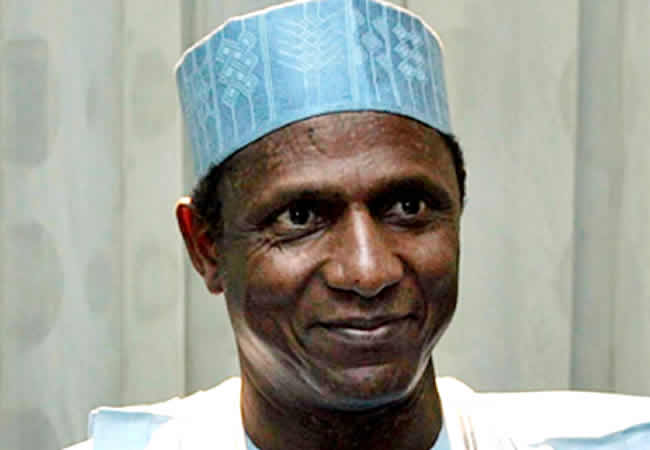
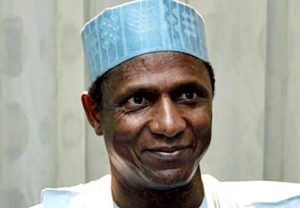
The Peoples Democratic Party and a former Senate President, Dr Bukola Saraki, have paid tributes to the late former president Umaru Musa Yar’Adua fifteen years after his passing.
PDP and Saraki hailed Yar’adua’s integrity, leadership, and unwavering commitment to national unity.
In a message posted on X on Monday, the PDP — the party that gave Yar’Adua the platform to serve as Nigeria’s president from 2007 until his death while in office in 2010 — described him as “a leader of integrity, humility, and vision.”
The statement read, “Fifteen years on, Nigeria still mourns one of its finest — and I still remember a friend whose quiet wisdom helped shape my understanding of service.
“President Umaru Musa Yar’Adua led with conviction, not commotion.”
Saraki led a chorus of remembrance for a man many still describe as one of Nigeria’s most honourable leaders.
“He listened more than he spoke — and when he did speak, it was with purpose, not politics.
“His legacy reminds us that leadership is not about power, but about duty, humility, and justice.
“May Almighty Allah (SWT) continue to grant him a place among the righteous in Al Jannah Firdaus. Ameen,” he prayed.
Also, the PDP, under whose platform Yar’Adua was elected president in 2007, paid homage to his enduring legacy in a solemn message shared on X.
Reflecting on his time in office, the party wrote, “Today, we honour the memory of our former President Umaru Musa Yar’Adua, a leader of integrity, humility, and vision.”
PDP lauds reforms
Described as a president who led with calm strength and deep conviction, Yar’Adua’s presidency was marked by quiet but meaningful reforms, particularly in the areas of electoral transparency and conflict resolution in the oil-rich Niger Delta.
His leadership style stood in contrast to the loud theatrics of politics, earning him respect across partisan lines.
The party’s message further read, “His commitment to Nigeria’s unity, electoral reform, and peace in the Niger Delta remains an enduring legacy.
“May his gentle soul rest in perfect peace, and his values continue to inspire ethical governance. #YarAdua15.”
Yar’Adua, born on August 16, 1951, served as president from 2007 until his death on May 5, 2010, after a protracted illness.
His passing marked a significant moment, as widely reported, in Nigeria’s democratic journey, as then-Vice President Goodluck Jonathan was sworn in to complete the term, PUNCH Online reports.
Beyond his own presidency, Umaru was also the younger brother of the late Shehu Musa Yar’Adua — a former Chief of Staff, Supreme Headquarters under General Obasanjo (1976–1979) and a key figure in Nigeria’s pro-democracy movement during the military era.
The Yar’Adua family, is often regarded as one of the most politically influential in northern Nigeria.
This year’s anniversary comes barely eight months after the death of their mother, Hajia Aya Dada Yar’Adua, who passed away in September 2024 at the age of 102.
The House of Representatives member representing Yewa North/Imeko-Afon Federal Constituency, Gboyega Isiaka, has lauded President Bola Tinubu for lifting restrictions on the sales and supply of petroleum products to communities that are within 20 kilometres of the country’s border with the Republic of Benin.
Isiaka said that though the lifting of the sanction imposed six years ago under President Muhammad Buhari will only allow five filling stations to operate among four border towns, including Imeko, Ilara, Oja Odan and Ihunbe, the magnanimity of President Tinubu has brought lots of relief to the residents of the Federal Constituency.
The federal lawmaker disclosed this in a statement issued on Monday by his media aide, Femi Peters
The statement explained that the lifting of the restriction was a result of Isiaka’s series of engagement with critical stakeholders, including the Nigeria Customs Service, other security agencies, as well as his plea for the reversal of the policy on the floor of the House of Representatives, Abuja.
The statement disclosed further that one of such pivotal efforts was the recent oversight visit on the 9th of April 2025, when Hon Isiaka joined the House Committee on Customs and Excise on a fact-finding mission to the Nigeria Customs Service Ogun 1 Area Command in Idiroko, among other key NCS formations in Zone A.
He had during that visit addressed the ongoing frustrations of the communities regarding the six-year petroleum product supply restriction within 20 kilometers of the border.
The lawmaker said that the policy had imposed severe economic hardship on already vulnerable populations, significantly increasing transportation costs, hampering local businesses, and further marginalizing our people.
Isiaka stated further that “Today, we are proud to announce that normalcy is gradually returning to our border communities.
“Thanks to sustained engagement, and the listening ears of leaders at the highest level, five petrol stations—two in Imeko, and one each in Ilara, Oja Odan, and Ohunbe—have now been granted permission to resume fuel sales.
“This for us represents more than just a policy shift; it is a restoration of dignity, a rekindling of hope, and a step towards economic justice for the long-neglected people of our border communities.
“On behalf of the good people of Yewa North/Imeko-Afon, we express our profound gratitude to His Excellency, President Bola Ahmed Tinubu, for his statesmanship and empathy, and to the management of the Nigerian Customs Service, led by the Comptroller-General of Customs, Bashir Adewale Adeniyi, whose cooperation has been instrumental in making this progress possible”.
While basking in this euphoria, Isiaka has however called on all fuel station operators and residents to act responsibly and strictly within the confines of the law.
He said “Let us ensure that this renewed trust is not misplaced, even as we continue to advocate for the complete reopening of our borders in a manner that balances national security with local prosperity”.
Brazilian winger Raphinha has revealed that he was on the verge of accepting a call-up to play for the Italian national team before ultimately representing Brazil.
Speaking to journalist Isabela Pagliari and posted on Monday, Raphinha admitted he was close to joining Italy’s Euro 2020-winning squad.
“I was close to accepting the Italian national team call!” he said. “I was supposed to go to the Euro they won in 2020. I was basically set to go. So luckily, since the passport didn’t come through.”
The Barcelona forward explained that he was being actively pursued by the Italian setup at the time.
“At that point, the people from the Italian national team were calling me. Jorginho used to call me all the time. The Italian staff had this amazing project for me, something that really caught my eye,” he added.
Despite the strong interest and the prospect of joining a major European tournament, Raphinha said he held onto a small hope of playing for his country of birth.
“But at the same time, deep down, I still had that one per cent of hope that I could wear the Brazil shirt. And luckily, my Italian passport didn’t get ready in time!” he said.
Raphinha has since gone on to feature for Brazil at the international level, fulfilling the dream he nearly missed out on.