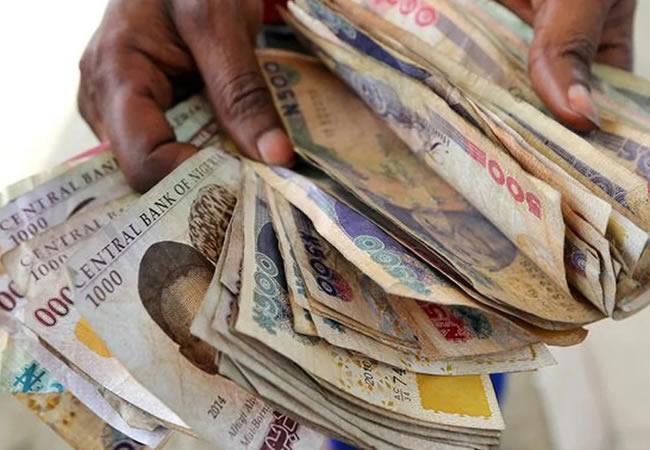
The monthly statutory allocations to state governments from the federation account may decline in the coming months following an official request by the Nigeria Sovereign Investment Authority to boost the nation’s residual funds with the support of N100bn monthly.
The request, which was presented by the Managing Director and Chief Executive Officer of NSIA, Aminu Umar-Sadiq, is aimed at unlocking large-scale investments to drive Nigeria’s economic growth.
He made the request at the March revenue-sharing meeting of the Federation Account Allocation Committee held between April 14 and 15, 2025. Our correspondent obtained a copy of his presentation during the meeting on Friday.
Umar-Sadiq appealed to the committee, which includes state commissioners of finance, to consider and approve the request, with funding proposed to commence from the March FAAC allocation.
The presentation was titled, “Activating Residual Funding for the Nigeria Sovereign Investment Authority – Unlocking Opportunities for Large-Scale Investments to Drive Nigeria’s Economic Growth.”
According to the document, the NSIA is requesting a structured monthly disbursement of N100bn from Residual Funds—revenues in the Federation Account beyond projected hydrocarbon income—to establish a Naira-based investible capital pool.
The move, the authority says, will enhance its capacity to finance critical domestic infrastructure projects.
The MD said, “The funding would position the authority as a leading sovereign wealth fund globally, promoting responsible and strategic investments for Nigeria’s economic development and enhancing its threefold mandate to build a savings base for the country, enhance the development of infrastructure, and provide stabilisation support.”
He explained that residual funds are a legitimate source of funds transferred to the authority, provided that the derivation portion of the revenue allocation formula shall not be included as part of this funding.
Delta State Governor, Sheriff Oborevwori, has called on private organisations to partner with the state government to address infrastructural needs in the state-owned universities.
Making the call at the 17th Convocation ceremony of Delta State University, Abraka, on Saturday, Oborevwori noted that the government alone could not tackle the challenges, hence the need to adopt the Public Private Partnership system to deliver a university that could compete globally.
He acknowledged the recurring issues of infrastructural gap in the university but assured that the State Government would do everything within the limit of available resources to address some of the challenges.
Oborevwori said, “We shall continue to tackle the recurring issues of infrastructural gap within the limit of our resources.
“We call on private organisations to partner with us in this regard.
“With the increasing need for infrastructure in our universities, there is a need for stakeholders to collaborate with the government to address the challenges.
“Government cannot do it alone; with an effective PPP, we shall deliver the university of our dream.”
Speaking further, Oborevwori assured that the state government would redouble its efforts to complement that of the university’s authority to continually support research, teaching excellence, and enhanced learning for the students.
He commended the Vice Chancellor of DELSU, Prof. Samuel Asagba for the development he had brought into the university within a short time in office.
“Within a short period in office, you have constructed a kilometre road in the campus. The University has made a series of researches, staff welfare, and enhanced learning planning under your tutelage,” Oborevwori said.
He also lauded the Governing Council of the University for their focus, dedication, and unwavering commitment to building a first-class university.
Earlier in his address, the Vice Chancellor of DELSU, Prof. Asagba, disclosed that a total of 6,401 graduates from the various programs in the 2023/2024 academic session participated in the Convocation.
“Our graduands have been known to have proven their mettle wherever they are found.
“It is important to state that, through continuous rejig and review of our curricula, we are in the forefront of exposing our students to the current tertiary education that is of international standard,” the Vice Chancellor said.
He listed some of the projects funded and built through the Internally Generated Revenue (IGR) of the University including the Construction of a kilometre road from the Faculty of Basic Medical Sciences to the Faculty of Arts in Site III; the Construction of the Faculty of Agriculture, Site III, which groundbreaking ceremony has been performed today by Gov. Oborevwori; the Construction of 500 capacity lecture theatre, Faculty of Arts. Site III (on-going); and the Construction of a block of five classrooms and offices for DELSU, among others.
The Pro-Chancellor and Chairman of DELSU Governing Council, Gen. Alexander Ogomudia (Rtd), noted with concern that the University was facing numerous challenges, including inadequate staffing, infrastructure deficit, such as lack of essential and current equipment in some laboratories, water supply and power amongst others.
He, however, assured that the Governing Council would continue to fashion out policies to facilitate the growth and development of academic standards and social relations in the institution.
The Nigerian Meteorological Agency has said that thunderstorms and hazy weather will affect many parts of the country between Sunday and Tuesday.
In a weather update shared on Saturday in Abuja, NiMet said, “There will be moderate dust haze in states like Katsina, Sokoto, Zamfara, Borno, Kano, Yobe, and Jigawa.”
The agency also said that Adamawa and Taraba States would likely see isolated thunderstorms during the forecast period in a post on its X handle on Saturday.
For the North-Central region, NiMet said people should expect partly cloudy skies in the morning.
In the afternoon and evening, there could be isolated thunderstorms over places like the Federal Capital Territory, Plateau, Kogi, Nasarawa, and Benue States.
In the South, morning thunderstorms are likely in Lagos, Cross River, Rivers, Bayelsa, and Akwa Ibom States, with more thunderstorms later in the day across other southern states.
On Monday, NiMet expects mostly sunny skies in the northern part of the country, although some areas like Taraba and Adamawa may have morning thunderstorms.
Later in the day, thunderstorms could spread to parts of Kaduna, Bauchi, and Gombe States.
For the North-Central area on Monday morning, thunderstorms are expected in Plateau, Nasarawa, and Benue States, while more storms could happen in the afternoon and evening across the region.
In the South, Bayelsa, Cross River, Akwa Ibom, Rivers, and Edo States could experience morning thunderstorms, with more rain expected later in the day across many southern states.
By Tuesday, NiMet forecasts “sunny weather with some clouds in the North, along with morning thunderstorms in parts of Adamawa and Taraba States”.
Later on Tuesday, thunderstorms might also hit parts of Kaduna, Adamawa, and Taraba States.
The North-Central area is expected to have partly cloudy mornings, but thunderstorms could follow in the afternoon and evening in places like the Federal Capital Territory, Kogi, Kwara, Benue, and Niger States.
In the South, early morning thunderstorms are likely in Akwa Ibom, Cross River, and Bayelsa States, with more thunderstorms expected later in the day across the region.
NiMet advised people to be careful, especially because strong winds could come before the rain in areas where thunderstorms are expected.
It also warned those living in the North to be cautious due to dust particles in the air.
Airline operators were also advised to get up-to-date weather information from NiMet for safe flight planning.
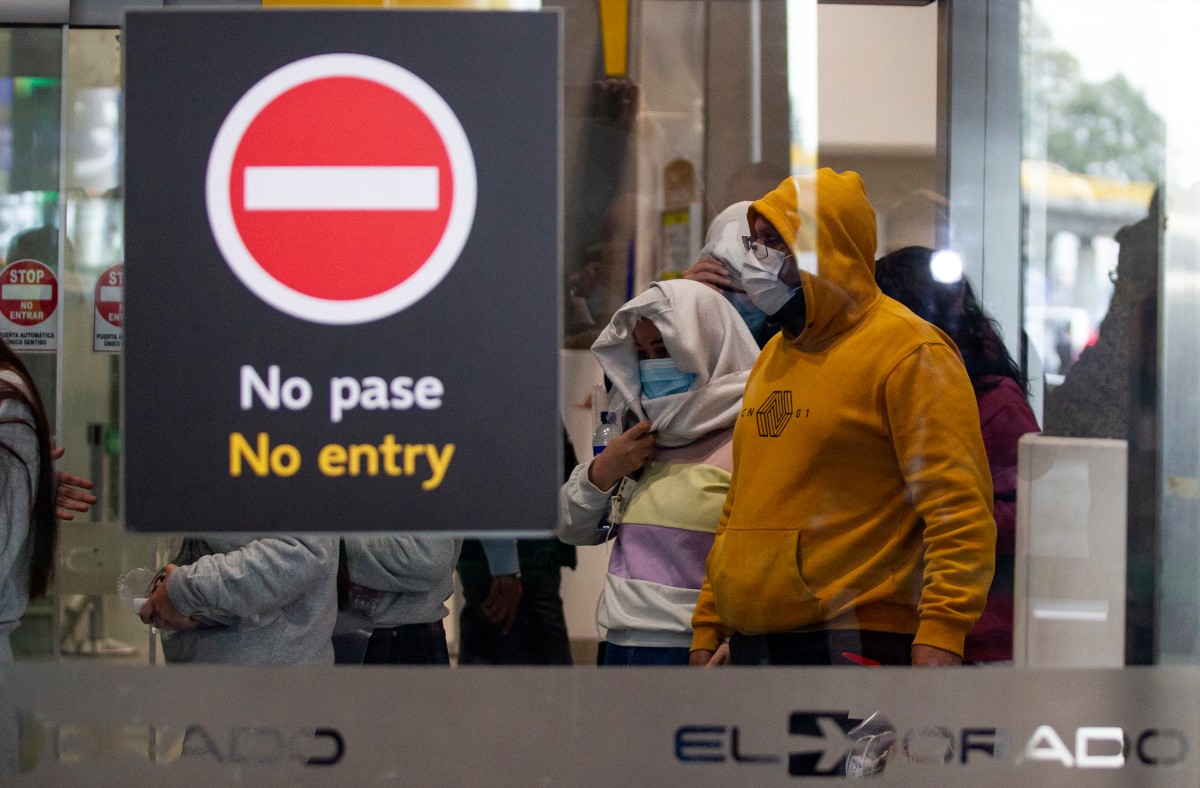
The United States Immigration and Customs Enforcement has expelled 902 Nigerians since the start of fiscal year 2019, according to data from the agency’s 2024 Annual Report.
This is as 3,690 more remain in limbo with removal orders hanging over them.
Although removals fell from 286 Nigerians in 2019 to 138 in 2024, reflecting a 51.7 per cent decline over the six years, ICE’s country-by-country deportation ledger showed Nigerians removals spiked during Donald Trump’s first two full years in office, 2018 and 2019, and may spike in 2025 under renewed crackdown.
Across Africa, Nigeria still accounts for the largest share of U.S. deportations.
Senegal was in second place with 716 removals, with 410 of those in 2024 alone.
Ghana sits third with 582 removals, followed closely by Mauritania with 491 removals.
Removals to Mauritania rose from 58 in 2023 to 353 in 2024.
The report attributed the spike to the Electronic Nationality Verification expansion programme, which shortened the paperwork cycle by allowing consular officers to clear identity checks electronically rather than in person. Officials say the ENV cut manifest-approval times from weeks to days and allowed weekend-chartered flights to countries such as Mauritania, Senegal and Ghana.
Other African countries on the list were Egypt (467), Somalia (406), Democratic Republic of Congo (395), Liberia (379), Kenya (335), and Guinea (294). The rest were scattered among Angolans (293), Cameroonians (288), The Gambia (22), Sierra Leone (165), Morocco (161) and Ethiopia (141), amongst others with smaller caseloads.
Outside Africa, the highest removals are to America’s near neighbours.
Mexico topped the deportation chart with 434,827 removals between fiscal 2019 and 2024, more than double that of any other nationality on the agency’s books.
Analysts say enforcement activity remained high in the Northern Triangle, with Guatemala recording 185,713 expulsions and Honduras 142,349, while El Salvador logged 65,268 during the same period.
Colombia accounted for 30,724 returns and Ecuador 26,847 due to a surge in charter flights in 2023. Peru followed with 11,554. Caribbean and Bolivarian states recorded smaller but still significant totals: the Dominican Republic saw 13,904 deportations, Nicaragua 13,350 and Venezuela 4,962 over the six-year period. ICE reports attributed this to a mix of travel-document diplomacy and a surge in border encounters.
Together, the 10 countries accounted for almost three-quarters of the 271,484 people ICE says it deported in 2024, the agency’s busiest year since before COVID-19 .
According to ICE, legal authority for such removals rests on the Immigration and Nationality Act.
It said foreign nationals might be expelled for unlawful entry, overstaying visas, fraud, certain criminal convictions or national-security grounds.
In January 2017, President Donald Trump signed Executive Order 13768, which broadened ICE’s enforcement to include anyone without lawful status.
ICE arrest numbers jumped 30 per cent that year as Nigerian removals rose accordingly.
In 2019, ICE carried out 267,258 removals, the highest yearly total in nearly a decade.
That year, Nigerian removal numbers rose to 286. This was part of a long list of 3,690 Nigerians whom ICE had identified and placed on its non-detained docket by late 2020, as revealed in January 2025.
Nigeria had the second-highest number of nationals facing deportation in Africa then, after Somalia’s 4,090 cases.
In 2021, President Joe Biden directed ICE to prioritise the most serious criminals and recent entrants for removal, leading to a sharp drop in deportation numbers.
ICE removals fell to about 59,000 in 2021, the lowest in decades, and Nigerian removals dropped to 78 that year.
The following year, even fewer Nigerians (49) were sent home amid pandemic-related travel restrictions and continued cautious enforcement. But a Supreme Court ruling in July 2024 allowed the Department of Homeland Security to fully reinstate those guidelines, prioritising public safety and national security cases.
ICE defines “removal” as the confirmed compulsory movement of a non-citizen out of the United States following an order of removal. This often follows a final removal order by an immigration judge or administratively via mechanisms like expedited removal at the border.
ICE says the journey from arrest to repatriation typically runs through a patchwork of local jails, immigration courts and consular clearances.
Once an order of removal is final, ICE’s Enforcement and Removal Operations division must secure travel documents, field medical clearances and book a commercial seat or, more commonly for West-African returns, a dedicated charter flight.
The agency says electronic verification has shaved days off that timeline, which is one reason the 2024 total dwarfs the previous two pandemic-ridden years.
In carrying out Trump’s recent deportation order, Immigration and Customs Enforcement agents have raided several establishments suspected of harbouring illegal immigrants and made arrests.
At a meeting with US Ambassador to Nigeria, Richard Mills Jr., in February, Nigeria’s Minister of State for Foreign Affairs, Ambassador Bianca Odumegwu-Ojukwu, called on the United States to ensure a humane deportation process for Nigerians.
“We are asking as a country whether they will be given ample time to handle their assets or will they just be bundled into planes and repatriated?” she queried, highlighting concerns over the emotional and financial impact on deportees and their families.
She argued that deportations, particularly for persons with no history of violent crime, should not be traumatic or abrupt.
The Nigerians in Diaspora Commission had earlier said it was ready to welcome Nigerians deported from the US.
“The Federal Government has set up an inter-agency committee, comprising the Ministry of Foreign Affairs, NiDCOM, Ministry of Humanitarian Affairs and Office of the National Security Adviser, should there be mass deportation of Nigerians from the US,” NiDCOM’s Director of Media and Corporate Affairs, Abdur-Rahman Balogun, said in an interview.
The Federal Government generated N84.05bn from the Electronic Money Transfer Levy in the first quarter of 2025, according to data obtained from a Federal Inland Revenue Service document seen by Sunday PUNCH.
The figure represents a 76 per cent year-on-year increase compared to the N47.74bn collected during the same period in 2024, reflecting stronger enforcement and the expanding use of digital payment platforms across Nigeria.
A breakdown of the figures showed that in January 2025, EMTL collections stood at N21.40bn, a 29.1 per cent rise from the N16.59bn recorded in January 2024.
February collections recorded the most significant jump, rising to N36.64bn from N15.79bn in February 2024 — more than doubling year-on-year with an increase of 132 per cent.
In March 2025, EMTL revenues were N26.01bn, up by 69.2 per cent from the N15.37bn earned in March 2024.
Month-on-month, February’s N36.64bn was 71 per cent higher than January’s N21.40bn.
However, March saw a 29 per cent drop from February’s peak, although it still outperformed March 2024 by a wide margin.
The EMTL, introduced under the Finance Act 2020 and implemented in 2021, imposes a N50 levy on electronic receipts or transfers of N10,000 and above.
Proceeds from the levy are shared among the three tiers of government based on an approved revenue-sharing formula, providing a supplementary revenue source that has grown in importance amid Nigeria’s push for increased non-oil revenues.
Usually, the proceeds are shared among the three tiers of government, with 15 per cent to the Federal Government and 85 per cent to states and local governments.
Sunday PUNCH further learnt that only about 96 per cent of the total EMTL revenue was shared among the three tiers of government.
An analysis of statements from the Office of the Accountant General of the Federation showed that the Federation Account Allocation Committee disbursed a total of N80.69bn from Electronic Money Transfer Levy collections to the Federal Government, state governments, and local government councils in the first quarter of 2025.
This figure represents a significant increase from the N46.45bn shared in the corresponding period of 2024.
From this amount, the Federal Government received N3.082bn, state governments received N7.192bn, while local government councils were allocated N10.274bn.
In February 2025, the levy’s contribution rose sharply to N35.171bn.
Of this figure, the Federal Government received N5.276bn, states received N17.585bn, and local governments collected N12.310bn.
In March 2025, N24.971bn was shared from EMTL receipts, with the Federal Government taking N3.746bn, states N12.485bn, and local councils N8.740bn.
The distribution pattern in the first quarter of 2025 was different from that of the first quarter of 2024.
In January 2024, FAAC disbursed N15.922bn in EMTL collections, with N2.388bn going to the Federal Government, N7.961bn to states, and N5.573bn to local government councils.
In February 2024, from N15.157bn collected, the Federal Government received N2.274bn, the states got N7.578bn, and local governments, N5.305bn.
March 2024 EMTL collections stood at N15.369bn, with N2.213bn allocated to the Federal Government, N7.377bn to states, and N5.164bn to local governments.
On a year-on-year basis, the total EMTL shared in the first quarter of 2025 rose by 73.7 per cent compared to the corresponding period of 2024.
The Federal Government’s total EMTL allocation increased from N6.875bn in Q1 2024 to N12.104bn in Q1 2025, reflecting a growth of approximately 76 per cent.
For state governments, the amount rose from N22.916bn in the first three months of 2024 to N37.262bn in the same period of 2025, representing a 62.6 per cent increase.
Local government councils recorded the highest growth rate among the three tiers, with EMTL receipts rising by about 88 per cent from N16.659bn in Q1 2024 to N31.325bn in Q1 2025.
Enzo Maresca saluted Chelsea’s “nasty” performance as a gritty 1-0 win over Everton on Saturday kept alive their bid to qualify for the Champions League.
Nicolas Jackson struck for the first time since December to seal a vital victory at Stamford Bridge.
The Senegal striker’s first half blast from 20 yards moved Chelsea back into the Premier League’s top five as they fight for a place in next season’s Champions League.
Chelsea’s third win in their last five league games eased the pressure on Maresca, who has come under fire for his team’s cautious tactics during their slump in the second half of the season.
Once again they endured a nervy finale as keeper Robert Sanchez made two fine saves to preserve the lead.
Maresca was pleased to see his team show some character as the tension mounts in the top five race.
“First half we controlled the game, we dominated, created chances and didn’t concede nothing. Then second half we dropped a little bit,” he said.
“We were strong, nasty enough when we needed to be like that. Overall I think we deserved to win and we are happy.”
Sanchez, so often the villain this season after a series of costly errors, repaid Maresca’s decision to keep faith with him.
The former Brighton keeper denied Beto low to his right before a fabulous reaction save to keep out Dwight McNeil’s effort deep into stoppage-time.
“You can see how his team-mates celebrated with him at the end of the game,” Maresca said.
“The team know that for Robert it’s not been a good moment so they try to support and help him.
“He had many good moments this season. The one against Tottenham at home, we were winning 1-0 and 90 minutes he did a great save.
“It’s normal that as human beings you remember the bad things and not the good things. About Robert, we remember the mistakes but he’s had some very good moments with us.”
The Anambra State First Lady, Dr Nonye Soludo, has embarked on actions to combat malaria in the state by calling for collective efforts and responsibility to drive community actions to keep malaria away from the environment.
In a statement on Saturday as part of activities marking the 2025 World Malaria Day, Soludo noted that Nigeria is among malaria-endemic countries in Africa, which means there is still a lot more to do to accelerate actions towards ending the disease.
She called for the use of insecticide-treated nets, adding that from 2023 to date, over 3.8 million free insecticide-treated nets have been distributed to homes and public health facilities in Anambra State.
The governor’s wife noted that the theme for this year’s World Malaria Day, tagged, ‘Malaria ends with us: Reinvest, reimagine, reignite’, captures the admonitions very succinctly, adding, “The time to start action is now, every action must be urgent”.
She said, “The World Health Organisation’s official report that malaria still claims an estimated one life every minute, with most deaths occurring in the African region, should really bother anyone who understands the overall implications.
“Nigeria is among malaria-endemic countries in Africa. Yet the growing threats that come with this dangerous disease are something we can really control through collective actions and sustained efforts.
“Sleeping under insecticide treated nets is still ideal for preventing malaria. Leading the campaign as Anambra’s net ambassador, we began the distribution of these nets across all the households in the state.
“And from 2023 till date, we have distributed over 3.8 million free insecticide treated nets to homes and public health facilities in Anambra State. It’s a modest effort with massive results.
“But there is still a lot more to do to accelerate actions towards ending malaria. While the government will continue to improve access to treatment and prevention of the disease, we also have a responsibility to drive community actions and promote common household habits to keep malaria away from our environments.”
The first lady also called on stakeholders, including parents, guardians, schools and religious institutions across the state for collective action on immunisation so as to increase coverage and comparative results.
“As we kick off the 2025 World Immunisation Week in Anambra State, we have set a target for increased coverage and comparatively greater results. Following the latest routine immunisation timetable in Nigeria, we want to ensure that every child within the vaccination age of zero to fifteen months who is living in Anambra State is duly covered in this important exercise.
“This exercise is a very important one. Therefore, I urge all stakeholders, including parents, guardians, schools, and religious institutions, to spread awareness and also follow up on families whose children should be vaccinated. I equally appeal to women leaders of the 179 communities and 326 political wards in Anambra State to, as a matter of responsibility, take up this task.
“The responsibility of protecting our children from vaccine-preventable diseases is non-negotiable. The lives of these children are as important as the future we are building around them. Let’s see this task as a sacred one. Thank you all, and may God bless you,” she added.
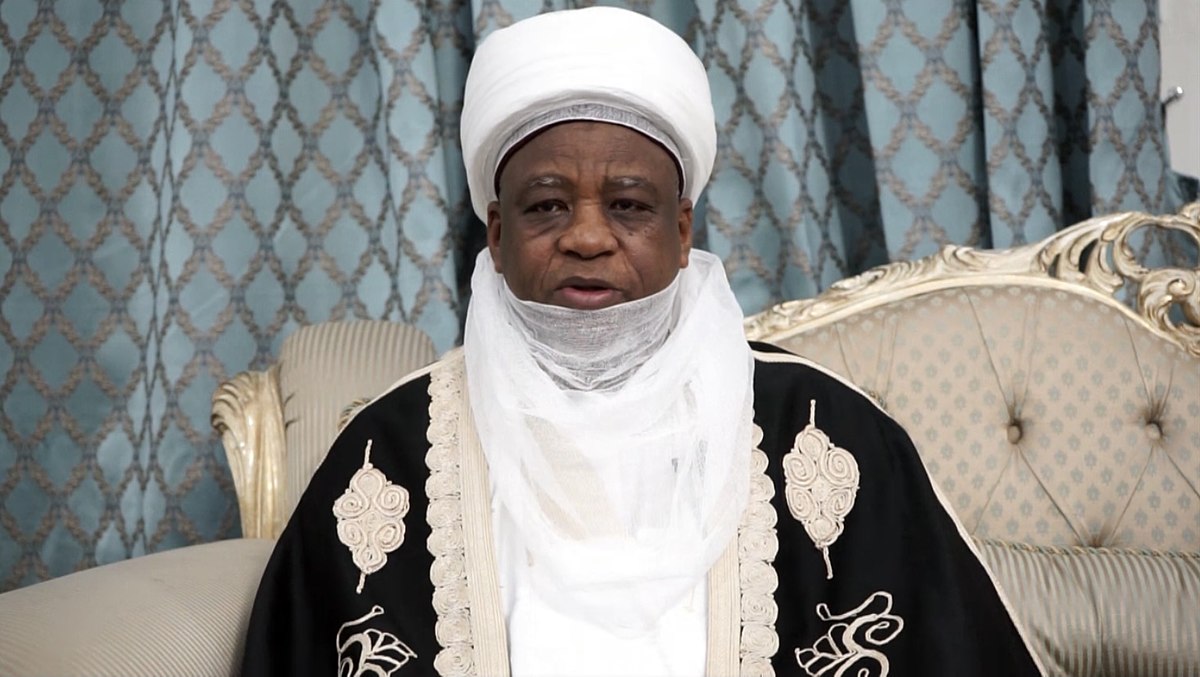
The Sultanate Council, Sokoto, through its Advisory Committee on Religious Affairs, has called on the Muslim Ummah to begin the search for the new moon of Zulki’ida 1446AH on Sunday, April 27, 2025.
This directive was contained in a statement on Saturday, by the Chairman of the Committee, Prof. Sambo Junaidu, who is also the Waziri of Sokoto.
The statement reads, “As Sunday corresponds to the 29th day of Shawwal 1446ah, it marks the appropriate time to search for the crescent of the new Islamic month.”
Muslims are urged to report any sighting of the new moon to the nearest District or Village Head, who will, in turn, communicate the information to the Sultan of Sokoto and President-General of the Nigeria Supreme Council for Islamic Affairs, Alhaji Muhammad Sa’ad Abubakar.
The Council prayed for divine support in fulfilling this religious responsibility, saying, “May Allah (SWT) help us in the discharge of this religious duty. Ameen.”
The sighting of the new moon traditionally signals the beginning of a new Islamic month and is critical to the religious calendar and observances among Muslims.
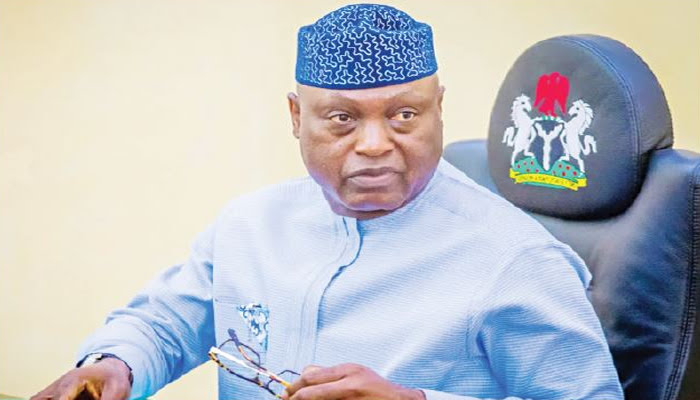
Ekiti State Governor, Biodun Oyebanji, has renewed his pledge to pay greater attention to the needs of the youth in a bid to develop their potential.
Oyebanji said his administration “is always open to collaborations with private individuals and organisations ready to support the state government’s efforts in harnessing the potential of our youth.”
The governor, represented by the Commissioner for Youth Development, Gold Adesola, spoke during an empowerment programme organised by the Oluseun Adeboyejo Foundation at Emure Ekiti on Saturday.
The foundation distributed various support items to residents of Emure Ekiti, including bursaries for students, knapsack sprayers for farmers, barbing kits for artisans, safety gear for commercial motorcyclists, and cash palliatives for market women.
Oyebanji, who praised the foundation for the initiative, emphasised the government’s commitment to youth development and encouraged other well-meaning individuals to emulate the gesture.
He said, “Right now in our country, the focus is on the development of the youth, and that is exactly what the state Ministry of Youth Development stands for — to pay more attention to the aspirations of young people in the state. This initiative by the Oluseun Adeboyejo Foundation aligns with our goals.”
The convener of the initiative and an indigene of Emure Ekiti, Mr. Oluseun Adeboyejo, said the project was borne out of a deep sense of empathy and commitment to community service.
“The Oluseun Adeboyejo Foundation stems from the ideology of empowerment and supporting the less privileged.
“This has been a personal passion project for over four years. It started in Ondo State during the COVID-19 pandemic, and over time, I decided to formalize it as a foundation. This is simply a way to give back.
“The goal is to touch every sector — from transportation and agriculture to trade and education. Empowerment is not just about giving money; it is about providing tools for sustainable livelihoods,” he said.
One of the beneficiaries, Mr. Jimoh Sunday, who received a barbing kit, expressed gratitude, saying, “I am really grateful for this pair of clippers. If I were to buy it myself, it would cost a lot. May God continue to bless him.”
Another beneficiary, Arike Onifade, who received a cash palliative, said, “I thank him for remembering us, the poor. God will continue to bless him.”
The event was attended by dignitaries, including the All Progressives Congress State Chairman, Sola Elesin, who was represented by the State Publicity Secretary, Segun Dipe; the State Auditor, Bola Ogundare; Emure Local Government Chairman, Tosin Adedayo; traditional chiefs; and other community leaders.
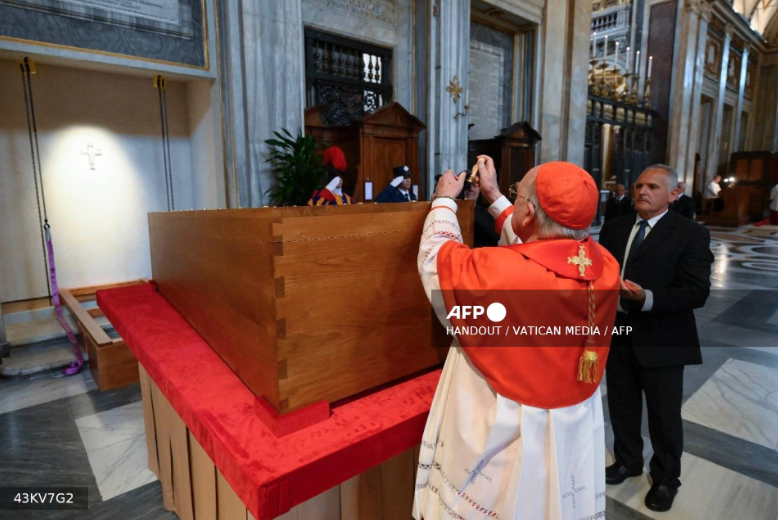
Pope Francis was buried inside his favourite Rome church after a funeral mass in St Peter’s Square, the Vatican said on Saturday.
The Argentinian pontiff, who died on Monday aged 88, was laid to rest during a 30-minute burial ceremony which started at 1:00 pm (1100 GMT) at the Santa Maria Maggiore basilica in the Italian capital.