FG laments low patronage of made-in-Nigeria products

A Federal Government agency – the National Agency for Science and Engineering Infrastructure, has decried the low patronage of Nigerian-made products by Nigerians.


The agency identified some challenges leading to the low patronage of the local products as affordability and public perception, among others.


Speaking on Thursday during a stakeholders meeting organised by the agency in Akure, Ondo State capital, the Deputy Director of Engineering at NASENI, Mr Joseph Alasoluyi, said Nigerians preferred buying foreign goods compared to local goods.


Alasoluyi, however disclosed that the agency had trained over 50 participants in the production of hand-made products, in a bid to ensure Nigeria-made products are patronised


He explained that NASENI was set up to promote science, technology, and engineering as a foundation for Nigeria’s development and currently operates 12 institutes nationwide to achieve its objectives.


According to him, the aim of President Bola Tinubu, who is also the overall chairman of NASENI, was to ensure high production and patronage of “our local products thereby creating employment opportunities for many.”


He said, “The idea of this programme is to interface to ensure we produce products using our indigenous technology. This is what NASENI is out for, to ensure that homegrown technologies are encouraged.

“We are out there to ensure we integrate efforts to ensure that local technology is used to develop products within the resources we have.


” The NASENI’s ‘3 Cs’ – Creation, Collaboration, and Commercialisation – that define NASENI’s strategic mandate: Creating innovations through research, Collaborating with partners to develop and refine products, and Commercialising these solutions to benefit the economy.


“Our achievements include the development of solar irrigation systems, CNG conversion centres, building machines capable of producing up to 1,000 blocks per hour, 10-inch tablets, locally made laptops, and electric tricycles (Keke Napep) set for market launch.”


In his remarks, the Deputy Vice Chancellor of the Federal University of Technology, Akure, Prof. Samuel Oluyamo, blamed the Federal Government for not properly funding research in the varsities, also noting that many research outputs were left halfway due to lack of funding and weak linkages between research institutions and industry.


Oluyamo also queried the federal government’s commitment to funding research and development, saying many academic innovations remained on the shelve due to a lack of support for commercialization and poor infrastructure.


“Until we upscale research into mass production, technological growth will remain elusive. The government is not funding research in the universities enough. Thank God for TETfund that is trying in this regime. The major interest in beefing up research in universities and research institutions is really not there,” he said.


2025 Hajj: CBN okays cash BTA for pilgrims

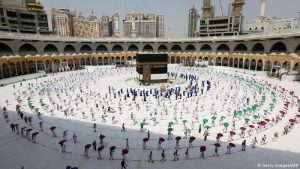
The Central Bank of Nigeria has approved the request of 2025 intending pilgrims to be granted cash transactions for the holy pilgrimage to Mecca.


This followed the intervention of Vice-President Kashim Shettima, who appealed to President Bola Tinubu on behalf of the over 40,000 pilgrims through the National Hajj Commission of Nigeria on Thursday.


NAHCON’s Commissioner for Policy, Personnel Management and Finance, Aliu Abdulrazaq, who disclosed while speaking with newsmen after meeting with the vice-president at the State House, Abuja, confirmed that the CBN granted Nigerian pilgrims the opportunity of cash transactions for this year’s Hajj.


He said, “The meeting was prompted by the policy of the Federal Government on the card for Basic Travel Allowance (BTA) for 2025 Hajj operations. We have held a series of meetings before now. The vice-president intervened and invited the Central Bank’s Deputy Governor with a plea.


“Out of the magnanimity of the CBN and appeal made by the vice-president, they dropped the idea of a card for pilgrims in the 2025 Hajj, and they conceded to people having cash instead of a card. This is a landmark achievement for NAHCON.


“If you go to Saudi Arabia, mostly the areas where the pilgrims are going to perform their rituals, there is only one Automated Teller Machine there, and it is always crowded – it poses so much difficulties for pilgrims to purchase whatever they want to purchase.”


He further explained that, “Secondly, 95 per cent of the pilgrims from Nigeria are peasant farmers, and they have difficulties with electronic payments. Even with the cash, some of them have difficulties identifying the currencies. These variables make it important for them to have the cash they are used to.


“From now on, we are even more confident that the Hajj operations will be very seamless for the pilgrims. All arrangements have been in top gear, but the BTA was our fear; today, the fear has now been addressed.”


Also speaking, the NAHCON’s Secretary, Dr Mustapha Muhammad Ali, clarified that the change is neither a concession nor a subsidy from the Federal Government.

There is a need for clarification we want to make. It is not a concession or intervention by the Federal Government. It is not a subsidy either. The vice-president intervened because most of the pilgrims make purchases in the streets of Mecca or Medina, and they do not need debit cards to make their purchases. Now it is allowed for them to carry cash. The CBN will provide the cash at the market rate,” he said.


Explaining the CBN’s intervention in the matter, the Director of Human Resources at the CBN and Board member representing the CBN in NAHCON, Abba Muhammad Aliyu, said the CBN granted NAHCON’s request because the welfare of Nigerian pilgrims was of utmost interest to the Nigerian government.


“Looking at the financial literacy of the pilgrims, there is a need for us to see that we make life easy for them because a lot of them do not know how to operate the ATM. So, these are some of the reasons the senior management of the bank, in their own magnanimity upon the call of the vice-president, looked at those issues,” Aliyu said.


He further clarified that the government was done with the concessionary issue, saying: “What is happening is purely a mode of payment method. Instead of asking the pilgrims to carry a card, they are only going to be paid through cash.”


There had been concerns that the hitherto use of mandatory debit cards proposed by the CBN for the pilgrimage would endanger the smooth planning, operation and performance at the 2025 Hajj.

The CBN had earlier in the year introduced a new payment method for Basic Travel Allowance for Nigerians embarking on the 2025 Hajj pilgrimage.


Under the revised system, each pilgrim would be issued an ATM card for withdrawals and transactions during the pilgrimage in the Kingdom of Saudi Arabia.


The initiative made it mandatory for all intending pilgrims to open a BTA-linked bank account

Disease outbreaks threaten vaccine progress, UN, Gavi warn

Immunisation efforts are under growing threat as misinformation, population growth, humanitarian crises, and funding cuts jeopardise progress and leave millions of children, adolescents, and adults at risk, the World Health Organisation, the United Nations Children’s Fund, and Gavi, the Vaccine Alliance, have warned.


The UN agencies and Gavi made this known in a news release on Thursday in commemoration of World Immunisation Week from April 24 to 30.


The release stated that outbreaks of vaccine-preventable diseases such as measles, meningitis, and yellow fever are rising globally, and diseases like diphtheria which have long been held at bay or virtually disappeared in many countriesare at risk of re-emerging.


In response, the agencies are calling for urgent and sustained political attention and investment to strengthen immunisation programmes and protect the significant progress achieved in reducing child mortality over the past 50 years.

“Vaccines have saved more than 150 million lives over the past five decades,” said WHO Director-General, Dr Tedros Ghebreyesus. “Funding cuts to global health have put these hard-won gains in jeopardy. Outbreaks of vaccine-preventable diseases are increasing around the world, putting lives at risk and exposing countries to increased costs in treating diseases and responding to outbreaks. Countries with limited resources must invest in the highest-impact interventions – and that includes vaccines.”


The release stated that measles is making an especially dangerous comeback. The number of cases has been increasing year on year since 2021, tracking the reductions in immunisation coverage that occurred during and after the COVID-19 pandemic in many communities. Measles cases reached an estimated 10.3 million in 2023 — a 20 per cent increase compared to 2022.


The agencies warned that this upward trend likely continued into 2024 and 2025, as outbreaks have intensified around the world. In the past 12 months, 138 countries have reported measles cases, with 61 experiencing large or disruptive outbreaks — the highest number observed in any 12-month period since 2019.


“Meningitis cases in Africa also rose sharply in 2024, and the upward trend has continued into 2025. In the first three months of this year alone, more than 5,500 suspected cases and nearly 300 deaths were reported in 22 countries. This follows approximately 26,000 cases and almost 1,400 deaths across 24 countries last year.


“Yellow fever cases in the African region are also climbing, with 124 confirmed cases reported in 12 countries in 2024. This comes after dramatic declines in the disease over the past decade, thanks to global vaccine stockpiles and the use of yellow fever vaccine in routine immunisation programmes. In the WHO Region of the Americas, yellow fever outbreaks have been confirmed since the beginning of this year, with a total of 131 cases in four countries.

These outbreaks come amidst global funding cuts. A recent WHO rapid stocktake with 108 WHO country offices — mostly in low- and lower-middle-income countries — shows that nearly half of those countries are facing moderate to severe disruptions to vaccination campaigns, routine immunisation, and access to supplies due to reduced donor funding.

Disease surveillance, including for vaccine-preventable diseases, is also impacted in more than half of the countries surveyed,” it noted.

It stated that the number of children missing routine vaccinations has been increasing in recent years, even as countries make efforts to catch up with those missed during the pandemic.


“The global funding crisis is severely limiting our ability to vaccinate over 15 million vulnerable children in fragile and conflict-affected countries against measles,” said UNICEF Executive Director, Catherine Russell.


“Immunisation services, disease surveillance, and outbreak response in nearly 50 countries are already being disrupted – with setbacks at a similar level to what we saw during COVID-19. We cannot afford to lose ground in the fight against preventable diseases.”


It further stated that joint efforts by WHO, UNICEF, Gavi, and partners have helped countries expand access to vaccines and strengthen immunisation systems through primary health care, even in the face of mounting challenges. Every year, vaccines save nearly 4.2 million lives against 14 diseases with nearly half of these lives saved in the African Region.


UNICEF, WHO, and Gavi urgently called on parents, the public, and politicians to strengthen support for immunisation.

The agencies emphasised the need for sustained investment in vaccines and immunisation programmes, and urged countries to honour their commitments to the Immunisation Agenda 2030.

“Increasing outbreaks of highly infectious diseases are a concern for the whole world. The good news is we can fight back, and Gavi’s next strategic period has a clear plan to bolster our defences by expanding investments in global vaccine stockpiles and rolling out targeted preventive vaccination in countries most impacted by meningitis, yellow fever, and measles,” said Dr Sania Nishtar, CEO of Gavi, the Vaccine Alliance.


“These vital activities, however, will be at risk if Gavi is not fully funded for the next five years, and we call on our donors to support our mission in the interests of keeping everyone, everywhere, safer from preventable diseases.”


Gavi’s upcoming high-level pledging summit, taking place on June 25, 2025, seeks to raise at least $9 billion from donors to fund its ambitious strategy to protect 500 million children, saving at least 8 million lives from 2026–2030.

135,000 living with HIV in Lagos -Commissioner

The Lagos State Government has revealed that over 135,000 residents are currently living with the Human Immunodeficiency Virus, highlighting the ongoing public health challenge in Nigeria’s most populous state.


The state Commissioner for Health, Prof. Akin Abayomi, disclosed this on Wednesday during a media briefing to mark the second anniversary of Governor Babajide Sanwo-Olu’s second term in office.


“135,224 residents are living with Human Immunodeficiency Virus (HIV),” Abayomi said, adding that the state government has intensified awareness and intervention efforts by engaging more than 100 religious leaders as HIV and AIDS ambassadors.


He explained that the involvement of faith leaders is aimed at reducing stigma and improving community-level outreach.


“We are using trusted voices to drive education, testing, and treatment in our communities,” he said.


In addition to tackling HIV, the state has provided free cervical cancer screenings for 154,228 women and treated 8,613 with thermal ablation.


It also conducted prostate cancer screenings for 300 men, alongside screening 312,927 people for hypertension and diabetes.


“In a population of 30 million, the estimated hypertension prevalence is 20%, and 70% of them are unaware of the disease,” the commissioner noted.


He also revealed that Lagos has a 12% obesity rate and a 6% diabetes prevalence, with 50% of those affected unaware of their condition.

Despite these health challenges, the state is grappling with a critical shortage of medical personnel.


Abayomi disclosed that Lagos needs an additional 33,000 doctors and 33,000 nurses to meet healthcare demands.


“We have 7,000 doctors in the state, but the state needs an additional 33,000,” he said.


To address this, he said the Lagos State University of Medicine and Health is expected to produce 2,500 healthcare workers annually within five years, including doctors, nurses, and laboratory scientists.


Meanwhile, only 4.17% of registered residents; about 1.25 million people, have taken up the state’s health insurance policy.

However, Abayomi expressed optimism that the recently passed mandatory health insurance law would boost enrolment and funding.


“The new mandatory nature of the state health insurance act would significantly scale up the size of the pool of funds,” he said.


He also reported that major health infrastructure projects, including the New Massey Street Children’s Hospital, the Ojo General Hospital, and the Mental Health Institute in Epe, are nearing completion and are expected to be commissioned by April 2026.

Police arrest two women trying to sell kidnapped minor in Imo

The Imo State Police command has arrested two women while attempting to sell a kidnapped four-year-old boy in Owerri for ₦2.7 million.


The boy was kidnapped in Abuja while hawking vegetables and then brought to Owerri to be sold before luck ran out for them.


The suspects are Joy Ugwu from Idah, Kogi State, and Rosella Michael of Zamba in Abuja, while the third suspect, a nurse, is currently on the run.


This was disclosed by the state Police spokesperson, DSP Henry Okoye, in a statement released on Thursday.

Okoye said the suspects were arrested in Owerri, the state capital on April 14, following a discreet operation by operatives while they were trying to sell the boy, for ₦2.7million.

He said the arrests were made following joint efforts between the Imo State Police Command and Zone 7 Police Headquarters, Abuja, though the suspects have been transferred to the Zonal Criminal Investigation Department, Abuja, for further investigation and prosecution.


Okoye said, “The Imo State Police Command has uncovered a suspected case of child trafficking, leading to the arrest of two female suspects and the rescue of a four-year-old boy. Acting on credible intelligence, operatives of the Scorpion Unit intercepted the suspects—Joy Ugwu from Idah, Kogi State, and Rosella Michael of Zamba, FCT Abuja—in Owerri on 14th April 2025 at about 6:00 p.m., following a discreet operation.


“Investigations revealed that the boy, Jaffa Umar, who speaks Hausa fluently, was abducted in Abuja while hawking vegetables. The suspects brought him to Owerri and were negotiating to sell him for ₦2.7 million before their arrest. A third accomplice, believed to be a nurse, is currently at large.


“The child has been safely reunited with his family through coordinated efforts between the Imo State Police Command and Zone 7 Police Headquarters, Abuja while the suspects have been transferred to the Zonal Criminal Investigation Department, Abuja for further investigation and prosecution”.


“The Commissioner of Police, CP Aboki Danjuma, reassures the public of the Command’s commitment to protecting vulnerable persons and dismantling trafficking networks. He encourages residents to report suspicious activity to the nearest police station or via the emergency line 0803 477 3600,” Okoye said.


FG to seize retirees’ property over unpaid housing loans

The Federal Government Staff Housing Loans Board says it has begun the compilation of list of retired civil servants who have defaulted on the full repayment of housing loans obtained.


Head of Information and Public Relations, FGSHLB, Mrs Ngozi Obiechina, disclosed this in a statement on Thursday in Abuja.


Obiechina quoted the Executive Secretary of the Board, Mrs Salamatu Ahmed, as saying that the move was aimed at recovering mortgaged properties from retirees who failed to meet their loan obligations.


Ahmed noted that the decision followed a recent memo issued by Mrs Patience Oyekunle, Permanent Secretary, Career Management Office, Office of the Head of the Civil Service of the Federation

According to her the memo reminded public servants of the mandatory requirement to obtain a Certificate of Non-Indebtedness to the FGSHLB and MDA Staff Multipurpose Cooperative Society as a precondition for retirement.


The executive secretary said that the board would take necessary legal steps to repossess properties where applicable, in line with the terms of the loan agreements.


She said this was in line with the provisions of the Public Service Rules 021002 (p), issued by the Office of the Head of the Civil Service of the Federation.


”I am directed to bring to your attention the provision of Public Service Rule (PSR) 021002 (p), which mandates all public servants to obtain a Certificate of Non-Indebtedness as a prerequisite for retirement.”

“The Federal Government will commence the seizure of mortgaged properties belonging to retiring federal public servants who have failed to fully repay housing loans obtained from the board,” she said.


Ahmed explained that the FGSHLB reserves the legal right to repossess any mortgaged property in cases where a public servant exits service without fully repaying the loan.


She reiterated that the directive also applied to already retired officers who were still indebted.


She urged all affected public servants to regularise their loan status and obtain the required clearance certificate without delay.


“The board is currently compiling a list of such retirees, which will be forwarded to relevant regulatory agencies for debt recovery.


“The FGSHLB remains committed to enforcing compliance and ensuring proper loan recovery procedures are followed, ” she added.

Satellite dishes don’t lead to hell, Islamic cleric faults rigid doctrines

Prominent Islamic scholar and Director of Markaz, Sheikh Habeebullah Adam El-Ilory, has openly challenged long-held religious beliefs that he says no longer reflect the realities of modern Islamic societies, calling for a more progressive and informed interpretation of Islamic teachings.


In a recent sermon, Sheikh Ilory criticised the rigid views held by some clerics who declared modern conveniences and female participation in public life as haram (forbidden).


He referenced the controversial claim that using satellite dishes could prevent Muslims from entering paradise; a view he described as lacking proper understanding.


“Anybody who uses a satellite dish and hangs it on the roof of his house and dies will not enter paradise because he/she committed haram,” he said, repeating the position of some conservative scholars, before questioning its validity and the mindset behind it.

Sheikh Ilory also revisited the criticism he received in 2010 for supporting women’s involvement in politics, a position that was deemed controversial at the time.


“When I said it earlier in 2010 that women can be involved in politics, people criticised me.

Not long after my statements in 2010, Saudi Arabia allowed women to vote and participate in politics,” he recalled.


He pointed to recent developments in Saudi Arabia, including the training of women in the military and changes in dress codes, as evidence of evolving Islamic norms.


“Presently they’re training women in the military in Saudi Arabia and they now wear trousers,” he said.


The scholar took aim at clerics who still cling to outdated doctrines, accusing them of misrepresenting Islamic texts


“One Alfa who criticised this evolvement was quoting a part of the scripture I believe he has no understanding of,” he said.

INEC moves to legalise voting without PVC

The Independent National Electoral Commission has expressed willingness to allow eligible Nigerians without Permanent Voter Cards to vote in the 2027 general elections, but insists that such a move must be backed by legislative amendments.


The Chief Press Secretary to the INEC Chairman, Rotimi Oyekanmi, told The PUNCH on Wednesday that the commission was committed to expanding voter access through technology, but emphasised that legal provisions must first be updated to accommodate any shift from the current PVC-only system.


The initiative followed remarks by INEC Chairman, Prof. Mahmood Yakubu, in December 2024 during a quarterly consultative meeting with Resident Electoral Commissioners in Abuja.


Yakubu highlighted the growing role of technology, particularly the Bimodal Voter Accreditation System, in streamlining the electoral process.

He noted that while PVCs will remain valid for those who possess them, future elections could allow voters to use slips generated by INEC or downloaded from its official website for accreditation.


This shift, he said, would lower costs, ease logistical burdens, and curb the misuse of voter cards.

“The commission also believes that with the introduction of the Bimodal Voter Accreditation System, the use of the Permanent Voters’ Cards as the sole means of identification for voter accreditation on Election Day should be reviewed.


“Those who already have the PVCs can still use them to vote, but going forward, computer-generated slips issued to the voter or even downloaded from the Commission’s website will suffice for voter accreditation.


“This will not only save cost, it will also eliminate the issues around the collection of PVCs and the diabolical practice of buying up the cards from voters in order to disenfranchise them,” Yakubu explained.


However, giving an update in an interview with The PUNCH on Wednesday, Oyekanmi stressed that any change in the voting procedure must be supported by corresponding legal amendments.


“It is not our stand alone that is important. Equally critical is what the subsisting law says. While the commission is favourable disposed to the recommendation by stakeholders (that PVCs alone should not be the only criterion for voting at an election), the law needs to be amended to reflect it,” he said.

US indicts Nigerian for $690k scam, false citizenship claim

A Nigerian-born United States citizen, Oladapo Fadugba, risks 27 years imprisonment over his alleged involvement in a $690,000 wire fraud scheme and making false declarations to obtain US citizenship.


PUNCH Metro learnt this in a statement by the US Attorney for the District of Florida, Gregory Kehoe, obtained on Wednesday.


According to Kehoe, Fadugba was indicted for multiple charges, including wire fraud, aggravated identity theft, and making false statements during his naturalisation process.


According to Kehoe, between October 2020 and July 2023, the suspect allegedly diverted $690,000 in funds belonging to the US Department of Veterans Affairs, which was meant for reimbursement to a major local healthcare provider.

It was further alleged that Fadugba used another person’s identity to facilitate the transfers into various bank accounts under his control.


The statement read, “According to the indictment, beginning on October 30, 2020, and ending no later than July 11, 2023, Fadugba had more than $690,000 of Department of Veterans Affairs funds, intended for reimbursement to a large local healthcare provider, transferred to his personal bank accounts.


“Fadugba then wrote cheques to himself or to businesses associated with him, which were subsequently transferred to other bank accounts under his control. It is alleged that he used the identification of another individual to carry out these transfers.”


In addition, Fadugba is accused of lying under oath during his US naturalisation proceedings by falsely stating that he had never committed a crime for which he had not been arrested.

Kehoe stated that, if the suspect was convicted on all counts, he risked a maximum sentence of 27 years in the US federal prison and the forfeiture of $400,000, representing proceeds from the alleged crimes.


“The indictment further alleges that Fadugba, a naturalised US citizen from Nigeria, made a false statement under oath during his naturalisation proceedings by claiming he had not committed any offence or crime for which he had not been arrested.


“If convicted on all charges, Fadugba faces up to 27 years in federal prison. The indictment also includes a notice that the United States is seeking a forfeiture order of $400,000, which reflects the approximate proceeds of the criminal conduct charged,” the statement added.


Kehoe concluded by noting that “an indictment is merely a formal accusation of criminal conduct, and every defendant is presumed innocent unless and until proven guilty.”


PUNCH Metro reported on April 12 that a 24-year-old Nigerian man, Mercy Ojedeji, pleaded guilty to charges of wire fraud and unlawful use of fraudulent immigration documents in the United States.


According to a statement released by the U.S. Attorney’s Office for the Eastern District of Missouri, the plea was entered in a US District Court in St. Louis, Missouri.

Ojedeji had admitted to fraudulently securing a student visa and gaining admission into the University of Missouri’s chemistry PhD program in Fall 2023.


He acknowledged using falsified academic transcripts, recommendation letters, a fake resume, and a fabricated English language proficiency report to obtain the visa.

NTF targets tennis development, certifies 40 coaches

No fewer than 40 coaches have completed a week-long ITF National Level 1 Tennis Coaching Course organised by the Nigeria Tennis Federation in Abuja.


The News Agency of Nigeria reports that the participants drawn from the six geopolitical zones in the country, were presented with their certificates at a closing ceremony on Wednesday.


The coaching course, which began on April 14, ended on Wednesday at the National Tennis Centre, Package B, Moshood Abiola National Stadium, Abuja.


NTF Technical Director and Course instructor, Rotimi Akinloye, highlighted the significance of the 10-day training programme for tennis coaches.


He explained that the training provides hope for the future of tennis in Nigeria, as young coaches learn modern teaching methodologies and technical knowledge to effectively guide players.


“Coaches play a crucial role in shaping the careers of tennis players, and their words can either inspire or discourage players.


“Thus, the training programme focused on equipping our coaches with global best practices and modern teaching techniques to enhance player development.


“It was also quite encouraging to see that the participants are young and knowledgeable about the game, indicating a promising future for Nigerian tennis,” he said.


NTF Secretary, Shammah Makpa, said that the importance of the training programme on Nigeria Tennis cannot be overemphasised.


Makpa said that it aimed to elevate the coaching standards in Nigeria, enabling coaches to provide better guidance and support to players.


“By equipping coaches with modern teaching methodologies, the programme can contribute to the development of skilled and competitive tennis players in Nigeria.


“It will also go a long way to help promote the growth of tennis at the grassroots, potentially leading to increased participation and success in local and international competitions,” he said.

He said that the Federation, under the leadership of Ifedayo Akindoju as President, will continue to work towards taking the country to greater heights in the world of tennis through developmental programmes.


Chukwunonso Nwabueze, a participant in the coaching training programme, shared his positive experience.

He highlighted the programme’s enriching content, which he noted covered essential aspects of tennis coaching.


Participants learned about the basics of tennis coaching, including training methods for beginners and intermediate players.


“The programme covered specific skill areas such as ball feeding, approach shots, serve and volley, providing participants with a comprehensive understanding of tennis techniques,” he said.


Nwabueze who is also the PRO of Nigeria Tennis Umpires Association, explained that he chose to participate in the training for capacity building and development, to further enhance his skills and knowledge of the game.


Rebecca Ekpeyong, a participant from Port Harcourt, said that the training demonstrates a commitment to professional development, allowing participants to stay up-to-date with best practices in tennis coaching.


“The programme equipped participants with the knowledge and skills necessary to effectively coach tennis players.


“By learning modern coaching techniques, participants can contribute to the development of skilled and competitive tennis players in Nigeria,” she said.


Also speaking, Bolaji Bankole from Lagos, commended the NTF for organising the course with a promise to put into use knowledge garnered from the training.

Exit mobile version