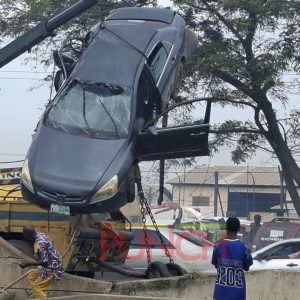
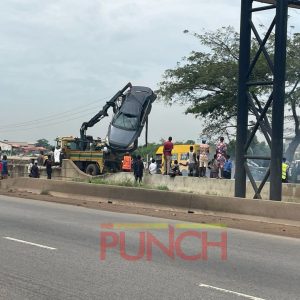
An accident involving a Honda EOd and a trailer caused considerable disruption of traffic on the Lagos-Ibadan Expressway on Wednesday morning, prompting swift intervention by officials of the Federal Road Safety Corps.
Trailer rams car into culvert on Lagos-Ibadan expressway. Credit: Olabode Olalekan, Segun Odunayo
According to eyewitness accounts, the incident occurred when a trailer hit the Honda EOd, forcing it off the road into a nearby culvert
Trailer rams car into culvert on Lagos-Ibadan expressway. Credit: Olabode Olalekan, Segun Odunayo
The damaged vehicle was subsequently dragged out of the culvert and hoisted into a towing van
Trailer rams car into culvert on Lagos-Ibadan expressway. Credit: Olabode Olalekan, Segun Odunayo
As of the time of this report, there have been no report of fatalities.
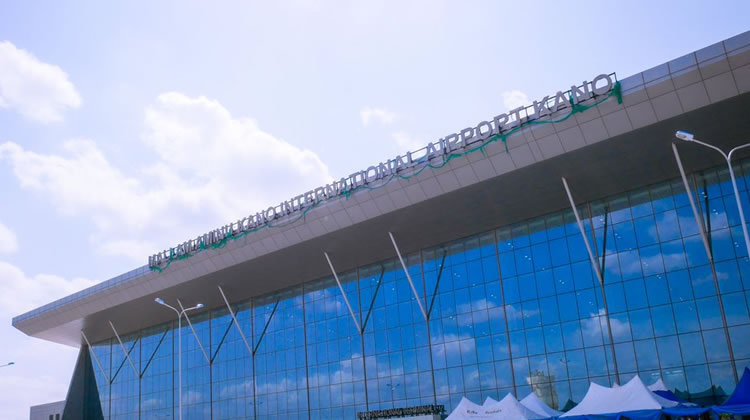
Many passengers were stranded on Wednesday at the Mallam Aminu Kano International Airport, Kano State, following a protest by staff members of the Nigerian Meteorological Agency over the non-implementation of the new national minimum wage.
The protest caused delays in several scheduled flights at the airport.
An airport staff member, who spoke to PUNCH Online on condition of anonymity, said the protest disrupted many flights, forcing the airport authority to cancel or delay them.
“As you know, flights are determined by weather, and NiMet is the agency providing weather information to pilots.
“So, though some flight operations are still ongoing, the protest has affected many flights,” he said.
It was gathered that many air travellers were left stranded as numerous flights experienced delays due to the protest.
The Northwest Zonal Chairman of the Amalgamated Union of Public Corporations, Civil Service Technical and Recreational Employees, Timothy Meshelia, also confirmed that the protest disrupted several flights at the airport on Wednesday.
“The protesting staff are accusing the management of NiMet of failing to implement the N30,000 and N70,000 minimum wage, non-payment of staff allowances, ignoring requests to include omitted staff in past payments, and neglecting key training programmes, among other issues.
“The association has given the management one month to implement the new minimum wage or face industrial action,” he stated.
They also demanded that management take proactive measures to address the economic challenges faced by staff, including the payment of a subsistence allowance, as previously agreed with the unions.
As of the time of filing this report, officials of the Federal Airports Authority of Nigeria, in Kano, had yet to make an official statement regarding the protest.
Equities rallied with Wall Street on Wednesday after Donald Trump said he had “no intention” of firing the head of the Federal Reserve and that eye-watering tariffs on China would be slashed drastically.
Global markets, already upended by a trade war, were battered further at the start of the week by fears the US president was looking to remove central bank boss Jerome Powell for not cutting interest rates, calling him a “major loser” and “Mr. Too Late”.
Observers warned such a move would have dealt a blow to the Fed’s independence and sparked a crisis of confidence in the world’s top economy, sparking a sell-off of US assets and another global crisis.
However, Trump looked to temper those fears on Tuesday, saying: “I have no intention of firing him.”
“I would like to see him be a little more active in terms of his idea to lower interest rates — it’s a perfect time to lower interest rates,” he said.
“If he doesn’t, is it the end? No.”
The remarks gave a much-needed shot of relief to investors, helped by the president’s comments later indicating a more conciliatory approach to the trade war with China.
Washington has imposed tariffs of 145 per cent on a range of products from China, while Beijing has replied with 125 per cent duties on imports from the United States.
But Trump acknowledged on Tuesday that the US levies were at a “very high” level, and that this will “come down substantially”.
“They will not be anywhere near that number,” he said, but added that “it won’t be zero”.
That came after Treasury Secretary Scott Bessent told a closed-door event in Washington that he expected a de-escalation soon in the United States’ tariff standoff with China, which he said was not sustainable.
White House Press Secretary Karoline Leavitt said later, “The president and the administration are setting the stage for a deal”, noting that “the ball is moving in the right direction”.
Chinese President Xi Jinping also warned on Wednesday that tariffs and trade wars “undermine the legitimate rights and interests of all countries, hurt the multilateral trading system, and impact the world economic order”.
However, foreign ministry spokesman Guo Jiakun said later in the day that “the door for talks is wide open”.
Investors welcomed the developments from Washington with open arms.
Hong Kong surged on the back of a rally in tech firms, including Alibaba and Tencent.
Tokyo, Sydney, Seoul, Wellington, Singapore, Mumbai, Manila, Jakarta and Bangkok also advanced, while London, Paris and Frankfurt were also sharply higher.
Taipei jumped more than four per cent, helped by a seven per cent surge in chip titan TSMC.
However, Shanghai edged down.
Gold, which had hit a record high above $3,500 Tuesday on a rush to safety, retreated to sit around $3,300, while the dollar clawed back some of its recent losses against the pound, euro and yen.
Oil prices were also boosted by more than one per cent, having taken a recent hit by fears over the economic fallout from the tariff standoff.
The gains followed rallies of more than two per cent for all three main indexes in New York.
“While it is still early days, the mood in the market is evidently shifting and what was a strong ‘sell America’ vibe flowing through markets… has in part reversed,” said Chris Weston at Pepperstone.
He added that Trump’s comments on Powell “should go some way to allaying fears of a major policy mistake”.
Investors were unmoved by the International Monetary Fund’s decision to slash its global economic growth outlook by 0.5 percentage points to 2.8 per cent this year, citing the effect of Trump’s tariff policies.
In company news, Japan’s Sumitomo Rubber, which recently bought the Dunlop brand, rose 3.7 per cent after it said it would hike tyre prices for US and Canadian cars and small trucks by up to 25 per cent.
Key figures at 0810 GMT include: Tokyo – Nikkei 225: UP 1.9 percent at 34,868.63 (close), Hong Kong – Hang Seng Index: UP 2.4 percent at 22,072.62 (close), Shanghai – Composite: DOWN 0.1 percent at 3,296.36 (close), London – FTSE 100: UP 1.4 percent at 8,445.62, Euro/dollar: DOWN at $1.1385 from $1.1420 on Tuesday.
Pound/dollar: DOWN $1.3305 at $1.3330, Dollar/yen: UP at 141.85 yen from 141.56 yen, Euro/pound: DOWN at 85.56 pence from 85.67 pence, West Texas Intermediate: UP 1.5 per cent at $64.63 per barrel, Brent North Sea Crude: UP 1.4 per cent at $68.41 per barrel, New York – Dow: UP 2.7 per cent at 39,186.98 (close).
The Kano State Pension Board has so far cleared over N21 billion in pension liabilities out of a total debt of N48.6 billion inherited from the previous administrations in the state.
The Executive Chairman of the Kano State pension fund trustees, Alhaji Habu Fagge made this known while addressing newsmen in Kano.
”The state the board was at the time of the current administration’s takeover was “deeply troubling.
”Pensioners suffered irregular and arbitrary deductions under the previous government, sometimes losing half of their meager monthly entitlements.
“At one point, pensioners receiving N6,000 had N3,000 deducted without explanation. We couldn’t find any clear formula for the deductions,” he said.
According to the executive chairman, the previous administration borrowed from the pension fund.
He said part of the recovery began when Governor Abba Yusuf approved deductions from the source for pension remittances, restoring regular payments and enabling the board to reach 100 per cent monthly pension disbursement.
“We inherited N48.6 billion in liabilities and also had to remit N75 billion that had been levied on local governments and some MDAs.
“Inspite of this, we’ve managed to settle N16 billion so far, with another N5 billion scheduled for disbursement soon,” Fagge said.
He praised the governor for showing empathy, noting that “even though the debt was inherited, the governor took responsibility and ensured payments were made, purely out of concern for the pensioners.”
The chairman also clarified the board’s involvement in housing projects in Bandirawo, Kwankwasiyya and Amana in the state.
Under the past government, he said,the board loaned funds for property investments, which led to legal disputes, and that following a court ruling and negotiations, 324 housing units were allocated to the pensions board as settlement.
“Those properties were in poor condition and neglected. The board opted to repurchase them at a negotiated rate of N4.5 billion, which was approved by the state government after clearance from relevant agencies,” he said.
On the issue of illegal deductions under the previous government, Fagge admitted that investigations were hindered by missing records.
“Without evidence, litigation would be fruitless and distract from our core duty—serving the pensioners,” he said.
Presently, he said, the board has over N4 billion in savings,adding that a proposal had been submitted to the Board of Trustees to use N3 billion to acquire more properties and the remaining N1.5 billion to support pensioners’ welfare.
The executive chairman then raised concerns over the rising number of retirees in the state.
“In December alone, over 4,100 new pensioners were enrolled due to mass retirements. With weekly interviews of about 200 to 300 retirees, the pressure is mounting,” he said.
In spite pf the challenges, he expressed optimism, citing recent increases in public sector salaries and upcoming mass employment plans by the state government as potential boosts to pension contributions.
“Our biggest challenge now is the surge in gratuity and pension obligations due to increased retirement benefits. But with continued reforms and support from the government, we believe we are on a sustainable path,” he said.
Describing the pension board office as a “hospital of last resort,” Fagge shared stories of desperate pensioners seeking funds for hospital bills, rent and basic sustenance.
“Our concern is the people’s concern. We are working to ensure that no pensioner is left behind. By God’s grace, we are seeing light at the end of the tunnel,” he added.
A member of the House of Representatives, representing Ido/Ibarapa East Federal Constituency, Aderemi Oseni has distributed 5,206 bags of fertilisers to farmers across his constituency.
Distributing the fertilisers at his Constituency Office at Ologuneru in Ibadan, Ido Local Government Area of Oyo State, on Tuesday, Oseni said fertiliser has greater purpose in the quest for agricultural prosperity, as a seed planted today will flourished into plentiful harvest tomorrow.
The Chairman House Committee on Federal Road Maintainance Agency said, “This landmark empowerment programme is aimed to increase productivity for farmers, ensuring plentiful harvest that not only enhances personal wealth but contributes to national food security.
“Food security has been one of the major agenda of President Bola Tinubu, which will continue to echo to every one of us, and we will continue to promote as much as we can.
“In the face of the current economic challenges and the surge of food prices, we are standing together to accelerate our seed while guaranteeing that our families remain nourished and supported.”
He said his empowerment initiative aligned with President Tinubu’s Renewed Hope and Economic Rebirth Agenda, an initiative promising to restore stability and purpose of the nation after recent challenges.
“It is my firm belief that by supporting our farmers, we are not only assisting in alleviating the skyrocketing prices of food but also empowering them to take charge of their destinies.
“As I distribute these 5,206 bags of fertilisers across my constituency today (Tuesday) to our esteemed and hardworking farmers, I see potential for growth.”
The lawmaker urged the beneficiaries to embrace the opportunity to their clear commitment as defined by President Tinubu in his renewed agenda.
“Let us cultivate the habit of excellence, not just in our farms but in every aspect of our lives. As your representatives, I assure you that I will continue to put you first. We will advocate for better policies, better infrastructure, and a better quality of life for everyone in our beloved Ibarapa’s Federal Constituency.
“This is not simply a promise. It is a pledge, grounded in my heart, grounded in my heartiness, and grounded in my unwavering love for each of you.”
Some of the beneficiaries at the event thanked Oseni for the initiative.
Dignitaries at the event were All Progressives Congress Chairman in Oyo South Senatorial District, Mojeed Olaoya, Onido of Idoland, Oba Muritala Babalola, representative of Christian Association of Nigeria and Muslim community, farmers association, students, youths among others.
The Nigeria Customs Service has shed light on the continued smuggling of petrol across the country’s borders, despite the elimination of fuel subsidies.
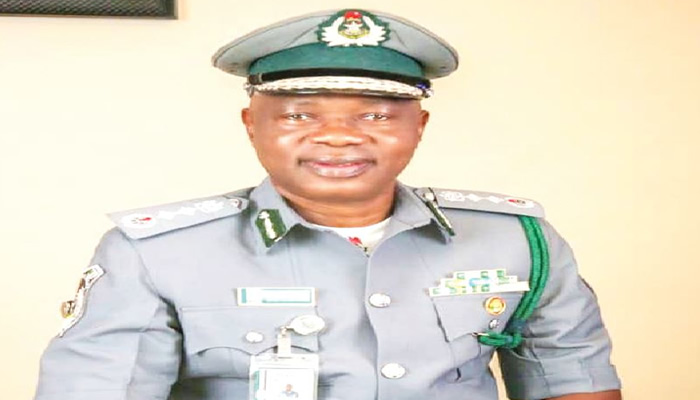
According to the Comptroller General of Customs, Adewale Adeniyi, the practice remains attractive to smugglers due to the stark difference in fuel prices between Nigeria and its neighbouring countries.
Speaking during the service’s first quarter performance briefing held in Abuja on Tuesday, Adeniyi noted that “Despite the removal of the fuel subsidy, it is still profitable for smugglers to take fuel illegally from Nigeria. You know that the prices are dynamic.”
He further explained that although Nigeria has ended its subsidy regime, the relatively lower pump price still incentivises illegal exportation of Premium Motor Spirit to countries like Cameroon, Niger, and the Benin Republic “Has remained profitable due to the price arbitrage”, he added.
Adeniyi highlighted that while the price of PMS within Nigeria ranges between N880 and N950 per litre, neighbouring countries are selling the same product for far higher amounts. “Is lower compared to around N1600 and N2000 per litre in Cameroon, Niger, and the Benin Republic,” he stated.
The Customs boss went on to stress that this significant price gap continues to fuel smuggling activities, even with some of these countries witnessing slight reductions in local fuel costs.
“While the price of the products is coming down to around N850 and N900 per liter in places like Cameroon, it is close to N2,000 per liter, in Niger, it is N1,600 per liter, and the same with the Benin Republic.”
In response to this ongoing challenge, Adeniyi said the NCS has initiated a special anti-smuggling operation. “This arbitrage provides the incentive. That is why we launched the operating Whirlwind,” he said.
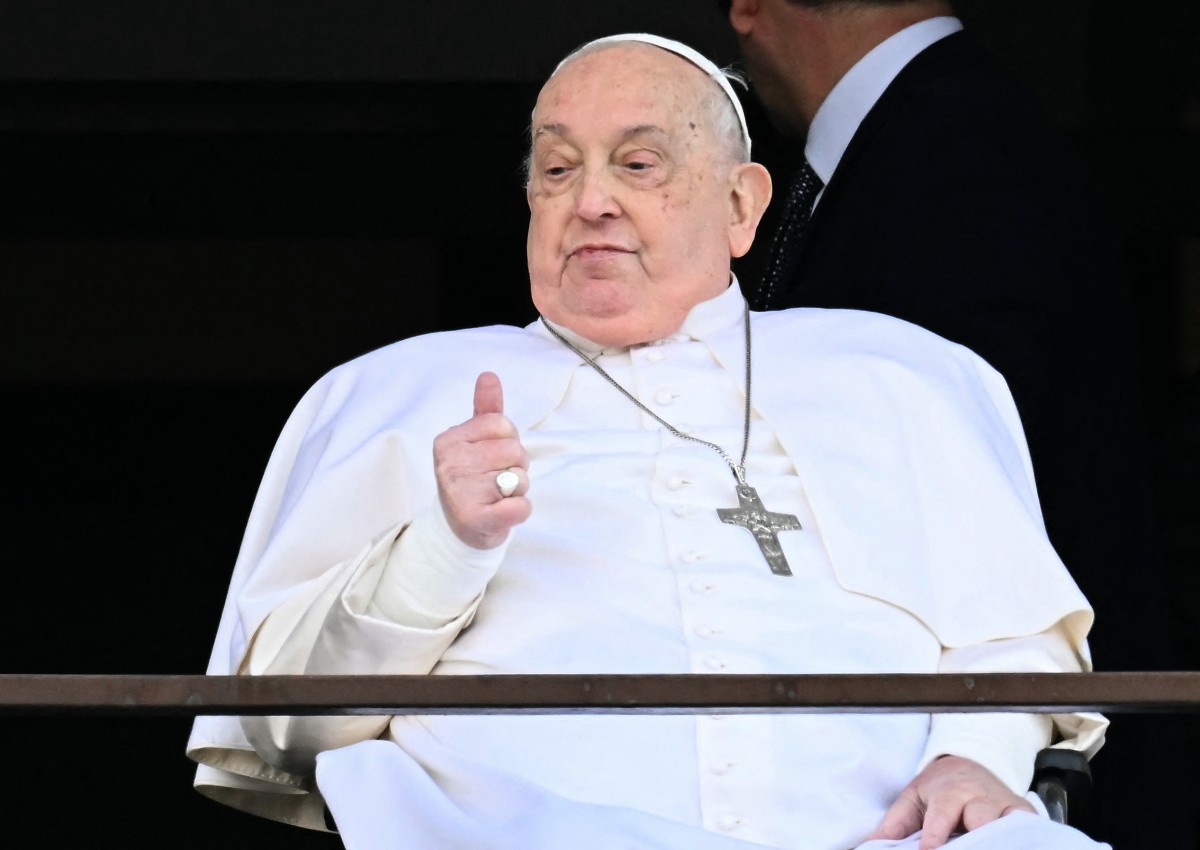
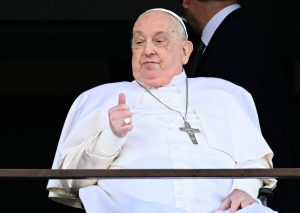
Pope Francis appears at a window of the Gemelli hospital before being discharged following a five weeks hospitalization for pneumonia, in Rome on March 23, 2025. Pope Francis is to leave hospital todayand return to his residence in the Vatican, where he is to spend “at least two months” recovering, one of his doctors announced during a press conference on March 22, 2025. (Photo by Filippo MONTEFORTE / AFP)
As the world mourns the passing of Pope Francis, the first pope from the Americas and the first Jesuit to lead the Roman Catholic Church, a conversation that has long simmered within the global Catholic community comes into sharper focus: Is it time for a Black pope? The death of Pope Francis, who was lauded for his progressive views on poverty, immigration, climate change, and interfaith dialogue, invites a moment of deep reflection on the direction of the Church, particularly in a world where Africa, home to a rapidly growing Catholic population, plays an increasingly prominent role.
The African Catholic Church: A Rising Power
The Catholic Church has been undergoing significant demographic shifts over the past century. While Europe and the Americas once held the majority of the world’s Catholic population, Africa has experienced explosive growth in both the number of Catholics and the number of seminaries and clergy emerging from the continent. In fact, Sub-Saharan Africa now accounts for over 20% of the global Catholic population, with numbers steadily increasing. According to the Vatican’s 2022 Statistical Yearbook, the number of Catholics in Africa has more than doubled in the past fifty years, a trend that continues to accelerate.
Yet, despite the rise of Africa’s Catholic presence, the Vatican remains overwhelmingly European, with only a handful of African cardinals, the electors of the next pope, making their mark on the highest echelons of Church leadership. This has led many to question whether the Church’s leadership is truly representative of the global body it seeks to guide. A Black pope would send a powerful message of inclusivity, acknowledging the growth and importance of Africa within the Catholic Church, and representing the millions of Black Catholics around the world whose voices are still often marginalized in the highest halls of power.
The Legacy of Pope Francis
Pope Francis’ papacy was a watershed moment for the Church in many ways. His focus on social justice, his calls for mercy and compassion, and his commitment to highlighting the struggles of the marginalized—whether migrants, the poor, or indigenous peoples—resonated deeply with millions of Catholics across the globe. His leadership also demonstrated a shift towards a more decentralized and inclusive Church, even as his papacy faced significant challenges, including conservative pushback from within the Vatican itself. His emphasis on synodality, the idea of a more participatory and inclusive decision-making process, hinted at a desire for change that could one day pave the way for the Church to embrace greater diversity at its core.
The question of whether it is time for a Black pope thus becomes more than just a theoretical query, it is an invitation to examine the Church’s future. The need for reform, inclusivity, and representation in the highest levels of ecclesial authority is clear. Pope Francis himself understood that his papacy was not just about leading the Church as it was but about guiding it toward the future. As we mourn his passing, we must consider how the next pope can build on his legacy of reform and inclusivity, while also taking into account the profound demographic shifts in the Church.
Africa’s Potential for Leadership
Could the next pope come from Africa? It is a possibility that has grown less improbable with each passing year. Figures like Cardinal Peter Turkson of Ghana, who has long been considered a frontrunner for the papacy, represent the potential for the Church to embrace an African pope. Cardinal Turkson’s long-standing leadership in the Vatican, including his role in shaping the Church’s response to issues like climate change and global inequality, suggests that a Black pope would bring not only symbolic weight but also substantive leadership in areas crucial for the Church’s future.
The notion of a Black pope also underscores the role that race and ethnicity play in shaping not only the global Catholic community but also its vision for the future. Africa, with its youthful population, its dynamic faith communities, and its growing influence in world affairs, presents an opportunity for the Church to engage with the world in new and relevant ways. A pope from Africa could more effectively address the challenges and aspirations of a continent that is poised to become even more central to the Catholic Church’s mission in the coming decades.
Theological and Cultural Implications
A Black pope would also bring a new theological and cultural perspective to the Church, which has historically been shaped by European and Latin American sensibilities. African Catholicism is deeply rooted in a rich tradition of spirituality, communalism, and respect for the sacred, which could breathe new life into the Church’s global mission. This perspective could also provide new avenues for dialogue between the Catholic Church and other faiths, particularly within Africa’s religiously diverse context.
Moreover, Africa’s history of colonization, conflict, and resilience has created a unique lens through which to understand issues of justice, peace, and reconciliation. The African experience with colonialism, civil strife, and economic exploitation could inform a pope’s approach to global issues such as human rights, economic inequality, and international relations. In this way, an African pope would not only represent the continent’s rapidly growing Catholic population but could also embody a more inclusive and globally relevant approach to the Church’s mission.
Conclusion: A New Era for the Church?
As we mourn the death of Pope Francis, we are reminded that the papacy is not simply a position of leadership but a symbol of the direction in which the Church is headed. The question of whether it is time for a Black pope is not just about ethnicity or race, it is about the future of a Church that must reckon with its increasingly diverse global community.
The papacy of Pope Francis demonstrated that the Church can embrace reform and adapt to the changing world while staying true to its mission. The election of a Black pope, particularly from Africa, would mark the next step in that journey, reflecting a Church that is inclusive, diverse, and engaged with the challenges of the 21st century. Whether or not the next pope will be African or Black remains to be seen, but the possibility stands as an invitation to rethink the global Church’s priorities and the legacy of Pope Francis.
In this time of mourning, it is important to ask not just what the Church has been but what it will become and what it can be for future generations. The election of a Black pope could be a significant step in that ongoing transformation.
Dr. Jude Dike, Ph.D.
Dike is a college professor and the host of a popular weekly podcast in Calgary, Canada.
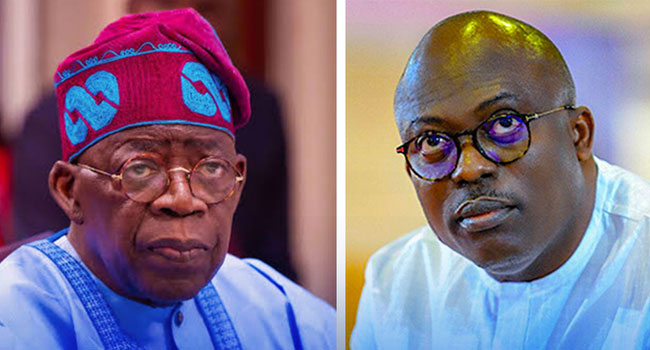
There are indications that suspended Rivers State Governor, Siminalayi Fubara, is warming up to making concessions to ease the political tension in the state.
This followed Fubara’s meeting with President Bola Tinubu in London during the latter’s 18-day retreat in Europe.
The meeting, confirmed by The Africa Report, was at the request of Governor Fubara, who first came into office in May 2023.
Although The PUNCH could not confirm details of the meeting at press time, a senior presidential adviser told the Paris-based publication that, Fubara “pledged to make certain concessions in a bid to ease tensions.”
“It is true. Governor Fubara held a private meeting with the president last week.
“Fubara has promised to make some compromises. Negotiations are ongoing, but from all indications, his suspension will be lifted before the six-month deadline,” said an adviser to the president who spoke on condition of anonymity.
The official hinted that negotiations are ongoing and that his six‑month suspension could be cut short.
Another aide added that Fubara is weighing a switch from the opposition Peoples Democratic Party to the ruling APC to get on the good side of the president.
“If Fubara joins the APC, it means the president’s chances of winning Rivers State are much higher,” the aide told the French magazine.
Presidential aides contacted by our correspondent said they were not on the latest private trip with the President and, therefore, did not witness the closed-door meeting.
It is first face‑to‑face since Tinubu invoked Section 305 of the 1999 Constitution on 18 March, declaring a state of emergency in Rivers and ousting Fubara and his deputy, Ngozi Odu.
Tinubu’s national broadcast on March 18 cited “months of intense political instability” that had “paralysed governance” and “threatened national stability.”
He installed former Navy Chief, Vice‑Admiral Ibok‑Ete Ekwe Ibas, as sole administrator.
Opposition governors from seven PDP‑ruled states immediately filed suit at the Supreme Court, challenging the decree’s constitutionality and demanding a return to democratic rule.
The political crisis, which has paralysed governance in the oil-rich state, stems from a power struggle between Fubara and his estranged godfather, Nyesom Wike, now the Minister of the Federal Capital Territory.
The turmoil escalated after Fubara demolished the state’s House of Assembly complex in December 2023, leading to a prolonged battle over the legitimacy of the legislative arm.
Things went further south when 27 lawmakers, loyal to Wike, defected from the Peoples Democratic Party to the All Progressives Congress, prompting legal disputes over their status.
On February 28, 2025, the Supreme Court ruled that the lawmakers remained valid members of the Assembly, faulting the governor’s actions as unconstitutional and tantamount to despotism.
The judgment noted that Rivers State had effectively collapsed into one-man rule due to the absence of a functioning legislature.
Despite the ruling, governance remained stalled, with the Assembly and executive failing to cooperate.
As of March 2025 the state’s annual Appropriation Bill had not been passed.
Hours before Tinubu declared emergency rule, an explosion rocked a section of the Trans Niger Pipeline in Bodo Community in Gonna Local Government Area of Rivers State.
A second explosion ruptured a pipeline manifold in the Omwawriwa axis of Ogba-Egbema-Ndoni Local Government Area of the State.
Citing fresh security reports at the time, Tinubu expressed concern over recent vandalisation of oil pipelines by militants, allegedly acting in support of Fubara.
The President, who had been in Paris, then London since April 2, agreed to meet Fubara in an attempt to defuse the lingering crisis.
The duo discussed restoring functional government in the oil‑rich state, officials say.
Neither side disclosed details, but sources said the talks may see Fubara back in power before his six-month suspension elapses in September.
It was learned that Fubara’s estranged political godfather now FCT Minister, Nyesom Wike, was not part of the meeting and was nervous about such an arrangement holding without him.
However, Tinubu is expected to meet Fubara, Wike, and the Rivers State lawmakers to chart a lasting solution to the political crisis in the state.
Tragedy struck on Monday when a 16-year-old boy, identified simply as Mustapha, was killed by a stray bullet during a suspected cult clash in the Oyingbo area of Ebute Metta, Lagos State.
PUNCH Metro learnt that the incident occurred during a peace walk organised by some youths to address rising cult-related violence in the community.
It was gathered that the walk had just concluded when an argument broke out among them.
A resident, who spoke to our correspondent on the condition of anonymity, said the argument degenerated as a suspected cultist pulled out a firearm and shot indiscriminately, leading to Mustapha getting hit by a stray bullet.
Another resident told PUNCH Metro that the teenager was not affiliated with any cult group.
“Mustapha just came out to support the walk. He was not part of any gang. He is a calm and respectful boy. He was taken to the hospital after the bullet hit him but he died on the way,” the source said.
The incident was said to have caused panic in the community, while the event ended abruptly.
Meanwhile, our correspondent learnt that one of the organisers, who was hit by a bullet, is currently in critical condition.
The state Police Public Relations Officer could not be reached for a reaction as calls made to his telephone were not responded to.
A text message sent to him had yet to be replied to as of the time this report was filed.
It would be recalled that PUNCH Metro reported that tension gripped the Idimu area of Lagos State on Sunday after residents discovered the bodies of two men, one of whom had been beheaded in a cult-related attack.
PUNCH Metro learnt that the killings occurred late Saturday night, but the corpses were only discovered on Sunday morning along Oladun Road.
This also drew the attention of stunned residents and passersby who gathered around the bodies.
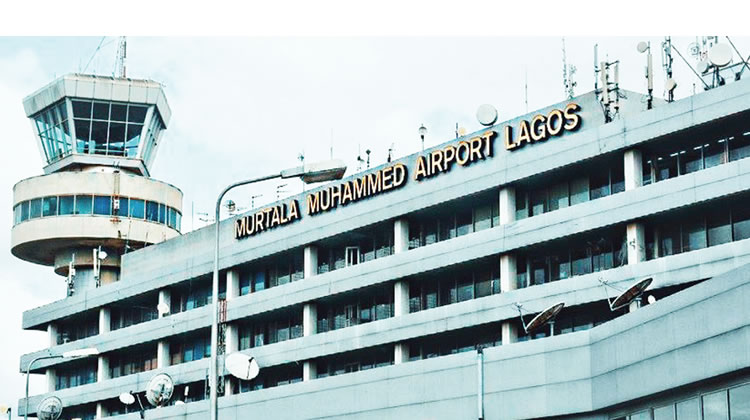
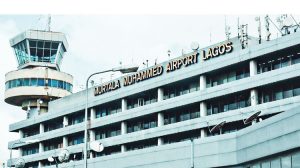
Passengers at the Murtala Muhammed Airport, Lagos, and the Nnamdi Azikiwe International Airport, Abuja, have expressed worry as workers of the Nigeria Meteorology Agency vowed to embark on a nationwide indefinite strike from midnight on Tuesday.
The development, according to operators and experts in the sector, could lead to flight disruption across the country should the strike linger.
While some passengers are confused about when the strike would begin, many are already jittery about boarding an aircraft.
In a letter obtained by The PUNCH, the Union of Air Transport Employees, the Association of Nigeria Aviation Professionals, and the Amalgamated Union of Public Corporations, Civil Service Technical, and Recreational Services Employees, accused NiMet management of failing to honour agreements aimed at resolving prolonged remuneration issues.
“As you are all aware, our unions have strived strenuously over the past few years to alleviate the exceedingly unjust remunerations conundrum that has visited extreme poverty and consequent untold hardship on NiMet workers. These efforts have been largely without substantial results,” the letter read.
The unions expressed frustration over management’s failure to implement a partial agreement reached on January 28, 2025. “You are equally aware that the agreement between the management and our unions since 28th January 2025 towards partial amelioration of the above-stated condition has been honoured largely only in the breach.”
The PUNCH understands that all flight operations must get NiMet clearance for favourable weather before taking off from the airports.
Passengers who spoke with one of our correspondents at the Lagos airport on Tuesday expressed fear, thinking that the workers might have abandoned their duty posts already.
“I have prayed three times today. I am fasting at the moment, and I won’t break this fast until I land at my destination. What I am going to do is very important; if not, I will shelve this journey,” a traveller, Mrs Adedire Airin, stated.
She added that she had questioned several airline and airport staff about the development, but none of them had been able to give a convincing explanation as to when the strike would begin.
“I have handed everything over to God, but I am calling on the government to ensure that an accident does not happen,” Airin stated.
Another traveller, who simply identified herself as Aderinsola, also expressed worry about the development, wondering when the strike would begin, as she prayed for safety.
“I should have been flown since yesterday, and I can’t allow any further delay. Some people have said the strike starts today, while some say it will start on Wednesday,” she stated.
In Abuja, a passenger, John Thompson, said he was told the strike would begin by midnight on Tuesday, and urged the unions to shelve the plan.
However, an industry expert, Muhammed Badamosi, said the strike may not be able to totally stop flight operations considering the level of technology available to the modern pilot.
“Nimet information is as important as any other information the pilot needs for operation, but the truth is that technology has made their service almost obsolete now, and it doesn’t stop the pilot from flying. From my house here, through an app, I can check all the weather in the world, including the ones sent to pilots.
“Remember that NiMet is using the same technology which is available to pilots, Yes, you need NiMet’s briefing but even without that, you can still operate. We don’t call it forecast per se, because when you have radar, it can give you the position of the weather and aircraft too for you to plan for flight even as a pilot,” he said.
Repeated phone calls and text messages to the Director of Public Affairs and Consumer Protection at the Nigeria Airspace Management Agency, Abdullah Musa, to ascertain if there would be flight operations at the airport were futile as he didn’t respond to questions.
Meanwhile, a source at the Nigeria Airspace Management Agency, who works at the control tower, expressed doubt that the entire agency would be shut down.
The source who could not give his name because he was not empowered to address the press on issues relating to the agency, stressed that NAMA would receive skeletal weather reports from NiMet and that would be what the agency would continue to make available to airlines for operations.
He said, “I think when agencies declare such a total strike, some key persons still stay back, such as someone from the forecast department, and I think that is where the little information we will be operating with would be coming from.”
Efforts to get the President of the National Association of Aircraft Pilots and Engineers, Galadima Abednego, on the possible impact of the strike were unsuccessful as he neither picked up his calls nor responded to text messages.
When asked what the situation would look like, perhaps, would airlines be able to operate under the circumstances of the strike, the Director of Public Affairs and Consumer Protection at the Nigeria Civil Aviation Authority, Michael Achimugu, said he would get back to our correspondent.
Also, Tunde Moshood, the spokesperson of the Minister of Aviation and Aerospace Development, Festus Keyamo, promised to get back to our correspondent on what the ministry was doing as regards the strike but never got back till press time.
Speaking with the Managing Director of Aero Contractors, Ado Sanusi, he stressed that it was the standard operational procedure for airlines to get weather reports for aircraft to either land or take off.
He, however, could not confirm if there would be flight operations on Wednesday or not.
“It is a standard operational procedure that if there is no weather report there is no how an aircraft can either land at an airport or take, but I cannot confirm if there will be flight operations tomorrow or not, I can not answer that question.
“NiMet is responsible for the weather forecast, and we all know that. But whether NAMA has now arranged with them or not, I don’t know! But if there is no weather report, there cannot be flight operations,” he stated.