Emergency rule: Reps panel awaits briefing on Rivers assignment

The House of Representatives’ 21-member Ad-Hoc Committee, constituted to oversee governance in Rivers State following the declaration of emergency rule by President Bola Tinubu, is yet to be briefed on how to carry out its mandate, The PUNCH has gathered.


President Tinubu declared a six-month emergency rule in Rivers State on March 18, 2025, after a prolonged political crisis between Governor Siminalayi Fubara and the State House of Assembly.


He suspended both parties and appointed Vice Admiral Ibok-Ete Ibas (retd) as Sole Administrator—a move ratified by both chambers of the National Assembly.


Speaker of the House, Tajudeen Abbas, inaugurated the committee on Tuesday at the National Assembly Complex in Abuja, appointing House Leader, Prof Julius Ihonvbere, as Chairman.


Despite the formal inauguration, members say they are yet to receive clear directives.


Speaking to The PUNCH, Patrick Umoh, representing Ikot Ekpene/Essien Udim/Obot Akara Federal Constituency of Akwa Ibom State, said: “The committee has just been inaugurated today (Tuesday). We are yet to be fully briefed on the modalities and rules of engagement. We hope the clarifications will be provided in due course.”


Another member, who spoke on condition of anonymity, added that the maiden meeting was largely ceremonial:


“Nothing took place at the meeting. We listened to the charge by the Speaker during the inauguration and we are prepared to hit the ground running. The meeting was for members to familiarise with one another.”


Attempts to get a comment from committee chairman, Prof Ihonvbere, were unsuccessful as he did not respond to messages sent to his phone.


Meanwhile, Speaker Abbas used the occasion to remind the appointed Sole Administrator that the Constitution requires him to report to the National Assembly.

“It is paramount to note that the current administration in Rivers State is inherently temporary. With the suspension of the state governor, Mr Siminalayi Fubara, and the entire House of Assembly, a caretaker administration has been installed under the stewardship of Rear Admiral Ibok-Ete Ekwe Ibas (retd.).


“His role is strictly circumscribed, as he is charged with maintaining law and order and ensuring that the basic functions of governance are met only until full democratic governance is restored,”Abbas said.


Referencing past interventions during emergencies in Plateau (2004), Ekiti (2006), and in Borno, Yobe, and Adamawa (2013), Abbas noted the constitutional authority of the National Assembly under Section 11(4) to legislate in such situations.


“This committee has a clear and non-partisan mandate. Its purpose is to monitor the implementation of federal directives and policies in Rivers State, ensure that the caretaker administration adheres to the law, and protect the public interest while facilitating the re-establishment of full democratic governance in the state,” he stated.

“The task before this committee is not routine; it is a mission of national significance that will serve as a litmus test for our commitment to democratic principles and constitutional governance.”


Urging members to maintain impartiality, the Speaker added,“You must conduct your oversight in strict accordance with the Constitution and avoid all forms of partisanship or bias. The National Assembly’s intervention in Rivers State is not an instrument of political vendetta but a constitutional necessity.”


In his response, Prof Ihonvbere assured of the panel’s readiness:“This is probably the strongest ad hoc committee ever set up since 2019. This will make our work a lot easier, and with the experience, exposure, dedication, and commitment to unbiased dispositions on national issues, I assure you, on behalf of my colleagues in the ad hoc committee, that we will not disappoint you, the National Assembly and Nigeria.”


Members of the committee include Prof Julius Ihonvbere (Chairman), Ali Isah (Deputy Chairman), Idris Wase, Muktar Betara, Sada Soli, Iduma Igariwey, Shehu Rijau, Wole Oke, Akarachi Amadi, Patrick Umoh, Isa Anka, and Chris Nkwonta, among others.


The representative for the South West, James Faleke, was absent at the inauguration.

Oil slump, Trump tariffs put Nigeria’s economy at risk — FG

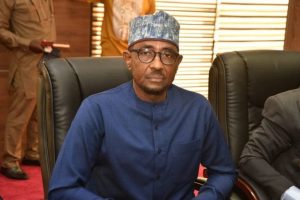
The CEO of the Nigerian Midstream and Downstream Petroleum Regulatory Authority, Farouk Ahmed, says the ongoing instability in global oil markets is negatively impacting Nigeria’s economy.


He said while falling petroleum product prices may benefit consumers, the broader economic consequences are severe for Nigeria, which heavily relies on oil exports.


“As consumers, we are happy that the price is coming down, but…as a nation, it’s not good for our economy because our revenue inflow is also impacted,” Ahmed told State House Correspondents at the Meet-the-Press briefing series organised by the Presidential Communications Team at the Aso Rock Villa, Abuja, on Tuesday.


“Most importantly, what is even destabilising the market is inconsistencies in the way the USA President Donald Trump also sends his policies. He moves today. Tomorrow, he reverses. So, it’s been challenging to predict the next level,” Ahmed explained.


He cited a recent sharp drop in prices—from $73 to $60 per barrel in a single day—as an example of how revenue inflows are being disrupted.


Further compounding the crisis are domestic challenges, including pipeline vandalism and reduced production, he argued.


His comments follow recent OPEC reports indicating that Nigeria’s oil output has fallen to approximately 1.4 million barrels per day.


In recent weeks, Trump’s aggressive trade policies—including sweeping tariffs on goods from several nations, especially China, and threats of levies on other countries—have injected uncertainty into global markets.


These measures, often abruptly announced or reversed, have disrupted supply chains and investor confidence, contributing to fluctuations in commodity prices, including crude oil.


The oil market, already sensitive to geopolitical tensions and demand shifts, has seen added volatility as Trump’s tariffs and waivers sway economic forecasts.


For instance, when tariffs were imposed, oil prices often dipped on fears of slowed global growth, while exemptions or rollbacks triggered temporary rebounds.


Pundits say such instability complicates long-term planning for oil-dependent economies like Nigeria, where revenue hinges on steady crude prices.


The NMDPRA Chief told journalists: “Recently, as we all know, the global oil market – not only the oil market but the global economy – has been a bit volatile in the sense of the new American government’s policy of tariffs, not only targeted at China but at the whole world.


“Investors and traders not only in the oil and gas industry but also in the general economies of the world are moving left and right to the extent that some are doing day trading. That means you do your trading today. You close by the end of today because you never know what tomorrow’s policy will drive the market into.

“So the crude oil and petrol products market continues to have a downward trajectory because of these inconsistencies and policies of the government of the United States, and the key aspect of it is the aspiration of the American president to ensure that the crude oil pricing, or the crude oil price, comes down to maybe below $50 a barrel; that’s why he encourages more exploration in his country.”


Turning to the local implications, Ahmed acknowledged that while lower product prices benefit Nigerian consumers, the overall impact on the economy is negative.


He said, “So how does it relate to our own local industry regarding crude oil pricing, product pricing, demand and supply? We see a downward trajectory in terms of product pricing and crude oil pricing.


“So, we are happy as consumers of the derivatives of product pricing that the price is coming down, but when you look at it globally as a nation, it’s not good for our economy because our revenue inflow is also impacted.


“If the crude oil price, like what happened some Fridays ago, where it dropped in one day from about $73 a barrel to $60, you can see that in terms of our crude oil production, our revenue is impacted severely.”


The NMDPRA chief urged stakeholders to prepare for prolonged uncertainty in the oil sector.

He added, “This volatility will continue because as recently as yesterday, when President Trump again exempted some sectors from tariffs, particularly to China, like in terms of vehicular tariffs, you saw the market again start to go up.


“So, this is how it will continue to show, just to give you a general perspective of the oil industry.


“We recently had a report from OPEC that Nigeria’s production has come down to about 1.4 million barrels a day. If we lose the price by $10, you can see the negative impact on our economy, national reserves, and the strength of our naira. Again, when you look at the product market, we are happy to say, oh, the price is coming down.”


In a similar vein, Ahmed revealed that imports of premium motor spirit (petrol) have plunged from 44.6 million litres a day in August 2024 to 14.7 million by 13 April 2025—a fall of roughly 30 million, or 67 per cent, according to the latest Nigerian Midstream and Downstream Petroleum Regulatory Authority supply tracker.


This was as local supply rose 670 per cent within that period.


Ahmed said after contributing virtually nothing in August, local plants delivered 26.2 ML/day in early April, a jump from the 3.4 ML recorded in September, the first month with measurable output.


He hinged the surge on the phased restart of the Port Harcourt Refining Company in late November and incremental volumes from modular refineries.


Despite the progress, combined supply crossed the government’s 50 ML/day consumption benchmark only twice in the eight-month window—November (56 ML) and February (52.3 ML).

In March it slipped just below target at 51.5 ML, and in the first half of April, it remained short at 40.9 ML.


Figures from the NMDPRA also showed the balance among the three sources of PMS —Oil Marketing Companies, Dangote refinery and the Nigerian National Petroleum Company Limited — fared since last October.


OMCs raised average daily imports from about 22 million litres in October 2024 to roughly 30 million litres in December, settling in the mid 20s. They now account for 55 60 per cent of all petrol on most days.


Meanwhile, deliveries from the Dangote Petroleum Refinery and Petrochemicals rose steadily from 10 ML/day in October to around 22 ML in January and February before easing to 18 ML by mid April 2025. The plant now meets about two fifth of national demand.


From 24 ML/day in October, the NNPCL volumes fell monthly, slipping to 1 ML in January and zero recorded supply after February, Ahmed revealed in his slide presentation.


The NMDPRA Chief argued that the authority only grants import licences relative to the country’s supply requirements.


On refining operations, he explained that six licensed private and four public refineries currently produce 1.12 million barrels per day.


Six licensed private plants account for 679,500 bpd of the total. The Dangote single train complex refines 650,000 bpd.


Other modular sites include Aradel (11,000 bpd), OPAC (10,000 bpd), Waltersmith (5,000 bpd), Duport Midstream Limited (2,500 bpd) and Edo Refining and Petrochemicals Company Limited (1,000 bpd).


State owned facilities add 445,000 bpd. The refurbished Port Harcourt complex (150,000 bpd), Warri (125,000 bpd), Kaduna (110,000 bpd) and the old Port Harcourt unit (60,000 bpd) make up the Nigerian National Petroleum Company Limited’s share.


The NMDPRA said it has issued 47 licences to establish covering 1.75 million bpd and 30 licences to construct for 1.23 million bpd. Only four plants currently hold licences to operate, and these together have a 27,000-bpd steady output.


Ahmed said five LTC projects with a combined capacity of 689,500 bpd are at the commissioning or construction stage, including Dangote with 650,000 bpd. Smaller builds include AIPCC Energy’s 30,000 bpd plant and Waltersmith’s 5,000 bpd second train.

Many feared killed as herders renew attacks on Benue community

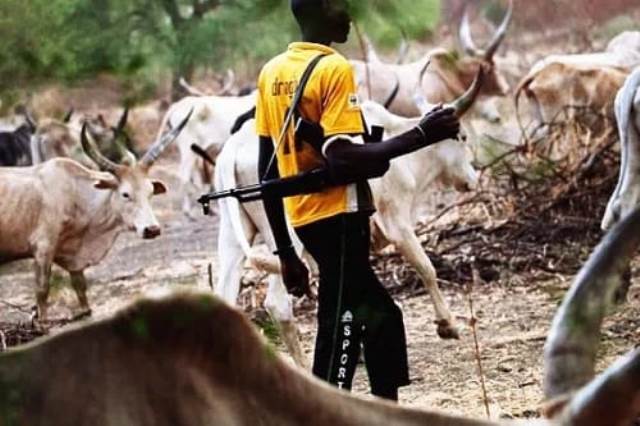
Panic gripped residents of Otobi community in the Akpa district of Otukpo Local Government Area of Benue State on Tuesday evening as suspected armed herders launched a fresh attack, leaving several people feared dead and hundreds displaced.


A resident of the area, Edwin Emma, confirmed the assault in a distressed phone call to journalists.


“We are being attacked by herdsmen at Otobi community. My wife and children are fleeing as I speak. Please call for help,” he said.


The lawmaker representing Otukpo-Akpa constituency in the Benue State House of Assembly, Kennedy Angbo, also confirmed the attack, which he said began around 5:30 p.m. on Tuesday.

In a phone conversation, Angbo disclosed that three corpses had already been recovered, with many more people feared killed.


“Right now, many people are feared dead, and hundreds have fled the community,” the lawmaker stated.


This marks the third reported attack on the Otobi community in the month of April alone, deepening fears among locals over growing insecurity in the area.

Attempts to reach the Benue State Police Public Relations Officer for an official response were unsuccessful, as her phone lines did not connect at the time of filing this report.


Meanwhile, the Chairman of Otukpo Local Government Area, Maxwell Ogiri, confirmed the incident to our correspondent in a telephone conversation from Abuja, where he is currently attending to post-election matters.


“Yes, the attack by herders on Otobi community is confirmed,” Ogiri said. “Though I am currently in Abuja, I have directed my aides in Otobi and Akpa district to mobilise security personnel to the affected area to bring the situation under control.”


Ogiri added that, as of Tuesday evening, he had not received a full report of casualties but emphasised that security agents had already been deployed to the community.


“I’ve been informed that the attack is ongoing. While I’ve not received confirmation of deaths yet, I expect to have clearer details by tomorrow,” he said.


He urged residents of Otobi to remain calm and law-abiding, assuring them that security agencies are working to contain the situation and restore peace.

Portable escapes re-arrest after release from police custody

Nigeria controversial singer, Badmus Okikiola popularly called Portable, on Tuesday, escaped re-arrest over another petition against him.


Portable regained freedom after veteran fuji musician, Okunola Saheed, popularly called Osupa, withdrew his petition.


Osupa had petitioned the police accusing Portable of criminal defamation, criminal intimidation, inciting public disturbance and cyberstalking.


Acting on Osupa’s petition, the Kwara State Police command had on Monday dragged Portable before a Kwara State Upper Area Court in Ilorin.


Potable was arraigned for offences deemed contrary and punishable under Section 392 (Criminal Defamation), Section 114 (Inciting Disturbance), Section 397 (Criminal Intimidation) of the Penal Code and Sections 24(1)(b) and 24(2)(c) of the Cybercrimes Act, 2015, as well as Sections 10 and 13 of the Violence Against Persons (Prohibition) Law, 2020.


The petition held that Portable, during a live Instagram broadcast on March 19, 2025, made defamatory remarks against Osupa, accusing him of jealousy and attempts to sabotage his career.


The presiding magistrate, Sunday Adeniyi had admitted Portable to bail in the sum of N1m and 2 sureties out of which one of them must be chairman of the Performing Musician Association of Nigeria while the other must own landed property in the Government Reserve Area within the jurisdiction of the Court.


Portable was unable to perfect his bail condition on Monday and was remanded at the federal correctional facility, Oke Kura, Ilorin.


However, respite came the way of Portable on Tuesday when Osupa, through his solicitor, Opalekunde Ahmed filed for withdrawal of the case.


Speaking with The PUNCH, on Wednesday, Osupa’s solicitor said his client mandated him to withdraw the case following intervention, and pleas from notable stakeholders.


He said Osupa was resorting to settling the case with Portable out of court.


The withdrawal letter, however, conveyed Osupa’s warning that Portable desists from further publications, or utterances disparaging his person.


The withdrawal letter read, “It’s our client’s (nominal complainant) instruction that the stakeholders in the music industry and other notable personalities in the society have intervened in the matter and pleaded to the nominal complainant to withdraw the case against the defendant in the interest of public peace.


“We hereby on behalf of our client apply to withdraw the case against the defendant and terminate same accordingly as the matter had been resolved amicably.

“Further, sir, we want to pray the court to admonish and warn the defendant to desist from any further publications, utterances and any other acts aiming at disparaging the person and businesses of the nominal complainant.”


Similarly, Osupa’s lawyer, Abdulqadir Ajasa confirmed that Osupa decided to withdraw the case following the intervention of some well-to-do members of the society pleading with Saheed to withdraw the case against the controversial singer.

The PUNCH correspondent gathered that Portable was released and left Ilorin, Kwara state, Tuesday afternoon.


But, Osupa also prevented Portable from being re-arrested by Managing Director of Starwood Hotels, Ilorin after allegedly collecting the sum of N6.3m for a show that he did not perform.


In the new development, Managing Director of the hotel, Mr Yemi George, said on Tuesday that Osupa prevailed on him not to re-arrest Portable after collecting the sum of N6.3m for a show that he did not perform.


“I have obtained every necessary document to re-arrest him today (Tuesday) to refund my money but out of respect for the legendary fuji musician (Osupa) who prevailed on me not to.


“My company, Starwood Hotels O2 Arena in collaboration with the leadership of the Theatre Arts and Motion Pictures Practitioners Association of Nigeria put an event together for Portable to perform but he never did,” George said.


According to a document titled Petition for fraudulent and obtaining by false pretence the sum of N6.3m, the petitioners said they entered agreement with Portable on July 22, 2024, which he never respected.


According to the petition, Portable was paid N6.3m to perform at the ‘Kwara Tampan Fiesta’ on September 29, 2024, but failed to appear on stage at the agreed-upon time.


Despite arriving over 16 hours late, he allegedly sneaked out of his hotel lodge without fulfilling his promise to perform.


The petitioners claim that Portable’s actions caused significant financial loss and distress, and they are seeking a thorough investigation, prosecution and restitution of the N6,300,000 allegedly obtained through fraudulent means.


The petition was signed by Chief Olu Amusan, Governor, TAMPAN and Ayodele Demokun on behalf of Starwood Hotels 02 Arena.


Meanwhile, Portable has had a history of being arrested and subsequently released.


In February, Portable was declared wanted by the Ogun State Police Command after he and his associates allegedly attacked government officials from the Ogun State Planning and Development Permit Authority at his bar in Iyana Ilogbo. The officials had visited to enforce regulatory compliance when the singer and his crew allegedly beat them up and vandalized their equipment.

Nine of his associates were arrested and arraigned in court, but Portable himself allegedly went into hiding and remained at large until February 19, 2025, when he turned himself in to the police in Lagos State.


In May 2024, Portable, became a trending topic after being arrested on May 14, 2024, over a debt he incurred after buying a N27 million G-Wagon from a car dealer.


Videos circulating across social media platforms show Portable being spoken to by policemen who read his warrant out to him, right before he swiftly leapt over a gate and ran away. The second video showed the moment he resisted after being apprehended by the policemen who carried him to the patrol vehicle.


In March 2023, Portable was arrested on March 31, 2023, after ignoring a 72-hour ultimatum given by the Ogun State Police Command to turn himself in. This followed allegations that he assaulted a man at his bar, Odogwu Bar, in Ogun State. After spending the weekend in custody, he was arraigned in court and granted bail.

Tinubu declares national emergency on food security

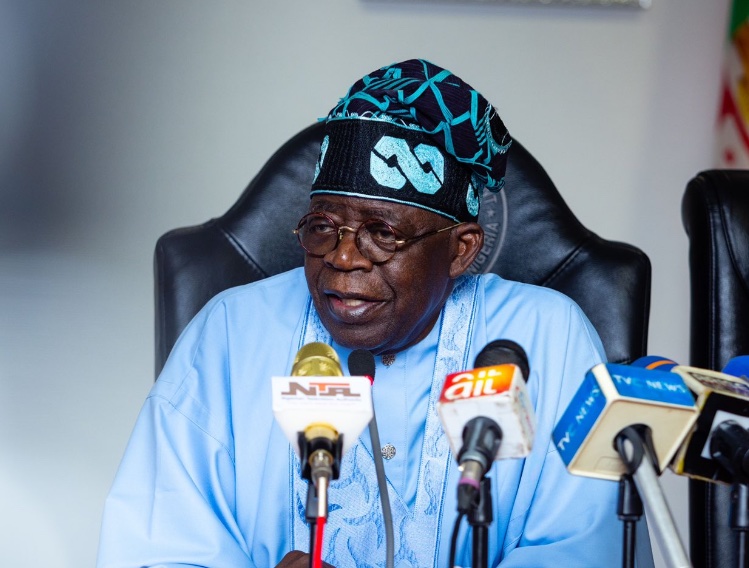
President Bola Tinubu on Monday declared a national emergency on food security, urging expanded irrigation infrastructure and participatory water resource management nationwide.


Tinubu made the declaration while opening the 6th African Regional Conference on Irrigation and Drainage in Abuja.


He was represented by the Secretary to the Government of the Federation, George Akume.


He urged African nations to adopt innovative strategies in addressing the continent’s irrigation and water management challenges.

He described the conference theme, “Tackling Irrigation Development and Water Management Crisis in Africa”, as a clarion call to action for sustainable agriculture and economic resilience.


“Africa continues to face major challenges in unlocking its irrigation potential due to inadequate infrastructure, financial constraints, climate change, and governance issues.


“This conference offers a vital platform for us to collectively chart a path forward,” he said.


Tinubu stated that the country had more than 3.1 million hectares of irrigable land located around key river basins such as the Niger and Benue.


In his remarks, the Minister of Water Resources and Sanitation, Prof. Joseph Utsev, said the government had completed several landmark initiatives under the Transforming Irrigation Management in Nigeria project.


He announced that its successor, the Sustainable Power and Irrigation for Nigeria project, would address outstanding gaps while optimising the economic value of water resources to support food security.


“With the TRIMING project winding down, Nigeria is poised to begin implementation of the SPIN project in partnership with the World Bank.


“This initiative will consolidate on the successes of TRIMING and expand our irrigation potential,” Utsev said.


According to the minister, the TRIMING project, which spanned more than seven years, delivered notable achievements, including the completion of the Dadin-Kowa and Bakolori irrigation schemes and 90 per cent completion of the Middle Rima Valley irrigation project.


It also supported ongoing interventions in Ondo, Kwara, Benue, Kebbi, Edo, Adamawa, and Oyo states.

He also noted that the project established Water Users Associations, farmer management centres, and supported market linkages for key value chains such as rice and tomato.


The minister further revealed that River Basin Development Authorities had developed more than 153,000 hectares of irrigable land and were being partially commercialised to attract private sector investment.


He also referenced the 2025 Flood Outlook and Risk Management Strategy, aimed at minimising flood-related impacts on agriculture.

“This conference is a platform for knowledge exchange, innovation, and collective commitment to resolving Africa’s pressing irrigation and water management issues,” he added.


The Head of the Civil Service of the Federation, Dr Didi Wilson-Jack, called for renewed commitment across all tiers of government to ensure national food security.


Former Permanent Secretary of the Ministry of Water Resources, Mr Godknows Igali, underscored the urgency of strategic planning, particularly in the face of Nigeria’s growing population.


He stressed the importance of professional staffing and proper management of river basins, adding that sub-national governments must play an active role in water governance and food systems.


Gov. Babagana Zulum of Borno State raised concerns over the shrinking farming seasons caused by climate change, warning that unpredictable rainfall patterns were creating uncertainty among farmers.


“Our fertile lands are turning to dust. Irrigation is now a necessity, not a luxury.


“Innovation must not be seen as a privilege of the few; we must empower women and youth who are at the frontline of agriculture,” Zulum said


He appealed to development partners to show greater responsiveness to the challenges of water access and rural farming in Africa.


President of the International Commission on Irrigation and Drainage, Dr Marco Arcieri, described the conference as both timely and essential.


“This could be a turning point. We’ve celebrated big ideas and set tangible goals to confront the pressing challenges.


“We remain committed to supporting Africa as it faces population growth and climate stress,” Arcieri stated.

It may be recalled that he had earlier addressed participants at the Young Professionals’ Forum, a pre-conference event which gathered emerging leaders in irrigation and water management across Africa.


Arcieri emphasised the role of young professionals in driving sustainable solutions to the continent’s water challenges.


Mr Ibrahim Musa, who leads the African Regional Working Group, expressed optimism that the conference would lead to innovative approaches and actionable outcomes in addressing Africa’s unique irrigation development needs.


The conference continues in Abuja until April 17, with technical sessions, policy dialogues, and field visits to irrigation sites across Nigeria.


NAN


Atiku condemns Plateau killings, blames Tinubu for security failures

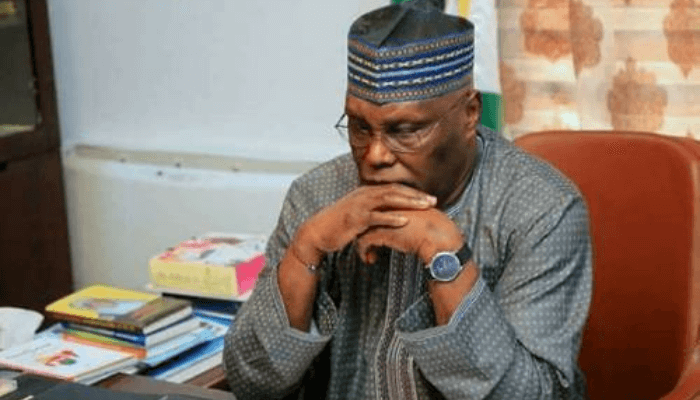
Former Vice President and presidential candidate of the Peoples Democratic Party in the 2023 elections, Alhaji Atiku Abubakar, has expressed sorrow and outrage over the recent wave of killings in Plateau and Borno states, describing the incidents as a reflection of the worsening security situation under President Bola Tinubu’s administration.


In a strongly worded statement issued on his official X account on Tuesday, Atiku condemned the latest attack in the Zike community, in the Kimakpa area of Kwali district, Bassa Local Government Area, Plateau State, where at least 47 persons were killed.


The incident, which occurred on Sunday, comes on the heels of another deadly attack in Bokkos Local Government Area.


“I am deeply saddened and alarmed by the resurgence of violent attacks in Plateau State, particularly the recent killings in Zike community in the Kimakpa area of Kwali district, Bassa Local Government Area, where at least 47 innocent lives were lost on Sunday.


“This tragedy, coming just days after a similar attack in Bokkos LGA, is a grim reminder of the worsening state of security in our country,” Atiku said.


The former vice president laid blame for the incident on the Federal Government, accusing Tinubu of failing to uphold the primary responsibility of protecting lives and property.


“It is regrettable and entirely unacceptable that these Nigerians had to lose their lives as a result of the incompetence of the Tinubu-led administration.


“The protection of lives and property is the primary responsibility of any government. Unfortunately, President Tinubu has failed these citizens and continues to fail them”, Atiku stated.


He also raised the alarm over continued terrorist attacks in Borno State, noting the increasing loss of life and territorial control to insurgents.


Atiku cited concerns raised by Governor Babagana Zulum and the Shehu of Borno, Abubakar Ibn Umar Garbai El-Kanemi, as further evidence of a deteriorating security situation.


“I also condemn the escalating wave of terrorist attacks in Borno State, which, according to Governor Babagana Zulum and the Shehu of Borno, Abubakar Ibn Umar Garbai El-Kanemi, has resulted in the loss of lives and territory to insurgents.


These disturbing developments underscore the total collapse of the current administration’s security policy and architecture”, he added.


According to Atiku, the failure to prosecute known terrorists has emboldened their activities across the country.


He urged swift and decisive judicial action to hold perpetrators accountable.

He continued, “Every sincere Nigerian should be disturbed by how terrorists and bandits operate with impunity, especially in Northern Nigeria, which has become the epicentre of this violence.


“The continued delay in prosecuting terrorists and bandits, some of whom have been in custody since 2016, has only emboldened these mass murderers.


“If the same level of urgency and energy were devoted to the prosecution of terrorists as we have seen applied to the trials of political critics, we would have sent a clear and forceful message that crime has consequences. Instead, justice is being delayed, and our security forces are being demoralised.”


He called on the Attorney General of the Federation to prioritise terrorism-related prosecutions and recommended the establishment of special courts to expedite justice.


“The Attorney General of the Federation must prioritise the prosecution of these criminals, and special courts should be established to fast-track their trials.


“Our justice system must not give the impression that terrorism pays. I am also alarmed by reports of armed criminal groups crossing our borders to carry out attacks. This is a national disgrace and further proof of a failed security framework”, he said.


Atiku also called for legislative action to enable states to better secure their territories by arming and equipping local security outfits.


“Condemnation after the fact is not enough. What is needed are proactive, preventive actions. As long as these criminals face no real consequences, they will continue to return to inflict more pain on innocent people.


“I urge the National Assembly to urgently pass legislation that allows state governments to properly arm and equip their security outfits with modern weapons. This will strengthen our overall security architecture and help relieve the overstretched federal security agencies,” he said.


He also urged community members to avoid aiding criminal groups and instead support the security forces by providing vital intelligence.


“At the same time, I must call on community members to reject collaboration with armed groups and instead support our security forces by sharing intelligence. Security is a shared responsibility,” he said.


While commending the efforts of Nigeria’s security agencies, Atiku stressed the need for greater support from the government.


“I commend the courage and sacrifices of our security forces. Their efforts remain invaluable, but they need the full support of the people and a government that prioritizes security, not just with words but with decisive action,” he added.

Olubadan warns Mogajis against land grabbing, insubordination

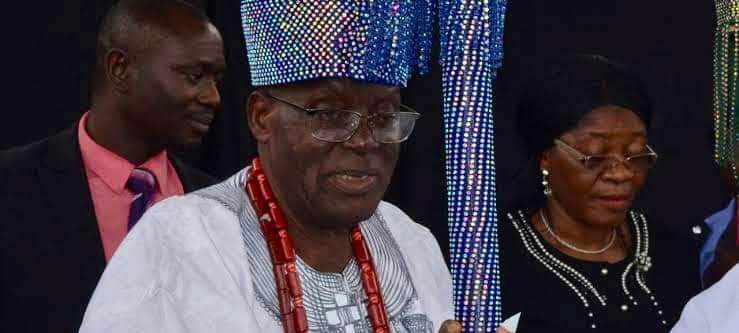
The Olubadan of Ibadanland, Oba Owolabi Olakulehin, has warned compound heads, popularly known as Mogajis and village heads, also referred to as Baales, against land grabbings and insubordination to elders within their families.


He gave this warning on Monday during the installation of nine compound and two village heads in his Palace at Oke-Aremo in Ibadan, the Oyo State capital.


A statement by his Chief Press Secretary, Gbenga Ayoade, on Tuesday in Ibadan, further warned them to ensure that peace reigns supreme in their domains as no meaningful development can be achieved without peace.


The newly installed nine Mogajis were Giwa Kamaldeen from Aliiwo Compound in the Ibadan North East Local Government Area of the state; Kamorudeen Adebimpe of Adebimpe family, Odinjo in the Ibadan South East; Muritala Aloba of Aloba family, Inalende in the Ibadan North; Kazeem Rabiu of Akinsumbo Compound, Oke-Balogun Opooyeosa in the Ibadan North West and Kadir Farayola, Samonda family, Ile Samonda, Oje in the Ibadan North East.


Others were Olukayode Oduntan, Awise of Oduntan Awise Compound, Oke-Offa in the Ibadan North East; Abideen Mustapha, Eleko family, Kososi Street, Idi Arere in the Ibadan South West; Yinusa Ibilade, Apapa Compound, Labiran in the Ibadan North East and Sholagbade Arapaja, Arapaja family, Kudeti in the Ibadan South West.

The Baales installed were Raimi Edujobi from Edujobi village in the Egbeda Local Government as well as Morakinyo Fagbemi of the Fagbemi village in the Akinyele Local Government Area of the state.


Olubadan, while speaking through Ekarun Balogun of Ibadanland, High Chief (Senator) Sharafadeen Alli, congratulated the newly installed traditional title holders for being counted worthy to receive the titles.


“You are the accredited representatives of the Olubadan of Ibadanland, therefore, you must ensure that peace reigns supreme in your domains, as no meaningful development can be achieved without peace.


“Desist from any act that can tarnish the reputation of the traditional institution, such as land grabbing, insubordination to elders within your families and oppression of family members whom you represent,” Olubadan warned.


Dignitaries at the occasion were members of the Olubadan Advisory Council, former Deputy Governor of the state, Taofik Arapaja, traditional rulers, religious leaders, business tycoons and well-wishers.

Many groan as CBEX allegedly sweeps N1.3tn from investors


The digital investment platform CBEX has allegedly collapsed, with reports indicating losses amounting to over N1.3 trillion incurred by investors.


On Tuesday, PUNCH Online reported that the platform became inaccessible after users experienced persistent withdrawal failures, followed by sudden account balance wipes.


The incident has sparked widespread reactions, particularly on social media, where users have expressed frustration, criticism, and concern over the situation.


On X (formerly Twitter), a user identified as #edoPeekeen (Edo Blood) commented, “Even pipul wey no get anything to do with CBEX dey cry too… 9ja don tire person to the extent person nor know who dey lie again. Chai,” capturing public disbelief.

Another user, H #Eskimoh_ stated:

“No one rule of investment states, ‘Never invest any amount you can’t afford to lose.’ A lot of people need financial literacy, and the sad story is the government will never add that to school subjects.”


On Facebook, Chinenye Nduka lamented,

“My brother invested his school fees and now he can’t even face my parents. God, this country keeps dealing with us.”


Another Facebook user, David Eyo, wrote,

“I warned my church WhatsApp group, but they mocked me. Now the same people are tagging me to help them recover their money. How??”


Instagram was no different with posts from victims and observers.

#the_real_aduke posted,

“I lost $1,000. That was my bridal savings. I don’t even know how to tell my fiancé. I feel numb.”


#iam_gideonlegend commented,

“CBEX came, sweet-talked everyone, and vanished like a thief in the night. Make we no lie, we were all greedy.”


A Lagos-based foreign exchange broker, #Obobanj (RHI O.O.BI), who has been linked to the platform, commented on the X platform,

“While investigations are still unfolding, social media has been flooded with heartbreaking stories, outrage, and bitter lessons from victims and observers alike.”


The Central Bank of Nigeria has consistently warned against investing in Ponzi-style schemes, particularly those offering high returns without regulatory oversight.


“The Central Bank of Nigeria (CBN) has long warned citizens about the dangers of Ponzi schemes, cautioning against investments that promise unrealistic returns. Despite this, platforms like CBEX continue to attract large followings, often collapsing without warning and leaving chaos in their wake,” #Obobanj added.


PUNCH Online earlier reported that the Securities and Exchange Commission had reaffirmed its commitment to safeguarding investors’ funds amid the growing prominence of fintech in Nigeria’s financial sector.

This is according to a statement by the Commission, which noted that the Director-General of SEC, Dr Emomotimi Agama, said this at a one-day capacity-building session for financial journalists in Abuja.


The SEC DG assured all that the commission would enforce existing regulations within the fintech space to prevent mismanagement of funds and ensure operators comply with the capital market rules, especially about fundraising.

Northern CAN condemns killings in Plateau

The Christian Association of Nigeria in the 19 Northern States and Abuja have strongly condemned the recent brutal killings in Bassa Local Government Area of Plateau State.


In a statement released on Tuesday in Kaduna, Rev. Yakubu Pam-led Northern CAN expressed deep sadness and outrage over the senseless and barbaric attacks that have claimed the lives of innocent and peace-loving citizens.


“We are deeply saddened and outraged by the senseless and barbaric attacks that have claimed the lives of innocent and peace-loving citizens.


These repeated acts of violence are not only a violation of human dignity and the sanctity of life, but they are also a direct threat to the peace and unity of our state and the nation at large,” Pam said.


Northern CAN called on security agencies to act swiftly and decisively to apprehend the perpetrators and bring them to justice.


“We call on security agencies to act swiftly and decisively to apprehend the perpetrators and bring them to justice. We also urge the government at all levels to take proactive steps to protect vulnerable communities and prevent further loss of lives,” he said.


Pam stressed the need for stakeholders, including traditional rulers, religious leaders, security operatives, and community-based organisations, to unite in purpose and work together to end the cycle of violence that has plagued Plateau State for far too long.

“The time has come for all stakeholders to unite in purpose and work together to end the cycle of violence that has plagued Plateau State for far too long,” he said.


He said Northern CAN stands in solidarity with the grieving families and the entire people of Bassa LGA in this moment of pain.


“We pray for peace, healing, and justice. Plateau must not bleed again,” Pam said.


PUNCH online reports that only recently, a crisis engulfed the association over tenure elongation.


At the center of the crisis is the tenure of Pam, whose term as chairman allegedly expired over two years ago.


The crisis took a turn for the worse when Rev. Hayab’s group conducted an election, appointing him as the new chairman while Rev. Pam’s faction has denounced the move, describing it as a “religious coup” and “fraudulent.

VIDEO: Nigerian women in tears after allegedly losing millions to crashed CBEX trading platform

Several Nigerian women have been seen breaking down in tears after reportedly losing millions of naira to CBEX, a digital trading platform that recently crashed.


According to circulating reports, the platform became inaccessible after users experienced difficulties withdrawing their funds. Many later discovered that their account balances had been wiped to zero.


CBEX had positioned itself as a high-yield investment platform, promising users a 100% return on investment within one month. Investments were made strictly in U.S. dollars.


The crash has sparked a wave of emotional reactions online, with many investors expressing regret and frustration over their losses.


In a video shared on social media, some women are seen lamenting their experiences.

Watch the video below

Exit mobile version