74 terrorists killed, 130 suspects apprehended in one week — DHQ

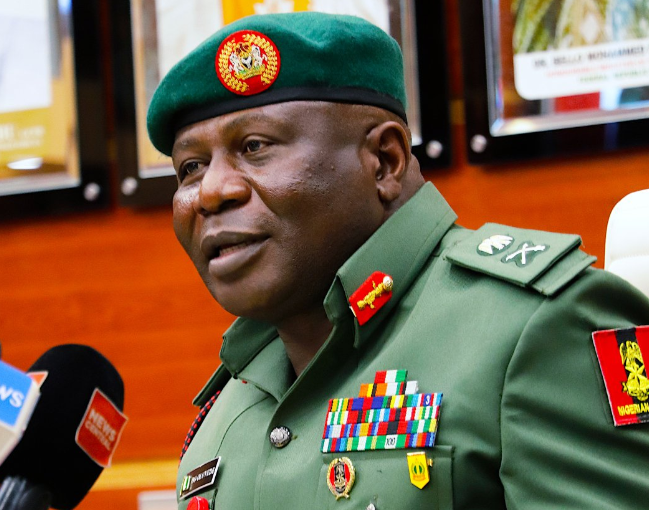
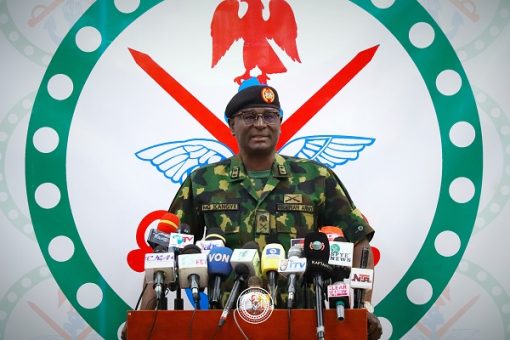
Maj-Gen Markus Kangye

The Defence Headquarters says troops have killed a total of 74 terrorists, apprehended 130 suspects, and rescued 61 kidnapped hostages in various operations conducted between March 5 and 13.

The Director of Defence Media Operations, Maj.-Gen. Markus Kangye disclosed this in a weekly report on ongoing military operations across the country on Friday in Abuja.

Kangye said the successful operations were jointly carried out by the land component of the Armed Forces, teams from the Office of the National Security Adviser, security agencies, and hybrid forces.

He stated that the troops recovered 71 assorted weapons, including 32 AK-47 rifles, 15 locally fabricated guns, nine Dane guns, three pump-action guns, two locally made pistols, and 10 other assorted arms.

According to him, troops also recovered 1,202 rounds of ammunition, comprising 1,133 assorted rounds of 7.62mm ammunition and 69 live cartridges.

The Defence Headquarters says troops have killed a total of 74 terrorists, apprehended 130 suspects, and rescued 61 kidnapped hostages in various operations conducted between March 5 and 13.

The Director of Defence Media Operations, Maj.-Gen. Markus Kangye disclosed this in a weekly report on ongoing military operations across the country on Friday in Abuja.

Kangye said the successful operations were jointly carried out by the land component of the Armed Forces, teams from the Office of the National Security Adviser, security agencies, and hybrid forces.

He stated that the troops recovered 71 assorted weapons, including 32 AK-47 rifles, 15 locally fabricated guns, nine Dane guns, three pump-action guns, two locally made pistols, and 10 other assorted arms.

Kangye further revealed that 143 terrorists, including five adult males, 66 adult females, and 72 children, surrendered to troops in the North-East theatre of operations during the week.

Among those who surrendered, one terrorist handed over two AK-47 rifles, 33 rounds of 7.62mm special ammunition, and two magazines

“The gallant men and women of the Armed Forces will continue to fulfil their constitutional responsibilities of protecting the lives and property of all Nigerians in line with our constitutional roles, Rules of Engagement, and Code of Conduct for Internal Security Operations,” he said.


Nekede poly suspends lecturer for assaulting student

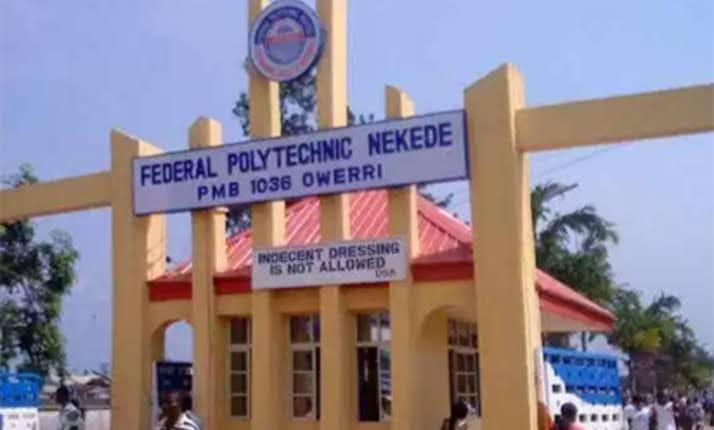
Federal Polytechnic, Nekede, Owerri, imo state

The Federal Polytechnic Nekede, Owerri, in Imo State, suspended a facilitator, Mr. Okoroafor Ifeanyichukwu, from duty on Friday after he was seen in a viral video assaulting a male student.

The suspension notice, issued in a letter with reference FPN/TEDC/80/1 and dated March 14th, 2025, stated, “You are hereby suspended from duty as a facilitator in the Technical and Entrepreneurship Development Centre pending the outcome of investigation into the incident that occurred yesterday 13th March, 2025 at the site of your entrepreneurship training.”

The letter, signed by the Director of TEDC, Dr. Okoye P.C., was copied to the Rector, Dean of Student Affairs, and the Student Union Government of the institution.

A video surfaced late Thursday showing the suspended facilitator slapping a male student, Chidera, and then kicking him, causing him to fall heavily onto a cemented walkway, damaging his phone. The facilitator then walked away.

The video garnered widespread attention and criticism.

Our correspondent noted that the lecturer, Okoroafor, sent an apology message to Chidera, which read: “Dear Chidera, LETTER OF APOLOGY TO MR CHIDERA. I am writing to offer my sincerest apologies for my behavior towards you. I am deeply sorry for the way I treated you, and I realize that my actions were unacceptable and hurtful. As your teacher, I should have provided a safe and supportive learning environment, but instead, I bullied and intimidated you.

“My behavior was not only unprofessional, but it also caused you harm and distress. I want you to know that I take full responsibility for my actions, and I am truly sorry for the pain and suffering I caused you. I understand that my apology cannot erase the past, but I hope it can be a step towards healing and moving forward.

“Please know that I am committed to changing my behavior and ensuring that all my students feel safe, respected, and supported in the classroom. I will do everything in my power to prevent similar incidents from happening in the future. If you are willing, I would like to meet with you to discuss how I can make amends and support you in any way possible. Please let me know if this is something you would be open to, and we can arrange a time and place that works for you. Once again, I offer my sincerest apologies for my behavior. You deserved better from me, and I hope you can find it in your heart to forgive me. Sincerely, Ifeanyichukwu.”

Netizens shared the suspension letter on social media, commending the institution’s swift action, though some questioned the lack of a fair hearing.


USAID cuts causing ‘catastrophic harm’, doctors tell Trump

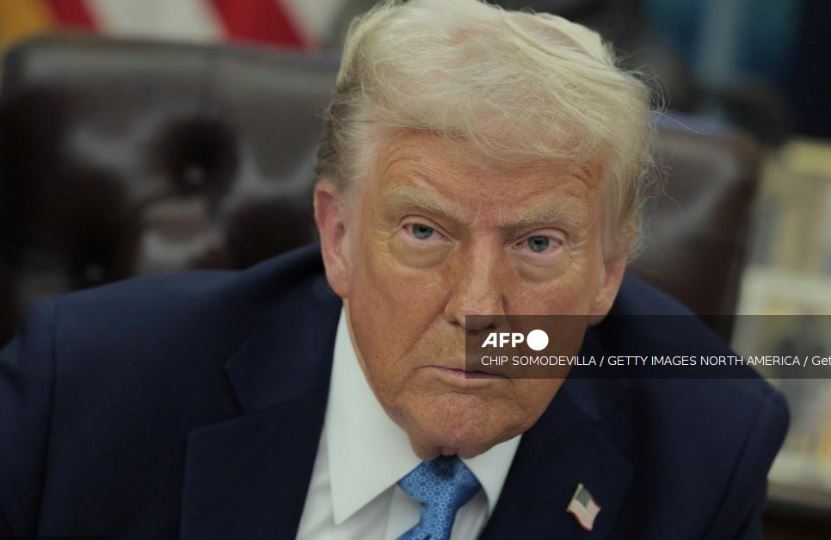
US President, Donald Trump

Hundreds of HIV doctors and researchers have called on the Trump administration to reverse its sweeping aid funding cuts, saying they are “doing catastrophic harm” to the global fight against AIDS.

The United States has historically been the world’s largest donor of humanitarian assistance, but President Donald Trump has slashed international aid since returning to the White House less than two months ago.

The cuts have had a huge impact on global efforts to combat HIV, tuberculosis, malaria and other health scourges, putting millions of lives at risk, humanitarian organisations have warned.

An open letter to US Secretary of State Marco Rubio signed by hundreds of high-profile HIV doctors, researchers and public health experts called on the government to change course.

“Unless reversed, the dismantling of the US-supported AIDS response will cause the deaths of an estimated six million people in the next four years, decades of progress will be reversed, and the world will face growing HIV epidemics across the globe,” said the letter, dated Thursday.

On Monday, Rubio announced that 83 percent of all contracts under the vast US humanitarian agency USAID have been terminated.

This meant an anti-HIV initiative called PEPFAR, which is one of the world’s most successful public health efforts and has saved an estimated 26 million lives over the two decades, has been “virtually eliminated”, the letter said.

The cuts also immediately halted medical trials across the world, “leaving study participants stranded,” the letter said.

Research institutions have been stripped of funding, staff and political independence, it added. The prestigious US university Johns Hopkins announced on Thursday it would lay off more than 2,000 employees because of the USAID cuts.

Even if US courts eventually find these decisions illegal, “the human suffering and loss of lives happening now cannot be reversed,” the letter said.

Among the signatories was French scientist Francoise Barre-Sinoussi, who won a 1983 Nobel prize for her work identifying the HIV virus.

The US government has said the funding cuts were aimed at reducing spending, while Trump’s billionaire advisor Elon Musk has boasted of putting USAID “through the woodchipper”.

The letter was published as researchers gathered for the Conference on Retroviruses and Opportunistic Infections in San Francisco.

Protests were held across the US last week calling for people to “Stand Up for Science”.


Kaduna distributes 7,000 motorcycles to civil servants

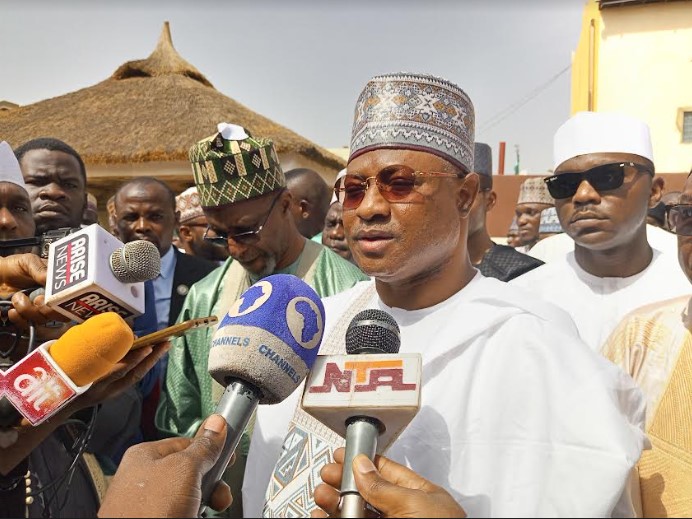
Kaduna gov, Uba Sani.

The Kaduna State Government has distributed 7,000 motorcycles, including 4,000 electric bikes, to civil servants across the state.

The initiative, launched by Governor Uba Sani, is the first of its kind in Nigeria and aims to ease the financial burden of transportation costs on civil servants.

“We recognise that transportation costs can be a significant burden for civil servants. It is our hope that these motorcycles will help alleviate that burden, allowing you to arrive at work early and focus on your tasks,” Sani said during the flag-off ceremony in Kaduna on Friday.

The governor, who was represented by his deputy, Dr Hadiza Balarabe, reiterated the government’s commitment to improving working conditions for civil servants, including enhancing workplace infrastructure.

“The civil service is the engine of government. Civil servants play a critical role in shaping governance and ensuring the efficient delivery of essential services. Our administration recognises that large-scale rural and urban transformations, as well as economic revitalisation, are only possible with a dedicated, skilled, and well-motivated workforce,” he added.

The motorcycles are being provided through a salary-deductible loan scheme in collaboration with the Nigerian Labour Congress, Paynacle Digital Services Limited, and Optimus Bank.

The Kaduna State Chairman of the NLC, Comrade Ayuba Magaji, praised Governor Sani for his commitment to workers’ welfare.

“We commend Governor Uba Sani for guaranteeing the financial cover necessary to make this initiative a reality. By ensuring that these motorcycles are accessible to qualified civil servants through salary-deductible loans, Your Excellency has once again demonstrated a deep commitment to the welfare of workers,” he said.

The Acting State Secretary of the National Union of Road Transport Workers (NURTW), Comrade Hassan Ibrahim, announced that the union had purchased 1,000 electric tricycles for its members, payable over two years.

“We appeal to the Kaduna State Government to contribute its own quota so that this initiative can be sustained,” Ibrahim said.

The distribution of motorcycles marks a significant step towards improving the lives of civil servants in Kaduna State. By providing affordable transportation options, the government is helping to ease workers’ financial burdens and enhance their overall well-being.

One of the beneficiaries, Mrs Sarah Musa, a civil servant with the Kaduna State Ministry of Education, expressed her gratitude for the initiative.

“This motorcycle will really help me. I used to spend a lot of money on transportation, but now I can use that money for other important things,” she said.

Tackle national security threats, army chief urges commanders

CoAS, Olufemi Oluyede

The Chief of Army Staff, Lt.-Gen. Olufemi Oluyede, has urged battalion commanders to demonstrate exemplary leadership in their respective commands to enable troops to tackle emerging threats to national security effectively.

Oluyede made this call while addressing battalion commanders participating in the just-concluded First Commanding Officers’ Workshop 2025, held at the Headquarters of 2 Division, Nigerian Army, Ibadan.

This was contained in a statement issued by the Director of Army Public Relations, Maj.-Gen. Onyema Nwachukwu, on Friday in Abuja.
Oluyede described battalion commanders as a crucial link between the operational and tactical levels of command.

He stated, “They must demonstrate the essential leadership qualities of responsibility, accountability, and moral courage to lead their troops effectively in both battle and peacetime.”

The army chief further urged the commanding officers to “brace up to address threats to national security in their respective areas of responsibility.”

He also called on them to remain unwavering in their loyalty to the government and the constitution of the Federal Republic of Nigeria.
Oluyede commended the Chief of Training (Army), Maj.-Gen. Sadiq Ndalolo, and his team for organising the workshop for battalion commanders.

He also expressed gratitude to the President and Commander-in-Chief of the Armed Forces of Nigeria, Bola Tinubu, for his continued support of the Nigerian Army’s transformation efforts.

While addressing troops of the division, the COAS praised them for their sacrifices in combating security challenges across the country and urged them to remain steadfast and professional.

He reassured them that the welfare of soldiers and their families remains his top priority.

Oluyede pledged to ensure the regular provision of uniforms, kits, and combat enablers, improved office and residential accommodation, access to soft loan schemes, increased Ration Cash and Instructors’ Allowances, and affordable housing.

During his visit, he also inaugurated the 2 Division Petroleum, Oil, and Lubricants Station at Adekunle Fajuyi Cantonment and a Military Police Holding Facility at Mokola Barracks.

Additionally, Oluyede approved the immediate rehabilitation of the Warrant Officers’ and Sergeants’ Mess in the cantonment, as well as the 81 Battalion Officers’ Mess in Mokola.

Earlier, the General Officer Commanding 2 Division, Maj.-Gen. Obinna Onubogu, stated that the workshop aimed to reinforce both individual and collective commitment towards the COAS’s vision of a highly motivated and combat-ready army.

Onubogu added that the workshop would provide battalion commanders with insights into improved tactical operations, strategic planning, and leadership skills to enhance operational and administrative efficiency across various theatres of operations.


INC urges Tinubu to caution Wike over comments on Ijaw

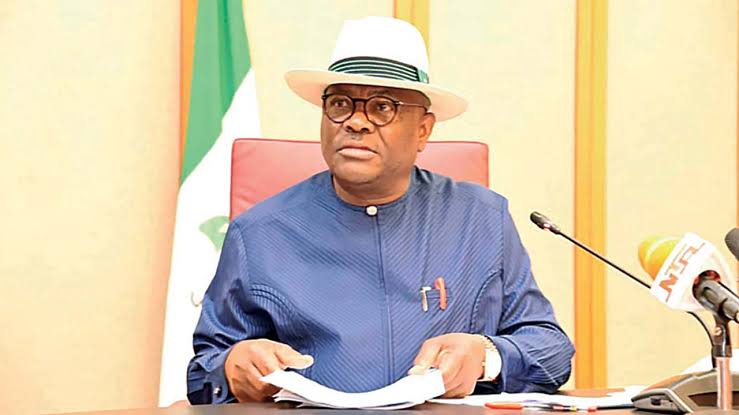
Nyesom Wike

The Ijaw National Congress has appealed to President Bola Tinubu to call the FCT Minister, Mr Nyesom Wike, to order over his comments on the Ijaw.

The INC was reacting to alleged comments credited to Wike in which he said the Ijaw people ”were a minority of minorities in Rivers and other South South States except Bayelsa”.

In a statement in Abuja on Friday, the National Publicity Secretary, INC, Chief Ezonebi Oyakemeagbegha, said that the congress had taken note of the FCT minister’s remarks.

”We will maintain peace and stability as we call on President Tinubu to caution him and redirect his focus to his ministerial duties.

“The INC remains committed to preserving the harmony enjoyed by all in the Niger Delta region.

“We have taken note of the recent remarks made by the Minister of the Federal Capital Territory.

“Given his eight-year tenure as governor of Rivers we expected a more informed understanding of the state’s history,” the INC said.

The INC said that the Ijaw people are the fourth largest ethnic group in Nigeria, with over 40 million people, and the oldest tribe in Nigeria, as documented in history.

“They are the largest ethnic group in Rivers with eight local government areas, and also not a minority in Delta.

“The Ijaw have consistently advocated for fairness and equity in the Niger Delta region and the South-South, and we will not be swayed by individual attempts to provoke us,” Oyakemeagbegha said.

NAN


NASS strips South-West development commission of 3% seaports, airport revenues

How ex-Kwara Governor diverted N5.78bn UBEC funds

Alhaji Abdulfatah Ahmed

From Sola Ojo, Abuja

The trial of the former Governor of Kwara State, Alhaji Abdulfatah Ahmed, and his Finance Commissioner, Ademola Banu, over the alleged misappropriation of N5.78 billion in public funds continued on Wednesday, 12 March 2025, before Justice Mahmud Abdulgafar of the Kwara State High Court sitting in Ilorin.

At the resumed hearing on Wednesday, the Economic and Financial Crimes Commission (EFCC) presented its second witness (PW2), Dr Musa Oladimeji Dasuki, a retired Permanent Secretary at the Kwara State Universal Basic Education Board (SUBEB), who served between 2011 and 2020.

Led in evidence by EFCC counsel Rotimi Jacobs, SAN, Dasuki testified that the Kwara State Government, under the leadership of the first defendant as Governor and the second defendant as Finance Commissioner, requested UBEC funds for the years 2013 and 2014 to pay teachers’ salaries.

‘The then Commissioner for Finance, Ademola Banu, who is the second defendant in this case, initially made an oral request for the release of the 2013 UBEC Matching Grant to pay teachers’ salaries.

‘However, we insisted that such a request must be made in writing. Subsequently, the Commissioner sent a letter conveying His Excellency’s approval for the release of the funds.

‘As a result, the money was deposited into the state government’s account domiciled with Skye Bank Plc,’ said Dasuki, as quoted in a statement on Thursday by the Head of Media and Publicity at the EFCC, Dele Oyewale.

According to Oyewale, Dasuki further explained that SUBEB initially opposed the request because they knew it would affect ongoing projects.

‘However, they eventually approved the release after receiving assurances from Banu that the funds would be repaid once the state received its allocation from Abuja,’ Oyewale said.

He further quoted Dasuki as saying, ‘A letter was written to that effect from the office of the Commissioner for Finance, signed on his behalf, and the money was released immediately upon receiving the letter.

‘According to the 2013 action plan submitted to UBEC, the funds were intended for the construction of 40 standard classroom blocks with offices, 40 VIP toilets, and Information and Communication Technology (ICT) centres in primary and junior secondary schools across the 16 local government areas of Kwara State. However, many of these projects could not be executed because the funds had been diverted.’

Despite the assurances, Dasuki stated that the money was never repaid.

He further testified that many contractors protested due to non-payment for completed projects.

During cross-examination by Jimoh Mumini, SAN, counsel to the first defendant, Dasuki confirmed that neither the former Governor nor the Finance Commissioner was a member of SUBEB.

Justice Abdulgafar adjourned the matter until Thursday, 13 March 2025.

Power plants face shutdown as FG pays only 20% of N1.9tr subsidy debt

• GenCos fear tariff hike over imposition of new taxes
• Demand 100 per cent debt settlement

Despite promises made by President Bola Tinubu’s administration, Nigeria’s power sector is facing an escalating financial crisis, with generation companies (GenCos) warning of potential shutdowns.

This comes as GenCos, in a new letter to the Financial Reporting Council of Nigeria (FRCN), disclosed the possibility of tariff increase following the imposition of new taxes on power companies.

With promises made to address the financial crisis in the power sector, documents yesterday from the Nigerian Electricity Regulatory Commission (NERC) showed that the Federal Government only paid N371 billion or 19.5 per cent of N1.9 trillion subsidy coming from last year’s tariff shortfalls.

The development indicates a tough task ahead for state governments that are taking over regulatory oversights from NERC. The Guardian learnt that over 99 per cent of the N762.1 billion paid to the GenCos came from distribution companies (DisCos) who were also unable to collect N155 billion of their bills.
Between January and November 2024, GenCos issued invoices valued at N2.7 trillion. But only N762.1 billion was paid, leaving a huge shortfall of N1.94 trillion, according to official documents.
This translates to a mere 28.18 per cent payment rate, highlighting deep-seated revenue collection and enforcement challenges.

A breakdown of the monthly invoices shows that just 9.46 per cent of January’s N256 billion bill was paid, while February’s N208 billion received only 9.29 per cent payment. March recorded an N235 billion invoice with a 9.34 per cent payment rate, while April’s N213 billion saw a temporary spike to 40.91 per cent. Payments fluctuated between 31.01 per cent and 39.05 per cent in the following months, with November recording the highest rate at 39.05 per cent.

Despite this gradual improvement, the payment gap remains high as the development has led to stranded 26,160MW of generated power. As of yesterday, 24 power plants on the national grid were generating between 3,900MW and 4,900MW. This is far below the 6,000MW target on which the tariff increase for band A was executed.

The Nigerian Electricity Regulatory Commission (NERC) report for 2024 reveals that GenCos billed a total of N2.972 trillion for electricity supplied, but only N155 billion or seven per cent of the outstanding debt was attributed to market inefficiencies by DisCos.
The remaining N1.94 trillion resulted from unfunded government subsidies, which stem from the gap between the cost of production and the tariffs charged to consumers.

Despite allocating N450 billion in 2024 to cover subsidies, the government used the funds to clear tariff shortfalls from 2023, leaving the 2024 shortfall largely unresolved.

The Nigerian Bulk Electricity Trading (NBET) company contributed a paltry N371 million toward the 2024 tariff deficit, covering just 0.019 per cent of the outstanding debt.

While DisCos managed an 84 per cent remittance rate on their Debt Repayment Obligation (DRO) of N1.031 trillion, paying N867.08 billion, the overall invoice settlement rate for GenCos stood at 29.48 per cent.

A letter seen by The Guardian, addressed to Minister of Power, Adebayo Adelabu and signed by the Chairman of the Board of Trustees of the Association of Power Generation Companies (APGC), Sani Bello, has called for urgent intervention.
The letter, dated 17th of February copied key officials, including the Chief of Staff to the President, the Governor of the Central Bank of Nigeria (CBN) and the Acting Managing Director of NBET and outlined the severe impact of the persistent shortfall in payments.

It noted that NBET’s remittance to GenCos for electricity sold to DisCos was below 30 per cent, making it nearly impossible for GenCos to sustain operations.

The development forced the operators to demand immediate approval of a mechanism to ensure 100 per cent payment of GenCos’ invoices by NBET.
They also demanded the settlement of GenCos’ outstanding historic market debts.

The Federal Government had earmarked N450 billion for 2024 and N900 billion for 2025 to partially clear the debts, but stakeholders argue that without a sustainable funding structure, the crisis will persist.

In the letter to FRCN, GenCos expressed deep concern regarding the financial implications of Section 33 subsection one of the FRC Act (Amended) 2023, which mandates annual levies based on turnover.

GenCos said being subjected to multiple taxes at both federal and state levels would further squeeze their already strained finances.

The operators noted that despite not being able to operate optimally due to debt, they are being forced to pay corporate tax at 30 per cent, education tax at 3 per cent, Police tax (introduced at the federal level), land use charge at the state level and various other state and local government levies.

Already most power plants in Nigeria are operating on the verge of collapse according to the February report of NERC that measures the performance of the plants.

In February 2025, Olorunsogo 2 reported a plant availability factor of 5 per cent. This means that the plant is in dire situation with capacity down by 95 per cent. Afam had plant availability factor of 10 per cent, Sapele Steam had a factor of 4 per cent, Alaoji recorded a stark 0 per cent availability, indicating it was completely offline. Omotosho-2 had a 14 per cent availability factor, and Ihovbor-1 was at 9 per cent. Geregu-1 showed a 20 per cent availability factor, while Geregu-5 performed better at 53 per cent. Omotosho-1 had a 52 per cent availability factor, and Ibom power-1 reported 11 per cent availability factor, while Rivers-1 stood at 39 per cent.

Omoku-1 had a 17 per cent availability factor, and Ikeja-1 performed strongly at 98 per cent. Trans Amadi had a 7 per cent availability factor, while Igbafo_1 was at 46 per cent. Overall, the grid total plant availability factor for these plants was 40 per cent.

 

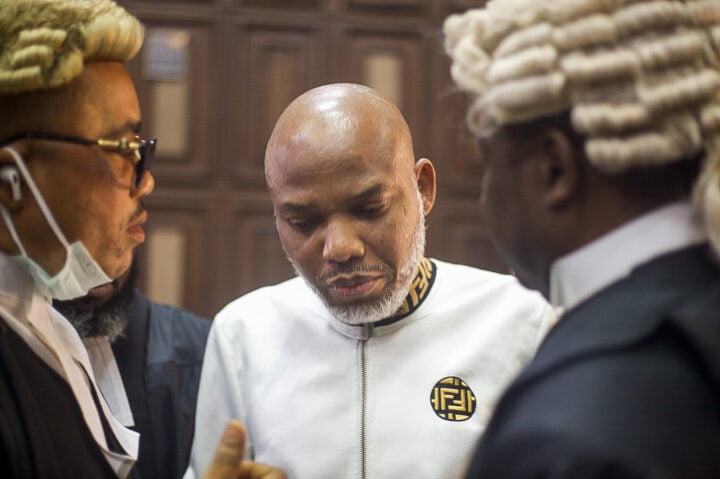
Nnamdi Kanu’s ‘terrorism’ trial begins afresh March 21 as new judge takes charge

Exit mobile version