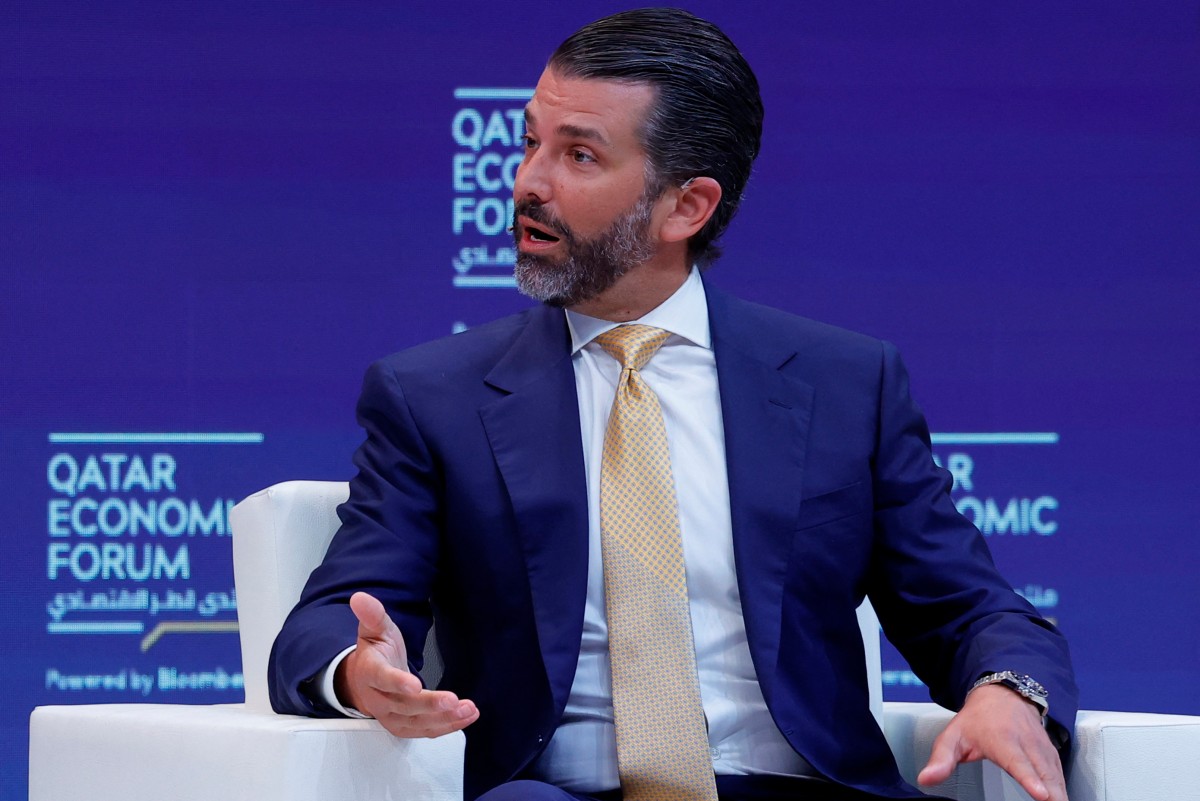
Donald Trump Jr. speaks during a session in the Qatar Economic Forum in Doha on May 21, 2025. (Photo by Karim JAAFAR / AFP)
The eldest son of US President Donald Trump, Don Jr, said Wednesday he could run for president “maybe one day”, after previously denying he was considering a White House bid.
Asked during a forum in Doha if he would consider entering a presidential race to succeed his father, Don Jr first chuckled before suggesting it was possible.
“It’s an honour to be asked and an honour to see that some people are OK with it,” he said during a panel discussion at Bloomberg’s Qatar Economic Forum as some in the audience applauded.
“You never know,” he added.
Donald Trump Jr, 47, is an executive vice president at The Trump Organisation, his family’s luxury real estate conglomerate, and a vocal proponent of his father’s right-wing MAGA political agenda.
In March, left-leaning website Mediate reported that Don Jr was “seriously considering a run for president in 2028”, which he denied at the time.
But on Wednesday, Don Jr did not rule out a White House run.
“I don’t know, maybe one day, you know, that calling is there,” he told the Bloomberg forum.
“I think my father has truly changed the Republican Party. I think it’s the America first party, now the MAGA party, however, you want to look at it,” he added.
The Trump Organisation has been run by the president’s two eldest sons, Don Jr and Eric, since his 2016 election win.
While the president no longer holds an executive title, he has retained his stake in the family business via a trust.
The Osun Police Command has said it is yet to receive any official communication on the escape of seven inmates from the Medium Security Custodial Centre in Ilesa, Osun State.
The Police Spokesperson for the command, DSP Abiodun Ojelabi, told NAN on Wednesday that the police state command had not been officially briefed or informed of the incident by the Nigerian Correctional Service.
He said, “We also heard about the escape, but there is no official report made to the police by the NCoS. Our Intel revealed to us that actually, there was an escape.
“The cause of the escape is what we don’t know because our men have gone there. From the intelligence report we got, there is nothing we can lay our hands on that made the inmates escape.
“The NCoS should inform us about what actually happened. The police are out to protect lives and property, and any criminal we see, we will apprehend.”
NAN reports that the NCoS declared seven inmates missing as a result of rain that damaged the security perimeter of the Medium Security Custodial Centre in Ilesa in the early hours of Tuesday.
The heavy rainfall around 2:00 a.m. caused a breach in the facility’s structure, allowing the inmates to escape.
Confirming the development in a statement on Tuesday, signed by the Deputy Controller of Corrections, Public Relations Officer, Umar Abubakar, the Controller-General of Corrections, Sylvester Nwakuche, ordered an immediate investigation into the incident and assured the public that efforts were underway to return the escapees to custody.
She said, “The service is working closely with sister security agencies as well as community leaders to recapture the escapees and bring them back to custody.
“However, the Service solicits the cooperation and support of the public in providing information that may lead to the recapture of the fleeing inmates.”
Authorities have since launched a manhunt to recapture the fugitives.
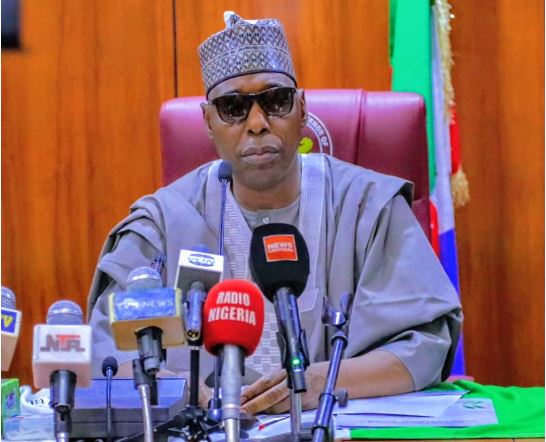
The Borno State Governor, Babagana Zulum, has alleged that some Nigerian politicians and members of the armed forces are acting as informants and collaborators for Boko Haram insurgents.
Zulum made the revelation on Wednesday during an interview on News Central’s Breakfast Central, where he vowed that the state would strengthen its intelligence network and deal with saboteurs “ruthlessly.”
“We have informants and collaborators within the Nigerian armed forces, within the politicians, and within the communities. What we shall do is to strengthen our intelligence and to deal with them ruthlessly.
“Let’s remove contractocracy. In six months, we can put an end to this madness. We need not politicise insecurity,” he said.
Addressing the issue of surrendered insurgents, Zulum stated that while not all who surrendered have reformed fully, the overwhelming majority are contributing positively.
“I cannot completely say that 100% of those people who have surrendered are doing the right thing, but I want to assure you that over 99% are doing well and are not participating in the ongoing terrorism,” Zulum said
The governor reaffirmed the need for Nigeria to embrace both kinetic and non-kinetic strategies in tackling insurgency, noting that over 99% of repentant insurgents are no longer involved in terrorism.
He stressed that military force alone would never bring about a total end to insurgency.
He stated, “Insurgency will never be ended by kinetic measures alone. We must ensure that the non-kinetic measures are also properly put in place.
“What I mean by non-kinetic measures is social, political, and economic dimensions of the crisis. Our ongoing non-kinetic measures have yielded positive results with the support of the Nigerian military.”
He acknowledged that not all 500,000-plus repentant fighters may stay reformed, but believes the system is largely working.
“Yes, I believe among the 500,000 or more that have repented, I cannot rule out the possibility of fewer of them going back to the bush,” he said.
He criticised the lack of equipment for the military and accused insurgents of having a superior technological advantage, saying “The army doesn’t have the necessary equipment on ground to fight the insurgency.”
The governor, however, commended the Nigerian military’s role in supporting peace-building efforts.
“I want to commend the Nigerian armed forces for the support that they have been rendering to our non-kinetic measures,” Zulum said.
He urged President Bola Tinubu to pay attention to ground-level intelligence and professional advice from the military.
“The forest guard shall be provided immediately. The President of Nigeria needs to listen to those who can differentiate their left from their right.
“We should not politicise insecurity. The President needs to listen to the people who can tell him the right thing. The President should listen to the army,” he stated.
An overnight rainfall on Tuesday has led to the escape of seven inmates from the Medium Security Custodial Centre in Ilesa, Osun State, after the facility’s old perimeter wall collapsed.
According to the Nigerian Correctional Service, the breach occurred around 2:00 a.m. and was caused by the structural failure of the wall during the storm.
The spokesperson for the NCoS, Umar Abubakar in a statement noted that authorities have since launched a manhunt to locate and return the escapees to custody.
The Controller General of Corrections, Sylvester Ndidi Nwakuche, has ordered an immediate investigation into the incident.
He assured the public that efforts are being intensified in collaboration with other security agencies and local community leaders, the statement added.
“The Nigerian Correctional Service has launched an expansive manhunt following the rainfall that breached the security of its facility at the Medium Security Custodial Centre, Ilesa, Osun State.
“The force majeure which occurred at about 0200hours on Tuesday, 20th of May 2025 led to the escape of seven (7) inmates.
“Following the incident, the Controller General of Corrections, Sylvester Ndidi Nwakuche, has ordered an immediate investigation into the circumstances surrounding the escape.
“The service is working closely with sister security agencies as well as community leaders to recapture the escapees and bring them back to custody,” the statement read.
NCoS is urging members of the public to assist with any information that could aid in recapturing the fugitives.
Citizens are advised to contact the nearest security agency or reach out via the following hotlines: 07087086005, 09060004598, or 08075050006.
Prison escapes have become a recurring security challenge in Nigeria, often exacerbated by the deteriorating condition of the country’s correctional facilities.
The incidents have further highlighted the deteriorating state of Nigeria’s correctional facilities, which have been increasingly vulnerable to natural disasters and security breaches in recent years.
On September 9 2024, flood triggered the collapse of the perimeter wall at the Medium Security Custodial Centre in Maiduguri, Borno State. A total of 281 inmates took advantage of the breach to flee.
On April 24, 2024, heavy rains also caused the walls of the Suleja Medium Security Prison in Niger State to collapse, leading to the escape of 119 inmates.
The Rivers State chapter of the All Progressives Congress (APC) has expressed readiness to welcome suspended Governor Siminalayi Fubara into the party if he decides to defect from the Peoples Democratic Party (PDP).
Speaking with The PUNCH on Tuesday, the reinstated Rivers APC Chairman, Chief Emeka Beke, said such a move would be mutually beneficial to both Governor Fubara and the APC.
His remarks come amid speculation that Fubara may defect to the APC as part of a political negotiation to resolve the lingering crisis in Rivers State, which led to his suspension by President Bola Tinubu.
Speaking through his Chief of Staff, Chizi Enyi, Beke said the APC would have no hesitation in admitting the governor.
“Sure, we will welcome the governor. Do we have an option? Welcoming the governor into the party will mean the APC gains a strategic advantage in Rivers State,” he said.
He noted that states where the governor is not from the ruling party often face challenges in funding and participation in state activities.
According to him, Fubara’s defection would give the APC greater leverage and visibility in the state’s governance.
“As the governor of Rivers State, he automatically becomes the leader of the party at the state level. This would also allow the APC to play a key role in state programmes and functions,” he added.
Beke further stated that he would be open to offering guidance to Fubara on how to improve governance in the state.
He explained that while the APC, as the opposition, had previously withheld such advice, the dynamic would change should the governor join the party.
“As an opposition party, we have what it takes to help the governor do better than what he is currently doing. But we have kept our suggestions as part of our ideology. If the governor joins us, we’ll open our hearts to him and offer input on how to improve the lives of Rivers people and others residing in the state,” he said.
Meanwhile, the Rivers State Elders and Leaders Council has distanced itself from any political party affiliation, insisting that their main concern is the return of Governor Fubara to office.
A member of the council and pioneer spokesman of the Pan Niger Delta Forum, Anabs Sara-Igbe, stated this during a phone interview with The PUNCH on Tuesday.
He criticised the continued stay of Vice Admiral Ibok-Ete Ibas (retd.) as Sole Administrator of the state, describing his appointment as unconstitutional.
Asked whether Fubara should join the APC as part of a peace deal with his former political mentor, now FCT Minister Nyesom Wike, Sara-Igbe said such speculation was irrelevant.
“Rivers people are not interested in that now. We are not interested in any party. What we want is Sim’s return. That is our interest,” he said.
He added, “We elected him as our governor. We don’t want anyone else coming to take our resources.”
Fubara’s media aide on electronic media, Jerry Omatsogunwa, confirmed that reconciliation talks between the governor and Wike are ongoing, though he declined to share details.
“They are talking, but the details are not clear. Everything you are hearing is still speculation. In time, we will know the full outcome,” he said.
On reports suggesting the governor might defect to the APC, Omatsogunwa said, “We have not heard anything about that for now.”
Dr Nonye Soludo, wife of the Anambra State governor, Prof. Chukwuma Soludo, has toured the newly-built Solution Fun City, new Governor’s lodge and the new Government House with children from various orphanage homes across the state.
The Solution Fun City and the new Government House built by the Soludo’s administration were some of the “legacy” projects commissioned on May 8th, 2025 by President Bola Tinibu during his official one day working visit to Anambra.
During the tour, the wife of the state governor conducted the children round the facilities, during which she played with them and shared inspiring stories to the community home children.
She said the exercise is aimed at giving the children a sense of belonging and for them to have a feel of what the projects look like, adding that it is going to be a continuous thing.
Explaining the reason she took the children around, Mrs Soludo said, “They are Anambra children too, and deserve the same fun and leisure as their peers in their parents’ homes”.
She expressed satisfaction that the children had fun and promised to return them to enjoy all the fun facilities immediately the Fun City commences full operation.
She said, “Today, I took my children from the orphanage homes to see what is happening in their state. Because of how they are, they do not always have this kind of opportunity.
These are children of Anambra too and they deserve some leisure and fun too. My greatest happiness is that they are happy.
“All we are doing as a government is for the interest of the children. I cannot wait for the place to be officially opened so that I can take them to enjoy all the facilities there.”
The first lady, who waved aside criticisms over why the state government decided to invest in constructing the fun city, explained that Governor Soludo, had in his manifesto, envisioned to make Anambra a place where people can live, work and enjoy.
She noted that some of the facilities like the fun city can only be found in faraway destinations, expressing confidence that when it fully comes on stream, the facility will attract fun seekers and holidaymakers to Anambra, and as such help stimulate the local economy.
“We want to make Anambra a destination and not a departure lounge. With this facility, you will see that people will want to bring their children to Anambra for leisure.
“Do you know that people travel from Nigeria to other countries just to enjoy facilities like this and have fun with their children and families?
“Now, we have this kind of thing in Anambra, it is a major plus to us,” she added.
One of the children, Chinwendu Madueke, expressed gratitude to the first lady for sharing such quality time with them, and the motherly love she showed them.
According to Madueke, the tour will leave indelible memories of joy and happiness in their minds.
“Since I came of age, this is the most joyous experience for me and I am happy I shared it with Her Excellency. I will always remember this day because it felt like motherly care,” he said.
Another child simply identified as little Benita, from a community in Awka, said she had so much fun and will have a lot to tell her fellow children when school resumes next week.
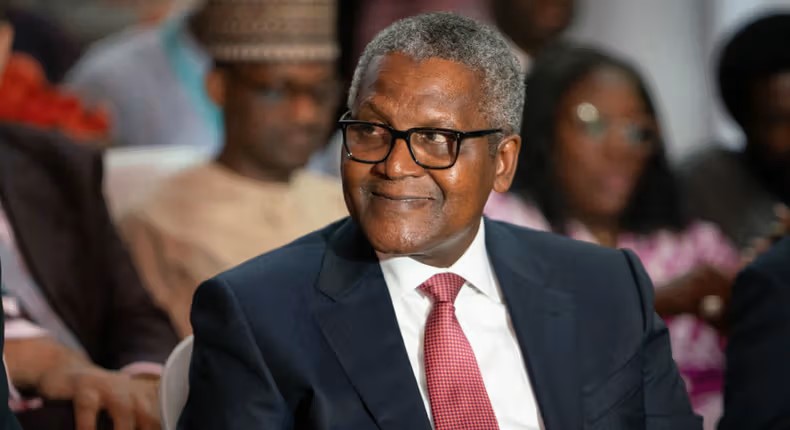
The Chairman of the Aliko Dangote Foundation and President/Chief Executive of Dangote Industries Limited, Aliko Dangote, has been named in the inaugural 2025 TIME100 Philanthropy list, which recognises the 100 most influential leaders shaping the future of philanthropy across the world.
A statement by the Dangote Group on Tuesday said the businessman is the only Nigerian on the list.
The list, published by TIME Magazine on Tuesday, features Aliko Dangote, whose Foundation spends an average of $35m a year on programmes across Africa, alongside other global figures in charitable work, such as Michael Bloomberg, Oprah Winfrey, Warren Buffett, and Melinda Gates, all of whom were recognised as Titans.
“A total of 100 influential individuals from 28 countries have been honoured for their philanthropic efforts in four categories: Titans, Leaders, Trailblazers, and Innovators, with Dangote emerging as one of the 23 Titans.
“TIME highlighted Dangote’s remarkable rise to wealth, having built a fortune of $23.9bn through ventures in cement, agriculture, and oil refining in Nigeria. However, his philanthropic efforts are equally noteworthy.
“In 2014, he endowed the Aliko Dangote Foundation with $1.25bn, with the aim of giving back to the continent that played such a key role in his success. The foundation spends an average of $35m each year on various initiatives across Nigeria and Africa,” the statement said.
Dangote stated that “investing in nutrition, health, education, and economic empowerment is our contribution to setting Africans up for success.”
It was added that among the foundation’s ongoing efforts is a $100m multi-year initiative to combat severe childhood malnutrition.
“Furthermore, an earlier vaccine programme in Nigeria, developed in partnership with the Bill and Melinda Gates Foundation and others, contributed to the World Health Organisation’s 2020 declaration that polio had been eradicated from Africa, Nigeria being the most populous country in Africa and the last country to eradicate the disease.
“Education is another area where Dangote is making a significant impact. He recently announced a $10m donation to the Aliko Dangote University of Science and Technology, based in Kano State. The conglomerate has provided a wealth of infrastructural support to the country’s tertiary institutions.
“In 2019, the Federal Government revealed that the N1.2bn hostel donated by the Aliko Dangote Foundation to Ahmadu Bello University, Zaria, was the largest donation ever made by an individual to a university in Nigeria’s history at that time.
“As a member of The Global Business Coalition for Education, the Aliko Dangote Foundation has also focused on early childhood education. Through the Mu Shuka Iri (Let’s Plant a Seed) programme, local women – affectionately known as ‘Aunties’ – are trained in Montessori-style education to become community educators in Kano,” it was added.
The billionaire businessman further remarked, “We need to create the next generation of African leaders.
“My mother instilled in me the ethos of giving back, which inspired my philanthropy 30 years ago. I trust my three daughters will continue this legacy, just as they will continue to grow our business and impact. I want to be known not just as Africa’s richest person but also as its biggest philanthropist.”
Members of the Trade Union Congress and the Petroleum and Natural Gas Senior Staff Association of Nigeria, on Tuesday, staged a protest at the Federal Ministry of Finance, demanding the immediate release of withheld pension, salary arrears, and other emoluments owed to staff of the Nigerian Nuclear Regulatory Authority.
The protesters, dressed in red T-shirts and carrying placards, blocked the entrance to the ministry, preventing vehicles from entering or exiting the premises and forcing many civil servants to return home.
Speaking during the protest, TUC Secretary General, Nuhu Toro, explained that the Ministry of Finance had withheld the Internally Generated Revenue of the NNRA, from which pensions and salaries are paid.
“We are here because of withheld IGR accrued to the NNRA, and we are finding it difficult to reconcile why,” Toro said. “Their contemporaries in the same sector have been paid. It is from this IGR that pensioners of the NNRA are paid, and from which workers earn their salaries and allowances. So, if the IGR is withheld, they will not be paid.”
Toro also lamented the impact of inflation and the rising cost of living on the N70,000 minimum wage.
“If salaries are not paid as and when due, you can imagine the suffering workers are subjected to. The value of the minimum wage has already been eroded by inflation and the high cost of living.”
He, however, acknowledged a step forward in the negotiations, disclosing that the Minister of Finance had granted approval for the release of funds.
“The Honourable Minister of Finance has graciously granted approval today,” he said. “The Permanent Secretary has assured us that the approval will translate into naira and kobo in our pockets within a very reasonable time. This protest will be suspended, not called off, until Wednesday, May 21, 2024.”
Addressing the protesters, Permanent Secretary, Special Duties, Raymond Omachi, confirmed that the payment process had begun.
“I have heard your grievances, and I have reached out to the Minister of Finance and the Coordinating Minister of the Economy. They have given me the go-ahead to ensure your demands are met. We are working on it, and within the next 48 hours, you will receive your payments,” Omachi said.
He thanked the workers for their patience and cooperation, adding, “Your voice has been heard, and we will not disappoint you.”
Katsina State Police Public Relations Officer DSP Abubakar Sadiq says the command has foiled a kidnap attempt and rescued five victims in the Faskari Local Government Area of the state.
He made this known to newsmen on Tuesday in Katsina.
He said, ”On May 19, 2025, at about 21:37 hours, a distress call was received at Faskari Divisional Police Headquarters regarding an attempted kidnapping by some suspected armed bandits at Unguwar Basau along the Funtua-Gusau Road, Faskari LGA, Katsina State.
“The suspected armed bandits attacked two motor vehicles: a Hummer bus (Reg. No. T0510 KN) and a white Mendez truck (Reg. No. LFA 508 YR).
“Upon receipt of the report, APC patrol team promptly responded to the scene, engaging the bandits in a gun battle where the assailants were overpowered due to superior tactics and firepower, as all five kidnapped victims, including two drivers and three passengers, were successfully rescued.
“Four victims sustained injuries and were immediately rushed to Sheme PHC for immediate medical attention, and they are responding to treatment.
“The Commissioner of Police, Katsina State Command, CP Bello Shehu commends the operatives for their bravery and swift response as he charges them to sustain efforts in the fight against banditry in the state.
“Investigation is ongoing, and further developments will be communicated accordingly,” he stated.
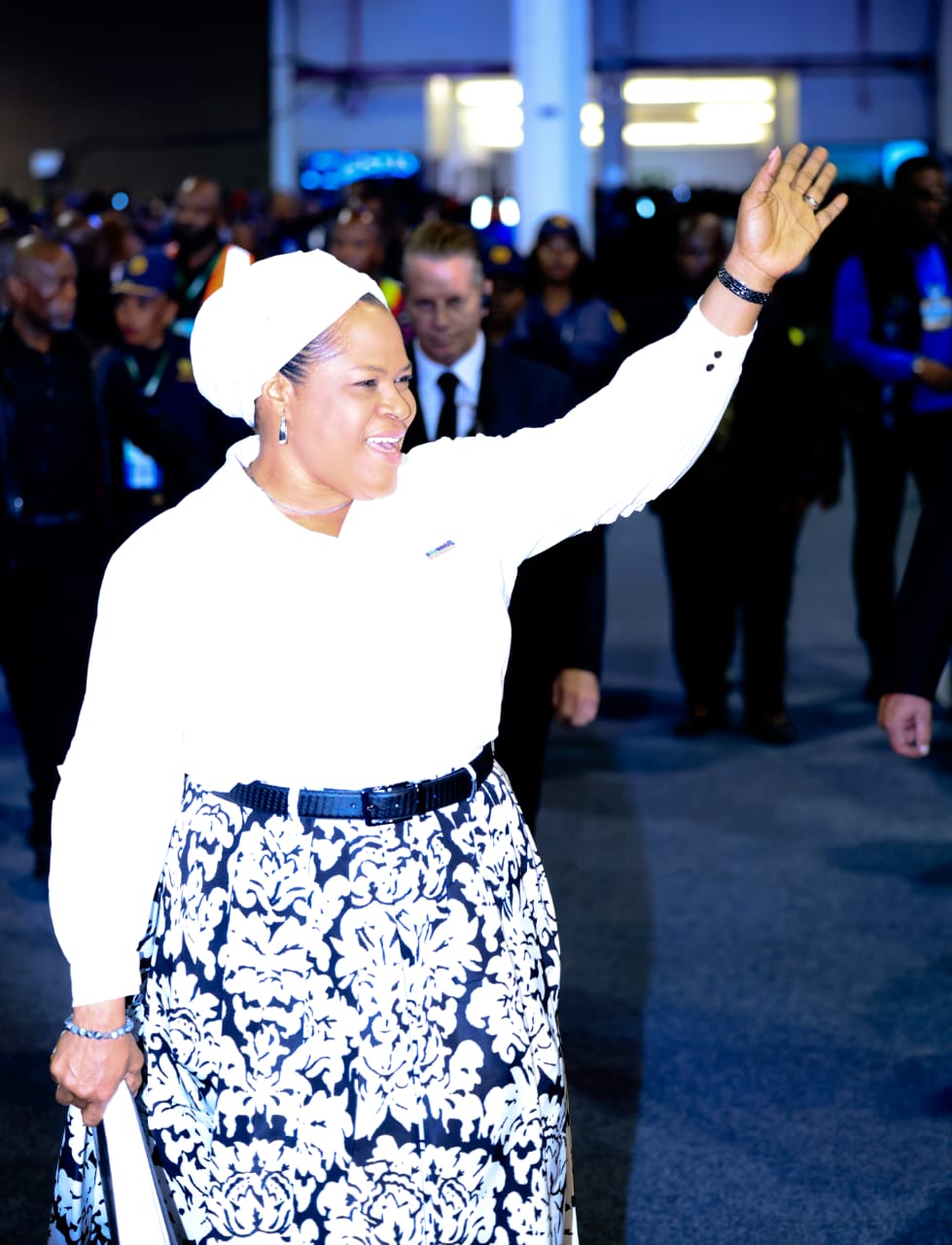
Wife of the late Prophet T.B. Joshua, Pastor Evelyn Joshua, on Monday, donated food items, educational materials, and a cash gift of R100,000 to residents of Madibe in Mafikeng, South Africa.
She also commissioned a portable water borehole for the community during a humanitarian outreach led by The Synagogue, Church of All Nations, in partnership with the Emmanuel TV Team.
According to a statement by the church, the outreach, held in the Ngaka Modiri Molema District of North West Province, drew widespread applause from residents who gathered to receive various relief items, including beddings and household supplies.
The statement read, “Residents received food items, educational materials for children, essential provisions, and beddings. In addition, a cash donation of R100,000 was presented by Pastor Joshua to support the community’s welfare. She encouraged the people with words of hope, assuring them of God’s unwavering love and provision.”
The visit was marked by vibrant cultural performances from a local dance group, who expressed their gratitude for the gesture and acknowledged Pastor Joshua as a channel through whom the community had “experienced renewed hope.”
According to the statement, the outreach was in line with SCOAN’s ongoing commitment to charity and social impact.
The event came days after a major SCOAN spiritual revival programme at the Johannesburg Expo Centre, which featured testimonies of healing and restoration.
The statement highlighted some of the healing which took place during the revival programme, “Among those who shared their stories was Andrew Makodi, who discarded his body brace after receiving healing from osteoarthritis. Rebecca Mathoda, who travelled from Limpopo, spoke of her relief from chronic shoulder pain caused by persistent muscle spasms.
“Mr. and Mrs. Jeyi recounted their emotional journey to healing from Polycystic Ovarian Syndrome, a condition that had affected their hopes for a complete family life.”
According to SCOAN, the initiative is part of it’s global efforts to extend compassion, following the legacy of Prophet T.B. Joshua, whose ministry was known for blending faith with humanitarian outreach.