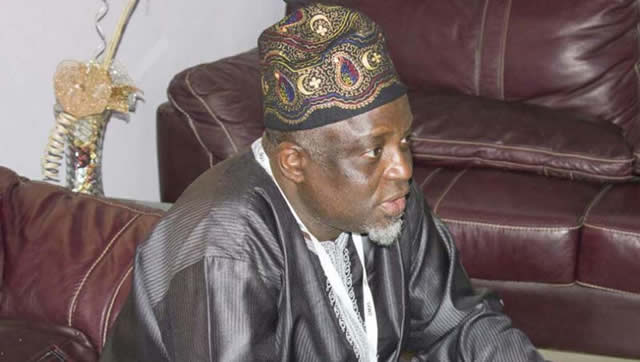
The Rector of Kogi State Polytheistic, Professor Salisu Ogbo has described it as a “rare course and uncommon decision of the Registrar of the Joint Admission and Matriculation Board, Professor Ishaq Oloyede to accept responsibility surrounding the 2025 UTME result glitch which affected over 300,000 candidates that participated in the exercise.
In a letter written to the registrar sighted by our correspondent on Friday in Lokoja, Professor Ogbo said Oloyede has demonstrated rare courage by admitting the error.
“As an institution, we are not celebrating the glitch and the associated issues, but your sincerity of purpose, strength of character and proven integrity for not trading the blame even with the obvious opportunities and the traceable link to the error.
“I wish to appreciate you most sincerely for not disappointing your mentees, which I am privileged to be one, in your handling of the affairs of JAMB and the overall conduct of UTME over the years. As someone whose style of leadership I have always admired, I wish to urge you to see the current challenges as a natural part of human fallibility.” the letter read in part.
He said that as a budding administrator, he has learnt significant lessons from the present circumstances most importantly, Oloyede’s depth of leadership courage, selflessness, team spirit and rare ability to openly accept responsibility without bulk-passing.
“As we appreciate the Board for taking the necessary corrective measures by giving the affected candidates that deserved opportunities to retake the examination, we are also confident that, the Board under your leadership will do all it can to avoid future occurrence.
“We pray for God’s guidance and protection now and always.
“Please, accept my warmest regards now and always, sir”, the rector added.
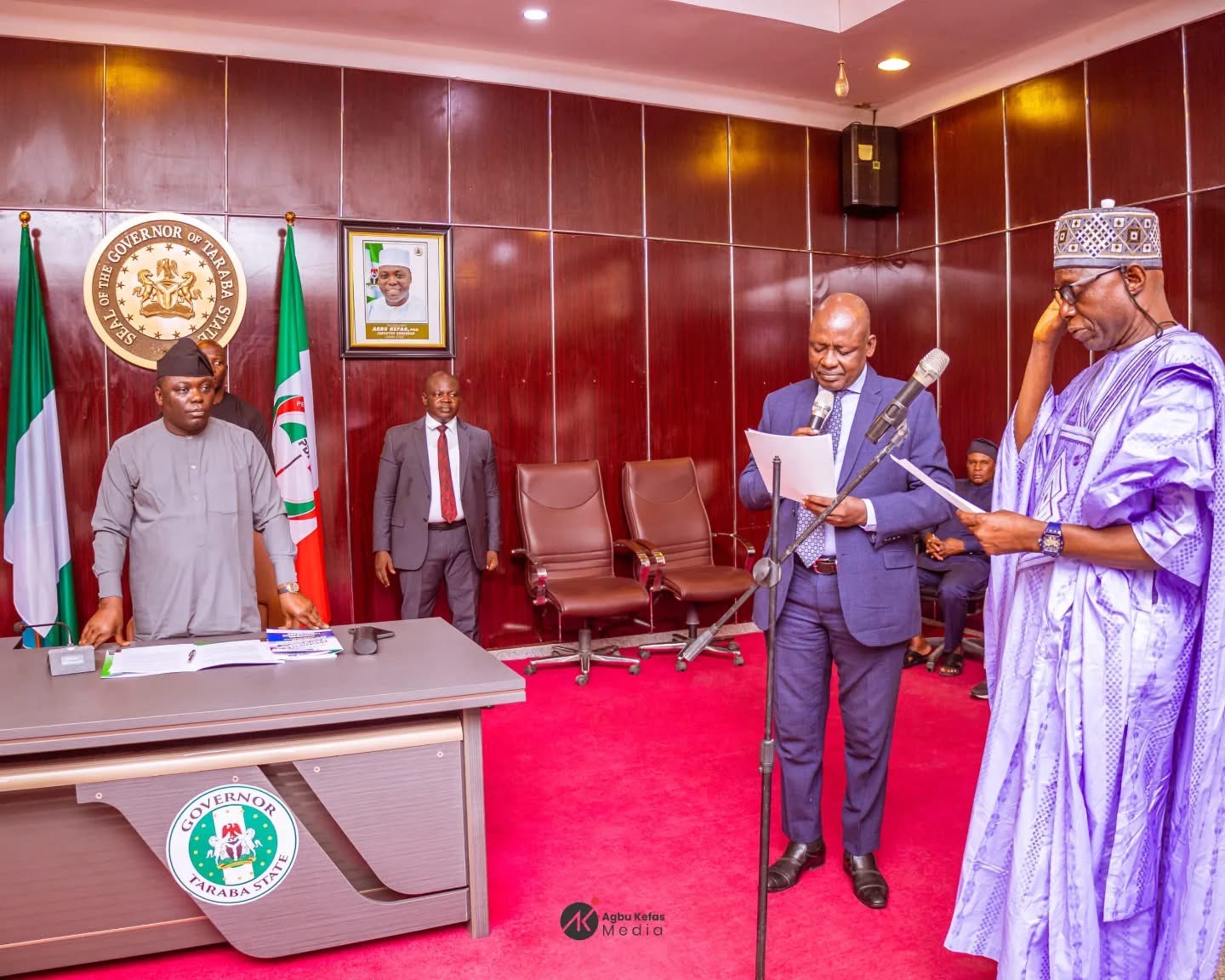
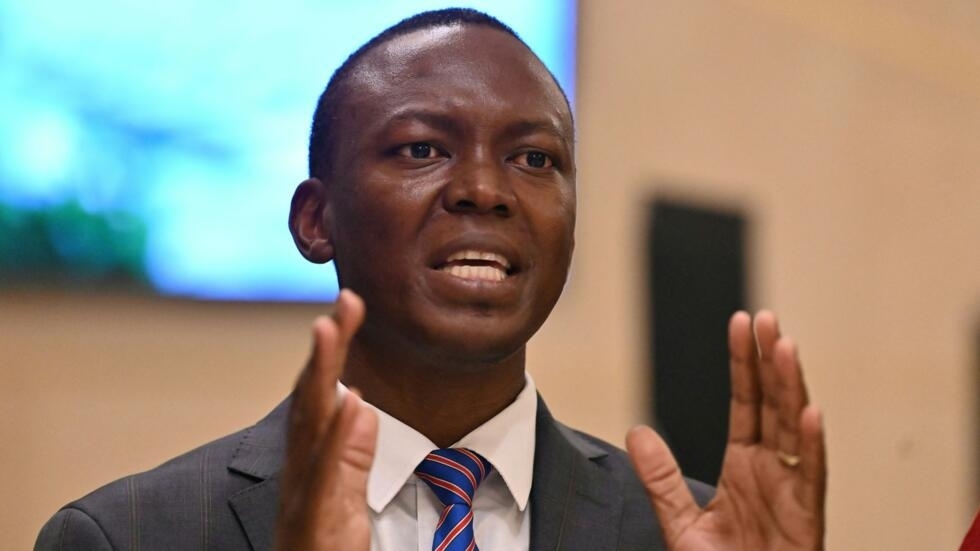
The Governor of Taraba State, Agbu Kefas, on Friday, swore in Mike Jen, as the new Commissioner for Tertiary Education, describing the appointment as a strategic step towards repositioning higher education in the state.
Jen, who until his appointment was a member of the Taraba State House of Assembly representing Karim Lamido II constituency, voluntarily resigned his legislative seat to join the State Executive Council.
Speaking during the swearing-in ceremony at Government House, Jalingo, Kefas said the appointment was borne out of a deep desire to solve the lingering challenges facing the tertiary education sector.
“I have been cracking my brain on how to solve the problem of tertiary education in Taraba, and my X-ray machine located Hon. Mike Dio Jen,” the governor said.
He commended Dio Jen’s passion for service and his willingness to sacrifice his legislative position for the greater good of the state.
“Governance is not easy. It requires getting the right people in the right places to get things done, especially in a state like Taraba.
“I congratulate the commissioner, his family, and constituents, and I call on all stakeholders to support him to succeed,” Kefas added.
In his acceptance speech, Jen thanked the governor for finding him worthy of the appointment and promised to give his best to improve the standard of tertiary education in the state.
“I am deeply honoured by this appointment. I thank His Excellency for the trust and confidence reposed in me. I pledge to work with all stakeholders to address the challenges facing our tertiary institutions in the state,” he said.
Dio Jen noted that Governor Kefas’ ongoing investment in education would yield long-term results, even if not immediately visible.
“The investment in education which the governor is doing may not be seen by many in the immediate term, but he is placing Taraba on the global map,” he added.
Our correspondent reports that the Governor also presented staff of office to the third-class Chief of Sansani, HRH Alhaji Bello Nuhu Mohammed following his selection by the kingmakers.
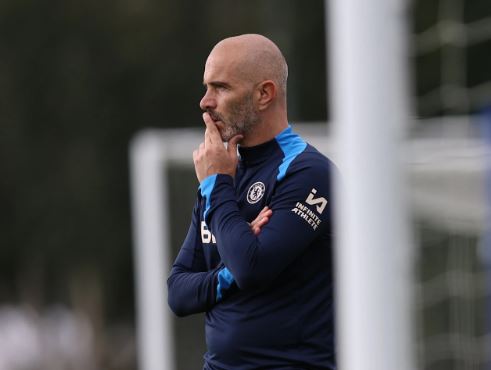
Chelsea manager Enzo Maresca and key figures around the club have reacted following the Blues’ 1-0 win over Manchester United, a result that not only bolstered their top-four hopes but also added further intensity to the Premier League title race.
Despite the win, Maresca, in his post-match reaction on Friday, called for patience and perspective from the media and supporters, highlighting that the current team is still in a transitional phase.
“The problem is that the press thinks it is the same Chelsea from years ago. It is not the same.
“It is about building something important. People have to trust us — we are going in the right direction,” Maresca said.
Club captain Reece James, who played a vital role in the team’s defensive solidity and gave the match-winning assist, echoed the ambition driving Chelsea’s end-of-season push.
“The Champions League is where Chelsea belongs, competing in the big competitions,” James declared.
Chelsea currently sit fourth on the table with 66 points after 37 matches — level with Aston Villa and Newcastle United but ahead on goal difference.
With the race for Champions League qualification tightening, the Blues’ latest result and internal belief could prove decisive in the season’s final stretch.
Meanwhile, speaking after the loss, Manchester United coach Ruben Amorim praised forward Rasmus Højlund’s efforts, while also noting the room for improvement in his game.
“I’m happy with Højlund. All the team has to improve. But the way he runs, he fights for every ball,” the Portuguese tactician said.
While Højlund’s overall impact on the game drew mixed reactions, Amorim acknowledged the young striker’s growing influence.
“He loses a lot of duels, wins some duels. He needs to improve the connection, but he’s improving. He just needs to continue to work hard,” he added.
The manager also hinted that individual performances in the Manchester United clash have given him clarity ahead of Man Utd’s next major – the Europa League Final.
“This performance has helped me a lot to choose the starting 11 for the final,” Amorim revealed, suggesting that selections for crucial matches will be shaped by recent displays.
The Lagos State Police Command has debunked speculations surrounding a viral video showing 89 young men arriving in Lagos and gathering in Ibeju-Lekki.
The Command confirmed that the individuals are legitimate workers recruited from Katsina State for employment at the Dangote Refinery in Lekki.
In a statement posted on X on Friday issued by CSP Benjamin Hundeyin, Police Public Relations Officer, the Command stated: “Upon receipt of the information on May 14, 2025, officers from the Command immediately deployed to the location to ascertain the facts.
“Preliminary investigations revealed that the young men in question, 89 in number, had arrived from Katsina State and were recruited to work as labourers at the Dangote Refinery in Lekki.”
The contractor responsible for their recruitment and the refinery’s Chief Security Officer (CSO) both confirmed the arrangement, noting that the men had been cleared to reside and work within the facility.
“The contractor working with the refinery appeared before the police and confirmed that he had personally sourced and brought the labourers from Katsina for legitimate employment purposes,” the statement added.
Thorough Checks Conducted
The Police Command assured the public that all necessary checks were conducted on the group.
“The individuals were thoroughly searched, and no incriminating items were found in their possession.
“Furthermore, each person properly identified themselves and presented their National Identification Numbers (NINs), which were duly verified,” Hundeyin said.
Public Urged to Stay Calm
Addressing the public’s concerns, the Commissioner of Police, CP Olohundare Jimoh, called for calm and discouraged the spread of unverified information.
“The Command remains committed to maintaining law and order across Lagos State and will continue to respond promptly to all matters relating to public safety,” the Commissioner stated.
The police advised residents to avoid spreading alarmist content, emphasising the importance of verifying information before sharing.
The Ogun Police Command has assured residents and visitors of maximum security in the state ahead of the forthcoming “22nd National Sports Festival, tagged “Gateway Games Ogun 2024.”
PUNCH Online had reported that the multi-sports event will run from Friday, May 16 to May 30, with the opening ceremony scheduled for the MKO Abiola Sports Complex on Sunday, May 18.
It was gathered that the events will be held across different venues, including the state capital, Abeokuta, Ikenne, Ijebu-Ode, and Sagamu.
In a statement released on Friday by Omolola Odutola, the command’s spokesman, she disclosed that there will be deployment of operatives and tactical teams to ensure a peaceful experience for every expected attendee.
“The Command is committed to providing a safe environment for visitors and residents alike, as a robust security architecture has been put in place across the state.
“The deployment of conventional police, tactical teams, and assets aims to ensure a peaceful and enjoyable experience for all participants and spectators who will grace the occasion,” she said.
The PPRO also urged citizens to contact the police command for any emergency, as they are dedicated to safeguarding the state.
“For emergency assistance, please contact the command through the following numbers: 09159578888, 09062837609, 09120141706, 09151027369, 07084972994
“Command Social Media Platform; X: @OgunPoliceNG, Instagram: Ogunpolice_ng, Facebook: Ogun Command…,” Odutola added.
The state Commissioner of Police, CP Lanre Ogunlowo in the statement also reiterated the command’s commitment to always prioritise the security of the good people of Ogun State and also assure a hitch-free festival.
A former Chadian Prime Minister and opposition leader, Succes Masra, was arrested early Friday on allegations of inciting hatred following deadly clashes in the southwestern Logone-Occidental region.
Masra, who served briefly as prime minister from January to May last year, was reportedly taken from his home in the early hours, with his party, The Transformers, claiming he was abducted.
A video circulated online appeared to show Masra being escorted by armed men in military uniform, though its authenticity has not been independently verified.
Public Prosecutor Oumar Kedelaye confirmed Masra’s arrest, linking it to Wednesday’s violence in the region, which left 42 people dead, most of them women and children.
He stated that judicial police investigations had uncovered messages inciting civilians to arm themselves, allegedly tied to Masra, although no specific details or direct attribution were provided.
“The investigations carried out by the judicial police revealed the involvement” of Masra, Kedelaye told reporters.
“Messages were disseminated, particularly on social media, calling on the population to arm themselves against other citizens,” the prosecutor said.
The violence is believed to have stemmed from a dispute between Fulani nomadic herders and Ngambaye farmers over land use.
Ethnic and regional tensions continue to plague parts of Chad, with longstanding grievances among southern communities over marginalisation by the central government.
Masra, an ethnic Ngambaye from the Christian-majority south, challenged President Mahamat Idriss Deby Itno in last year’s presidential election, securing 18.5 percent of the vote to Deby’s 61.3 percent. He rejected the outcome, declaring himself the rightful winner.
A former economist educated in France and Cameroon, Masra has been a vocal critic of the Deby administration. Though appointed prime minister as part of a reconciliation initiative, he resigned five months later, and his party boycotted subsequent parliamentary elections, which solidified Deby’s hold on power.
Masra previously fled the country after a violent crackdown on protests against the extension of the political transition in October 2022. Known as “Black Thursday,” the incident reportedly left up to 300 people dead, according to international observers.
Masra later returned from exile under a reconciliation agreement but faced backlash for engaging with the ruling junta.
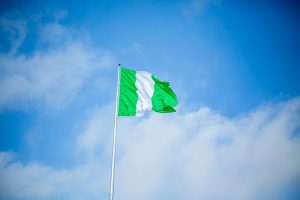
The Kwara State Government has unveiled a 70-meter flagpole, describing it as the tallest in the West African region to make a bold declaration of identity and pride.
The State Commissioner for Works, Abdulquawiy Olododo, disclosed in a statement on Friday that the erected towering structure with the Nigerian flag attached to it stands as both a cultural lighthouse and an economic catalyst, symbolising the dynamic spirit of the Kwara people.
According to Olododo, Kwara State’s tallest flagpole transcends its role as a physical monument, It represents a blend of cultural pride and economic growth, inviting Kwarans to celebrate their heritage and seize new opportunities for a unified and prosperous future.
“Flagpoles have long been pivotal symbols of national pride and identity.
“Kwara’s newest landmark goes beyond mere symbolism; it acts as a cultural yardstick, reflecting the rich heritage, traditions, and values of the Kwara people; a community known for its harmonious blend of ethnic diversity and shared values.
“The monument also aligns with the emerging status of Kwara State as a destination for technology innovation, creative economy, hospitality and tourism, trade and agribusiness, shedding the age-long appelation as a civil service state where the whole economy revolved just around payment of salary.
“The flag that flies high represents not only the sovereignty of Nigeria but also the collective spirit and unity of the diverse groups that call Kwara home,” the commissioner said.
Olododo stated that Kwara’s flagpole embodies the state’s blend of tradition and modernity, promoting social cohesion and celebrating diversity.
He said it serves as a symbol of growth, attracting tourism and investment, boosting local businesses, and stimulating economic development. He explained that the flagpole represents Kwara’s promise of a brighter future, driven by strategic investments and innovation.
The Commissioner further encouraged residents to reflect on their role in Kwara’s growth, emphasising the need for sustainable development that balances cultural heritage with modern progress.
The Kwara Government has unveiled a 70-meter flagpole in its state, describing it as the tallest in the West Africa region to make a bold declaration of identity and pride.
The Kwara Commissioner for Works, Abdulquawiy Olododo, disclosed in a statement on Friday that the erected towering structure with the Nigerian flag attached to it stands as both a cultural lighthouse and an economic catalyst, symbolising the dynamic spirit of the Kwara people.
According to Olododo, Kwara State’s tallest flagpole transcends its role as a physical monument, It represents a blend of cultural pride and economic growth, inviting Kwarans to celebrate their heritage and seize new opportunities for a unified and prosperous future.
“Flagpoles have long been pivotal symbols of national pride and identity.
“Kwara’s newest landmark goes beyond mere symbolism; it acts as a cultural yardstick, reflecting the rich heritage, traditions, and values of the Kwara people; a community known for its harmonious blend of ethnic diversity and shared values.
“The monument also aligns with the emerging status of Kwara State as a destination for technology innovation, creative economy, hospitality and tourism, trade and agribusiness, shedding the age-long appelation as a civil service state where the whole economy revolved just around payment of salary.
“The flag that flies high represents not only the sovereignty of Nigeria but also the collective spirit and unity of the diverse groups that call Kwara home,” the commissioner said.
Olododo stated that Kwara’s flagpole embodies the state’s blend of tradition and modernity, promoting social cohesion and celebrating diversity.
He said it serves as a symbol of growth, attracting tourism and investment, boosting local businesses, and stimulating economic development. He explained that the flagpole represents Kwara’s promise of a brighter future, driven by strategic investments and innovation.
The Commissioner further encouraged residents to reflect on their role in Kwara’s growth, emphasising the need for sustainable development that balances cultural heritage with modern progress.
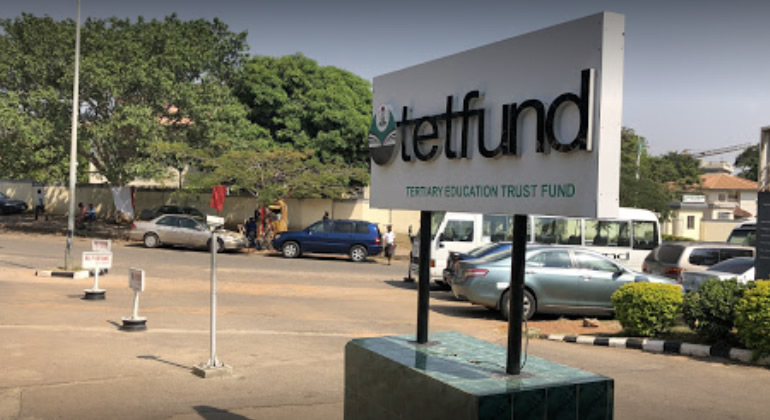
The Minister of Education, Mr. Tunji Alausa, has announced that tertiary institutions with fewer than 2,000 students will no longer be eligible for funding from the Tertiary Education Trust Fund.
Speaking on Friday at a one-day engagement with heads of institutions, bursars, and procurement directors in Lagos, Alausa said the Federal Government was repositioning the funding framework to ensure public resources are used efficiently.
“We are re-evaluating how institutions benefit from TETFund. We can no longer incentivise poor performance or underutilisation,” the minister said.
He noted the inefficiency of allocating equal resources to underpopulated schools as those with significantly higher student numbers.
He stated, “Several polytechnics established as far back as 2019 have only between 350 to 550 students enrolled, yet receive the same level of funding as institutions with over 18,000 students.
“This is inefficient and unsustainable. Therefore, we have set a new benchmark: any institution that, after five years of operation, still has fewer than 2,000 students may be deemed ineligible for TETFund support until they scale up their capacity.”
Alausa said the engagement with institutions from the southern zone was aimed at reviewing the 2024/2025 intervention guidelines and fostering transparency.
“There’s no doubt that TETFund has greatly benefited our tertiary institutions through numerous interventions and improvements.
“However, under the directive of President Bola Ahmed Tinubu, our focus now is to ensure maximum value from every naira spent in our institutions,” he further stated.
He also raised concerns about the unchecked proliferation of satellite campuses, calling it “unsustainable and counterproductive.”
On foreign scholarships, Alausa revealed a shift in policy, explaining that more funds would now be invested in building local capacity.
He continued, “Our evidence-based analysis showed that 85 per cent of Nigerian students sent abroad on government scholarships never returned to contribute to national development.
“Many of the programmes they studied could have been handled effectively within our own institutions.”
To address this, he said 28 Centres of Excellence have been established across public and private institutions to offer postgraduate programmes, enhance research and create jobs.
In his remarks, the Executive Secretary of TETFund, Sonny Echono, said the agency is moving towards a more sustainable and performance-driven funding model.
Echono stated, “The Fund has been moving toward a more sustainable model of funding. This is in line with the broader objective to reduce institutions’ reliance on government subvention and to encourage Public-Private Partnerships, particularly in areas such as hostel development, innovation parks and service facilities.”
Echono warned that underperforming institutions risk being removed from the list of TETFund beneficiaries.
“Institutional expansion must be checked, and we must avoid unnecessary duplication of mandates.
“Institutions that consistently fail to access, utilise, or retire funds appropriately, or that fall short of enrolment and academic performance thresholds, risk being delisted,” he warned.
He added that the goal of these new measures was not to punish, but to enhance the credibility and impact of TETFund.
He declared, “This policy is not meant to punish but to safeguard the credibility and impact of TETFund interventions. We want to ensure that the Fund’s resources are directed toward institutions committed to high standards of governance, transparency and accountability.”
He concluded by calling for deeper accountability and reform across the tertiary education sector.
“This engagement is a call to action. It is a platform to learn, reflect and commit to best practices in governance, project management and compliance,” he concluded.
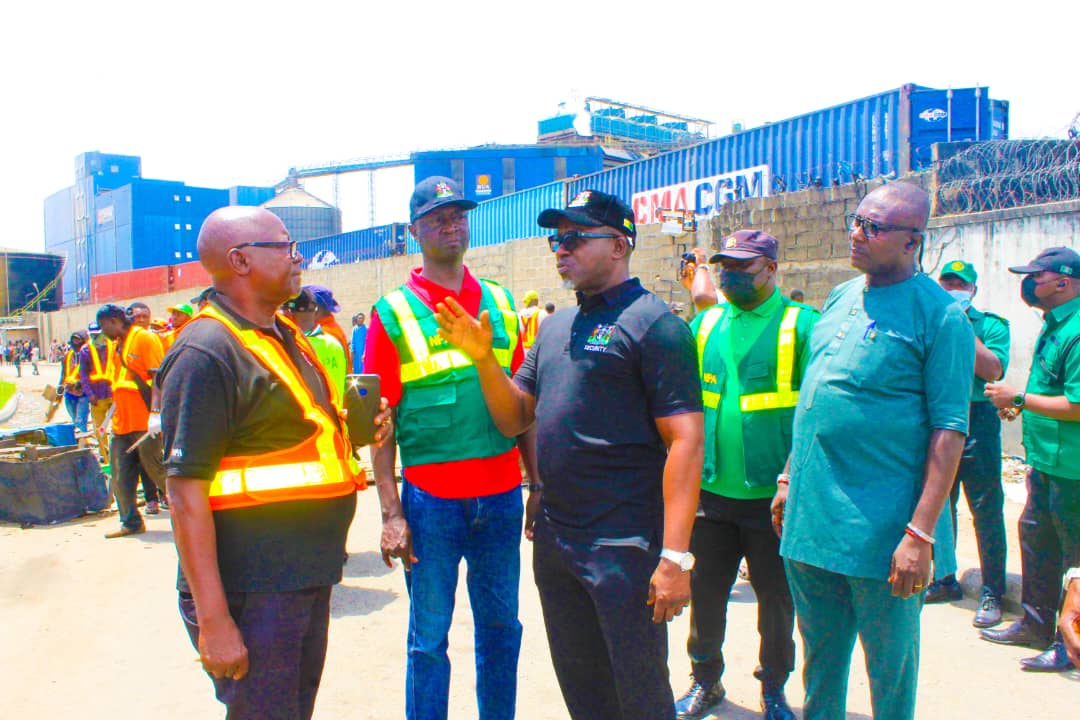
Determined to clear the port corridor of congestion, the management of Nigerian Ports Authority, in collaboration with the Lagos State Government and other relevant agencies, recently embarked on a three-day clean-up and sensitisation operation at the Lagos Port Corridors.
In a statement on Friday, the NPA disclosed that the exercise themed, ‘NPA security clearance operations 2025′, would eliminate security threats and environmental hazards, which have long plagued the Nigerian ports.
“It aims to tackle the issues hindering smooth operations at the ports and pave the way for greater port efficiency.
“The scope of this extensive clean-up operation covers all entry approaches to the Tincan Island Complex, Lagos Port Complex, Kirikiri Lighter Terminals I & II, and the port environs,” the statement read in part.
It was reiterated that the goal of the exercise is to flush out criminal elements, miscreants, hoodlums, remove shanties, kiosks, and containers that obstruct the free flow of traffic, and “pose a threat to the safety of personnel, cargo, and vessels.”
The statement stressed that the initiative also aligns with the International Ship and Port Facility Security Code measures developed by the International Maritime Organisation to ensure the safety and security of ports worldwide.
Speaking during the flag-off of the exercise, the Managing Director of NPA, Abubakar Dantsoho, emphasised that the ports’ access roads and environs are international corridors.
The MD, who was represented at the event by the General Manager, Security at NPA, Anthony Edosomwan, maintained that the ports are the gateway to the national economy and the NPA has a responsibility to collaborate with relevant agencies to ensure that sanity is maintained.
“The operations will not only improve the safety and security of the ports but also contribute to the economic growth of the nation.
“The congestion and delays caused by these issues have been a major hindrance to the efficient functioning of ports, affecting trade facilitation and ultimately, the nation’s Gross Domestic Product,” Dantsoho said.
Dantsoho said to ensure the success of the operation, the NPA’s security division had previously carried out enlightenment campaigns to sensitise the public on the importance of the exercise.
“This is a crucial step in gathering support and cooperation from all stakeholders, including port users, traders, and residents in the surrounding areas,” he stressed.
He reiterated that the NPA remains unwavering in its commitment to achieving environmental sustainability and maintaining a clear and safe port environment.
“Indeed, the negative impact of pollution and encroachment on the ports cannot be ignored.
“This clean-up operation is not only beneficial to the ports’ operations but also to the surrounding communities and the environment as a whole,” he added.
The NPA boss noted that the operation is part of the broader initiative aimed at tackling congestion issues and paving the way for a more efficient and sustainable future for Nigeria’s ports.
He stated that by collaborating with relevant agencies and carrying out necessary awareness campaigns, the NPA is also calling for public collaboration.
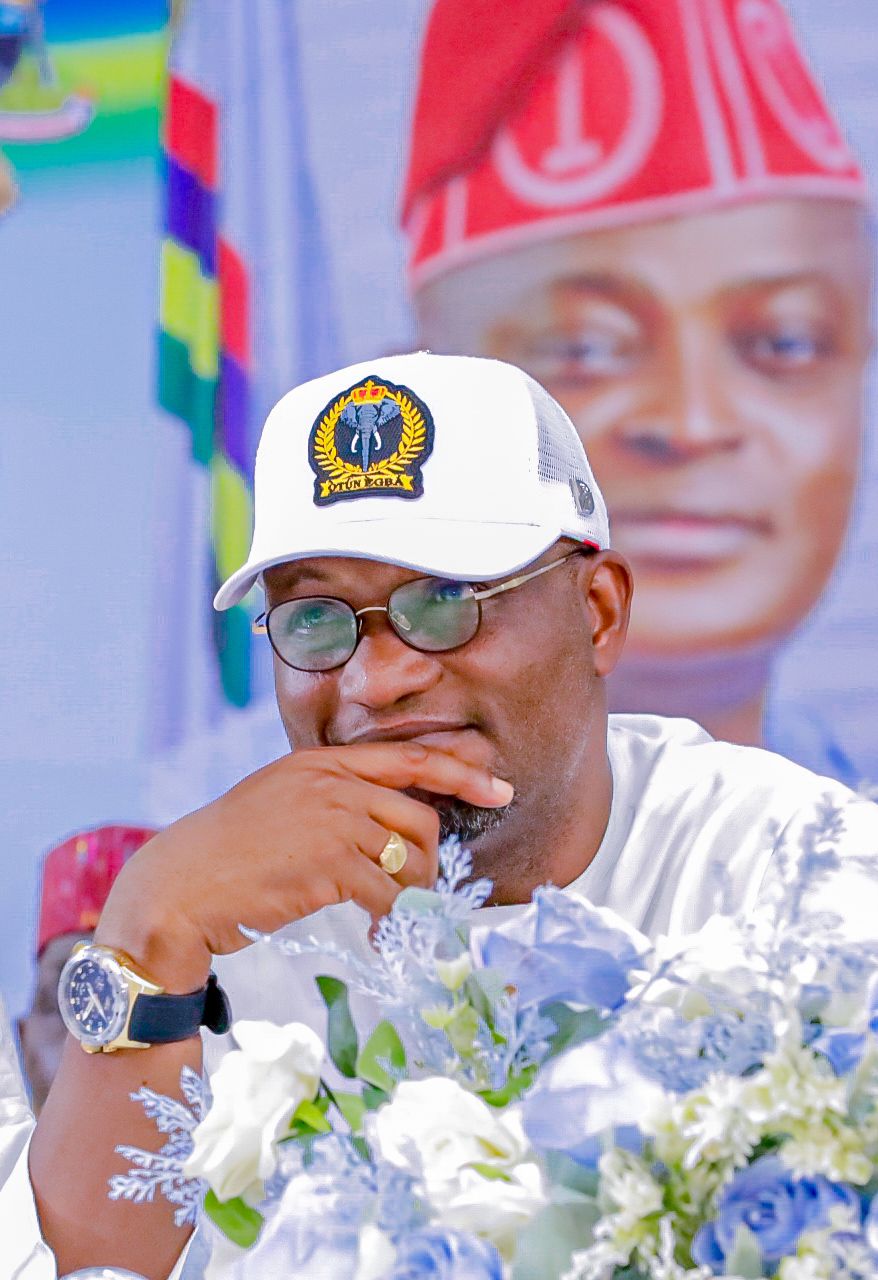
The Executive Chairman of Agege Local Government Area of Lagos State, Ganiyu Egunjobi, has thrown his weight behind the emergence of Lagos Assembly Speaker Mudashiru Obasa’s son as the All Progressives Congress chairmanship candidate for the upcoming council polls, declaring that the young man “deserves to succeed me.”
Egunjobi, in an interview with select journalists, addressed the mounting controversy that followed the May 10 APC primaries, dismissing claims of imposition and defending the legitimacy of the process that produced candidates across local government areas.
“I think the reactions in those quarters where they are shouting ‘imposition’ is in the character of politicians in our clime,” Vanguard quoted him as saying on Friday.
“I’m sure if the results had gone their way, they would be lavishing praise on the electoral process. The election committee put up a good show and should be commended, same with the leadership of the party in the state.”
Tensions had risen after a protest in Agege and Orile-Agege by some APC members who accused Speaker Obasa of planting loyalists and family members, including his son (Abdulganiyu), as flagbearers in the upcoming July 12 council elections.
But Egunjobi dismissed the demonstration as a charade sponsored by political desperadoes.
“I watched the video of the so-called protest and I was amazed to see those who led it. A political neophyte, who is a charge-and-bail lawyer, anchored it.
“For your information, this man until recently was gushing about the Speaker, thinking singing the praise of Obasa would get him the party chairmanship ticket for Orile-Agege,” he said.
He added that some of the aggrieved aspirants, including Sola Osolana and Bukola Sofidiya, only returned to the party shortly before the primaries and lacked the moral and constitutional right to contest.
“We know some of their paymasters in the persons of a certain serving senator from Ogun State and a three-time House of Assembly member in our area, to mention but a few,” he hinted, without naming names.
Addressing the controversy over the candidacy of Obasa’s son, who is reportedly running as a vice-chairmanship candidate in Agege, Egunjobi defended the Speaker’s son as eminently qualified, drawing comparisons to political dynasties in the United States and Nigeria.
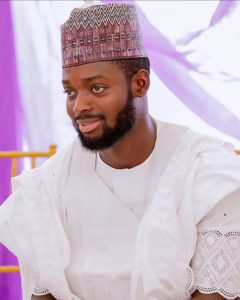
Obasa’s son, Abdulganiyu
“This is someone that is well-read, a PhD student for that matter, who has been touching lives in Agege long before now. In fact, he deserves to succeed me.
“People blabbing ‘imposition’ in respect of the Speaker’s son’s matter are not fair to the young man and Agege,” he declared.
Highlighting his own tenure, which ends in about two months, Egunjobi reeled out achievements including the construction of roads, health centres, public school infrastructure, vocational training, youth empowerment programmes, and local job creation.
“We built a CBT centre for JAMB candidates, upgraded our vocational training institute, and even created a deradicalisation programme for louts post-EndSARS,” he said.
“Over 700 staff, including security personnel under ‘Paramole’, are on our payroll, receiving stipends to maintain peace and order.”
When asked about the perennial Awori versus non-indigene divide in Agege politics, the chairman responded with a rebuke of identity politics.
“We are all born and bred in Agege. Come to think of it, no Awori person in Agege is more Agege than me. The dichotomy doesn’t hold water and is inconsequential,” he concluded.