
Borno Assembly to criminalise diversion of malnourished children’s food


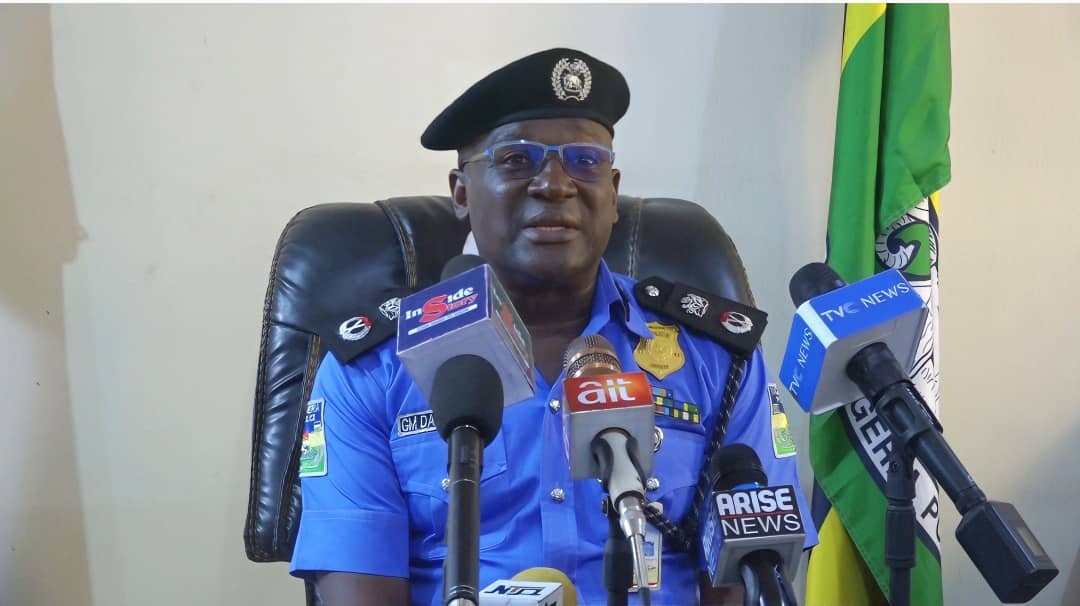
The Borno state House of Assembly has said it will criminalise the diversion and reselling of malnourished children’s food following the disturbing alarm raised by the United Nations Children’s Fund


The House pledged on Friday when UNICEF visited its committee on health to discuss possible collaborations on the Federal government’s N-774 project, which focused on addressing issues of malnutrition in the country


While expressing grievances over the reselling and diversion of malnourished children’s food, the Chairman of the state’s House of Assembly Committee on Health, Maina Mustapha, assured UNICEF of collaboration to deliver its mandate of protecting children’s health through stringent regulations that will deter the selling of healthcare donated items


“We will criminalise the issue of selling out, taking, or theft of nutrition products that is being supplied by donor partners.


“We claim we are poor and resort to selling whatever has been given to us by donor partners.


“Instead for us to use it for our children, we choose to use it for our personal gain,” Mustapha frowned.


Speaking on the N-774 initiative, Mustapha appreciated UNICEF’s involvement, while stating that it is ready to carry it along in all the planning and strategies.

The UNICEF Chief of Maiduguri Field Office, Joseph Senesie, commended the partnership, saying with the right political will through the N-774 initiative, children in grassroots areas will enjoy access to good nutrition


He said, “N-774 is an initiative, launched by the government of Nigeria, headed by the Vice President, and the N-774 represents all the local governments in Nigeria, meaning it’s for the whole country, where nutrition will go right down to the grassroots level.


“The agenda is to bring down issues relating to malnutrition.


“In Borno state, we are meeting here at the House of Assembly to ensure that the initiative that started at the national level is coming down to the sub-national level.


“This is why we are calling ours the end N-27, since that is the number of LGAs in the state. We want to have committee members and form the committee that will represent all these LGAs so that nutrition is taken down to the grassroots,”


He commended the house for the bold step to criminalise the diversion of products meant for malnourished children, while describing it as the right step in the right direction


PUNCH had recently reported that UNICEF raised the alarm over the diversion and reselling of RUTF, a product meant for over half a million malnourished children in Borno, Adamawa, and Yobe states.

Davido credits Bright Chimezie’s ‘because of English’ as inspiration for new song ‘With You’


Nigerian Afrobeats superstar David Adeleke, popularly known as Davido, has shown appreciation to legendary highlife maestro Bright Chimezie, crediting his timeless track ‘Because of English’ as the inspiration behind his new song “With You” featuring Omah Lay.


In a video call that quickly circulated on social media, Davido was seen in a video call with Chimezie. With visible admiration, he told the veteran that his decades-old classic planted the creative seed for “With You”, a standout track from his fifth studio album.


“The latest hit I just did with Omah Lay, I used inspiration from your song, ‘Because of English,’” Davido told the highlife icon during the call. Chimezie responded with interest, to which Davido added, “I will tell them to play it for you. It’s trending everywhere, the whole world.”


Reacting in a video posted on his Instagram page on Thursday, the music legend Bright Chimezie praised Davido and Omah Lay for their hit single ‘With You’, which samples his iconic track ‘Because of English’.


In the video, Chimezie was seen dancing joyfully to the song while applauding the artists for creatively drawing inspiration from his classic.


“You can see I am vibing to the song already. It’s a beautiful piece of work, very wonderful. I appreciate the fact that you said you picked the inspiration from this song I recorded many years ago; I appreciate you for that,” he said


Davido, in turn, replied with deep respect, switching to the Igbo language to honour the icon:

He wrote, “Ihe di ka gi akokwala m. Chief Sir Bright Chimezie, Ezigbote Onye Egwu,” meaning, “People like you inspire me. Chief Sir Bright Chimezie, a true music legend.”


“With You”, produced by the talented beatmaker Tempoe, fuses the lush groove of highlife with modern Afrobeats and a sprinkle of funk, a sound that echoes Nigeria’s 70s and 80s musical golden age, where artists like Chimezie laid the foundation.


Watch the video below:


𝐕𝐈𝐃𝐄𝐎: 𝐃𝐚𝐯𝐢𝐝𝐨 𝐂𝐫𝐞𝐝𝐢𝐭𝐬 𝐁𝐫𝐢𝐠𝐡𝐭 𝐂𝐡𝐢𝐦𝐞𝐳𝐢𝐞’𝐬 ‘𝐁𝐞𝐜𝐚𝐮𝐬𝐞 𝐨𝐟 𝐄𝐧𝐠𝐥𝐢𝐬𝐡’ 𝐀𝐬 𝐈𝐧𝐬𝐩𝐢𝐫𝐚𝐭𝐢𝐨𝐧 𝐅𝐨𝐫 𝐍𝐞𝐰 𝐒𝐨𝐧𝐠 ‘𝐖𝐢𝐭𝐡 𝐘𝐨𝐮’


Nigerian Afrobeats superstar David Adeleke, popularly known as Davido, has shown appreciation to… pic.twitter.com/hPajWSWJ3Z


— Punch Newspapers (@MobilePunch) May 16, 2025

Don’t scrap TETFund for NELFUND, OOU VC urges FG


The Vice-Chancellor, Olabisi Onabanjo University, Ago-Iwoye, Prof. Ayodeji Agboola, has passionately appealed for the continued existence of the Tertiary Education Trust Fund to support the development of tertiary education in Nigeria.


Prof. Agboola noted that TETFund had become inevitable as a significant intervention agency for universities and other tertiary education institutions and should not be scrapped or underfunded due to the birth of the Nigerian Education Loan Fund.


In a statement on Thursday

, the Vice-Chancellor made this call when he received the Chairman, South-West Zone of TETFund Board of Trustees. Sunday Adepoju, who led a delegation on a familiarisation and project inspection visit to the University recently.


The Vice-Chancellor said both TETFund and NELFUND should run simultaneously rather than allowing one to kill the other.


According to him, the TETFund is a force to reckon with in Nigeria’s educational landscape, and its various interventions have been instrumental in addressing key challenges facing the country’s tertiary institutions.


He faulted the calls in certain quarters for the scrapping of TETFund as a result of the emergence of NELFUND, arguing that such would be counterproductive in the long run.


Prof. Agboola contended that with the existence of both agencies, the attrition rate of students in universities would be reduced, while infrastructural development in those institutions would also be increased.


He said, “I want to say that without TETFund, maybe many universities would not be in existence. TETFund has been very significant in virtually all the development of this University, they also train academic staff for their PhDs.


“I’m one of the beneficiaries of TETFund because my PhD was sponsored by TETFund at the University of Nottingham.”


“I am also aware that a couple of our colleagues make use of TETFund for conference’ attendance and training. Virtually all the buildings we have and in all our satellite campuses, if you take away the philanthropists and the alumni donations, the rest are TETFund and Needs Assessment.


“My plea is that NELFUND should not replace TETFund, and the funds being allocated to TETFund should also not be reduced.”

“If you give more money to NELFUND for student loans and the student does not have anywhere to sit, it would be another kettle of fish. In this University, you can have 35,000 students applying every year, and there is only a quota of 7,000.


“Most of the teaching aids that we have come from interventions from TETFund. So, if the government decides to reduce the funds being allocated to TETFund and give them to NELFUND, I think the government needs to look at it again.”


“No nation will develop better than the products of its universities. If we bring more students into the university and there are no facilities, it won’t be a good development. So, it will be better for us to have the two agencies simultaneously.”

The Vice-Chancellor noted that OOU had judiciously utilised funds allocated for TETFund projects in the institution, calling for more interventions of the agency to move the University forward.


Prof. Agboola also used the opportunity of the visit to appeal to the Federal Government for urgent reconsideration of its stance on the cancellation of overseas training for Nigerian scholars.


Speaking during the visit, Adepoju said his visit was aimed at familiarising the Board of Trustees with some of the ongoing and completed projects of TETFund in the University.


Adepoju commended OOU and its Management for adequate utilisation of funds and implementation of TETFund projects, stressing that taxpayers’ money had been put into good use in the state-owned institution.


He said, “We have come, we have seen, and we will make our informed decision. With what we have seen so far, TETFund has done greatly for you in this University, and you are making effective use of the physical infrastructure given to you. We are very pleased, and if there is an opportunity for TETFund to do more, it will be done.


“You have shown that taxpayers’ money is being put to use, and by the grace of God, it would be the beginning of more to come from TETFund. I am happy that you are not having any abandoned projects and you are not having any unaccessed funds.


“That shows the quality of the Management this University has. As we have been told, some Managements of institutions delay the payment of money to contractors, thereby causing inflation to the projects. That has not been the case in OOU.”

UN warns of fragile global economy amid rising trade tensions


The United Nations Department of Economic and Social Affairs has said that the global economy stands at a fragile turning point amid escalating trade tensions and growing policy uncertainties.


UN DESA, in a report published on Thursday, stated that tariff-driven price pressures were adding to inflation risks, leaving trade-dependent economies particularly vulnerable.


It stated that higher tariffs and shifting trade policies were threatening to disrupt global supply chains, raise production costs, and delay key investment decisions – all of which would weaken the prospects for global growth.


The economic slowdown is widespread, affecting both developed and developing economies around the world, according to the report.


For instance, in the United States, growth is projected to slow “significantly”, as higher tariffs and policy uncertainty are expected to weigh on private investment and consumer spending.


Several major developing economies, including Brazil and Mexico, are also experiencing downward revisions in their growth forecasts.


China’s economy is expected to grow by 4.6 per cent this year, down from 5.0 per cent in 2024. This slowdown reflects a weakening in consumer confidence, disruptions in export-driven manufacturing, and ongoing challenges in the Chinese property sector.


By early 2025, inflation had exceeded pre-pandemic averages in two-thirds of countries worldwide, with more than 20 developing economies experiencing double-digit inflation rates.

This comes despite global headline inflation easing between 2023 and 2024.


Food inflation remained especially high in Africa and in South and Western Asia, averaging above six per cent. This continues to hit low-income households hardest.


Rising trade barriers and climate-related shocks are further driving up inflation, highlighting the urgent need for coordinated policies to stabilise prices and protect the most vulnerable populations.


“The tariff shock risks hitting vulnerable developing countries hard,” Li Junhua, UN Under-Secretary-General for Economic and Social Affairs, said in a statement.


As central banks try to balance the need to control inflation with efforts to support weakening economies, many governments, particularly in developing countries, have limited fiscal space. This makes it more difficult for them to respond effectively to the economic slowdown.


For many developing countries, this challenging economic outlook threatens efforts to create jobs, reduce poverty, and tackle inequality, the report underlines.

Presidents after Obasanjo to blame for growing Boko Haram menace – Atiku


Former Vice President Atiku Abubakar has said ex-President Olusegun Obasanjo swiftly ended Boko Haram’s activities when the group first emerged during their administration.


Speaking in Abuja on Wednesday during a visit by stakeholders from Kogi East Senatorial District, led by former Kogi State Deputy Governor, Simon Achuba, Atiku attributed the early success against the insurgents to strong political will.


Atiku, in a video shared on his Facebook page from the meeting, said Boko Haram first appeared in Yobe State in 2002, prompting Obasanjo to consult him on how to respond.


Atiku said, “You remember when the Boko Haram started in Yobe? It was actually in 2002. We were in the office. The president sent for me. ‘VP, what do we do about this?’ Then I said, ‘Mr President, let’s call the Service Chiefs and give them a deadline. If they can’t put it down, then they should put down their uniform and go away. We will get some other people.


“And he called the Service Chiefs; I was there, and gave them marching orders, and within a few weeks, they put down the insurgency in Yobe. It never came up again until we left office.”

Atiku blamed the group’s later resurgence on the failure of successive leaders to act decisively.


“So, I will say there’s a lack of political will on the leaders. When they’re killing your citizens, how can you even eat? They’re killing your citizens and you don’t give a damn; that is the greatest irresponsibility by any political leader, anywhere.


“So I hold our leadership responsible for all the insecurity that is going on all over the place,” he added.


Atiku served as Vice President of Nigeria from 1999 to 2007 under President Olusegun Obasanjo, during the Fourth Republic, following the end of military rule.

VIDEO: Don’t date when jobless, Pastor Idowu warns against ‘hunger-induced’ relationships


The lead pastor of Harvesters International Christian Centre, Bolaji Idowu, has advised individuals to refrain from entering romantic relationships while unemployed.


He emphasised that financial instability can impair one’s judgment and lead to unwise decisions in matters of the heart.


Speaking during a recent sermon which started trending on X (formerly Twitter) on Thursday, Idowu explained that unemployment often narrows one’s options and may cause a person to settle for relationships they would not consider if they were financially stable.


“Don’t date when you are jobless.


“There are some relationships that are attractive not because they are attractive, it’s because you have no money.


“When you have your own money, you will be surprised how you should have not fallen in love with some people. It’s not love induced; it was hunger induced,” he said.


He cautioned his audience against making important life decisions under financial duress, warning that desperation can lead to unfavourable outcomes.


“Never negotiate on an hungry stomach, you will get a bad deal. Crumbs mentality – when you are poor, small things satisfy you easily.

“One of the signs of crumbs mentality is that you settle for less so easily,” he stated.


Idowu encouraged a shift in mindset, urging individuals to adopt a broader, more ambitious perspective not limited by current circumstances.


“Shift in your thinking. I’m saying you need to think in abundance. I hang around people and when I hear the things that they used to talk about – ‘if I can just travel to America’. How can traveling to America be a goal?” he asked.


Watch the video below:


Wema Bank Training Institute,Purple Academy Shines At Global Awards,Paris


Wema Bank Training Institute, Purple Academy Shines At GlobalCCU Awards, Pari

…Confirmed Winner of the 2025 GlobalCCU Award for ‘Best Corporate University Culture’

Wema Bank, Nigeria’s oldest indigenous bank, most innovative and pioneer of Africa’s first fully digital bank, ALAT, has been announced the gold winner of the 2025 Global Council of Corporate Universities Awards (GlobalCCU) Award for ‘Best Corporate University Culture’. Held in Paris, on May 12, 2025, the awards recognized the bank’s training institute, Purple Academy, for its excellence and strategic impact in driving learning culture.

Hosted every two years and considered the gold standard for corporate education, the GlobalCCU Awards played host to the world’s most innovative and high-impact corporate universities, evaluating nominees through a rigorous multi-phase process led by an international jury. The award also celebrates corporate universities that demonstrate measurable value for people, business, society, and the planet.

For the 2025 edition, Wema Bank’s Training Institute, Purple Academy was shortlisted alongside leading institutions from across the world, standing out for its transformative work in human capital development, strategic business alignment, and learning innovation.

Coming in the same year the bank celebrated its 80th anniversary, this recognition reinforces Wema Bank’s legacy as a forward-thinking institution committed to building people, pioneering innovation, and redefining the future of work in Nigeria and beyond. “This win is more than just a global recognition of our learning strategy as a bank, it’s a powerful validation of what we have stood for over the past 80 years,” said Moruf Oseni, Managing Director/CEO of Wema Bank.

“At Wema, our transformation has always started with our people. Purple Academy is one of our promises in motion to equip every member of our workforce with the tools to grow, lead, and innovate as we evolve and adapt to our environment. To be globally recognized in this milestone year is a proud moment for us and everyone who has believed in our journey,” He concluded,

Speaking on why Purple Academy deserves the award, the Founder and Chairman of the GlobalCCU Awards, Annick Renaud-Coulon, shared, “Purple Academy is an outstanding Corporate University that is clearly the Best Corporate University Globally for driving a Learning Culture. It is a Corporate University that transmits, respects and preserves the Wema Bank cultural heritage and effectively evolves it as a principle which drives efficient actions. The diversity of its employees generates a high level of empathy among its stakeholders. The way it honors diversity and inclusion is brilliant to see and their leaders are so engaging when featured in internal videos. They are not only representing a great company, but also the culture of their country in the best possible way.”

Wema Bank’s Training Institute, Purple Academy, launched as a corporate university in 2022, has a beacon of learning excellence and innovation, that empowers employees at every stage of their career. The corporate university offers a dynamic blend of immersive learning experiences, personalized development paths, and forward-thinking content that addresses the evolving demands of work, life, and leadership. Through structured programs across its five key schools, including Culture, Leadership, Banking, Business, and the SME Business School, Purple Academy nurtures talent with a future-ready approach. From onboarding new hires through the Bankers-in-Training School to shaping high-impact leaders, the Academy remains committed to investing in people, promoting growth, and fostering a vibrant workplace culture aligned with Wema Bank’s legacy of innovation and excellence.

As Purple Academy continues to scale new heights and expand its influence across sectors and borders, this GlobalCCU recognition signals yet another bold chapter in Wema Bank’s story. It tells a story of a bank rooted in people, purpose, and the pursuit of excellence .

Reps move to make voting compulsory for Nigerians


A bill to amend the Electoral Act 2022 to make voting compulsory for Nigerians of voting age has passed second reading in the House of Representatives.


The proposed legislation was sponsored by the Speaker, Tajudeen Abbas, and Daniel Ago.


Leading the debate during plenary on Thursday, Ago said the bill aimed to encourage citizens’ participation in the electoral process, noting that voter apathy during elections would be addressed if the bill scales legislative scrutiny.

Although the bill passed second reading, a member of the Peoples Democratic Party from Akwa Ibom State, Mark Esset, said enacting a law to make voting compulsory is not enough to sanitise the electoral system.


“Let us not put something on nothing. If citizens have lost confidence in the electoral system, there is a lot of work to be done.


“Many Nigerians do not vote during elections because they believe that their votes will not count. If we must make a law to make voting compulsory, we must also make another one to make their votes count,” he said.

Defection: Our goal is to move Delta forward, not kill PDP – Oborevwori


Delta State Governor Sheriff Oborevwori has stated that his administration’s recent political realignment is aimed at advancing the state’s development, not destroying the Peoples Democratic Party.


Speaking through the Commissioner for Works (Rural Roads) and Public Information, Mr. Charles Aniagwu, during a press briefing in Asaba, Oborevwori said the decision to defect to the All Progressives Congress was informed by the political realities ahead of the 2027 general elections.


“Our desire is not to kill PDP but to move Delta forward, and so we changed our driving pattern.


“It was obvious that PDP won’t make headway in the forthcoming 2027 election, and so [there was] need to move to APC,” Aniagwu said.


Highlighting the administration’s performance, Aniagwu added, “In almost two years, we can see very bold and remarkable achievements by Governor Oborevwori and his team.


“We have provided roads in various communities, reducing travel time from Asaba to Ughelli to just one hour and forty-five minutes.”


He dismissed concerns raised by critics about the government’s capacity to deliver, stating, “Anyone suggesting that the administration is losing grip is far from the truth.


“We remain committed to delivering results.”

Aniagwu also revealed plans to mark the administration’s second anniversary with the commissioning of several completed projects, though the governor may not be able to personally inaugurate all of them due to the volume.


“Some of the key projects include the Beneku Bridge, Ishiagu-Ewulu Road and Bridge, Upper and Lower Erejuwa Roads in Warri, erosion control in Okpanam, Olomoro-Igbide Road, Otolokpo to Boji-Boji Owa, Akumazi-Owere-Olubor Road, and Obi-Ibabu Road, among others.


“We have also installed medical equipment at Asaba Specialist Hospital, Warri Central Hospital, and Delta State University Teaching Hospital in Oghara, all aimed at improving healthcare delivery and reducing medical tourism,” he said.


On security, Aniagwu stated that the state government has taken proactive steps. “The Inspector General of Police was in the state recently to commission operational vehicles.


“We have also improved street lighting across urban centres,” he said.


Addressing concerns about rising house rents in Asaba and other towns, the commissioner said the state government is implementing a housing scheme to expand livable spaces.

He noted that 50 residential units are being constructed in each local government area, with the pilot phase ongoing in Ozoro, Owa-Oyibu, and Kwale.


The scheme features 30 three-bedroom flats and 20 two-bedroom flats.

Compulsory voting bill sparks debate in House of Reps


Two opposition lawmakers on Thursday raised concerns over a bill seeking to amend the Electoral Act, 2022, to make voting compulsory for Nigerians of voting age in all national and state elections.


The bill, sponsored by Speaker of the House of Representatives, Tajudeen Abbas, and Daniel Asama (Plateau), scaled second reading during plenary.


Leading the debate on the general principles of the bill, Asama said the proposed legislation aims to enhance democratic participation by mandating eligible Nigerians to vote during elections.


Asama said, “Voting is not only a right but a civic responsibility, and in many democracies across the world, it is treated as such.


“This bill proposes to introduce mandatory voting for all Nigerians of voting age in general elections, both at the national and state levels. It seeks to amend the relevant provisions of the Electoral Act, 2022, to reflect this obligation, while also allowing for limited and justified exemptions where necessary.”


He pointed to low voter turnout as a major concern, noting, “In the 2023 general elections, less than 30% of registered voters participated.


“This trend undermines the legitimacy of elected governments and weakens democratic institutions.”


The lawmaker argued that mandatory voting would foster greater civic engagement.


“By making voting a legal obligation, it will instil in citizens a sense of civic duty and shared responsibility in the governance process.


“Several democracies, including Australia, Belgium, and Brazil, have adopted mandatory voting with positive outcomes in terms of political participation and public accountability,” Asama said.


Asama also stated that the bill would help reduce electoral malpractice. “Mandatory voting can significantly reduce the influence of vote-buying, as more citizens will be participating,” he added.

He highlighted other objectives of the bill, including:


Amending the Electoral Act, 2022, to introduce compulsory voting for all citizens aged 18 and above.

Providing a legal framework for enforcing mandatory voting, including appropriate sanctions for unjustified failure to vote and valid grounds for exemption such as illness, religious objection, or residency outside the country.

Empowering the Independent National Electoral Commission to develop systems for tracking voter compliance and managing exemption requests without infringing on fundamental rights.

Promoting electoral education and awareness to deepen democratic participation.

Asama also noted that INEC’s dual role in regulating political parties and conducting elections creates structural inefficiencies.


“This challenge is not merely administrative; it is structural.

“When a single body is tasked with both organising elections and regulating the participants in those elections, questions arise about the independence, neutrality, and operational capacity of that institution,” Asama said.


Opposition Lawmakers Raise Concerns

Members of the Peoples Democratic Party (PDP), Mark Esset (Akwa Ibom) and Awaji-Inombek Abiante (Rivers), questioned the practicality and fairness of enforcing compulsory voting.


Esset said, “We are trying to put something on nothing. When citizens have lost confidence in voting, there is a lot of work to be done. If we make a law to make voting compulsory, we should make another law to make the votes count.”


Abiante added, “I agree that every adult man and woman should participate in deciding their leaders, but there are certain questions we need to ask. What are the incentives to make them go out and vote? Have they been assured of their security? We are talking of a country where the name Mike Tyson is still on the voter register. Do we have an authentic voter register?


“If you make voting compulsory, there are Nigerians in Ghana, the United States, and everywhere. How do you bring them back to vote?”


Support from Other Lawmakers

The bill received support from Deputy Speaker Benjamin Kalu, Tijani Ghali (NNPP, Kano), and Amadi Akarachi (APC, Imo), who echoed the need for reforms to boost civic participation.


The bill has been referred to the House Committee on Electoral Matters for further legislative action.

Exit mobile version