A touching video of Nollywood actress Iyabo Ojo praying for her daughter, Priscilla, is warming hearts across social media as the young bride prepares for her traditional wedding to Tanzanian musician Juma Jux today, April 17.
In the now-viral clip, Priscilla is seen kneeling before her mother, holding her hand while Iyabo offers heartfelt prayers. The intimate moment, filled with emotion, beautifully captures the sacred bond between mother and daughter on one of life’s most significant days.
The video comes just days after Priscilla and Juma shared their stunning pre-wedding portraits — five captivating photos that lit up the internet.
The couple described their union as “two hearts united as one soul, on a mission to forever.”
Their love story has been nothing short of magical. In February, the pair held a private wedding introduction in Tanzania, attended only by close family and friends.
Then, just two days before Valentine’s Day, Juma Jux proposed to Priscilla again — this time with a ring twice the size of the first. The romantic moment, captured in a video shared online, showed Juma reaffirming his love and commitment in the presence of her loved ones.
The following day, the couple sealed their love with a civil wedding ceremony, graced by celebrity guests including Toyin Abraham, Chioma Good Hair, and her best friend, Enioluwa
A touching video of Nollywood actress Iyabo Ojo praying for her daughter, Priscilla, is warming hearts across social media as the young bride… pic.twitter.com/3zFGe1oHxX
The President of the African Development Bank, Dr. Akinwumi Adesina, has called on African nations to put an end to the export of raw materials if the continent is to overcome poverty and underdevelopment.
According to data from the Office of US Trade Representative and other multilateral institutions, Africa accounts for less than 2 per cent of global manufacturing.
In a post shared on Thursday via his official X handle, Adesina stressed the need for Africa to shift from being a supplier of unprocessed commodities to a producer of value-added goods.
“Africa must end the exports of its raw materials. The export of raw materials is the door to poverty. The export of value-added products is the highway to wealth. And Africa is tired of being poor,” he wrote.
Despite Africa being home to the world’s most sought-after raw materials, its share of global trade remains under 3%. Efforts to change this narrative have gained momentum in recent years. Initiatives such as the African Continental Free Trade Area are designed to enhance intra-African trade, boost manufacturing, and encourage value addition across sectors.
Adesina has consistently advocated for policies that promote agro-industrialisation, energy expansion, and improved infrastructure as a foundation for transforming Africa’s economies.
Last week, Adesina criticised the disproportionate allocation of the International Monetary Fund’s Special Drawing Rights, revealing that Africa received just $33 billion, only 4.5 per cent of the $650 billion issued globally.
The AfDB president stressed that the distribution model of the SDRs failed to reflect the urgent financial needs of Africa, which bore some of the deepest economic scars from the pandemic, with limited fiscal capacity to implement a robust recovery plan.
To address this imbalance, Adesina disclosed that the AfDB, in partnership with the African Union, spearheaded efforts to rechannel unused SDRs from wealthier nations to African economies. Leveraging the AfDB’s AAA credit rating, a new framework co-developed with the Inter-American Development Bank (IDB) has now been approved by the IMF Board.
NCDMB, Renaissance Energy Commit to Collaboration, Local Content Developmen
The Executive Secretary, Nigerian Content Development and Monitoring Board (NCDMB), Engr. Felix Omatsola Ogbe, on Wednesday expressed total support for the vision and long-term plan of Renaissance Africa Energy Company Limited, a consortium that concluded acquisition of onshore oil assets of Shell Petroleum Development Company (SPDC) in March 2025.
Addressing a high-powered delegation of the company in his office at the Nigerian Content Tower (NCT) in Swali, Yenagoa, Engr. Ogbe said indigenous oil and gas companies are ever assured of an enabling environment by the Board, and that its Management team would be willing to engage with their counterparts from the Renaissance Group whenever the need arose.
He commended the company’s emphasis on Nigerian Content and plans to establish a foothold in other countries across Africa, assuring the delegation that NCDMB would provide their company with “double enabling environment” in support of its growth in Nigeria and abroad.
The NCDMB boss noted that Renaissance Africa Energy Company has a promising future, given the very competent hands in its employ who had held responsible positions in companies with track records of performance in the oil and gas sector.
Earlier the Managing Director and Chief Executive Officer of the company, Dr. Tony Attah, had thanked the Executive Secretary for the warm reception, assuring him and the NCDMB Management, “We are ourselves Nigerian Content – we’re wholly Nigerian.”
On the company’s long-term plan, he said, “We invest in Nigeria, but represent Nigerian Content across Africa…. Our mission is to be the African leader in energy but most importantly to enable energy security, to enable industrialisation.”
In his own remarks, the Chairman of the Renaissance Group, Dr. Layi Fatona, recalled that the NCDMB had been very supportive to the SPDC in the past, and that it was their expectation that the new company which has acquired the assets of the Anglo-Dutch giant would continue to enjoy the same relationship.
The General Manager, Corporate Communications and Zonal Coordination of the NCDMB, Barr. Esueme Dan Kikile, in a brief comment noted that the vision of the NCDMB aligns with that of Renaissance, and that the two organisations would be able to collaborate productively to advance local content.
Renaissance Africa Energy Company Limited is a consortium comprising four leading indigenous oil companies, namely, ND Western Limited, Aradel Holdings, FIRST Exploration and Petroleum Development Company Limited (FIRST E&P), and Waltersmith Group, and an international energy company known as Petroni.
The distinguished Senator representing Ogun East Senatorial District and Chairman of the Senate Committee on Navy, His Excellency, Otunba Engr. Gbenga Daniel, has extended warm congratulations to Aare Adetola EmmanuelKing, Chairman/CEO of Adron Group, on the occasion of his 50th birthday.
In a heartfelt message, Senator Daniel praised Aare Adetola EmmanuelKing for his outstanding dedication and immense contributions to the Nigerian housing sector. He described the celebrant as a shining example in the business community, whose passion and commitment have left an indelible mark on the real estate industry across Nigeria.
“You are indeed a source of inspiration to your generation and a shining example within the business environment. There is no doubt that you had written your name in an indelible ink across Nigeria and most especially among the real estate developers,” he wrote.
Senator Daniel also acknowledged Aare Adetola EmmanuelKing’s conferment as the ‘Otun-Asiwaju of Remo Christians’ by the Ogun State branch of the Christian Association of Nigeria (CAN), as a reflection of his God-fearing nature, philanthropic spirit, and commitment to humanity.
The senator offered prayers for good health, greater accomplishments, and many more remarkable years ahead for the business mogul.
He concluded by affirming his highest regards and admiration for the celebrant.
The Lagos State High Court in Ikeja has declared the removal of Mudashiru Obasa as Speaker of the Lagos State House of Assembly illegal and unconstitutional.
In a judgment delivered on Wednesday, Justice Yetunde Pinheiro nullified the House’s proceedings and resolutions of January that led to Obasa’s ouster.
Obasa had filed a suit against the Lagos State House of Assembly and Mojisola Meranda, who was named the new Speaker, challenging the legality of the process that resulted in his removal.
Represented by his counsel, Chief Afolabi Fashanu, Obasa argued that the decision to remove him was taken by 36 lawmakers while the Assembly was on recess and he was out of the country
He maintained that the session was invalid, as it was convened without his authority or a formal delegation of power, in violation of the House’s procedures.
The suit was based on nine grounds, referencing relevant provisions of the 1999 Constitution (as amended) and the Standing Orders of the Lagos State House of Assembly.
The Joint Admissions and Matriculation Board has dissociated itself from the ongoing circulation of false, misleading, and criminal messages targeting candidates who registered for the 2025 Unified Tertiary Matriculation Examination.
The JAMB spokesperson, Dr Fabian Benjamin, in a statement released on Wednesday in Abuja, said the messages were being disseminated by suspected fraudsters to defraud unsuspecting individuals.
Benjamin noted that the perpetrators had exploited the numerical variant of UTME, 8863, and merged it with the Board’s short code, 55019, to create a deceptive code that mimics JAMB’s official messaging system.
According to him, through this fraudulent scheme, they have been sending misleading messages to candidates, falsely claiming to detect manipulations in their JAMB details and urging them to contact certain individuals who would “assist” in resolving these fabricated issues.
“We want to emphasise that these messages are not from JAMB. Security agencies have been notified and are actively tracking the perpetrators behind this scam.
“Candidates are strongly advised to ignore such messages. This is a common tactic employed by fraudsters who seek to exploit the examination period to deceive and defraud innocent candidates.”
He, therefore, urged the general public to remain vigilant and critically assess the messages they receive, adding that any communication that does not align with JAMB’s official channels or uses suspicious language or instructions should be treated as fraudulent.
Gabon international striker Aaron Boupendza died on Wednesday at the age of 28 when he fell from the 11th floor of a building in China, according to the national football federation (Fegafoot).
“The Gabonese international died following a fall from the 11th floor of his building in China, where he was playing for Zhejiang FC,” the federation said in a statement on X.
“Aged 28, Boupendza leaves us with the memory of a great striker who left his mark on the CAN (Africa Cup of Nations) in Cameroon.”
In 2022, the Panthers were eliminated in the last 16 of the AFCON by Burkina Faso.
“Fegafoot and the entire Gabonese football family offer their sincere condolences to his biological family,” the federation added.
Gabonese president-elect Brice Oligui Nguema also took to X to add his condolences.
“It is with immense sadness that I learn of the tragic death of Aaron Boupendza, a talented centre-forward who brought honour to Gabonese football,” he posted.
Broadcaster Gabon 24 said that while “the exact circumstances of this tragedy are still unclear,” an investigation is underway to establish the facts.
Born in Moanda, Boupendza joined French side Bordeaux in 2016, spending most of his time on loan at other French clubs.
In 2020 he signed for Turkish side Hatayspor, and was top scorer in the Super Lig in 2020–21 before moving on to Al Arabi, with whom he won the Qatar FA Cup, and Al Shabab in the Saudi Pro League.
Spells in the USA with FC Cincinnati and Romania’s Rapid Bucharest followed ahead of his move to China in January.
Gabon international striker Aaron Boupendza died on Wednesday at the age of 28 when he fell from the 11th floor of a building in China, according to the national football federation (Fegafoot).
“The Gabonese international died following a fall from the 11th floor of his building in China, where he was playing for Zhejiang FC,” the federation said in a statement on X.
“Aged 28, Boupendza leaves us with the memory of a great striker who left his mark on the CAN (Africa Cup of Nations) in Cameroon.”
In 2022, the Panthers were eliminated in the last 16 of the AFCON by Burkina Faso.
“Fegafoot and the entire Gabonese football family offer their sincere condolences to his biological family,” the federation added.
Gabonese president-elect Brice Oligui Nguema also took to X to add his condolences.
“It is with immense sadness that I learn of the tragic death of Aaron Boupendza, a talented centre-forward who brought honour to Gabonese football,” he posted.
Broadcaster Gabon 24 said that while “the exact circumstances of this tragedy are still unclear,” an investigation is underway to establish the facts.
Born in Moanda, Boupendza joined French side Bordeaux in 2016, spending most of his time on loan at other French clubs.
In 2020 he signed for Turkish side Hatayspor, and was top scorer in the Super Lig in 2020–21 before moving on to Al Arabi, with whom he won the Qatar FA Cup, and Al Shabab in the Saudi Pro League.
Spells in the USA with FC Cincinnati and Romania’s Rapid Bucharest followed ahead of his move to China in January.
The House of Representatives’ 21-member Ad-Hoc Committee, constituted to oversee governance in Rivers State following the declaration of emergency rule by President Bola Tinubu, is yet to be briefed on how to carry out its mandate, The PUNCH has gathered.
President Tinubu declared a six-month emergency rule in Rivers State on March 18, 2025, after a prolonged political crisis between Governor Siminalayi Fubara and the State House of Assembly.
He suspended both parties and appointed Vice Admiral Ibok-Ete Ibas (retd) as Sole Administrator—a move ratified by both chambers of the National Assembly.
Speaker of the House, Tajudeen Abbas, inaugurated the committee on Tuesday at the National Assembly Complex in Abuja, appointing House Leader, Prof Julius Ihonvbere, as Chairman.
Despite the formal inauguration, members say they are yet to receive clear directives.
Speaking to The PUNCH, Patrick Umoh, representing Ikot Ekpene/Essien Udim/Obot Akara Federal Constituency of Akwa Ibom State, said: “The committee has just been inaugurated today (Tuesday). We are yet to be fully briefed on the modalities and rules of engagement. We hope the clarifications will be provided in due course.”
Another member, who spoke on condition of anonymity, added that the maiden meeting was largely ceremonial:
“Nothing took place at the meeting. We listened to the charge by the Speaker during the inauguration and we are prepared to hit the ground running. The meeting was for members to familiarise with one another.”
Attempts to get a comment from committee chairman, Prof Ihonvbere, were unsuccessful as he did not respond to messages sent to his phone.
Meanwhile, Speaker Abbas used the occasion to remind the appointed Sole Administrator that the Constitution requires him to report to the National Assembly.
“It is paramount to note that the current administration in Rivers State is inherently temporary. With the suspension of the state governor, Mr Siminalayi Fubara, and the entire House of Assembly, a caretaker administration has been installed under the stewardship of Rear Admiral Ibok-Ete Ekwe Ibas (retd.).
“His role is strictly circumscribed, as he is charged with maintaining law and order and ensuring that the basic functions of governance are met only until full democratic governance is restored,”Abbas said.
Referencing past interventions during emergencies in Plateau (2004), Ekiti (2006), and in Borno, Yobe, and Adamawa (2013), Abbas noted the constitutional authority of the National Assembly under Section 11(4) to legislate in such situations.
“This committee has a clear and non-partisan mandate. Its purpose is to monitor the implementation of federal directives and policies in Rivers State, ensure that the caretaker administration adheres to the law, and protect the public interest while facilitating the re-establishment of full democratic governance in the state,” he stated.
“The task before this committee is not routine; it is a mission of national significance that will serve as a litmus test for our commitment to democratic principles and constitutional governance.”
Urging members to maintain impartiality, the Speaker added,“You must conduct your oversight in strict accordance with the Constitution and avoid all forms of partisanship or bias. The National Assembly’s intervention in Rivers State is not an instrument of political vendetta but a constitutional necessity.”
In his response, Prof Ihonvbere assured of the panel’s readiness:“This is probably the strongest ad hoc committee ever set up since 2019. This will make our work a lot easier, and with the experience, exposure, dedication, and commitment to unbiased dispositions on national issues, I assure you, on behalf of my colleagues in the ad hoc committee, that we will not disappoint you, the National Assembly and Nigeria.”
Members of the committee include Prof Julius Ihonvbere (Chairman), Ali Isah (Deputy Chairman), Idris Wase, Muktar Betara, Sada Soli, Iduma Igariwey, Shehu Rijau, Wole Oke, Akarachi Amadi, Patrick Umoh, Isa Anka, and Chris Nkwonta, among others.
The representative for the South West, James Faleke, was absent at the inauguration.
The CEO of the Nigerian Midstream and Downstream Petroleum Regulatory Authority, Farouk Ahmed, says the ongoing instability in global oil markets is negatively impacting Nigeria’s economy.
He said while falling petroleum product prices may benefit consumers, the broader economic consequences are severe for Nigeria, which heavily relies on oil exports.
“As consumers, we are happy that the price is coming down, but…as a nation, it’s not good for our economy because our revenue inflow is also impacted,” Ahmed told State House Correspondents at the Meet-the-Press briefing series organised by the Presidential Communications Team at the Aso Rock Villa, Abuja, on Tuesday.
“Most importantly, what is even destabilising the market is inconsistencies in the way the USA President Donald Trump also sends his policies. He moves today. Tomorrow, he reverses. So, it’s been challenging to predict the next level,” Ahmed explained.
He cited a recent sharp drop in prices—from $73 to $60 per barrel in a single day—as an example of how revenue inflows are being disrupted.
Further compounding the crisis are domestic challenges, including pipeline vandalism and reduced production, he argued.
His comments follow recent OPEC reports indicating that Nigeria’s oil output has fallen to approximately 1.4 million barrels per day.
In recent weeks, Trump’s aggressive trade policies—including sweeping tariffs on goods from several nations, especially China, and threats of levies on other countries—have injected uncertainty into global markets.
These measures, often abruptly announced or reversed, have disrupted supply chains and investor confidence, contributing to fluctuations in commodity prices, including crude oil.
The oil market, already sensitive to geopolitical tensions and demand shifts, has seen added volatility as Trump’s tariffs and waivers sway economic forecasts.
For instance, when tariffs were imposed, oil prices often dipped on fears of slowed global growth, while exemptions or rollbacks triggered temporary rebounds.
Pundits say such instability complicates long-term planning for oil-dependent economies like Nigeria, where revenue hinges on steady crude prices.
The NMDPRA Chief told journalists: “Recently, as we all know, the global oil market – not only the oil market but the global economy – has been a bit volatile in the sense of the new American government’s policy of tariffs, not only targeted at China but at the whole world.
“Investors and traders not only in the oil and gas industry but also in the general economies of the world are moving left and right to the extent that some are doing day trading. That means you do your trading today. You close by the end of today because you never know what tomorrow’s policy will drive the market into.
“So the crude oil and petrol products market continues to have a downward trajectory because of these inconsistencies and policies of the government of the United States, and the key aspect of it is the aspiration of the American president to ensure that the crude oil pricing, or the crude oil price, comes down to maybe below $50 a barrel; that’s why he encourages more exploration in his country.”
Turning to the local implications, Ahmed acknowledged that while lower product prices benefit Nigerian consumers, the overall impact on the economy is negative.
He said, “So how does it relate to our own local industry regarding crude oil pricing, product pricing, demand and supply? We see a downward trajectory in terms of product pricing and crude oil pricing.
“So, we are happy as consumers of the derivatives of product pricing that the price is coming down, but when you look at it globally as a nation, it’s not good for our economy because our revenue inflow is also impacted.
“If the crude oil price, like what happened some Fridays ago, where it dropped in one day from about $73 a barrel to $60, you can see that in terms of our crude oil production, our revenue is impacted severely.”
The NMDPRA chief urged stakeholders to prepare for prolonged uncertainty in the oil sector.
He added, “This volatility will continue because as recently as yesterday, when President Trump again exempted some sectors from tariffs, particularly to China, like in terms of vehicular tariffs, you saw the market again start to go up.
“So, this is how it will continue to show, just to give you a general perspective of the oil industry.
“We recently had a report from OPEC that Nigeria’s production has come down to about 1.4 million barrels a day. If we lose the price by $10, you can see the negative impact on our economy, national reserves, and the strength of our naira. Again, when you look at the product market, we are happy to say, oh, the price is coming down.”
In a similar vein, Ahmed revealed that imports of premium motor spirit (petrol) have plunged from 44.6 million litres a day in August 2024 to 14.7 million by 13 April 2025—a fall of roughly 30 million, or 67 per cent, according to the latest Nigerian Midstream and Downstream Petroleum Regulatory Authority supply tracker.
This was as local supply rose 670 per cent within that period.
Ahmed said after contributing virtually nothing in August, local plants delivered 26.2 ML/day in early April, a jump from the 3.4 ML recorded in September, the first month with measurable output.
He hinged the surge on the phased restart of the Port Harcourt Refining Company in late November and incremental volumes from modular refineries.
Despite the progress, combined supply crossed the government’s 50 ML/day consumption benchmark only twice in the eight-month window—November (56 ML) and February (52.3 ML).
In March it slipped just below target at 51.5 ML, and in the first half of April, it remained short at 40.9 ML.
Figures from the NMDPRA also showed the balance among the three sources of PMS —Oil Marketing Companies, Dangote refinery and the Nigerian National Petroleum Company Limited — fared since last October.
OMCs raised average daily imports from about 22 million litres in October 2024 to roughly 30 million litres in December, settling in the mid 20s. They now account for 55 60 per cent of all petrol on most days.
Meanwhile, deliveries from the Dangote Petroleum Refinery and Petrochemicals rose steadily from 10 ML/day in October to around 22 ML in January and February before easing to 18 ML by mid April 2025. The plant now meets about two fifth of national demand.
From 24 ML/day in October, the NNPCL volumes fell monthly, slipping to 1 ML in January and zero recorded supply after February, Ahmed revealed in his slide presentation.
The NMDPRA Chief argued that the authority only grants import licences relative to the country’s supply requirements.
On refining operations, he explained that six licensed private and four public refineries currently produce 1.12 million barrels per day.
Six licensed private plants account for 679,500 bpd of the total. The Dangote single train complex refines 650,000 bpd.
Other modular sites include Aradel (11,000 bpd), OPAC (10,000 bpd), Waltersmith (5,000 bpd), Duport Midstream Limited (2,500 bpd) and Edo Refining and Petrochemicals Company Limited (1,000 bpd).
State owned facilities add 445,000 bpd. The refurbished Port Harcourt complex (150,000 bpd), Warri (125,000 bpd), Kaduna (110,000 bpd) and the old Port Harcourt unit (60,000 bpd) make up the Nigerian National Petroleum Company Limited’s share.
The NMDPRA said it has issued 47 licences to establish covering 1.75 million bpd and 30 licences to construct for 1.23 million bpd. Only four plants currently hold licences to operate, and these together have a 27,000-bpd steady output.
Ahmed said five LTC projects with a combined capacity of 689,500 bpd are at the commissioning or construction stage, including Dangote with 650,000 bpd. Smaller builds include AIPCC Energy’s 30,000 bpd plant and Waltersmith’s 5,000 bpd second train.
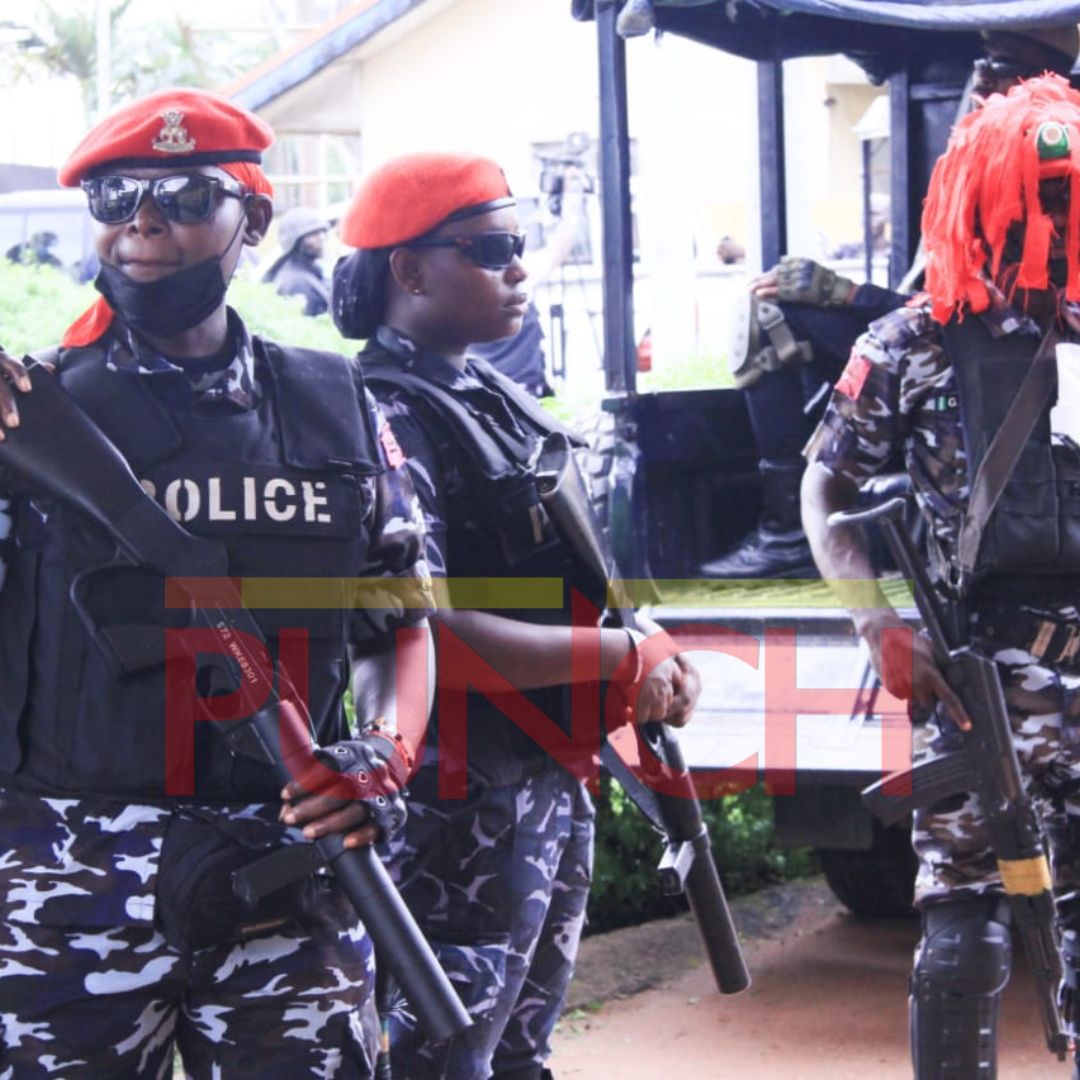
Panic gripped residents of Otobi community in the Akpa district of Otukpo Local Government Area of Benue State on Tuesday evening as suspected armed herders launched a fresh attack, leaving several people feared dead and hundreds displaced.
A resident of the area, Edwin Emma, confirmed the assault in a distressed phone call to journalists.
“We are being attacked by herdsmen at Otobi community. My wife and children are fleeing as I speak. Please call for help,” he said.
The lawmaker representing Otukpo-Akpa constituency in the Benue State House of Assembly, Kennedy Angbo, also confirmed the attack, which he said began around 5:30 p.m. on Tuesday.
In a phone conversation, Angbo disclosed that three corpses had already been recovered, with many more people feared killed.
“Right now, many people are feared dead, and hundreds have fled the community,” the lawmaker stated.
This marks the third reported attack on the Otobi community in the month of April alone, deepening fears among locals over growing insecurity in the area.
Attempts to reach the Benue State Police Public Relations Officer for an official response were unsuccessful, as her phone lines did not connect at the time of filing this report.
Meanwhile, the Chairman of Otukpo Local Government Area, Maxwell Ogiri, confirmed the incident to our correspondent in a telephone conversation from Abuja, where he is currently attending to post-election matters.
“Yes, the attack by herders on Otobi community is confirmed,” Ogiri said. “Though I am currently in Abuja, I have directed my aides in Otobi and Akpa district to mobilise security personnel to the affected area to bring the situation under control.”
Ogiri added that, as of Tuesday evening, he had not received a full report of casualties but emphasised that security agents had already been deployed to the community.
“I’ve been informed that the attack is ongoing. While I’ve not received confirmation of deaths yet, I expect to have clearer details by tomorrow,” he said.
He urged residents of Otobi to remain calm and law-abiding, assuring them that security agencies are working to contain the situation and restore peace.