Cash Shortage: The Governors are Acting on Their Own Volition and it Has Nothing to do with Tinubu Only – APC-PCC
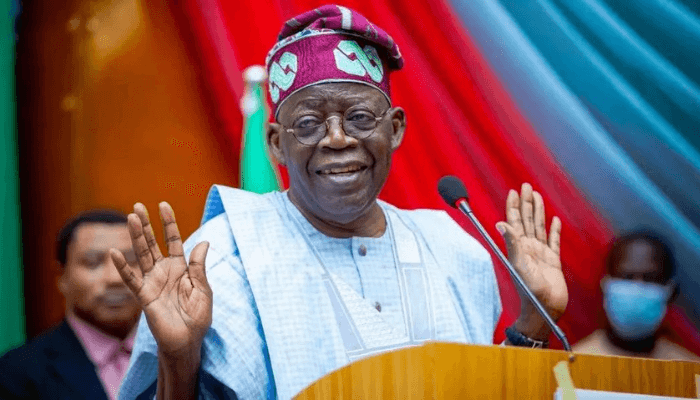
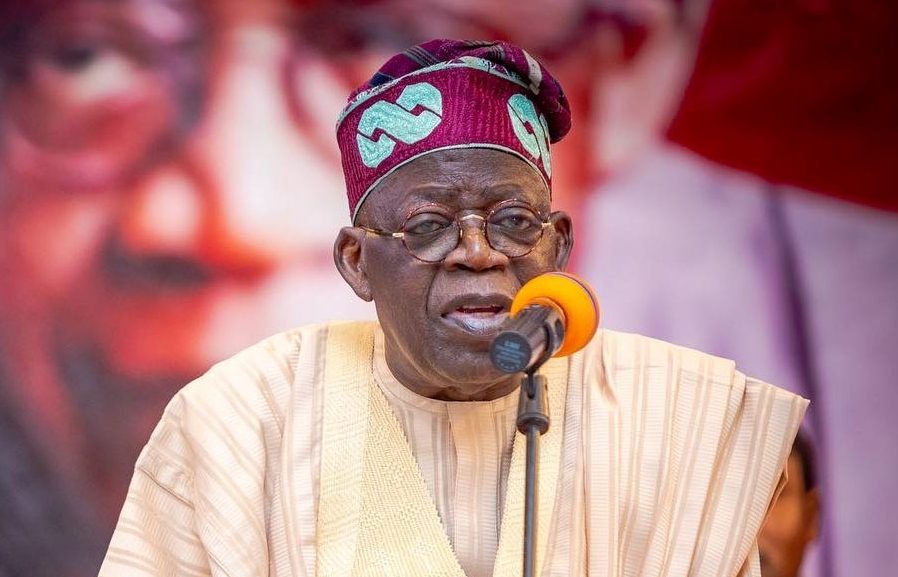
The All Progressives Congress Presidential Campaign Council (APC-PCC) has denied a media report alleging that it’s Presidential Candidate, Asiwaju Bola Ahmed Tinubu asked state governors to disregard President Muhammadu Buhari over the issues relating to the naira redesign.
Bayo Onanuga, the Director, Media & Publicity of the APC Presidential Campaign Council, said in a statement, which he personally signed, dated
February 17, 2023, that the report was fake.
“Our attention has been drawn to a fake viral news published by the Peoples Gazette, claiming Asiwaju Bola Tinubu, the APC presidential candidate has asked APC governors to ignore President Muhammadu Buhari’s broadcast and enforce the Supreme Court ruling on the recirculation of old Naira notes.
“The publication by the platform is fake.
“Tinubu never issued such an order. Mr Dele Alake, the APC-PCC Adviser on Media and Communications never issued such advisory on behalf of Asiwaju Tinubu.
“The message quoted by Peoples Gazette was being randomly shared on WhatsApp. Mr Alake was not the author,” the statement read.
Onanuga stressed that “Asiwaju Tinubu has been known, since the currency swap crisis started, to call for calm as the authorities try to find out a solution to the currency crisis. He has offered a six-point suggestion to lessen the anguish our people are facing in trying to get money from the banks.x
While stating that “Tinubu has also held several meetings with President Buhari, his leader over the matter,” he said that “it is thus inconceivable and unthinkable that he would instruct APC governors to disregard President Muhammadu Buhari’s order on the currency matter.”
“Governors who have so far declared this line of action said clearly that they were acting on the ruling of the Supreme Court, the highest court in the land.
“Asiwaju has had no influence in this decision.
“Journalists, unless acting on the dictates of political opponents or prosecuting some agenda, should endeavour to confirm authorship of their materials from the Media and Publicity Directorate of the campaign. They can also seek confirmation from the Tinubu Media Office or Mr. Alake .
“The Gazette should recant the story with immediate effect,” the statement read.
We Need A Nationalist, Not Southern Or Northern President — Jandor
By Abiodun Alade
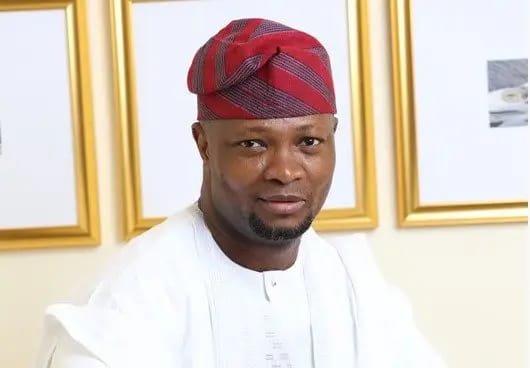
In this interview, Dr Abdul-Azeez Olajide Adediran popularly known as Jandor, the governorship candidate of the Peoples Democratic Party (PDP), in Lagos State, speaks on his plans for the state as well as why Nigerians should elect a nationalist and not a regional president come February 25.
From what you have seen so far, do you believe we’re going to have a free and fair election?
Well, of course, with the preparation of INEC and expression of readiness by all the security formations, I believe that this time, Nigerians will make the choice of who will be the leader of the country. And I have no doubts that for the very first time, we will have an election that reflects the wishes of the people. We’re confident that barring any unforeseen situation, that INEC, if what has happened in off-cycle elections in Anambra, Ekiti and Osun is anything to go by, will get it right and our party is ready for the election.
There are calls by some politicians that INEC should jettison BVAS. And there have also been pockets of violence in some parts of the country as a result of naira scarcity, don’t you think this will affect the conduct of the polls?
Wherever the calls for cancellation of BVAS and the likes are coming from speak to the character of such a group of persons or organisation. If what we’re yearning for is an election that will be free, fair and credible; and we now have a technology to assist us in getting that right and you have some people calling for cancellation, it shows that these are the set of people that have been undermining democracy for a long while.
You also look at the issue of Naira redesign and the fact that we’re not going to have an election that will be monetized so to speak. And you see some set of people coming out to complain. It speaks volumes of who they are. And if you look at all of this sequence of happenings tilting to one side, the question you need to ask yourself is: “why the sudden love for Nigerian people?” ASUU was on strike for nine months, none of you came out to speak for ASUU and speak against the fact that our brothers and sisters were at home for nine months doing nothing.
But again, whatever it is that they feel they want to do or they’re trying to do, it will not change what is going to happen because the people of Nigeria now know where all of these are coming from. How come it is only one political party that is crying foul over this whole issue? How come it is just one presidential candidate as well as a set of governors of a particular political party that are crying foul? You can then understand that the pockets of violence that you’re talking about is from them.
People are wise enough to see all of these and they are not buying it. As far as we are concerned, we’re ready for the election.
Why should Nigerians vote for the presidential candidate of the PDP on February 25?
Because as we speak, nothing is working in our country. The economy is terrible, insecurities here and there, massive unemployment in this country. And we need someone with experience and preparedness to recover this country and get things done. If you look at his message, let me pick just one of his messages and you can see what that can do for the country.
He said when he comes to power, he is going to set aside $10 billion for youth and women empowerment. This will curb insecurity because the majority of the people involved in all of these things is because they have nothing to do. So, if we have that huge amount of money to empower our youths in making sure they have means of livelihood, it will resolve insecurity issues to a very large extent. And the issue of women empowerment will resolve the level of poverty that we have in the country. Now, let’s put that N10 billion aside. If he sells the moribund refineries that are not useful to anybody as we speak, at a rate of $10bn and the money is channelled into youth and women empowerment as he said; don’t forget the organised private sector or a consortium of companies that bought the refineries won’t just leave them like that. They would have another $5bn if not more set aside to invest into resuscitating the refineries. And in doing that, it will create jobs and you can imagine the number of employment opportunities it will generate as well as other benefits to the country. That alone will reduce unemployment, insecurity and poverty in the land. That is the man who’s got a plan and is always coming forward to provide solutions on how to revive the economy and recover Nigeria from those who have held it by the jugular.
There is agitation for a Southern presidency and some people are clamouring that Yorubas should support one of their own?
In the South West, we are very sophisticated. I’m sure you know we’re blessed at that. And we’ve looked at what we have in the country, the hardship that we have in the country, we’ve looked at it holistically, and we have been able to identify that it is a hardship that doesn’t even recognise your tribe. It doesn’t even know where you’re coming from.
On this presidential election, you need to look at each candidate based on their merits, integrity, character, track record, and see which one of them can actually take us out of the issues confronting us as a country. It is not about where you are coming from.
So, when people are shouting about a Southern president, I don’t want it and I don’t want a Northern president either. What I want is a Nigerian president. Let’s have a president that is a nationalist, and this is what Atiku Abubakar represents. He has tentacles spread across the country; he is one man that has roots everywhere, and he has the experience. This election is not your regular election (like what we’ve been having in the past). This will be the first popularity test of APC in the Southwest, especially in Lagos State.
How do you respond to the position of the ruling APC that you have not held any elective position in the past and so don’t have experience to lead a sophisticated state like Lagos?
It all depends on their definition of experience and the job at hand. What has their own experience given us in Lagos? The experience that has not been able to curb Lagos traffic for 24 years or the experience that has 4.2 million Lagosians living in extreme poverty under four years. Experience that has 1.8 million Lagosians unemployed as against what it used to be in 2019 or experience that has over 2 million of our children out of school? The experience that gave us collapsed buildings every now and then because the regulatory agency has no clue of what to do. Experience that has gotten our state ravaged with flood every time it rains. So, they are missing the point because they don’t understand the concept of experience.
What we’re bringing to the table that they don’t have is that we have experience on how best to run an economy unlike them. For close to two decades, I have been an employer of labour in this economy, contributing a whole lot in this economy. I’ve had cause to look for funds, turn it around, and make profit not to stay afloat but pay salaries and more. Same with my running mate, unlike the man there now, he has been a salary earner all his life and that is why he does not have what it takes to run an economy.
Your thinking, as a business owner, who has gone to a financial house to source for funds, invest it in business to be able to pay back the loan, pay salaries and make profit will be completely different from a man who waits every 30 days to get salary. So, it is the business-like experience that we are bringing to the table. So, they are inexperienced in this case because they have not had cause to employ five persons.
What will you do if elected as governor of Lagos State?
We’re first going to birth a government that people can call their own. We’re going to have a governor that people can beat their chest and say ‘we put this man there’.
It is about time we make Lagos a wealthy state indeed, not just on paper. What we hear today is that Lagos makes N51bn monthly but you can’t see it reflecting in our daily living. We are changing that by giving Lagos a breath of fresh air, where they can see the fortune of their state. Is it not troubling that with such monthly IGR, there are no iconic projects in Lagos?
We would look at issues that are currently giving us bad names and fix them. It is unacceptable that we have about 2 million out-of-school children. I don’t need to build new schools before I proffer solution to that. We will engage the private school owners – about 5,000 registered private schools in the state, and I will inform them that I have about 2 million children that I need to spread across your schools in exchange for tax holiday or incentives as the case may be. By doing so, I would have put some of my children in those schools. And I would also engage churches and mosques that have spaces they don’t use during school hours to let the government use them to put some of the children there. If I do this within three months of coming into office, we would have reduced the number of out-of-school children drastically. And I would do this pending when I can embark on aggressive infrastructural renewal across the local government areas.
Is Lagos PDP still one? Chief Olabode George has not been part of your campaign?
I have a rigorous campaign strategy of visiting every ward in the state. Our leader is close to 80. I can’t possibly be dragging such an old man to every ward. But we don’t have any problem, he is our leader and he is supporting us in everything we are doing.
2023: Deputy Governor, Obasa Make Revelations About Tinubu
– Hamzat commends Lagos Speaker over Agege transformation
Lagos Deputy Governor, Dr. Obafemi Hamzat, and the Speaker of the State, Rt. Hon. Mudashiru Obasa, have again declared Asiwaju Bola Tinubu of the All Progressives Congress (APC) the best of all the presidential candidates for the February election.
The duo further further urged Lagos electorate to make proper use of their Permanent Voters Card (PVC) at the coming general election by voting massively for candidates of the APC in order to enjoy more dividends of democracy.
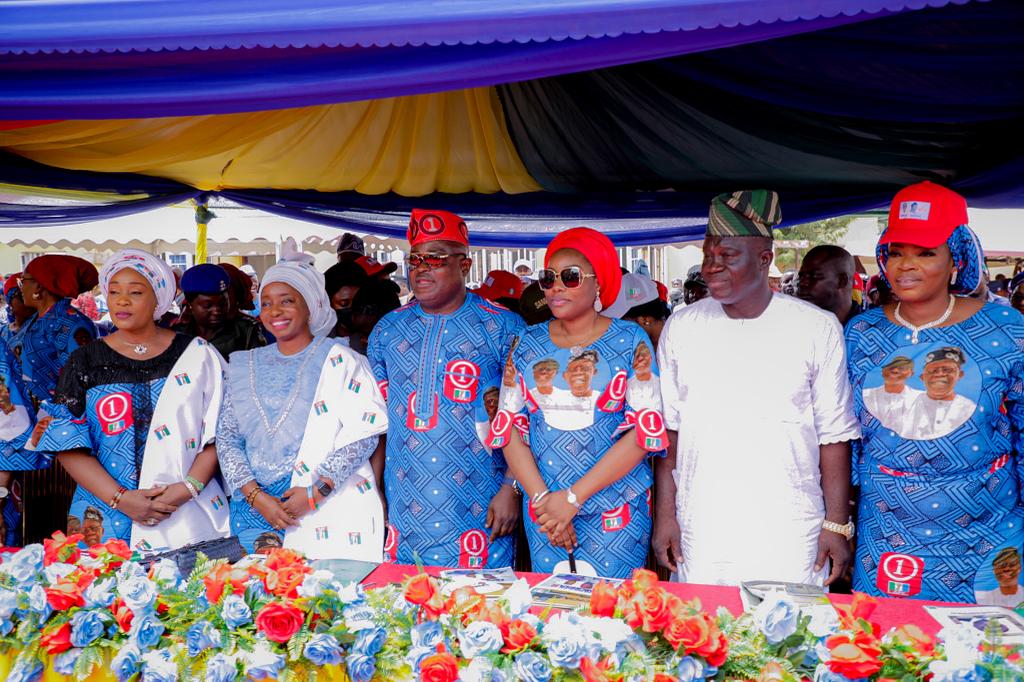
Hamzat and Obasa gave the charge at the grand finale of the Agege Day celebration and launching of N500,000,000 Agege Education Endowment Fund on Tuesday where they, with the First Lady of Lagos, Dr. Ibijoke Sanwo-Olu, commissioned projects
Dr. Obasa, while describing Tinubu as the only one with competence and capacity for the task ahead amongst the other contenders, noted that the presidential candidate had excelled in three areas – infrastructural development, employment and human capital management and development – while in office as governor and continued to effectively manage people even outside office.
“Make sure you vote right by voting for the person that is competent to serve you, to represent you and bring about the dividends of democracy and we, without second thought, strongly believe that Asiwaju Bola Ahmed Tinubu is the most competent amongst those who are vying for the presidency and that is why we are encouraging everybody to come out en masse.
“It’s not only about winning. We don’t just want to win, but win with massive votes coming from Lagos in competition with votes that would come from other parts of the country, so that we can win convincingly and at the end of the day Asiwaju Bola Ahmed Tinubu can have a say as opposed to what we witnessed in 1999 when the President that emerged did not gain the support of his people. This time around, we want our President to have the support of all of us from Lagos, Southwest and other parts of Nigeria.
“We are not just canvassing for him, but we are canvassing for him based on his achievements, what we have witnessed and are still enjoying. You will agree with me that some of the roads constructed during Asiwaju’s era as Governor in Lagos are still in existence functioning properly.
“Most of the schools built during his administration known as Millennium Schools are still in good shape, talk about those who have been empowered and established. I am one of them. These are testimonies that this man can do a lot,” Obasa said.
Speaking on the essence of the N500 million education endowment fund, Obasa note that the government alone cannot do it all. He urged well-meaning individuals across the state to help contribute to objectively construct a society free from social vices through provision of qualitative education to stem the ugly trend of out of school students constituting nuisance in the state.
“Basically, the essence of an achievement is to continue to build on it. We have so many people who have passed through some of the schools in Agege and achieved so much in their lives and calling on these people to further support the current students we have in Agege right from primary school to secondary school.
“Through this endowment fund, we can equip the beneficiaries, support them through higher institutions and establish them.
He said commended the residents of Agege for their unity irrespective of tribe and religion saying Agege Day is meant to further cement the relationship and fight crime.
“We are determined to entrench enduring crime-free and educational legacies that would bring uncommon progress to us in all areas of our socio- economic development. As your representative in government, I am standing before you to reaffirm that I would continue to make Agege my first.
“I will give all it takes to coast home every development opportunity for our advancement.
As the Speaker of the foremost House of Assembly in Nigeria, I reassure you all that I shall continue to take Agege to enviable heights. I trust our people in Agege. We are passionate. We are Progressives. We speak with one voice. We love the APC and will always stand by the party, now and always.
“This is why we are resolute to ensure massive victory for every candidate of the APC starting from our father and Leader, Asiwaju Bola Ahmed Tinubu, Governor Babajide Sanwo-Olu, Idiat Oluranti Adebule, Wale Ahmed, Abdulkareem Jubril to my humble self in the elecetion that will happen a few days from now,” Obasa reiterated.
Speaking at the event, Deputy Governor Hamzat commended the Speaker for facilitating development to Agege. He agreed that the town had witnessed the true dividends of democracy.
According to Hamzat, those who have not been to Agege in the last five years would find it difficult to recognise the place as a result of development.
While commending the council chairmen in Agege and Orile-Agege, Chief Ganiyu Egunjobi and Johnson Babatunde, respectively, for their efforts to better their people, Hamzat urged Lagosians and Nigerians to vote for Tinubu looking at how he had helped to make Lagos what it is today.
Speaking on the essence of the endowment fund, the Chairman of the Organization Committee of Agege Day, Hon. Afolabi Ayantayo, said it would be used to mitigate shortfalls in educational infrastructure and other related areas.
Ayantayo, who is the Special Adviser to the Governor Babajide Sanwo-Olu on Parastatals Monitoring Office, said: “Students gaining admissions overseas but whose parents could not afford to cater for their tuition can approach the fund. When they graduate in future, they will be thankful and appreciative of those who came to their aid back then.”
Eromosele Ebhomele
Chief Press Secretary to the Speaker of the Lagos State House of Assembly.
If Tinubu Wins There will be Great Hopes For Heart Surgery Patients – Dr. Ariyo Idowu, Perfusionist
Perfusion is a rare and delicate Cardiovascular profession that has to do with handling and operating equipment that assists surgeons during an open-heart surgery or any other medical procedure in which it is necessary to artificially support or temporarily replace a patient’s circulatory or respiratory function.
It is a system where the experts use the equipment to temporarily put the heart to sleep (hibernate) and revives it after the surgery to safe the patient the frightening experience of pain during opening up of the heart or the lungs. It is a medical process to safe life which were in the past only available in the advance country.
However, it is interesting to learn that, Asiwaju Bola Ahmed Tinubu, the Presidential Candidate of the All Progressives Congress (APC), trained the first expert and pioneered the career of open heart surgery in the country when he was the governor of Lagos State.
Although, Idowu admitted that the heart operations used to take place in Enugu and Ibadan in the 1970s, the exercise stopped more than 20 years before Tinubu revived it in Lagos, expressing the conviction that, if he wins on February 25, Nigerians should expect revival of the medical exercise in a very larger scale across the country.
Dr. Ariyo Idowu, made the disclosure Tuesday during a scheduled Zoom meeting organized by the members of the APC Presidential Campaign Committee Media Directorate, Lagos, headed by the former Commissioner for Information and Strategy, Hon. Kehinde Bamigbetan.
Idowu discussed Asiwaju Tinubu’s intervention in the health sector when he was the state governor when young health professionals, including himself, were trained. The scheduled zoom meetings were some of the avenues created by the Kehide Bamigbetan led media Directorate to unveil Tinubu to the public to realise reasons he (Tinubu) should be voted for as the next president on the Saturday 25 election.
According to the Perfusionist, Tinubu, as a visionary administrator who searches for young talented materials to build for nation building spotted the potential in Ariyo Idowu when he was just 26 years old and sent him abroad to train as an expert in perfusion. After the training, Tinubu as governor then now established a medical centre where free heart surgeries were carried out.
While fielding questions from his zoom guests, Dr. Idowu confirmed that, at least 20 of such surgical operations were carried out during Tinubu’s tenure as the executive governor of Lagos State adding that minimum cost of an operation then was N5 million meaning Tinubu expended a whooping sum of N100million on the 20 patients.
Speaking further, Dr Idowu reasoned that, with Tinubu as the next president of the Federal Republic of Nigeria, the country would climb up the ladder of global medical rating while the youth would have field day as opportunity for their development and empowerment would be the priority of the new president going by his pedigree and antecedent.
What Tinubu did as just as governor of a state in the health sector just like in any other sectors would be replicated on a larger scale to the best interest of all Nigerians, asserting that, Asiwaju Bola Ahmed Tinubu is the best bet for the country at this point in time for rapid development and positive utilization of the raw energy deposited in the body of the youth by God for nation building.
“Tinubu is a visionary leader who knows the plights of the citizenry and ready to help. He has had the mind set to uplift humanity from the onset. The most important thing in governance is to be prepared to serve humanity selflessly like Tinubu. He is ready for the task ahead. And after reviving the free heart surgery through the Ministry of Health under Dr. Leke Pitan, his commissioner for Health after comatose for 20 years, the programme has continued since then nonstop,” Idowu submitted with great appreciation to his mentor, Tinubu.
“Kindly permit me to thank Asiwaju Bola Ahmed Tinubu for giving me the rare opportunity to acquire this unique knowledge that has put me where I am today as a globally recognised professional on the medical line. And I am sure the youth stand a similar chance if they vote for him en masse on February 25 to become president. With Tinubu as president, the sky would be too low to be their limit,” Idowu rounded off.
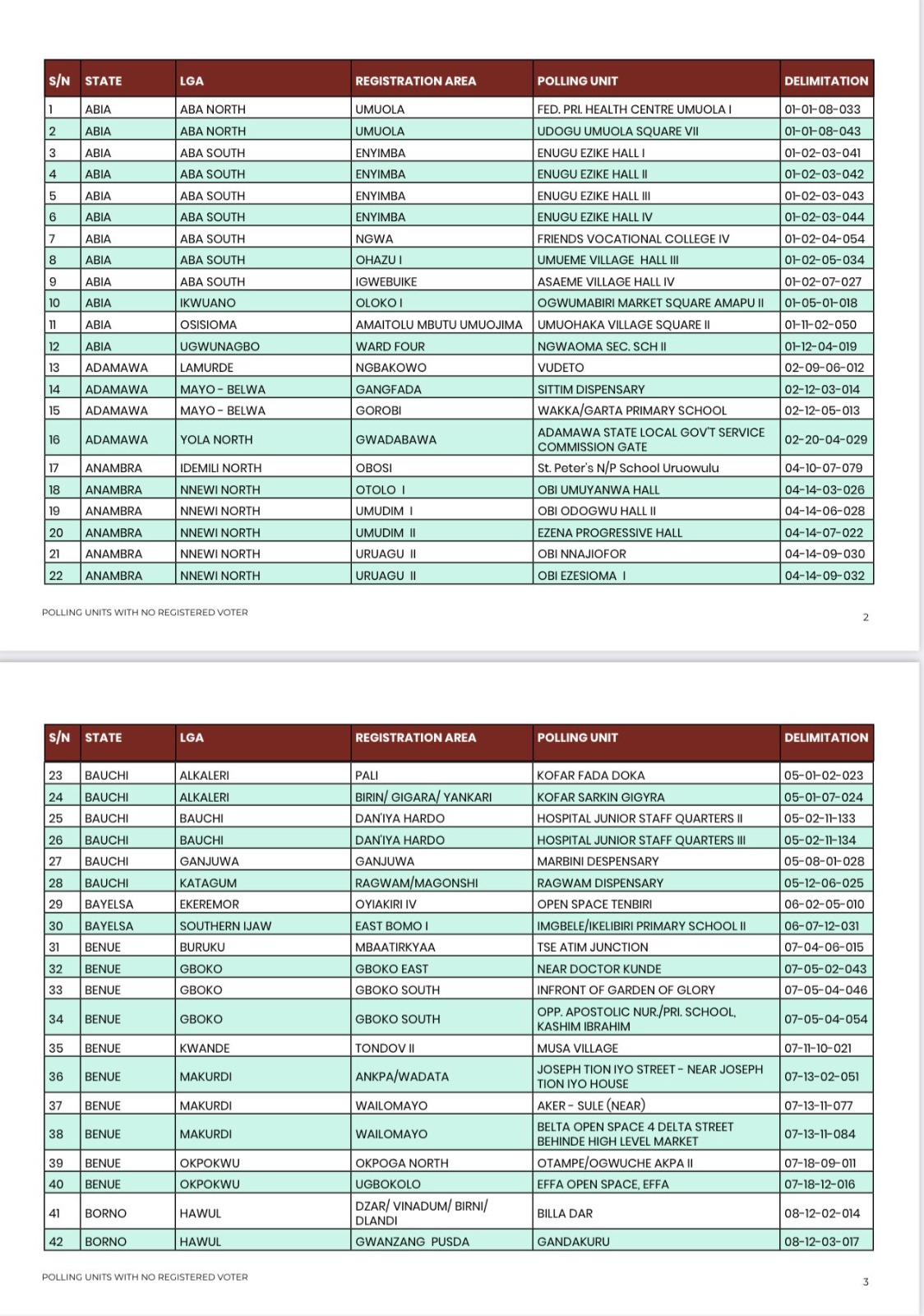
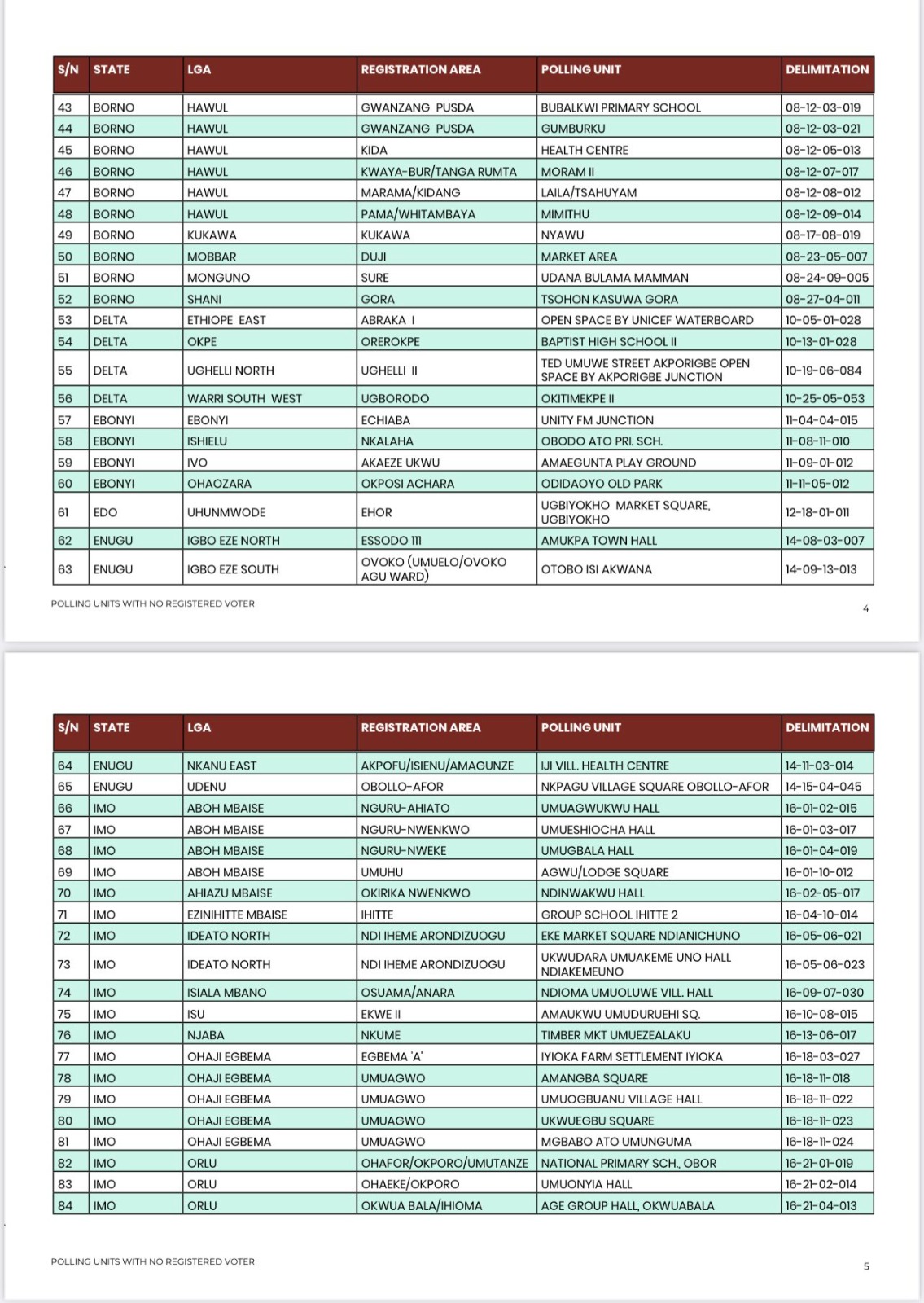
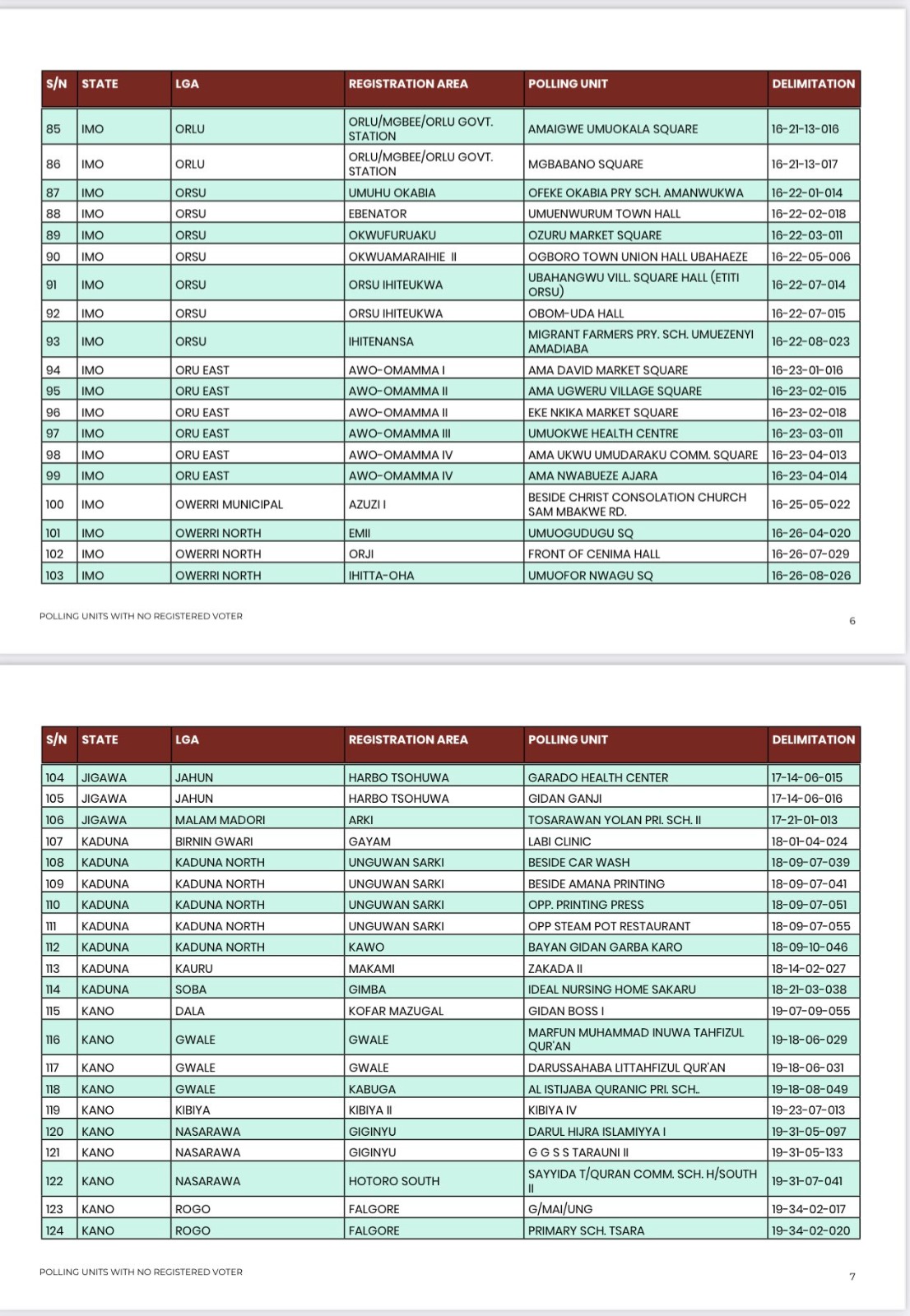
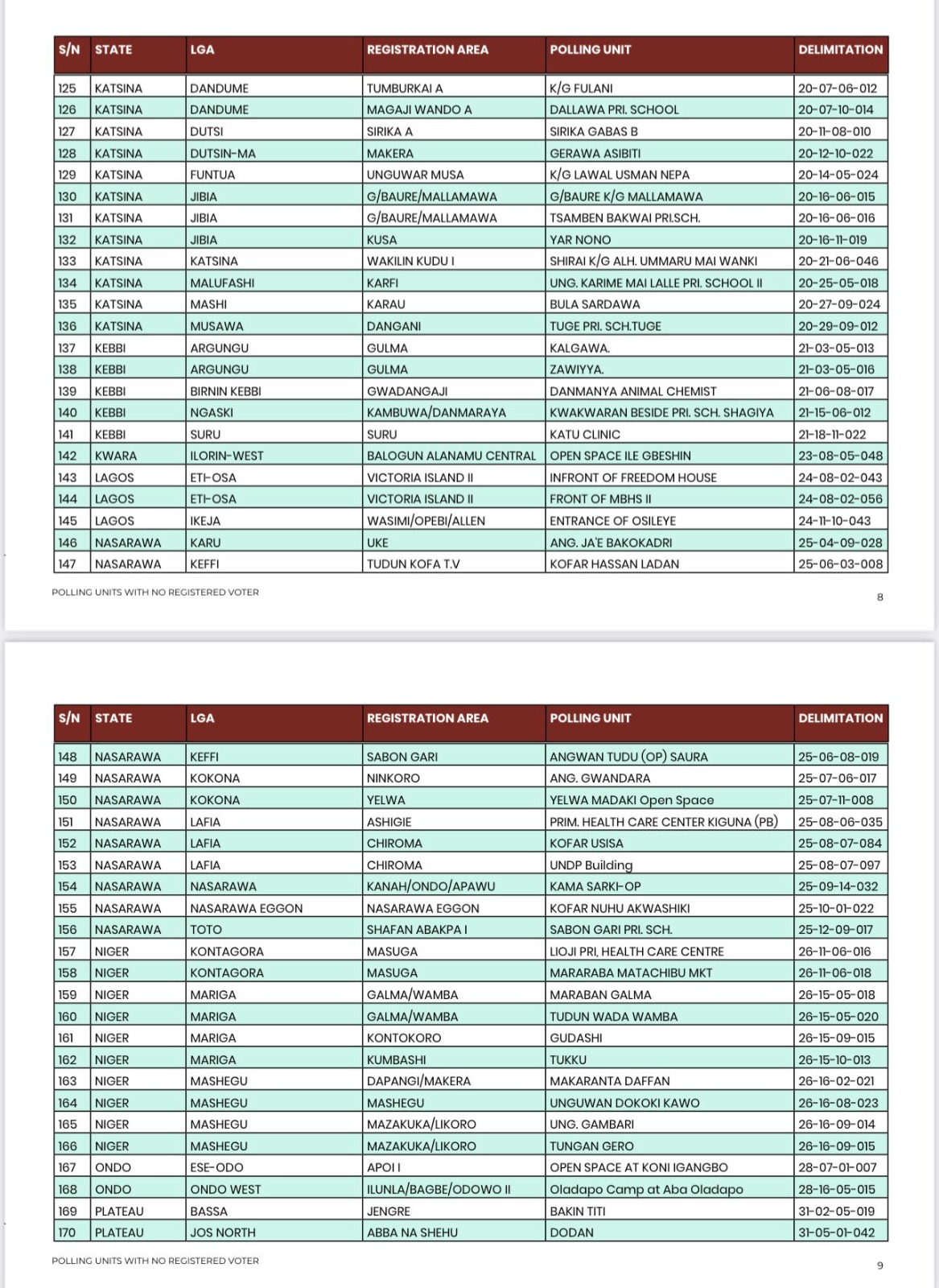
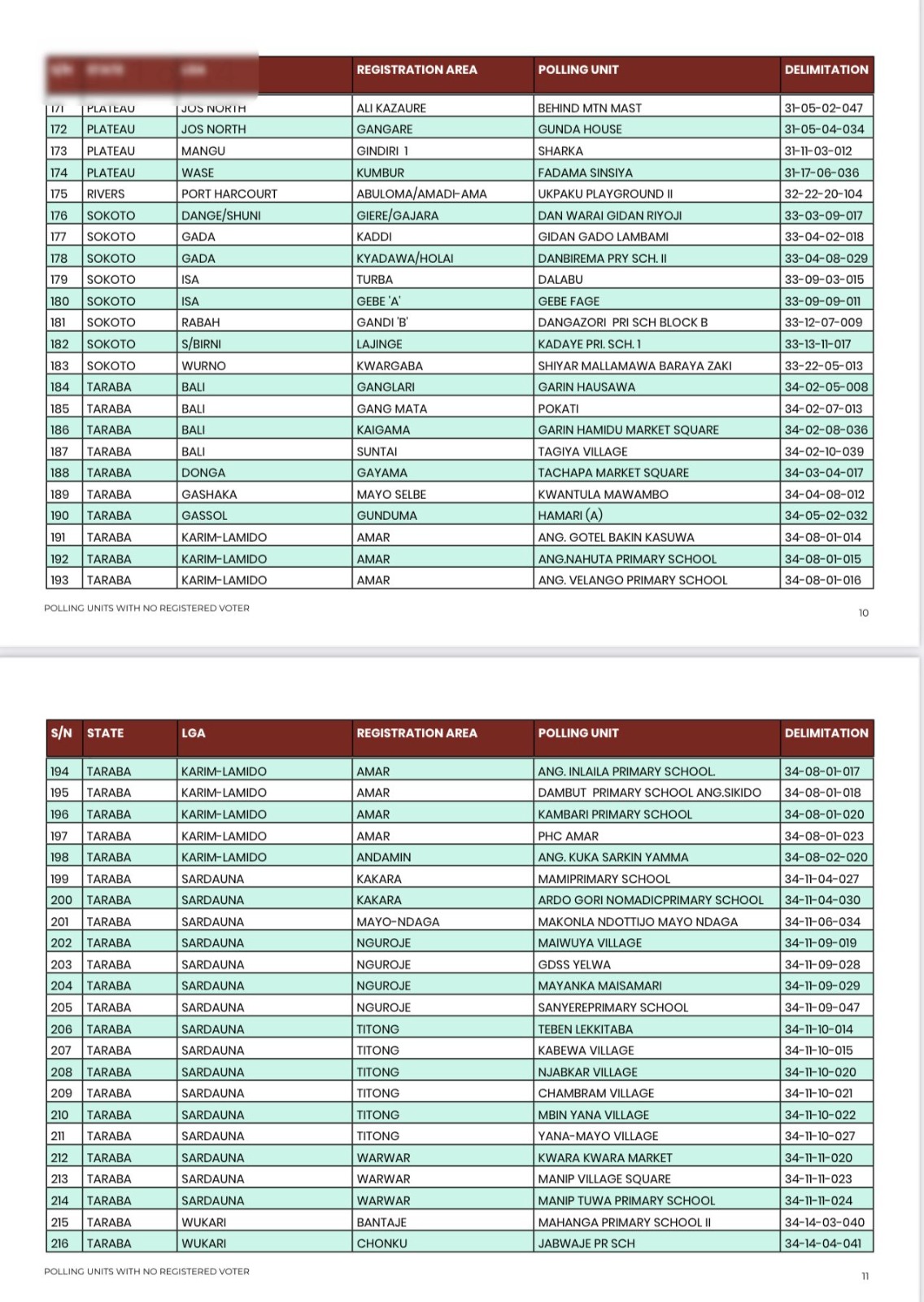
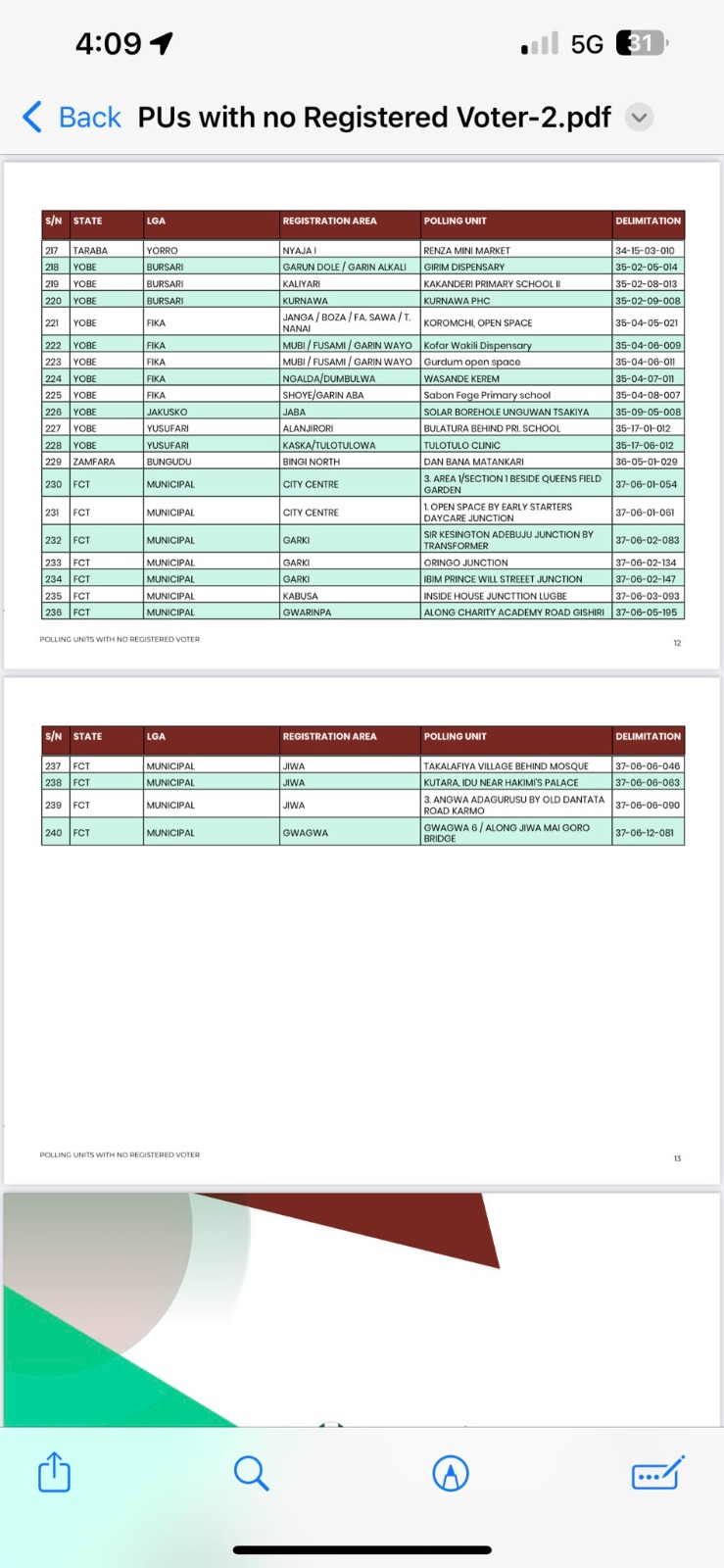
Check the Full List of the 240 Polling Units where INEC will not Conduct Elections
The Independent National Electoral Commission, INEC, has released the full list of the 240 polling units where elections will not hold in 28 states.
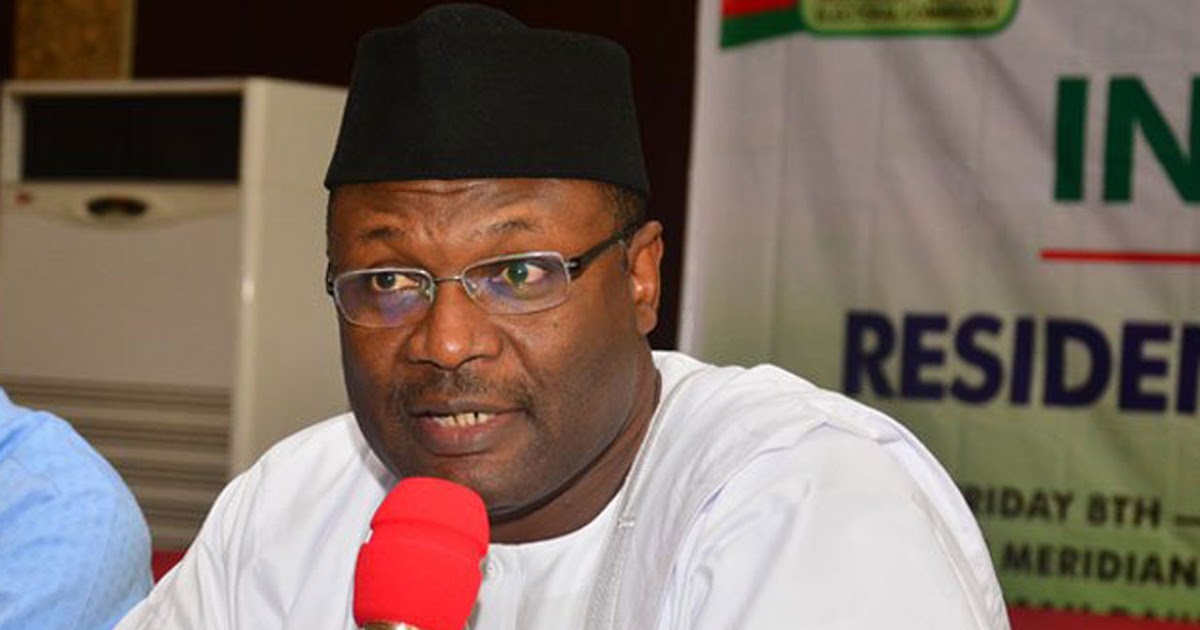
The INEC Chairman, Professor Mahmood Yakubu, had said this during a meeting with the national leaders of political parties in Abuja on Monday.
Giving the reason, INEC said the affected polling units the were newly created do not have new registered voters, adding that no voter also transferred to those polling units.
Video: Yoruba Nation Agitators, Police Clash in Lagos… Death Recorded
There has been a confrontation between the Yoruba Nation Agitators and men of the Nigerian Police Force in Lagos this morning, the agitators had storm Ojota axis of Lagos where they were planning to hold their mega rally.
In a video making round a young man who identified himself as Saoti Igboho, was speaking in Yoruba that two of his boys had been killed while showing the lifeless body of a young man on the suspected to be the Seven Up axis of the Lagos Ibadan express. The young man also showed a video of a van suspected to be police car just in the process of being engulfed in fire, he also said they will be burning a certain police station.
Though the cause of the whole issue cannot be ascertain, some other information is saying it was a confrontation between the group and the men of Oduduwa People’s Congress, OPC.
Attempt to reach out to the PPRO Lagos, Mr. Benjamin Hundeyin is not possible as his phone lines are engaged.
2023 General Elections: Awesu Mobilises Residents’ Support For Atiku In Ikorodu
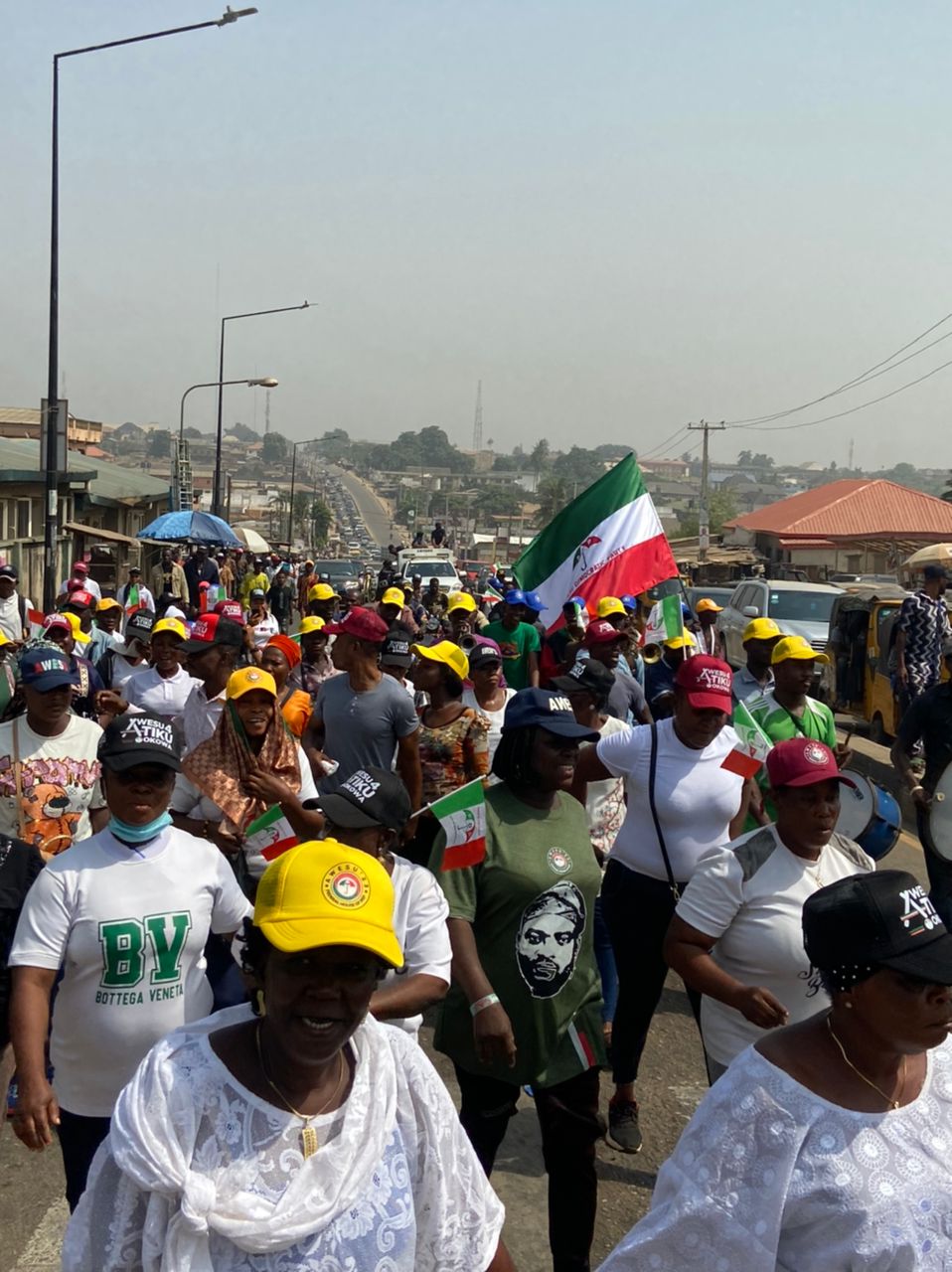
A contender for the Ikorodu House of Representatives seat, QS. AbdulAzeez Adekunle Awesu and his political group has called on the youths and entire residents of Ikorodu to support the Presidential candidate of the Peoples Democratic Party (PDP), Alhaji Atiku Abubakar at the forthcoming presidential election.
Awesu said that Atiku is a unifier who needed to bring the various parts of the country together and with the capacity to salvage Nigeria out of his economic and political problems.
The PDP contender who is challenging the withdrawal of his mandate at the Supreme Court made the appeal during a massive rally he convened in Ikorodu on Wednesday.
The march, attended by several candidates, former aspirants and other stakeholders in Ikorodu PDP, was staged to mobilise support for the PDP Presidential candidate and others.
According to the Convener, it was also staged to re-assure party members and residents who have been complaining of dull moments within the major opposition party since the last rally that was organised on the Independence Day, by the same House of Representatives contender.
He led the massive crowd across major roads in Ikorodu which include Awolowo Road, Ireshe Road, Oriwu Road, Ayangbure Road, Ikorodu Garage Roundabout and along the Ikorodu – Shagamu Road.
Awesu, speaking with newsmen during the rally, said that:
“This rally is basically to let people know that PDP is still on ground, because if you can recall, we started this journey couple of months ago, and we knew the pace that we were going, but considering the circumstances, the whole things seem to be dying down but then, people really need to know that PDP is still on ground, that is just the basic essence of this and to know that that Atiku Abubakar is going to be the next President of the Federal Republic of Nigeria”, he explained.
“Atiku Abubakar is the unifier. That is the major reason while we are doing this to bring Atiku Abubakar to each and every one’s door step, knowing that it is Atiku Abubakar that can do it on the platform and umbrella of the Peoples Democratic Party
“That is why we are mobilising our people and residents to put on their dancing shoes and come out here to know we have a lot of work to do”.
He said that he was impressed with the turnout, and added that many have been expecting such outing.
“I’m really happy with the turnout. It showed that a lot of people have actually been waiting for this to happen. The essence of the whole thing is just to bring us together instead of sitting in our houses and thinking there is nothing to be done. There is a lot to be done in PDP, and we need to come out. This is our time, we have every chance; we have every opportunity to take back what is ours”.
Speaking on how the party intends to win the next general elections, Awesu said that more engaging activities have been planned which are going to unfold soon.
“We have lots and lots of strategies in place and for sure, I tell you that in Ikorodu for one that I know of, PDP is taking the Ikorodu Assembly, House of Representatives and the Senate and the Gubernatorial seat. All of these will be ours.
“You can see from the turnout how people came out massively despite the weather and trust me, if you tell the people that we are still going further, they will be willing to go because they are very much on ground. The truth is that we have a lot of activities, and other functions to put out there”, Awesu said.
He also hinted that there will be three or more rallies which are going to include the PDP Governorship and other candidates to mobilise people for the next year’s general elections.
“Trust me, we are going to have three to five more rallies, and the essence will be to bring PDP to the people’s door steps. You know that people out there have been hearing Awesu and it was possible that they met him first at our first and today, lots more came to meet him again. I am sure that the third rally is going to include our Excellency, Olajide Adedoyin Jador, who is our Governorship candidate; Senatorial candidate, in person of Akobada; House of Assembly candidate constituency 1, Hon. Lawal Olamide, and our House of Assembly candidate Constituency 2, in person of Hon. Oyebo.
“So, the whole thing is just to bring everybody together. It is said that say a tree does not make a forest. We just need to come together, and make the whole thing robust and give Lagos the results we are looking for”, he said.
The PDP candidate for the Ikorodu Constituency I, Mr Olamide Olamilekan Lawal, also speaking, said that the rally was aimed at giving the youths the opportunity to prove that the party is still much a force to reckon with, and to mobilise people for Atiku’s victory.
“As you can see around you, most of us here are young. I am a youth, so also is my counterpart, Awesu. We are here to let people know our position that youths are on board. We are fully on ground, and we are here to support Atiku and Okowa for President. If you look around, there are about 5000 thousand people matching for Atiku/Okowa Presidency come 2023”, he said.”
“Well, it is an election we hope to win for Atiku, and we are going to do all our possible best here in Ikorodu and Lagos at large to ensure that Atiku/Okowa become our next President and Vice President, come 2023 lnshallah”.
Mr Idowu Hammed Odunayo (Collaboration), a former House of Assembly aspirant, also expressed that Atiku will win the next election while also wishing the rally Convener to reclaim his mandate at the Supreme Court.
“Well, we, members of the PDP, are strongly behind Alhaji Atiku Abubakar and his Vice, Okowa. We are also solidly with our brother, Awesu, and we wish that he retrieves his mandate”, he said.
Mr Peter Ugoeze, Chairman, Non-Yoruba in Ikorodu Local Government, said that non-Yorubas in Ikorodu have decided to give their support for Atiku/Okowa come 2023.
“The non-Yoruba have decided to support Atiku Abubakar, because we have seen that he’s the only person that can give us the particular mandate that we are looking for, and he’s most experienced among all the presidential contestants. He is the only person that has adequate experience to deliver Nigeria from this mess that APC has led us into. So, that is why we are supporting Atiku/Okowa to win this election come February 2023”, he said.
He also said that his group is looking forward to Awesu reclaiming his mandate at the Supreme Court.
“By the special grace of God, we are also looking forward to Awesu reclaiming his mandate because he is the only person that can deliver this House of Representatives for PDP in Ikorodu. Without Awesu, I don’t think PDP is going anywhere in Ikorodu Local Government”, Mr Peter said.
A member of the PDP, Mrs Adenike Borokini who also said that they are rooting for Atiku to correct many disappointments of the APC government, also said that they believe in Awesu.
“You see, when it comes to the issue of Awesu, we, in Ikorodu, believe in Awesu so much, and he is the man of the people. He is the man people love so much. He knows our pains and what we are going through in Ikorodu, and we believe in him. We have 100% assurances that Awesu can do it better than anybody in Ikorodu. If it’s not Awesu, nobody in this lkorodu is worthy to represent us”, she stated emphatically
BBC: Tinubu got it right on territories reclaimed by Buhari – Buratai
Former Chief of Army Staff and Nigerian ambassador to the Benin Republic, Lt. Gen. Tukur Yusuf Buratai talked about the security situation in the country, he also lend his expert insight to the statement of the Presidential Candidate of the All Progressives Congress (APC) Asiwaju Bola Ahmed Tinubu during his recent BBC interview…
What is your take on the current military’s tactics in decimating banditry and terrorism in the country?
I’ll say, let them maintain it and keep up the aggressive assaults. Additionally, collaboration and synergy with other sister agencies is crucial. They must avoid being distracted and keep their attention on their task.
How would you describe the fight against terrorism in the country since you left office as the COAS?
Well, you must understand that the military is not a one man show; even when I was in service, I worked with a team, and I am happy to say that many of them are still in service. The current COAS served under me as Theater Commander of OP LAFIYA DOLE now OP HADIN KAI. By and large, I will say that they are doing well. Whatever little success we were able to achieve during my tenure, we did it together; it was a collective effort.
The 2023 general election is just by the corner; what advice do you have for the military to ensure a hit-free poll as far as security is concerned?
They must stick to their constitutional role and remain apolitical. I understand that the military may be called in to assist the civil police at some point, but only when things are about to get out of hand. I think the electorate must not succumb to fear or intimidation; they should come out and exercise their civic duty. At the same time, all of us must be vigilant; if you see something suspicious, try to say something to the right authorities.
According to PRNigeria the presidential candidate of the All Progressive Congress (APC), Bola Ahmed Tinubu created an impression that the Buhari-led administration had inherited seventeen local governments and about four states which were under the control of foreign Jihadists in 2015. What is your take on this?
The conclusion and verdict of PRNigeria is false, wrong, and inaccurate. I was the first COAS to serve under President Muhammadu Buhari, GCFR, and even before my appointment as COAS, I was the Force Commander, MNJTF, so I should have correct information and the situation of things in the North-East and Borno State, which is my state of origin. Asiwaju Bola Ahmed Tinubu got it right. As of July 2015, the following LGAs were under Boko Haram in Borno State: Dikwa, Marte, Gamboru Ngala, Kala Balge, Guzamala, Damasak, and in Yobe State, we have Gulani and Gujba. The terrorists also partially occupied Kukawa,Gajiram, Kaga , Mafa, Bama, Gubio, Chibok, Gwoza, Damboa, and Nganzai. The wrong impression created by PR Nigeria should be corrected. I understand that they were misinformed, but this is the correct information.
What is your reaction on the report by PRNigeria that foreign technical experts, including mercenaries, assisted greatly in the recovery of the occupied territories in North-East?
If it does in fact occur, it did not occur during the time that I was in charge.
You actively supported one of the candidates in the presidential primaries of the ruling party. And you are on the side of your party’s presidential candidate in this election. Yet, you have always insisted, “I am not a politician.” How do you explain this position?
Our lives are in phases and chapters. When I said, “I am not a politician,” that was the truth and nothing but the truth. I was not a member of any political party then. I was a soldier who was under oath to protect and defend the territorial integrity of Nigeria. But as you know very well, that phase of my life is now gone. There is a time to join the Army and serve as a soldier, and there is a time to leave the Army and return to civilian life. I am a democrat; that’s why, when I was in the Army, I tried to keep soldiers out of politics and allow the people to choose their leaders as they wanted. We also protected this democracy. So now that I am a civilian, I think it won’t be out of place if I heed the call of destiny and enter politics. That doesn’t mean I will run for political office. My plan is to form a government with some Nigerians who I believe have good intentions for the country. I initially supported Rotimi Amaechi because I believed in him, but we lost the primaries. However, since the party is supreme and God has willed that Asiwaju Bola Tinubu will be the flagbearer of the APC, it is expected that I should support him to win the elections. This is what I am doing. And this is not a new thing in Nigeria or the US. Generals Shehu Yar’adua, Obasanjo, and Ibrahim Babangida, as well as Aliyu Gusau, David Jemibiwon, Abdurahman Danbazau, and Dwight D. Eisenhower, all played politics after their service in the military. There is no doubt; stakeholders and imminent Nigerians thought that I could add value and so invited me to join them to move the country forward. One thing I want to tell Nigerians is that I will surely add value. There is no doubt about that.
Your name isn’t going to fade away anytime soon from the Nigerian Army, both in terms of exploits and enduring legacies. How do you feel about your stewardship?
Honestly, it humbles me. We wanted to achieve much more than we have, but, you know, things don’t always work out as planned. But it’s nice to hear soldiers and officers talk positively about us. We did what we thought was best for the army and the wellbeing of Nigeria. As COAS, I worked virtually around the clock daily. Sometimes I just sleep for a few hours.
What do you see as the place of regional cooperation in addressing the security challenges in Nigeria?
Regional cooperation is strategic in addressing security challenges because our borders are porous and our people are interconnected. Some people in south-western Nigeria have blood relatives in the Benin Republic. Those in the North East have relatives in Chad, Cameroon, and the Niger Republic, as well as in Sokoto and other places. So it is easy for criminals to move into Nigeria from these neighboring countries. What affects our neighbors can easily affect us. Not just us, but the entire ECOWAS membership. When the Boko Haram insurgency started, some people thought it was a Nigerian problem alone, but it has now spread to Burkina Faso and Mali. So, regional cooperation is needed to tackle the issue of small arms proliferation, help with intelligence gathering, and conduct COIN operations. For example, the MNJTF is helping to deal with Boko Haram and ISWAP in a good way.
There is the story of your long connection to President Buhari, beginning with his deployment as Military Governor of North East State. Can you help us recall this and its culmination during your time as Force Commander of MNJTF and COAS?
Yes, President Buhari and I have come a long way because destiny connected us in 1975, when he was the military governor of Borno State and I was a Form One student at Teacher’s College Maiduguri. He used to come to the school in the evenings to watch us play football. When I was running off the pitch to get the ball after hitting the ball so hard that it knocked down one of our classmates, the then-Colonel Buhari said to me, “You this boy! The army is what suits you best.
One thing led to another, and I was transferred to Teacher’s College Potiskum, while then-Col Buhari left Borno to serve as Petroleum Minister in the government of General Olusegun Obasanjo. I finished Teacher’s College, taught in a primary school at Buratai, and then joined the NDA in 1981. I got commissioned in December 1983 and heard that Major General Buhari was now the new Head of State. I proceeded to Elele in Rivers State, and that was it until sometime in 2015, when he visited Ndjamena as the newly democratically elected President of Nigeria. At that time, I was the Force Commander, MNJTF. When he returned to Nigeria and wanted to appoint his service chiefs, he appointed me as the 20th COAS. So he has been my leader and mentor in the past, now, and always.
What advice is best for the young officers and soldiers on the frontlines of service to the nation?
I have written and published a book known as Thoughts and Principles on Leadership. I am recommending it to all military officers to read. But that notwithstanding, my candid advice to young officers and soldiers is to remember the seven core Army values: their unit, the Army, God, and country. They must remain patriotic and keep on developing their skills and improving their competence.
Lagos Speaker Celebrates Buhari At 80, Calls Him A True Democrat
The Speaker of the Lagos State House of Assembly, Rt. Hon. Mudashiru Obasa, has congratulated President Muhammadu Buhari on his 80th birthday describing him as a leader who remains focused on strengthening democracy in Nigeria.
Dr. Obasa’s congratulatory message issued by his Chief Press Secretary, Eromosele Ebhomele, said President Buhari’s humility, honesty, selflessness and passion for a better and more secured Nigeria makes him a true leader.
The Speaker said Buhari’s maturity, wisdom, courage and zeal to ensure Nigeria stands a united country remains a mark of his leadership capacity.
He commended the President for ensuring his administration’s success in infrastructure renewal and development in the nation.
He further noted how President Buhari’s effort to depeen democracy made him join the battle for the autonomy of State legislatures and judiciary in compliance with section 121(3) of the Constitution of the Federal Republic of Nigeria, 1999 (as Amended).
“On behalf of my family and colleagues at the Lagos State House of Assembly, I join President Muhammadu Buhari’s family, friends, associates and the government of Nigeria to celebrate him on his 80th birthday.
“The President deserves to be celebrated for the successes his administration has recorded since he took the mantle of the leadership of our dear country.
“History will always remember his efforts to build a stronger and more secured Nigeria through the fight against insurgency, infrastructural development and other social investment schemes.
“President Buhari’s love for our democracy remains appreciated, especially in relation to his signing of the celebrated Executive Order 10 to grant autonomy to legislatures and judiciary across the 36 states of the federation.
“The President’s honesty, dedication, courage and determination to leave a stronger and more United Nigeria is worthy of emulation.
“As he clocks 80, it is our prayer that Almighty Allah continue to grant him strength, good health, sound mind and the capacity to always contribute to our national growth, development and progress,” the Speaker prayed.
Eromosele Ebhomele
Chief Press Secretary to the Speaker of Lagos State House of Assembly.
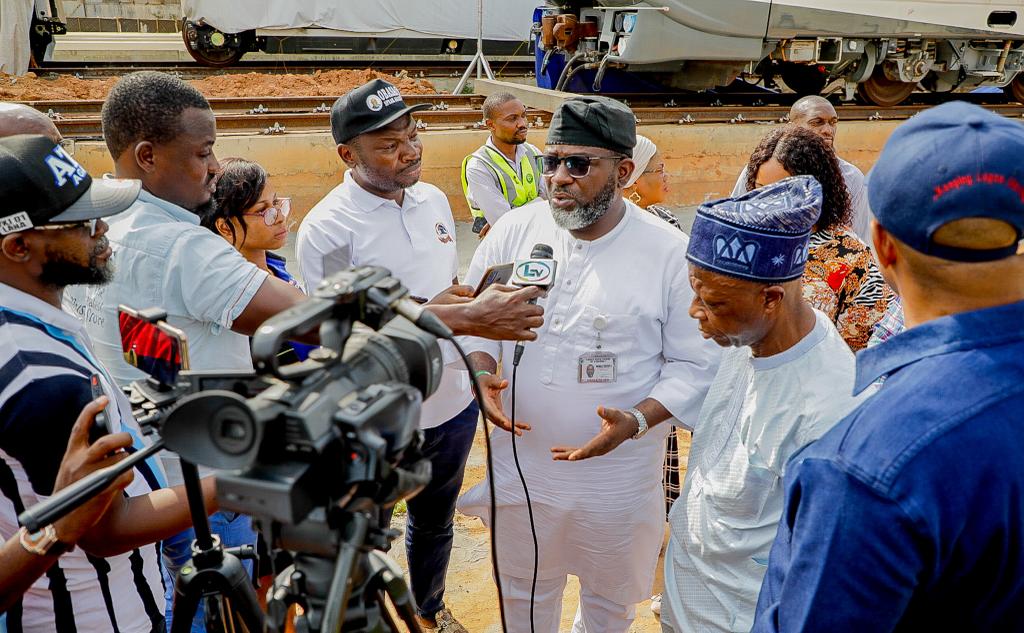
The chairman of the Lagos State House of Assembly Committee on Transportation, Hon. Temitope Adewale, has disclosed that trains in the Red Line of the State’s rail mass transit will move 500,000 passengers daily.
This amounts to 3.5 million passengers weekly and 15 million passengers a month.
Hon. Adewale made the disclosure on Thursday when he led the committee on an on-the-site visit to the train stations between Ifako-Ijaiye and Yaba.
Adewale, who confirmed that the project was at 85% of its completion, said it showed that the State government understands the need to boost the transportation sector to ease daily movement of residents.
“Remember that the Rt. Hon. Speaker, Dr. Mudashiru Obasa, during the presentation of the 2023 budget, commended Governor Babajide Sanwo-Olu for the purchase of trains and his zeal to complete the project.
“So today, by the powers conferred on us by the Constitution and under the headship of Mr. Speaker, we decided to conduct an oversight on the Ministry of Transportation and to be precise, the Lagos Metropolitan Area Transport Authority (LAMATA).
“We have visited the railway and five stations in Iju, Agege, Ikeja, the Yaba and now Oyingbo where the rolling stocks or trains are parked contrary to what we’ve been hearing that the trains are not here.
“From what we have seen so far, the project is approaching completion and having spoken with the contractors, we are sure the Governor will do the commissioning as projected believing that the possibility is true and positive,” Hon. Adewale said.
He said the train service became necessary because the Lagos master plan indicates the need to inculcate it and increase passengers using mass transit.
“The red line will help move 500,000 Lagosians on a daily basis and reduce heavy traffic where more cars and personal vehicles would be left at home.
“This administration has achieved a milestone and the our Speaker has been able to give support to the executive to ensure that funds are put into good use,” he added.
On his part, Hon. Bisi Yusuff, a lawmaker, described the project as the result of good leadership and continuity in government.
According to Hon. Yusuff, the project was actually started by Asiwaju Bola Tinubu, presidential candidate of the All Progressives Congress (APC) and built upon by subsequent administrations.
Noting that the trains would help the State’s economic growth and smart city dream, the lawmaker pleaded for proper maintenance mechanisms.
He urged Lagosians to vote massively for the APC so they would continue to enjoy dividends of democracy.
Engineer Olasunkanmi Okusaga of the Directorate of Transport, promised that the project would be delivered at the target time.
Eromosele Ebhomele
Chief Press Secretary to the Speaker of the Lagos State House of Assembly.