 SocietyGazette.com Society Gazette News

Related Articles


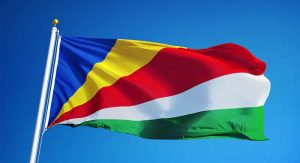
The Indian Ocean archipelago of the Seychelles boasts one of the highest standards of living in Africa, driven in part by high-end tourism and fishing, but the island nation is also plagued by drug use and trafficking.
It will hold presidential and legislative elections on September 25-27.
– 115 islands –
The 115 mostly uninhabited islands and islets that make up the Seychelles represent a total of 455 square kilometres (280 square miles), barely the size of the principality of Andorra.
But, spread across an area of more than 388,000 square kilometres, the islands and their surrounding waters make up a vast economic exclusive zone of more than one million square kilometres, twice the size of France.
The islands and their waters are a paradise of biodiversity, home to a rich variety of fauna and flora, and are an important nesting site for birds and turtles.
At the heart of the Indian Ocean, the archipelago occupies a strategic position between Madagascar, Africa, and India.
Three-quarters of its roughly 120,000 citizens live on the Mahe island, where the capital, Victoria, is located, according to 2024 World Bank data.
The archipelago is vulnerable to climate change, and is facing rising sea levels, the deterioration of the marine ecosystem — particularly its coral reefs — as well as landslides, flooding, and drought.
– Young democracy –
The islands were occupied in the 17th century by the French, and then in the 19th century by the British under their rule in nearby Mauritius.
The Seychelles became a colony in its own right in 1903 and achieved independence in 1976 under the presidency of James Mancham.
In 1977, a coup brought to power France-Albert Rene, who established a single-party state and survived multiple coup attempts.
The first multi-party elections took place in 1993 after a new constitution was adopted.
United Seychelles had provided every head of state until the 2020 election, which was won by opposition leader Wavel Ramkalawan.
Ramkalawan is seeking a second term against Patrick Herminie, of the United Seychelles party.
Herminie was charged in late 2023 with “witchcraft”, which he said was politically motivated, and the charges were later lifted.
– Tourism and fishing –
Known for its white beaches and high-end tourism, the Seychelles has Africa’s highest GDP per capita income, according to the World Bank.
However, its economy is vulnerable to price fluctuations for imported products, including food and petrol, which increase the cost of living.
The employment rate is low and while extreme poverty has been almost entirely eradicated, it faces issues such as drug use and trafficking, according to the World Bank.
– Heroin, the dark side of paradise –
Government figures show between 5,000 to 6,000 Seychellois consume heroin, data based on those on a methadone substitution programme.
Other estimates suggest up to 10,000 users, equivalent to roughly 10 percent of the population.
Critics say Ramkalawan has failed to fulfil campaign promises on fighting corruption and drug trafficking.
– ‘Coco bottom’ –
Synonymous with the Seychelles and commonly known as the sea coconut, or coco de mer, is the world’s largest seed — and is shaped like a woman’s bottom.
It became popular when tourism took off following independence.
Authorities limited trade in 1978, but the restrictions were ignored by nut poachers, and since 2011, it has been on the International Union for Conservation of Nature’s “red list”.
AFP