 SocietyGazette.com Society Gazette News

Related Articles



The historic Glover Memorial Hall on Lagos Island was steeped in history and reflection on Sunday, September 21, 2025, as scholars, cultural custodians, political leaders, and members of the Lagos royal family converged for the King Kosoko Memorial Lecture 2025. This year’s theme, “The Lagos Kingship: Its Territory, Culture, Traditions, and Its Districts Before 1852,” offered a panoramic exploration of Lagos’ precolonial society and the enduring legacies of its monarchs.
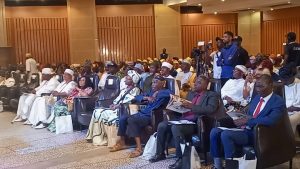
Delivering the welcome address, Prince Abiola Olojo-Kosoko, Chief Curator of the King Kosoko Memorial Museum, described the lecture as more than a scholarly gathering, but rather a moment to honor the resilience and vision of King Kosoko.
“Our story as Lagosians did not begin with colonial maps or modern skyscrapers it began with the wisdom, courage, and vision of our forebears, among whom King Kosoko stands tall,” he said.
Prince Olojo-Kosoko emphasized that King Kosoko embodied the spirit of a cosmopolitan Lagos whose influence extended beyond the island to Epe, Ikorodu, Badagry, and even into the debates of Britain’s parliament. He thanked the planning committee, sponsors, Lagos State Government, and the Royal Family of Lagos, urging participants to recommit themselves to preserving Lagos’ cultural heritage in an age of globalization.
The keynote lecture was delivered by Idris Aregbe, Special Adviser to the Lagos State Governor on Tourism, Arts & Culture. He described the Lagos Kingship as both sacred and political, structured around the Oba, a council of chiefs, and customary institutions that ensured governance, justice, and ritual authority.
Aregbe highlighted the district system that organized Lagos’ social and economic life before 1852:
District A: Maritime hub with shrines tied to tides and markets.
District B: Agricultural hinterland trading crops with port towns.
District C: Artisan and craft quarter where guilds set norms.
District D: Fortified district with plazas for assemblies and conflict resolution.
District E: Spiritual center housing shrines and ritual specialists.
These districts, he explained, were united by alliances, intermarriages, shared markets, and customary law, creating a governance model that combined independence with unity under the Oba.
He also celebrated Lagos’ cultural richness oriki (praise poetry), drumming ensembles, masquerades, sacred shrines, and festivals like Adamu-Orisa (Eyo), Egungun, and Gelede as the fabric of precolonial identity.
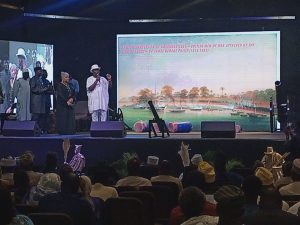
Adding historical depth, Prof. Habeeb Abiodun Sanni of Lagos State University traced the monarchy’s origins to Ashipa, a representative of the Oba of Benin, who laid the foundations of the Lagos throne.
His research underscored Lagos’ hybrid monarchy: a blend of Awori traditions and Benin imperial structures, producing a kingship that was both spiritual and political. Prof. Sanni recounted how rulers such as Akinsemoyin transformed Lagos into a major slave-trading hub, while Erelu Kuti played a decisive role in preserving dynastic continuity and embedding women into the political fabric of Lagos.
He noted that Lagos’ territory expanded beyond the island to Ikorodu, Ijede, Epe, and Badagry through diplomacy, exile settlements, and commercial networks making Lagos a regional power by the early 19th century.
In her captivating contribution, Aduke Gomez offered a wide-angle view of Lagos as a pepper farm turned warrior camp (Oko to Eko), which grew into a trading powerhouse.
She highlighted the strategic location of Lagos, with its lagoon and waterways linking the West African “Slave Coast” from Ghana to Bayelsa. Large war canoes, some carrying 100 people and mounted with guns, symbolized Lagos’ strength in trade and conflict.
Gomez revisited the succession disputes that defined Lagos politics whether primogeniture from father to son, lateral succession among brothers, or outright seizure by rivals. She noted how the rivalry between Kosoko and Akitoye led to the 1851 British bombardment and paved the way for annexation.
Importantly, she spotlighted the role of women in shaping kingship and trade:
Erelu Kuti, who safeguarded dynastic succession.
Madam Tinubu, whose entrepreneurial and political influence supported kings.
Opo Olu and other royal women, who defended Kosoko’s interests.
Gomez argued that the kings’ economic vision such as Akinsemoyin’s invitation to European traders and Kosoko’s engagement with Afro-Brazilian returnees laid the foundations for Lagos’ cosmopolitan identity as a global hub of trade, creativity, and migration.
The lectures collectively stressed that studying the Lagos kingship before 1852 is not merely an academic exercise but a strategic investment in heritage-led development.
Aregbe called for:
Curated heritage routes across former districts.
Community-led festivals that revive traditional ceremonies.
Expanded museums and digital archives to capture oral histories.
Training local artisans and guides to sustain cultural industries.
Prince Olojo-Kosoko and other speakers emphasized the need to balance cultural preservation with ethical tourism, ensuring that sacred spaces and community rights are respected while Lagos shares its authentic stories with the world.
The 2025 King Kosoko Memorial Lecture succeeded in weaving together history, culture, and policy, offering Lagosians a chance to reconnect with their roots while imagining a future shaped by heritage, creativity, and resilience.
From the Awori migrations and Benin influence, to the trade networks, succession disputes, and festivals that defined precolonial Lagos, the event underscored that Lagos was already a cosmopolitan kingdom before 1852.
As Aduke Gomez concluded, it was the “entrepreneurial interventions of the Lagos kings that transformed Lagos from a pepper farm to a megacity first the capital, now the economic and creative heartbeat of Nigeria.”
The resounding call was clear to honor the past, preserve the present, and shape a future where Lagos’ cultural heritage continues to inspire generations.