 SocietyGazette.com Society Gazette News

Related Articles

2027: INEC Sets November 28 for Nationwide Mock Presidential Poll
 The Independent National Electoral Commission (INEC) has fixed November 28, 2026, for a nationwide mock accreditation and voting exercise to test upgraded electoral technologies ahead of the 2027 general elections.
The exercise will simulate the presidential election and test the commission’s Bimodal Voter Accreditation System (BVAS) and electronic results transmission.
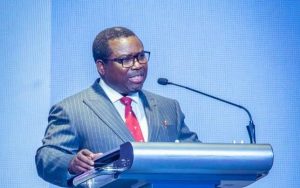
INEC Chairman, Prof. Joash Amupitan (SAN), announced this on Thursday at a dialogue organised by the Kimpact Development Initiative at Chatham House, London, with the theme, “Nigeria’s 2027 Elections: Democratic Trajectory and Regional Stability Beyond the Ballot.”
Amupitan said the exercise would help INEC identify and fix weaknesses before the actual election.
“On the 28th of this month, we will conduct a mock accreditation and voting exercise across all states of the federation to simulate the presidential election and verify that we have gotten both accreditation and electronic result transmission right,” he said.
He also disclosed that INEC had introduced technical safeguards to prevent inaccurate results and figures indicating over-voting from reaching its Result Viewing Portal, IReV.
According to him, a post-2023 audit showed that major problems in election result management occurred at collation centres rather than polling units.
“We have now devised a technical safeguard: if a result is not accurate at the polling unit, it will not go to IReV at all,” he said.
BVAS Upgrades
Amupitan said INEC had procured additional BVAS machines and reduced the maximum number of registered voters assigned to each device from 1,250 to 850.
Polling units with more than 850 registered voters will therefore receive multiple devices.
He said the commission was also building climate-controlled storage facilities across the states to protect BVAS machines from extreme temperatures, a problem blamed for some malfunctions during the 2023 elections.
On funding, Amupitan said INEC had received a substantial portion of its 2027 election budget but was awaiting the release of the balance.
He expressed optimism that the outstanding funds would be released before the end of November, particularly as part of the money would be required for the recruitment and welfare of ad hoc election personnel.
INEC Seeks to Restore Trust
The INEC chairman acknowledged that the disputed 2023 presidential election created a significant trust deficit for the commission.
“First and foremost, let me speak about what happened in 2023, which resulted in a significant trust deficit for INEC—damage so large that the commission has not yet fully recovered from it,” he said.
He, however, cited recent elections, including the Anambra and Osun governorship polls, the Ekiti governorship election, FCT Area Council elections and 16 legislative by-elections, as evidence of efforts to improve the electoral process.
Amupitan said the results of the Anambra and Osun governorship elections were declared the day after voting, describing each election as a learning opportunity.
He also denied allegations questioning his political neutrality, saying he did not operate the X account linked to a controversial political post.
According to him, an independent forensic review had been obtained and the matter referred to the Department of State Services and the Inspector-General of Police for investigation.
“My loyalty is solely to the Constitution of the Federal Republic of Nigeria and the Electoral Act,” he said.
INEC Begins Movement of Election Materials
Separately, INEC National Commissioner, Prof. Rhoda Gumus, said the commission had begun moving non-sensitive election materials to some zones ahead of the 2027 polls.
Gumus spoke in Abuja on Thursday during a meeting with a delegation from Kenya’s Independent Electoral and Boundaries Commission.
She said INEC had completed nine scheduled activities and conducted readiness assessments across the six geopolitical zones.
“Right now, all non-sensitive materials are almost ready. In fact, today as we speak here, the non-sensitive materials have been lifted to some zones now,” she said.
Gumus added that PVC production had been completed, with most states receiving the first and second batches, while collection was ongoing.
She urged eligible voters to collect their PVCs ahead of the elections and disclosed that INEC was also conducting capacity-building exercises for electoral personnel.
On calls for aspirant voting, she said INEC could not introduce the system without an amendment to the Electoral Act.
Kenya Seeks Nigeria’s Electoral Experience
Kenya’s High Commissioner to Nigeria, Isaac Parashina, said the delegation was in Nigeria to learn from INEC ahead of Kenya’s August 2027 general elections.
He said both countries faced similar electoral challenges and expressed particular interest in Nigeria’s experience with diaspora voting and arrangements for special interest groups.
Parashina said about 12 countries participated in Kenya’s diaspora voting during its last election, with plans to expand the number to about 26.
“The success of Nigeria remains a great success to Kenya and indeed to the continent. Everyone is looking at what Nigeria will do because it’s the biggest democracy in Africa,” he said.
Nigeria’s presidential and National Assembly elections are scheduled for January 16, 2027, while governorship and State Houses of Assembly elections will hold on February 6, 2027.