NDLEA unveils German-built sniffer dog facility


The National Drug Law Enforcement Agency has lauded the donation of a newly built canine facility by the German government, stating that it will strengthen Nigeria’s fight against illicit drugs.


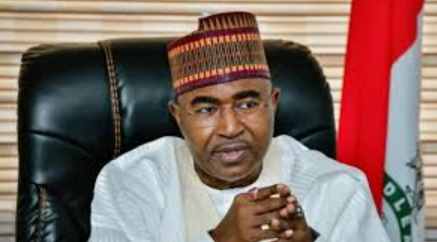
The Agency’s Chairman and Chief Executive Officer, Brigadier General Mohamed Buba Marwa (retd.), stated this on Friday at the commissioning of the modern canine complex in Lagos.


According to a statement issued in Abuja by NDLEA’s Director of Media and Advocacy, Femi Babafemi, the German government’s intervention demonstrates the importance it attaches to supporting Nigeria’s anti-drug campaign.


Marwa assured stakeholders that the provision of the facility would significantly boost the Agency’s capacity to fulfil its core mandate.

“The quality of the infrastructure at the new NDLEA dog facility is commendable. It speaks volumes of the commitment, goodwill and tenacity of our partners,” he said.


He commended the German government for its support over the years, noting that the Canine Unit had played a critical role in several successful operations, including the seizure of 74.119kg of captagon at Apapa Port in 2021.


While acknowledging the progress made, Marwa stressed that more work is required to sustain the current level of operational excellence.


“This newly commissioned facility will, without doubt, provide a comfortable and dignified environment that will motivate our Canine Unit personnel to discharge their duties effectively,” he said.


Marwa highlighted that NDLEA’s sniffer dogs have been instrumental in the seizure of more than 17.9 metric tonnes of illicit substances since their deployment, but that poor infrastructure had previously limited the Unit’s capacity.

He noted that the construction of the new complex, sponsored by the German Federal Criminal Police through its Liaison Office, commenced in August 2024 and was delivered on schedule.


The NDLEA boss expressed gratitude to German Consul General Daniel Krull, and officials of the German Federal Criminal Police for their role in the project.


In his remarks, Krull said NDLEA’s success benefits not only Nigeria but also Germany and the wider region.


“The amazing work of your Agency under your leadership is important for Nigeria, for the region, and for Germany. I encourage all members of NDLEA to keep up the good spirit,” he said.


Similarly, Mr Florian Bulow, Deputy Head of Section IZ14, BKA Berlin, described the collaboration with NDLEA as one of the longest-running projects in police capacity building.

“Like in a marriage, cooperation needs trust. We share the same goals and values in the fight against drug smuggling and abuse, and our long-standing teamwork has yielded these achievements,” he added.


The NDLEA has intensified its anti-drug campaign under the leadership of Marwa, recording record seizures and high-profile arrests in recent years.


The Canine Unit, established to detect concealed narcotics, has become a critical component of its operations at airports, seaports, and land borders.

Japan scraps ‘Africa Hometown’ project after visa confusion


The Japan International Cooperation Agency has cancelled its ‘JICA Africa Hometown’ initiative, citing “misunderstandings and confusion” over the programme.


JICA announced the withdrawal in a statement on its website on Thursday, weeks after reports claimed Japan would create a special visa category for Nigerians who wished to relocate to Kisarazu, a city designated as “hometown” to Nigerians and other Africans under the scheme.


On August 26, the Japanese government denied the visa plan after the Director of Information at the State House, Abiodun Oladunjoye, issued a statement relaying that Japan would introduce a “special visa category” for highly skilled, innovative, and talented young Nigerians who want to move to Kisarazu to live and work.


Clarifying its position, JICA said the use of the term “hometown” and the idea of “designating” Japanese municipalities as such led to “misunderstandings and confusion within Japan, placing an excessive burden on the four municipalities.”

The statement read, “Originally, under this initiative, it was envisioned that exchange programs would be coordinated and implemented among the Japanese local governments, relevant African countries, and JICA. The specific details were to be determined later.


“However, JICA believes that the very nature of this initiative—namely, the term “hometown” and the fact that JICA would ‘designate’ Japanese local Governments as “hometowns”—led to misunderstandings and confusion within Japan, placing an excessive burden on the four municipalities. JICA sincerely apologizes to the municipalities involved for causing such situation.


“JICA takes this situation seriously. After consulting with all parties involved, JICA has decided to withdraw the “JICA Africa Hometown” initiative.”

The initiative was launched in August during the 9th Tokyo International Conference on African Development with the goal of promoting exchanges between four Japanese municipalities and four African countries through cultural and educational programmes.


JICA, however, stressed that it had never undertaken initiatives to promote immigration and has “no plans to do so in the future,” adding that it would continue supporting other forms of international exchange.


In August, confusion arose after the State House announced that Japan had designated Kisarazu city as the “hometown” for Nigerians and would introduce a special visa category for young, skilled Nigerians wishing to live and work there.


However, the Japanese government quickly dismissed the claim.


The Ministry of Foreign Affairs of Japan clarified that while the JICA Africa Hometown initiative aimed to promote cultural and developmental exchanges between selected African countries and four Japanese cities, it did not involve immigration benefits or special visas.

The clarification came after Nigeria’s Chargé d’Affaires in Japan, Florence Akinyemi Adeseke, and Kisarazu’s Mayor, Yoshikuni Watanabe, publicly received a certificate naming the city the “hometown” of Nigerians, further fuelling reports of migration opportunities.

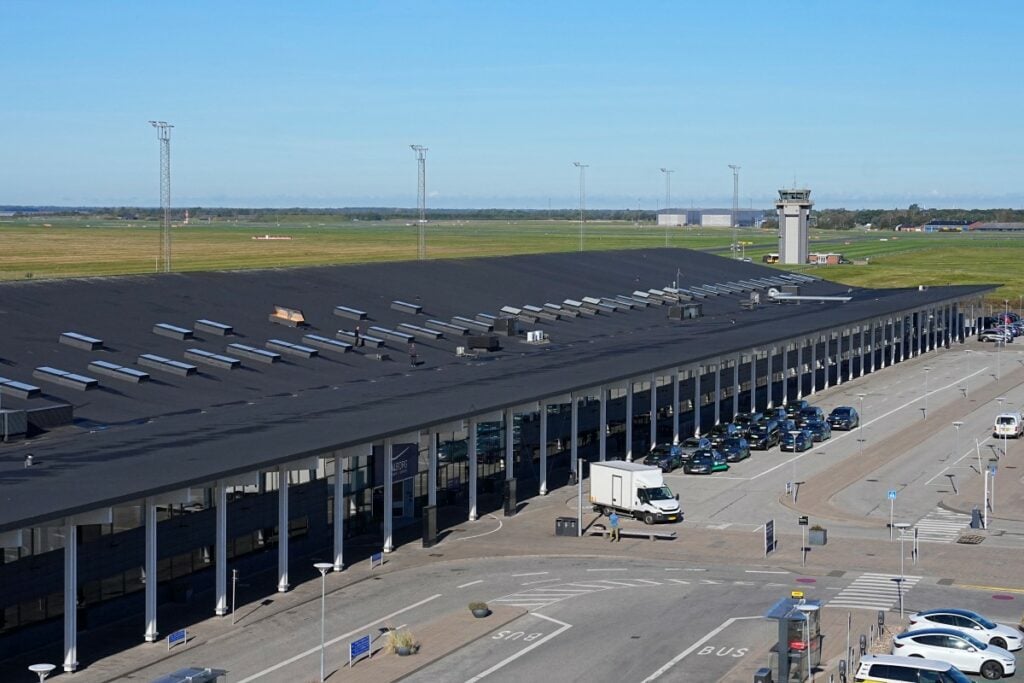
Denmark shuts airport twice amid drone security scare


A sighting of a suspected drone briefly shuttered a Danish airport on Friday for the second time in a few hours, after the country’s prime minister said the flights were part of “hybrid attacks” that may be linked to Russia.


Drones have been seen flying over several Danish airports since Wednesday, causing one of them to close for hours, after a sighting earlier this week prompted Copenhagen airport to shut down.


That followed a similar incident in Norway, drone incursions in Polish and Romanian territory and the violation of Estonian airspace by Russian fighter jets, which raised tensions in light of Russia’s ongoing invasion of Ukraine.


“Over recent days, Denmark has been the victim of hybrid attacks,” Prime Minister Mette Frederiksen said in a video message on social media on Thursday — referring to a form of unconventional warfare.

She warned that such drone flights “could multiply”.


Investigators said they had so far failed to identify those responsible, but Frederiksen stressed: “There is one main country that poses a threat to Europe’s security, and it is Russia.”


Moscow said Thursday it “firmly rejects” any suggestion that it was involved in the Danish incidents. Its embassy in Copenhagen called them “a staged provocation”, in a post on social media.


Denmark’s Justice Minister Peter Hummelgaard earlier said the aim of the attack was “to spread fear, create division and frighten us”.


He added that Copenhagen would acquire new enhanced capabilities to “detect” and “neutralise drones”.


Denmark will on Friday join other EU countries, mostly along the eastern border with Russia, in the first talks on proposals to build a “wall” of anti-drone defences in the face of the tensions with Moscow.


– Russia sabotage warning –


Drones were spotted on Wednesday and early Thursday at airports in Aalborg, Esbjerg, Sonderborg and at the Skrydstrup air base before leaving on their own, police said.

Aalborg airport, located in northern Denmark, was initially shut down for several hours, and closed again for about an hour from late Thursday into early Friday morning due to another suspected sighting.


“It was not possible to take down the drones, which flew over a very large area over a couple of hours,” North Jutland chief police inspector Jesper Bojgaard Madsen said about the initial Aalborg incident.

The head of Denmark’s military intelligence, Thomas Ahrenkiel, told a news conference the service had not been able to identify who was behind the drones.

But intelligence chief Finn Borch said: “The risk of Russian sabotage in Denmark is high.”


Danish Defence Minister Troels Lund Poulsen told a news conference the flights appeared to be “the work of a professional actor… such a systematic operation in so many locations at virtually the same time”.


He said it had posed “no direct military threat” to Denmark.


Frederiksen said Thursday that she had spoken with NATO chief Mark Rutte about the incidents.


Lund Poulsen said the government had yet to decide whether to invoke NATO’s Article 4, under which any member state can call urgent talks when it feels its “territorial integrity, political independence or security” are at risk.


French President Emmanuel Macron said his country stood ready “to contribute to the security of Danish airspace”.


Copenhagen is set to host a summit of European Union leaders next week.


– ‘Feel rather insecure’ –


Police said investigations were under way with the Danish intelligence service and the armed forces.


The drone activity shook some in Denmark, including 85-year-old Birgit Larsen.

“I feel rather insecure. I live in a country where there has been peace since 1945. I am not really used to thinking about war,” she told AFP in central Copenhagen.


Others were less concerned.


“It’s probably Russia, you know, testing the borders of Europe. They fly close to the borders and stuff and try to provoke, but not threaten,” said 48-year-old Torsten Froling.

The drone flights came after Denmark announced it would acquire long-range precision weapons for the first time, as Russia would pose a threat “for years to come”.


AFP

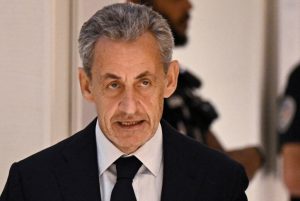
Ex-French president Sarkozy found guilty in Libyan money scandal


A Paris court on Thursday convicted former French president Nicolas Sarkozy on charges of criminal conspiracy but acquitted him of corruption and accepting illegal campaign financing in his trial into accusations late Libyan dictator Moamer Kadhafi helped fund his victorious 2007 presidential run.


The trial is the latest in a string of legal troubles for the right-wing ex-leader, 70, who denies the charges.


Sarkozy, who was president from 2007 to 2012, has already been convicted in two separate cases and stripped of France’s highest honour.


Judge Nathalie Gavarino said Sarkozy,as a serving minister and party leader at the time, had “allowed his close collaborators and political supporters over whom he had authority and who acted in his name”, to approach the Libyan authorities “in order to obtain or attempt to obtain financial support”.


The court’s ruling however did not follow the conclusion of prosecutors that Sarkozy was the alleged beneficiary of the illegal campaign financing. He was acquitted on a separate charges of embezzlement of Libyan public funds, passive corruption and illegal financing of an electoral campaign.

Sentencing is due to be announced later in the hearing, with prosecutors requesting a seven-year prison term for Sarkozy.


He was present in court for the verdict, accompanied by his model and musician wife Carla Bruni-Sarkozy.


Two former close aides were also convicted. His former right-hand man Claude Gueant was found guilty of passive corruption and falsification while former minister Brice Hortefeux was found guilty of criminal conspiracy.


Eric Woerth, Sarkozy’s 2007 campaign treasurer, was acquitted.


In a dramatic coincidence, the judgement was issued by the Paris court two days after the death on Tuesday in Beirut of Franco-Lebanese businessman Ziad Takieddine, a key accuser of Sarkozy in the case.


Takieddine, 75, had claimed several times that he helped deliver up to five million euros ($6 million) in cash from Kadhafi to Sarkozy and the former president’s chief of staff in 2006 and 2007.


He then spectacularly retracted his claims before contradicting his own retraction, prompting the opening of another case against Sarkozy and also Bruni-Sarkozy, on suspicion of pressuring a witness.

Prosecutors argued that Sarkozy and his aides devised a pact with Kadhafi in 2005 to illegally fund Sarkozy’s victorious presidential election bid two years later.


Investigators believe that in return Kadhafi was promised help to restore his international image after Tripoli was blamed by the West for bombing a plane in 1988 over Lockerbie, Scotland and another over Niger in 1989, killing hundreds of passengers.


Kadhafi was ultimately overthrown and killed by opponents in 2011 during the Arab Spring as NATO military intervention — in which France under Sarkozy played a key role — enforced a no-fly zone.


The prosecution’s case is based on statements from seven former Libyan dignitaries, trips to Libya by Gueant and Hortefeux, financial transfers, and the notebooks of the former Libyan oil minister Shukri Ghanem, who was found drowned in the Danube river in Vienna in 2012.


Sarkozy has faced a litany of legal problems since his mandate and has been charged separately with corruption, bribery, influence-peddling and campaign finance infringements.

He was first convicted for graft and sentenced to a one-year jail term, which he served with an electronic tag for three months before being granted conditional release.


Separately, he received a one-year jail term — six months with another six months suspended — in the so-called “Bygmalion affair” for illegal campaign financing. Sarkozy has gone to France’s top appeals court to appeal that verdict.


He has faced repercussions beyond the courtroom, including losing his Legion of Honour — France’s highest distinction — following the graft conviction.


Legal woes aside, the man who styled himself as the “hyper-president” while in office still enjoys considerable influence and popularity on the right of French politics, and is known to regularly meet with President Emmanuel Macron.

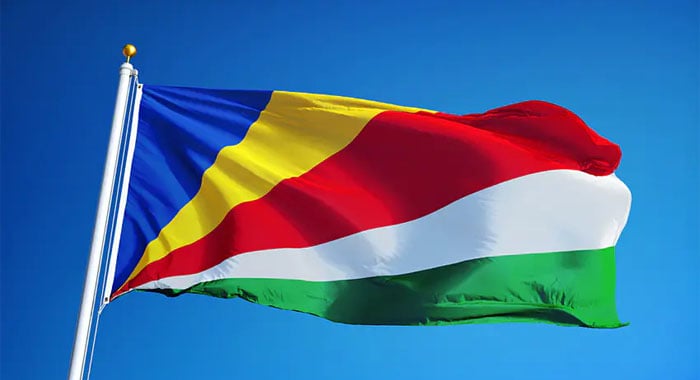
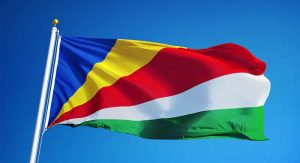
Five things to know about Seychelles ahead of September elections


The Indian Ocean archipelago of the Seychelles boasts one of the highest standards of living in Africa, driven in part by high-end tourism and fishing, but the island nation is also plagued by drug use and trafficking.


It will hold presidential and legislative elections on September 25-27.


– 115 islands –


The 115 mostly uninhabited islands and islets that make up the Seychelles represent a total of 455 square kilometres (280 square miles), barely the size of the principality of Andorra.


But, spread across an area of more than 388,000 square kilometres, the islands and their surrounding waters make up a vast economic exclusive zone of more than one million square kilometres, twice the size of France.


The islands and their waters are a paradise of biodiversity, home to a rich variety of fauna and flora, and are an important nesting site for birds and turtles.


At the heart of the Indian Ocean, the archipelago occupies a strategic position between Madagascar, Africa, and India.

Three-quarters of its roughly 120,000 citizens live on the Mahe island, where the capital, Victoria, is located, according to 2024 World Bank data.


The archipelago is vulnerable to climate change, and is facing rising sea levels, the deterioration of the marine ecosystem — particularly its coral reefs — as well as landslides, flooding, and drought.


– Young democracy –


The islands were occupied in the 17th century by the French, and then in the 19th century by the British under their rule in nearby Mauritius.


The Seychelles became a colony in its own right in 1903 and achieved independence in 1976 under the presidency of James Mancham.


In 1977, a coup brought to power France-Albert Rene, who established a single-party state and survived multiple coup attempts.


The first multi-party elections took place in 1993 after a new constitution was adopted.

United Seychelles had provided every head of state until the 2020 election, which was won by opposition leader Wavel Ramkalawan.

Ramkalawan is seeking a second term against Patrick Herminie, of the United Seychelles party.


Herminie was charged in late 2023 with “witchcraft”, which he said was politically motivated, and the charges were later lifted.


– Tourism and fishing –


Known for its white beaches and high-end tourism, the Seychelles has Africa’s highest GDP per capita income, according to the World Bank.


However, its economy is vulnerable to price fluctuations for imported products, including food and petrol, which increase the cost of living.


The employment rate is low and while extreme poverty has been almost entirely eradicated, it faces issues such as drug use and trafficking, according to the World Bank.


– Heroin, the dark side of paradise –


Government figures show between 5,000 to 6,000 Seychellois consume heroin, data based on those on a methadone substitution programme.


Other estimates suggest up to 10,000 users, equivalent to roughly 10 percent of the population.


Critics say Ramkalawan has failed to fulfil campaign promises on fighting corruption and drug trafficking.


– ‘Coco bottom’ –

Synonymous with the Seychelles and commonly known as the sea coconut, or coco de mer, is the world’s largest seed — and is shaped like a woman’s bottom.


It became popular when tourism took off following independence.

Authorities limited trade in 1978, but the restrictions were ignored by nut poachers, and since 2011, it has been on the International Union for Conservation of Nature’s “red list”.


AFP

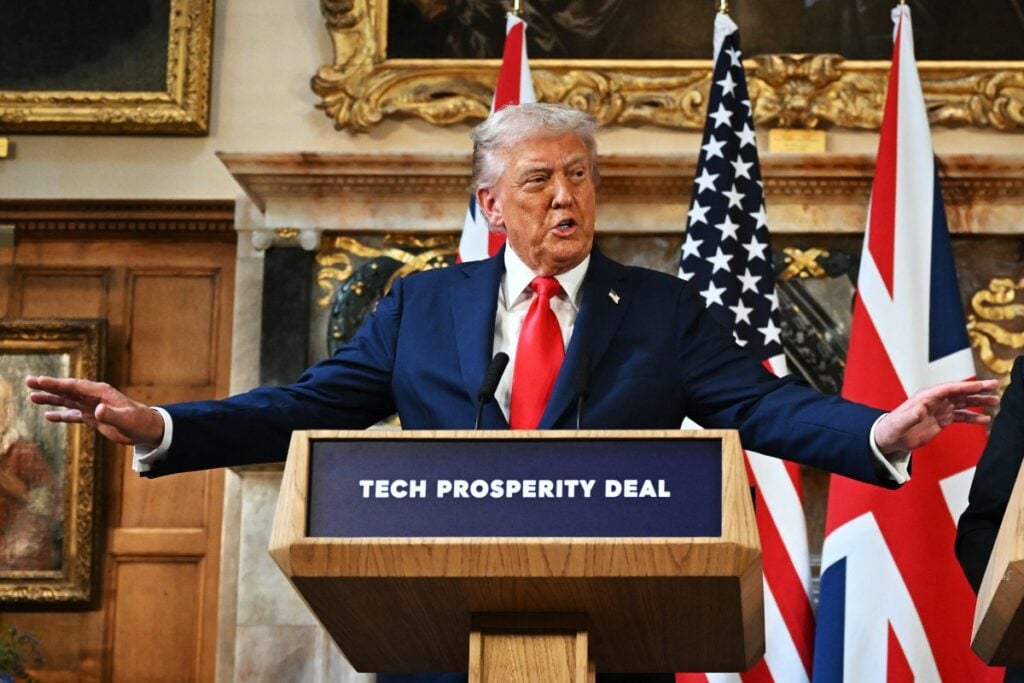
Trump to headline opening of 80th UN General Assembly


A speech by U.S. President Donald Trump will mark the opening of the 80th session of the annual General Debate of the UN General Assembly in New York on Tuesday.


Other speakers on the agenda for the first day are Brazilian President Luiz Inácio Lula da Silva, Turkish President Recep Erdoğan, and French President Emmanuel Macron.


The speeches are scheduled to start at 9 am (1300 GMT).


UN Secretary General António Guterres and General Assembly President Annalena Baerbock are also to speak.

A session of the UN Security Council on the Ukraine war, which Ukrainian President Volodymyr Zelensky is expected to attend, is also scheduled.

Around 150 heads of state and government are set to speak over the week ahead, with the Middle East conflict and the war in Ukraine.


The UN’s precarious finances would not be left out, along with the changing geopolitical role of the United States under Trump.


Nigeria’s Vice-President, Sen. Kashim Shettima, who is leading the country’s high-powered delegation to the annual global event, has since arrived in New York.


The News Agency of Nigeria reports that Shettima is representing President Bola Tinubu at the UN epochal event.


(dpa/MAN)

‘Over 7,000 Nigerians sought asylum in Sweden in 24 years’


Nigerians filed over 7,646 asylum applications in Sweden between 2000 and 2024, according to official figures from the Swedish Migration Agency, Migrationsverket.


Data obtained by Saturday PUNCH from the agency’s portal, covering the period, showed a consistent stream of Nigerian asylum seekers in the Nordic country.


A total of 6,783 asylum applications from Nigerian nationals were recorded between 2000 and 2021.


In 2022, there were 288 applications, followed by 200 in 2023, and 375 in 2024. Of the 375 applications received in 2024, 239 were first-time claims, while 136 were follow-up “extension” requests from persons whose temporary status was about to expire.

Women filed nearly two-thirds (159) of all first-time Nigerian claims, and half of every Nigerian applicant was between 25 and 44 years old, as no one over 64 applied in 2024.


Children accompanied 60 adult applicants, while one child travelled alone and registered as an unaccompanied minor.


Similarly, in 2023, there were 160 adults, 39 children in families, and one unaccompanied child among first-time asylum seekers from Nigeria.


Over the longer period from 2000 to 2021, a total of 132 unaccompanied minors from Nigeria applied for asylum.


The number of new applications for international protection peaked in 2003 at 452 and again in 2013 at 601, but the volume has never reached the scale of applications seen from countries experiencing internal conflicts.


Across Africa, Nigeria is among the top five countries of origin for asylum seekers in Sweden.


However, Somalia, Eritrea, Sudan, and Ethiopia far surpass it in numbers due to ongoing conflict and instability.

Somalia alone accounted for more than 54,128 applications since 2000, followed by Eritrea with over 39,000, then Sudan, Libya, Morocco, and the Democratic Republic of the Congo.


Other countries include Uganda, Egypt, Cameroon, The Gambia and Burundi, Kenya, Algeria, Tunisia, Rwanda, Tanzania, Ghana, Guinea, Sierra Leone, Mali, Zambia, Djibouti, Côte d’Ivoire, Angola, Zimbabwe, Burkina Faso, and single-digit applications from Benin, Niger, Equatorial Guinea, the Central African Republic and Mauritania. Nigeria, however, remains West Africa’s largest contributor of asylum seekers.


According to the reports, the migration from these countries is often directly tied to large-scale conflict and instability, a factor that distinguishes them from the lower, more consistent flow of applicants from Nigeria.

Swedish authorities say the distinction is significant as it enables a fast-track process for nationalities with historically high rejection rates, defined as a rejection percentage of 85 per cent or higher.

In 2024, Nigerian asylum seekers had an 88 per cent rejection rate while Colombians had 99 per cent.


Globally, the highest asylum grants in Sweden went to nationals of Syria, Afghanistan, Eritrea, Somalia, Iraq, Iran, Ethiopia, Palestine, Ukraine, and stateless persons.


On the other hand, the highest denials were recorded among applicants from Nigeria, India, Bangladesh, Albania, Georgia, Mongolia, Russia, Morocco, Algeria, and Tunisia.


The Swedish government says it prioritises claims linked to war, persecution, or statelessness over applications driven by economic factors.


Sweden’s asylum regime is rooted in the Aliens Act (Utlänningslagen), which incorporates both EU asylum directives and the 1951 UN Refugee Convention.


A successful applicant must demonstrate either refugee status (fear of persecution), eligibility for subsidiary protection (risk of serious harm in war or conflict), or humanitarian grounds such as severe illness or family reunification.


In recent years, however, Sweden has shifted toward more restrictive policies.

Since 2022, it has issued more temporary residence permits, limited family reunification programmes and tightened deportation enforcement.


Following the record influx of asylum claims in 2015, the Swedish parliament introduced a temporary emergency law that curtailed family reunification rights and made almost all new permits temporary. The main features were ratified in July 2021.


Under its 2023 Tidö Agreement, the current centre-right coalition, bolstered by the far-right Sweden Democrats, imposed “the EU’s minimum level” of protection, which uses tougher naturalisation and welfare rules as explicit deterrents.


To be granted asylum in Sweden today, an applicant must clear at least one of the classic Geneva or EU thresholds—fear of persecution, risk of torture or death, or indiscriminate violence—or demonstrate “exceptionally distressing” humanitarian circumstances.


Meanwhile, Abuja-based development economist Dr Aliyu Ilias, reasoned that the exit of more Nigerians and their permanent settlement abroad meant a loss of skilled labour for the country.

He said that with Nigerians battling economic headwinds and deteriorating security at home, the asylum route, however uncertain, still appeared to offer a better prospect.

“So, it is a total brain drain in the long run, and for the economy, it is reducing our GDP. The appalling part is that most of our Nigerian brothers and sisters who go out do not return,” he added.

EU seeks to speed up Russian gas phase-out after Trump push


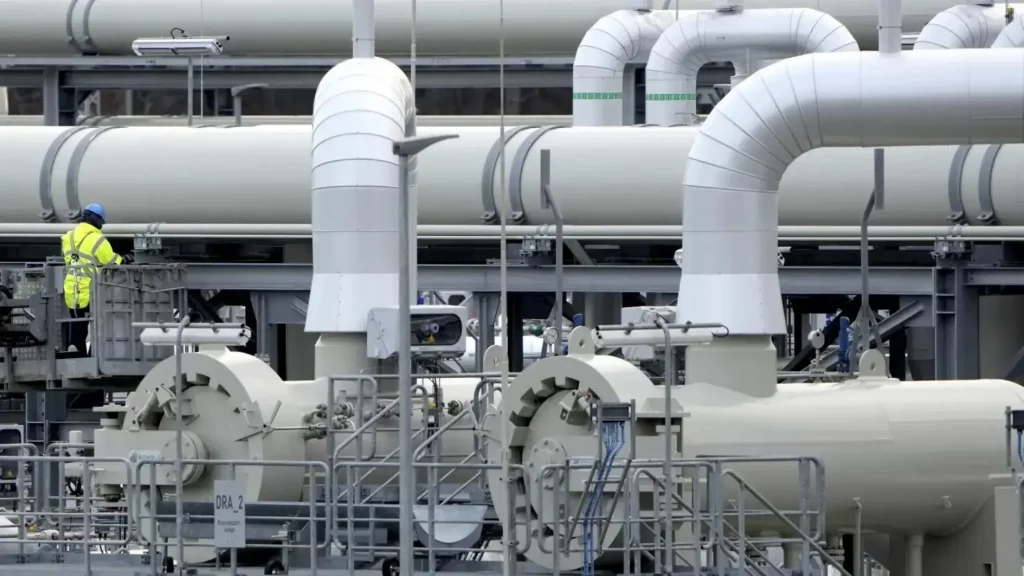
The European Union proposed Friday to bring forward a ban on Russian gas imports as part of a new package of sanctions aimed at sapping Moscow’s war chest — and pleasing US President Donald Trump.


Under the measures presented for approval by the bloc’s member states, the European Commission said it aims to phase out liquefied natural gas purchases from Russia by January 2027 — one year earlier than planned.


“Russia’s war economy is sustained by revenues from fossil fuels. We want to cut these revenues. So we are banning imports of Russian LNG into European markets,” Commission chief Ursula von der Leyen said.


“It is time to turn off the tap”.

The proposal comes as the United States pressures the EU to end fossil fuel imports from Russia — and the bloc seeks in turn to persuade Trump to take a tougher stance on Moscow over its invasion of Ukraine.


The US leader has so far held back from upping pressure on Russian President Vladimir Putin but said last week he was ready to do so if allies stopped buying Russian oil and hit China with tariffs.


The 27-nation EU has already banned most Russian oil under previous rounds of sanctions — slashing the share it imports from 29 per cent in early 2021 to two per cent by mid-2025.


Only Hungary and Slovakia, friendly to Moscow and Trump, still buy the stuff.


– ‘Pay the price’ –


Presenting the new EU sanctions package — the 19th targeting Moscow since the Ukraine war began in 2022 — von der Leyen made no mention of oil.

But EU foreign policy chief Kaja Kallas said the bloc was bringing forward by 12 months a previous pledge to end all imports of LNG by the end of 2027.


“Our aim is to speed up the phase-out of Russian liquefied natural gas by 1 Jan 2027,” she wrote on X.


“Moscow thinks it can keep its war going. We are making sure it pays the price for it.”


Despite a push to end decades of European dependency, Russia still supplied 19 per cent of the EU’s gas in 2024 — down from 45 per cent before the war.

This is in part due to an increase in purchases of LNG transported by sea, which has partially offset a sharp fall in pipeline imports.


In 2024, 32 billion cubic metres of gas entered Europe via the TurkStream pipeline, and 20 billion cubic metres through liquefied natural gas (LNG) shipments.


Most LNG is imported through terminals in France, Spain, Italy, the Netherlands and Belgium — although it is hard to know how much is also consumed there or simply passes through towards other nations.


The United States — the world’s top oil producer — is the largest supplier of the stuff, accounting for almost 45 per cent of total EU LNG imports.


AFP

FG ends passport production at multiple centres after 62 years


The Nigeria Immigration Service has officially ended passport production at multiple centres, transitioning to a single, centralised system for the first time in 62 years.


Minister of Interior, Dr Olubunmi Tunji-Ojo, said this on Thursday while inspecting Nigeria’s new Centralised Passport Personalisation Centre at the NIS Headquarters in Abuja.


He stated that since the establishment of NIS in 1963, Nigeria had never operated a central passport production centre, until now, marking a major reform milestone.


“The project is 100 per cent ready. Nigeria can now be more productive and efficient in delivering passport services,” Tunji-Ojo said.

He explained that old machines could only produce 250 to 300 passports daily, but the new system had a capacity of 4,500 to 5,000 passports every day.


“With this, NIS can now meet daily demands within just four to five hours of operation,” he added, describing it as a game-changer for passport processing in Nigeria.

“We promised two-week delivery, and we’re now pushing for one week.


“Automation and optimisation are crucial for keeping this promise to Nigerians,” the minister said.


He noted that centralisation, in line with global standards, would improve uniformity and enhance the overall integrity of Nigerian travel documents worldwide.


Tunji-Ojo described the development as a step toward bringing services closer to Nigerians while driving a culture of efficiency and total passport system reform.


He said the centralised production system aligned with President Bola Tinubu’s reform agenda, boosting NIS capacity and changing the narrative for better service delivery.


NAN

Yahoo boys worsening visa restrictions for Nigerians – EFCC


The Economic and Financial Crimes Commission has warned that the rising cases of internet fraud are worsening visa restrictions for innocent Nigerians abroad.


The EFCC Chairman, Ola Olukoyede, said fraudulent practices not only destroy the future of those involved but also tarnish Nigeria’s international image, resulting in stricter travel conditions for law-abiding citizens.


Olukoyede, who was represented by the Chief Superintendent of the EFCC, CSE Coker Oyegunle, gave the charge on Monday at an event in Port Harcourt, Rivers State, organised by the Coalition of Nigerian Youth on Security and Safety Affairs.


His statement was contained in a release issued by the commission on Tuesday.

“The EFCC boss highlighted that internet fraud, money laundering, and economic sabotage cost Nigeria billions of naira annually, undermining national growth and depriving citizens of infrastructure, jobs, and opportunities.


“Beyond the economic damage, he pointed out that the crimes erode Nigeria’s international image and subject innocent Nigerians to stricter visa restrictions abroad,” the statement read.


He urged young people in the South-South and across the country to channel their energy into productive ventures such as digital innovation, entrepreneurship, agriculture, and the creative industry.


He was quoted as saying, “Fraud is not success; it is a trap. Easy come, easy go. Many who follow the path of ‘yahoo-yahoo’ always end up losing their freedom, reputation, and future. The law is catching up with them and digital footprints never disappear. Don’t destroy your tomorrow with shortcuts today.”

Olukoyede reaffirmed the commission’s readiness to intensify sensitisation, enforcement and collaboration with communities to combat fraud and related crimes.


Also speaking at the event, a representative of the National Drug Law Enforcement Agency, Mathew Ewah, warned that drug abuse remained one of the most dangerous threats facing Nigerian youths, while the Nigeria Security and Civil Defence Corps cautioned against pipeline vandalism in the South-South.


The EFCC has recently intensified its clampdown on cybercrime across the country.


In August, operatives of the commission’s Lagos Zonal Directorate 1 arrested 38 suspected internet fraudsters at Mambillah Hotel, Ikorodu, Lagos, following days of surveillance.


Items recovered from the suspects included vehicles, mobile phones, and substances suspected to be narcotics.


Similarly, the Benin Zonal Directorate of the EFCC secured the conviction of 12 persons, including two brothers, for fraud-related offences.

They were sentenced by Justice M. Itsueli of Edo State High Court after pleading guilty to charges bordering on advance fee fraud, possession of fraudulent documents, and retention of proceeds of crime.

Exit mobile version