2027: PDP candidate, Accord aspirant, 3,000 supporters defect to APC in Oyo
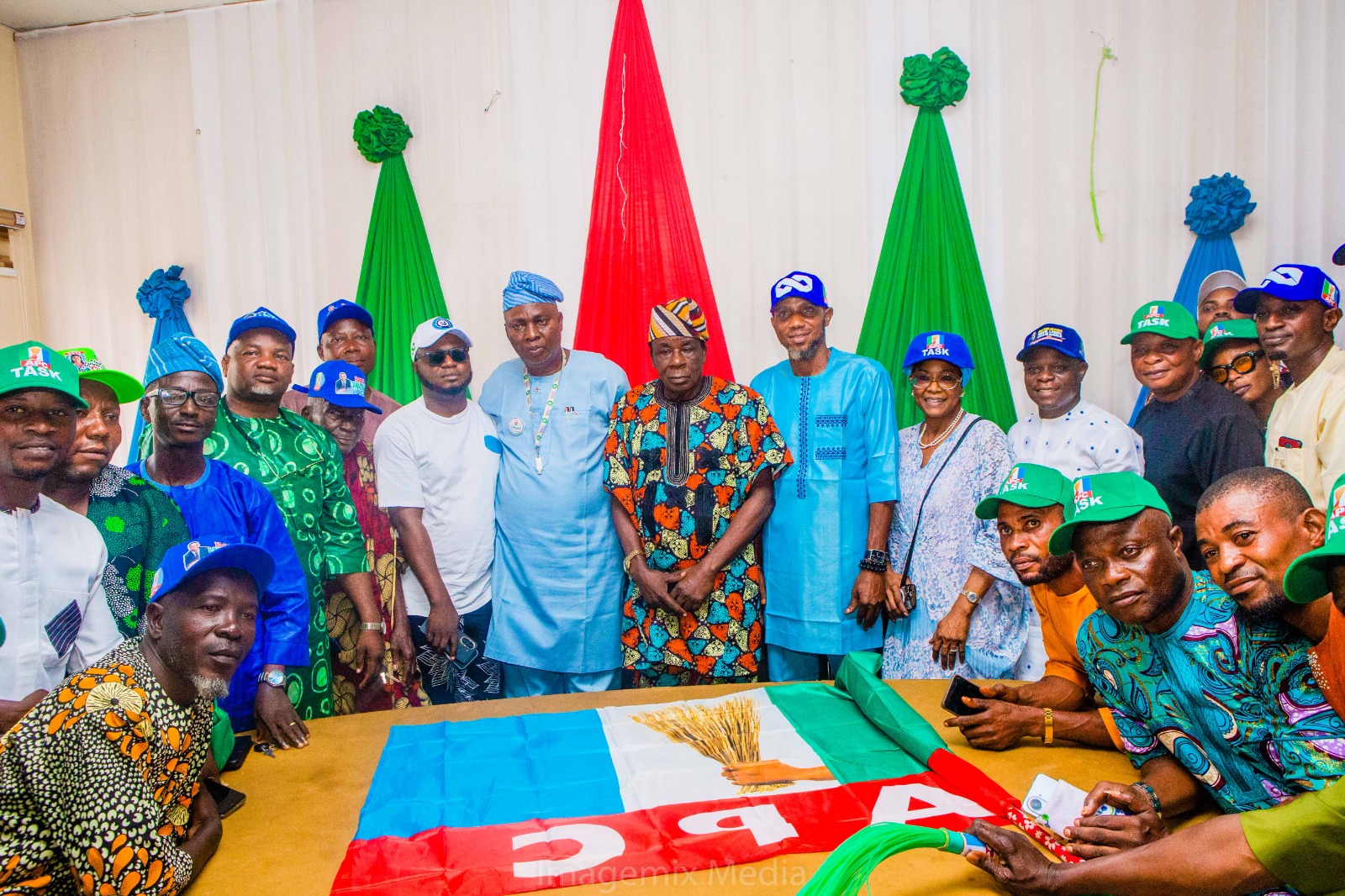
The Peoples Democratic Party (PDP) candidate for Ibadan North-East State Constituency II in the 2027 general elections, Hon. Hammed Taoreed Ademola, and an Accord aspirant for the same constituency, Hon. Adedapo Ojo, on Friday led about 3,000 of their supporters to defect to the All Progressives Congress (APC) in Oyo State.
The defectors formally declared their membership of the APC at an event held at a private facility along Old Ife Road, Ibadan.
Ademola, popularly known as Lucky, said his decision to abandon the PDP ticket followed his assessment of the political situation ahead of the 2027 elections.
He said: “I did my due diligence and I came to realise that any ticket outside the APC is a mere tissue paper which cannot take a candidate anywhere in 2027.
“We are here in our hundreds to formally join the APC, and we promise to do our best in the interest of the progressive party and our dear country, Nigeria.”
Speaking at the event, Ojo described Accord as a distraction and urged voters to support the APC.
He said: “We thought about making Accord a credible alternative in the state, but we later realised that the APC was ahead of other parties by far.
“We wasted our time, energy and resources on an unproductive exercise. We later realised it wasn’t worth it. So, we decided to pitch our tent with the progressive party, and here we are today.”
Receiving the defectors into the APC, the state chairman of the party, Chief Moses Alake-Adeyemo, assured them of equal opportunities.
Adeyemo urged the new members to work assiduously for the victory of all APC candidates in the 2027 general elections, describing the election as another opportunity to rewrite the history of Nigeria.
Also speaking, the APC governorship candidate in the 2027 election, Senator Sharafadeen Alli, promised to ensure fairness to all members of the party and all zones of the state.
Alli said: “It is a thing of joy that reasonable individuals are abandoning their parties to join the APC at a time like this. The hope is getting brighter every day, and it is now important for us to get more prepared because Oyo State deserves the best from May 2027.
“We have been saying it that we would run an all-inclusive government which every indigene and resident of the state shall be proud of.
“Workers and pensioners would get their salaries and allowances regularly, in amounts that would be enough for them to live a decent life.
“The work environment would be conducive for all workers, including civil servants and teachers, while workers in all categories would be given adequate training and retraining to improve their productivity.
“Within our first six months in office, a standard ICT hub would be established in Ibadan, and this would be replicated in Oke-Ogun, Ogbomoso, Oyo and Ibarapa before January 2029.
“We would ensure that no zone is left out in the distribution of infrastructure and basic amenities, while each of the 33 local government councils would have a general hospital that is well staffed and fully equipped to cater to the basic medical needs of our people.”
Also present at the event were the APC deputy governorship candidate, Hon. Adesoji Adedeji; the Oyo South Senatorial candidate, Hon. Aderemi Oseni; and other party members.
Oyo APC gains ground as Obidient Movement leader Sunday Oni joins party, endorses Alli, others
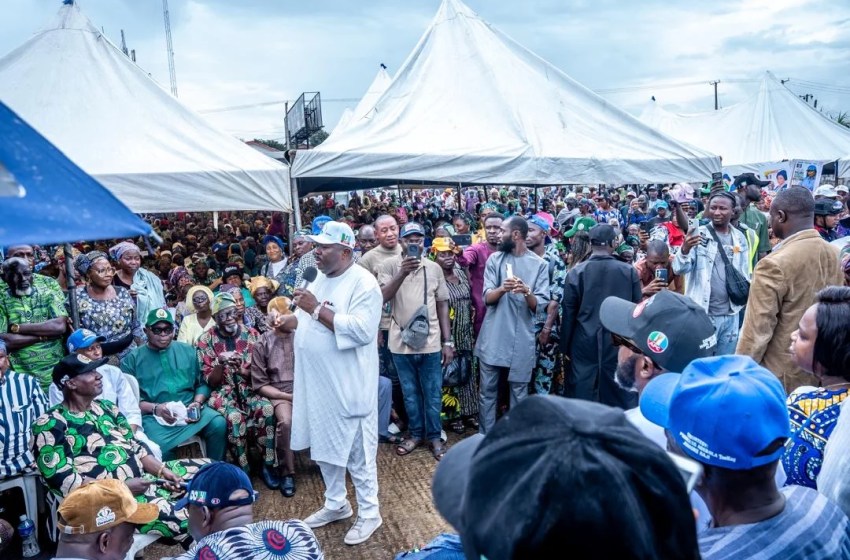
The leader of the Obidient Movement and a pillar of the Labour Party in Oyo State, Mr Sunday Oni, has led thousands of his followers and supporters into the All Progressives Congress (APC), pledging to work with all stakeholders to ensure victory for the party’s candidates in the 2027 general elections.
Oni was received into the party in Ibadan on Wednesday by the APC State Chairman, Chief Moses Adeyemo; the party’s governorship candidate in the state, Senator Sharafadeen Alli; and other APC leaders, including Hon Aderemi Oseni, the party’s candidate for the Oyo South Senatorial District.
Addressing the mammoth crowd at the event, Oni disclosed that he played a key role in the alliance that supported Governor Seyi Makinde in the 2023 election but later regretted his decision.
He said the governor failed to fulfil all the agreements he reached with members of the Labour Party, despite their sacrifices and risks during the election.
He said: “Everyone out there appreciates the fact that our Obidient Movement is strong and virile, going by what we were able to do for the LP presidential candidate in 2023, Mr Peter Obi, despite all odds. But this time round, our efforts will be channelled towards the cause of all APC candidates, including President Bola Tinubu, Senator Sharafadeen Alli, Hon Remi Oseni and all others.
“We are swinging into action immediately, and I make bold to say that the crowd of LP and Obedient Movement members you are seeing here is just a small fraction of our entire population, which cuts across the 33 local government councils in the state.
“We are not here for the fun of it. We are poised to add value, and our impact shall be greatly felt in the areas of mobilisation and sensitisation of voters in favour of the APC.”
Speaking, Alli eulogised Oni and other promoters of the Obidient Movement in the state for taking what he described as a bold step to join the APC, which he described as the only party capable of accommodating patriots across all strata of society for the purpose of leadership service, democratic growth, development and good governance.
“Apart from the fact that I grew up on the streets of Ibadan, I have always been conversant with happenings in our dear state for close to 50 years of my adult life. With my high level of experience, expertise and zeal, Oyo State under me as governor from May 29, 2027, would witness a great measure of turnaround such that it would rank among the best three in the country in no time.
“The youth population will be actively involved in everything we do as a government. Our deputy governorship candidate, Adesoji Adedeji, will be given the opportunity to work in favour of the youth population, which he represents, while workers, pensioners and other people in the state will have every cause to be comfortable and happy,” Alli stated.
APC leaders who attended the event included Rt. Hon. Asimiyu Niran Alarape, Alhaji Taofeek Lamidi, Hon Fatai Adesina, Dr Adekemi Opatunde, Hon Yemi Aderibigbe, Hon Sola Ogunbode, Hon. Olawale Sadare, Hon Tunde Oloyede, Alhaji Shina Alabi, Hon Sunday Aborisade, Hon Tunde Elegbede and Comrade Olalekan Oladejo.
Just-In: Appeal Court Overturns Deregistration Order Against ADC, Four Other Parties
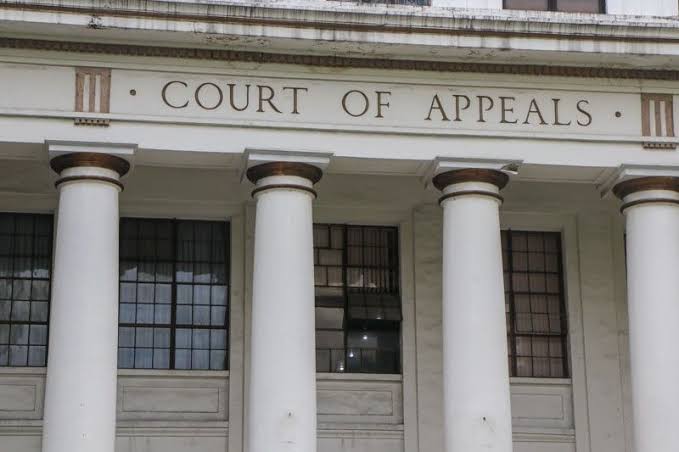
The Court of Appeal in Abuja, on Tuesday, nullified the judgment of the Federal High Court ordering the Independent National Electoral Commission to deregister the African Democratic Congress and four other political parties.
In a unanimous judgment delivered by a three-member panel of justices led by Justice Abba Mohammed, the appellate court held that the June 15 judgment of the Federal High Court was a nullity, having been delivered without jurisdiction.
The appellate court held that the trial court wrongly assumed jurisdiction and made the order on an incompetent suit filed by a non-juristic entity.
It held that there was no valid suit that could have warranted the consequential order directing INEC to deregister the affected political parties.
The appellate court further held that the trial court failed to properly evaluate the evidence before it, noting that proof showing the parties had won various elective seats in previous elections was ignored.
It also held that the lower court acted in defiance of an order directing it to stay proceedings pending the determination of an interlocutory appeal.
The appellate court consequently held that the Federal High Court ought to have dismissed the substantive suit for want of jurisdiction and merit.
It allowed the separate appeals filed by the political parties, restored their registration, and awarded costs against the National Forum of Former Legislators, which instituted the suit.
The affected parties are the African Democratic Congress, Action Peoples Party, Action Alliance, Accord Party and Zenith Labour Party.
The appellate court declared that all the affected political parties remain duly registered.
The appellate court had, on June 16, stayed the execution of the trial court’s judgment pending the determination of the appeals.
In its decision, the panel faulted the conduct of Justice Peter Lifu for proceeding with the case, despite an earlier order made on May 22 directing him to stay proceedings pending the outcome of the appeal.
The appellate court noted that although Justice Lifu’s attention had been drawn to the stay order, he proceeded to deliver judgment.
It described the action as “a form of judicial impertinence,” adding that the Supreme Court had previously held that a judge who acts in such a manner “is unfit for the bench, as the conduct amounts to judicial rascality.”
Journalists for Good Governance Shines Searchlight on Local Government Administration
…Calls for Accountability in Nigeria’s Grassroots Governance
LAGOS, Nigeria — A civil society coalition known as Journalists for Good Governance(JGG) has intensified public debate on transparency and accountability within Nigeria’s local government system, urging media professionals, civil society actors, and citizens to hold grassroots leaders accountable.
Speaking an event in Lagos recently, the acting chairman of the society, Comrade Bunmi Obarotimi said that despite reforms such as the Supreme Court’s 2024 ruling granting financial autonomy to all 774 Local Government Areas (LGAs), systemic challenges continues to hinder effective service delivery and responsible stewardship of public funds.
“Local governments are the closest tier of government to the people — yet too often they remain the least transparent. Without civic oversight and vibrant media, promises of autonomy ring hollow.” the acting chairman said.
The Journalist for Good Governance emphasised crucial roles that journalists can play in uncovering discrepancies in council spending, flagging poor service delivery, and educating citizens on their rights. Their call comes amid wider efforts by media and civic organisations to bridge accountability gaps. The civil society initiatives had previously launched monitoring campaigns to track local government expenditures and have been quietly advocating for transparency in how public money is deployed.
The leaders of the Journalists for Good Governance (JGG) highlighted the importance of physical assessment and citizens engagement on projects to boost people’s confidence, urging local councils to adopt open data platforms and proactive information dissemination in compliance with the Freedom of Information Act. Experts say the majority of LGAs currently lack operational websites or digital portals, further limiting public scrutiny.
The Journalists for Good Governance initiative aligns with sustained advocacy by civil society groups and governance experts calling for a collective approach to strengthening democratic accountability, and has decided to engage in critical and holistic assessments of how Local Governments is being run and the impact and quality of projects they embark-on and to address deficits in transparency and public trust.
Meanwhile, some state governments have signaled support for improved community engagement. In Lagos State, authorities reiterated a commitment to enhancing community media platforms as vehicles for civic participation and accountability at the grassroots level.
The renewed spotlight on local government administration has reignited public debate over fiscal responsibility and priorities. Controversies such as the widely criticised Adamawa council chairmen’s wives trip to Istanbul — which drew public outrage for perceived misuse of public funds — underscore why watchdog groups say stronger oversight mechanisms are urgently needed at the grassroots.
Citizens and activists have welcomed the journalists’ initiative, calling for sustained media engagement that goes beyond headlines to influence policy and accountability reform.
The civic rights advocates note that real change will require robust legal frameworks, a free press, and empowered communities equipped to demand transparency at every level of governance.
As Journalists for Good Governance mobilises its members, the coming months are likely to see heightened media attention on grassroots administration — from council budgets and service delivery to the enforcement of public information laws and digital transparency initiatives.
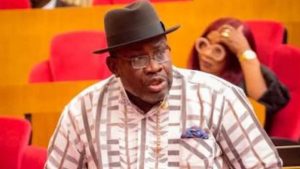
Agitation for Real-Time Transmission of Election Result is Superfluous and does not Guarantees Transparency – Seriake Dickson
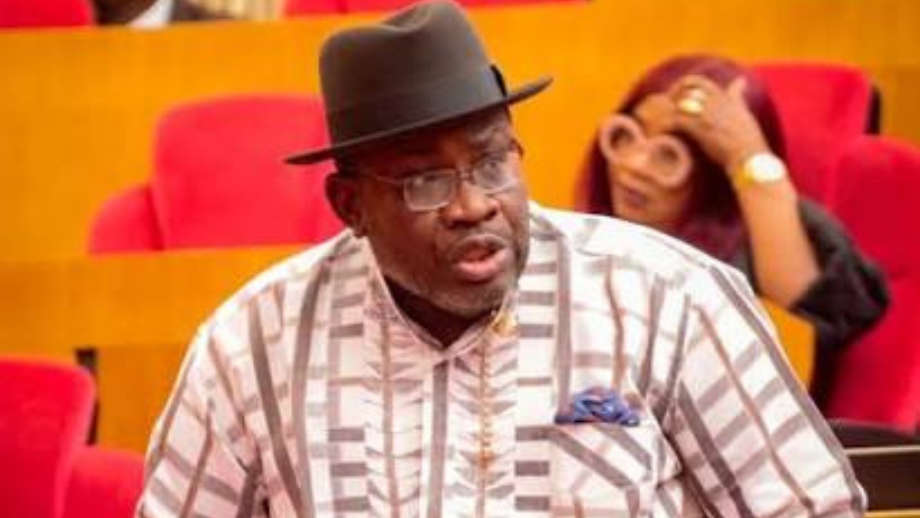
A former Bayelsa State governor and lawmaker representing Bayelsa West, Senator Seriake Dickson, has said Nigeria is not yet at the stage of electronic voting, describing the insistence on “real-time” transmission of election results as unnecessary.
Speaking in an interview with ARISE News on Tuesday, he said the concept of real-time transmission is being widely misunderstood.
“What is the meaning of real time? We are not voting electronically in Nigeria. We are not at the point where you go and press a button and your vote is instantly added to a portal,” he said.
He described the term as “superfluous,” adding that it does not in itself guarantee transparency.
“The word ‘real time’ in this context is actually superfluous. It doesn’t, on its own, give you a transparent election. It shouldn’t have been there in the first place. It’s never too late to correct something.”
He further added that the Senate’s latest action on the Electoral Act Amendment Bill should not be seen as a setback for democracy.
“I don’t count the proceedings of today and the outcome as a loss for democracy,” he said.
His comments come in the wake of the Senate’s emergency plenary, which revisited Clause 60(3) of the bill following public outrage. The upper chamber approved the transmission of results to the Independent National Electoral Commission’s Result Viewing Portal (IREV), while retaining manual collation as a backup in cases of network failure. However, the Senate stopped short of making electronic transmission compulsory and rejected the inclusion of real-time upload of results.
Critics have argued that the absence of an explicit real-time transmission requirement leaves room for manipulation.
Dickson, however, clarified that he was speaking in his personal capacity.
“I’m not here as spokesman of the Senate. I’m here to give my views as someone who has been deeply involved in all these processes as a ranking member of this committee and as someone who participated in the proceedings of today,” he said.
He explained that deliberations on electronic transmission had lasted nearly two years, involving consultations and engagements with INEC.
“This has been going on for about two years or so — different workshops, conferences at the Senate Committee, joint committees and also interactions with INEC,” he said.
The senator disclosed that he was absent when the Senate earlier took the controversial decision due to bereavement.
“I was not there when the Senate took that decision earlier, about a week ago, as I was bereaved. I lost a close brother, the sitting deputy governor of my state. Today was the very first day I went to sit in the Senate because of the importance of this matter,” he said.
Tracing resistance to electronic transmission to longstanding political divisions, Dickson said, “This issue of electronic transmission is always problematic. Even in the 9th Senate, when we tried to introduce electronic transfer, there was stiff opposition. Somehow, the party in power has always been very resistant to these notions.”
According to him, the Senate Committee and the House of Representatives had initially reached unanimous agreement on protecting IREV before the matter was altered on the Senate floor.
“There was unanimity of opinion. The same report was presented by the House of Reps committee, and they passed it without controversy. That was what we all agreed, he added.
He described the earlier reversal as “unfortunate,” noting that INEC had assured lawmakers it could implement electronic transmission.
“What happened in the Senate last week was unfortunate, especially when INEC had already assured us that it could implement electronic transmission,” he said.
Dickson said he confronted Senate leadership upon his return and was assured that a compromise would be found.
“When I went in for the sitting, I confronted the leadership. They gave me their word that they were going to find a middle course,” he said.
Dickson stressed that transparency lies in protecting polling unit results, maintaining that the EC8A form remains the primary evidence of victory.
“The primary evidence of who won an election is the EC8A. Once the votes are counted, agents sign, and copies are issued, INEC compels presiding officers to transmit the result to IREV. That is good enough for us,” he said.
Although he expressed reservations about the proviso allowing manual collation in cases of network failure, Dickson said compromise was necessary.
“I don’t agree with the proviso that has been included, but parliament works on the basis of majority,” he said. He maintained that electronic transmission remains mandatory under the amended clause: “Every presiding officer shall transmit the result electronically. That is mandatory. That is what we passed today,” he said.
On harmonising Senate and House versions, he said he would adopt the House position, reflecting earlier consensus.
He said, “If I were a member of the conference committee, I would adopt the House version because it reflects what we all agreed in the joint committee.”
He also raised concerns about other provisions, particularly the proposal to compel all parties to adopt direct primaries. “Direct voting is a concept introduced by the APC. They have no right to enforce it on every other party, particularly the smaller parties.”
On accountability, Dickson stressed that INEC ultimately holds responsibility. “Even now, without this amendment, INEC guidelines already compel electronic transmission to IREV.” He defended the Supreme Court’s 2023 ruling, noting that EC8A forms remain the primary source of proving election results. “The IREV was never intended to be the primary evidence.”
Concluding on electoral reform, Dickson said progress must be incremental. “You make gains incrementally. It’s not always your way or the highway. We have made electronic transfer mandatory, and that is progress.”
The Presidential Fiscal Policy and Tax Reforms Committee has released detailed clarifications addressing concerns by Nigerians in the diaspora about the new tax reforms taking effect in 2026.
This was disclosed in a material obtained by PUNCH Online on Thursday from the Chairman of the Presidential Fiscal Policy and Tax Reforms Committee, Taiwo Oyedele.
According to the document, “genuine personal transfers such as family remittances, gifts, refunds (e.g., flight tickets), or community savings contributions are not treated as taxable income.”
It explained that “only income earned or deemed to be income (e.g., wages, business profits, investment returns) is subject to tax,” adding that “every individual is required to self-report their income and pay tax where applicable.”
On double taxation, the committee clarified that “income earned abroad and brought into Nigeria by a non-resident individual is now specifically exempted from tax in Nigeria regardless of whether tax was paid abroad or not.”
It added that “Nigeria has Double Taxation Agreements (DTAs) with several countries, and the new tax laws provide for a unilateral relief where a DTA does not exist to ensure that the same income is not taxed twice.”
Explaining how residency is determined, the statement said, “Residency is based on the 183-day rule (cumulative days of physical presence in Nigeria within a 12-month period). Non-residents are taxed only on income derived from Nigeria (e.g., rental income, dividends, business profits).”
The committee clarified that “diaspora Nigerians living abroad who are not tax resident in Nigeria are not taxed on their foreign employment or business income,” and that “dual citizenship has no impact on the tax status of an individual whether resident or non-resident in Nigeria.”
On investments, it noted that “income from investments in Nigeria are either exempt, subject to capital gains tax (CGT) or withholding tax as a final tax,” adding that “government bonds, including Sukuk are tax exempt.”
It further stated, “CGT applies to the sale of real estate other than sale of owner-occupied buildings. Shares are exempt up to proceeds not exceeding ₦150 million and ₦10 million gains in a year.
“Dividends, non-government bond interest and rental income are subject to withholding tax at 10% as final tax which may be reduced to 7.5% for recipients in certain countries such as the UK, South Africa and China.”
Addressing questions on pensions and remote work, the material noted that “only income that arises in Nigeria is taxable for non-residents. Pensions and stipends from abroad are not taxed in Nigeria unless received for work done in Nigeria.”
It added, “Remote workers are taxed based on the rules in the country where they are resident or earn such income, not merely where payment is made.”
On tax identification requirements, the committee explained that “a TIN is not required and there is no requirement to file tax returns unless you earn employment or business income from Nigeria.”
It continued, “Non-residents without Nigerian-source income are not obliged to file annual returns. Those with taxable employment or business income in Nigeria are required to file returns. Simplified channels (e.g., TaxProMax, online TIN applications) are available to ease compliance.”
“For individuals, a TIN can be obtained from the Joint Tax Board via https://tin.jtb.gov.ng. For companies, TIN is now automatically assigned at the point of registration with the Corporate Affairs Commission,” the committee said.
Regarding NGOs and diaspora-owned businesses, it stated that “NGOs are tax-exempt if they are registered and operate strictly for charitable purposes, and comply with reporting and filing requirements.”
“Diaspora-owned SMEs in Nigeria are treated like local businesses, taxed on profits but eligible for incentives and reliefs available to small enterprises,” the material added.
The document also noted that the reforms mandate transparency measures, including public reporting, governance structure and independent oversight for tax revenues.
“Other fiscal measures are being strengthened to link tax revenues to visible infrastructure and service delivery with safeguards against corruption and framework to prevent and punish misuse of taxpayer data,” it said.
On incentives, the committee explained that “incentives under the new laws apply generally to certain investments including diaspora-led investments in key sectors (e.g., priority sector incentives in agriculture, creative sector, manufacturing, etc.), SME corporate tax exemption threshold, exemption of VAT on real estate, etc.”
According to the Presidential Fiscal Policy and Tax Reforms Committee, reforms make the tax system in Nigeria fairer and more friendly to Nigerians in the diaspora, address incidence of double taxation, align Nigeria with global best practice, simplify and provide clarity where tax is payable or filing obligation is applicable.
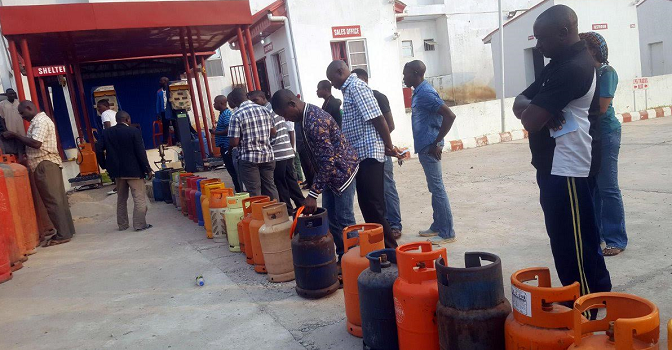
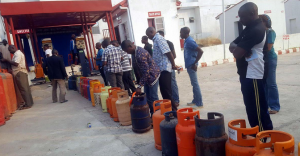
Many residents of the Federal Capital Territory have decried the high cost of Liquefied Petroleum Gas, popularly known as cooking gas, calling on the government to find a lasting solution to the persistent price hikes.
Residents who spoke to the News Agency of Nigeria on Tuesday in Abuja said the recent surge in gas prices is unsustainable and negatively affecting household expenses.
The PUNCH recalls that the prices of cooking gas rose recently from an average of N1,000 per kilogram to about N2,000/kg in some locations. This followed the recent strike by the Petroleum and Natural Gas Senior Staff Association of Nigeria during the rift between it and the Dangote refinery.
A businesswoman, Mrs Tina Okojie, said she refilled her 12.5kg cylinder for N18,125, up from N15,000.
“I had to visit three outlets in my area before I finally bought at Shafa filling station. We are already struggling with other bills, and this is affecting my expenditure on other needs. I hope the government can address the issue because many Nigerians rely on gas for cooking,” she said.
A security guard, Mr Nura Idris, said he could no longer afford to refill his 5kg cylinder and called on the government to intervene.
“I usually fill my 5kg cylinder for between N5,500 and N5,800. Now it costs N8,000. I just bought 3kg at N4,800 and have been managing. I call on the government to please help Nigerians; we are going through a lot of hardship. Let them find a solution to the high cost of cooking gas,” he said.
Similarly, Mrs. Bose Ajibade, a tailor, said she could not refill her 12.5kg cylinder until the price comes down.
“I was refilling at N14,000; now it’s N21,000. The difference is too much. How many Nigerians can afford this? I just bought what N14,000 could give me because I’ve already budgeted that amount. Going beyond that will affect my expenses on other items. I have cautioned my children not to waste gas. I am calling on the government to come to our aid,” she said.
A civil servant, Mrs Beatrice John, said she resorts to charcoal whenever gas prices increase.
“Whenever gas goes up, I use my charcoal stove. It’s not convenient, but what can one do? I have a large family, and with the current price, it’s difficult to sustain its use alongside other bills. The government needs to find a lasting solution,” she said.
However, some residents are still able to access gas at lower prices. Mrs. Ese Okoro, a public servant, said she purchased her cylinder from major marketers amid long queues.
“I refrained from using roadside outlets due to the price surge and bought from NIPCO, which sells at about N1,120 per kg. I filled my 12.5kg cylinder for N14,000 after queuing for a few hours. The situation seems to be easing gradually. I urge the Federal Government to ensure full product circulation to restore normalcy and affordability,” she said.
Following the price hike, the Federal Government directed the Nigerian Midstream and Downstream Petroleum Regulatory Authority (NMDPRA) to intensify monitoring of LPG depots to prevent hoarding.
The Minister of State for Petroleum Resources (Gas), Dr. Ekperikpe Ekpo, said the surge was mainly caused by the PENGASSAN strike at the Dangote Refinery and ongoing maintenance at Nigeria LNG Train Four, which reduced LPG availability.
He assured that operations at the Dangote Refinery have resumed, with LPG now being loaded for the domestic market.
“Similarly, the Bonny River Terminal operated by Seplat Energy has commenced loading, while the Nigeria LNG is gradually restoring normal operations as maintenance nears completion,” Ekpo said.
He appealed to Nigerians to remain calm and assured that the situation is temporary. He also called on marketers, distributors, and stakeholders in the LPG value chain to be patriotic and desist from hoarding.
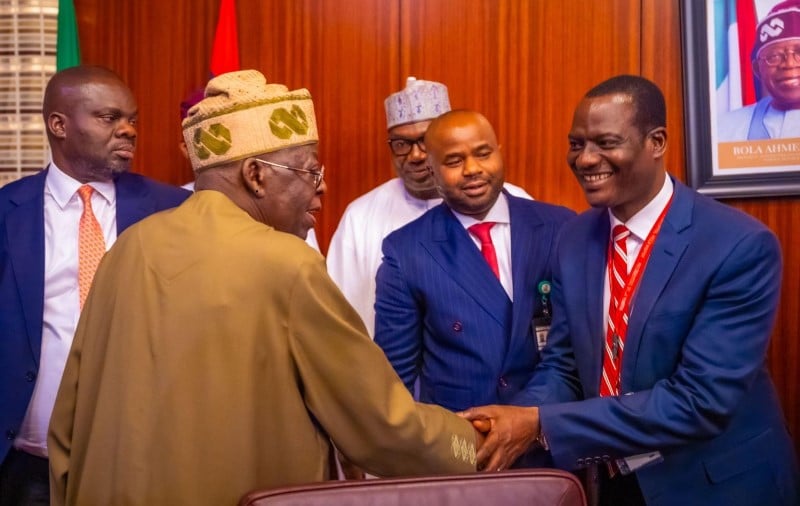
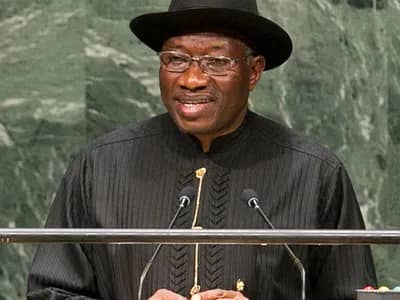
Fresh pressure is mounting on former President Goodluck Jonathan to shelve his rumoured plan to contest the presidency in the 2027 general elections, as prominent figures in the Niger Delta intensify efforts to persuade him to instead support the re-election of President Bola Tinubu.
Findings by The PUNCH revealed that ex-militant leader, High Chief Government Ekpemupolo, alias Tompolo, is leading the regional movement urging Jonathan to drop his alleged presidential ambition and rally behind President Tinubu’s second-term bid.
It was gathered that Tompolo, accompanied by top associates including the Managing Director of Tantita Security Services Nigeria Limited, High Chief Kestin Pondi, and the deputy governorship candidate of the All Progressives Congress in the 2023 Bayelsa State election, Joshua Maciver, among others, paid a private visit to Jonathan at his Otuoke home in Ogbia Local Government Area of Bayelsa State on October 16.
The meeting, which reportedly lasted several hours, was Tompolo’s first public appearance in nearly 10 years—an indication of the gravity of his mission.
Contrary to initial media reports suggesting that discussions centred on peace and security in the Niger Delta, multiple impeccable sources disclosed that the visit was primarily political.
According to sources close to both men, Tompolo’s visit was aimed at discouraging Jonathan from seeking the presidency and urging him to support President Tinubu’s re-election in 2027.
A top Jonathan associate, who was privy to the meeting but declined to be named for lack of authorisation to speak, confirmed that the meeting indeed took place.
“It is true, the meeting held,” the source said. “Niger Delta stakeholders feel Tinubu has done a lot for the region—look at the Lagos-Calabar Coastal Highway, the university he approved for Ogoni land, and several other projects. So everyone feels we should back President Tinubu’s second-term bid. That was what Tompolo came to discuss with the former President. He urged him not to run but to support President Tinubu.”
Pressed on whether Jonathan was nursing a presidential ambition, the associate added, “Yes, he was considering it.”
A source within Tompolo’s camp corroborated this, describing the visit as historic.
“It was the first time in a decade that Tompolo would visit anyone. That alone shows the importance of the meeting,” the source said.
Tompolo, who has been a staunch supporter of President Tinubu, currently enjoys the renewal of the multibillion-naira pipeline surveillance contract first awarded to him during the administration of the late former President Muhammadu Buhari.
Tompolo also leads a grassroots political structure known as the ‘PBAT Door-to-Door Movement’, mobilising support for Tinubu’s re-election across the Niger Delta.
Further details from sources familiar with the meeting suggest that Tompolo told Jonathan that the psyche of Niger Deltans was not in favour of his rumoured ambition to return to power.
“Tompolo was very frank with him,” one source said. “He told the former President that his people were no longer disposed to supporting him for another presidential contest and that most Niger Deltans prefer Tinubu to continue till 2031.”
The source added that Tompolo advised Jonathan to “borrow a leaf” from his wife, Patience Jonathan, and Governor Douye Diri of Bayelsa State, who have both aligned themselves with the movement for Tinubu’s re-election.
“Tompolo pointed out that Mrs Jonathan had already publicly endorsed President Tinubu for re-election and that Governor Diri’s resignation from the PDP and his planned defection to the APC were indicators that the region was moving in that direction,” the source continued.
Another participant at the meeting said Tompolo urged Jonathan not to be swayed by politicians urging him to challenge Tinubu, warning that he would not get the needed “home support.”
“He told him point-blank that no one can defeat President Tinubu in a free and fair contest considering his performance so far,” the source said. “Tompolo stressed that most Nigerians, especially in the South, want continuity to allow Tinubu to complete his programmes.”
The ex-militant leader reportedly told Jonathan that he didn’t need to defect to the APC to support Tinubu, but could remain a statesman and use his influence to deliver the region to the President in 2027.
According to one of the sources, Jonathan listened attentively and promised to consider Tompolo’s advice carefully.
“President Jonathan appreciated Tompolo for his visit and acknowledged the wisdom in his submissions,” the source said. “He promised to review the counsel and make his decision known in due course.”
While Tompolo declined to speak to journalists after the closed-door meeting, Jonathan told reporters that the visit focused on maintaining peace and stability in the Niger Delta.
“Since I left office, we have not seen each other,” Jonathan said. “Tompolo is one young man who has played key roles in the unity of our people. We discussed issues people have been complaining about to ensure the Niger Delta remains peaceful. He has contributed significantly to peace and the protection of oil installations.”
Despite Jonathan’s diplomatic tone, multiple insiders insist that the political dimension dominated the discussions, especially as Niger Delta elites increasingly tilt towards Tinubu’s re-election.
Meanwhile, former Labour Party governorship candidate in Bayelsa State, Udengs Eradiri, dismissed claims that Jonathan was planning a return to power, describing such reports as speculative.
“I am not aware that Jonathan is running,” Eradiri said. “Until he himself comes out to declare, it’s just rumour. And as for Tompolo’s visit, it’s normal that he would pay respect to Jonathan as a leader in the Niger Delta.”
He explained that Jonathan remains a revered figure among Niger Delta stakeholders due to his pivotal role in the Amnesty Programme, which he helped midwife while serving as vice president under the late President Umaru Yar’Adua.
“Any day, any time, Goodluck Jonathan is a leader respected by people like Tompolo,” he said. “So, it is natural that when Tompolo visits Bayelsa, he would first go to see Jonathan. Whether there was political persuasion or not, I cannot say. But I don’t think Jonathan has declared any ambition to be pressured in the first place.”
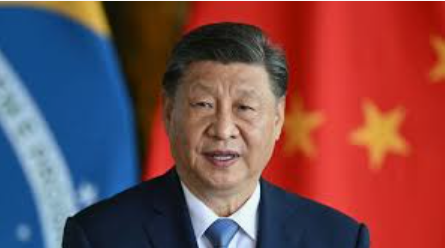
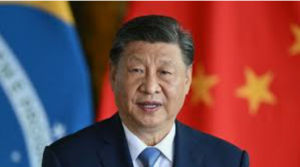
China said on Thursday it “opposes” recent sanctions slapped by the United States on the two largest Russian oil companies over Moscow’s war in Ukraine, saying they had “no basis in international law”.
President Donald Trump announced the measures on Wednesday after plans for a fresh summit with Vladimir Putin collapsed, complaining that talks with his counterpart “don’t go anywhere”.
China — a major Russian trading partner — has said it takes a neutral stance on the war and has refrained from condemning Moscow’s 2022 full-scale invasion of Ukraine.
Asked about the new US sanctions at a daily press conference in Beijing, foreign ministry spokesman Guo Jiakun said “China consistently opposes unilateral sanctions that have no basis in international law and are not authorised by the United Nations Security Council”.
In response to another question about Trump’s statement that Chinese President Xi Jinping could have a “big influence” on Putin in efforts to end the war, Guo said that “dialogue and negotiations are the only feasible way out of the Ukraine crisis”.
At the same press conference, Guo criticised sanctions on Russia agreed on Wednesday by the European Union, whose targets included Chinese companies, saying Beijing was “strongly dissatisfied”.
“China is neither the creator of the Ukraine crisis nor a party to it,” he said.
“The European side is in no position to make irresponsible remarks about the normal exchanges and cooperation between Chinese and Russian enterprises.”
Guo urged Brussels to “stop making an issue out of China”, vowing that Beijing “will take all necessary measures to safeguard its legitimate rights and interests”.
The Energy Commission of Nigeria has reaffirmed the Federal Government’s commitment to tackling electricity challenges in public hospitals and universities through increased investment in renewable energy.
The Director-General of the ECN, Dr. Mustapha Abdullahi, disclosed this in a statement issued on Thursday to mark his two years in office.
He said the Renewed Hope Solarisation Project under President Bola Tinubu’s administration has accelerated the deployment of two-megawatt solar hybrid systems in public institutions across the country.
According to Abdullahi, the first phase of the project has been successfully implemented at the Aminu Kano Teaching Hospital in Kano, General Hospital Bangi in Niger State, the Enugu Research Centre, and the University of Abuja.
The ECN boss added that several communities in Benue, Kebbi, Kaduna, Ekiti, and Osun States have also benefited, while more institutions have been listed for the second phase.
He noted that the Commission has led key initiatives promoting renewable energy and sustainable power development, signing several memoranda of understanding for solar mini-grid deployment, which are at various stages of implementation.
“The newly gazetted National Energy Policy and National Energy Master Plan were launched by the Federal Government to enhance coordination of projects and catalyse investment in the renewable energy sub-sector,” Abdullahi stated.
He further revealed that the ECN has established a pilot Green Hydrogen Plant to drive the domestication and localisation of green energy technologies, a move he said would strengthen Nigeria’s clean energy transition and institutional capacity for sustainable growth.