The Energy Commission of Nigeria has reaffirmed the Federal Government’s commitment to tackling electricity challenges in public hospitals and universities through increased investment in renewable energy.
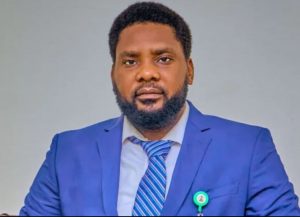
The Director-General of the ECN, Dr. Mustapha Abdullahi, disclosed this in a statement issued on Thursday to mark his two years in office.
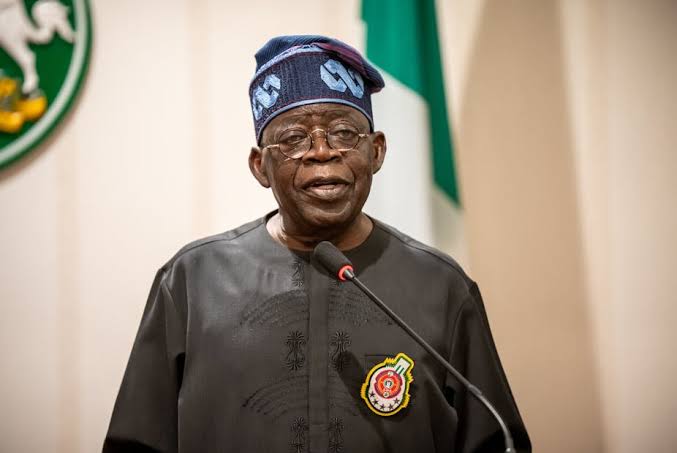
He said the Renewed Hope Solarisation Project under President Bola Tinubu’s administration has accelerated the deployment of two-megawatt solar hybrid systems in public institutions across the country.
According to Abdullahi, the first phase of the project has been successfully implemented at the Aminu Kano Teaching Hospital in Kano, General Hospital Bangi in Niger State, the Enugu Research Centre, and the University of Abuja.
The ECN boss added that several communities in Benue, Kebbi, Kaduna, Ekiti, and Osun States have also benefited, while more institutions have been listed for the second phase.
He noted that the Commission has led key initiatives promoting renewable energy and sustainable power development, signing several memoranda of understanding for solar mini-grid deployment, which are at various stages of implementation.
“The newly gazetted National Energy Policy and National Energy Master Plan were launched by the Federal Government to enhance coordination of projects and catalyse investment in the renewable energy sub-sector,” Abdullahi stated.
He further revealed that the ECN has established a pilot Green Hydrogen Plant to drive the domestication and localisation of green energy technologies, a move he said would strengthen Nigeria’s clean energy transition and institutional capacity for sustainable growth.
As 2025 enters its final quarter, President Bola Tinubu’s administration faces mounting public expectations to deliver on major economic and social pledges that define its reform agenda.
From tackling inflation and boosting growth to driving infrastructure and food security, several commitments made over the past year have set clear benchmarks for performance.
Below are five of the most critical promises that Nigerians should be tracking closely in Q4 2025:
Reduce inflation to 15 per cent by the end of 2025
Tinubu first made this pledge on December 18, 2024, during the presentation of the ₦49.7 trillion 2025 Budget to the National Assembly.
He assured Nigerians that his administration would bring inflation down to around 15 per cent and stabilise the exchange rate.
The target, reaffirmed by the Finance Ministry in early 2025, aims to ease the cost-of-living crisis.
With inflation currently at 18 per cent, the administration has recorded modest progress, but the goal remains challenging. Tracking this promise requires close monitoring of monthly inflation figures from the National Bureau of Statistics and changes in the prices of essential goods such as food, transport, and fuel.
Achieve 7 per cent economic growth by 2027
On August 14, 2025, at a Federal Executive Meeting in Abuja, President Tinubu announced his administration’s goal of achieving at least 7 per cent annual economic growth by 2027. https://punchng.com/nigerias-economy-growing-consistently-due-to-tinubus-reforms-edun/ He said bold reforms, improved investment flows, and infrastructure expansion would drive the recovery.
The current GDP growth rate is 4.23 per cent. Tracking this will depend on quarterly GDP reports and foreign investment data over the next two years.
Boost local agricultural production for food security
The Federal Government declared a national emergency on food security on April 15, 2025, following renewed spikes in food prices.
According to the Federal Ministry of Information, there was a rollout of 2,000 tractors for mechanised farming, fertiliser distribution, and irrigation expansion in June. Tinubu said the move was aimed at reducing Nigeria’s heavy dependence on food imports and strengthening local production. The announcement followed an earlier declaration made in July 2023 when the administration first recognised food insecurity as a national crisis.
Accelerate major infrastructure projects nationwide
On June 6, 2025, President Bola Tinubu flagged off a series of major infrastructure projects across the country, including federal highways, bridges, and transport corridors. The initiative forms part of his administration’s broader plan to modernise Nigeria’s road network and enhance regional connectivity.
He reaffirmed this commitment on October 12, 2025, pledging equitable infrastructure development across all regions and promising that no part of the country would be left behind. According to The Guardian, the projects are aligned with the Federal Government’s drive to improve transportation links and stimulate economic growth.
Tracking this promise will involve monitoring the progress of key national projects such as the Lagos–Calabar Coastal Highway, the Sokoto–Badagry Superhighway, the Abuja–Kaduna–Kano Road, and ongoing rail expansion programmes.
Implement Comprehensive Tax and Revenue Reforms
On June 26, 2025, President Bola Tinubu signed into law four major tax reform bills — the Nigeria Tax Act 2025, Nigeria Tax Administration Act 2025, Nigeria Revenue Service (Establishment) Act 2025, and Joint Revenue Board (Establishment) Act 2025.
The reforms, earlier passed by the National Assembly between March and May 2025, are expected to raise Nigeria’s tax-to-GDP ratio, enhance fiscal transparency, and curb revenue leakages.
The laws will take effect from January 1, 2026. Tracking progress will involve monitoring quarterly federal revenue reports, budget performance data, and improvements in tax collection efficiency.
These five promises, made between December 2024 and October 2025, define the Federal Government’s reform agenda heading into Q4. They cover inflation, growth, food production, infrastructure, and fiscal reforms. They are areas that directly impact Nigerians’ livelihoods and the overall economy.
As 2025 winds down, the delivery of these promises will shape public confidence in the Tinubu administration’s ability to translate policy goals into tangible progress.
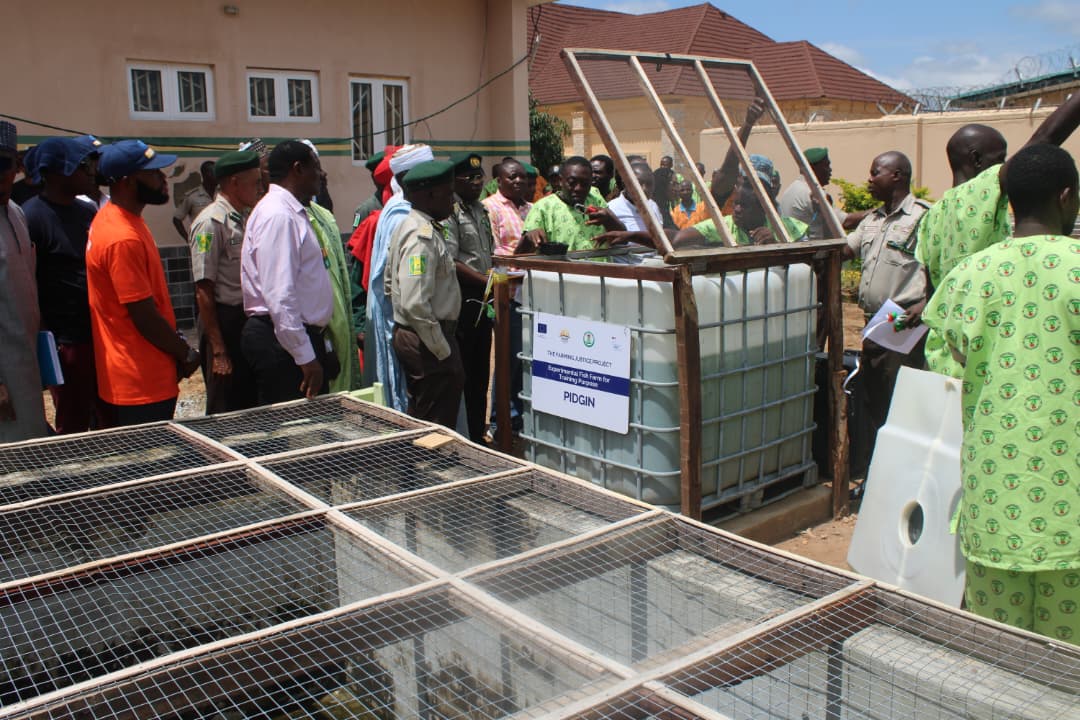
A Non-Governmental Organisation, Hope Behind Bars Africa, has inaugurated the Farming Justice Project at the Kuje Custodial Centre in Abuja to promote inmate rehabilitation and tackle food insecurity within correctional facilities.
The initiative, implemented in partnership with the Nigerian Correctional Service, is funded by the European Union through International IDEA under the Rule of Law and Anti-Corruption Programme.
At the official launch on Tuesday, the Executive Director of HBBA, Funke Adeoye, described the project as a practical response to Nigeria’s evolving correctional mandate.
“With the change in nomenclature from ‘prison’ to ‘correctional service,’ there is a need to ensure that our custodial centres reflect that change through genuine rehabilitation and empowerment,” she said.
Adeoye explained that the Farming Justice Project integrates agriculture with restorative justice principles, giving inmates the opportunity to gain life skills and contribute meaningfully to society both during and after incarceration.
She noted that the initiative seeks to empower inmates through agricultural training and practical food production, adding that over 80 inmates are currently being trained in modern techniques for okra, watermelon, and tomato cultivation.
“Some of our harvested okra has already been consumed by inmates, showing real progress in tackling food shortages in custodial centres,” she said.
The project currently operates at the Kuje Custodial Centre and the Dukpa Farm Centre in Abuja, with plans to replicate the model in other facilities across the country, including Lagos, where HBBA has previously worked with female inmates on similar agricultural initiatives.
“Our goal is to reduce recidivism by equipping inmates with viable means of livelihood after serving their sentences.
“We are calling on partners and well-meaning Nigerians to support the NCoS in ensuring effective rehabilitation and reintegration of inmates,” Adeoye added.
She commended the Comptroller General of the Nigerian Correctional Service, Sylvester Nwakuche, for his support and openness to public-private partnerships aimed at reforming correctional practices.
On the broader issue of incarceration, Adeoye emphasised the importance of preparing inmates for reintegration into society.
“Out of over 80,000 inmates nationwide, only about 3,600 are on death row. This means a large number will eventually return to our communities. Therefore, it is our responsibility to ensure they come out better prepared for productive living,” she said.
In his welcome remarks, the Controller of Corrections for the FCT Command, Christopher Jen, praised the initiative as a significant step towards building a more peaceful and secure Nigeria.
“My desire is to see a better Nigeria tomorrow where everyone will live without fear or anxiety.
“The enthusiasm and willingness of inmates to learn skills today give me confidence that such a future is possible,” Jen said.
He described the Kuje Custodial Centre as a “centre of excellence” in vocational training, listing ongoing programmes such as barbing, embroidery, carpentry, plumbing, electrical work, shoemaking, soap making, and fishery.
In a goodwill message, Joseph Odeh, a representative of International IDEA, stressed the importance of collective effort in justice reform.
“Justice reform is not the responsibility of one institution alone. It is a shared mission that requires the active participation of all sectors of society.
“Let this day mark the beginning of a new chapter in our justice system—one that prioritises human development, community reintegration, and sustainable transformation,” he said.
The event featured a guided tour of the Kuje facility, the unveiling of the Farming Justice Project, and visits to various skill acquisition centres where inmates are receiving hands-on vocational training.
No fewer than 117 beneficiaries from northern Nigeria have departed for Algeria to pursue various academic programmes under a fully funded study scholarship facilitated by the Sheikh Dahiru Usman Bauchi Foundation.
Speaking during a send-forth and orientation ceremony organised for the beneficiaries in Bauchi, the Chairman of the Foundation, Sayyadi Aliyu, explained that the scholarship was secured through the Darika Tijjaniyya Islamic Sect in collaboration with the Algerian Government.
According to him, “We were able to secure 140 slots, but only 117 met the complete requirements. The remaining ones will join them later.”
Aliyu noted that Bauchi State, being the host of the foundation, produced the highest number of beneficiaries, while others were drawn from Gombe, Taraba, Yobe, and other northern states.
He disclosed that 50 of the slots were allocated for Medicine, while the remaining were distributed among other disciplines such as Computer Science, Engineering, and Islamic Studies.
The chairman added that the scholarship covers feeding, accommodation, healthcare, and other essential needs, urging the students to remain law-abiding and disciplined throughout their studies.
“You must be good ambassadors of Nigeria and of those who facilitated this opportunity.”
“You have already been introduced to Arabic and French to help you settle in quickly. Islam is a religion of knowledge, and whoever neglects to seek it is going against its teachings, ”Aliyu charged.
He cautioned the students against distractions, urging them to remain united and focused on their purpose of acquiring knowledge for the benefit of Islam and humanity.
In his remarks, the Emir of Bauchi, Dr Rilwanu Sulaimanu Adamu, advised the beneficiaries to uphold Nigeria’s image abroad and avoid any act capable of tarnishing the country’s reputation.
Expressing concern over negative reports involving Nigerians abroad, the Emir said:
“The Nigerian flag has in many instances been blackened abroad, contrary to its true green-white-green identity. Green, as we know, is the colour associated with the house of Prophet Muhammad (Peace Be Upon Him).
“You must uphold this symbol with dignity and commit yourselves to the pursuit of knowledge.”
The World Health Organisation sounded the alarm on Monday over soaring numbers of drug-resistant bacterial infections, compromising the effectiveness of life-saving treatments and rendering minor injuries and common infections potentially deadly.
The United Nations’ health agency warned that one in six laboratory-confirmed bacterial infections worldwide in 2023 showed resistance to antibiotic treatments.
“These findings are deeply concerning,” Yvan J-F. Hutin, head of the WHO’s antimicrobial resistance department, told reporters.
“As antibiotic resistance continues to rise, we’re running out of treatment options and we’re putting lives at risk.”
Bacteria have long developed resistance against medicines designed to fight them, rendering many drugs useless.
This has been accelerated by the massive use of antibiotics to treat humans, animals and food.
Antimicrobial-resistant (AMR) superbugs directly cause over a million deaths and contribute to nearly five million deaths every year, according to the WHO.
In a report on AMR surveillance, the WHO examined resistance prevalence estimates across 22 antibiotics used to treat infections of the urinary and gastrointestinal tracts, the bloodstream, and those used to treat gonorrhoea.
‘Flying blind’ –
In the five years leading up to 2023, antibiotic resistance increased in over 40 per cent of the monitored antibiotics, with an average annual rise of between five and 15 per cent, the report found.
For urinary tract infections, resistance to commonly used antibiotics was typically higher than 30 per cent globally, it showed.
The report looked at eight common bacterial pathogens, including E. coli and K. pneumoniae, which can lead to severe bloodstream infections that frequently result in sepsis, organ failure and death.
The WHO warned that more than 40 per cent of E. coli infections and 55 per cent of K. pneumoniae infections globally are now resistant to third-generation cephalosporins — the first-choice treatment for these infections.
“Antimicrobial resistance is outpacing advances in modern medicine, threatening the health of families worldwide,” WHO chief Tedros Adhanom Ghebreyesus warned in a statement.
The WHO hailed improvements in surveillance but warned that 48 per cent of countries were still not reporting any AMR data.
“We are definitely flying blind in a number of countries and regions that have insufficient surveillance systems for antimicrobial resistance,” Hutin acknowledged.
‘Future threat’ –
Judging from the available data, most resistance was found in places with weaker health systems and less surveillance, the WHO said.
The highest resistance was found in the Southeast Asian and Eastern Mediterranean regions, where one in three reported infections were resistant.
In the African region, one in five infections was meanwhile resistant.
Silvia Bertagnolio, who heads the WHO unit for antimicrobial resistance surveillance, told reporters it was unsurprising that resistance would be higher in places with weaker health systems, since they may lack the capacity to diagnose or treat pathogens effectively.
The differences could also be linked to the fact that countries with less surveillance may test and provide data on fewer patients and only those with the most serious infections, she said.
The WHO has warned that there are not enough new tests and treatments in the pipeline to tackle the growing spread of drug-resistant bacteria.
This is creating a significant “future threat”, Hutin cautioned.
“The increasing antibiotic use, the increasing resistance and the reduction of the pipeline is a very dangerous combination.”
US President Donald Trump and his Egyptian counterpart Abdel Fattah al-Sisi will on Monday chair a Gaza peace summit in Sharm el-Sheikh, also attended by world leaders, including the UN chief.
The gathering in the Red Sea resort town will bring together “leaders from more than 20 countries”, Sisi’s office said.
It will aim “to end the war in the Gaza Strip, enhance efforts to achieve peace and stability in the Middle East, and usher in a new era of regional security and stability”.
UN Secretary-General Antonio Guterres said he will attend, as will Britain’s Prime Minister Keir Starmer, his Italian counterpart Giorgia Meloni and Pedro Sanchez of Spain.
French President Emmanuel Macron and Turkish President Recep Tayyip Erdogan will also travel to Sharm el-Sheikh, according to their offices.
The European Council will be represented by its president, Antonio Costa, a spokesperson said.
“The plan offers a real chance to build a just and sustainable peace, and the EU is fully committed to supporting these efforts and contributing to its implementation,” the spokesperson added.
Jordan’s King Abdullah II is also expected to attend, according to state media.
There was no immediate word on whether Israeli Prime Minister Benjamin Netanyahu would participate, while Hamas has said it will not take part.
Hossam Badran, a Hamas political bureau member, told AFP in an interview that the Palestinian militant group “will not be involved”.
Hamas “acted principally through… Qatari and Egyptian mediators” during previous talks on Gaza, he said.
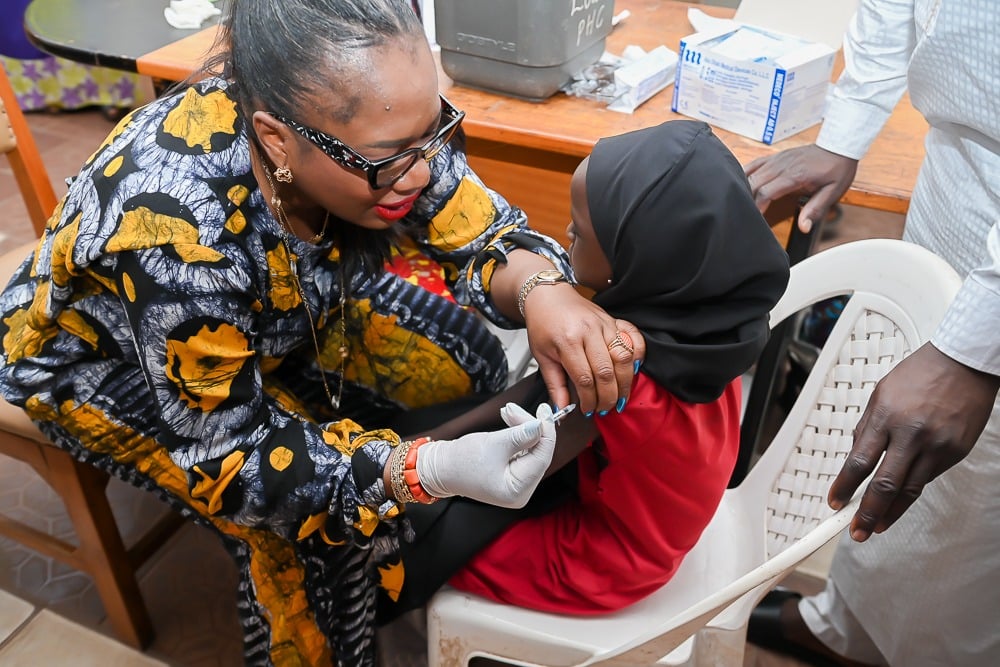
The National Primary Health Care Development Agency, in collaboration with state governments and development partners, has intensified efforts to vaccinate 106 million Nigerian children against vaccine-preventable diseases.
The nationwide initiative aims to raise awareness for the ongoing Integrated Measles-Rubella, Polio, and Human Papillomavirus vaccination campaign, which will run from October 2025 to February 2026.
This large-scale vaccination exercise reflects the agency’s commitment to ensuring that no child is left unprotected while strengthening partnerships between national and state health authorities to achieve improved health outcomes for children across the country.
On October 6, the First Lady, Senator Oluremi Tinubu, who flagged off the Measles–Rubella campaign, described the exercise as a bold step toward protecting the lives and future of children.
Speaking during a road walk and health show in Abuja, the Director of Disease Control and Immunisation at NPHCDA, Dr Garuba Rufai, described the exercise as part of a broad awareness campaign currently taking place across 11 states and the Federal Capital Territory.
“This is part of our awareness campaign for the measles-rubella integrated campaign that is currently ongoing in 11 states and the FCT.
“As we speak, in those 11 states and the FCT, children aged zero to 14 years are being vaccinated with the measles-rubella vaccine and the polio vaccine. The HPV vaccine is for girls aged nine to 14 years, alongside the routine immunisation vaccines,” Dr Rufai explained.
He added that the campaign is being implemented in collaboration with other health programmes, including malaria and Neglected Tropical Diseases (NTDs).
“We are also collaborating with the malaria programme, and we are providing what we call seasonal malaria prophylaxis in a couple of the states. We’re also working with the NTDs programme to manage some of the diseases in states where they are prevalent,” he noted.
According to Dr Rufai, several strategies have been deployed nationwide to ensure that the campaign reaches every eligible child.
“We have all of our social mobilisation efforts, including the use of public announcement vans. We have engaged with communities and different groups — teachers, parents, physicians, ministries such as education, religious bodies, and traditional leaders,” he said.
He disclosed that similar road walks are being replicated across participating states, supported by state governments, the wives of governors, and local government chairpersons.
Rufai revealed that while the first phase of the campaign covers 11 states and the FCT, the next phase will commence soon.
“We intend to vaccinate 106 million Nigerians by the end of February. We’re starting with 11 states and the FCT now. By October 18, we’ll move to the next stream of states, which will complete the first phase for this year. By January next year, we’ll continue with phase two, and also in February,” he explained.
He urged parents and caregivers to take advantage of the ongoing exercise.
“Nigerians should come out en masse and get their children vaccinated — not just for this campaign, but also by taking their children to health facilities for routine vaccines. The diseases are not waiting; they do not know any political party, religion, or tribe.
“When a child catches one of these diseases and develops complications, something as seemingly simple as measles can make a child go blind. Why would anyone wait for that to happen? Why would any woman allow herself to give birth to a child only to lose them before they reach their full potential?” he added.
The World Health Organisation (WHO) FCT Coordinator, Dr Kumshida Balami, emphasised that vaccines are both safe and effective, stressing the need to eliminate diseases that should no longer claim lives in the 21st century.
“We cannot be in this century and still have children coming down with measles or polio. We cannot still have women dying from cervical cancer simply caused by the human papillomavirus — a disease that can be prevented through vaccination,” she said.
She further urged parents and caregivers to ensure that all eligible children receive the necessary vaccines, noting that the goal is to safeguard lives and build trust in the nation’s health system.
Similarly, the Executive Director of the NPHCDA, Dr Muyi Aina, together with the Mandate Secretary of the Health Services and Environment Secretariat of the Federal Capital Territory Administration, Dr Adedolapo Fasawe, on Friday led a joint monitoring team to assess the progress of the ongoing vaccination campaign.
The monitoring team visited Primary Health Care Centres within and outside the FCT, including the Chikora North PHC in Kogi Local Government Area, Kogi State, and the New Township PHC in Abaji Area Council, Abuja.
A press statement released on Saturday and signed by Mrs Bola Ajao, Special Adviser to Dr Fasawe, noted that the team also visited surrounding communities, sensitising mothers and caregivers on the importance of immunisation and advising them to ensure their children are vaccinated and properly finger-marked as evidence of vaccination.
Dr Aina commended the dedication of frontline health workers and encouraged them to maintain accuracy and honesty in data reporting, stressing that verified data — whether targets are achieved or not — are crucial for effective planning and sustainable health sector improvement.
He explained that the monitoring visits were designed to evaluate coverage levels and workforce commitment, particularly in hard-to-reach areas, and to ensure credible, on-the-spot assessments of field operations.
Aina further assured health providers that the Federal Government is aware of their challenges and is taking steps to address them under the Renewed Hope Health Reform Agenda of the present administration, aimed at delivering equitable and efficient healthcare services across the nation.
“At the New Township PHC, Abaji, Dr Fasawe personally administered vaccines to infants and sensitised mothers on the importance of routine immunisation to prevent child-killer diseases and avoidable deaths. She urged parents to spread the message within their communities, noting that unvaccinated children remain at high risk of contracting measles (rubeola) and rubella (German measles) — viral infections that can lead to blindness, brain damage, hearing loss, congenital defects, and even death.
“Both health leaders commended the turnout and coverage recorded by the vaccination teams so far, urging them to remain proactive and adhere strictly to safety standards. During the visit, the delegation also attended to a 13-year-old patient at the Kogi PHC and recommended follow-up care to ensure effective service delivery,” the statement highlighted.
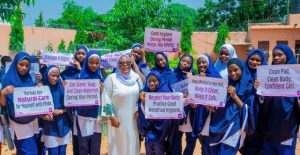
As the world marks the International Day of the Girl Child, a non-governmental organisation, the Gender Educators Initiative (GEI), has called on the Federal Government to prioritise the creation of safe spaces for girls living in conflict-affected and crisis-prone communities across Nigeria.
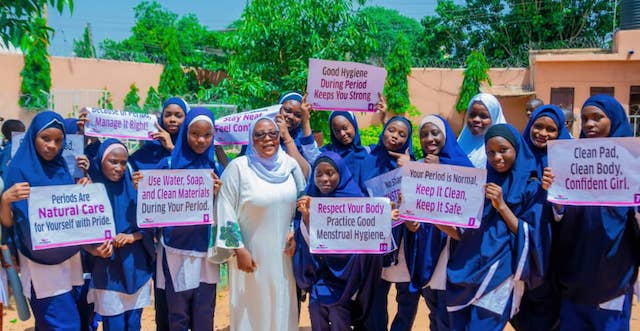
The Executive Director of GEI, Shafa’atu Suleiman, made the call on Friday during a sensitisation programme on menstrual hygiene for female students in private schools across Sokoto State, held in commemoration of the International Day of the Girl Child on October 11, 2025
Suleiman expressed concern that insecurity, displacement, and poverty have continued to expose young girls — particularly in northern Nigeria — to violence, abuse, and early marriage.
“Thousands of girls across northern Nigeria are growing up amid crises — from insurgency to banditry and forced displacement. “Many have lost access to education, healthcare, and the basic sense of safety every child deserves. It is therefore imperative that government, development partners, and community leaders act urgently to protect and empower them,” she said.
She explained that establishing safe spaces within internally displaced persons (IDP) camps and vulnerable communities would provide psychosocial support, ensure continuity of education, and offer mentorship for affected girls.
“When girls are safe, educated, and empowered, entire communities benefit. Investing in girls is investing in peace and progress,” Suleiman added.
The GEI boss also urged the Ministries of Women Affairs, Education, and Humanitarian Affairs to collaborate with civil society organisations to design gender-sensitive interventions tailored to the needs of girls in crisis zones.
As part of activities marking the day, GEI organised a menstrual hygiene awareness campaign to educate young girls on how to manage their health during their menstrual periods.
Speaking at Sahaba Academy in Sokoto, the school’s Principal, Mrs Ana, commended GEI for its efforts, while the Proprietor, Ahmed S. Fada, called on the government to give more attention to girls’ education and provide adequate facilities for their comfort and health in schools.
Also speaking, GEI’s Programme Officer, Linda Idoko, encouraged girls to take pride in their womanhood and prioritise their health.
“Being a woman is an amazing thing. Our organisation uses this opportunity to educate the girl child on the importance of menstrual hygiene and how to choose safe products to stay healthy and protected,” she said.
This year’s International Day of the Girl Child, themed “The Girl That I Am, The Change I Lead,” underscores the importance of empowering girls to lead change within their communities.
Reaffirming GEI’s commitment to advancing gender equality, Suleiman stressed that no girl should be left behind due to where she was born or the crises surrounding her.
A paediatrician, Ayobola Adebowale, known as Your Baby Doctor, has explained that some newborn girls may experience light bleeding shortly after birth, a condition medically known as pseudo menstruation or neonatal menstruation.
Adebowale in a video obtained by our correspondent on Saturday said the condition occurs due to hormonal changes after delivery and is usually harmless.
She said,”Your newborn baby can actually menstruate and this is what we call pseudo menstruation or neonatal menstruation, and it occurs because your baby inside your womb was exposed to a lot of your hormones.
“When you bring them out suddenly at time of delivery, they have what we call withdrawal bleeding, which is basically menstruation, and this happens in newborn babies and it’s essentially normal.”
Adebowale advised parents not to panic when they observe such discharge in their baby girls.
“You have no reason to be scared. You have nothing to be worried about. Just observe the discharge and after a few days it will resolve by itself.
“You really don’t have to do anything and you have no reason to be worried and that child is not a witch,” she said.
She, however, added that if the bleeding persists, parents should consult a doctor for a proper check-up.
According to medical research, some newborn girls experience what’s called “neonatal menstruation” or “pseudomenstruation.”
It usually occurs within the first week after birth and is caused by a sudden drop in the mother’s oestrogen levels after delivery.
While the baby is still in the womb, she is exposed to high levels of maternal hormones.
After birth, those hormones quickly fall, and the baby’s uterus may respond by shedding a small amount of blood or mucus, just like a mini period.
Doctors advise parents to seek medical attention if the bleeding is heavy, lasts more than a few days, or occurs after the first week of life, as it could signal an infection or another medical issue.
The Special Assistant to the Kaduna State Governor on School Feeding Programme, Dr Fauziya Buhari-Ado, says the scheme has continued to empower women employed as cooks and supports local farmers.
She also called for stronger humanitarian leadership and strategic partnerships to combat hunger and promote sustainable economic transformation across Africa.
Dr. Fauziya, who made the call while receiving the 2025 4th Humanitarian Bootcamp Award in Nairobi, Kenya, according to a statement she personally signed and released on Friday morning.
In her presentation, titled “Feeding the Future: Leveraging Humanitarian Leadership to Achieve Food Security and Economic Transformation in Africa,” Dr. Buhari-Ado expressed profound appreciation to Governor Uba Sani of Kaduna State, for his vision, trust, and leadership in championing the Kaduna State School Feeding Programme, a flagship social intervention that provides daily meals to thousands of schoolchildren across the state.
“Governor Uba Sani’s confidence in my capacity to serve has made it possible to impact the lives of children across Kaduna State,” she stated. “Under his leadership, the School Feeding Programme has become a model of inclusive development — improving nutrition, boosting school attendance, empowering women, and supporting local farmers.”
She described the initiative as a holistic approach that strengthens multiple sectors of the economy, noting that every meal served goes beyond nourishment to symbolise hope, care, and opportunity for the next generation.
“Each meal we provide is not just food; it is a bridge to learning, a shield against poverty, and a promise that we see these children, we care for them, and we will not abandon them,” Dr. Buhari-Ado said. “Feeding our children is not charity — it is nation-building.”
She further stressed that food security must be viewed as a strategic pillar of Africa’s social and economic development, adding that eradicating hunger is essential to ensuring stability, productivity, and peace across the continent.
Dr. Buhari-Ado also paid tribute to outstanding women leaders who have played pivotal roles in advancing humanitarian and leadership development across Africa. She commended Dr. Martina Nentawe Yilwatda, Patron of the Women’s Leadership Network, for her foresight and mentorship, and Mrs. Deborah Hornecker, the Network’s founder, for her resilience and commitment to women’s empowerment.
“The Women’s Leadership Network represents a powerful platform for collaboration and transformation,” she noted. “It brings together professional women from diverse sectors to drive inclusion, social impact, and leadership development across communities.”
In her closing remarks, Dr. Buhari-Ado urged governments, development partners, civil society organizations, and the private sector to work collectively to end hunger in Africa.
“When the day comes that no African child — and no African adult — goes to bed hungry, we will know that we have truly fed the future — not through power, but through humanity, compassion, and love,” she concluded.
The school feeding programme in Kaduna state is funded annually with over N4bn, according to data by the state government.
The state also noted that it feeds over 730,000 pupils and has over 7,000 cooks employed to prepare meals in a total of 3,400 schools.
The scheme aims to increase enrollment, support the local economy, and improve the nutrition of pupils.
Similarly, on October 3, 2025, President Bola Tinubu reaffirmed his administration’s commitment to reducing child malnutrition and improving school enrolment through the Renewed Hope Mo’Feed Project, a school feeding and empowerment initiative designed to reach over 600,000 vulnerable Nigerians across the six geopolitical zones.
The Senior Special Assistant to the President on School Feeding, Dr. Yetunde Adeniji, who represented the President, said this at the official launch of the project in Lagos.
She said the initiative aligns with the Renewed Hope Agenda by tackling food insecurity, poverty, and gaps in education.