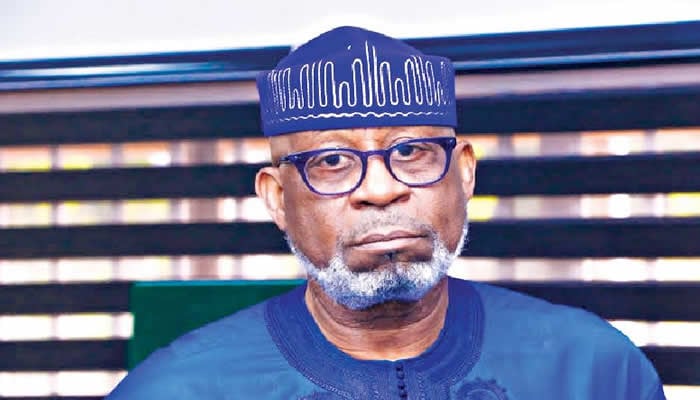
The Energy Commission of Nigeria has reaffirmed the Federal Government’s commitment to tackling electricity challenges in public hospitals and universities through increased investment in renewable energy.
The Director-General of the ECN, Dr. Mustapha Abdullahi, disclosed this in a statement issued on Thursday to mark his two years in office.
He said the Renewed Hope Solarisation Project under President Bola Tinubu’s administration has accelerated the deployment of two-megawatt solar hybrid systems in public institutions across the country.
According to Abdullahi, the first phase of the project has been successfully implemented at the Aminu Kano Teaching Hospital in Kano, General Hospital Bangi in Niger State, the Enugu Research Centre, and the University of Abuja.
The ECN boss added that several communities in Benue, Kebbi, Kaduna, Ekiti, and Osun States have also benefited, while more institutions have been listed for the second phase.
He noted that the Commission has led key initiatives promoting renewable energy and sustainable power development, signing several memoranda of understanding for solar mini-grid deployment, which are at various stages of implementation.
“The newly gazetted National Energy Policy and National Energy Master Plan were launched by the Federal Government to enhance coordination of projects and catalyse investment in the renewable energy sub-sector,” Abdullahi stated.
He further revealed that the ECN has established a pilot Green Hydrogen Plant to drive the domestication and localisation of green energy technologies, a move he said would strengthen Nigeria’s clean energy transition and institutional capacity for sustainable growth.
The United Kingdom on Tuesday cut the post-study work period from two years to 18 months for foreign students, including Nigerians, from January 2027.
This was disclosed by the UK’s Home Secretary, Shabana Mahmood, on October 14 while explaining the reasons for the need for immigrants to pass an A-level standard of English Language.
According to a statement posted on the UK Government’s website on Wednesday, the time for international students to find a graduate-level job after completing their studies will be reduced to 18 months from the current two years.
The statement read, “Laid in changes before Parliament this week, the measures form part of the government’s flagship immigration white paper and Plan for Change to deliver on the priorities of working people for tighter control of who comes to this country while continuing to attract top global talent.
“The time for international students to find a graduate-level job after completing their studies will also be cut to 18 months from the current two years. The immigration skills charge (ISC), which is paid by employers sponsoring skilled foreign workers and reinvested in training the domestic workforce, is being raised by 32%.
“The ISC increase is the first since 2017 and will be used to boost investment in British workers and reduce reliance on overseas recruitment. The Parliamentary process to increase the charge will begin later this week. To ensure graduates contribute effectively to the economy, the maximum post-study stay will be reduced to 18 months from the current 2 years for most from 1 January 2027. It comes after data clearly showed that many holders had not transitioned into graduate-level employment as intended.”
Recently, the UK announced that an additional fee is expected to be passed on to overseas students, making studying in the UK more expensive than before.
The tuition fees for undergraduate degrees in the 2025/26 academic year have already risen by 3.1%, from £9,250 to £9,535.
Additionally, stricter English language requirements are being introduced for international students entering the country for study, work, and settlement.
Data shows fewer foreign students opted for the UK as a study option in 2024.
UK immigration rules were modified in January 2024 to prevent students from bringing dependants, except for those studying postgraduate research courses or courses with government-funded scholarships.
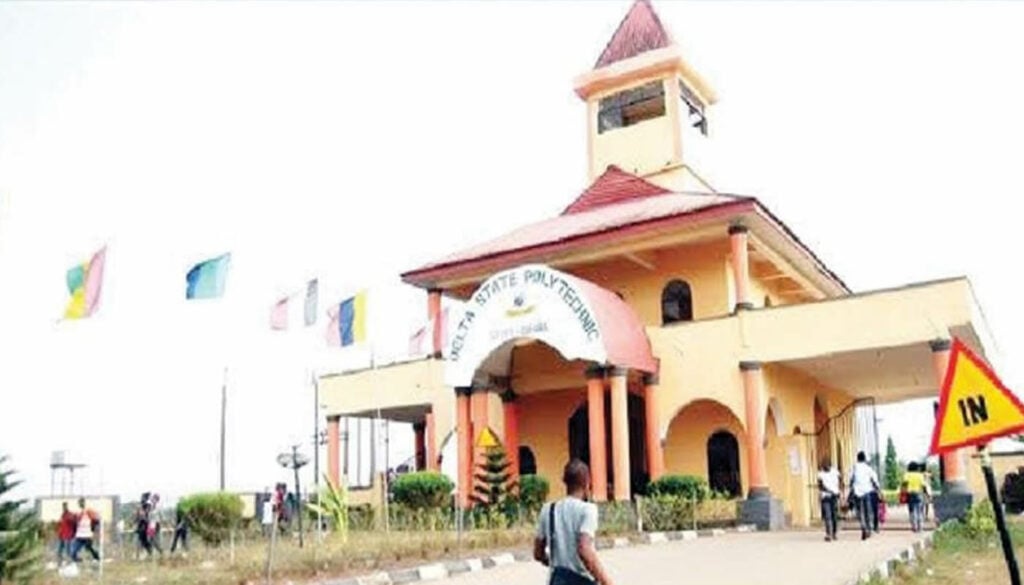
Following alleged certificate racketeering at Delta State Polytechnic, Ogwashi-Uku, the Academic Staff Union of Polytechnics suspended its services on Tuesday for two weeks.
A whistleblower, Raphael Ufua, accused the institution of certificate racketeering, causing serious damage to the school.
Ufua alleged that the principal officers issued certificates to students who never attended the school.
However, announcing the strike, ASUP Chairman Dr Michael Ohana said the lingering issue of alleged result racketeering has brought the institution into disrepute and disrupted academic activities.
He said, “A serious cause for concern is how the yet-to-be-verified result racketeering issue has permeated social media, bringing staff and the institution into public disrepute.
“Our members are the worst hit. When we relate with the world outside, we are no longer able to proudly say we are staff of Delta State Polytechnic, Ogwashi-Uku. Meanwhile, within the work environment, the necessary supplies and resources that make teaching and learning possible have become a far cry.
“Following the state government’s refusal to act decisively on issues between the Governing Council and Management, despite several meetings and ultimatums, it has become imperative that the Union embarks on a two-week warning strike.
“Recall that in February 2025, the Governing Council suspended the Registrar over unverified allegations of result racketeering without due diligence.
“Similarly, in July 2025, the Council suspended the Rector over unfounded accusations of financial impropriety, later repudiated by the governor as ultra vires.
“Despite relentless union efforts, these issues continue.
“Therefore, ASUP suspends its services to the state government for 14 days, hoping the government will consider reports from investigative committees rather than forming endless committees on this matter.
“The Nigerian Police must stop harassing staff, especially our members. Heads of Departments are being summoned to Abuja to answer for suspected forged student results.
“Government should call the Governing Council to order and duly communicate to them their mandates and functions. This is to make them operate in the manner that is expected of a Council that governs an academic institution, as obtainable with other tertiary institutions within and outside the state”
The ASUP called for the arrest and prosecution of the false whistleblower, Raphael Ufua, whose actions have brought disgrace and public disrepute upon the institution and staff of Delta State Polytechnic, Ogwashi-uku.
They stated that the alleged result racketeering, involving principal officers of the institution, had disgraced the image of the state institution, insisting that it was merely a case of result forgery perpetrated by individuals who are neither management staff nor principal officers of the institution.
The Nigerian Education Loan Fund has announced the official opening of its student loan application portal for the 2025/2026 academic session, providing access to financial support for students across tertiary institutions in the country.
The agency said the application window will run from Thursday, October 23, 2025, to Saturday, January 31, 2026.
This is contained a statement issued on Tuesday by NELFUND’s Director of Strategic Communications, Oseyemi Oluwatuyi.
NELFUND urged fresh students to apply using their Admission Number or JAMB Registration Number in place of a matriculation number.
It appealed to tertiary institutions to show understanding regarding registration and fee payment deadlines for applicants awaiting loan disbursement.
“Institutional Institutions are encouraged to show understanding in enforcing registration and fee Flexibility payment deadlines for students awaiting loan disbursement
“Institutions that have not yet commenced their 2025/2026 academic session should Special Notice formally write to NELFUND with their approved academic calendar for scheduling flexibility
“NELFUND appeals to all institutions to consider temporary registration measures for students whose loan applications are being processed to ensure that no student loses access to education due to financial constraints,” the statement said.
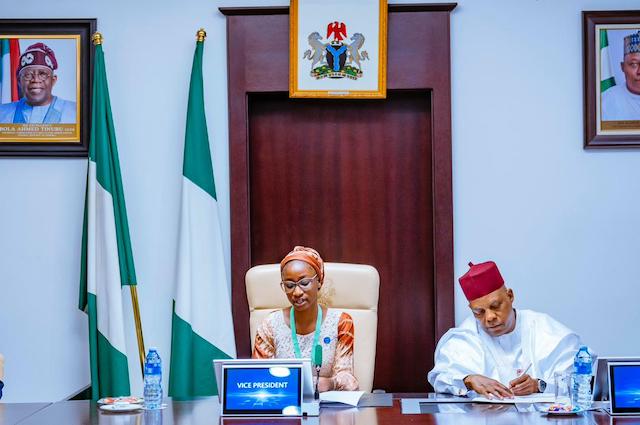
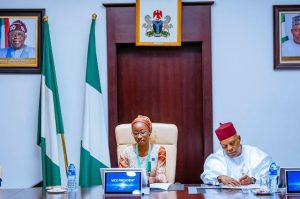
A teenager, Joy Ogah, symbolically took over the seat of Vice President Kashim Shettima for a day, using the platform to advocate passionately for the rights and education of girls across Nigeria.
In a statement issued by the Office of the Vice President on Tuesday, the symbolic handover took place during a meeting on Monday between Vice President Shettima and a delegation from PLAN International, led by Helen Mfonobong Idiong, Director of Programme, Quality, and Innovation.
From the Vice President’s chair, Ogah highlighted the challenges facing girls in the country, noting that over 10.5 million children remain out of school, more than 60 per cent of whom are girls.
“We must invest in education that is safe and inclusive for every child in Nigeria,” she said, urging policymakers and stakeholders to prioritise interventions that protect and empower young girls.
Ogah also urged the government to provide free sanitary products in schools and ensure access to clean water, sanitation, and proper nutrition for all children. She stressed that every girl deserves a classroom, a choice, dignity, and not silence.
“When girls are protected, peace becomes possible. I may be the Vice President for a day, but the struggles I represent cannot end in a day. They must continue in our policies, our classrooms, our conversations, and our budgets,” she said.
Shettima also used the occasion to reaffirm President Bola Tinubu’s commitment to advancing girl-child education and inclusive learning nationwide.
“We will continue the engagement with PLAN International and see where the force and strength of government can be brought to bear on your solid advice on girl-child education.
“In President Bola Tinubu, you have an ally you can believe in and invest your trust in,” Shettima said.
Recent reports from PUNCH Online indicate growing national momentum toward gender inclusivity in education. On October 20, 2025, advocacy groups urged all tiers of government to invest more in girl-child education, mentorship, and sensitisation programmes, calling for stronger efforts to eliminate gender bias in schools.
In September, the Federal Government launched the Renewed Hope Social Impact Interventions (RH-SII774) targeting over 10 million women across all 774 local government areas through livelihood grants, digital inclusion, and clean energy initiatives.
Similarly, the Ministry of Education and the National Assembly have reinforced support for gender parity and access to learning.
The government’s recent workshop on inclusive education, coupled with the Student Loans Act and increased education funding, reflects ongoing institutional commitment to equity — a goal echoed in Joy Ogah’s symbolic “Vice President for a Day” advocacy.
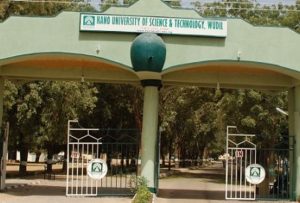
The Aliko Dangote University of Science and Technology, Wudil, Kano State, has expelled 34 students for examination misconduct.
The institution also rusticated 13 others for one academic session, while several others received warning letters.
This was contained in a statement issued by the Head of Information, Publications and Public Relations Unit of the university, Abdullahi Datti, and made available to PUNCH Online on Friday.
According to the statement, the disciplinary actions followed the approval of the report of the Examinations Regulations and Irregularities Committee by the university senate at its 123rd meeting held on October 9, 2025.
“The report includes recommendations for different kinds of punishments for students who were found to have engaged in examination malpractice,” the statement said.
Meanwhile, the university has established a Centre for Equipment Maintenance to enhance the upkeep and functionality of academic and research tools across its faculties.
The centre, according to the statement, will implement preventive maintenance schedules, provide repair services for faulty equipment, and organise regular training for staff and students on proper equipment use and basic maintenance.
Vice-Chancellor of the university, Prof Musa Yakasai, has approved the appointment of Dr Murtala Dambatta of the Department of Mechanical Engineering as the pioneer Director of the centre.
Nigeria has taken the top spot in Sub-Saharan Africa’s higher education rankings, with 24 universities listed in the 2026 Times Higher Education World University Rankings.
This makes Nigeria the most represented country in the region, ahead of South Africa, which has 13 universities on the list.
The Times Higher Education Sub-Saharan Africa Insights 2026 report, released on Thursday on THE’s website, shows that the region now has a record 55 universities from 14 countries in the global rankings, which is a significant rise from just 10 universities less than ten years ago.
The report described this as a “moment of celebration” for African higher education, noting that universities are improving not only in number but also in quality and global visibility.
South Africa still leads in performance, with four universities ranked among the world’s top 500. The University of Cape Town is Africa’s highest-ranked institution at 164th globally, its best-ever position.
The University of Johannesburg also reached a major milestone by entering the global top 400 for the first time, while the University of Pretoria returned to the 501–600 range after some years.
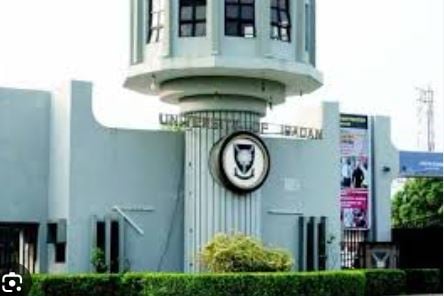
For Nigeria, the University of Ibadan and the University of Lagos both entered the world’s top 1,000 universities for the first time.
Ghana’s University of Cape Coast and Uganda’s Makerere University also featured in the same range, marking steady progress for West and East Africa.
Other countries also improved their presence. Ghana now has four ranked universities, while Botswana has two. Kenya and Tanzania maintained two each.
Senegal made a debut in the rankings through Université Cheikh Anta Diop de Dakar marking a new era for Francophone Africa.
The report showed how fast the region has grown in the rankings over time. From just 12 universities in 2017, the number has grown steadily to 18 in 2020, 25 in 2022, 43 in 2024, and now 55 in 2026, the highest ever.
Times Higher Education’s Chief Global Affairs Officer, Phil Baty, said Africa’s progress is not just about numbers but quality.
“We are not just seeing improvements in representation; we are seeing improvements in quality too… a great opportunity to build on the momentum and make sure Africa’s universities are ready to drive innovation and development,” he said.
The top 10 universities in Sub-Saharan Africa, according to The Times Higher Education Sub-Saharan Africa Insights 2026 report include:
1. University of Cape Town (=164 globally)
2. Stellenbosch University (301–350)
3. University of the Witwatersrand (301–350)
4. University of Johannesburg (351–400)
5. University of KwaZulu-Natal (501–600)
6. University of Pretoria (501–600)
7. University of the Western Cape (601–800)
8. Makerere University (801–1,000)
9. University of Cape Coast (801–1,000)
10. University of Ibadan / University of Lagos (801–1,000)
The report also noted that the global higher education system is changing. Some of Asia’s top universities, such as Tsinghua University and the National University of Singapore, have slowed in growth, while many US and European universities are facing challenges from funding cuts and political pressure.
These changes, the report said, create a new opportunity for Africa to rise further by focusing on research, innovation, and strong international partnerships.
PUNCH Online reported that the University of Ibadan also topped Nigeria’s domestic rankings for 2026, moving up from fourth position in the previous year to become the nation’s best university.
According to the PUNCH Online report, the Times Higher Education World University Rankings 2026 noted that UI and the University of Lagos share the same global ranking band (801–1,000), followed by Bayero University, Covenant University, and Landmark University in the 1001–1200 range.
The PUNCH Online report also highlighted that Nigerian universities performed differently across the five indicators used by THE: teaching, research environment, research quality, international outlook, and industry impact.
The University of Lagos scored highest among Nigerian institutions for research quality, Bayero University topped the list for international outlook, while Covenant University led in industry engagement.
The Minister of Solid Minerals Development, Dr Dele Alake, says Schools in Nigeria charging tuition fees in foreign currencies should be closed.
Alake made the call at the Nigeria Gold Day Celebration on the sidelines of the 10th edition of Nigeria’s Mining Week, themed Nigeria Mining: From Progress to Global Relevance, on Wednesday in Abuja.
He criticised the practice and described it as a part of the leakages and loopholes in Nigeria’s economy, threatening its growth.
“I am still going to make a proposal to the Federal Executive Council that all those schools in Nigeria that are charging in foreign currencies should be closed.
“These are some of these leakages and loopholes that we say exist in our economy that people do not really take these things very seriously,” he said.
“If you look at the foreign currency that goes into some of this, it is humongous
“If your child is attending a school in Abuja or Lagos or somewhere in the country and is paying 10,000 pounds or 10,000 dollars as their fees, that means you will be looking for naira to go and buy dollars.
“Driving the value of dollar up, whereas this school is in Abuja in Nigeria, you can’t go to UK, establish a school, and then be charging naira, it’s not done.
“It’s only in this country that I see so many contradictory things that really demolish the economy,” he said.
The minister said the Federal Government was introducing various measures, including digital mechanisms, to ensure that all leakages in Nigeria’s gold value chain were blocked and every loophole sealed.
He said the move would reduce room for interpersonal transactions, thereby reducing the propensity of corruption, which would further position Nigeria’s gold as one of the global pillars of means of exchange of value.
He said the Federal Government’s National Gold Purchase Programme (NGPP), implemented through the Solid Minerals Development Fund (SMDF), was designed to shore up Nigeria’s foreign reserves and strengthen the naira.
Alake explained that the NGPP, a component of the Presidential Artisanal Gold Mining Initiative, allows the government to buy gold directly from artisanal miners in naira, rather than spending foreign exchange to purchase gold internationally.
In her remarks, the Executive Director of SMDF, Fatima Shinkafi, said that, unlike global trends, gold exploration funding in Nigeria was on an upward trajectory.
Shinkafi explained that, within the broader macroeconomic context, gold serves as a safe-haven asset and encouraged conference participants to explore Nigeria’s gold opportunities.
“We implore everyone here to examine Nigeria’s gold resources and support the minister’s efforts to make Nigeria a premier destination for junior miners.
“In another year or so, let’s look at Nigeria’s Gold Day 2025 as a pivotal turning point, “ she said.
NAN reports that the Nigeria Mining Week, holding from October 13 to 15, is organised by the Miners Association of Nigeria in partnership with PricewaterhouseCoopers and the VUKA Group.
The Nigerian Association of Medical and Dental Academics has debunked rumours that its members are on strike.
The association clarified its position in a statement jointly signed by its President, Dr Nosa Lancy-Orhue; Secretary-General, Dr Abdulrahman Shehu; and National Liaison Officer/Organising Secretary, Dr Muhammad Askira, on Wednesday in Abuja.
NAMDA is the trade union for medical lecturers in universities, tertiary health, and research institutions.
It is responsible for undergraduate and postgraduate medical education, including the training of medical doctors and dentists in Nigeria.
The association reaffirmed that it remains an independent union with the capacity to negotiate its interests and uphold mutual respect.
“NAMDA is not on strike, and we will not be blackmailed, coaxed, or lured away from the interest of our members,” the statement read.
It said the clarification became necessary following persistent enquiries from members, the press and the public regarding its stance on the ongoing withdrawal of services by another academic union in the university system.
NAMDA said its members had been neglected for long but would continue to support legitimate demands that do not adversely affect their interests.
The association acknowledged ongoing engagements with the Federal Government through the Ministries of Labour and Education, which it described as “very encouraging”
It said the Minister of Education, through a meeting facilitated by the Minister of Labour and Employment, had promised to address key issues affecting medical lecturers.
“These demands include the implementation of the Consolidated Medical Workers Salary Structure (CONMESS) and the withdrawal of the compulsory PhD requirement for medical lecturers with postgraduate fellowship for academic promotion and eligibility to vie for the position of Vice-Chancellor,” the statement said.
NAMDA also called for the approval by the Federal Executive Council of the scheme of service contained in memorandum CM(90)92 of its 11th meeting in 1990, based on the recommendations of the committee chaired by the late Chief Justice Atanda Fatai Williams.
It said the issue of Earned Academic Allowances was also discussed.
The association noted that the minister apologised for the error in a letter from the Office of the Accountant-General of the Federation, which appeared to limit the benefit to members of the Academic Staff Union of Universities.
NAMDA alleged that some university managements, supported by a sister union, attempted to exclude its members from the EAA payment.
It cited the Abubakar Tafawa Balewa University, Bauchi, where the Governing Council had responded that medical lecturers were not entitled to the allowance.
The association said it had requested the Department of State Services to investigate how two conflicting letters on the same matter emanated from the AGF’s office.
NAMDA said it would continue to engage the Federal Government through the committee set up to negotiate with university unions to emphasise its long-standing demands.
“The conditions of service for medical and dental lecturers cannot be satisfactorily negotiated by anyone but medical academics under NAMDA,” it said.
The association urged the Federal Government to fast-track the circularisation of CONMESS and direct the National Universities Commission to reaffirm the withdrawal of the circular making a PhD compulsory for medical academics with postgraduate fellowships.
NAMDA said it reserved the right to adopt legitimate means, including legal actions, in pursuing its demands, adding that any withdrawal of service by the union would be guided by its constitution.
It warned that such an action, if ever taken, would have serious implications for the education and health sectors.
The House of Representatives on Tuesday urged the Federal Government and the Academic Staff Union of Universities to urgently return to the negotiating table to resolve the ongoing dispute that led to the declaration of a two-week warning strike by the union.
The House’s resolution followed the adoption of a motion of urgent public importance moved by the member representing Badagry Federal Constituency of Lagos State, Oluwaseun Whinghan, during plenary.
ASUU had on Monday began a two-week warning strike over the Federal Government’s alleged failure to address long-standing issues, including the implementation of the 2009 ASUU-FGN Agreement, revitalisation funding, earned academic allowances, salary structure, and university autonomy.
Before the commencement of the strike, the Minister of Education, Dr. Yusuf Sununu, had assured that the President Bola Tinubu administration was in the final stage of talks with ASUU to resolve all outstanding matters.
Moving the motion, Whinghan expressed deep concern over the renewed strike, warning that such industrial actions have historically escalated into prolonged shutdowns that disrupt academic calendars, derail research, and deepen the frustration of students, parents, and lecturers alike.
“The House notes that although ASUU has described the strike as a warning, previous experiences show that these actions often degenerate into extended work stoppages,” he said.
“We are aware that the Nigerian university system remains central to national development, innovation, and human-capital growth, and that any disruption weakens the country’s competitiveness, scientific advancement, and youth productivity.”
He added that education is constitutionally recognised under Section 18 of the 1999 Constitution (as amended) as a key driver of social and technological progress, stressing that both the Federal Government and university unions share a collective duty to protect its continuity and quality.
Whinghan lamented that repeated strikes in the tertiary education sector have resulted in student dropouts, brain drain, and the loss of public confidence in the nation’s university system, thereby undermining national stability and Nigeria’s long-term development goals.
He called for “renewed dialogue anchored on mutual respect, transparency, and good faith, with the legislature serving as a neutral facilitator in the interest of students and the nation.”
Following the unanimous adoption of the motion, the House mandated its Committees on University Education and Labour, Employment, and Productivity to immediately intervene between the Federal Government and ASUU to facilitate a mutually acceptable and lasting resolution.
The House also resolved to constitute an Ad-hoc Committee to be chaired by the Speaker, Tajudeen Abbas, to mediate in the crisis and ensure that striking lecturers return to the classrooms without further delay.
It urged both parties to exercise restraint, embrace dialogue, and prioritise the interests of students and national development above all other considerations.
Additionally, the House called on the Federal Government to establish a permanent joint consultative platform with recognised university unions for continuous engagement to prevent future industrial actions.
The Committee on Legislative Compliance was further directed to monitor and report the progress of the mediation efforts to the House within one week.