Jide Sipe, Abiodun Coker of UBA, Others Emerge as ACAMB Executives
…Chinwe Bode-Akinwande Elected First Vice President
…New EXCO Pledges Unified Advocacy, Professional Growth
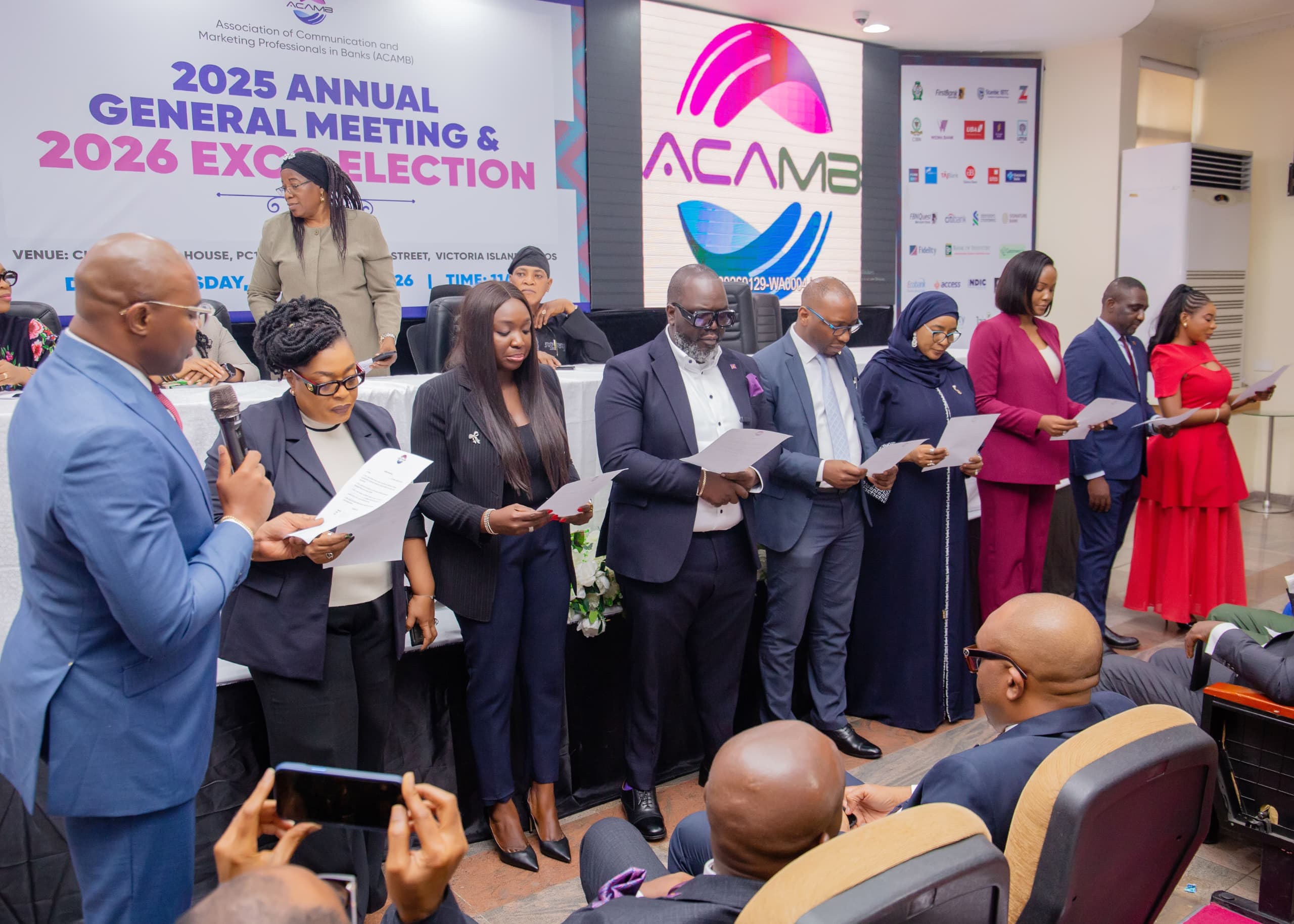
The Association of Communication and Marketing Professionals in Banks (ACAMB) has ushered in a new executive council, with a strong representation from leading financial institutions, to steer its affairs for the 2026-2028 term.
The election, held during the association’s Annual General Meeting in Lagos on Thursday, saw seasoned professionals from across the banking landscape elected to key positions.
The newly constituted executive includes Babajide Sipe of the Bank of Industry as President; Chinwe Bode-Akinwande of FirstBank as First Vice President; Morolake Philip-Ladipo of Wema Bank as Second Vice President; Abiodun Coker of the United Bank for Africa (UBA) as the Publicity Secretary; Olugbenga Owootomo from Polaris Bank as General Secretary; Halima Ishak from Jaiz Bank as Financial Secretary; Ademola Adesola from Parallex Bank as Assistant General Secretary; Unoaku Temitope Anyadike from Guaranty Trust Bank as Treasurer and MacQueen Afolabi from Zenith Bank as Social Secretary
In his inaugural address, President Babajide Sipe expressed profound gratitude for the confidence reposed in him, outlining a purposeful agenda for his tenure.
“I promise to lead with courage, intention, and purpose. My leadership will be anchored on four pillars: mentorship and career development; strengthening outcomes relevant within the banking industry; active member engagement; and strong representation and advocacy,” he stated.
He further emphasized, “I will be an unrelenting advocate for our members and for the strategic value of our profession. My key focus is growth—growth for members, growth for the association, and ensuring that the values of ACAMB are protected.”
The newly elected First Vice President, Chinwe Bode-Akinwande, who gave the vote of thanks, rallied members for collective effort. “The job of amplification is for each and every one of us. We have heard the feedback and are ready to hit the ground running,” she said. She reassured members of the new Executive Council’s dedication, stating, “We have no doubt in our minds that this EXCO will do great.”
The immediate past President, Rasheed Bolarinwa, highlighted the achievements of his tenure, notably in professionalising the membership. “We facilitated structured arrangements with regulatory bodies, enabling our seasoned professionals to formalise their certifications. Today, there’s hardly anyone in banking communication who does not belong to key professional groups,” he recounted.
Commenting on the ongoing bank recapitalisation exercise, the former president allayed fears, expressing optimism. “There are no issues. If mergers and acquisitions happen, it will be for the good of the industry and its workforce. There is no cause for alarm,” he concluded.
As the new EXCO assumes office, all eyes are on its pledge to drive growth, unity, and vigorous advocacy for the banking communications community.
WEMA BANK LAUNCHES “EVOLUTION OF LOVE” CAMPAIGN FOR VALENTINE’S DAY
…Offers celebrity performance for newly-weds and other gifts for singles, friends and couples*
Following the launch of “ALAT: The Evolution”, Wema Bank, Nigeria’s oldest indigenous bank, most innovative and pioneer of Africa’s first fully digital bank, ALAT, has launched its 2026 Valentine’s campaign tagged “Evolution of Love, powered by Wema Bank”.
Inspired by the “evolution” theme of its upgraded ALAT app, Wema Bank launched the “Evolution of Love” campaign with the goal of celebrating different forms of love experienced by customers, and how they have evolved over time. From self-love to friendship, romantic love to family, this campaign introduces a fresh twist to Valentine’s, decentralising romantic love and creating a space for every Wema Bank customer this season of love.
“Evolution of Love, powered by Wema Bank” calls on new and existing Wema Bank customers across 4 categories: Singles [self-love], friends [friendship], married couples and those getting married this February [romantic love]. While the gifts vary across each category, the requirement is the same—create a Love Goal on the ALAT App and submit a 1-minute video on any social media platform sharing how your love journey has evolved over the years, for access to gifts ranging from cash to spa vouchers, vacations and expense-paid getaways, and for one couple getting married in February, a special performance at the wedding from a celebrity artiste, courtesy of Wema Bank.
Announcing the campaign, Wema Bank’s MD/CEO, Moruf Oseni, gave further insights into the Bank’s approach to celebrating Valentine’s this year. According to him, “Love is central to the delivery of true customer-centric service, and as a Bank that prides itself on being customer-centric, this is reflected in the thought, intentionality and commitment we put into all we do at Wema Bank. It has always been clear how much we care about our customers and this year, we decided to celebrate the journey of love across different categories that reflect the different experiences and realities of our customers, from friends and couples who have grown together over the years to lovers taking the bold step of marriage and even singles because self-love is crucial”.
“This Valentine’s, we chose to acknowledge the beauty of every love journey, and we are inviting all new and existing customers who have a story to share. For the friends and singles, our goal is to promote true friendship and self-love. For families and married couples, our goal is to strengthen bonds by reminding them of how far they have come. For those intending to get married, we are adding one more memorable touch to their wedding with a special artiste performance. Our ultimate goal is for every Wema Bank customer to feel loved this season and beyond,” Oseni concluded.
Anyone interested in submitting their entry is encouraged to make a 1-minute video sharing their love journey and where applicable, feature the person with whom their love has evolved. All submissions are to be posted on any social media platforms using #ALATEvolutionofLove and tagging @alat_ng and @wemabank.
To be eligible, customers are expected to activate SAW, the Voice Banking virtual assistant on the upgraded ALAT App, create a personal or group goal on the app with the name “Love Goal”, fund the goal and transact with their ALAT/Wema card between February 1st – February 10th.
More details on qualification criteria are available at wemabank.com/love
Africa’s First Fully Digital Bank, ALAT By Wema Is Getting An Upgrade
Wema Bank is once again redefining the future of banking with the upgraded version of ALAT scheduled to go live in January, 2026. Tagged ALAT: The Evolution, the upgraded version of ALAT will once again set the standard on the next chapter in the banking industry.
With ALAT: The Evolution, Wema Bank is pushing the envelope even further. It represents a thoughtful evolution of everything users already love about ALAT; redesigned to feel more intuitive, more responsive, and more personal. From faster interactions, to a smarter understanding of user behavior, to the introduction of SAW (Smart ALAT by Wema, an AI assistant on the ALAT App), the upgraded ALAT will show how far digital banking has come, and how much further it can go when innovation is intentional.
When ALAT by Wema first launched in 2017, it made history as Africa’s first fully digital bank, changing how millions of people viewed and experienced banking. With the upgraded version of ALAT, Wema Bank is again reaffirming its position as the most innovative Bank in the banking industry.
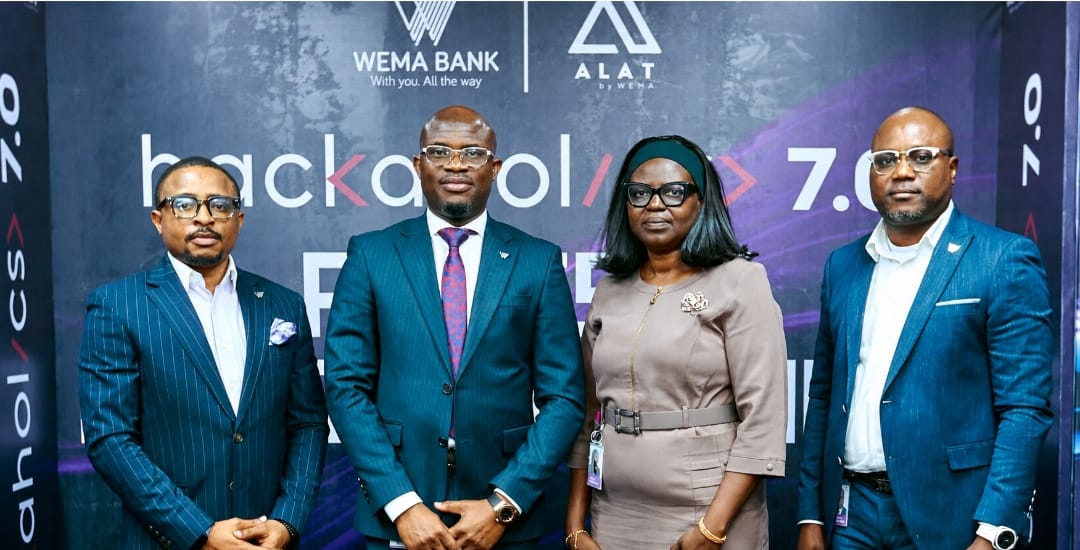
Wema Bank Empowers Tech Innovators at Akure, Zaria, Ibadan, and Lagos with Hackaholics 6.0
Wema Bank, Nigeria’s most innovative bank and pioneer of Africa’s first fully digital bank, ALAT, has continued to deepen its commitment to youth innovation and entrepreneurship with Hackaholics 6.0, its flagship campus ideathon. This year, the Hackaholics train has toured four Nigeria cities from the Federal University of Technology, Akure (FUTA) and Ahmadu Bello University (ABU), Zaria, to the University of Ibadan (UI) and Purple Academy, Lagos, bringing together some of the brightest young minds in Sub-Saharan Africa to create transformative solutions to real-world problems.
With over 3,000 entries submitted so far, at each location, hundreds of students and young entrepreneurs gathered to receive industry-led masterclasses, and develop ideas aimed at solving challenges in the ecosystem. For four days in each location, participants were immersed in the full Hackaholics experience, from ideation to mentorship to pitch readiness, culminating in high-energy final pitches where the best ideas emerged. In every location, three Ideathon winning teams; including one women-led group and two Hackathon teams walked away with invitations to compete at the Hackaholics 6.0 Grand Finale. These teams now stand a chance to scale their solutions with the backing of Wema Bank’s innovation ecosystem.
Speaking on the initiative, MD/CEO Wema Bank, Plc, Moruf Oseni, said, “Hackaholics has always been about more than technology. It is about empowering young people to think differently, create boldly, and contribute solutions that can move our industry and nation forward. The level of talent and creativity we have witnessed so far further reinforces why we continue to invest in this programme. The innovative ideas and solutions coming out of the participants have the power to shape the future of financial services and beyond, and we are excited to see them come to life.”
Since its launch in 2019, Hackaholics has grown into a cornerstone of youth engagement and innovation in Nigeria. With over 12,000 applicants from 15 schools, and a total of over $300,000 disbursed in funding, including ₦75 million awarded to women-led teams between 2023 and 2024, the program has consistently delivered on its mission to create a vibrant ecosystem where students, innovators, and early-stage founders can collaborate, learn, and grow while building long-term relationships with Wema Bank.
As the Hackaholics 6.0 train continues its journey to more cities before the Grand Finale, Wema Bank remains committed to empowering the next generation of Nigerian innovators. Students and young entrepreneurs are encouraged to visit https://hackaholics.wemabank.com/ for more information on how to participate and submit their entries.
Access Bank and Mastercard: Enabling Seamless Africa-Global Payments
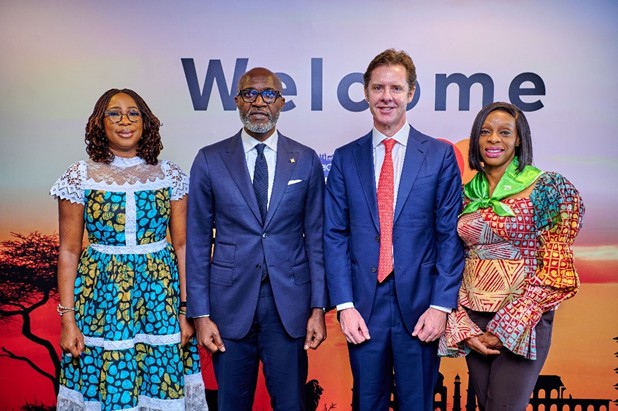
L-R: Folashade Femi-Lawal, Country Manager, West Africa, Mastercard; Roosevelt Ogbonna, Group MD, Access Bank; Mark Elliot, Division President, Africa, Mastercard; and Chizoma Okoli, Deputy MD, Access Bank at the Access – Mastercard Event.
In today’s interconnected world, seamless cross-border payments are vital for economic growth, business expansion, and personal empowerment. For decades, millions of Africans faced steep barriers in sending or receiving money internationally: high fees, opaque exchange rates, and long delays that made transactions uncertain and costly. Whether they are students paying tuition abroad or traders settling import bills and families depending on remittances, these challenges have touched every layer of society.
Africa’s fragmented payments landscape, marked by multiple currencies, varying regulations, and limited banking infrastructure, has long slowed financial inclusion. In this system, a trader in Lagos might wait weeks for funds from Nairobi, while a Ghanaian student in the United States could lose a significant portion of tuition to
intermediary charges. For many, especially in rural or informal sectors, formal banking channels were out of reach, forcing reliance on informal and risky alternatives.
Recognising the need for change, Access Bank, one of Africa’s largest and most innovative financial institutions, has partnered MasterCard, a global payments leader, to reimagine how money moves across borders. The collaboration aims to make cross-border payments faster, cheaper, and more transparent, empowering individuals and businesses to participate more fully in the global economy.
“By combining our strengths, we can unlock new opportunities, bridge the financial divide, and create a more inclusive and prosperous future for all Africans,” says Robert Giles, Senior Advisory, Retail Banking at Access Bank.
The partnership leverages Access Bank’s extensive African footprint and its Access Africa platform alongside MasterCard’s global network, treasury infrastructure, and advanced technology, particularly through the Mastercard Move system. Together, they have built an ecosystem that finally delivers on the promise of speed, convenience, and reliability.
The solution is designed to be inclusive and versatile, allowing users to send and receive money via multiple channels: bank accounts, cards, mobile wallets, and even cash. Whether a student in Ghana paying tuition in Europe, a trader in Lagos importing goods from China, or a family in Kenya receiving remittances, cross-border transactions are now simpler and safer.
For MasterCard, the goal extends beyond expanding services; it is about deepening financial inclusion. “This partnership transforms payment experiences, extending MasterCard’s digital ecosystem to ensure millions from underserved communities can participate in the evolving digital economy,” says Mark Elliott, Mastercard’s Division President for Africa.
The alliance builds on mutual strengths, Access Bank’s deep local knowledge and MasterCard’s global reach, to create a seamless payments corridor connecting Africa to the world.
A critical element of this innovation is the technical integration led by Fable Fintech, a MasterCard Express Partner under the Move Programme. Integrating Access Bank’s operations across multiple African markets was a massive undertaking, given diverse currencies and regulatory frameworks. The result is a unified cross-border payment experience, reducing complexity and delays.
“We were fortunate to be the fulcrum of the seamless multi-country integration of one of Africa’s largest banks using MasterCard’s cross-border assets,” a Fable Fintech representative noted. The platform now supports real-time or near-real-time transactions, offering resilience, scalability, and strong fraud protection.
Apart from technology, this partnership signals a paradigm shift, from dependency to empowerment, from financial fragmentation to unity. By democratising access to affordable and transparent payments, Access Bank and MasterCard are enabling millions of Africans to engage in international trade, education, and family support. The impact is tangible: faster transactions, lower costs, and increased financial inclusion.
Already, the ripple effects are visible. Informal traders in Kigali now use formal financial channels instead of risky agents. SMEs in Nairobi can settle invoices with international clients more predictably. Families in Accra receive remittances with less worry about lost payments, while students overseas manage tuition with ease. Each transaction strengthens Africa’s participation in global commerce.
The partnership also prioritises financial literacy and empowerment. Recognising that technology alone is not enough, Access Bank and MasterCard are educating users on digital payments, security, and the benefits of financial inclusion, particularly in underserved communities where awareness gaps remain.
The collaboration aligns with broader socio-economic goals such as job creation, poverty reduction, and gender inclusion. By expanding access to finance, it empowers women entrepreneurs, youth, and small businesses to thrive. A woman running a rural enterprise can now receive payments from clients abroad and reinvest in her community; a young professional can more easily fund studies or start a venture. The result is a more inclusive and resilient African economy.
This initiative also complements Access Bank’s wider sustainability agenda, seen in projects like the Access Clean Water Initiative, which integrates financial inclusion with social impact. The Bank’s approach underscores that responsible banking and profitability can go hand in hand.
Access Bank and MasterCard are looking at scaling their innovation, embrace emerging technologies, and deepen collaborations with governments and development partners to expand access even further. As Africa’s economies evolve, agile and secure payment systems will be essential to sustaining growth.
The partnership stands as example of what is possible when business, technology, and purpose converge. By harnessing shared vision and innovation, Access Bank and MasterCard are redefining Africa’s role in the global payments ecosystem, breaking down financial barriers and enabling millions to connect, trade, and thrive across borders.
The Nigerian Education Loan Fund has announced the official opening of its student loan application portal for the 2025/2026 academic session, providing access to financial support for students across tertiary institutions in the country.
The agency said the application window will run from Thursday, October 23, 2025, to Saturday, January 31, 2026.
This is contained a statement issued on Tuesday by NELFUND’s Director of Strategic Communications, Oseyemi Oluwatuyi.
NELFUND urged fresh students to apply using their Admission Number or JAMB Registration Number in place of a matriculation number.
It appealed to tertiary institutions to show understanding regarding registration and fee payment deadlines for applicants awaiting loan disbursement.
“Institutional Institutions are encouraged to show understanding in enforcing registration and fee Flexibility payment deadlines for students awaiting loan disbursement
“Institutions that have not yet commenced their 2025/2026 academic session should Special Notice formally write to NELFUND with their approved academic calendar for scheduling flexibility
“NELFUND appeals to all institutions to consider temporary registration measures for students whose loan applications are being processed to ensure that no student loses access to education due to financial constraints,” the statement said.
Olusegun Alebiosu’s Leadership Questioned as Fraud Scandals Rock First Bank
…Cases of Customers’ Funds Illegally Accessed Become Worryingly Frequent in First Bank
Banking thrives on trust — depositors rely on their banks to safeguard their money, while banks are expected to put robust measures in place to uphold that trust. However, in the case of First Bank under the leadership of Managing Director Olusegun Alebiosu, that trust appears to be eroding fast.
Once regarded as a financial fortress, First Bank is now facing allegations of rampant fraud, with both internal and external perpetrators reportedly having unfettered access to customer accounts. The situation has raised alarm across the industry, as fraud incidents within the bank have become increasingly frequent since 2024 — the very year Mr. Alebiosu took over.
First Bank, Nigeria’s oldest bank, has historically enjoyed a reputation built on customer loyalty and decades of reliability. But that image has been badly tarnished in recent months. According to industry watchers, the level of fraudulent activity is unprecedented, with some linking the escalation directly to lapses in the bank’s current management structure while some were of the notion that it is due to the incompetence of those at the helms of the bank affairs.
There has been so many issues with unauthorised transfer of deposit and withdrawal associated with the bank in recent times. This write up will be mentioning two of such incidents; one of such is the case of a customer whose video was posted on social media sometimes in July when she stormed a branch of First bank in Ibadan, Oyo State after her savings of N949,000 vanished from her account. In the video the distraught depositor was heard saying that her account was emptied without any form of notification like sms alert or email and while they were told to exercise patience the branch manager invited policemen to come and arrest them.
Similar incident is that of Charles Mary, a struggling entrepreneur, who is a customer of the bank. According to her a client paid a certain amount into her account on Friday 18th July, meant to execute the supply of certain materials, she decided to withdraw some money to pay for some of the materials needed through the First Bank ATM machine in Opebi around 5pm of the same day.
She explained that the ATM machine of First Bank at that branch did not dispense and she removed her card after few seconds and to her surprise she started receiving alerts while still in the vicinity of the bank.
To her surprise her account was not debited the amount she hope to withdraw from the ATM, instead debit alerts of five hundred thousand (500,000), two hundred thousand (200,000), ninety nine thousand (99,000) and fifty thousand (50,000) naira were received, without her compromising her account details in any form.
Findings revealed, it has become a pattern in First Bank, as customers details are exposed to activities of fraudsters, going by recent occurrence, many staffs of the bank are found to be working with these set of people.
Investigation shows two patterns that the fraudsters have been employing, the first style is that where alerts are not sent during and after the act, while the second is the illegal transfers and deduction being effected after closing of work on Friday so any action will wait till Monday since financial institutions don’t work on weekends.
While some customers are abandoning their account after transferring to other banks, some believed the bank will soon get it right. For many customers that are still holding on, the question on their minds remains: Can First Bank under Olusegun Alebiosu still guarantee the safety of their money?
JIM OVIA NAMED DOYEN OF THE NIGERIAN BANKING INDUSTRY AT THE NGX CLOSING GONG CEREMONY
Zenith Bank Plc‘s Founder and Chairman, Dr. Jim Ovia, CFR, accompanied by the bank’s Group Managing Director/CEO, Dame Dr. Adaora Umeoji, OON, on Tuesday, October 14, 2025, carried out the prestigious closing gong ceremony at the Nigerian Exchange (NGX), marking a significant milestone in the bank’s continued partnership with the capital market and the official closing of the trading day. The ceremony highlights Zenith Bank’s strong relationship with the NGX and its commitment to transparency, accountability, and bolstering investor confidence.
While speaking at the Nigerian Exchange, Dr. Umeoji expressed her delight in participating in the closing gong ceremony, acknowledging the NGX’s visionary leadership and innovative initiatives. “We are delighted to be here today to perform the closing gong ceremony – a symbol of shared progress and enduring partnership,” Dr. Umeoji said. “The NGX’s leadership has been very creative and innovative, and their electronic trading platform – X-stream played a pivotal role in the success of our recapitalization exercise, which achieved a 160% subscription. The bank’s stock price has doubled since the recapitalization exercise, from N36.50 per share to N68. Zenith Bank has also reported impressive financial results for the Half Year (H1) of 2025, becoming the most profitable bank in Nigeria and paying the highest dividend in the industry for the half year.”
“We are committed to creating value for our stakeholders and will continue to partner with the NGX to boost the Nigerian economy,” Dr. Umeoji added. “Our expansion strategy is focused on following our customers’ businesses and ensuring that we go to countries and economies where we can scale and provide more returns for our shareholders.”
She stressed that the bank plans to make good on its promise of being investors’ delight by paying quantum dividends to its shareholders by year end. According to her “For us in Zenith, we are looking forward to paying more based on the confidence the market reposed on us. We are working assiduously to ensure that we do not disappoint the Market. We are going to continue to be the investors’ delight, and we assure the market that we would continue to pay enhanced dividends come end of the year.”
Also commenting, the Director General of the Securities and Exchange Commission (SEC), Dr. Emomotimi Agama emphasised the role of the NGX in creating value in the Nigerian economic space. He said, “I want to thank you all for making the market what it is. Without you, the market wouldn’t have seen the leap that it has achieved in the last one-and-half year. I spoke earlier that at my assumption of office, market capitalization stood at N55 trillion, today it is hovering around 89 trillion and 93 trillion. That was not done by a spirit, it was done by you. Your ability, tenacity, courage, vision and transparency have moved the market where it is. Our vision is that by next year, we will have the market at 200trn.”
The Doyen of the NGX, Alhaji Rasheed Yusuf while giving his remarks, lauded the Founder & Chairman, Zenith Bank Plc, Jim Ovia, CFR for his vision and leadership. He ended by referring to him as the “Doyen of the Commercial banking sector”.
Zenith Bank remains committed to creating long-term value for its stakeholders while driving economic development in Nigeria. As the bank continues on its growth trajectory, it has its sights set on global expansion. The bank intends to strategically leverage the capital raised from the Market to enhance its scalability and deliver enhanced services to its valued customers.
The Bank’s track record of excellent performance has continued to earn the brand numerous awards, including being recognised as the Number One Bank in Nigeria by Tier-1 Capital for the sixteenth consecutive year in the 2025 Top 1000 World Banks Ranking, published by The Banker and “Nigeria’s Best Bank” at the Euromoney Awards for Excellence 2025. The Bank was also awarded Bank of the Year (Nigeria) in The Banker’s Bank of the Year Awards for 2020, 2022 and 2024; Best Bank in Nigeria from 2020 to 2022, 2024 and 2025, in the Global Finance World’s Best Banks Awards; Best Bank for Digital Solutions in Nigeria in the Euromoney Awards 2023; and was listed in the World Finance Top 100 Global Companies in 2023.
Further recognitions include Best Commercial Bank, Nigeria for five consecutive years from 2021 to 2025 in the World Finance Banking Awards and Most Sustainable Bank, Nigeria in the International Banker 2023 and 2024 Banking Awards. Additionally, Zenith Bank has been acknowledged as the Best Corporate Governance Bank, Nigeria, in the World Finance Corporate Governance Awards for four consecutive years from 2022 to 2025 and ‘Best in Corporate Governance’ Financial Services’ Africa for four consecutive years from 2020 to 2023 by the Ethical Boardroom.
The Bank’s commitment to excellence saw it being named the Most Valuable Banking Brand in Nigeria in The Banker’s Top 500 Banking Brands for 2020 and 2021, Bank of the Year 2023 to 2025 at the BusinessDay Banks and Other Financial Institutions (BAFI) Awards, and Retail Bank of the Year for three consecutive years from 2020 to 2022 and 2024 to 2025 at the BAFI Awards. The Bank also received the accolades of Best Commercial Bank, Nigeria and Best Innovation in Retail Banking, Nigeria, in the International Banker 2022 Banking Awards.
Zenith Bank was also named Most Responsible Organisation in Africa, Best Company in Transparency and Reporting and Best Company in Gender Equality and Women Empowerment at the SERAS CSR Awards Africa 2024; Bank of the Year 2024 by ThisDay Newspaper; Bank of the Year 2024 by New Telegraph Newspaper; and Best in MSME Trade Finance, 2023 by Nairametrics. The Bank’s Hybrid Offer was also adjudged ‘Rights Issue/ Public Offer of the Year at the Nairametrics Capital Market Choice Awards 2025.
An Oyo State High Court 5 sitting in Ibadan, again, on Friday, extended ruling on applications filed by the United Bank for Africa Plc and other defendants in the suit instituted by the Attorney General of Osun State and one other person as claimants, till next Tuesday.
The applications before the court include one filed by UBA seeking an adjournment sine die (indefinitely) and another challenging the court’s jurisdiction, filed by counsel to the sacked All Progressive Congress Local Government Chairmen by the Senior Advocate of Nigeria, Kazeem Gbadamosi.
Some other parties, including the sacked APC Chairmen and the PDP, also filed applications seeking to be joined in the suit.
PUNCH Online reports that Court 5, presided over by Justice Ladiran Akintola, had, on Thursday, fixed Friday for the hearing of the case.
The UBA, while seeking the case to be adjourned indefinitely, said the local government funds in contention were still in its safe custody and untouched by any party.
Presiding Judge, Akintola, said the ruling date was set after due consultations with all parties to allow sufficient time for a well-considered ruling on the various applications.
He, therefore, extended order of Interim Injunction against UBA Plc till Tuesday, October 14, maintaining a no-debit restriction on 30 bank accounts into which withheld Osun State Local Government allocations were paid by the Central Bank of Nigeria.
During Friday’s proceedings, counsel to UBA, Mutalib Ojo, SAN, reminded the court of his earlier application that the matter be adjourned sine die pending the judgment of the Supreme Court on a related case.
Ojo explained that the substantive dispute had already been heard by the Supreme Court, which has reserved judgment, saying any ruling by the lower court might conflict with the apex court’s eventual decision.
“If this High Court proceeds to hear the suit, there is a 50-50 chance that whatever decision it makes may conflict with the outcome of the Supreme Court. The issue here concerns the hierarchy of courts. Proceeding further may amount to a waste of judicial time since the Supreme Court’s decision will ultimately prevail.”
He, therefore, advised the court to adjourn the matter indefinitely, assuring that the funds in question were still in the safe custody of UBA and untouched by any party.
However, counsel to the sacked APC chairmen, Gbadamosi, SAN, opposed the application, urging the court not to grant it until the issue of jurisdiction had been addressed. He described the bank’s application as “an anomaly” that should not be entertained.
“From the defendants’ originating summons, it is clear that there is a pending suit before the Supreme Court upon which this current case and its reliefs are predicated. This present suit was filed subsequently after the Supreme Court case was instituted. That in itself constitutes an abuse of court process which this court must not condone.”
In his response, counsel to the plaintiffs, Musibau Adetunmbi, SAN, countered the submission, explaining that his clients approached the court only after discovering that Federal agencies, including the CBN and the Accountant General of the Federation, had transferred the disputed funds to UBA despite the pending case at the Supreme Court.
“If the money had not been moved from the CBN, we would not have come before this court. The Supreme Court does not have original jurisdiction over UBA, but this High Court does, hence our action.”
Akintola, who retired briefly to his chambers after hearing extensive arguments and counterarguments from all counsels, then adjourned the case for ruling till Tuesday, October 14, 2025.
On October 7, a seven-member panel of the Supreme Court of Nigeria had reserved judgment in a suit seeking to urge the Attorney General of the Federation to release Osun State’s withheld local government funds, which he had already allegedly directed to be paid to the disputed local government chairmen elected on the platform of the All Progressives Congress.
The panel, which was presided over by Justice Uwani Aba’aji, reserved judgment after hearing arguments from Osun State’s Attorney General, represented by Musbau Adetumbi (SAN), and the Attorney General of the Federation’s counsel, Chief Akin Olujimi (SAN), in the suit numbered SC/CV/773/2025.
Justice Uwani Aba’aji said, “Date for judgment in the suit will be communicated to parties.”
The Financial Reporting Council of Nigeria, the Securities and Exchange Commission, and other stakeholders have called for ethical governance at board levels as the nation faces multiple disruptions.
The call was made at the 20th anniversary corporate governance conference of the Society for Corporate Governance Nigeria on Thursday, themed ‘Strengthening Ethical Governance in a Disrupted World: Reflection on Governance’s Journey for a Sustainable Future.’
The SCGN conference marked two decades of promoting integrity, transparency, and responsible leadership. It provided a platform for regulators, board leaders, and governance professionals to explore practical strategies for building resilient, ethical, and future-ready institutions.
The Executive Secretary and Chief Executive Officer of the FRC, represented by the Coordinating Director, Directorates of Corporate Governance and Inspections & Monitoring, Titus Osawe, highlighted several emerging challenges threatening ethical governance in Nigeria.
He identified issues such as knowledge gaps, greenwashing, data manipulation, digital disruption, artificial intelligence, and digital assets. He stressed that organisations must demonstrate their commitment to ethics and integrity through strong ethical leadership and sound governance.
“Strengthening ethical governance is a collective responsibility. I call on all stakeholders, organisations, institutions, and individuals to prioritise ethics and integrity.
We must drive ethical governance intentionally by working together to build a more sustainable future for our country,” he said.
“We at the FRC are committed to promoting ethical governance. We will continue to set standards, provide guidance, monitor and enforce compliance, and where breaches occur, impose applicable sanctions. Together, we can create a culture of transparency, accountability, and integrity that benefits us all. We remain steadfast and resolute in strengthening ethical governance.”
In his remarks, the Director-General of the SEC, Dr. Emomotimi Agama, represented by the Head of the Lagos Zonal Office, John Briggs, underscored the urgency of addressing governance and sustainability challenges.
“The world is grappling with the interconnected challenges of climate change, social inequality, technological disruption, and evolving investor expectations,” he said.
“In this era of profound transformation, the principles of sound governance and transparent sustainability reporting have transcended mere compliance. They are now fundamental pillars of long-term value creation, competitive resilience, and sustainable national development. For emerging economies like Nigeria, this imperative carries particular weight. We face the dual challenge of stimulating economic growth and attracting investment while ensuring that such growth is inclusive, equitable, and responsible. Corporate governance provides the essential framework for meeting these challenges.”
Commending the SCGN for its role in promoting governance standards, Agama said, “Through its unwavering commitment to advocacy, capacity building, and research, the Society has consistently advanced awareness and best practices. Its focus on reviewing and highlighting governance and sustainability trends has provided an invaluable benchmark for boards, regulators, investors, and the public alike.
“This work has enriched national discourse, encouraged high standards, and prepared Nigerian businesses to engage confidently on the international stage. Therefore, this 20th anniversary is more than a milestone; it is a testament to the indispensable role institutions play in shaping a nation’s corporate character.”
He also called for the incorporation of good governance and sustainability principles into the “very DNA of institutions,” adding that transparency, accountability, and inclusiveness must not be treated as optional add-ons but as “fundamental, non-negotiable components” of doing business in Nigeria.
The keynote speaker, Dr Omobola Johnson, Board Chair of Guinness Nigeria Plc, emphasised that diversity on boards is key to achieving ethical governance.
“In a world without a rule book, no single demographic has a monopoly on the knowledge and expertise required for effective governance,” she said. “Diverse boards with different lived experiences bring richness and depth to discussions and decision-making. They also foster integrity and ethics by ensuring that boards are not monolithic but truly representative, essential for making ethically sound decisions that consider a broad range of stakeholders.”
She added, “Integrity and ethical governance go hand in hand. They are not merely top-down mandates but shared values that boards must champion. This requires a long-term view of enterprise success defined by broader metrics such as resilience, trust, and strategic clarity, all vital for navigating uncertainty in a constantly changing world.”
In his opening speech, the President of SCGN, Muhammed Ahmad, acknowledged the disruptive nature of today’s operating environment and the resulting need for stronger ethical grounding.
“In an environment that is highly challenging and disruptive, where AI is constantly reshaping our world, we must ask: what is the role of ethics? How can we ensure that ethical behaviour remains part of our DNA?” he asked.
“Ethics is not just about compliance or ticking boxes. It’s about living, acting, and relating with others based on the highest ethical standards. Governance, therefore, is about guiding our organisations to make the right choices, not taking shortcuts. The easy path is not always the right one. We must remain transparent, fair, and accountable to all stakeholders.”
One of SCGN’s founding directors, Professor Pat Utomi, brought a philosophical perspective to the discussions. Referencing economic historian Carlo Cipolla’s Five Laws of Human Stupidity, Utomi observed that “sometimes emotion overtakes reason,” and called for the development of conscience “so that we can always speak truth to power and help those who might otherwise be carried away.”
The conference also featured a panel discussion with prominent speakers, including the Chairman, Presidential Committee on Fiscal Policy and Tax Reforms, Mr. Taiwo Oyedele; CEO, LeadRight Consultant (South Africa), Ms. Kim Anderson; Director, NCGC, Mrs Yeside Kazeem; and Chairperson, Coronation Life Assurance Limited, Mrs Suzanne Iroche. The session was moderated by the Group Managing Director, Zedcrest Group, Mr. Adedayo Amzat.
Three new publications were launched at the event: Corporate Governance and Sustainability Reporting in Nigeria, Governance in Motion: 20 Years of Corporate Governance Influence and Impact, and the 28th edition of the Journal of Corporate Governance.