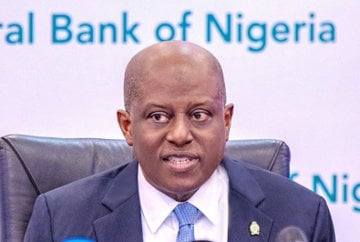
CBN promotes adoption of alternative payment systems in C’River


The Central Bank of Nigeria has reaffirmed its commitment to expanding financial inclusion and driving economic growth by promoting the adoption of alternative payment systems.


The apex bank expressed this commitment at a sensitisation exercise known as the ‘CBN Fair,’ held at the Dome Event Centre in Calabar on Thursday.


The event’s theme was “Promoting Alternative Payment Channels as Tools for Financial Inclusion, Growth and Accelerated Economic Development.”


The fair brought together manufacturers, traders, microfinance banks, commercial banks, merchant banks, students, artisans, members of the National Youth Service Corps, and other stakeholders.

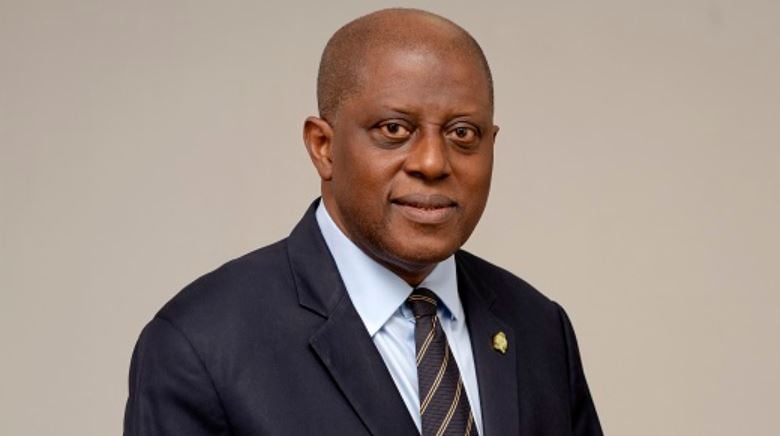
Speaking at the event, an Assistant Director in the Corporate Communications Department, Uche Tobias, highlighted policies undertaken by the Olayemi Cardoso-led management since assuming office.


He noted that the Central Bank is championing technologies that empower individuals, boost productivity, and connect communities to the nation’s economic opportunities.


He said, “Under the leadership of Olayemi Cardoso, the management of the Bank remains firmly committed to fostering productivity, enhancing financial inclusion, and maintaining monetary and price stability. These efforts are already yielding positive results, as evidenced by the steady reduction in inflation and current stability in the foreign exchange market.


“Since assuming office, the Governor has spearheaded several key policies to strengthen the financial system. These include: exchange rate unification; the launch of the non-resident Bank Verification Number (BVN) to connect Nigerians abroad with home banking facilities; the BMatch System for forex trading; and the unveiling of the Nigeria Payments System Vision 2028 (PSV 2028) to accelerate digital transformation, broaden financial inclusion, and minimise downtime for faster and safer transactions,” he said.


He also noted the introduction of a 75 per cent Cash Reserve Ratio on non-Treasury Single Account public sector deposits, stressing that this policy aims to enhance liquidity management and mitigate potential inflationary pressures.


He explained that the sensitisation exercise was primarily to educate the public on how the bank’s policies enhance their lives and livelihoods and contribute to the growth and development of the Nigerian economy. He urged them to rely only on information disseminated through the verifiable official channels of the Central Bank of Nigeria.


“This engagement is primarily to sensitise members of the public on how the Bank’s policies enhance their lives and livelihoods and contribute to the growth and development of the Nigerian economy. We urge you to rely only on information disseminated through the verifiable official channels of the Central Bank of Nigeria,” he explained.

In his welcome address, the Calabar Branch Controller, Jibunoh Tolefe-Nwanneamaka, represented by the Head of Research, Jude Nwafor, stated that the fair was designed to promote financial inclusion by showcasing alternative payment channels and highlighting key reforms geared towards building a resilient and inclusive financial system.


According to him, the fair facilitates constructive dialogue between the Bank and the public, adding that it is a space where questions, concerns, and feedback are not only welcomed but valued, with the aim of building trust, enhancing consumer protection, and ensuring that every Nigerian feels empowered to participate in the financial ecosystem.


Cross River State Governor, Bassey Otu, represented by his Special Assistant on Agriculture, John Shiyam, commended the CBN for the initiative.

He noted that the Otu-led administration has prioritised agriculture as a strategy for rapid economic development to promote food security and the well-being of farmers in the state.


He concluded that the CBN Fair is beneficial for creating awareness of alternative payment systems.


“Cross River State is a very vast state with different topographical features, and most areas are remote. As I speak with you, not every local government in the state has a commercial bank.


“So it has been a very big challenge for farmers and even business people in such areas to access banking services. This initiative and this exercise are going to be very beneficial to people in such areas, to be aware of the alternative payment systems that they can leverage for their financial transactions,” he added.


The CBN, in a publication on its website, stated that it has long prioritised financial inclusion, ensuring that more Nigerians have access to banking and financial services. The CBN’s NFIS, first launched in 2012, created a framework for widening access, especially for underserved populations.


The apex bank explained that a challenge to financial inclusion in Nigeria persistently arises from low financial literacy, weak infrastructure, digital divide, and limited reach of formal banking services in rural and remote areas.


PUNCH Online reports that more recently, the CBN unveiled Payments System Vision 2028 (PSV 2028) to succeed PSV 2025, signalling its commitment to expanding, modernising, and securing Nigeria’s digital payments infrastructure.

CBN reaffirms commitment to monetary stability


The Central Bank of Nigeria has assured Nigerians that its ongoing policies and reforms are targeted at restoring price and monetary stability amid rising inflation and economic hardship.


Speaking at the CBN Fair in Uyo, Akwa Ibom State, on Tuesday, the CBN governor, Olayemi Cardoso, said some of the apex bank’s monetary measures were already yielding results, citing the easing of inflationary pressures and relative stability in the foreign exchange market.


Cardoso, represented by the acting Director of Corporate Communications, Hakama Ali, noted that the exchange rate unification policy had reduced volatility and cleared more than $7 billion in verified forex backlogs.


He added that the B-Match forex trading system had strengthened market integrity and improved price discovery.


The governor highlighted other initiatives, including bank recapitalisation to strengthen the sector’s resilience, the introduction of non-resident BVN to link Nigerians abroad with local banking services, and the Nigeria Payments System Vision 2028 to accelerate digital transformation and deepen financial inclusion.

He also mentioned the 75 per cent CRR on non-TSA public sector deposits, aimed at improving liquidity management and curbing inflationary pressures.


“Some of our monetary policies have started yielding positive results. This can be seen in the steady ease of inflation and current stability in the foreign exchange market,” Cardoso said.


He further urged Nigerians to respect the national currency, cautioning against spraying, mutilating, or counterfeiting the Naira.


Earlier, CBN Uyo Branch Controller, Njideka Nwabukwu, said the fair was designed to sensitise the public on the bank’s policies while creating a feedback platform to improve service delivery.


She pledged the branch’s commitment to supporting Akwa Ibom’s economic aspirations through financial literacy campaigns and stakeholder engagement.


On Monday, the PUNCH reports that naira maintained its upward momentum last week, closing at ₦1,465/$ at the official market.


The rally was driven by weaker U.S. economic data that softened the dollar, alongside stronger foreign exchange inflows that eased demand pressure.

At the parallel market, the currency also appreciated by 3.8 per cent week-on-week to ₦1,460/$.


This narrowed the gap between the official and parallel market rates to ₦5.68/$1, compared with ₦34.34/$1 the previous week.

The Nigerian Railway Corporation generated N1.95 billion from transporting 929,553 passengers through the rail system in the first quarter of 2025, the National Bureau of Statistics has reported.


The figure is disclosed in the Rail Transportation Data Q1 2025, published by NBS on October 5 and announced via its X handle on Tuesday.


The report indicates a significant boost in NRS’s passenger and revenue figures for the first quarter of 2025.


“In Q1 2025, a total of 929,553 passengers travelled through the rail system, relative to 675,293 reported in the corresponding quarter of 2024, indicating a growth rate of 37.65%.


“The volume of goods/cargoes transported stood at 181,520 tons compared to 160,650 tons recorded in Q1 2024,” the report read.


In terms of revenue generation, NBS said, “N1.95 billion was received from passengers during the reference period, showing an increase of 37.36% from the N1.42 billion recorded in the same quarter of the previous year.”


It added that N657.03 million was received from goods and cargoes conveyed, up by 8.19% from N607.32 million in Q1 2024.


“In addition, Other receipts amounted to N115.68 million, indicating an increase of 355.39% in Q1 2025 from the N25.40 million received in Q1 2024.”

PUNCH Online reports the growth may be attributed to ongoing infrastructure investments, including the operational Lagos-Ibadan rail line, which has been a key driver of the sector’s expansion since its launch in 2021.


Recall that the rail sector’s contribution to Nigeria’s GDP rose by 18.65% in Q1 2025, underscoring its growing economic significance.

20 govs borrow N458bn amid rising debts


No fewer than 20 states of the federation borrowed about N458bn in the first half of 2025, findings by Saturday PUNCH have revealed.


This comes against the backdrop of a soaring external debt servicing burden gripping state governments.


Collectively, the states spent about N235.58bn on servicing external debt within the period, representing a sharp rise of N95.65bn or 68.4 per cent when compared with the N139.92bn recorded in the corresponding half of 2024.


According to experts, the surge underscores the mounting pressure of dollar-denominated debt repayments on state finances in the wake of the naira’s depreciation.


An analysis of the Federal Account Allocation Committee disbursement data released by the National Bureau of Statistics shows that a total of N10.13 trillion, including statutory revenue, Value Added Tax, Electronic Money Transfer Levy and Exchange Rate Difference, was shared among the three tiers of government in the first half of this year.

Out of this, the states received N3.425tn, a 42.96 per cent increase from the N2.396tn they got in the first six months of 2024.


In H1 2024, the states received N379bn in January, N366.9bn in February, N396.8bn in March, N403bn in April, N388.4bn in May, and N461.97bn in June.


But in the same period this year, allocations surged to N590.6bn in January, N562.19bn in February, N530.45bn in March, N556.74bn in April, N577.84bn in May, and N607bn in June.


Despite the higher inflows, an analysis of states’ Q2 budget implementation reports showed that about 20 of them still resorted to fresh borrowings, both foreign and domestic, amounting to N457.66bn in the first half of 2025.

Leading the pack is Oyo State, which took a N93.4bn domestic loan, followed by Kaduna and Lagos, which took N62bn (foreign) and N50bn (domestic) loans, respectively.


States that took foreign loans include Gombe (N20.3bn), Zamfara (N28bn), Katsina (N20.7bn), Kebbi (N7.4bn) and Jigawa (N10.98bn).


While Bauchi took both domestic and foreign loans totalling N26.3bn, Borno, Taraba, Sokoto, Niger, Kwara, and Ekiti borrowed N18.2bn, N18.7bn, N15bn, N25.8bn, N2.18bn and N19.8bn respectively in foreign loans.


The foreign loan list also includes Ondo (N5.6bn), Abia (N7bn), Ebonyi (N10.9bn) and Enugu (N10.7bn).


Analysts warn that the continued reliance on foreign loans exposes states to even greater fiscal risks in the face of a weakening naira.

“Since most of the debts are dollar-denominated, every depreciation of the local currency automatically inflates repayment obligations, forcing states to channel a larger share of their revenues into debt servicing at the expense of development projects,” says a Professor of Economics at the Ekiti State University, Taiwo Owoeye.


Beyond repayment costs, Owoeye noted that heavy external borrowing also undermines states’ financial autonomy.


“By taking on more foreign obligations, many states risk mortgaging future federal allocations to meet repayment schedules, leaving them with little room to respond to emergencies or fund critical sectors such as health, education, and infrastructure,” he explained.

FBI places $10,000 bounty on Nigerian wanted for bank fraud


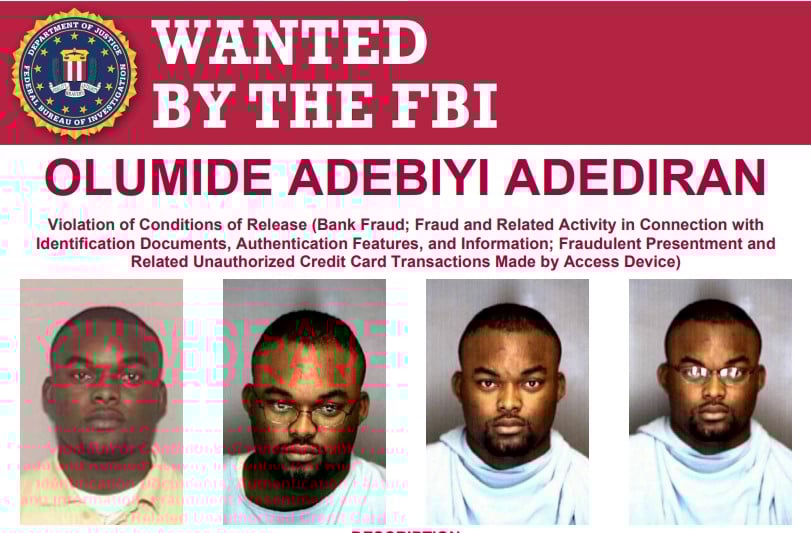
The Federal Bureau of Investigation has announced a $10,000 reward for information leading to the arrest and conviction of a Nigerian, Olumide Adebiyi Adediran, wanted in the United States for multiple fraud offences.


According to a statement on the FBI’s website on Wednesday, Adediran faces charges of bank fraud, identity document fraud and credit card fraud in connection with alleged crimes committed in Illinois as far back as 2001.


The 56-year-old, who also goes by several aliases including Kevin Olumide Adediran, Eric O. Williams, Maxo Alexandre, Olumide Adkins, and Edward N. Anderson, is accused of attempting to cash fraudulent checks and using stolen identities of US citizens to open bank and credit accounts.


According to the FBI, Adediran fled the Central District of Illinois in December 2001, shortly before his trial was due to begin.

A federal arrest warrant was subsequently issued on January 2, 2002, for violation of the conditions of release.


The statement read, “Olumide Adebiyi Adediran is wanted for Violation of Conditions of Release. In August of 2001, Adediran allegedly entered a bank in Champaign, Illinois, and attempted to retrieve funds from a deposited fraudulent check.

“He also allegedly used stolen information of United States citizens to open bank and charge accounts. Adediran fled the Central District of Illinois at the end of December 2001, shortly before his trial in the Central District of Illinois was set to begin on federal charges of Bank Fraud, Identification Document Fraud, and Credit Card Fraud.


“On January 2, 2002, a federal arrest warrant was issued for Adediran in the United States District Court, Central District of Illinois, Urbana, Illinois, after he was charged with Violation of Conditions of Release.”


The FBI noted that Adediran has ties to South Florida and remains on its wanted list.


He is described as being 5’11” tall, weighing 200 pounds, with black hair and brown eyes.


“The FBI is offering a reward of up to $10,000 for information leading to the arrest and conviction of Olumide Adebiyi Adediran,” the agency stated.


The FBI urged anyone with information on his whereabouts to contact its offices in the United States or the nearest American embassy or consulate.

17 African countries back electricity reforms—World Bank


The World Bank said seventeen African governments have committed to reforms and actionable plans to expand electricity access as part of Mission 300, an ambitious partnership led by the lender and the African Development Bank Group that aims to connect 300 million Africans to electricity by 2030.


The lender said in a statement on Wednesday that governments from Benin, Botswana, Burundi, Cameroon, Comoros, the Republic of the Congo, Ethiopia, Gambia, Ghana, Guinea, Kenya, Lesotho, Mozambique, Namibia, São Tomé and Príncipe, Sierra Leone, and Togo endorsed National Energy Compacts at the Bloomberg Philanthropies Global Forum.


The Bank described the compacts as policy blueprints intended to guide public spending, drive reforms, and attract private investment, while serving as a model for the rest of the world.


Nigeria was not part of the latest group; it had joined earlier this year alongside Chad, Côte d’Ivoire, Democratic Republic of Congo, Liberia, Madagascar, Malawi, Mauritania, Niger, Senegal, Tanzania, and Zambia. Collectively, those countries pledged more than 400 policy actions to strengthen utilities, reduce investor risk, and remove bottlenecks.

“Electricity is the bedrock of jobs, opportunity, and economic growth.


“That’s why Mission 300 is more than a target; it is forging enduring reforms that slash costs, strengthen utilities, and draw in private investment,” World Bank Group President Ajay Banga said.


Since the launch of Mission 300, 30 million people have already been connected, with more than 100 million in the pipeline.


African Development Bank Group President Dr Sidi Ould Tah said, “Reliable, affordable power is the fastest multiplier for small and medium enterprises, agro-processing, digital work, and industrial value-addition.

“Give a young entrepreneur power, and you’ve given them a paycheck,” he added.

National Energy Compacts are at the core of Mission 300, developed and endorsed by governments with technical support from development partners. Tailored to each country’s context, these practical blueprints integrate three core tracks: infrastructure, financing, and policy.


The World Bank Group and the African Development Bank Group are working with partners, including the Rockefeller Foundation, Global Energy Alliance for People and Planet, Sustainable Energy for All, and the World Bank’s Energy Sector Management Assistance Program trust fund, to align efforts in support of powering Africa. Many development partners and development finance institutions are also supporting Mission 300 projects through co-financing and technical assistance.


President of Botswana, Duma Boko, said, “This National Compact is our shared pledge to ensure accessible, reliable and affordable energy as a basic human need, to transform our economy and create jobs, and to electrify our journey to an inclusive high-income country.”

President of the Republic of Cameroon, Paul Biya, said, “The government of the Republic of Cameroon is committed, through its Energy Compact, to a determined transition towards renewable energies, promoting inclusive universal access and sustainable development based on partnerships and ambitious reforms to build a low-carbon future.”


President of the Union of the Comoros, Azali Assoumani, noted, “The Comoros Energy Compact is a call for collective action to achieve universal access to electricity by 2030, to ensure the country’s emergence in dignity, equity, and shared progress.”


President of Ethiopia, Taye Atske Selassie, noted, “Our National Energy Compact exemplifies Ethiopia’s unwavering dedication to ensuring universal, affordable, and sustainable energy access for all.

“By unlocking our vast renewable resources and strengthening regional interconnections, we aim to foster inclusive growth domestically and propel Africa’s collective momentum toward ending energy poverty. Together, we are committed to building a resilient, equitable, and sustainable energy future for generations to come.”

FirstBank partners Lagos for E1 Lagos GP

FirstBank partners Lagos for E1 Lagos GP

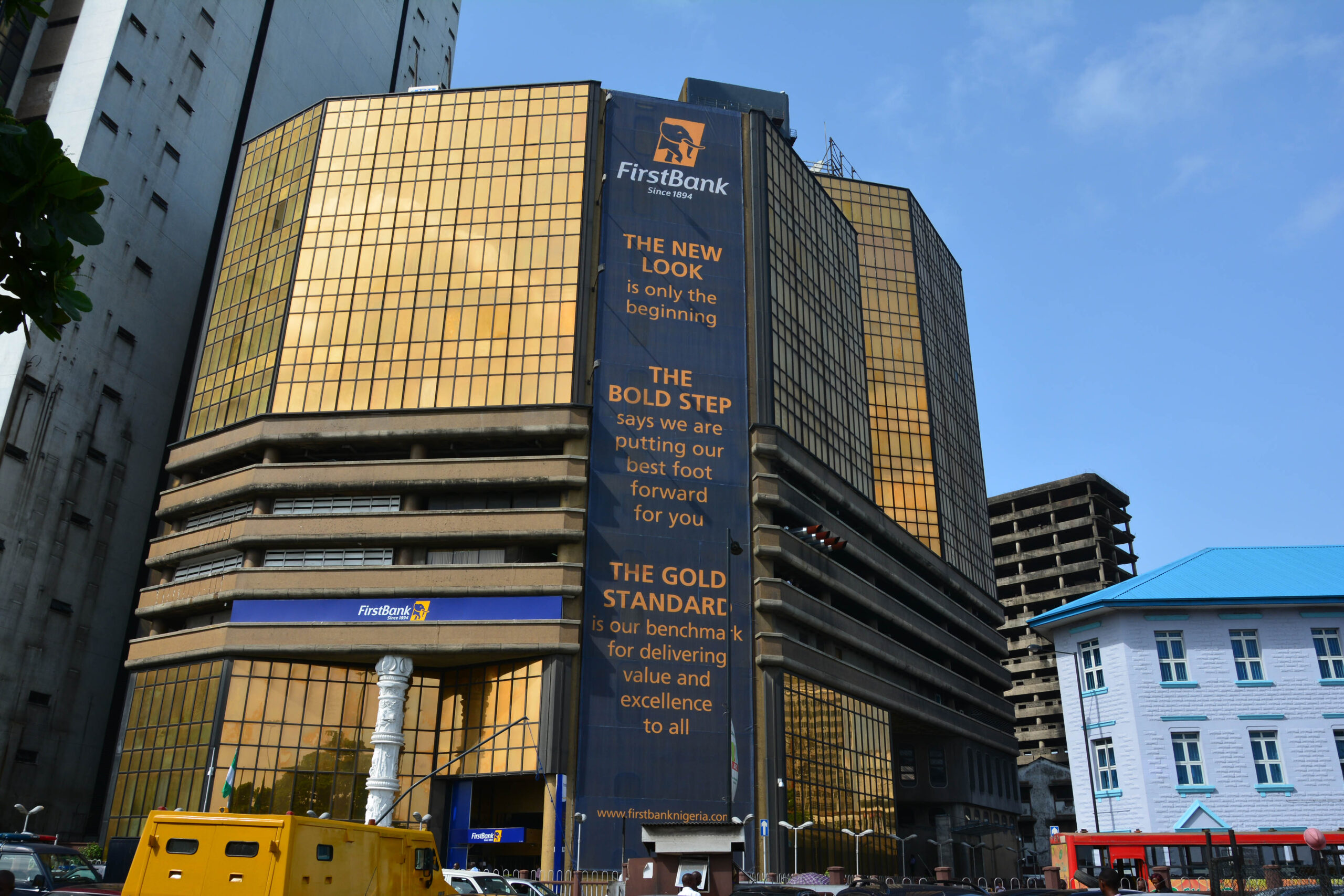
In line with its commitments of promoting sports and developmental initiatives at all levels, First Bank of Nigeria Limited is partnering the organizers of the first of its kind E1 Lagos GP an all-electric powerboat racing championship, set to hold between the 3rd and 5th of October 2025. Disclosing this at the E1 Lagos GP Stakeholder Immersion session in Lagos recently, Olayinka Ijabiyi, the Acting Group Head, Marketing and Corporate Communication of FirstBank, reaffirmed the Bank’s commitment to supporting initiatives that engender human development across the country while cementing legacies.

“Our involvement in the E1 Lagos GP is about driving legacy and enabling the passions and aspirations that unite Nigerians. We are a bank that has been in business for over 131 years and we recognize that sports drives us as a country, which is why through our First@Sports initiative, we continue to invest in platforms that inspire and elevate our people. We have been supporting legacy sport tournaments like the Georgian Polo Cup which we have hosted for 105 years, and the Lagos Amateur Open Golf Championship for 64 years now,” Ijabiyi said.

With the event slated for the start of the fourth quarter, FirstBank is aligning its partnership with the annual DecemberIssaVybe initiative, a campaign that celebrates the vibrant spirit of Nigerians during the festive season by curating unforgettable experiences that blend culture, entertainment and lifestyle.  “FirstBank is deeply woven into the fabric of society and the lives of our customers. As presenting partner, we are creating meaningful touchpoints with customers and prospects, offering them a world-class experience of relaxation and celebration that captures the true essence of Lagos during the festive season,” he added.

Lagos State Commissioner for Information and Strategy, Gbenga Omotoso, who was also at the event, described the initiative as an event that will grow not just the sports but also showcase Lagos’s vibrant culture, dynamic people, and global relevance, while commending FirstBank for their support.

The teams owned by notable stars like Tom Brady, LeBron James, Didier Drogba, Will Smith, Marc Anthony, Steve Aoki, Rafael Nadal will compete in the Lagos leg before the 2025 season of the competition terminates in Miami in the United States.

Wema Bank Concludes ₦150 Billion Rights Issue with CBN & SEC Approval, Surpasses Regulatory Capital Requirement

Wema Bank Concludes ₦150 Billion Rights Issue with CBN & SEC Approval, Surpasses Regulatory Capital Requirement

Wema Bank Plc (“the Bank”) announces the successful completion of its ₦150 billion Rights Issue, which opened on April 14th,2025, and closed on May 21st,2025. The exercise has received formal approval from the Central Bank of Nigeria (CBN) and the Securities and Exchange Commission.

This Rights Issue was undertaken in response to the CBN’s directive on the recapitalization of banks in Nigeria. With the successful completion and regulatory approval, Wema Bank has now met the
₦200 billion minimum capital requirement applicable to commercial banks with national authorization.

In addition to the Rights Issue, Wema Bank also recently concluded a ₦50 billion Private Placement, which is now awaiting regulatory reviews. This additional capital raises the Bank’s total capital base above the regulatory threshold, further strengthening its buffer, enhancing its shock-absorption capacity, and positioning the Bank for sustained growth.

Commenting on the Bank’s success in meeting the regulatory threshold ahead of the 24-month timeline, Moruf Oseni, Wema Bank’s MD/CEO, reaffirmed the Bank’s promise of delivering the best value as it continues its growth journey. According to Oseni, “As a growth-driven Bank, the industry recapitalization requirement came as a welcome mission, and we undertook it with full confidence. Our success in surpassing the ₦200 billion benchmark ahead of the 2026 deadline not only reinforces our strong financial standing as a bank but also attests to the mutual trust and confidence that exists between Wema Bank and its shareholders. We do not take this trust for granted and we take this moment to firmly reiterate our commitment to continue delivering optimum value to every shareholder and stakeholder of Wema Bank.”

The conclusion of these capital-raising initiatives reinforces the Bank’s prudential position and provides a solid foundation for long-term stability. It also reflects the continued confidence of stakeholders in Wema Bank’s governance, financial performance, and strategic direction.

Wema Bank remains committed to full regulatory compliance and prudent risk management. With its strengthened capital base, the Bank is well positioned to support customers, contribute to the stability of the Nigerian financial system, and deliver sustainable value to its stakeholders.

For more information, please reach out to investor.relations@wemabank.com or visit www.wemabank.com.

The Alternative Bank Targets Women, Men, and Farmers with National Financial Inclusion, Entrepreneurship Drive

The Alternative Bank Targets Women, Men, and Farmers with National Financial Inclusion, Entrepreneurship Drive

The Alternative Bank, one of Nigeria’s leading non-interest banks, has ramped up its efforts to promote economic empowerment and financial inclusion for market traders and smallholder farmers across the country. With a focus on improving access to banking services, the Bank is providing critical financial support to some of Nigeria’s most underserved communities.

The initiative, undertaken through an agreement between Sterling Financial Holdings Company and the Association of Market Women/Men and Farmers of Nigeria (AMWMF), aims to address the challenges faced by millions of market women, men, and farmers who have long been excluded from formal banking systems. According to the Central Bank of Nigeria, approximately 26% of Nigerian adults, or about 28.8 million people, remain financially excluded, with rural communities and informal sector workers being particularly affected. is working to change this by making essential financial services accessible to these groups, particularly women.

Through this new initiative, The Alternative Bank is opening access to formal financial services for over 16 million members of the AMWMF. The collaboration is designed to provide members with access to a range of banking services, including zero-fee accounts, microloans, and SME funding, aimed at fostering business growth and financial independence.

Korede Demola-Adeniyi, Executive Director at The Alternative Bank, shared her thoughts on the role of banks in supporting grassroots financial inclusion, saying, “To adequately bridge the financial inclusion gap, financial institutions must continue to devote resources towards removing the barriers that have historically hindered large segments of our population. For the unbanked and underbanked, the challenges go beyond the lack of physical infrastructure and extend to deeper issues of trust, financial illiteracy, and systemic exclusion from mainstream financial services.

“At The Alternative Bank, we are committed to breaking these barriers by offering tailored solutions and championing programs that empower people to take control of their financial futures. We believe that by simplifying access to financial services and addressing these long-standing obstacles, we can unlock the potential of millions of grassroots entrepreneurs and contribute to broader economic growth.”

Recognising education as a key factor in the country’s financial literacy gap, The Alternative Bank is offering the Association’s members access to financial literacy training and personalised business support, aimed at empowering them with the knowledge and skills to manage and grow their finances effectively. In addition, the Bank is also supporting business growth by offering no initial fees for point-of-sale (POS) terminals to vendors, making it easier for them to accept electronic payments.

The drive, which began in Oyo State, will extend to 15 other states across Nigeria’s geopolitical zones throughout the course of the year and has since received strong support from AMWMF’s leadership. Erelu Dr. Becky Olubukola, the National President of the Association, praised the collaboration as a crucial step towards realising the association’s vision of creating an environment where every member has the opportunity to thrive. She emphasised that, by working with financial institutions like The Alternative Bank, the association could vastly expand opportunities for its members and help drive local economic development.

In addition to banking services, The Alternative Bank is also exploring innovative solutions to meet the diverse and evolving needs of grassroots entrepreneurs. This includes the deployment of electric-powered tricycles for market vendors to help with the transportation of goods and the introduction of health and medical kiosks in underserved areas to improve access to basic healthcare. Furthermore, the Bank is committed to creating wealth for the Association’s members through initiatives like its waste-to-wealth program, which enables participants to convert waste materials into viable income-generating ventures.

Naira strengthens against dollar, closes week at N1,534.72


The Naira closed the week on a positive note, gaining 4.52 kobo against the U.S. dollar at the official market on Friday.


According to the latest figures from the Central Bank of Nigeria, the Naira traded at N1,534.72 per dollar.


The figure represents a modest gain of 0.05 per cent on Thursday, when it was valued at N1,534.79 to the dollar.

However, the Naira had experienced minimal losses earlier in the week, trading at N1,535.62 on Wednesday and N1,535.24 on Tuesday.


The trading week began with a minor decline of 20 kobo on Monday.


NAN

First Holdco, FCMB, Fidelity Bank drive 75% of NGX’s N500bn weekly trade


Stock market investors traded 17.498 billion shares worth N500.762 billion in 142,082 transactions this week on the floor of the Nigerian Exchange.


This contrasts with 5.390 billion shares valued at N107.811 billion traded last week across 134,390 transactions.


As a result, the transaction value on the Exchange surged by 78.48 per cent.


The market opened for four days, as Tuesday was declared a public holiday to honour the late President Muhammadu Buhari.


The Financial Services Industry led the activity chart with 15.771 billion shares worth N437.763 billion in 66,725 transactions.


This represented 90.13 per cent and 87.42 per cent of the total equity turnover volume and value respectively.


The ICT Industry followed, trading 325.134 million shares valued at N3.492 billion in 9,028 deals.


In third place was the Consumer Goods Industry, with 313.424 million shares worth N20.162 billion across 14,917 transactions.


First Holdco Plc, FCMB Group Plc and Fidelity Bank Plc accounted for 13.229 billion shares worth N367.498 billion.


These three equities represented 75.60 per cent of the turnover volume and 73.39 per cent of the value.

The NGX All-Share Index rose by 4.31 per cent to close at 131,585.66, while market capitalisation reached N83.241 trillion.


All other indices ended higher, except NGX Insurance, NGX ASeM, NGX Oil & Gas, NGX Growth and NGX Sovereign Bond.


These declined by 3.65 per cent, 9.56 per cent, 0.76 per cent, 4.80 per cent and 0.57 per cent, respectively.


Forty-nine equities recorded price gains during the week, lower than the 90 recorded the previous week.

Fifty-four equities lost value, up from 16 recorded last week, while 44 remained unchanged, compared to 41 previously.


Top gainers were Eunisell Interlinked Plc, BUA Cement, Associated Bus Company, Industrial and Medical Gases, and Secure Electronic Technology.


They gained N4.40, N29.40, N1.25, N8.45 and 21k respectively, representing increases of 32.59, 31.28, 28.41, 24.85 and 21.00 per cent.


Top losers included Academy Press, RT Briscoe, Cutix Plc, Caverton Offshore, and Champion Breweries Plc.


They lost N2.25, N1.00, 90k, N1.54 and N2.61 respectively during the week.


NAN

Exit mobile version