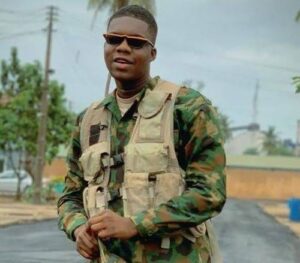
A 21-year-old final year student of Federal University of Technology, Akure (FUTA), Jimoh Victor Eyitayo, has died after he was shot by armed robbers in Ikorodu area of Lagos State.
The robbers reportedly took his phone and other belongings.
According to a source, “He was shot on the lap along Ota-Ona, in Ikorodu. He was rushed to the General hospital but they demanded to see a police report before they could administer treatment on him.
“He died on transit from Ikorodu General Hospital to LUTH.”
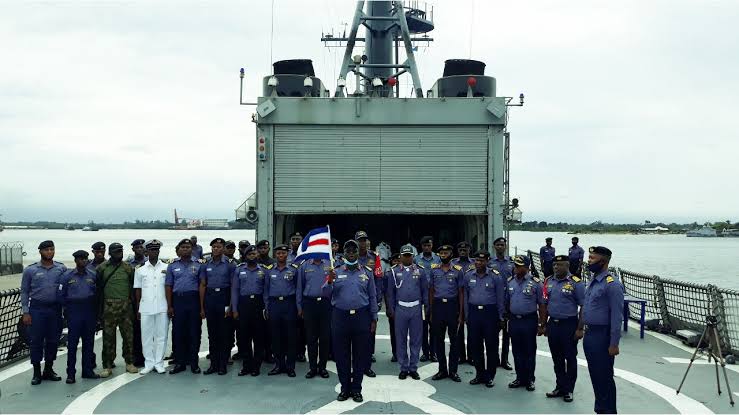
The Nigerian Navy (NN) has denied a video trending online concerning a student who was allegedly brutalised by an instructor in Nigerian Navy Secondary School, Abeokuta.
The Director of Information, Naval Headquarters, Commodore Suleman Dahun, made the denial in a statement in Abuja.
According to Dahun, the video was sent to the management of the school by a concerned parent who declined to specify when the incident took place and the person involved.
The director added that preliminary investigation revealed that the incident took place two sessions ago and was handled administratively.
“For the avoidance of doubt, further investigation is ongoing on the matter and parents are advised to avoid recycling these sorts of materials to create tension and ill feelings.
“The service is committed to providing top-class education in its schools under a conducive atmosphere.
“The NN is also not unmindful of the need to uphold standards and discipline in its schools without recourse to the unorthodox method of achieving these goals.“
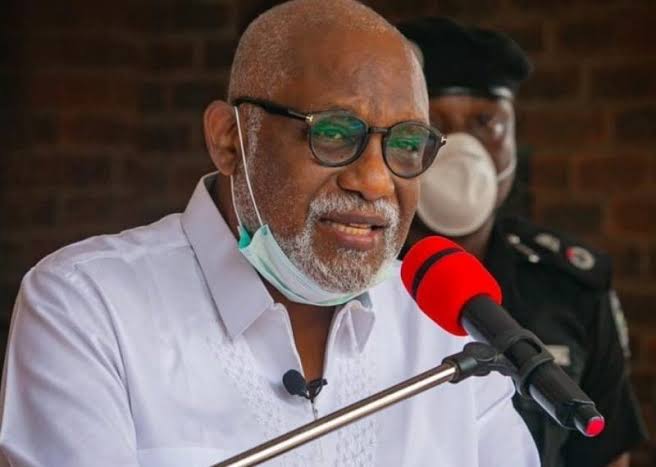
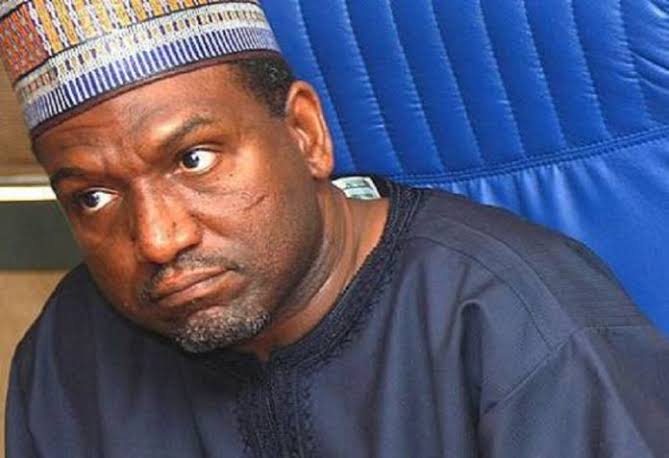
Governor Rotimi Akeredolu of Ondo State has appointed his son, Babajide Akeredolu, as the new Director General of the Performance and Project Implementation Monitoring Unit, Governor’s Office (PPIMU).
This was announced in a statement by the Commissioner for Information and Orientation, Donald Ojogo, on Tuesday.
Ojogo added that the governor nominated 14 new commissioners-designate whose names will be forwarded to the State House of Assembly for confirmation.
“Ondo State Governor, Arakunrin Oluwarotimi Akeredolu, SAN, has nominated 14 new commissioners-designate and seven special advisers,” the statement read.
“The commissioner nominees are as follows: Mrs Bamidele Ademola Olateju (Akoko South East), Otunba Adefarati Gboyega (Akoko South West), Rt Hon Olotu Fatai (Akoko North East), Dr. Julianah Oshadahun (Akoko North West), Otunba Dele Ologun (Akure North), Mr. Sunday Adekunle (Idanre) and Engr. Razaq Obe (Ifedore).
“Others are Dr. Banji Awolowo Ajaka (Ilaje), Pastor Emmanuel Igbasan (Irele), Mrs Yetunde Adeyanju (Odigbo), Mr. Femi Agagu (Okitipupa), Hon. Akinlosotu (Ondo East), Hon Omolola Fagbemi (Ondo West) and Chief Olayato Aribo (Ose).
“Those nominated for the position of Special Advisers include the following: Chief (Dr) Victor Ategbole, Dr. (Mrs) Wunmi Egbayelo Ilawole, Hon. (Barr) Tobi Ogunleye Felix, Dr. Ajibayo Adeyeye, Mrs Olamide Falana, Dr . Francis Adedayo Faduyile and Mr Oyeniyi Oseni.
“In the same vein, the governor appointed Mr. Babajide Akeredolu as the Director General, Performance and Project Implementation Monitoring Unit (PPIMU).
“The names of the nominees, especially the position of commissioner, will be forwarded to the House of Assembly for screening, clearance and confirmation.
“All nominated/appointed persons will be sworn in at a date to be announced later after the necessary legislative processes.”
The Chief of Defense Staff, General Lucky Irabor, has faulted the procedure adopted in the release of the report of the Lagos State Judicial Panel of Inquiry on Restitution For Victims Of SARS Related Abuses and Other Matters.
Speaking after a courtesy visit to Edo State Governor, Godwin Obaseki, the Defence Chief said the report ought to have been submitted to the convening authority.
“I am sure those of you in the media must have seen a report that was released through, in my view, a wrong channel, that is making the rounds in the social media,” the CDS said.
“Whether it is a true report, I can’t tell. But I’d like to indicate that the normal procedure is to have such a report submitted to the convening authority. And then there will be a white paper that will be presented, based on which one can make informed comments.”
General Irabor also stated that the Nigerian armed forces are committed to their constitutional mandate and would not engage in ignoble acts as alleged in the report.
“I’d like to indicate that the Armed Forces of Nigeria is a professional armed force. We are peopled by Nigerians and we remain committed to the constitutional mandate. So we will not at this point think that Nigerians should make disparaging remarks regarding the Armed Forces of Nigeria, in the sense that we are a professional armed forces. If there are issues, of course, we address them within the ambit of the provisions.
“It would not be right to disparage men and women who have worked so hard to ensure that the territorial integrity of this nation is kept intact. So in the meantime, until I see the full extent of the report.
“I can assure that the Armed Forces of Nigeria are well-disciplined and we do not engage in any ignoble acts. If Nigerians do not trust us, then we won’t be doing what we are doing, and in any case, it is the Armed Forces of Nigeria; we are not talking of the police. So when the Armed Forces are called out, it is because there is a need; there is no one who doesn’t desire to live in peace.
“We need to understand that the Armed Forces are there to keep the peace, to provide the ambiance that will enable each Nigerian to live his or her desires in peace and harmony. So let us not make inciting comments that will put the entire space on fire. That’s not right.”
Recall that the panel alleged that operatives of the Nigerian Army and the Nigeria Police Force shot directly at unarmed protesters at the Lekki Toll Gate in October 2020, with the aim to kill them.
The panel likened what played out at Lekki to a “massacre” resulting in 48 casualties – 11 deaths and 37 others who sustained gunshot injuries, missing presumed dead, injured, assaulted.
Popular Instagram comedian, Ahmed Gafar, known as The Cute Abiola has been declared missing.
This was made known by a fellow comedian, Mr Macaroni on Tuesday evening.
Mr Macaroni shared the news on Twitter and also attached a Whatsapp message he received.
From the message, it was alleged that the last time Cute Abiola’s wife and associates heard from him was on November 15.
While it was stated that no one has heard from him since then, it was also alleged that he was locked up in a Nigerian navy cell and nobody knows the offence he committed.
The message read; “Ahmed Gafar is popularly known as The Cute Abiola left his house for office at Navy Town at 06:00Am on the 15th November, 2021 and got to the office at about 07:00am or thereafter. While he got to the office, he called his wife and associates that he had gotten to the office.
“Subsequently, his wife and other associates have made several attempts to contact him but to no avail. Since he last communicated with his wife and associates that he already got to the office, he has not returned to his family and no one has heard from him till this moment.
“It was subsequently gathered from a reliable source that he has been locked up in the Nigerian Navy cell since he got to the office yesterday morning till the time of posting this information without being fed and no date has been stated for his release from custody.
“The most frustrating part is that nobody is talking anything as to the offense he has committed, but that he’s been detained on an order from the Nigerian Navy Headquarters.
“This unfortunate situation has rendered his wife emotionally tortured and traumatized as the Cute Abiola is an Ulcer patient. Hence, not feeding an Ulcer patient as punishment for an undisclosed offense is something to be worried about with the view to avoiding unnecessary circumstance with regards to the health of The Cute Abiola”
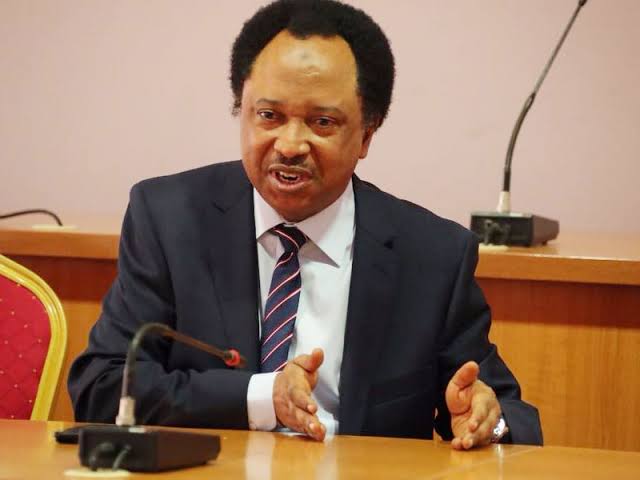
Former Kaduna Central Senator, Shehu Sani has reacted to the findings and conclusion of the Lagos State judicial panel on police brutality cases and the shooting of protesters at Lekki toll gate.
Naija News had reported earlier that the panel Chairperson, Justice Doris Okuwobi (rtd) delivered two reports to Governor Babajide Sanwo-Olu at the State Secretariat in Ikeja on Monday.
Sanwo-Olu had stated, after receiving the report, that it will be submitted to the National Economic Council (NEC), chaired by Vice President Yemi Osinbajo.
Naija News understands that the Lagos #EndSARS panel in its reports indicted the Nigeria Police Force in the October 20, 2020 incidents that caused a commotion in the country.
In the report titled, ‘Report Of Lekki Incident Investigation of 20th October 2020’, the panel claimed that the police officers who were at the tollgate physically assault unarmed protesters.
The panel’s report added that the assault of Nigerian youths at the Lekki toll gate led to injuries and deaths.
The panel also accused the police of attempted cover-up of the shooting of protesters at Lekki tollgate by picking up bullets at the scene of the incident.
Reacting to the outcome of the panel that has received commendations from citizens, Shehu Sani in a post on his Twitter account, said those that have been in denial of the Lekki massacre can now bury their shame.
He said they should accept the fact that they tried all possible means to cover up the truth of the incidents.
The former lawmaker tweeted: “The doubters and deniers of the #LekkiMassacre should simply and humbly step out of their bubble of falsehood and accept the fact that they attempted to cover up corpses with Roses.”
Sani wrote in another post: “It’s like People are holding Cutlasses and sticks and looking for those who denied Lekki Massacre”
The Nigerian Government has denied abandoning one Itunu Babalola from Oyo State to die in a prison in Cote d’Ivoire.
It also called for full investigation into the circumstances leading to her death.
Reports of her demise went viral on Monday and Nigerians took to Twitter to vent their anger on the federal government over alleged negligence.
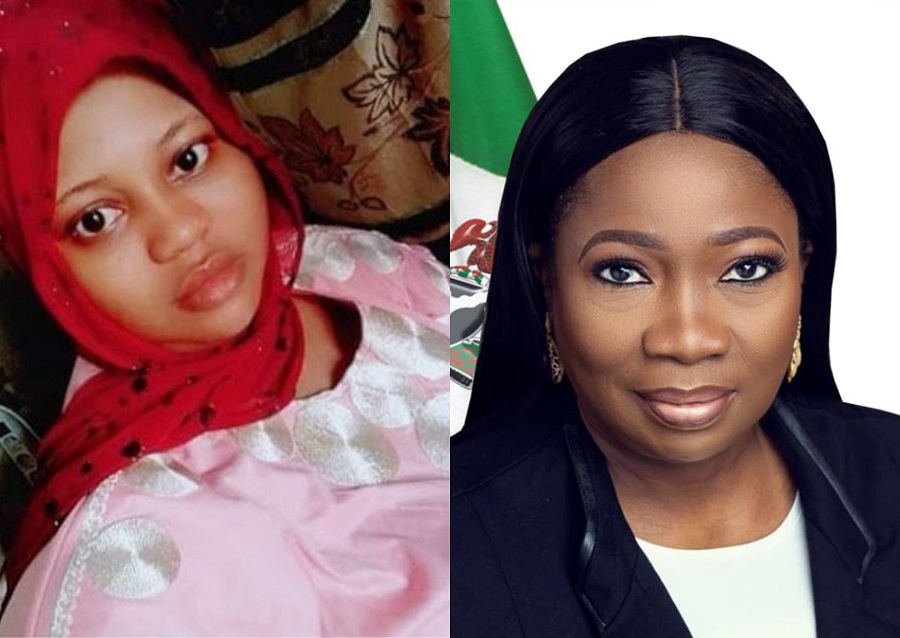
The Chairman Nigerians in Diaspora Commission (NIDCOM), Hon. Abike Dabiri-Erewa, said the government followed up on the case even though she was convicted and sentenced by the host country’s judiciary
Dabiri-Erewa’s reaction was contained in a statement issued by the Commission’s Head of Media, Abdur-Rahman Balogun.
She said that even when Babalola contracted an illness, it was Nigeria’s diplomatic mission in the country that paid for her medical bills, aside making part payment to a lawyer to appeal her conviction.
“The staff of the Nigeria mission had also visited Itunu in prison, a distance of over four hours from Abidjan.
“While the appeal case was on , Itunu was said to have complications from diabetes and was rushed to the hospital.
“The fees for the treatment was paid by the Nigerian mission through the lawyer whose services were engaged by the mission; unfortunately, she died suddenly after a few days of admission at the Hospital.
“The Federal government of Nigeria has demanded for full autopsy on the sudden and mysterious death of Ìtùnú Babalola, a Nigerian, sentenced to 20 years imprisonment in Côte Divoire for alleged human trafficking.
“Her death, will however, not stop the appeal in court in order to vindicate her of the charges against her,” NIDCOM had stated.
THE WHISTLER reported that the NIDCOM in conjunction with the Nigeria Mission in Abidjan, Cote d’Ivoire, had on March 19, 2021 confirmed that Babalola from Oyo State was wrongfully held in a prison in that country after she was said to have reported a theft incident at her apartment to the country’s police in 2019.
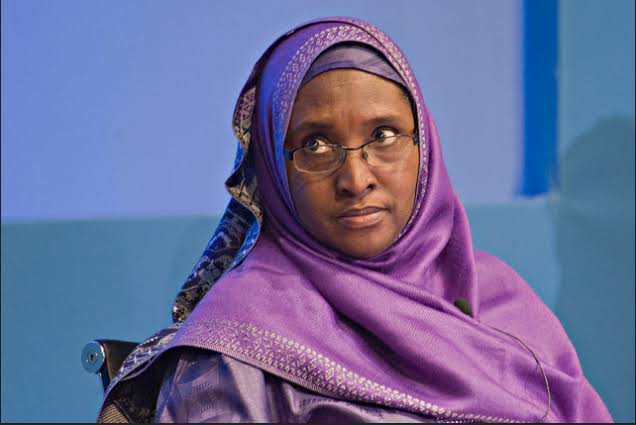
The Minister of Finance, Budget and National Planning, Mrs Zainab Ahmed, has claimed that the foreign rice smuggled into the Nigerian market is not good for human consumption.
Ahmad made the claim during a recent interview monitored by THE WHISTLER.
The minister while commenting on the gains of the Anchor Borrowers Programme which has gulped over N554.61bn also said Nigeria has become self sufficient in rice production.
Ahmed said, “We forget that we were importing rice into the country using foreign exchange that could be used for other things to import rice.
“So, the major benefit of the Anchored Borrowers Programme is that we are now actually all feeding ourselves with Nigerian rice and that is a huge achievement.
“We have become self-sufficient in rice production, we have also reached our target in maize production. We are still lagging behind in wheat production.
“Price of rice, which is the major staple consumed in the country, has been high. A bag sells for as high as N30,000.
“Unfortunately there’s a lot of distortion and the distortion is arising from smuggling of goods into the country, we have unpatriotic Nigerians that will bring rice that is poor quality, some of it not even fit for human consumption and come and dump it into the market making it problematic for the millers that are processing rice in the country to sell their own healthy high quality rice.
“In some cases, smugglers are even getting the rice for free, they rebag it and they bring it and sell it at a very low price making it problematic for the made in Nigeria rice.”
She said Nigerians have to understand that the imported rice is “rice that is classified not fit for human consumption in some countries and we have people that are unpatriotic enough to get it, bring it into our country and sell it for consumption.”
The minister said the market distortion does not mean that the commodity is not sufficient in the market.
She said “We don’t want a situation where we are subsidizing food, because we don’t want to create another subsidy. We are already battling with fuel subsidies. We are trying to exit it and it is a big problem.
“What we are doing is subsiding, encouraging and supporting the production of fertilizer. The Ministry of Agriculture is working towards bringing quality inputs and also they have research institutions that are developing quality inputs.
“Once we get the price of the input right, the price of fertilizer right, then it will reduce the high cost.”
Nigerian businessman and multi-investor, Sani Dangote has been confirmed dead.
Reports reaching Naija News at this time confirmed that the younger brother of Africa’s richest man, Aliko Dangote died after battling a terminal disease.
It was gathered that the Vice President of Dangote Group and a two-time President of Lagos Polo Club reportedly gave up the ghost at a United States of America hospital on Sunday evening, November 14.
Confirming Dangote’s demise in a short announcement on Sunday night, the Dangote group wrote: “INNA LILLAHI WA INNA ILAIHI RAJIUN! It is with a heavy heart but with total submission to Almighty Allah that we announce the passing on of our Group Vice President, Alhaji Sani Dangote today 14th November 2021.
“May Allah SWT Grant him mercy and Admit him in Aljannat-al-Firdaus “!
The deceased before his death, hold major investments in key sectors of the economy including manufacturing, agriculture, banking, and oil services.
Dangote had sat on the board of several other companies, including Nigerian Textile Mills Plc, Nutra Sweet Limited, Gum Arabic Limited, Dangote Textile Mills Limited, Alsan Insurance Brokers, Dan-Hydro Company Limited, Dansa Food Processing Company Limited and Dangote Farms Limited.
The deceased was also a two-time President of Lagos Polo Club in addition to being a professional polo player.
He was also appointed as the Consul-General of the Romanian Embassy in Nigeria in recognition of his sterling leadership qualities.
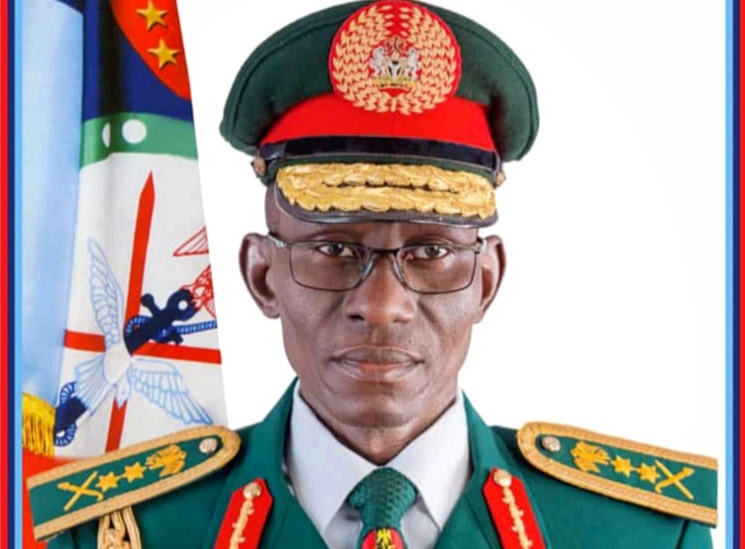
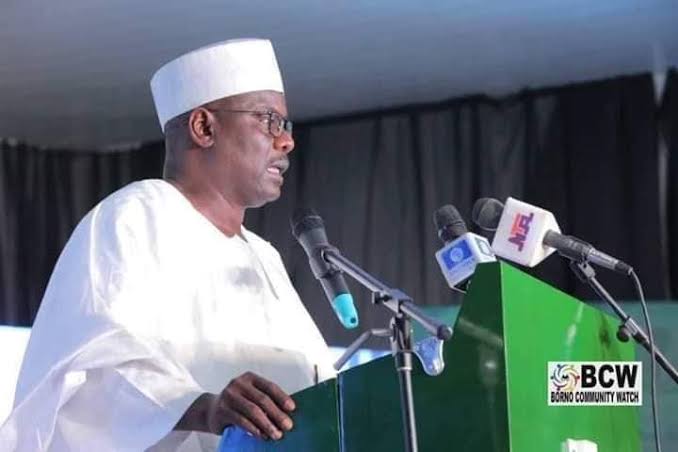
Senator Ali Ndume (APC-Borno South) has revealed that fighters of the Islamic State in West Africa Province, ISWAP, rammed a bomb-laddened car into the convoy of Brig-Gen. Dzarma Zirkusu.
Naija News had earlier reported that Brigadier-General Dzarma Zirkusu, a Commander of the Army’s Special Forces was killed by ISWAP terrorists in an ambush attack which also resulted in the death of other soldiers.
The terrorists had launched an attack against a military base in Askira/Uba LGA of Borno State.
Though troops of Joint Task Force, North East ‘Operation Hadin Kai’ also killed several of ISWAP terrorists during the clash that ensued, some military operatives paid the supreme price in the defence of their nation.
The incident was confirmed in a statement to newsmen by the Director, Army Public Relations, Brig-Gen Onyema Nwachukwu.
Speaking to newsmen on Sunday while reacting to the attack, Ndume, the Chairman, Senate Committee on Army, said the late General Zirkusu had become a problem for the terrorists group hence their need to take him out.
According to the controversial lawmaker, ISWAP fighters are regrouping in Borno North, which is the Lake Chad axis.
He stated that the Nigerian Army have been able to take out top commanders of the Boko Haram faction in recent times.
Ndume, however, pointed out that the intensity of the attack on Askira was worrisome, urging other security agencies to give the Nigerian Army the needed support.
“I want to express my condolences to the Nigerian Army over the death of the General who died along Chibok road,” Ndume said.
“ISWAP terrorists attacked a town there. They know that the General was the major obstacle to their operation. They laid an ambush and rammed a bomb-laddened car into his vehicle.
“He was a gallant soldier. He took the fight to the terrorists. His death has sent panic to people in that area.
“I am aware that some people around that Chibok area have started thinking of relocating.
“Some want to go to Mubi and other places. We are trying to urge them to remain there. The insurgency is coming to an end.
“This is not the end, but the beginning of the end of terrorists. I know that the Army has what it takes to take the fight to them.
“There is a need to urge other security agencies to give the Army the needed support. We also need to urge vigilante groups to assist them.
“For now, we will assume that it was an isolated case. But the intensity with which they came is worrisome.
“They came with more than 10 gun trucks. They are also regrouping around Borno North. That’s the Lake Chad axis.
“The military is aware and the Air Force is providing surveillance in the area. It was a revenge mission. The Army has been taking out key ISWAP commanders and they had their revenge.
“Last week, for instance, they abducted relatives of the Emir of Askira. They also abducted some passengers along that road. If the Army sustains the temple, we will win this insurgency.
“The equipments are arriving gradually. We are monitoring. As a committee, we will go and see what had been brought into the country.
“This is an improvement. The Army is very rapid in responding. The Army is involved in about 33 states now. They’re under pressure.”