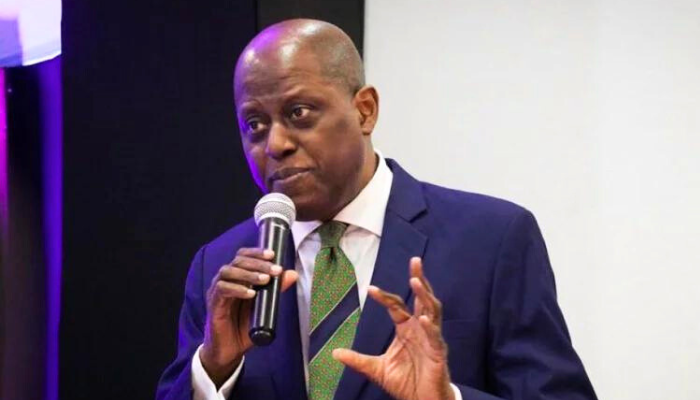
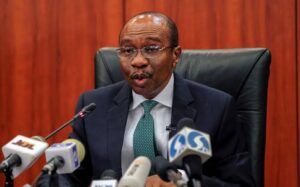
The Central Bank of Nigeria’s governor Mr. Yemi Cardoso expects headline inflation to fall to 21.4 per cent in 2024.
The apex bank’s governor disclosed this during his keynote speech at the launching of the Nigerian Economic Summit Group macroeconomic outlook report for 2024.
Cardoso said, “Inflationary pressures are expected to decline in 2024 due to the CBN’s inflation-targeting policy, which aims to rein in inflation to 21.4 per cent.”
According to him, the inflation targeting will help the government in its battle against inflation which hit 28.9 per cent in December. Lower rates will ultimately affect businesses, he alluded.
“The outlook for decreasing inflation in 2024 will have a profound impact on businesses, providing a more predictable cost environment and potentially leading to lower policy rates, stimulating investment, fueling growth, and creating job opportunities,” Cardoso said.
Emefiele: CBN sacks boards of Union, Titan, Keystone, Polaris banks
The Central Bank of Nigeria (CBN) has, with immediate effect, sacked the entire Board of Directors of Polaris, Titan, Union and Keystone Banks.
CBN sources say the decision was taken in a meeting led by the apex bank’s governor, Yemi Cardoso, on Wednesday in Abuja.
The source, who spoke on condition of anonymity, hinted that an official statement dissolving the board of directors will be released shortly.
The source said, “In the next hour, there is going to be official communication from the bank. We are working on it and an official statement will be sent soon.”
The action follows the recommendation of the Special Investigator, Jim Obazee, appointed by President Bola Tinubu in July 2023, to probe the activities of the CBN and other relevant establishments.
The report of the special investigation into the activities of the CBN had accused the immediate past governor of the apex bank, Godwin Emefiele, of acquiring banks for himself through proxies.
The report stated that Emefiele used proxies to acquire Union Bank of Nigeria for Titan Trust Bank Limited and Keystone Bank without any evidence of payment.
As a result, it recommended that the Federal Government reverse the sale of the banks and take them over.
Cash Crisis: Former Finance Minister Idika Kalu Blames CBN
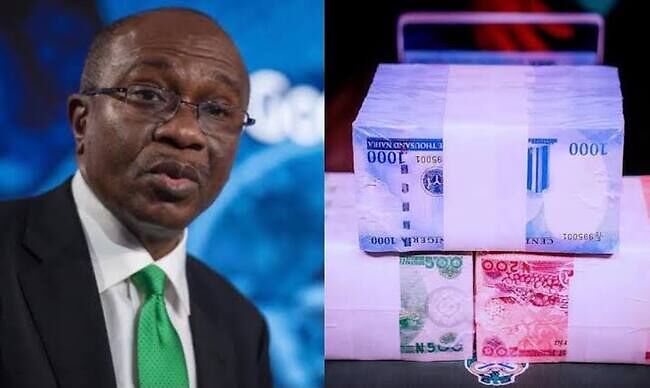
A former Minister of Finance, Dr Idika Kalu, has faulted the logistics of the Central Bank of Nigeria (CBN) for the crisis that has characterized the distribution of new N1000, N500 and N200.
Speaking on Channels Television on Friday, he noted that the new naira scarcity was a result of a huge logistic mistake.
He said, “It is obvious that what we are dealing with is huge logistic mistakes that have been made.”
Kalu added that the CBN ought to have done its preliminary assessment of how long and what it would take to ensure the efficient distribution of the new notes.
“You have to assess the timing, which is predicated on how long it will take to do the exercise that you want to do. So, that is where it is really up to the central bank and its advisers to come up to the government to say, you have agreed we will do this. This is how much time we need, every aspect of it, procuring the papers for printing, whether it is imported or locally made, the printing process itself, the logistics of identifying the various constituencies, the banks, the communities, the rural areas and all segments of this country.
“The people are not interested in all these details but you have to take into account how you are going to deliver. Is it by air, road, train or a combination of all that?,” he added.
He explained that the reason the new notes were not in banks when people needed them was due to poor logistics.
“The logistics have to be very carefully put together. It is very apparent that we did not do that. I think the logistics are really the problem not the question of jurisdiction,” Kalu noted.
He further faulted the CBN’s reasons for redesigning the old notes, stating that countries don’t change their currencies because they want to improve the effectiveness of monetary policies.
He also noted that there were other policies that the CBN and the Federal Government could have introduced if they wanted to tackle corruption and the high amount of currency in circulation.
Kalu also said that the naira redesign plan of the CBN would likely lead to a contraction in the economy.
He further questioned the metrics of inflation used to measure the effectiveness of the naira redesign policy.
“If you curtail the money supply, it will bring down inflation. But they will have to check on what it does to production and employment. So, it is not a one-dimensional measure of success,” he said.
He further described the naira redesign policy of the CBN as draconian, noting that there was something wrong with what the CBN was trying to do.
Heritage Bank, CBN adopt novel approach to boost wheat production capacity…To add 750, 000MTs via rain-fed cultivation, reduce annual import by 60%
In a bid to meet high demand amid poor production capacity of wheat, the Central Bank of Nigeria and Heritage Bank Plc have adopted a novel but more robust approach to boost local production and reduce dependence on importation.
The partnership is basically to consummate Wheat Seed Multiplication Project in Jos as part of the CBN’s Brown Revolution Initiative, the apex bank’s wheat value chain intervention to address the challenges in Wheat value chain, thereby increasing the domestic production of wheat and closing the wide supply gap in Nigeria agricultural space.
The novel initiative that will boost wheat production annually is being process via rain-fed cultivation, as this approach is actually the first ever wheat programme that it would be planted in wet season.
Meanwhile, as part of the pilot phase of the initiative, Heritage Bank financed the first ever large scale rain-fed wheat production in Nigeria.
Speaking at the flag-off ceremony for the Brown Revolution Initiative, which was the pilot project and also declared the 2021 dry season farming open in Jos yesterday, the Deputy Governor, CBN, Edward Adamu stated that the short-term benefit is the addition of about 2, 000 metric tonnes (MT) of high yield seed variety to the national wheat seed stock which is 20, 000MT currently.
According to him, this effort has the potential to add about 750, 000MT of wheat annually through rain-fed cultivation.
He noted that estimated that only one per cent or 63,000MT of wheat, out of the five to six million metric tons of wheat consumed annually was produced locally, whilst with the Brown Revolution and in partnership with Heritage Bank and others, CBN seeks to eliminate dependence on imported wheat by 60%.
The MD/CEO of Heritage Bank; Ifie Sekibo who frowned at that the country’s increased wheat importation bills affirmed that this strategic partnership would help reverse the trends and upscale domestic production of wheat to close the wide supply gap in the agricultural space.
As part of the Heritage Bank’s efforts to support the high yield seed variety to national wheat seed stock, Sekibo represented by the Head Agricbusiness and Export, Ugonwa Ikegwuonu explained that the bank set out to cultivate a total of 1, 000 hectares of farm land at the end of the year with at least producing about 5tonnes of wheat seeds per hectare in terms of yield.
“We set out to cultivate a total of 1,000 hectares of farm land but at the end of the day because of time constraints & other challenges, we have been able to cultivate 357 hectares. The crops according to the project manager are doing very well & in few weeks they will be ripe for harvest, in fact part of the farm is already ripe for harvest. So we set out with this partnership with two anchors which we call service providers,” he further explained.
Speaking during his welcome address, the Governor of Plateau State, Simon Lalong affirmed that Nigeria was on the path of Agricultural food sufficiency with the ‘Brown Revolution’ the rain-fed wheat would help curtail the $2billion spent on importation of wheat.
He further noted that the target of his administration was to attain zero-importation of wheat, attain wheat sufficiency in the economy and commence exportation to raise foreign reserve.
President of Wheat Farmers Association of Nigeria, Salim Muhammad stated that they have good understanding with Heritage Bank for its proactive approach to the objective of the rain-fed wheat production in Agriculture value chain.
He assured, “I assure you that at the end of this programme, by next season, it will be a different scenario/story because we are now doing on a very small scale but I’m sure by next season, the real revolution will start off and it will be seen all over Nigeria. Because, currently we are producing wheat in 16 wheat producing states. By the coming of this wheat dry season, seeds available and practicable; we are going to expand our scope to cover other areas that can produce wheat during the dry season. I’m not saying that we are going to cover the whole 36 states of the Country, but I assure you, by next season we will be thinking of about 20 to 27 states that we have.”
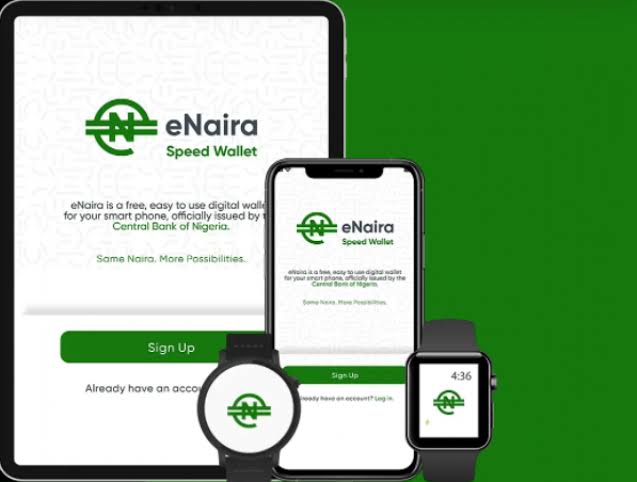
The E-Naira speed wallet has disappeared from the Google Play Store barely 48 hours after its launch, The PUNCH has observed.
However, our correspondent learnt that the eNaira merchant wallet, which is designed for businesses, is still running and has over 10,000 downloads on the Google Play Store made available to Android users.
Checks on the Apple App Store showed that the eNaira speed wallet was still active but had been upgraded.
To access the eNaira, users have to download the ‘speed wallet’, which allows them to conduct transactions with speed and ease. It is a digital storage that holds the eNaira and is held and managed on a distributed ledger.
Before it disappeared, the speed wallet had a rating of 2.0 from 2, 150 reviews as of Tuesday evening with many complaining of glitches.
AbokiFX Announces Interim Suspension Of forex rate updates as CBN investigates founder
ABOKIFX, the website that quotes daily foreign exchange rates against the naira, has announced the interim suspension of the updates on its platform following serious allegations of currency manipulation, speculation and illegal dealings in forex levelled against it by the Central Bank of Nigeria (CBN).
Godwin Emefiele, CBN Governor, had earlier vowed to prosecute the founder, Oniwinde Olusegun Adedotun after the regulator launched an investigation into the company and Oniwinde’s activities and blocked bank accounts linked to them.
In response, AbokiFX took the decision on September 17, 2021, to temporarily suspend rate updates on all our platforms, until it gets better clarity of the situation.
Meanwhile, final rates were posted on Friday but the abokiFX news section and the Crypto rates section would remain active.
Emefiele alleged that Oniwinde and his company operate 25 bank accounts in eight banks that are filled with money from his alleged speculative activities.
According to Emefiele, “The founder of AbokiFX is an illegal dealer with tens of millions invested across several Nigerian companies,” but vowed to track him down in his UK abode and have him prosecuted.
AbokiFX released the statement following the CBN governor’s statement after the MPC decision briefings.
AbokiFX was established in 2014 as a research and information service company, to conduct market research and gather data on the parallel market rates.
“We also wanted to provide some transparency around the parallel market with the availability of information technology,” the firm noted in a statement.
AbokiFX purely provides benchmark parallel rate information which helps guide users in almost 200 countries across the world.
The management says abokiFX does not trade in FX, which it has always maintained in its emails and social media platforms.
“We do not trade FX neither do we have the power to manipulate the rates as we do not create the rates. We are the only entity in Nigeria that has a full set of parallel rates, right from our inception in 2014 when the exchange rate was trading at N166 to $1.
“We collated data for years before we started publishing, as we realised the demand increased for our historical data,” a statement from the firm observed.
To most users of its platforms, it is just a parallel rates board but to many institutions, ranging from Ivy League universities to global businesses and research centres, “we are a key source of data, especially, historical data (almost a decade’s worth of data on parallel rates).
“Companies use our data for their internal and external audits as well as planning and budgeting,” it stated.
The firm added that it only publish what was sourced on the streets of Lagos, hence the phrase, Lagos Parallel Rates.
The rates sourced are carefully collated, reviewed and a mean rate is published from the data pool. This explains our three daily updates – * morning, ** midday, ***evening.
It should be remembered that in 2017, Nigeria experienced an FX crisis and the Naira depreciated to over N500/$1. AbokiFX was accused of manipulating the parallel market rates.
Once liquidity was injected, the Naira appreciated and it published the appreciation which is basically what it does.
It observed that 2021 has seen a similar scenario with the naira depreciating and “we have published what we have been given, which has led some to believe we are manipulating the market.
“Yet no one can complain about our rates deviating +/- 2 per cent from the parallel market rates when they patronise the dealers in the market. If we do not create the rates, how then can we control the rates. Our only sources of income have been our API and advert sales,” it explained.
The Central Bank of Nigeria’s Naira4Dollar scheme may have attracted about $40 million in foreign remittances in one week, according to a reliable source with knowledge of the scheme.
Sources informs that the scheme had performed a lot more than expected as remittances via commercial banks have picked up suggesting Nigerians in the diaspora have embraced it.
According to the source, the CBN received circa $40 million last week from remittances up from about $6 million before the policy was introduced. At $40 million a week the CBN could be attracting about $160 million a month or $1.9 billion per annum. This will be higher than the estimated $1.1 billion received in 2020 from diaspora remittances but much lower than the $3.2 billion received in 2019.
The central bank captures remittances in its Balance of Payment report and the Foreign Exchange Flows data. While the BOP includes non-cash items remitted into Nigeria, the Foreign Exchange Flows Data records cash items only.
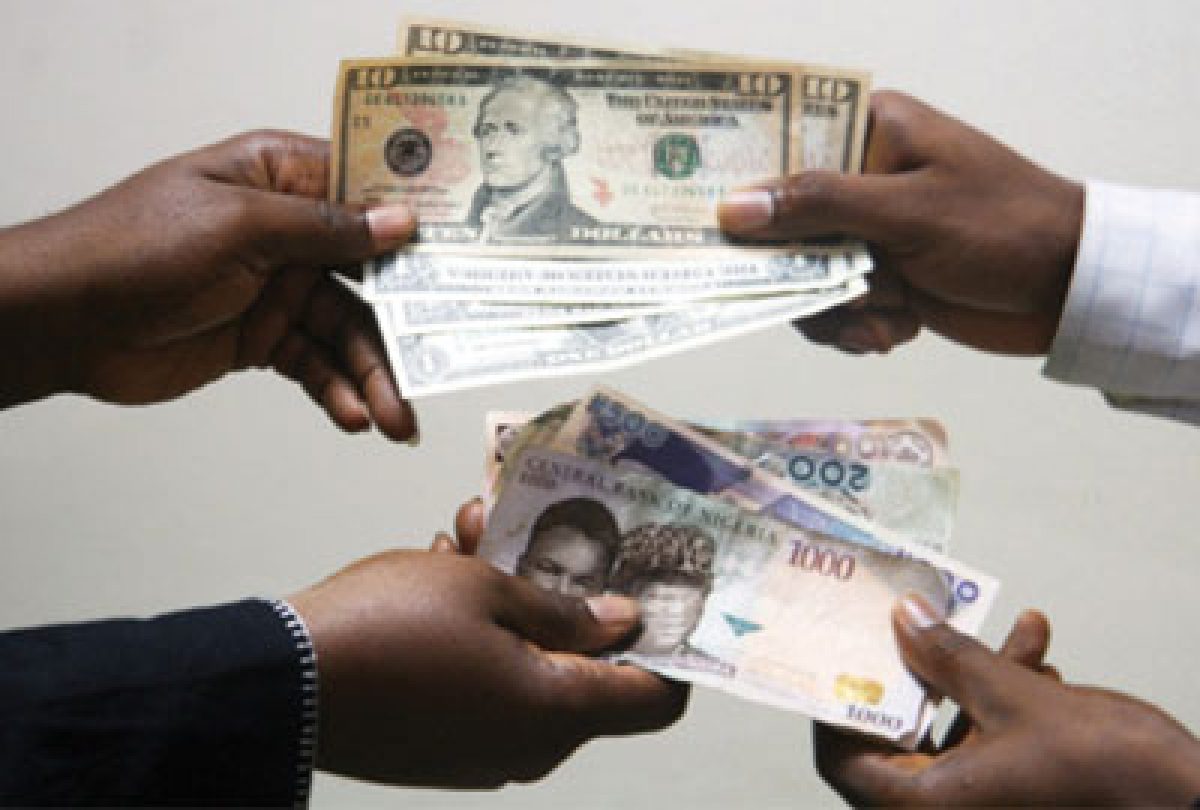
It was reported recently that commercial banks in Nigeria are automatically opening domiciliary bank accounts for Beneficiaries of diaspora remittances in Nigeria under the CBN’s Naira4Dollar scheme. As the beneficiary receives the inflows, N5 for every dollar remitted is a credit to the naira account of the beneficiary.
The CBN Naira4Dollar scheme appears to be recording success since its introduction three weeks ago. A $40 million a week inflow suggests most of the dollars are either in domiciliar account of customers or withdrawn and exchanged at the black market.
The CBN believes remittances paid in dollars and sold on the streets will improve liquidity in the retail end, thus strengthening the exchange rate.
However, the latest information suggests the exchange rate between the naira and dollar is N486/$1 higher than the N480/$1 exchanged just before the new policy was introduced.
At $40 million the CBN would have incurred a cost of about N200 million.
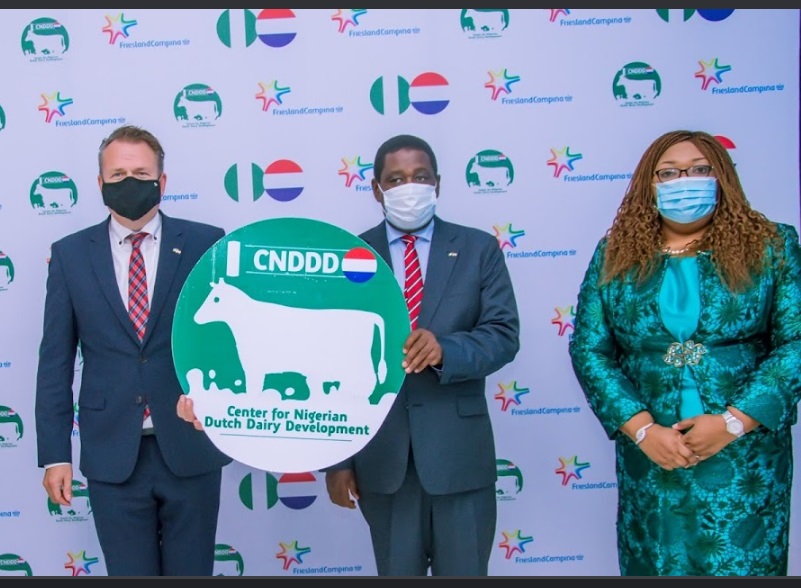
The Centre for Nigerian Dutch Dairy Development (CNDDD) has announced that it will host a webinar in partnership with the Federal Ministry of Agriculture and Rural Development (FMARD) and the Central Bank of Nigeria (CBN) on topics that will enable a sustainable national dairy sector and value chain in Nigeria.
The CNDDD webinar titled “Harnessing the Great Unpolished Diamond of Africa” slated for Wednesday March 10 at 10.00am will have pressmen in virtual attendance. Speakers at the webinar would include the Chief Operating Officer of URUS, Mr. Keith Heikes, Head of Animal Science, Nasarawa State University,Prof. Mohammed Maikano Ari and Corporate Director, Dairy Development, Royal FrieslandCampina, Mr. Jeroen Elfers.
The webinar would highlight the key building blocks required for a sustainable dairy sector in Nigeria and provide insights into best practices around cattle breeding and the importance of good animal nutrition. Please click to join: https://tinyurl.com/CNDDDWebinar
The Center for Nigerian Dutch Dairy Development is Nigeria’s first national expertise Centre for Dairy Development and it is committed to unlocking and developing dairy expertise for all stakeholders in the Nigerian dairy sector. The Centre seeks to drive a homegrown model for the entire dairy value chain in Nigeria as it partners with stakeholders including the government, universities and dairy value chain professionals.