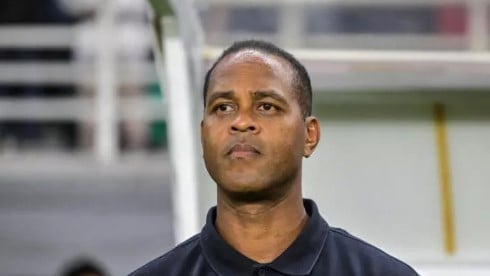
Patrick Kluivert’s stint as Indonesia coach is over after they “mutually” agreed to part ways Thursday following a failed bid to reach the World Cup.
Indonesia’s hopes of qualifying for the tournament in North America next year ended with defeats to Iraq and Saudi Arabia in the past week.
The 49-year-old Netherlands and Barcelona great, who was only appointed in January, was in charge for just eight matches.
He won three of his games in charge, losing four and drawing one.
Writing on Instagram, Kluivert called it “an unforgettable journey”.
He added: “Even though I’m deeply disappointed and sorry for the fact that we didn’t make it to the World Cup, I’ll always be proud of what we built together.”
The Dutchman took over following the controversial sacking of South Korean Shin Tae-yong.
The former striker signed a two-year contract at the start of the year, tasked with taking Indonesia to their first World Cup since gaining independence in 1945.
The Football Association of Indonesia, PSSI, said Kluivert’s departure was “through mutual termination”.
“This step was taken as part of a comprehensive evaluation of the national football coaching and development programme,” it added.
The statement did not name Kluivert’s successor.
Amsterdam-born Kluivert retired as a player in 2008 after a stellar career that started at Ajax, where he won the Champions League, before moves to AC Milan and Barcelona.
Kluivert’s managerial career has not been nearly as spectacular.
His previous coaching role was in charge of Adana Demirspor in Turkey for five months in 2023.
Before that he was caretaker manager of Curacao in 2021.
He was also number two to Louis van Gaal with the Dutch national side in 2012-2014.
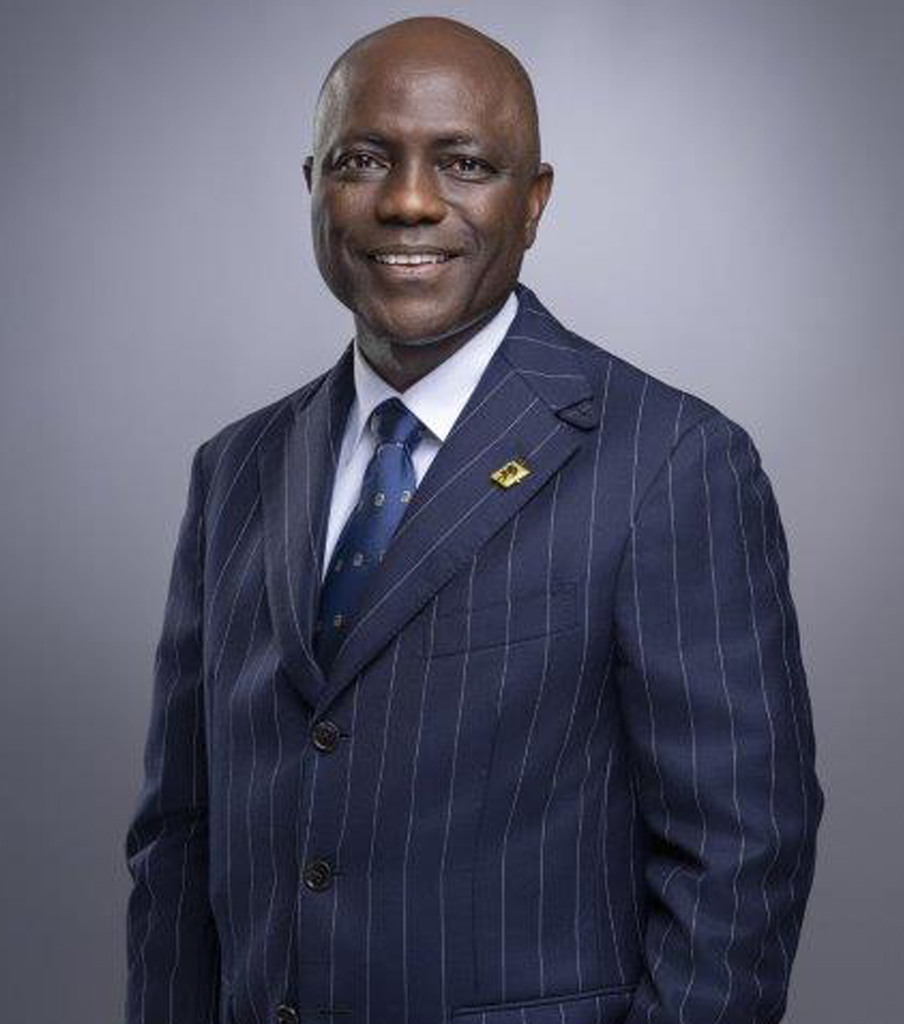
Olusegun Alebiosu’s Leadership Questioned as Fraud Scandals Rock First Bank
…Cases of Customers’ Funds Illegally Accessed Become Worryingly Frequent in First Bank
Banking thrives on trust — depositors rely on their banks to safeguard their money, while banks are expected to put robust measures in place to uphold that trust. However, in the case of First Bank under the leadership of Managing Director Olusegun Alebiosu, that trust appears to be eroding fast.
Once regarded as a financial fortress, First Bank is now facing allegations of rampant fraud, with both internal and external perpetrators reportedly having unfettered access to customer accounts. The situation has raised alarm across the industry, as fraud incidents within the bank have become increasingly frequent since 2024 — the very year Mr. Alebiosu took over.
First Bank, Nigeria’s oldest bank, has historically enjoyed a reputation built on customer loyalty and decades of reliability. But that image has been badly tarnished in recent months. According to industry watchers, the level of fraudulent activity is unprecedented, with some linking the escalation directly to lapses in the bank’s current management structure while some were of the notion that it is due to the incompetence of those at the helms of the bank affairs.
There has been so many issues with unauthorised transfer of deposit and withdrawal associated with the bank in recent times. This write up will be mentioning two of such incidents; one of such is the case of a customer whose video was posted on social media sometimes in July when she stormed a branch of First bank in Ibadan, Oyo State after her savings of N949,000 vanished from her account. In the video the distraught depositor was heard saying that her account was emptied without any form of notification like sms alert or email and while they were told to exercise patience the branch manager invited policemen to come and arrest them.
Similar incident is that of Charles Mary, a struggling entrepreneur, who is a customer of the bank. According to her a client paid a certain amount into her account on Friday 18th July, meant to execute the supply of certain materials, she decided to withdraw some money to pay for some of the materials needed through the First Bank ATM machine in Opebi around 5pm of the same day.
She explained that the ATM machine of First Bank at that branch did not dispense and she removed her card after few seconds and to her surprise she started receiving alerts while still in the vicinity of the bank.
To her surprise her account was not debited the amount she hope to withdraw from the ATM, instead debit alerts of five hundred thousand (500,000), two hundred thousand (200,000), ninety nine thousand (99,000) and fifty thousand (50,000) naira were received, without her compromising her account details in any form.
Findings revealed, it has become a pattern in First Bank, as customers details are exposed to activities of fraudsters, going by recent occurrence, many staffs of the bank are found to be working with these set of people.
Investigation shows two patterns that the fraudsters have been employing, the first style is that where alerts are not sent during and after the act, while the second is the illegal transfers and deduction being effected after closing of work on Friday so any action will wait till Monday since financial institutions don’t work on weekends.
While some customers are abandoning their account after transferring to other banks, some believed the bank will soon get it right. For many customers that are still holding on, the question on their minds remains: Can First Bank under Olusegun Alebiosu still guarantee the safety of their money?
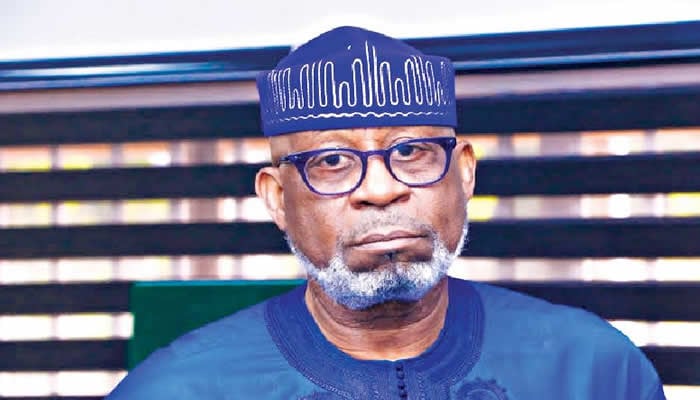
The Minister of Solid Minerals Development, Dr Dele Alake, says Schools in Nigeria charging tuition fees in foreign currencies should be closed.
Alake made the call at the Nigeria Gold Day Celebration on the sidelines of the 10th edition of Nigeria’s Mining Week, themed Nigeria Mining: From Progress to Global Relevance, on Wednesday in Abuja.
He criticised the practice and described it as a part of the leakages and loopholes in Nigeria’s economy, threatening its growth.
“I am still going to make a proposal to the Federal Executive Council that all those schools in Nigeria that are charging in foreign currencies should be closed.
“These are some of these leakages and loopholes that we say exist in our economy that people do not really take these things very seriously,” he said.
“If you look at the foreign currency that goes into some of this, it is humongous
“If your child is attending a school in Abuja or Lagos or somewhere in the country and is paying 10,000 pounds or 10,000 dollars as their fees, that means you will be looking for naira to go and buy dollars.
“Driving the value of dollar up, whereas this school is in Abuja in Nigeria, you can’t go to UK, establish a school, and then be charging naira, it’s not done.
“It’s only in this country that I see so many contradictory things that really demolish the economy,” he said.
The minister said the Federal Government was introducing various measures, including digital mechanisms, to ensure that all leakages in Nigeria’s gold value chain were blocked and every loophole sealed.
He said the move would reduce room for interpersonal transactions, thereby reducing the propensity of corruption, which would further position Nigeria’s gold as one of the global pillars of means of exchange of value.
He said the Federal Government’s National Gold Purchase Programme (NGPP), implemented through the Solid Minerals Development Fund (SMDF), was designed to shore up Nigeria’s foreign reserves and strengthen the naira.
Alake explained that the NGPP, a component of the Presidential Artisanal Gold Mining Initiative, allows the government to buy gold directly from artisanal miners in naira, rather than spending foreign exchange to purchase gold internationally.
In her remarks, the Executive Director of SMDF, Fatima Shinkafi, said that, unlike global trends, gold exploration funding in Nigeria was on an upward trajectory.
Shinkafi explained that, within the broader macroeconomic context, gold serves as a safe-haven asset and encouraged conference participants to explore Nigeria’s gold opportunities.
“We implore everyone here to examine Nigeria’s gold resources and support the minister’s efforts to make Nigeria a premier destination for junior miners.
“In another year or so, let’s look at Nigeria’s Gold Day 2025 as a pivotal turning point, “ she said.
NAN reports that the Nigeria Mining Week, holding from October 13 to 15, is organised by the Miners Association of Nigeria in partnership with PricewaterhouseCoopers and the VUKA Group.
Placards and slogans against France that surfaced in demonstrations against impeached President Andry Rajoelina this week exposed deep resentment against the former colonial power.
“France out,” “Rajoelina and Macron out,” said banners after French media reported that the president had fled on a French military plane as an army unit threw its weight behind protesters calling for his resignation.
“They are still colonising us even though we are supposed to be independent,” said Koloina Andrianina Rakotomavonirina, a 26-year-old engineer.
“It’s unfair that they intervene in such a matter,” she told AFP at a demonstration in central Antananarivo.
With the whereabouts of the 51-year-old president unknown, the national assembly impeached him on Tuesday for desertion of duty, paving the way for a military unit called CAPSAT to seize power.
Negative perception about France was not surprising considering its history, Paris-based political scientist Christiane Rafidinarivo told AFP.
Its colonisation of the Indian Ocean island until independence in 1960 was marked by several atrocities, including the bloody repression by French forces of a 1947 uprising which claimed tens of thousands of lives.
“France represents colonialism,” Rafidinarivo said. “This perception runs through public opinion and is triggered depending on current events.”
While President Emmanuel Macron refused to confirm French involvement in Rajoelina’s evacuation, a presidential pardon for two French nationals jailed in Madagascar on coup charges—announced as the reports of his departure broke—raised suspicions of a deal.
Citizenship revelation
Rajoelina’s apparently chummy ties with Paris have long been criticised at home, but media reports in 2023 that he had obtained French nationality nine years before deepened the mistrust.
The revelation came just before the 2023 presidential race and led to calls for him to be disqualified, as the opposition claimed he should have lost his Madagascan nationality as a result, according to local law.
Rajoelina went on to win reelection, but the polls were boycotted by most opposition parties and marked by a low turnout.
That sparked new criticism against France “because the opposition accused him of being a French agent,” said Adrien Ratsimbaharison, author of a book on the 2009 coup that brought Rajoelina to power but denied him international recognition.
French president at the time, Nicolas Sarkozy, was the first foreign head of state to recognise Rajoelina as president during a state visit to France in 2011.
“People did not forgive in France for that, because that gave Rajoelina some kind of legitimacy,” Ratsimbaharison said.
There were also suspicions that Sarkozy sent financial aid to Rajoelina to engineer the 2009 protests and secure the support of military personnel to overthrow then-president Marc Ravalomanana, he said.
Rumours, resentment
In Madagascar’s social media mix of disinformation and rumour, a widely shared but out-of-context image that claimed to show the deployment of French gendarmes to support the embattled Rajoelina outraged those who believed it.
The photo showed a Malagasy gendarme wearing French colours, but this was only because he had undergone training in France, the gendarmerie told AFP.
Resentment towards the former colonial power is also fuelled by the awarding of major contracts to French companies and open French sex tourism on the impoverished island.
Some French businesses, such as call centres, meanwhile, use French-speaking Malagasy workers at a fraction of the wages they would earn in Europe.
At one demonstration, 27-year-old Mampionona Razafinjoelina said he quit his call-centre job because: “I was tired of being insulted by the French.”
Amid the long-running animosity, Macron said on a visit to the island in April he wanted to create the conditions for “forgiveness” for France’s colonisation, which has also left a bitter taste in its other former colonies such as Mali, Burkina Faso, Niger and Gabon.
This included returning the remains of a Malagasy king killed by the French army in an 1897 massacre that were taken to France as trophies, which happened in September, as well as the establishment of a Franco-Malagasy commission to look into atrocities of the time.
Singer, Seyi Shay, has revealed the reasons for her isolation for over four years, citing the need to reflect on her life and personal growth.
In an interview with Chude Jideonwo seen by PUNCH Online on Thursday, the singer said the isolation helped her operate on a different level and has also helped her change the perception she had of men.
The interview marks one of the first in-depth public reflections from Seyi Shay in years, offering her fans and the public a clearer understanding of why she stepped back and what she gained in the process.
“I have done so much work over these past four years. The transformation of my mind started before I had my child. I started a journey of isolation. There is something really good about isolation, but I know some people say it is not good, but one thing for me is that I was blessed with hindsight and I could just reflect and I was also blessed with insight which in turn, gave me foresight and I think that is the biggest gift beside my daughter that God has given me these few years that I have been away.
“My spirituality has also transformed, and I am vibrating on such a different level now that I actually feel very comfortable with men. I love all the men. It is a man’s world,” she said.
She, however, revealed why she is not married to the father of her daughter, despite maintaining a close and respectful relationship with him.
She said, “It’s a technical issue, you understand? But he’s great, he’s cool, he’s around. He’s Nigerian, he’s in the UK at the moment, and he’s also in the music industry on the corporate side of things. We just work together, raising our child, and we are great friends.”
PUNCH Online had reported earlier that Nigerian singer Tiwa Savage revisited her long-standing rift with fellow artiste Seyi Shay, clarifying her side of the story regarding the infamous salon confrontation that went viral years ago.
Nigeria’s headline inflation rate eased to 18.02 per cent in September compared to 20.12 per cent in August 2025, indicating the sixth consecutive month of deceleration in inflation.
This was disclosed by the National Bureau of Statistics in the latest Consumer Price Index published on Wednesday. This also marked the first time in three years that inflation had fallen below the 20 per cent threshold.
The rebasing of the CPI has been a driver of the decline in inflation this year, which has resulted in the first rate cut by the Monetary Policy Committee of the Central Bank of Nigeria in years. The sustained dip in inflation supports the projection by economists that the MPC may still cut the benchmark rate.
According to NBS, the September 2025 headline inflation rate decreased by 2.1 per cent compared to the previous month. On a year-on-year basis, the headline inflation rate was 14.68 per cent lower than the rate recorded in September 2024 (32.70 per cent), marking a decrease compared to the same month in the preceding year.
However, on a month-on-month basis, the food inflation rate in September 2025 was -1.57 per cent, down by 3.22 per cent compared to August 2025 (1.65 per cent). The decrease can be attributed to the rate of decrease in the average prices of maize (corn) grains, garri, beans, millet, potatoes, onions, eggs, tomatoes, fresh pepper, etc.”
Core inflation, which is all items less farm produce and energy, stood at 19.53 per cent in September 2025. On a year-on-year basis, it declined by 7.9 per cent when compared to the 27.43 per cent recorded in September 2024.
On a month-on-month basis, the core inflation rate was 1.42 per cent in September 2025, down by 0.01 per cent compared to August 2025 (1.43 per cent). The average 12-month annual inflation rate was 22.39 per cent for the 12 months ending September 2025, which was 3.25 percentage points lower than the 25.64 per cent recorded in September 2024.
Urban inflation inched up month-on-month by 0.25 per cent to 0.74 per cent from 0.49 per cent in August. However, on a year-on-year basis, it stood at 17.50 per cent, which is about 17.63 percentage points lower compared to September 2024.
The rural inflation rate in September 2025 dipped on a yearly and monthly basis. It stood at 18.26 per cent (yearly) and 0.67 per cent (monthly).
At the state level, the headline inflation rate on a year-on-year basis was highest in Adamawa (23.69 per cent), Katsina (23.53 per cent), and Nasarawa (22.29 per cent), while Anambra (9.28 per cent), Niger (11.79 per cent), and Bauchi (12.36 per cent) recorded the lowest rise in headline inflation on a year-on-year basis. On a month-on-month basis, however, NBS said the highest increases were recorded in Zamfara (9.36 per cent), Adamawa (8.15 per cent) and Nasarawa (7.49 per cent), while Niger (-8.14 per cent), Oyo (-5.56 per cent) and Bayelsa (-4.61 per cent) recorded a decline.
Year-on-year, food inflation was highest in Ekiti (28.68 per cent), Rivers (24.18 per cent), and Nasarawa (22.74 per cent), while Bauchi (2.81 per cent), Niger (8.38 per cent), and Anambra (8.41 per cent) recorded the slowest rise. On a month-on-month basis, food inflation was highest in Zamfara (15.62 per cent), Ekiti (12.77 per cent), and Sokoto (12.55 per cent) and lowest in Akwa Ibom (-12.97 per cent), Borno (-12.95 per cent), and Cross River (-10.36 per cent).
Ahead of the release of the inflation data, the Senior Research Analyst at FXTM, Lukman Otunuga, had projected an easing in the inflation to 18.8 per cent.
He had pegged his projection on “A combination of softer food prices and a strengthening naira may have tamed price pressures. Further signs of cooling price pressures may pave the way for further rate cuts by the CBN in November to stimulate economic growth.”
The experts at Arthur Steven Asset Management also affirmed the sentiments that the MPC may cut rates at its last meeting of the year, saying, “Nigeria’s inflation eased to 18.02 per cent in September, marking the sixth consecutive month of decline following the 50 bps MPR rate cut in September. The sustained disinflation trend strengthens expectations of a possible further rate reduction at the next MPC meeting in November.”
AIICO Capital, in their Inflation Watch, said that the decline in inflation reflects the positive impact of recent government policy reforms.
“Notably, the Consumer Price Index was rebased earlier in the year to a new 2024 base year with an updated basket of goods, contributing to the sustained moderation in inflation. In addition, energy prices and the FX rate have remained stable, with the naira appreciating by 2.9 per cent in September 2025, its strongest level in 15 months. Encouragingly, both annual and monthly inflation have trended downward, easing immediate price pressures.
“Furthermore, following the Monetary Policy Committee’s decision to cut the benchmark interest rate by 50 basis points to 27 per cent in September, the sharp decline in inflation, now approaching the 15 per cent budget benchmark, signals the possibility of further rate cuts in the Monetary Policy Rate before year-end. However, sustaining lasting price stability will require consistent policy discipline, strengthened food security measures, and continued stability in energy prices to guard against renewed volatility.”
Senate Set to Screen new INEC Chairman, Amupitan Today
The Senate will today (Thursday) screen Prof. Joash Ojo Amupitan for the position of Chairman of the Independent National Electoral Commission (INEC).
The announcement was contained in a circular issued on Wednesday by the Director of Information for the Senate, Bullah Audu Bi-Allah, and made available to journalists in Abuja.
The development comes barely 24 hours after President Bola Tinubu’s letter seeking the speedy confirmation of Amupitan was read on the Senate floor by the President of the Senate, Godswill Akpabio.
The circular read in part: “The Office of the Secretary, Research and Information wishes to notify members of the press and the general public that the Senate will on Thursday, 16th October, 2025, conduct the screening of the nominee of President Bola Tinubu, Prof. Joash Ojo Amupitan, as INEC Chairman.
“The exercise is scheduled to hold at the Senate Chamber, National Assembly Complex. Members of the Senate Press Corps are kindly requested to provide their usual media coverage and support to ensure adequate dissemination of information to the public. Similarly, television stations are expected to extend the usual courtesies of providing live coverage of the event.”
Amupitan’s nomination, which followed last week’s endorsement by the National Council of State, marks a significant transition for the electoral body following the exit of Prof. Mahmood Yakubu after a decade at the helm of INEC.
In his letter to the Senate, Tinubu stated that the appointment was made “in line with Section 154 (1) of the 1999 Constitution (as amended)” and urged lawmakers to grant it their “usual expeditious consideration.”
“I am pleased to present for confirmation by the Senate the appointment of Professor Joash Amupitan, Senior Advocate of Nigeria, as Chairman of the Independent National Electoral Commission,” the President wrote.
Amupitan’s nomination comes at a politically sensitive time, with renewed debates over INEC’s independence and credibility following contentious post-election reviews.
While the Presidency described him as “an apolitical figure of impeccable integrity,” opposition parties and civil society groups have urged the Senate to ensure a transparent and rigorous confirmation process.
Today’s screening is expected to be closely watched nationwide, as it will set the tone for electoral reforms and test the administration’s commitment to credible polls ahead of the 2027 general elections.
Meanwhile, the Northern Nigeria Minorities Group has warned against attempts by individuals and interest groups to ethnicise Amupitan’s appointment.
In a strongly worded statement issued in Kaduna on Tuesday and signed by its Convener, Chief Jacob Edi, the group expressed concern over what it described as “divisive commentaries and social media tirades” questioning President Tinubu’s choice of the Kogi-born scholar.
Edi noted that Amupitan, an indigene of the Okun ethnic group in Kogi State, represents one of the minority nationalities in northern Nigeria and that his appointment should be celebrated rather than politicised.
“We view with consternation the ongoing attempts by certain individuals and interest groups to ethnicise the nomination of Professor Joash Ojo Amupitan, SAN, as Chairman of the INEC,” Edi said.
“For the avoidance of doubt, Professor Amupitan is an Okun man from Kogi State, one of the minority ethnic nationalities in Northern Nigeria. There are 19 states in the North, each richly diverse and unique, none superior to another by tribe, tongue, or faith.”
He expressed concern that “some self-styled northern voices” were portraying the President’s decision as an act of ethnic preference, describing such a narrative as “false, dangerous, and inimical to national unity.”
Edi, who also holds the title of Kakaki Basanghe, noted that this is the first time in 65 years—since the establishment of a statutory electoral commission in 1959—that someone from a northern minority group has been appointed to lead the nation’s electoral body.
“In all these decades, no northern minority group has ever questioned the decisions of successive Heads of State or Presidents to appoint individuals they felt comfortable working with, even when the North-West and North-East held the position consecutively for 15 years,” the statement added.
The NNMG urged Nigerians to recognise northern minorities as equal stakeholders in the Nigerian project and to desist from questioning their appointments to national offices.
Edi lamented that the “unfortunate trend” of delegitimising northern minority appointments began during the administration of former President Olusegun Obasanjo, when such appointments were derisively dismissed as “not northern enough.”
“The current ethnicisation of Professor Amupitan’s appointment is a direct continuation of that ugly and retrogressive trend, and it must stop,” he declared.
The group stressed that the North should not be defined by ethnicity but by inclusiveness and diversity, warning that those peddling divisive narratives were “the real enemies of national unity and progress.”
It further outlined four key points, asserting that the backlash over Amupitan’s appointment exposes a long-standing prejudice against northern minorities.
“This jejune narrative underscores our growing concern that some of our northern colleagues continue to perceive northern minorities merely as fillers of demography, unworthy of the privileges and recognition that come with our place in the federation,” it stated.
“Such thinking is antiquated, divisive, and inimical to the spirit of modern governance.”
According to the NNMG, 65 years after independence, Nigeria should be guided by competence, integrity, and capacity rather than ethnic considerations.
“The appointment of Professor Amupitan should be celebrated as a bold step toward inclusivity, equity, and meritocracy. These are values that must be internalised if we are to strengthen our democracy,” the statement added.
While commending President Tinubu for “recognising the diversity of the North,” the group said the President deserves credit for giving all constituent groups in the region a sense of belonging through his recent appointments.
Edi cautioned that further attempts to polarise the country along ethnic or sectional lines would only undermine democratic development.
“We urge political actors, commentators, and citizens alike to rise above petty identity politics and focus on building institutions that work, irrespective of who heads them. The time for ethnic arithmetic is over. The era of competence, fairness, and national responsibility must begin in earnest,” he said.
The group also maintained that northern minorities play a crucial role in stabilising the Nigerian federation, noting that collectively they represent “the real majority” that continues to believe in the unity and progress of the nation.
“We must reiterate, without ambiguity, that northern minorities collectively constitute the true stabilising force of this federation — and when placed together, we are not just minorities; we are the real majority that believes in the unity and progress of Nigeria,” Edi said.
He concluded by calling for an end to the politicisation of national appointments and urged Nigerians to rally behind Professor Amupitan as he prepares to lead the electoral commission.
“Let competence and fairness, not ethnicity, define our national discourse. The success of Nigeria’s democracy depends on it,” Edi added.
The Nigerian Association of Medical and Dental Academics has debunked rumours that its members are on strike.
The association clarified its position in a statement jointly signed by its President, Dr Nosa Lancy-Orhue; Secretary-General, Dr Abdulrahman Shehu; and National Liaison Officer/Organising Secretary, Dr Muhammad Askira, on Wednesday in Abuja.
NAMDA is the trade union for medical lecturers in universities, tertiary health, and research institutions.
It is responsible for undergraduate and postgraduate medical education, including the training of medical doctors and dentists in Nigeria.
The association reaffirmed that it remains an independent union with the capacity to negotiate its interests and uphold mutual respect.
“NAMDA is not on strike, and we will not be blackmailed, coaxed, or lured away from the interest of our members,” the statement read.
It said the clarification became necessary following persistent enquiries from members, the press and the public regarding its stance on the ongoing withdrawal of services by another academic union in the university system.
NAMDA said its members had been neglected for long but would continue to support legitimate demands that do not adversely affect their interests.
The association acknowledged ongoing engagements with the Federal Government through the Ministries of Labour and Education, which it described as “very encouraging”
It said the Minister of Education, through a meeting facilitated by the Minister of Labour and Employment, had promised to address key issues affecting medical lecturers.
“These demands include the implementation of the Consolidated Medical Workers Salary Structure (CONMESS) and the withdrawal of the compulsory PhD requirement for medical lecturers with postgraduate fellowship for academic promotion and eligibility to vie for the position of Vice-Chancellor,” the statement said.
NAMDA also called for the approval by the Federal Executive Council of the scheme of service contained in memorandum CM(90)92 of its 11th meeting in 1990, based on the recommendations of the committee chaired by the late Chief Justice Atanda Fatai Williams.
It said the issue of Earned Academic Allowances was also discussed.
The association noted that the minister apologised for the error in a letter from the Office of the Accountant-General of the Federation, which appeared to limit the benefit to members of the Academic Staff Union of Universities.
NAMDA alleged that some university managements, supported by a sister union, attempted to exclude its members from the EAA payment.
It cited the Abubakar Tafawa Balewa University, Bauchi, where the Governing Council had responded that medical lecturers were not entitled to the allowance.
The association said it had requested the Department of State Services to investigate how two conflicting letters on the same matter emanated from the AGF’s office.
NAMDA said it would continue to engage the Federal Government through the committee set up to negotiate with university unions to emphasise its long-standing demands.
“The conditions of service for medical and dental lecturers cannot be satisfactorily negotiated by anyone but medical academics under NAMDA,” it said.
The association urged the Federal Government to fast-track the circularisation of CONMESS and direct the National Universities Commission to reaffirm the withdrawal of the circular making a PhD compulsory for medical academics with postgraduate fellowships.
NAMDA said it reserved the right to adopt legitimate means, including legal actions, in pursuing its demands, adding that any withdrawal of service by the union would be guided by its constitution.
It warned that such an action, if ever taken, would have serious implications for the education and health sectors.
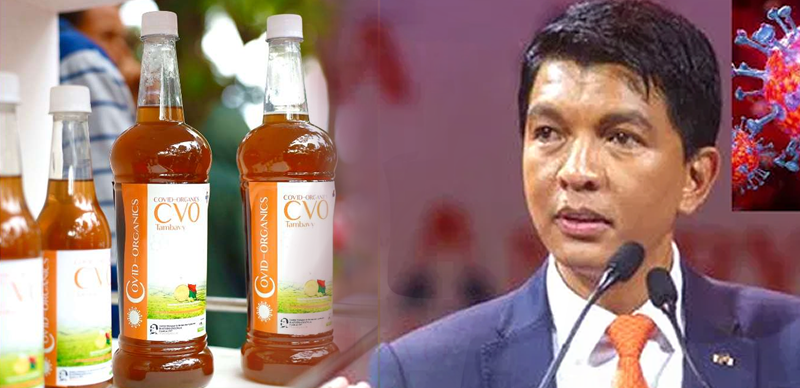
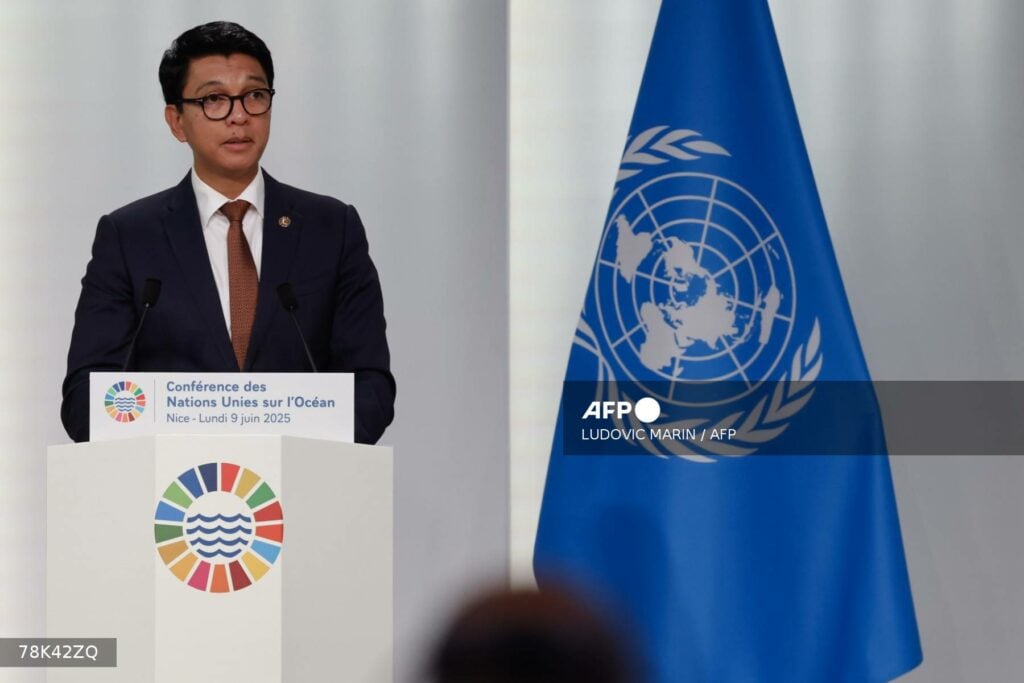
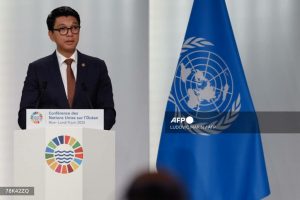
Madagascar’s President Andry Rajoelina on Tuesday dissolved the national assembly, pre-empting an opposition-led vote to force him out of office over the island nation’s spiralling political crisis.
Rajoelina has faced over two weeks of deadly street clashes, led largely by young demonstrators furious with the ruling elite, forcing the 51-year-old leader into hiding.
The decree to dissolve the assembly “shall enter into force immediately upon its publication by radio and/or television broadcast”, the presidency said in a statement published on Facebook.
Rajoelina, who has defied mounting calls to resign, defended the move in a separate social media post as necessary to “restore order within our nation and strengthen democracy.”
“The People must be heard again. Make way for the youth,” he said in a post on social media.
Opposition leader Siteny Randrianasoloniaiko said Monday they would vote to impeach Rajoelina for desertion of duty following reports he had fled the country.
Rajoelina, a former mayor of the capital Antananarivo, said late Monday he was sheltering in a “safe space” after attempts on his life, without revealing his location.
The protests began on September 25 and reached a pivotal point at the weekend when mutinous soldiers and security forces joined the demonstrators and called for the president and other government ministers to step down.
Among them was the elite CAPSAT unit, which played a major role in the 2009 coup that first brought Rajoelina to power.
To try to defuse the protests, the president last month sacked his entire government.
Radio France Internationale reported that Rajoelina departed Madagascar aboard a French military plane at the weekend but French officials have yet to respond to AFP’s request for confirmation.
The Joint Task Force Operation Enduring Peace has dismissed as “propaganda” a viral video in which a clergyman, identified as Rev. Dachomo, alleged a mass mobilisation of Fulani fighters through Nyerwai village in Barkin Ladi Local Government Area, Plateau State, and accused security forces of collusion.
PUNCH Online reports that in the video making rounds, a clergyman claimed a herder was killed and 36 cows were rustled, while another 49 animals were allegedly stolen in the area.
He also accused the Nigerian Armed Forces of complicity and accused Christians in positions of authority in the LG of betrayal.
But in a statement issued on Tuesday by its Media Information Officer, Major Samson Nantip Zhakom, JTF OPEP said the video was designed to inflame public sentiment and erode confidence in security agencies.
The statement read, “A viral online video has surfaced in which one Reverend (Rev) Dachomo makes alarming claims about potential Fulani terrorist attacks in the Dorowa area of Barkin Ladi LGA, Plateau State.
“He alleges an insider source revealed a mass mobilisation through Nyerwai and asserts that recent deaths in the community were linked. Furthermore, he claims that a visit to the headquarters yielded no confirmation of these reports and that troops had been withdrawn, leaving the community vulnerable.
“The Reverend’s accusations extend to claims of a Fulani leader influencing security forces to shield Fulani suspects from arrest. He also criticises Christian authorities for alleged inaction, suggesting a link to ISWAP. Dachomo’s statements culminate in a call to arms for local youths to defend themselves and a plea for prayer, painting a dire picture of the security situation in the region.”
In the video, the task force said the reverend’s “alleging mobilisation of Fulani terrorists through Nyerwai in Barkin Ladi LGA and accusing security agencies of collusion is a clear case of propaganda intended to inflame public sentiment and erode confidence in security agencies.
“The video emerged in the wake of heightened tension following the killing of a herder and 36 cows as well as the rustling of 49 others in the area, creating a volatile environment easily exploited by misinformation and invoking the name of the Fulani leader, referring to a court judgment in Adamawa State and accusing Christians in positions of authority of betrayal, the speaker deliberately employed emotionally charged and divisive narratives to whip up ethno-religious sentiments and curry favour from the local populace.”
The statement described the claims as baseless and warned the propagator to desist or face the full wrath of the law.
“Rev Dachomo’s accusation is baseless and aimed at causing unnecessary tension. The JTF OPEP condemns the misleading narratives and hereby warns the propagator to desist from causing panic and discord among the peace-loving people of the state, to abstain from such acts or face the full wrath of the law,” JTF OPEP noted.
Major Zhakom reiterated the task force’s commitment to protecting civilians and prosecuting those who spread misinformation that could jeopardise public safety.
“Troops of Operation ENDURING PEACE deployed within Sector 4 Areas of Responsibility (AOR) will continue to upscale their operational activities around Nyerwai and Dorowa to reassure residents of their safety.
“Also, the command of JTF OPEP condemns the incitement and remains fully committed to its mandate to restore peace and order in the Joint Operations Area (JOA).
“We call on all stakeholders – traditional leaders, religious leaders and civil society to avoid inflammatory rhetoric statements, instead rally around our common goal of a peaceful, united, and secure Plateau,” the statement concluded