
Lagos defends Trade Fair demolition, denies ethnic targeting


The Lagos State Government has defended the ongoing demolition of illegal structures at the Trade Fair Complex in Ojo, insisting that the exercise is a technical enforcement of planning laws and not targeted at any ethnic group.


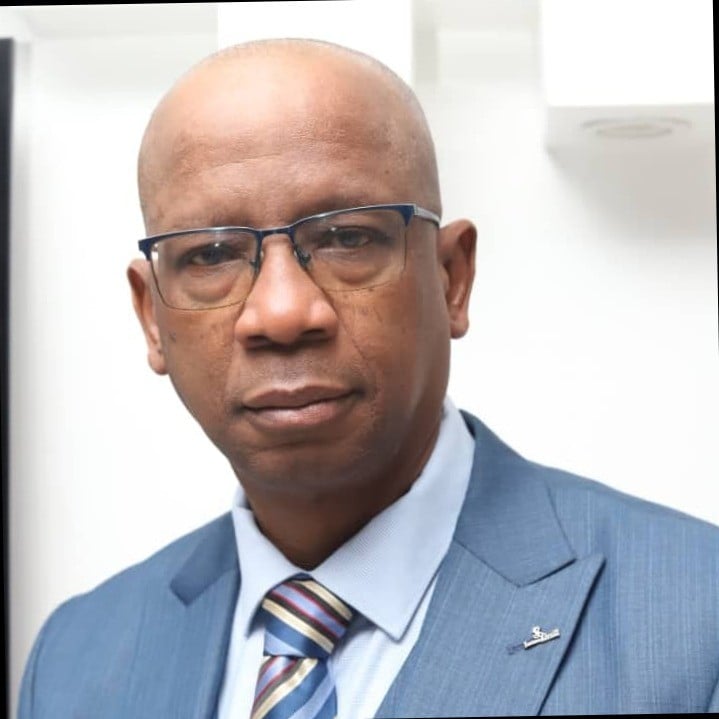
Commissioner for Physical Planning and Urban Development, Olumide Oluyinka, made the clarification on Thursday during an interview on Channels Television’s The Morning Brief, following criticisms that the exercise was discriminatory.


“That is not true. We have been to Owode Onirin, Idumota, and Ikeja. It has no ethnic correlation. The fact is that we just have to do our work. There is nothing ethnic here; it is purely technical,” he said.


He explained that several buildings inside the complex were constructed without statutory approvals, some in violation of basic safety standards.

“There has been a series of enforcement carried out on Lagos Island,” he added. “I personally led a team that even touched the palace of a white cap chief. This is Nigeria for all of us.


“The facts are clear; when you are in a place, you must live by the law of that place. It is as simple as that,” Oluyinka added.


The commissioner stressed that defaulters were given ample time to regularise their structures before the demolitions began, adding that government officials had faced harassment while serving notices.


He said, “I led a team there in March 2024. Between then and now is over a year and a half.


“We met with the Executive Director, and there was almost a confrontation, which is evidence that we were there.

“Our officers went there to serve notices and were locked up for five to six hours. We had to bring in the police to release them.


“Even this year, officers went there and were detained. So what more notice are they requesting? It’s not new to them that we were coming. We gave defaulters time. They must keep by the law.”


He added that the Trade Fair Management worsened the situation by leasing land to third parties who built without recourse to planning regulations.


The commissioner lamented the state of infrastructure at the complex, citing poor refuse management, blocked drainage, and dilapidated walkways, and argued that the government had a duty to sanitise the area.


“It’s a shame we allowed our Trade Fair to get to that extent. Refuse, passage, drainages, walkways, sewage, everything is in shambles.

“They should even be happy we are there to sanitise because that is our responsibility. We cannot allow it to continue,” he said.


On September 25, Lagos State authorities, led by the Ministry of Physical Planning, commenced the demolition of unsafe and illegal buildings at the complex.


The operation was carried out in collaboration with the Lagos State Building Control Agency, Urban Renewal Agency, and the Physical Planning Permit Authority, with security backup provided.

Tinubu to unveil $400m indigenous crude oil terminal in Rivers


President Bola Tinubu is scheduled to commission the $400m Otakikpo Onshore Crude Oil Export Terminal in Rivers State on October 8, the first new crude export facility to be built in Nigeria in over 50 years.


The facility, developed by Green Energy International Limited, operators of the Otakikpo field in OML 11, Ikuru town, Andoni Local Government Area of Rivers State, is the first wholly indigenous onshore terminal built in Nigeria. The last such facility, the Forcados Terminal, was commissioned in 1971.


The inauguration is expected to attract top government officials, including the Minister of State for Petroleum (Oil), Senator Heineken Lokpobiri, Rivers State Governor, Siminalayi Fubara, and key stakeholders across the oil and gas sector.


According to a statement signed by GEIL’s Executive Director of Legal and Corporate Services, Olusegun Ilori, on Thursday, the terminal aligns with President Tinubu’s drive to boost crude oil production and address Nigeria’s long-standing evacuation challenges.

“This project is a strategic infrastructure that supports the administration’s commitment to raising output while reducing costs,” Ilori said.


Industry operators have consistently highlighted evacuation bottlenecks as a major obstacle to meeting the Federal Government’s production target of three million barrels per day.

The Otakikpo terminal is expected to serve as a lifeline to more than 40 stranded oil fields by providing a reliable evacuation outlet, potentially unlocking millions of barrels of crude previously trapped underground.


With an initial storage capacity of 750,000 barrels, expandable to three million barrels, and a loading capacity of 360,000 barrels per day, the facility is also projected to reduce production costs for indigenous producers significantly.


Chairman and Chief Executive of GEIL, Professor Anthony Adegbulugbe, described the terminal as a “game-changing national infrastructure.”


“What we have achieved here is not just a storage solution, but a pathway for about 40 stranded oil fields to finally contribute to the economy,” Adegbulugbe said.


The commissioning underscores the Federal Government’s renewed efforts to restore investor confidence in Nigeria’s oil sector, which has struggled with declining production, pipeline vandalism, oil theft, and rising operational costs in recent years.

99.99 per cent of Nigerians lack access to justice – Legal expert


Legal practitioners and Civil Society Organisations have called for greater collaboration and systemic reforms to strengthen Public Interest Litigation in Nigeria.


The call was made during a special session hosted by Spaces for Change (S4C) at the PILNet Africa Regional Convening on Public Interest Litigation.


The Executive Director, S4C, Mrs Victoria Ibezim-Ohaeri, in a statement on Thursday in Lagos, highlighted S4C’s research-driven approach.


She noted that several pro bono legal interventions stemmed from extensive fieldwork and community-driven investigations.

The event was organised by PILNet, with S4C focusing on integrating human rights into social and economic governance through its rights-based research and advocacy.


Ibezim-Ohaeri cited her doctoral research on SARS operations in Anambra, explaining how many victims later secured compensation through the EndSARS judicial panels.


She added that S4C frequently partners with other research-focused organisations to uncover and document human rights violations across the country.


In a panel discussion, Prof. Adebisi Arewa of the Nigerian Institute of Advanced Legal Studies, described access to justice as the most essential human right.


He lamented the inadequate access to justice for ordinary Nigerians, stressing that its absence undermines national development and erodes human dignity.

“About 99.99 per cent of Nigerians lack access to justice,” Arewa declared, emphasising that strategic litigation both exposes systemic flaws and offers lifelines for marginalised citizens.


Former Nigerian Bar Association Chairman, Alex Morka, stressed the importance of institutionalising pro bono legal services nationwide.


He urged the NBA to consider making pro bono representation mandatory, while commending judges who assign senior lawyers to represent indigent defendants in capital cases.


On behalf of the National Human Rights Commission, Dr Lucas Koyejo, raised concerns about alleged human rights violations in Lagos.


Koyejo revealed that the NHRC’s Lagos office, which serves over 20 million residents, is staffed by only 12 lawyers, including himself.

“We receive countless complaints daily, some from individual citizens and others through partners like S4C. But our capacity remains overstretched,” he said.


The event also featured testimonies from victims of forced evictions, police brutality, and other abuses, many of whom had benefited from S4C’s legal interventions.


Their stories underscored the tangible impact of public interest litigation and the urgent need for sustained reforms in Nigeria’s justice system.


NAN

Nigeria @ 65: Nigerians deserve better than peanuts from politicians – Cleric


Achudume stated, “You find Nigerians excelling abroad in fields like medicine, tech, and education – showcasing their capabilities. But back home, we grapple with leadership gaps and infrastructural deficits holding us back.”


He commended the Federal Government’s Student Loan Scheme as a positive stride towards boosting educational access.


“The Federal Government’s student loan initiative is a right step that will go a long way in supporting education,” he said, adding that such programmes should not be politicised or hijacked by politicians.

“Often, when governments send money or empowerment support meant for market women and other beneficiaries, it doesn’t get to them because of politicization,” Achudume cautioned.


He also criticised the prevalent practice of vote-buying during elections, involving handouts like indomie and petty gifts.


“Nigerians deserve better than peanuts from politicians during elections – we need leaders who genuinely understand the common man’s hardships,” Apostle Achudume emphasised.


According to him, Nigeria requires environments nurturing business growth, innovation, and intellectual pursuits.


“For Nigeria to realize her giant potential, we need leadership attuned to citizens’ needs and ecosystems that empower talent,” he noted.


He called for transformative leadership focusing on grassroots realities.


“Leadership feeling the pulse of ordinary Nigerians is crucial if we’re to match Nigeria’s global footprint with domestic progress,” Achudume said.

Nigeria needs accountable leadership for real transformation – Natasha


The lawmaker representing Kogi Central, Senator Natasha Akpoti-Uduaghan has expressed concern that Nigeria cannot experience real transformation without accountable leadership as the country marks its 65th Independence anniversary.


She disclosed this In her congratulatory message issued in Abuja on Wednesday.


The Federal Government had declared Wednesday, October 1, a public holiday to commemorate the country’s independence from Britain in 1960.


However, in a late announcement on Monday, the Office of the Secretary to the Government of the Federation disclosed that the traditional Independence Day parade would no longer be held.

In her statement, Akpoti-Uduaghan described Nigeria as a nation at a crossroads, grappling with insecurity, economic hardship, and inequality, but still showing resilience through innovation and creativity.


“The Nigeria our heroes envisioned is not one divided by ethnicity, religion, or politics, but one united by shared values of justice, equity, and prosperity.


“Building such a Nigeria requires a collective will—a government accountable to its people, a citizenry committed to nation-building, and a leadership rooted in service and integrity,” she said.

Continuing, the lawmaker stressed that Independence Day should serve as a sober reminder of the vision of those who fought for freedom.


She also urged Nigerians to transform the country’s vast potential into tangible progress for future generations.


“Independence Day is more than a date etched in history. It is a reminder of the sacrifices of our founding fathers and mothers… Today, we must honour their memory not with words alone, but by carrying forward their vision of a nation that truly works for all.


“Sixty-five years on, the task before us is clear: to ensure no Nigerian is left behind and to pass on a country worthy of pride. By honouring our past, embracing the present, and marching with hope, we shall bring to life the Nigeria our heroes envisioned,” she stated.


The National Assembly had earlier unsealed the office of Akpoti-Uduaghan.


PUNCH Online understands that her office, located in Suite 2.05 of the Senate was unsealed by the Sergeant-at-Arms of the National Assembly, assisted by security personnel.


The office had been under lock and key since March 6, 2025, when the senator was suspended from the Red Chamber.

Nigeria @ 65: FCT one of Nigeria’s safest places – Wike


The Minister of the Federal Capital Territory, Nyesom Wike, has declared Abuja one of the safest cities in Nigeria, crediting both security measures by the administration and the commitment of residents to peace and harmony.


Speaking in his Independence Day anniversary message on Wednesday, Wike commended residents for intentionally living in peace and harmony, “in spite of a few distractions.”


He stressed that Abuja’s relative calm was not accidental, but the result of deliberate efforts by government and the cooperation of citizens.


“Residents have also remained intentional about living together in peace and harmony in spite of a few distractions.

Consequently, the FCT has become one of the most peaceful places to reside in the entire country.

“This is not only due to the security measures we have put in place, but also because of zero tolerance of residents for insecurity, and their readiness to promote peace in every part of the Territory.”


While commending the capital’s record, Wike urged residents not to be complacent. He assured that his administration, working with law enforcement agencies, was committed to ensuring security and law and order at all times.


“I, therefore, appeal to all residents to go about their lawful businesses, to be watchful over their neighbourhoods and to report all suspicious movements to the law enforcement agents.”

The Minister also reminded residents that the FCT would once again set the pace for Nigeria’s election season, when it holds its Area Council elections in February 2026.


He appealed for calm, orderly campaigns and urged residents to choose leaders who had the interest of their people at heart.


“Come February 2026, the FCT will kick off the electioneering process in the country as residents head to the polls to elect new chairmen and councillors for the six area councils.


“I implore residents to go about campaigning for candidates of their choice in a peaceful and orderly manner. I also encourage everyone to come out en masse when the time comes, to vote for leaders who evidently have their interest at heart; leaders who have vision and capacity to attract development and prosperity to the people,” he said.


Wike’s comments on security in the FCT follows recent news of the death of 29-year-old Somtochukwu Maduagwu, a reporter and News anchor with Arise Television News, who died in Monday, after jumping from the third floor of her apartment building to escape armed robbers.


The Minister has pledged support for Police investigation, describing her death as tragic and unacceptable.


US govt shutdown begins after Congress fails to reach deal


The US government began shutting down on Wednesday after lawmakers and President Donald Trump failed to break a budget impasse during acrimonious talks that hinged on Democratic demands for health care funding.


Republicans and Democrats immediately blamed each other for the deadlock that will impact hundreds of thousands of government workers and the millions of Americans who use the services they provide.


The shutdown, which will stop work at multiple federal departments and agencies, comes as deep partisan divisions in Washington have raised fears over what will be the length and consequences of the halt.


Trump threatened to punish Democrats and their voters by targeting progressive priorities and forcing mass public sector job cuts during the first stoppage since the one during his previous term.


“So we’d be laying off a lot of people that are going to be very affected. And they’re Democrats, they’re going to be Democrats,” Trump told reporters in the Oval Office.

He said a “lot of good can come down from shutdowns,” and suggested he would use the pause to “get rid of a lot of things we didn’t want, and they’d be Democrat things.”


Government operations began grinding to a halt at 12:01 am (0401 GMT) on Wednesday, after a frenetic but ultimately failed bid in the Senate to rubber-stamp a short-term funding resolution already approved by the House of Representatives.


Top Senate Democrat Chuck Schumer posted a video on social media that showed a clock ticking down to midnight over an image of the US Capitol building.


“The Republican shutdown has just begun because Republicans wouldn’t protect America’s health care,” he said. “We are going to keep fighting for the American people.”


The shutdown will not affect vital functions like the Postal Service, the military and welfare programs like Social Security and food stamps.


But up to 750,000 workers could be sent home each day and would not be paid until the shutdown was over, according to the Congressional Budget Office.


This is the first shutdown since the longest one in US history — lasting 35 days — almost seven years ago during Trump’s previous term.

Hopes of a compromise had been hanging by a thread since Monday, when a last-gasp meeting at the White House yielded no progress.


The gridlocked Congress regularly runs into deadlines to agree on spending plans, and the negotiations are invariably fraught. But Congress usually avoids them ending in shutdowns.

Democrats, in the minority in both chambers of Congress, have been seeking to flex their rare leverage over the federal government eight months into Trump’s second presidency, that has seen entire government agencies dismantled.

– How long? –


Trump’s threat of new job cuts added to anxieties in the federal workforce, sparked by large-scale firings orchestrated by tycoon Elon Musk’s Department of Government Efficiency earlier this year.


Republican House Speaker Mike Johnson wrote on X after the shutdown began to ask, “How long will Chuck Schumer let this pain go on — for his own selfish reasons?”


“Results: Moms and kids now lose WIC nutrition. Veterans lose health care and suicide prevention programs. FEMA has shortfalls during hurricane season. Soldiers and TSA agents go UNPAID,” Johnson wrote.


Former Democratic presidential hopeful Kamala Harris wrote on X that the Republicans were in charge of the White House and both houses of Congress.


“This is their shutdown,” ex-vice president Harris wrote.


The 100-member Senate requires government funding bills to receive 60 votes — seven more than the Republicans control.


Republicans had proposed to extend current funding until late November, pending negotiations on a longer-term spending plan.

But Democrats wanted to see hundreds of billions of dollars in health care spending restored, particularly in the Obamacare health insurance program for low-income households, which the Trump administration is likely to eliminate.


Almost all Senate Democrats voted against a House-passed, seven-week stopgap funding measure hours ahead of the midnight deadline.


It remains unclear how long the shutdown will last.


The federal government has shuttered 21 times since 1976, when Congress enacted the modern-day budget process.


The longest began on December 22, 2018, when Democrats and Trump found themselves at an impasse over $5.7 billion that the president was demanding for a border wall during his first term.

Nigeria’s foreign reserves highest since 2019 — Tinubu


President Bola Tinubu on Wednesday said Nigeria’s economy had recorded significant improvements in foreign reserves, tax revenues, and trade balance, describing the gains as proof of resilience and diversification.


In his Independence Day broadcast to mark the country’s 65th anniversary, the President said, “We have a stronger foreign Reserve position than three years ago. Our external reserves increased to $42.03 billion this September — the highest since 2019.”


He explained that fiscal reforms were yielding results, with the country’s tax-to-GDP ratio improving in recent months.


“Our tax-to-GDP ratio has risen to 13.5 per cent from less than 10 per cent. The ratio is expected to increase further when the new tax law takes effect in January. The tax law is not about increasing the burden on existing taxpayers but about expanding the base to build the Nigeria we deserve and providing tax relief to low-income earners,” he said.

Tinubu also pointed to trade as an area of positive turnaround. “We are now a Net Exporter: Nigeria has recorded a trade surplus for five consecutive quarters. We are now selling more to the world than we are buying, a fundamental shift that strengthens our currency and creates jobs at home,” he said.

According to him, the progress marks the country’s gradual shift from overdependence on oil.


“Nigeria’s trade surplus increased by 44.3% in Q2 2025 to ₦7.46 trillion ($4.74 billion), the largest in about three years. Goods manufactured in Nigeria and exported jumped by 173%. Non-oil exports, as a component of our export trade, now represent 48 per cent, compared to oil exports, which account for 52 per cent. This signals that we are diversifying our economy and foreign exchange sources outside oil and gas,” Tinubu stated.


PUNCH Online reports that in 2022, reserves fell by $3.43 billion.


That decline reflected constraints from low oil production, capital flight, falling export earnings, and persistent external obligations.

Tinubu hails Nigeria’s growth in health, tech, defence since independence


President Bola Tinubu has hailed Nigeria’s progress in key sectors such as healthcare, technology, infrastructure, and defence since gaining independence 65 years ago, saying the country has recorded “a significant surge in growth across every sector of our national life.”


The President stated this in his national broadcast on Wednesday to mark Nigeria’s 65th Independence Anniversary.


While acknowledging that the nation has faced major trials, Tinubu said the journey since 1960 has also been marked by resilience and remarkable achievements.


“Although it is much easier for those whose vocation is to focus solely on what ought to be, we must recognise and celebrate our significant progress. Nigerians today have access to better education and healthcare than in 1960,” he said.

He noted that at independence, Nigeria had only two tertiary institutions, the University of Ibadan and Yaba College of Technology, compared to the 274 universities, 183 polytechnics, and 236 colleges of education spread across the country today.


“We have experienced a significant surge in growth across every sector of our national life since Independence, in healthcare, infrastructure, financial services, manufacturing, telecommunications, information technology, aviation and defence, among others,” Tinubu added.

The President described the nation’s endurance through crises, including the civil war, military rule, and recurring political upheavals, as proof of its determination to survive and thrive.


“For decades, the promise of our Independence has been tested by profound social, economic, and political challenges, and we have survived. While we may not have achieved all the lofty dreams of our forebearers, we have not strayed too far from them,” he declared.


Nigeria celebrated its 65th Independence Anniversary on 1 October 2025, with Tinubu delivering his third anniversary address since assuming office in May 2023.


Unlike previous years, the Federal Government cancelled the traditional military parade in Abuja, citing cost-saving and logistical reasons.


Tinubu’s remarks come at a time of renewed debate over his administration’s economic reforms, including the removal of fuel subsidy and foreign exchange unification, which have triggered inflation and hardship for many citizens.


While defending the reforms as necessary for long-term stability, the President used the anniversary broadcast to highlight the country’s broader achievements in nation-building since 1960, framing Nigeria as a nation that has endured challenges but continues to make progress.

With God’s help, a new, stronger Nigeria possible – Tinubu


President Bola Tinubu has called on Nigerians to unite in building a stronger nation, assuring that his administration’s reforms are laying a solid foundation for a prosperous future.


PUNCH Online reports that Nigeria marked its 65th Independence Anniversary on Wednesday, October 1, 2025, commemorating the country’s freedom from British colonial rule in 1960.


Traditionally, the occasion is celebrated with nationwide parades, cultural events, and presidential addresses.


However, this year’s commemoration was toned down following the Federal Government’s cancellation of the usual ceremonial parade in Abuja, citing cost-saving and security considerations.

Addressing the nation during Nigeria’s 65th Independence Anniversary on Wednesday, the President urged citizens to support his government’s efforts to reset the economy and promote productivity, noting that with God’s help, a new, stronger Nigeria will emerge.


“Fellow Nigerians, I have always candidly acknowledged that these reforms have come with some temporary pains. The biting effects of inflation and the rising cost of living remain a significant concern to our government.


“However, the alternative of allowing our country to descend into economic chaos or bankruptcy was not an option,” he said.


He further stressed that progress would not be measured by figures alone but by improvements in daily life.

“The accurate measure of our success will not be limited to economic statistics alone, but rather in the food on our families’ tables, the quality of education our children receive, the electricity in our homes, and the security in our communities,” he declared.


Calling for renewed patriotism, Tinubu urged Nigerians to prioritise homegrown solutions.


“Let us be a nation of producers, not just consumers. Let us farm our land and build factories to process our produce. Let us patronise ‘Made-in-Nigeria’ goods. I say Nigeria first. Let us pay our taxes.


“Finally, let all hands be on deck. Let us believe, once more, in the boundless potential of our great nation. With Almighty God on our side, I can assure you that the dawn of a new, prosperous, self-reliant Nigeria is here”, the president remarked.


PUNCH Online reports that Tinubu, who assumed office on May 29, 2023, has made economic reforms the cornerstone of his administration’s “Renewed Hope Agenda.”


Since taking office, his administration has implemented far-reaching but controversial policies, including the removal of fuel subsidy and the unification of foreign exchange rates.

While the policies were aimed at stabilising the economy and freeing up resources for development, they triggered a sharp rise in the cost of living, with inflation hitting households hard.


However, the President has repeatedly defended the reforms as “painful but necessary,” assuring that the economy is gradually stabilising.


Exit mobile version