How Women’s Participation Can Bridge Digital Gender Divide – Adeniyi
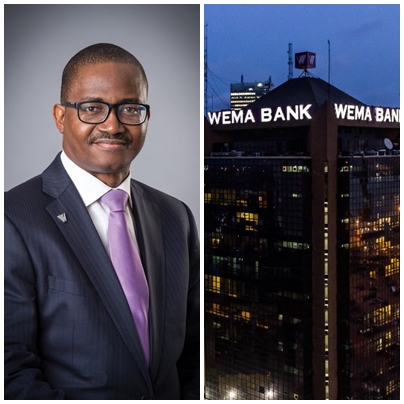
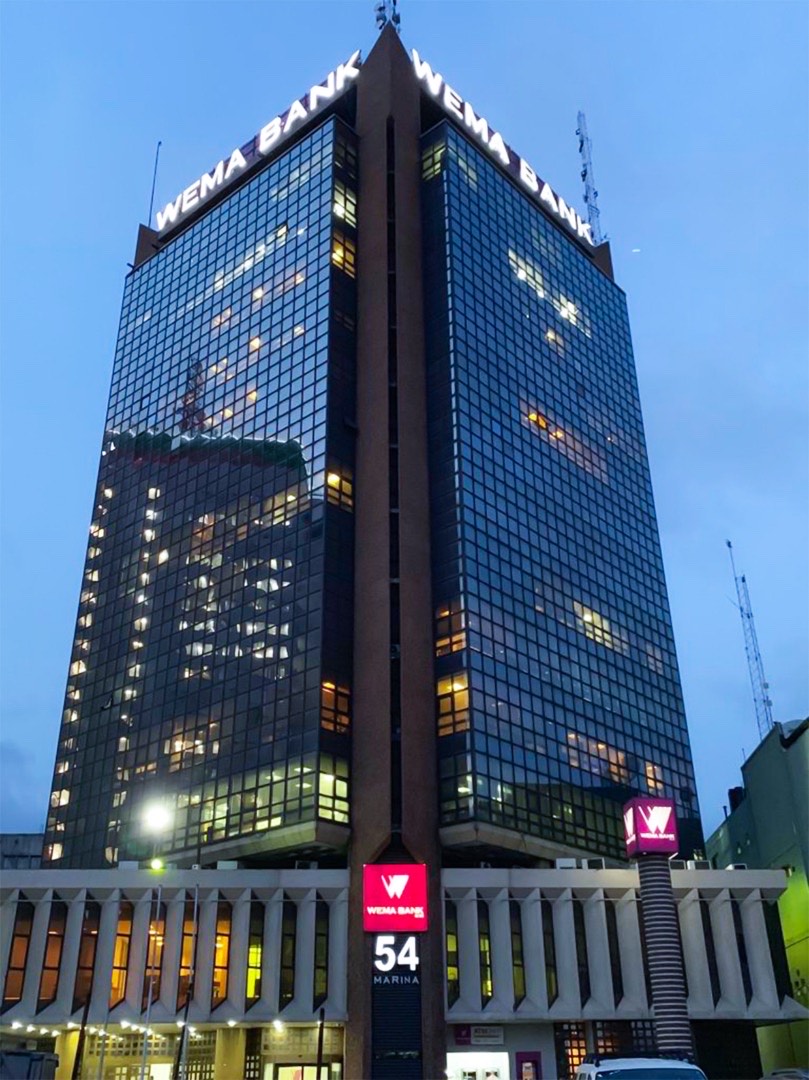
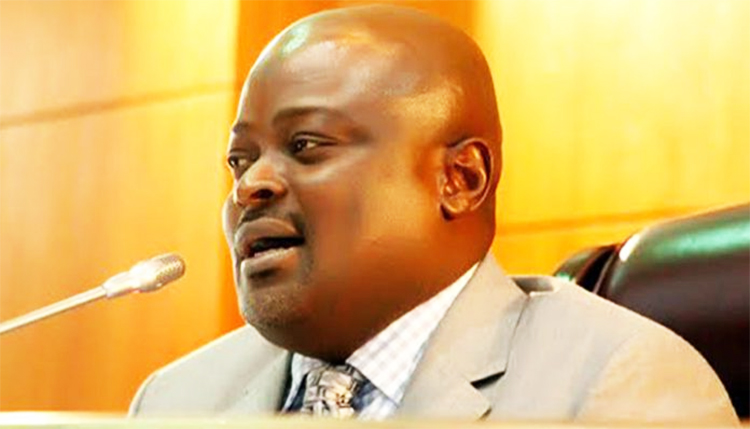
With growing concern over the participation of women in the tech industry, it has become imperative to establish a roadmap that will help draft more women into the sector. Speaking recently at the 2022 edition of SheCan Conference in Lagos, the Chief Digital Officer of Wema Bank Plc, Mr Olusegun Adeniyi identified various areas where women can take part in the growing digital economy to stem the current female underrepresentation in the sector.
Speaking on the subject, “She can do more in technology,” Mr Adeniyi said more women’s participation would address the imbalance and gender diversity in the digital space and create greater prosperity in the world.
He established opportunities for women in the digital sector to include cloud computing, green economy, sales, product development, content production and writing. Other opportunities, according to him, are marketing, e-commerce, product development, and digital healthcare services, among others.
Quoting the World Economic Forum’s 2018 report on the “Future of Jobs”, he said we could create globally about 150 million new technological jobs in the next five years but lamented that women were grossly underrepresented in the digital sector in developing countries.
“The International Telecommunications Union “Digital Gender Divide survey” reports that women using the internet are 12 percent fewer than men and are four times less likely to use digital technology,” he said.
Noting that more traditional jobs would become technological jobs soon, he advised women to embrace science, technology, engineering, and mathematics to play well in the digital sector.
Adeniyi also called for the eradication of the stereotype that only men can play in the sector and stressed the need for women to be encouraged and supported to close the digital gender divide.
More importantly, he canvassed for a paradigm shift among women to use technology and for them to gain criteria thinking skills, interactive, leadership, self-awareness and other skills that would immune them from machine replacement.
Wema Bank’s partnership over the past few years has resulted in the empowerment of over 5,000 women across various locations in Nigeria.The bank, through its Sara By Wema proposition, has led the frontier for women’s empowerment through initiatives like Shecan Nigeria, while also providing financial support through loans, business advisory, discounted health plans and networking opportunities.
His generosity and philanthropy are without equivalence, but some prefer to loathe him for these good virtues and in his usual self still remains a man that cannot be ignored from the consciousness of those who have drunk from his fountain of knowledge, wisdom, wealth and political clout.
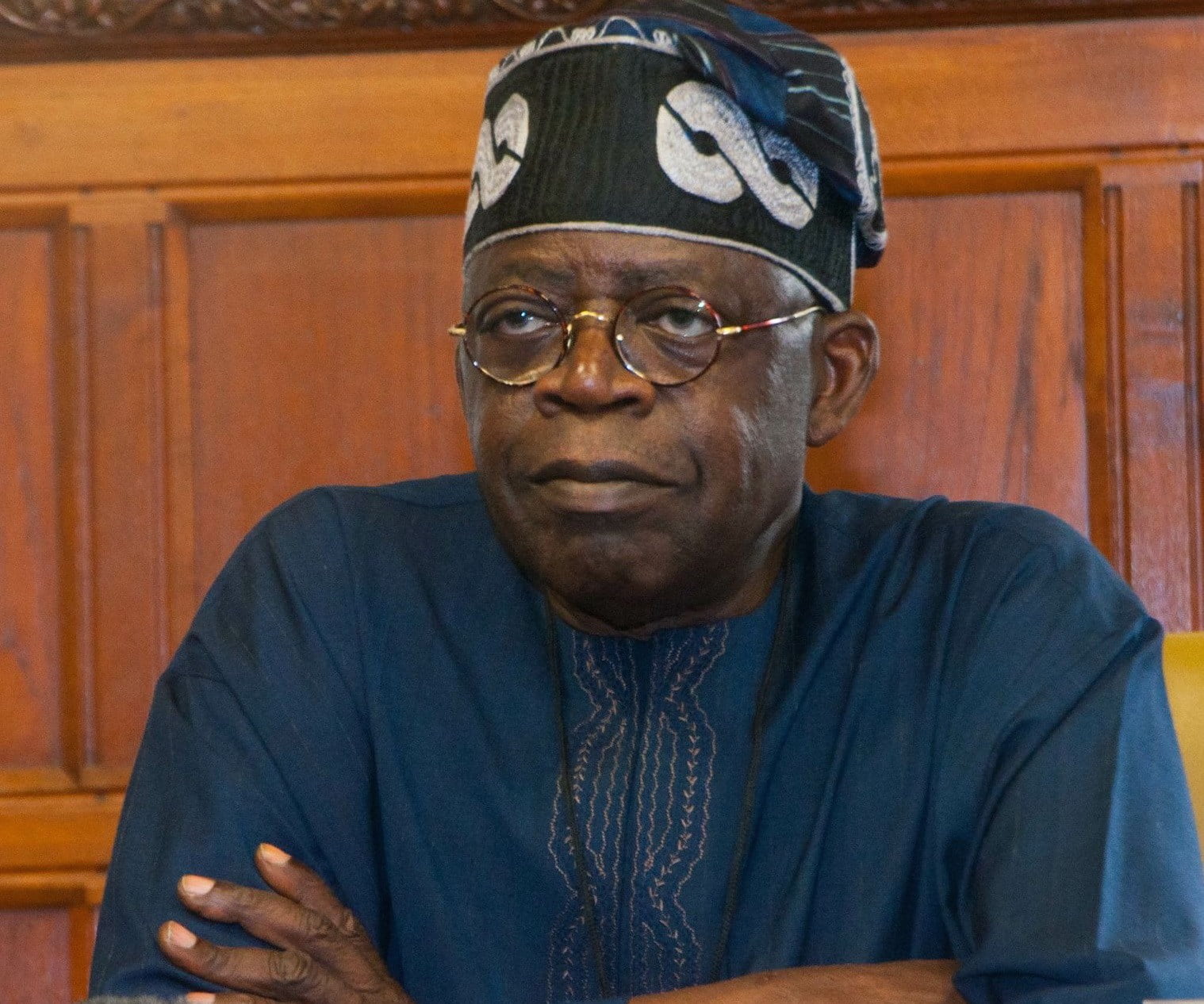
For the former two-term governor of Lagos State, Asiwaju Bola Ahmed Tinubu, they can hate him or detest him for frivolous reasons in their wildest thoughts; but his admirers are swelling in uncountable numbers, much to the chagrin of his loathers.
In their vitriolic of Bola Tinubu, he still stands tall and grandstands as a political titan, but try as they have continued in their accusations and counter accusations; they are not making any headway in their unjustified grievances against him and his big status in the political terrain.
The Jagaban Borgu has been called so many names and variously accused of so many things that many are now wondering his offence is. Even with the recent public outcries informed by the now-disbanded Federal Special Anti-Robbery Squad, (SARS,) arm of the Nigerian Police Force, they targeted him and every member of his household as being the sole bankroller of the crises, which later degenerated into unrests, chaos across the country.
Their prime allegation is that amongst many, Tinubu is the owner of Oriental Hotels, which is the most-talked about topic for some time now; even when some are claiming the 5-Star hotel, which has been put up for sale since 2017, belongs to the former governor of Lagos State. Going further, the real owners came out to categorically debunk the story on various news sites, but this set of people still continued in their quest to pin every highbrow property to him just to fit their narratives, in their campaign of calumny.
In their unbridled pull-him-down campaign, they still go ahead to allege that Tinubu is the owner of Lekki Toll gate which has never been set straight by those in authority. Wherever they got their information on Tinubu’s ownership of these plum properties will be left in their imagination and concocted allegations without solid facts and evidences to verify their claims.
By all instances, Lekki Toll Gate is currently owned authoritatively by the Lagos State Government after the Lekki Concession Company, (LCC,) was acquired and conceded as the rightful owners. Even as PDP chieftain, Chief Olabode George recent statement and that of others, linking Bola Tinubu to the ownership of the LCC is coming to nothing but lies and premeditated fabrications and should therefore be ignored in their entirety.
The Cable, published in June 13, 2018 a news story under the headline REVEALED: Lagos acquired LCC years before Lekki-Epe toll fare hike, how Lagos State Government under the current Minister of Works and Housing Babatunde Raji Fashola had approached the State House of Assembly for funds to buy back the concessioned toll.
In their wake of unsolicited allegations against Asiwaju Tinubu, they are even making sure that LIRS coming redundant on the matter, because they believed in error that Alpha-Beta Consulting is collecting all IGRs in Lagos State.
For matter of fact, Alpha-Beta is known to many as a consulting firm handling the computation, tracking and reconciliation of Internally Generated Revenues, (IGRs,) in Lagos State; in return for a commission, this was on record as it started helping Lagos State with aggressive revenue mobilization and generation in 2000; until 2006 when LIRS was created to compliment the works started six years earlier by Alpha-Beta which eventually raised the Lagos IGRs from N22.2bn in 1999 to N79.7bn in 2005, before the two organizations now moved the state’s IGRs to the present enviable level it is at the moment.
Still in their unfounded allegations they are still going ahead to claim that Tinubu is the owner of Alpha-Beta and that he collects 15% of the money coming into the State. It is however suffice to say that, though there have been so many claims linking Tinubu to the company like they did with Oriental Hotels and other establishments nobody can be bold enough to present any document to attest to these.
It is to note here that the company’s former MD, Mr. Dapo Apara, recent name-throwing, may be as a result of the financial misappropriation probe launched against him by the organization’s management. Findings also show that there are many areas where Alpha-Beta Consulting only takes 10% commission in the areas it mobilizes and helps generate IGRs from, as it was made known that areas that were not discovered by the company are usually off-commission for it.
It is equally on record that Tinubu personally pioneered many developmental things in the country, all of which are being built on by subsequent governors in the state, and being copied by other states in and Nigeria.
Below is a list of the many good things which Senator Tinubu has left in his trail:
1. Tinubu instituted a reform plan that greatly improved the welfare of judicial officers including magistrates.
2. He revamped the civil and criminal procedure rule as well as creation of the Citizens Mediation Centre; a well-staffed and independent Office of the Public Defender, offering legal services for the poor.
3. He established additional five (5) general hospitals in Lagos state
4. He upgraded facilities at the Lagos State Teaching Hospital, (LASUTH.)
5. He provided free healthcare services including free ante-natal care for women, free eye treatments and free glasses, popularly called ‘JIGI BOLA.’
6. He pioneered the Bus Rapid Transit System and LAGBUS.
7. He established the Lagos State Traffic Management Authority, (LASTMA.)
8. Reference of at least 13 matters related to the principle of federalism to be tested by the Supreme Court
9. He created 37 Local Council Development Areas, LCDAs against all odds.
10. He established the Lagos State Waste Management Authority, LAWMA, to clear mini hills of refuses all around the State.
The Lagos State House of Assembly on Tuesday urged Governor Babajide Sanwo-Olu, and the Commissioner for Information, Mr. Gbenga Omotoso, to intensify campaign against the new wave of COVID-19 in the state.
Speaker of the House, Rt. Hon. Mudashiru Obasa, who brought the matter before the House during plenary, added that it was important for the state’s Commissioner for Health, Professor Tunji Abayomi, to brief the House on the efforts being made by the government to curtail the spread of the disease.
Obasa said there was need for the people to take precaution against the pandemic at this point to prevent further spread.
He also urged lawmakers to intensify observance of the protocols against it.
“The Governor is down with mild symptoms of COVID-19 and I want to urge all the lawmakers in the House to observe the protocols of the pandemic.
“The Clerk of the House should also ensure that the staff of the House and visitors observe COVID-19 protocols.
“We should sustain the campaign against the spread of the disease in the state. We all know that the disease is on the increase in the United States of America and in other countries.
“The Commissioner for Health, Professor Tunji Abayomi, would have to come and brief the House on efforts being made to prevent the spread of the disease in the state,” Obasa said.
Commenting on the matter, Hon. Bisi Yusuff, who is a member of the House Committee on Health Services, expressed fears concerning the new wave while lamenting that many residents have become careless.
He said Lagosians must continue to observe protocols.
Meanwhile, a bill for a law to provide for the registration of cooperative societies in Lagos State has been read a second time.
The bill was analysed by the Chairman of the House Committee on Commerce and Industry, Hon. Ganiu Okanlawon (Kosofe 1) and it was debated by some members at the sitting.
The bill was then committed to the House Committee on Commerce and Industry to report back to the House in two weeks.
At the sitting, a report on Unlawful Societies and Cultism (Prohibition) Bill 2020 was presented by the Chairman of the House Committee on Judiciary, Human Rights, Public Petitions and LASIEC, Hon. Victor Akande, representing Ojo1.
However, the committee was asked to make some amendments on the bill based on the observations and comments of members on the report before it would be read for the third time.
Before adjourning the sitting to Monday, December 28, Speaker Obasa urged standing committees of the House to conclude work on bills before them.
He also urged the joint Committees on Budget and Economic Planning and Finance to complete work on the 2021 Budget proposal of the state.
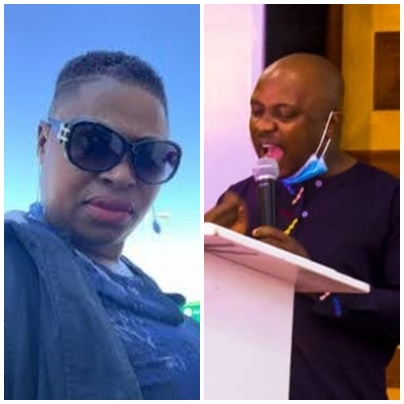
Africa expresses wisdom in proverbs and one of the funniest proverbs I have heard in recent times is “A smelling mouth shouldn’t try to whisper words into anyone’s ears because of the odour”. This will best be used to depict Facebook fraudulent broadcaster, Maureen Badejo, who recently decided to paint me black for being a whip to straighten her lying curves.
Maureen had last week taken my case to her Facebook program she normally uses to blackmail people, reeling out all sort of lies she’s now known for about me, believing the story her fake informants gave her not even bordering to consult free to air google search engine to verify and find out more, since her program is designed for fake content and blackmail lacking any form of investigation she took it to the press not minding the lack of basis.
Before I go further, let me introduce myself properly, so you and your cohort will know who you are dealing with and understand why I will keep exposing your lies and treachery to your followers, since they are the ones that needs to be redeemed of what you are doing to their psych.
My name is Femi Oyewale and I am a journalist who won’t give room for quacks to spoil the good name of the noble profession as the PRO of the Nigerian Guild of Investigating Journalists (NGIJ) as well as the President of the National Association of Online Security Reporters known as NAOSRE. I graduated from Olabisi Onabanjo University where I finished among the top three, from the department of English.
I cut my teeth as a journalist under the tutelage of Mr Femi Adesina while in defunct Concord Newspaper, after which I joined Encomium Magazine under the leadership of Mr Kunle Bakare and Mr Azuh Arinze who are adjudged one of the best in their chosen careers.
In 2015, I started first Sahara international services, publishers of Sahara Weekly Magazine and Sahara online ( www.saharaweeklyng.com)
Within the space of 5 years, the medium has risen to become a force to be reckoned with. I made it a part of my business to create positive awareness campaigns around the Christian community by giving a voice to ministries through my online publications.
Like the saying that who goes to equity must come with clean hands, Maureen can you now reason some of us will always be in your space since you and your likes are giving the profession we love so much a bad name because you and your likes are dragging us in the mud for calling yourself a journalist while it is in public sphere that you are more of a fraudster, home wrecker, marriage scammer, a blackmailer and a LIER?
The story of how you left Nigeria is also public knowledge, how you left your husband, how you registered a church in England under limited liability instead of an NGO because I believe you had ulterior motives , Maureen we know you.
Let’s leave your life at the moment because it’s practically nothing to talk about. You cannot sit down in a COUNCIL FLAT in THE UK and begin to talk about people that transform lives, people that have toiled for the kingdom of God, to remain strong on the face of the earth, people that have raised men that have brought transformations worldwide and YOU expect me who is a kingdom defender to keep mute
Let me tell you why I followed you up on Dr D.k Olukoya’s case, it’s because from the very beginning your allegations were based on lies and emptiness and I will state a fraction of them below.
(1) you said his child was bought for a price and that he wasn’t the father and I replied you through proper investigation that the child was the flesh and blood of Dr DK Olukoya , born at a very popular hospital in London which I mentioned earlier and you can still go and find out
(2) You said Olukoya stole 4 million pounds , this was a display of abysmal ignorance because this 4 million pounds was an annual report of total expenditure of the ministry
(3) You said the Dr D.k Olukoya’s son Elijah had 6 billion naira at Heritage bank, meanwhile from our findings Elijah doesn’t even have a bank account in that bank
(4) You said the marriage of Dr Olukoya is no longer valid , that the wife had left for Canada but from our finding the lady in question visited Canada sometime in 2007 and she is still very much enjoying her marital journey unlike you that has had 3 failed attempts at marriage
(5) You claimed that there was a brawl in one MFM branch in London where people had guns and were shooting and even played a video for evidence meanwhile , it was a political brouhaha in south America , Dominican republic to be precise and I brought out the true story.
(6) You said a house called Shiloh was demolished because you spoke about it and that it harboured virgins, meanwhile when we decided to look into the case we realised that it was a building that was instructed to be pulled down by the Lagos state government cause of safety reasons and another house was built for the occupants, that where families and people alike not virgins.
(7) You said that Mrs Shade Olukoya (Dr Olukoya’s wife) is on the church payroll and she is earning a salary in the sum of 35,000 pounds from MFM. Although as a pastor, she is entitled to a salary but from our findings she has never taken a penny from MFM UK.
(8) You continued in your many lies that a particular pastor from MFM UK paid the sum of 150,000 pounds into the personal account of Dr Daniel Olukoya and then went to Nigeria to meet the GO so he could help him cover up his fraud. We later found out that no pastor has ever paid a cent into Dr’s account and these were fabricated stories
(9) You said That Dr Daniel Olukoya has abandoned his family members, refusing to take care of them. Meanwhile, members of Dr Olukoya’s family from both sides are all still alive to bear witness to the contrary, as matter of fact I believe that there are a few GENERAL OVERSEERS that take care of people worldwide like DKO. That is if there is any.
(10) You ignorantly told your viewers that Dr Daniel Olukoya as well as all the MFM UK Trustees are thieves because they are all deeply involved and participated in the alleged fraud that is being investigated by the Charity Commission. Unknowingly, the charity commission case was a fraud against mfm by a pastor and an external auditor and DK Olukoya was never a part of It, these are information you will never know because you don’t have that kind of intelligence
Maureen let me stop here out of your over 1000 lies and fabricated stories. We know you, and how you operate, how you arrange fake callers, how you don’t let other people with the right views speak. When people call into your show to correct your misinformation, you react like a person with a mad dog disease and display more of your ignorance to your ignorant viewers, whom the devil is snatching away through your bogus and inconsequential program
For your information I am a true journalist and my work takes me to different places including churches. For you to think that because I write about TB Joshua and other ministers means they are now related or friends, it simply shows that you have a tiny brain that doesn’t think, another proof of your pack of lies. To the best of my knowledge Ma, TB Joshua and DKO are two different personalities and ministries , and to the best of my knowledge, nothing connects these two people. So once again, do your investigations before you come and ventilate nonsense on the air. I believe I have spent too much time on your matter but I just want to make it clear that you have no business being in any kind of journalism be it blogging, vlogging, facebooking or whatever people call it these days. But I have one advice for You, Repent! Repent! Repent! Before it’s too late.
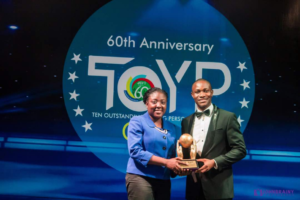
Junior Chamber International, Nigeria has called on Nigerians to nominate prospective young Nigerians that are advancing the cause of human and global development for its 2021 ‘Ten Outstanding Young Persons Award, that is also known as JCI Nigeria TOYP.
The nomination process for the TOYP commences from December 15th, 2020 via the organisation’s web portal www.toyp.jci.ng and will last for forty-five days slated to close by January 31st 2021.
TOYP Chairperson, Oluwakemi Irinoye said that the criteria for application enable nominees who are young Nigerians that have attained national prominence before the age of 40, and not JCI members alone.
“The process requires procedure that allows for the nomination of any young Nigerian, who resides in or out of Nigeria and is between the ages of 18 and 40”, she explained
Irionye further urged the general public to use the link www.toyp.jci.ng to nominate any outstanding young person with distinguished records in categories that include business, economic, entrepreneurial accomplishment, political, legal and/or governmental affairs, academic leadership and/or accomplishment, and cultural achievement.
Other category she mentioned are moral, environmental leadership, contribution to children, world peace, human rights, voluntary leadership, science, technological development, personal improvement or accomplishment in medical innovation.
She said the award selection process entails a panel of eminent and credible Nigerians from different works of life that will streamline the nominees to just thirty.
“This will be done after the close of the nomination process. Subsequently, the last ten finalists will emerge through a public voting process monitored by an audit firm and they will be recognized during a special TOYP award ceremony slated for 12th of August, 2021.
Winners in these categories will be further nominated for the World JCI TOYP where they get to be honoured worldwide if they are eventually selected.
The 2021 National President of the organisation, Abiola Olorunnisola said that JCI Nigeria as an organization believes that recognizing young people raises their status of being socially responsible leaders in the world as their stories of discovery, determination and ingenuity inspire young people to be better leaders and create better societies.
JCI is a membership based, non-profit organization of young active citizens between the ages of 18 and 40 that are dedicated to creating positive change in their communities. JCI forms a vibrant global community of nearly 200,000 active citizens and a rich alumni body.
Previous recipient that have won the awards on the global stage are Ray Ekpu (1988), Dr. Modupe Osho (1996), Dr. Ola Orekunrin (2013), Imrana Alhaji Buba (2017), Adepeju Opeyemi Jaiyeoba (2017), Jacinta Uramah (2018) and Samson Itodo in 2019.
Other winners of the award includes individuals like, Rt. (Hon.) Rotimi Amechi, Mrs Ibukun Awosika, Shina Peters, Daddy Showkey, Richard Mofe Damijo, Femi Anikulapo-Kuti, Gbenga Sesan, Kanu Nwankwo, Kafayat Shafau, Linda Ikeji, Japheth Omojuwa.
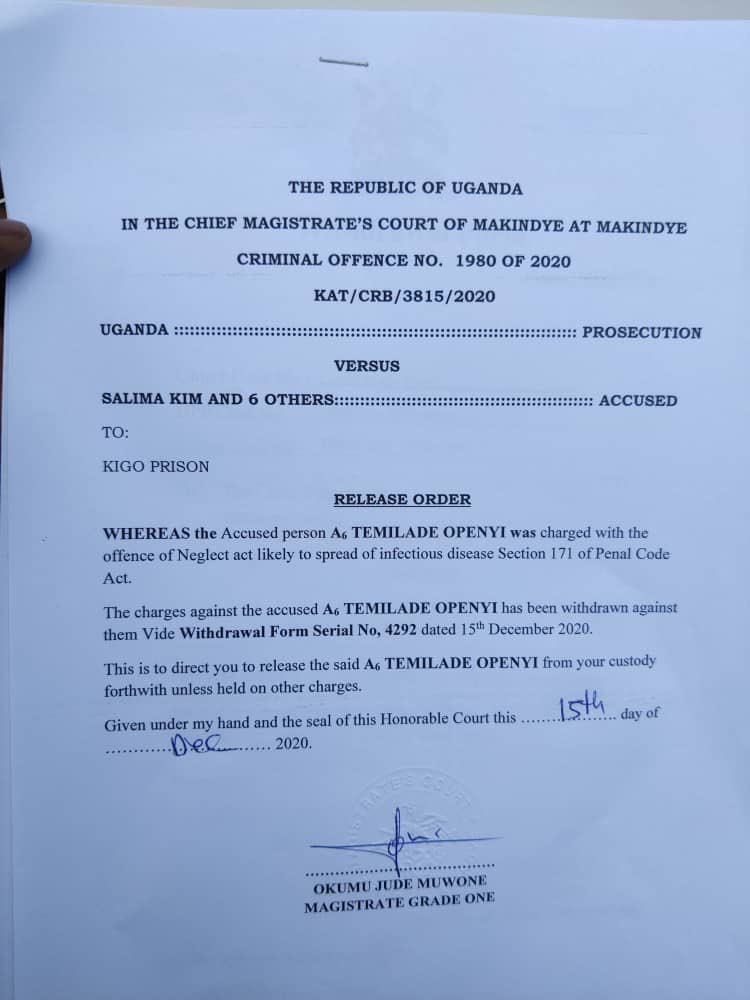
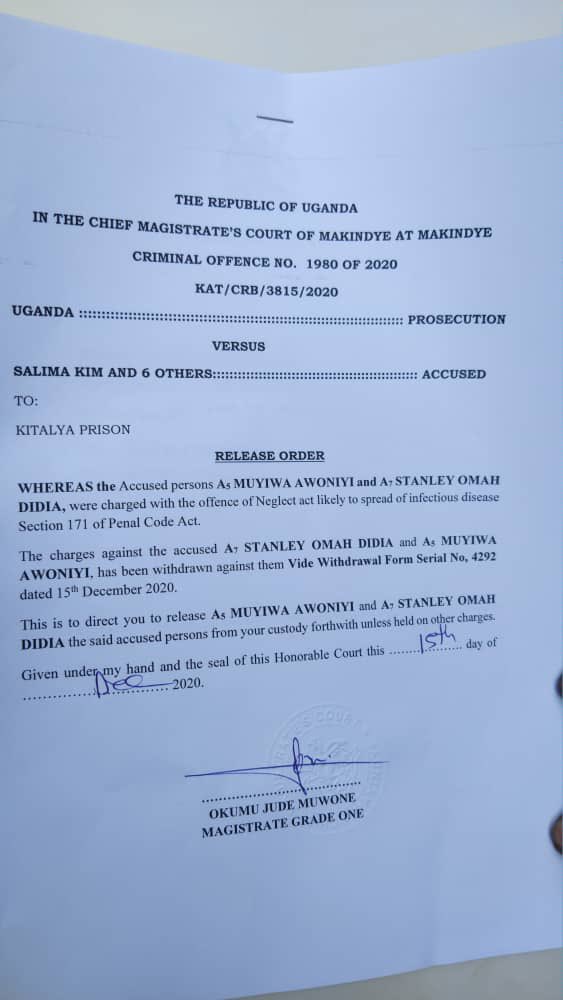
We can tell you authoritatively that Nigerian singers Omah Ley and Tems that has been held in detention by the Ugandan government for flouting the COVID-19 lockdown rule in the East African nation has been released.
In documents in our possession the 3 Nigerians held in the President Museveni led country were ordered to be released by the magistrate court.
Nigerian had trooped to the social media to demand for their release since the story of their arrest broke-out and the Abike Dabiri-Erewa led Nigerians in Diaspora Commission played a significant role in fast tracking the release of the two Nigerian music stars.
…As winner of Ynspyre Account online giveaway received N1m
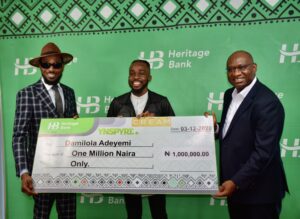
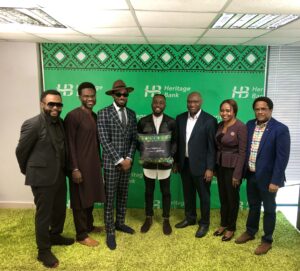
R-L: MD/CEO, Heritage Bank Plc, Ifie Sekibo; Winner of Ynspyre Account’s N1m online giveaway competition, Damilola Adeyemi and Musician and Ynspyre Account’s Ambassaor, Daniel Oyebanjo (D’banj), during the N1million cheque presentation to the winner of an online giveaway competition to celebrate the bank’s Ynspyre Account ambassador, inspired by Heritage Bank yesterday at the bank’s head office
Entertainment and creative sector is about to receive a huge boost, as Heritage Bank Plc, Nigeria’s Most Innovative Banking Service provider has arranged to set aside N5billion as a support funds to drive the industry and stimulate sustainable growth to the nation’s economy.
Meanwhile, Heritage Bank doled out the sum of N1million to Damilola Adeyemi, a winner of an online giveaway competition to celebrate the bank’s product, Ynspyre ambassador, Oladapo Daniel Oyebanjo, better known by his stage name D’banj, which heralds launching of the Ynspyre Account set aside for talented young Nigerians in the different spectrum of the creative and entertainment industry.
MD/CEO of the bank, Ifie Sekibo who affirmed Heritage Bank’s commitment to the development and growth of the nation’s creative sector, described the sector as one of the leeway to solving the unemployment occasioned by the prevailing adverse macro-economic environment.
Sekibo, during the presentation of the N1million cheque, said the development and growth of the entertainment industry will get as many people as possible involved as manufacturing, banking and other sectors cannot do it alone.
The bank, in statement, yesterday, signed by the Divisional Head, Corporate Communications of the bank, Fela Ibidapo, assured “the entertainment is going to take a new leaf of life, with the Ynspyre platform; we are hoping to start with this and obviously it will grow to another level. You will see greater things in couple of months.”
Sekibo said the music industry has done so much for Nigeria in terms of employment and foreign exchange earnings and if more resources could be put into it, the country would be better for it.
Besides supporting individual artistes in the industry, the bank has also partnered with some organisers to perform and produce some entertainment shows.
In similar manner, whilst confirming the N5billion set aside for the creative sector and commending Heritage Bank for its numerous bold steps in supporting the industry, D’banji stated, “The reason for setting up this fund is for creative people like me, you (Adeyemi) and the other upcoming artists to have access to it.
L-R: MD/CEO, Heritage Bank Plc, Ifie Sekibo (5th from Left); CEO, Cream Platform, Damian Okoroafor; Musician and Ynspyre Account’s Ambassaor, Daniel Oyebanjo (D’banj); Winner of Ynspyre Account N1m online giveaway competition, Damilola Adeyemi; Group Head, Entertainment, Lagos Island 1 Zone, Kufretido Etim and Dike Dimiri, Regional Executive, Lagos & South-West, during the N1million cheque presentation to the winner of an online giveaway competition to celebrate the bank’s Ynspyre Account ambassador, inspired by Heritage Bank yesterday at the bank’s head office.
“I want to commend Heritage Bank for believing not just in me but the creative industry. Over the years, Heritage Bank has worked behind the scene to sponsor and invest in lots of creativity projects.”
Speaking on the modalities of the product, he disclosed that the Ynspyre Account is the perfect account, specifically created to accommodate and support creative ideas in the industry, which do not need collateral.
“Just open your Ynspyre account, get your proposal ready on what you intend doing in the creative industry; be it music, fashion, lifestyle, IT and others because they have created categories for each and every one of us to enable us assess funds, supports, loans and grants at single digit interest rates,” he explained.
The winner, Adeyemi who disclosed the creative industry had never gotten such spotlight before, said that he was inspired by the cash reward, as the Ynspyre Account product serves as boost to the creative industry.
“Prior to now, artist struggle to get to the level they find themselves either through their personal funds, manager or parents’ funds. Finally, it is actually time for us to shine and the spotlight is on us.
“Big thank you to Heritage Bank for creating this platform, for creating this opportunity, I am so excited. It couldn’t have come at a perfect timing; N1million during Covid-19, it only can be better. I want to thank Heritage Bank for believing in D’Banj and the creative industry, for counting us worthy to invest in us,” he stated.
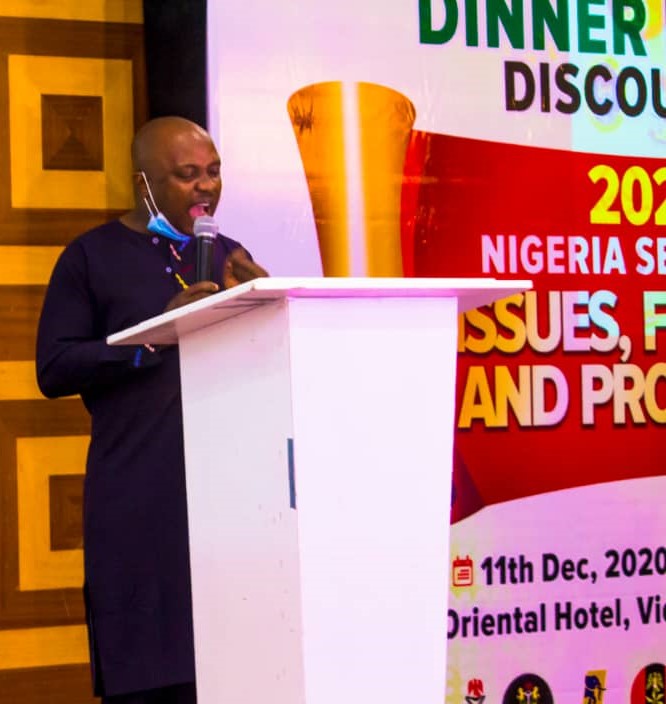
A special security event convoked by the leadership and members of the National Association of Online Security Reporters (NAOSRE) on December 11 in Lagos, 2020, brought new light on the insecurity bedeviling Nigeria.
The brainstorming event––NAOSRE’s maiden Dinner Night and Discourse–– was organised by the body’s new executives that took over the helm of affairs barley two months ago, specifically on October 29.
NAOSRE’s members comprised professional journalists with strong media credentials who have worked with the conventional media and are now reporting on digital platforms, some of them, Nigeria’s finest hands in security reportage.
Established with the main objective to provide accuracy, transparency in relaying security news, the association also stands as the long expected information bridge between citizens and security agents.
To this end, it has successfully established a sustainable working relationship with key security players in the corporate world and security agencies in Nigeria, including but not limited to the Nigerian Army, Nigerian Navy, Nigerian Air Force, Nigeria Police Force and Nigeria Customs Service as well as Federal Road Safety Corps.
Without doubt, NAOSRE’s clout in Nigeria’s security stratosphere was displayed by the event of December 11, which, as it were, has passed into history as a watershed in the annals of security discourse in the country.
The Dinner Night and Discourse drew participants, guests and speakers from the safety and security agencies, the legislative arm of government, traditional leadership and corporate organizations and of course, the media––both traditional and the digital media.
Interestingly, the evening of intelligent discourse with a theme: “2021 Nigeria Security: Issues, Funding and Prospect,” unlocked a plethora of security solutions and ideas.
Expectedly, the convergence of key players in the security circle opened the windows set of suggestions which would embellish 2021 security policy formulation and implementations in a manner that Nigeria would be one of the secured countries on the continent.
Femi Oyewale, NAOSRE’s President, in his welcome address, set the tone for the event:
“Today’s security discourse was birthed out of the need to address the security issues in Nigeria, bearing in mind that 2020 has been a very tough year for citizens, businesses and indeed, the security sector.”
Oyewale’s remark was, unmistakably, the needed bullet that hit the bull’s eye, considering the various security challenges that reared up in the course of the year, culminating in the catharsis of the #ENDSARS protest.
It provided room for elaborate sharing of ideas and offered a 360-degree view of Nigeria’s security apparatus. Each security apparatus spoke on the unique challenges confronting their efficiency on the job, as well as also informed the public about the gains and the good strides that have been achieved by their respective organisations.
From the Federal Road Safety Corps, FRSC, came a detailed analysis of the use of hi-tech speed sensors to check recklessness of drivers on Nigerian roads, and thus secure road transportation in the country.
Superintendent Route Commander, SRC, E. Olasehinde who represented Bisi Kazeem, the spokesman for the Commission, elaborated the professional working abilities of Corps Marshal of the Federal Road Safety Corps (FRSC), Dr Boboye Oyeyemi. He disclosed that the Corps has “Embraced technology in all its operations.”
He hinted that a drivers’ license issued by FRSC in Nigeria can validate a user’s driving permission across many countries in the world. He however sued for strict adherence to driving rules and codes by road users to mitigate the growing list of disasters on Nigerian roads.
The National Public Relations Officer of the Nigeria Customs Service, NCS, Deputy Comptroller Joseph Attah, gave a wide-angle view of the new developments. “We are not relenting. We continue to do our best to drastically reduce smuggling to the barest minimum,” he assured.
Represented by Uche Ejesieme, PRO Tin Can Island Port, the Customs Service elaborated its deployment of intelligence in the discharge of its duties at all the country’s points of entry.
The Customs particularly advocated for synergy among security agents in view of the multifaceted dimensions of border security.
Superintendent Adebisi Adewunmi, who represented Commissioner of Police, Lagos State Police Command, Hakeem Odumosu, highlighted: “There is need to spend money and there is need to inject more funds in the security apparatus from military to the Police.”
Speaking further, he said: “In Lagos, Policemen work 24/7. They are overstretched. But with proper funding, everyone will sleep with their eyes closed.”
Adewunmi, however, noted that the work of the police is further made difficult by online mischief-makers who created unnecessary panic. “Please join hands with the police, tell us our wrongs, but don’t encourage sensational journalism that can further breach the peace in society,” he appealed to NAOSRE.
Adewunmi acknowledged the positive development arising from the fallout of the #ENDSARS protest: “We have been promised an improved salary and retirement package.”
Major Osoba Olaniyi, who represented Brigadier General Sagir Musa, Acting Director, Army Public Relations, disclosed that “Nigerian Army is conducting internal security operations in 34 states.”
Major Olaniyi, Acting Deputy Director, 81 Division Army Public Relations, explained: “We accept criticism because we are a professional institution. However, what we don’t want is casting aspersion on us, because it has the tendency to weaken the resolve of those still fighting and dishonour the memories of our fallen heroes; it also has the tendency to undermine national unity.”
Olaniyi, responding to concerns raised about members of Police and Army impunity when dealing with civilians affirmed: “Irrespective of whatever uniform we wear, we still share the same humanity with members of society. And we shall try to remain humane with you.”
Both the Police and Army agreed that there are bad eggs among their operatives.
“The military is still high on discipline. We still don’t condone indiscipline,” Major Olaniyi Osoba who speaks for Army formations in both Ogun and Lagos States, asserted.
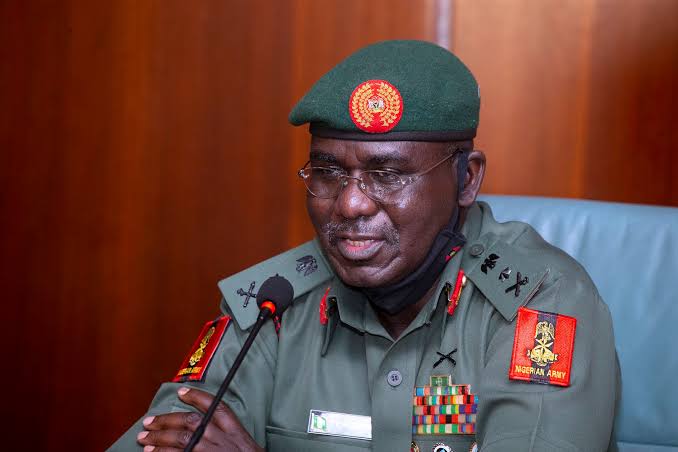
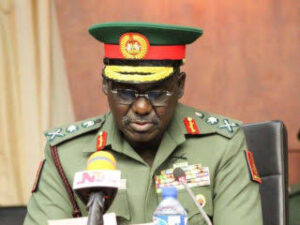
He nonetheless advised the public to report cases of infractions to 81 Division and 9th Brigade, stressing that Lieutenant General Tukur Buratai, the Chief of Army Staff, has zero tolerance for indiscipline among officers and men especially in relating with the general public.
Corroborating Major Osoba’s submission, Superintendent Adewunmi added that: “There will always be Judas among people. The same applies to the Nigeria Police. But be assured that we are doing all we can to train our men on how to relate with the public.”
He gave the anecdote of how some communities rose to protect Police officers and prevented attacks on police stations located in their neighbourhood.
“Citizens should imbibe the spirit of supporting security agents at all times,” he requested.
Various speakers from the non-security sector further expanded the evening discourse.
Dr Tony Akposheri, veteran Nollywood actor, who represented Prince Honourable Ned Nwoko, Grand Patron, NAOSRE, pointed out that the public has roles to play in the security of our society.
“We cannot leave everything to the government,” he noted and further submitted: “Nigerian security discourse is timely at this time of our nation, not the issue of sacking service chiefs; if they are sacked and the right things are not in place the situation will not improve.”
Dr Akposheri noted further that: “Our security personnel are not adequately well taken care of and the number of security operatives in this country is not adequate,” he said, pointing out other deficits including working with obsolete tools and technology.
In his view, “Children of security agents should enjoy free education from primary school to university.” This, he averred, would boost the morale of security operatives.
“We are not happy with the state of the Nigerian Police. They are not well remunerated. There should be transparency in what goes to them as earnings and allowances,” Akposheri declared.
Barrister Yinka Oguntimehin who represented Aare Ona-Kakanfo of Yoruba land, Otunba Gani Adams, dwelt on how the police institution has decayed over time. He recounted the heart-breaking revelations on a recent radio programme about the poor salary of policemen.
Aside, he added the dehumanizing condition of service Police officers are subjected, starting with the barracks where they live which have degenerated into squalor, and the burden of providing the basic tools of their jobs including their uniform, beret and boots and even the charge sheets in their stations.
While commiserating with the police force for the loss of its members during the ENDSARS saga, Oguntimehin observed: “As a matter of fact, a better police service was what the youths had demanded.”
Although, the Guest Speaker of the event, Senate Committee Chairman on Air Force, Senator Bala Ibn Na’Allah, was unavoidably absent ––having had to fly back home earlier on that day as he was bereaved––he nonetheless made a vital contribution that became one of the main takeaways from the event.
With the participants listening to him on phone, Senator Na’Allah avowed that “A lot of issues need to be addressed if we must reverse the insecurity facing Nigeria.”
He was blunt in holding the country’s elite responsible for the degeneration of security. “There must be an institutional commitment on the part of the government to curb some of the security challenges,” he said.
Continuing, he further asserted: “It has dawned on everyone and the government that there is an urgent need to address security issues affecting the country.”
Other highlights of the night include messages of support from the Speaker, Lagos State House of Assembly, Rt. Hon. Mudashiru Obasa, whose message was delivered by a Principal Officer of the House, Honourable Noheem Adams representing Constituency: Eti-Osa I.
In his message, Speaker Obasa who is also the Chairman Nigerian body of Speakers, assured Lagosians and indeed Nigerians of qualitative legislative contributions to a safer society. “As legislators, we are committed to our oversight functions to ensure that appropriated funds for military operations are judiciously utilized for its rightful purpose,” Obasa vowed.
There was also a show of support by FirstBank of Nigeria Plc team. Nigeria’s leading bank’ staff were physically present at the event, a development that sent assuring signals to the banking public of FirstBank’s commitment to security in a manner that depositors with the bank do not have any need to entertain fears in the years ahead.
From the traditional enclave was HRM. Oba (Dr.) Adeoriyomi Akeem Oyebo, Obateru of Egbin Kingdom, Ikorodu, Lagos , to lend his voice to NAOSRE’s dinner of security solutions.
The Lagos first class traditional ruler advised government across levels to consider the use of traditional methods to checkmate criminal activities. “Some criminal elements, who, at times, over power security agents use traditional powers. Why can’t the government look in that direction? He asked.
The highly respected Oba, who was accompanied to the event by Chief Lateef S. Saminu, Olisa Egbin, supported his suggestion with a story of a man who once secured and safe guarded a bank in Ibadan without being physically present.
He however prayed for NAOSRE and encouraged its leaders to sustain its noble task of promoting effective security communication. Another traditional ruler at the event was HRM Oba Abdulwasiu Omogbolahan Lawal Abisogun, Oniru of Iruland .
The Kabiesi was ably represented by his media aide, Femi Liadi.
Nollywood star, Paul Obazele reflected on the trauma of the recent protest and called for more citizens’ co-operation with security agents.
Nigerian Army has landed in its best of times on infrastructural provisions and exceptional welfare packages under the leadership of the Chief of Army Staff, COAS, Lieutenant General Buratai, says Thomas Uzah, Ph.D, Head of Department, Mass Communication, Kwararafa University Wukari, Taraba State, in this piece made available to NAOSRE
It will be twisted logic and misplaced sense of judgment of the exact reality to assert that the Nigerian Army (NA) is having good times in infrastructural provisions under the supervision of its current Chief of Army Staff (COAS) Lt. Gen. Tukur Yusuf Buratai, more appropriate to say, the Nigerian Army has landed in its best of times on infrastructural provisions and exceptional welfare packages under the leadership of the COAS, Gen. Buratai.
Before the reality of the leadership of Nigeria by President Muhammadu Buhari, discerning Nigerians knew several other salient reasons accounted for the persistent open anger expressed by soldiers in the warfront. The persistent mutinous actions by troops at the frontlines fighting Boko Haram was partly attributable to poor troops’ welfare occasioned by absolute neglect and dilapidated infrastructur and accommodation for officers and soldiers.
Soldiers experienced and endured dilapidated Barracks, acute shortage of office and residential accommodations, poor state of Army Guest Houses and camps throughout the country. Some Army Barracks had not tested any flavour of renovation or rehabilitation since Nigeria’s first post-independence era Defence Minister, Alhaji Muhammadu Ribadu built the structures in the early sixties. History has recorded him as a leader who massively built new Barracks and renovated old ones.
Like Ribadu; Gen. Buratai has carved an enviable niche for himself in the new Millennium as an Army Chief who has generously built new Barracks for the Army and massively renovated old ones in virtually all parts of the country. African proverb says, a chic which would grow into a cock is known the very it is hatched.
So, Gen. Buratai started exuding the signs of a genuine leader, reformer, a positive minded personality and charismatic goal-getter on all fronts the first day he assumed office as Nigeria’s COAS. He toured Army formations and units across the country; bemoaned the competitively dilapidated state of Army Barracks and facilities, whilst he silently took notes on the urgent interventions each of the Barracks required to transform into a habitable befitting dwelling place for soldiers.
The Army boss believes in the philosophy that a soldier deserves the best in peacetime because he faces death every minute in wartimes.Though, Gen. Buratai sauntered unto the leadership of the NA at the time Nigeria was plunged into economic crunch. But the reality of meagre budgetary votes and insufficient funding of the Army to date did not deter Gen. Buratai from putting smiles on the faces of officers and soldiers.
With a supportive Commander-In-Chief, President Buhari, Gen. Buratai has propelled the NA on an unprecedented and incredible structural expansion and physical development in the last five years. He corrected and normalized what appeared to have been a carelessly institutionalized structural decay and degeneration of almost three decades in barely five years of his leadership.
And the real good news is that the Army Chief has not felt he has done enough to assuage the depravities of his Comrades in the profession of arms’ yet. Therefore, he hungers to accomplish more in impactful legacies for the NA. And to properly uplift Army personnel’s welfare, Gen, Buratai has starched an extra mile to partner with private estate developers to berth his vision of normalizing the accommodation deficits, which hitherto plagued the NA for decades.
Reputed as a focused, dynamic and foresighted leader, with a functional mind, Gen. Buratai has conceptualized and delivered his development agenda for the NA under the broad divisions of policy frameworks of NA Property Limited and NA Welfare Limited by Guarantee, Army Post-Service Housing Scheme and NA Farms and Ranches among a motley of others.
Gen. Buratai is a man of taste and elegance. And one unique feature of Buratai’s touch on structural transformation of the Army is that he has phased out the Lord Lugard’s structures which dotted Army formations/Barracks across Nigeria and replaced them with modern, befitting and well furnished accommodation. And the new buildings are also an aesthetic consummation of the dynamism of architecture’s latest wonders of awful edifices. They are a sight to behold anywhere in the world. He replaced obsolete amenities, facilities and equipment in the Army Barracks and units with state-of-the art latest models.
The establishment of two new Divisions of the NA by Gen. Buratai in conformity with the Presidential directive on new NA Order of Battle (ORBAT) is not the most cheering news. But it is the pleasant shock that the new Divisions 6 and 8 in Port Harcourt, Rivers state and Sokoto are fully operationalized. And it is because the Army Chief worked assiduously to get all the needed structures, manpower and equipment ready within record time.
Gen. Buratia has replicated the same portrait in the new and novel Nigerian Army University Biu (NAUB); the first Nigerian Army War College, the Nigerian Army Aviation Command, Nigerian Army Women Corps, Command Engineering Depot Kaduna, Special Forces Command, Special Forces School at Buni Yadi as well as the renovation and construction of new buildings at the Nigerian Army School of Artillery in Kachia, Kaduna State. He renovated and modernized the Office of the Military Secretary at the Army Headquarters Abuja; built and equipped the first well organized and effectively manned think thank Centre per excellence – the Nigerian Army Resource Centre (NARC) located at strategic area of Asokoro Abuja, which is serving the dual purpose of an alternate office accommodation and modern resource venue for workshops and seminars for the army and qualified public organisations and individuals.
Still in Abuja, the fanciful modern structures at the recently built and commissioned Muhammadu Buhari Cantonment at Giri, consisting of new 150 flats of accommodation in the Barracks accommodating 150 families of officers and soldiers is legendary in the recent history of the Nigerian Army. Okene in Kogi State has also hosted a new Army Forward Operations Base and military barracks. So also the latest building, manning and equipping of Cyber warfare Command Office Complex, Cyber Operations Centre and Nigerian Army Intelligence and Cyber Warfare School at Giri-Abuja.
The testimony also reflected at the newly built various Nigerian Army Super Camps across the volatile locations in Nigeria to facilitate the defeat of terrorism, Armed banditry and other insecurities across the nation.The structural development inclination of Gen. Buratai started quite early in his leadership. By 2016, the renovation of 10 blocks of 30 flats each at the Maxwell Khobe Cantonment, Jos was completed. So also the dramatic renovation and expansion of Army headquarters Complex in Abuja.
The development streak descended on the 3 Brigade Kano, where new blocks of multiple flats of accommodation for soldiers in the Bukavu Barracks, Kano have been completed. It amazingly displays two newly constructed blocks of 24 flats each and five renovated blocks of 12 flats each. Still under Gen. Buratai’s leadership, the NA renovated and remodeled accommodation for 120 soldiers in Ribabu Cantonment and Dalet Barracks, under 1 Division Kaduna, comprising of flashy 120 flats.
Similarly in 8 Division Lagos area, – specifically – in 9 Brigade Ikeja multiple accommodation for soldiers and officers have been renovated and new ones were built. There, in ikeja Cantonment, a befitting accommodation for NA pilots has recently been completed and commissioned by Gen Buratai.
And the NA’s partnership with Betonic West Limited has launched a N7.5 billion Army Post-Service Housing project in Otukpo and Ohimini LGAs of Benue state. The same rewarding partnership with Belemaoil Producing Limited, has earned the Army a 3-story building containing 30 flats at the 16 Brigade Headquarters, Camp Buratai, Yenagoa, Bayelsa State. Gen. Buratai has intentionally established a dozen Army Forward Operations Bases throughout Nigeria with all the necessary facilities to checkmate all forms of insecurity in Nigeria.
Quite impactfully too, the NA under Gen. Buratai has rehabilitated, re-equipped all existing Army hospitals, medical facilities and Referral hospitals across Nigeria. Two new reference hospitals have been approved and are under construction in 7 Division Maiduguri and 82 Division Area of Responsibility located at Abakaliki in Ebonyi State.The aim is to give the best medical care to Wounded in Action troops and members of their families as well as members of the public/host communities.
The reference hospitals are meant to provide effective healthcare services, – more accessible and affordable to soldiers, their families and members of the host communities. Gen. Buratai is indeed, the NA’s Mr. Infrastructure. He is indefatigable, charismatic and pragmatic leader and military commander of the highest order!Even at the risk of flattery, it is more accurate to say that NA has never experienced these robust structural developments and expansions in her over 100 years of existence as seen during the period of Gen. Buratai. There is a saying in the NA that the period 2015 – 2020 is the Golden Moment of the Nigerian Army as factually articulated in the Compendium of Nigerian Army Transformation: The Buratai Years – 2015 – 2020. This book objectively presents the remarkable transformation of the Nigerian Army under the leadership of Gen Buratai.
Therefore, it is obvious that there is no COAS since post -independence Nigeria that has dramatically upgraded structures, welfare, training and professional standing or disposition of the NA like Gen. Buratai. He has evidently done so much to better the lot of his officers and men more than any other COAS in the history of the NA.
Gen. Buratai represents the changing face of NA’s professionalism, rich history, records of operational achievements in the various theatres of Operations. One wonders what our country would have become in the absence of men and women of Buratai’s caliber especially in the face deliberately and politically engineered insurrection like the “ENDSARS cannibalism” in Nigeria.
The Lagos State Police Command has commenced thorough investigation into the circumstances surrounding the death of one Dapo Ojora, a socialite and Polo Buff, who was alleged to have shot himself in the head on Friday, 11th December, 2020, in his Lagos residence.
The Lagos State Police Command therefore urges the general public to disregard media speculations making waves on the cause of his death until the investigation instituted by the Commissioner of Police, Lagos State, CP Hakeem Odumosu, to unravel the cause of his death is concluded and the findings made public.
The police command condemns all sorts of speculations making round in the media. These are not only unfounded and baseless but could jeopardise police investigation on Dapo’s death.
The Commissioner of Police, CP Hakeem Odumosu, while commiserating with the family, friends and business partners of the deceased, assures that police experts in the Homicide Section of the command’s State CID will do the needful on the investigation.
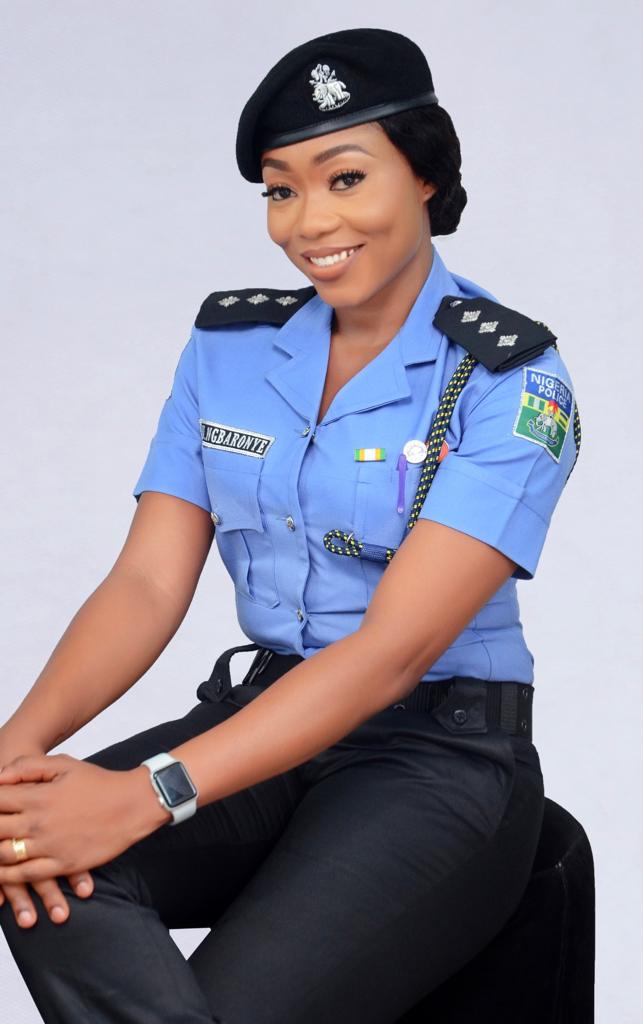
Meanwhile, the Commissioner of Police, Lagos State Police Command, CP Hakeem Odumosu has approved the appointment of DSP Matilda Umiah Ngbaronye as the new Deputy Police Public Relations Officer, Lagos State Command.
DSP Matilda Umiah Ngbaronye was enlisted into the Nigeria Police Force on 19th April 2010. She has served in various capacities in Lagos State Police Command. Before her appointment as the DPPRO, she was the Crime Officer, Dolphin Estate Division, Ikoyi, General Investigation /Fingerprint Expert at the State Criminal Investigation Department, SCIID Panti, the Officer-in-Charge, Public Complainants Bureau, (PCB), after which she was deployed to African Union Mission in Somalia AMISOM where she made the country proud and excelled as the Public Information Officer (PIO).
DSP Matilda Umiah Ngbaronye, a good image manager, has attended the Advanced Detective Course, (ADC), Human Rights Protection Course and many others courses both within and outside Nigeria.