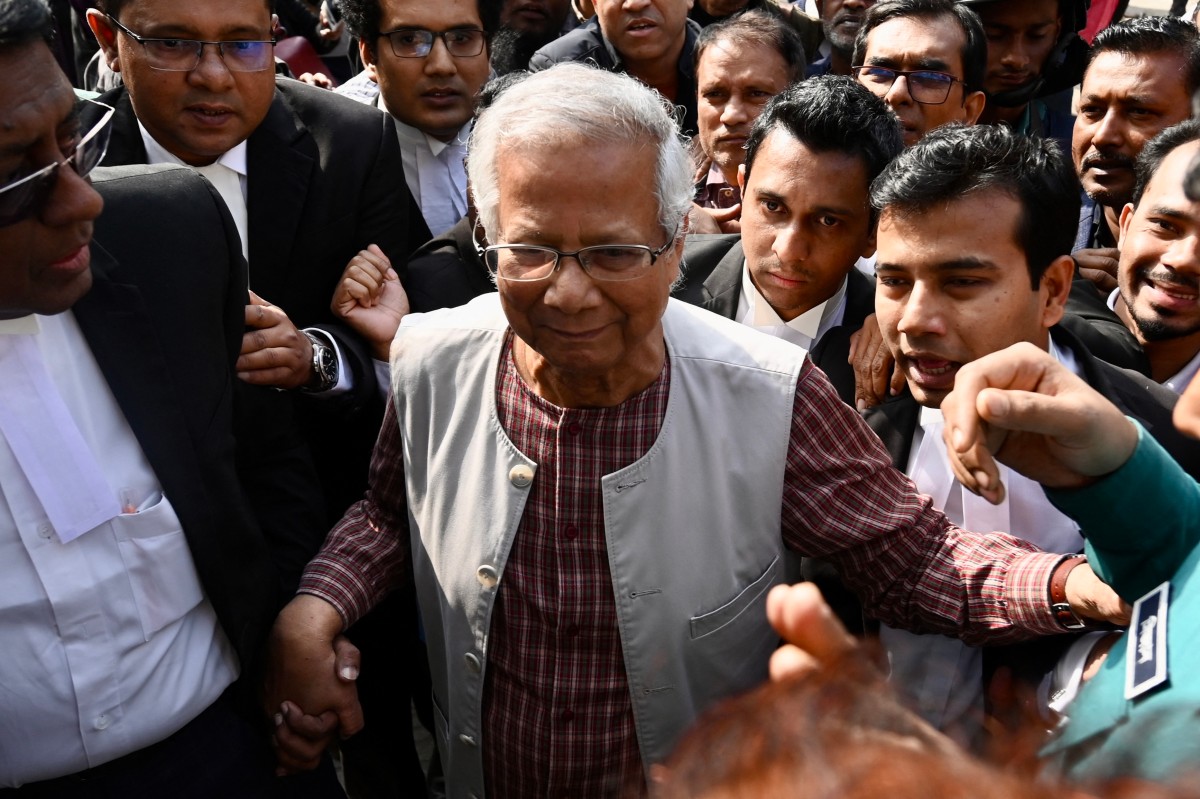
Bangladesh’s caretaker government has overturned a long-standing protocol requiring women officials to be addressed as “sir”, calling it an “odd” relic of ousted leader Sheikh Hasina’s regime.
The interim administration, headed by Nobel Peace Prize winner Muhammad Yunus, took office last year after former prime minister Hasina was overthrown by a student-led uprising, forcing her to flee to neighbouring India.
A statement issued by the press wing of the caretaker government late Thursday said the directive mandating the use of “sir” for women in official roles had been “annulled”.
“During Sheikh Hasina’s nearly 16-year-long autocratic rule, a directive was reportedly issued requiring public officials to address her as ‘sir’,” it said.
“This practice extended to other high-ranking women officials, who were – and still are – being called ‘sir’, which is clearly odd.”
A new committee has been formed to revise other protocol-related directives, the statement added.
A woman bureaucrat told AFP that the caretaker government took the call without consulting women officials.
“The tradition began during Sheikh Hasina’s tenure, but many women officers supported it, finding the address gender-neutral,” said the official, speaking on condition of anonymity.
Hasina, 77, who has defied orders to return to Dhaka, faces several charges at Bangladesh’s International Crimes Tribunal for alleged crimes committed during a crackdown on the protests that led to her toppling.
Up to 1,400 people were killed between July and August 2024, according to the United Nations.
Prosecutors say that Hasina held overall command responsibility for the violence.
The United Arab Emirates has imposed tougher entry conditions for Nigerian travellers and banned transit visa applications entirely.
Travel agents confirmed on Tuesday.
According to new directives from Dubai immigration, Nigerians aged 18 to 45 will no longer be eligible for tourist visas unless accompanied.
For those aged 45 and above, visa applicants must present a personal six-month bank statement showing a minimum monthly balance of $10,000 (or its naira equivalent).
Travel agents said the new policy is expected to drastically reduce travel from Nigeria to Dubai, a top destination for business and tourism.
“For Nigerian nationals, please bear in mind that an applicant aged 18 to 45 years travelling alone is not eligible for the TOURIST VISA CATEGORY.
“An applicant who is 45 years or above must provide a Single Nigerian personal bank statement for a period of the last six months, with each month’s end balance reflecting a minimum ending balance of USD 10,000 or its naira equivalent.
“Kindly note that the above points must be taken into consideration before sending your applications with other existing documents such as hotel reservation, data page, etc,” the notification reads.
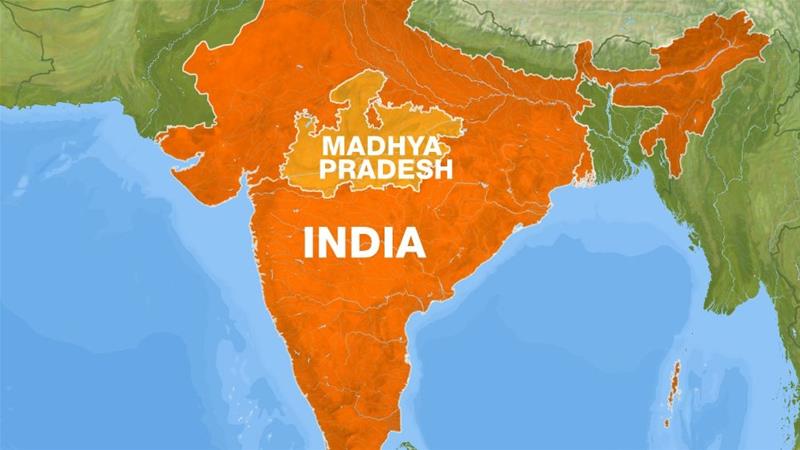
Indian villagers beat a family of five to death and dumped their corpses in a lake, accusing them of “practising witchcraft” after the death of a boy, police said Tuesday.
Three people have been arrested and have confessed to the crime, police in the northern state of Bihar said in a statement.
Three women — including a 75-year-old — were among those murdered.
The main accused believed that his son’s recent death was caused by one of those killed, and blamed “him and his family of practising witchcraft”, the statement said.
“After beating the victims to death, the perpetrators loaded the bodies onto a tractor and dumped them in a pond,” police said.
The murderers and victims all belonged to India’s Oraon tribe in Bihar, India’s poorest state and a mainly Hindu region of at least 130 million people.
Despite campaigns against superstition, belief in witchcraft remains widespread in rural areas across India, especially in isolated tribal communities.
Some states, including Bihar, have introduced laws to try to curb crimes against people accused of witchcraft and superstition.
Women have often been branded witches and targeted, but the killing of the family of five stands out as a particularly heinous recent example.
More than 1,500 people — the overwhelming majority of them women — were killed in India on suspicion of witchcraft between 2010 and 2021, according to the National Crime Records Bureau.
Some believe in the occult, but attackers also sometimes have other motives including usurping their rights over land and property.
Defending champions Nigeria and Togo are preparing to retain their titles at the 2025 International Table Tennis Africa Federation West Africa Regional Championships in Lagos from July 16 to 19.
The event will take place at the Molade Okoya-Thomas Hall, located within the Teslim Balogun Stadium complex in Lagos.
Nigeria, the region’s most decorated team, will defend the women’s team title it successfully retained in Lomé last year.
This confirmation was made in a statement on Sunday by ITTF Africa.
Togo will pursue back-to-back wins in the men’s team event, after a thrilling 3-2 victory over Nigeria in the 2024 final.
That 2024 triumph came on home soil, spurred by strong local support from enthusiastic fans.
This year, Togo faces tough opposition from Nigeria and other countries including Benin Republic, Ghana, and Côte d’Ivoire.
Other participating nations include Burkina Faso, Guinea, Liberia, Niger Republic, and Sierra Leone.
In the singles event, Nigeria’s top-ranked player, Matthew Kuti, will seek to retain his men’s singles crown.
Kuti won his first regional title last year in Lomé, defeating Oba Oba Kizito of Côte d’Ivoire 4-1 in the final.
Victory this year would make him the first male player to win consecutive singles titles at the tournament.
However, the women’s singles title is wide open due to the absence of reigning champion, Nigeria’s Hope Udoaka.
Her absence provides a golden opportunity for a new female champion to emerge from the competition.
The championship will also serve as a qualifier for the 2025 African Championships in Rwanda later this year.
With home advantage and the largest squad, Nigeria is eyeing a return to the top in the men’s team event.
Nigeria narrowly lost the men’s team title to Togo in last year’s hard-fought final in Lomé.
This year’s edition has seen increased participation, with over ten countries confirming their attendance.
This marks a rise from previous editions, which recorded a maximum of nine participating countries.
Sierra Leone, Guinea, and Niger Republic are returning to the championship after years of absence.
All eyes will be on Nigeria, a country that has dominated both men’s and women’s events in the region.
Ferdinand Sonou, ITTF Africa West Region Vice President, shared his excitement ahead of the event.
He said, “I’m thrilled we’re back in Nigeria for the regional championships. It’s always a favourite for visiting teams.
“Nigeria has a strong reputation for hosting international events, and teams look forward to the experience.
“This tournament signals the start of a packed international table tennis season in Lagos.
“I’m confident we’ll witness the rise of new talents alongside the established stars of the sport.
“The passionate Lagos crowd will certainly bring energy to the matches.”
Sonou also praised ITTF Africa President, Wahid Enitan Oshodi, for his unwavering support for the championships.
He noted that the growing number of teams reflects ITTF Africa’s commitment to developing the sport across the region.
The News Agency of Nigeria reports that the 2025 championship promises intense action and top-tier table tennis talent.
BRICS leaders meeting in Rio de Janeiro from Sunday are expected to decry Donald Trump’s hardline trade policies, but are struggling to bridge divides over crises roiling the Middle East.
Emerging nations representing about half the world’s population and 40 per cent of global economic output are set to unite over what they see as unfair US import tariffs, according to sources familiar with summit negotiations.
Since coming to office in January, Trump has threatened allies and rivals alike with a slew of punitive tariffs.
His latest salvo comes in the form of letters due to be sent starting Friday informing trading partners of new tariff rates expected next week on July 9.
Diplomats from 11 emerging nations, including Brazil, Russia, India, China and South Africa, have been busy drafting a statement condemning the economic uncertainty.
Any final summit declaration is not expected to mention the United States or its president by name. But it is expected to be a clear political shot directed at Washington.
“We’re anticipating a summit with a cautious tone: it will be difficult to mention the United States by name in the final declaration,” Marta Fernandez, director of the BRICS Policy Center at Rio’s Pontifical Catholic University said.
This is particularly the case for China, which has only recently negotiated with the US to lower steep tit-for-tat levies.
“This doesn’t seem to be the right time to provoke further friction” between the world’s two leading economies, Fernandez said.
– Xi no show –
Conceived two decades ago as a forum for fast-growing economies, the BRICS have come to be seen as a Chinese-driven counterbalance to Western power.
But the summit’s political punch will be depleted by the absence of China’s Xi Jinping, who is skipping the annual meeting for the first time in his 12 years as president.
“I expect there will be speculation about the reasons for Xi’s absence,” said Ryan Hass, a former China director at the US National Security Council who is now with the Brookings Institution think tank.
“The simplest explanation may hold the most explanatory power. Xi recently hosted Lula in Beijing,” said Hass.
The Chinese leader will not be the only notable absentee. War crime-indicted Russian President Vladimir Putin is also opting to stay away, but will participate via video link, according to the Kremlin.
Hass said Putin’s non-attendance and the fact that India’s prime minister will be a guest of honor in Brazil could also be factors in Xi’s absence.
“Xi does not want to appear upstaged by Modi,” who will receive a state lunch, he said.
“I expect Xi’s decision to delegate attendance to Premier Li (Qiang) rests amidst these factors.”
Still, the Xi no-show is a blow to host President Luiz Inacio Lula da Silva, who wants Brazil to play a bigger role on the world stage.
In the year to November 2025, Brazil will have hosted a G20 summit, a BRICS summit, and COP30 international climate talks, all before heading into fiercely contested presidential elections next year, in which he is expected to run.
– Middle path –
Iran’s President Masoud Pezeshkian, whose nation is still reeling from a 12-day conflict with Israel is also skipping the meeting.
A source familiar with the negotiations said the BRICS countries were still in disagreement over how to respond to the wars in Gaza and between Iran and Israel.
Iranian negotiators are pushing for a tougher collective stance that goes beyond referencing the need for the creation of a Palestinian state and for disputes to be resolved peacefully.
Artificial intelligence and health will also be on the agenda at the summit.
Original members of the bloc Brazil, Russia, India, and China have been joined by South Africa and, more recently, by Saudi Arabia, Iran, the United Arab Emirates, Egypt, Ethiopia and Indonesia.
Analysts say that it has given the grouping more potential international punch.
But it has also opened many new fault lines.
Brazil hopes that countries can take a common stand at the summit, including on the most sensitive issues.
“BRICS (countries), throughout their history, have managed to speak with one voice on major international issues, and there’s no reason why that shouldn’t be the case this time on the subject of the Middle East,” Brazil’s Foreign Minister Mauro Vieira told AFP.
President Bola Tinubu has arrived in Rio de Janeiro, Brazil, to participate in the 17th Summit of Heads of State and Government for the Global South and Emerging Economic Bloc.
The block includes Brazil, Russia, India, China, and South Africa, also called the BRICS.
The President’s flight touched down at the Galeao Air Force Base tarmac at 8:45 pm local time on Friday, where the Galeao Air Force Base Commander coordinated the Guard of Honour.
Tinubu’s Special Adviser on Information and Strategy, Bayo Onanuga, revealed this in a statement he signed Saturday titled ‘President Tinubu Arrives In Rio De Janeiro For BRICS Meeting’.
Brazil’s Deputy Minister for Africa and the Middle East, Carlos Sergio Sobral Duarte, and the Deputy Minister for Trade Promotion, Science, Technology, Innovation, and Culture, received President Tinubu.
Tinubu is in Brazil at the invitation of President Luiz Inacio Lula Da Silva.
The Nigerian leader will attend a bilateral meeting hosted by President Lula on Saturday, July 5, ahead of the summit on June 6 and 7.
At the BRICS Summit, the President will participate in a plenary session and deliver an address on Nigeria’s ongoing reforms to reposition the economy for global competitiveness.
He will also meet with investors to capitalise on the country’s opportunities in agriculture, solid minerals, healthcare, and alternative energy.
The summit’s theme is “Strengthening Global South Cooperation for More Inclusive and Sustainable Governance.”
Deliberations will centre on health, Artificial Intelligence, governance, and Climate Change issues.
Ahead of the Leaders’ Summit, the political negotiators of BRICS brainstormed over aligning more commitments to combat socially determined diseases, artificial intelligence governance, and climate finance.
Their focus was on providing concrete solutions to the structural challenges faced by the Global South.
State Governors participating in the summit with the President are Hyacinth Alia (Benue), Prince Dapo Abiodun (Ogun), Babajide Sanwo-Olu (Lagos), Sheriff Oborevwori (Delta) and Mohammed Umar Bago (Niger).
Donald Trump said on Saturday that his relationship with his billionaire donor Elon Musk is over and warned there would be “serious consequences” if Musk funds U.S. Democrats running against Republicans who vote for the president’s sweeping tax and spending bill.
In a telephone interview with NBC News, Trump declined to say what those consequences would be, and went on to add that he had not had discussions about whether to investigate Musk.
Asked if he thought his relationship with the Tesla and SpaceX CEO was over, Trump said, “I would assume so, yeah.”
“No,” Trump told NBC when asked if he had any desire to repair his relationship with Musk.
“I have no intention of speaking to him,” Trump said.
However, Trump said he had not thought about terminating U.S. government contracts with Musk’s StarLink satellite internet or SpaceX rocket launch companies.
Musk and Trump began exchanging insults this week, as Musk denounced Trump’s bill as a “disgusting abomination”.
Musk’s opposition to the measure complicated efforts to pass the legislation in Congress, where Republicans hold only slim majorities in the House of Representatives and Senate.
The bill narrowly passed the House last month and is now before the Senate, where Trump’s fellow Republicans are considering making changes.
Nonpartisan analysts estimate the measure would add $2.4 trillion to the $36.2 trillion U.S. debt over 10 years, which worries many lawmakers, including some Republicans who are fiscal hawks.
Musk also declared it was time for a new political party in the United States “to represent the 80 per cent in the middle!”
Trump said on Saturday he is confident the bill would get passed by the U.S. July 4 Independence Day holiday.
“In fact, yeah, people that were, were going to vote for it are now enthusiastically going to vote for it, and we expect it to pass,” Trump told NBC.
Republicans have strongly backed Trump’s initiatives since he began his second term as president on Jan. 20.
While some Republican lawmakers have made comments to the news media expressing concern about some of Trump’s choices, they have yet to vote down any of his policies or nominations.
Musk has deleted some social media posts critical of Trump, including one that signaled support for impeaching the president, appearing to seek a de-escalation of their public feud which exploded on Thursday.
During his first term as president, the House, then controlled by Democrats, twice voted to impeach Trump but the Senate both times acquitted him.
The White House and Musk did not immediately respond to requests for comment on Saturday on the deleted posts.
People who have spoken to Musk said his anger has begun to recede and they thought he would want to repair his relationship with Trump.
One of the X posts that Musk appeared to have deleted was a response to another user posting: “President vs Elon. Who wins? My money’s on Elon. Trump should be impeached and (Vice President) JD Vance should replace him.” Musk had written “yes.”
On Theo Von’s “This Past Weekend” podcast – recorded on Thursday as the feud between Trump and Musk unfolded and released on Saturday – Vance called Musk’s criticism of Trump a “huge mistake.”
“I’m always going to be loyal to the president, and I hope that eventually Elon kind of comes back into the fold. Maybe that’s not possible now because he’s gone so nuclear.
But I hope it is,” said Vance, describing Musk as an “incredible entrepreneur.”
Trump is due to attend an Ultimate Fighting Championship fight card on Saturday in New Jersey.
Since his second election win, he has attended two previous UFC mixed martial arts fight cards with Musk. Musk is not expected to attend on Saturday.
Musk, the world’s richest man, bankrolled a large part of Trump’s 2024 presidential campaign, spending nearly 300 million dollars in last year’s U.S. elections and taking credit for Republicans retaining a majority of seats in the House and retaking a majority in the Senate.
Trump named Musk to head an effort to downsize the federal workforce and slash spending, lauding him at the White House only about a week ago for his work as head of the Department of Government Efficiency.
Musk cut only about half of one per cent of total spending, far short of his brash plans to axe two trillion dollars from the federal budget.
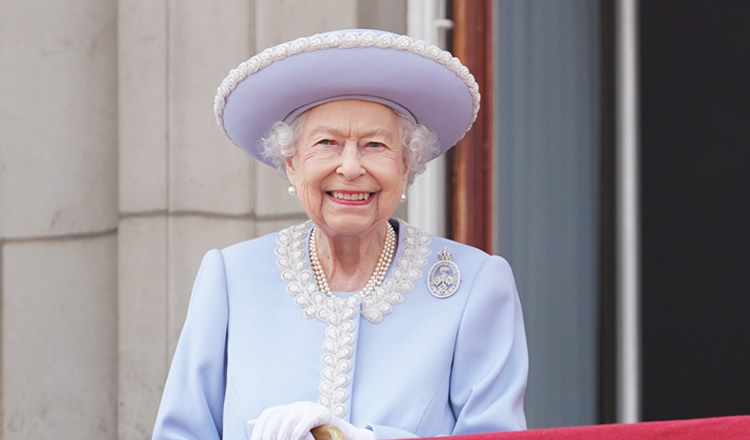
The popular Ijebu age grade, Egbe Bobakeye Okunrin Akile Ijebu, on Saturday, lamented the wrong narrative being circulated on social media about the visit of the late Queen Elizabeth II of England to Nigeria, particularly, Ijebu land in 1956.
While addressing journalists at Ijebu Ode on Saturday, Abiodun Onanuga, the Giwa of the age-grade, said that the narrative being pushed around that the late Queen Elizabeth II slept in the house of the late Ogbeni Oja of Ijebu land and famous industrialist, Chief Timothy Adeola Odutola, during her visit was an outright falsehood.
The group stated that the late monarch was received at Itoro by the late Awujale, Oba Daniel Adesanya, then she moved to the GRA residence of the colonial head of the old Ijebu Province, now housing the Egbe Bobakeye.
According to the group, they said she had her lunch there and left for Lagos.
Onanuga said that the foremost age grade decided to take it upon itself to clear the air about this unnecessary distortion of history, and the dissemination of untrue news to preserve the integrity of highly diligent and resourceful people.
He explained that the age group, about a year ago, commissioned two of its members, Kayode Adesanya and Lekan Odufunlade, to approach the British National Archives to research this controversial history and investigate the truth.
He stated that “The duo painstakingly checked through volumes of documents for several months and succeeded in obtaining a well compiled information on Her Majesty’s travel, meticulously detailing every point of her official visit to a few parts of the old Western Region of Nigeria, including where she had lunch.
“They ultimately obtained incontrovertible documentary evidence from the British Government on the itinerary of Her Majesty, Elizabeth II, the late Queen of England’s visit to Ijebu-Ode and our Ule Egbe in 1956.
“On behalf of Egbe Bobakeye, I can now state categorically and indisputably that our own Ule Egbe, which used to be the residence of the British resident in ljebu-Ode, was the venue where the Queen had her lunch.
“This record unequivocally debunks any claim that her Majesty spent the night in Ijebu-Ode because she left for Lagos after visiting the Awujale at Itoro and having lunch at our present Ule Egbe, which at that time was housing the colonials”.
Odunfunlade, one of the researchers commissioned for the research, said that the researcher got the truth from some documents obtained at the British National Archive.
Odunfunlade, however, called on the federal government to intensify efforts at preservation and documentation of the country’s history, such that it will be available for the yet unborn generation.
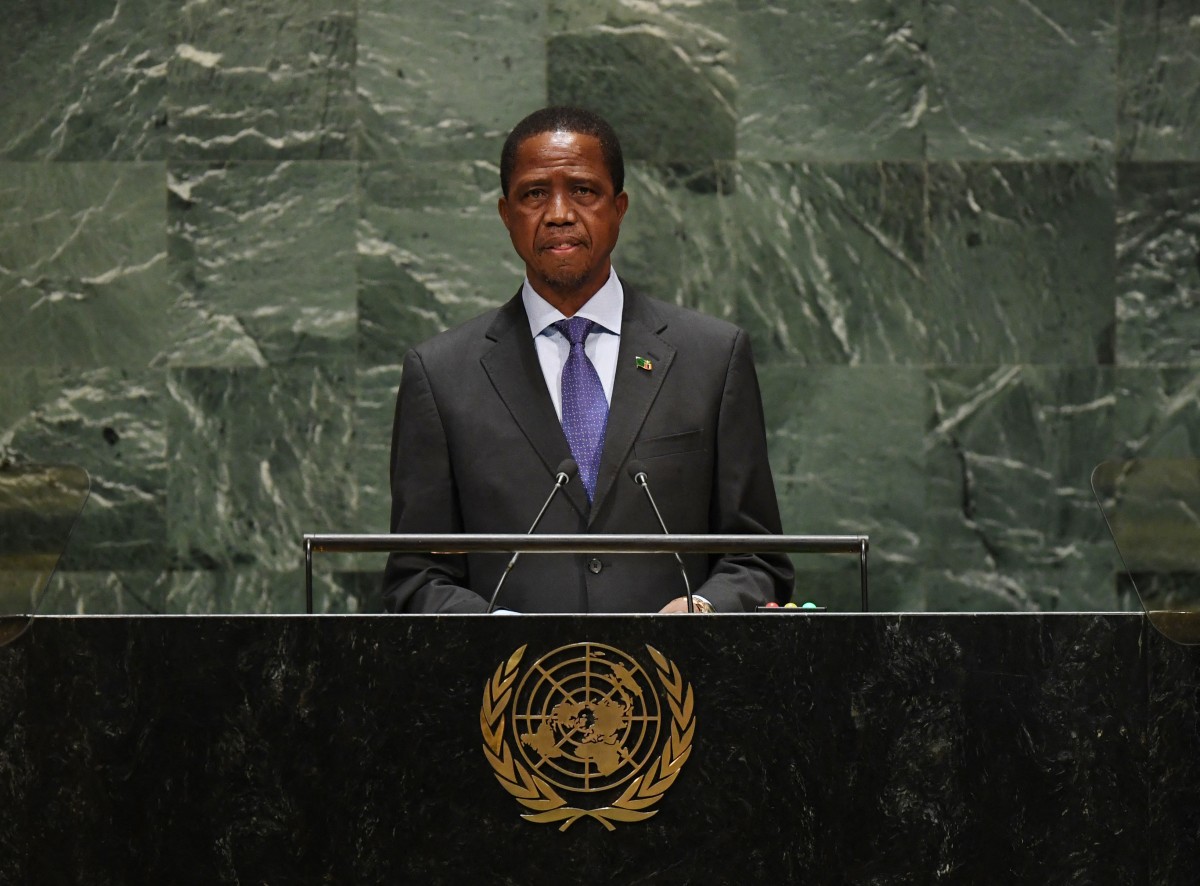
Zambia’s former president Edgar Lungu, who held power for almost seven years until 2021, died Thursday in a hospital in South Africa at the age of 68, his party and family announced.
Lungu had been receiving specialised medical treatment in a clinic in Pretoria, the Patriotic Front, his political party, said in a statement.
“My father had been under medical supervision in recent weeks,” his daughter Tasila Lungu-Mwansa announced in a video shared on social media.
“His condition was managed with dignity and privacy with support from all well-wishers,” she said, without providing details of the cause of his death.
Lungu had suffered from recurring achalasia, a condition caused by narrowing of the oesophagus, for which he had been treated in South Africa.
Lungu, a trained military officer and lawyer, stepped down from the presidency in 2021 when veteran opposition leader Hakainde Hichilema, the current president, won elections by a landslide.
He had said he planned to run for president again in the 2026 elections.
He came into power in 2015, after the death in office of his predecessor Michael Sata, and described himself as an “ordinary Zambian of humble beginnings”.
President Donald Trump has signed a new proclamation barring citizens from 12 countries from entering the United States, citing national security concerns.
The full travel ban affects nationals from Afghanistan, Myanmar, Chad, Congo, Equatorial Guinea, Eritrea, Haiti, Iran, Libya, Somalia, Sudan, and Yemen.
The restriction will take effect on June 9, 2025.
In addition to the full bans, the proclamation imposes partial restrictions on citizens of Burundi, Cuba, Laos, Sierra Leone, Togo, Turkmenistan, and Venezuela.
There are some exemptions, including athletes travelling for major sporting events, some Afghan nationals and dual nationals with citizenship in unaffected countries, according to the BBC.
Trump stated that the measure is intended to prevent individuals considered potential security risks from gaining entry into the US.
“We cannot have open migration from any country where we cannot safely and reliably vet and screen,” he said in a video message posted on X on Wednesday.
According to the White House, the countries facing the harshest restrictions were deemed to have a “large-scale presence of terrorists,” poor cooperation on visa-related security measures, and inadequate systems for verifying travelers’ identities.
The administration also cited issues such as poor record-keeping of criminal histories and high visa overstay rates as contributing factors.
The new directive builds on Trump’s broader immigration crackdown initiated at the beginning of his second term.
On January 20, the president signed an executive order mandating stricter security checks for foreign nationals and instructing federal agencies to review which countries should face entry suspensions due to inadequate vetting procedures.
This move echoes Trump’s controversial travel ban during his first term, which initially targeted seven predominantly Muslim countries and was upheld by the US Supreme Court in 2018.
The ban was later repealed by President Joe Biden in 2021, who described it as “a stain on our national conscience.”