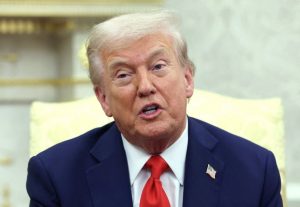
US President Donald Trump and his Egyptian counterpart Abdel Fattah al-Sisi will on Monday chair a Gaza peace summit in Sharm el-Sheikh, also attended by world leaders, including the UN chief.
The gathering in the Red Sea resort town will bring together “leaders from more than 20 countries”, Sisi’s office said.
It will aim “to end the war in the Gaza Strip, enhance efforts to achieve peace and stability in the Middle East, and usher in a new era of regional security and stability”.
UN Secretary-General Antonio Guterres said he will attend, as will Britain’s Prime Minister Keir Starmer, his Italian counterpart Giorgia Meloni and Pedro Sanchez of Spain.
French President Emmanuel Macron and Turkish President Recep Tayyip Erdogan will also travel to Sharm el-Sheikh, according to their offices.
The European Council will be represented by its president, Antonio Costa, a spokesperson said.
“The plan offers a real chance to build a just and sustainable peace, and the EU is fully committed to supporting these efforts and contributing to its implementation,” the spokesperson added.
Jordan’s King Abdullah II is also expected to attend, according to state media.
There was no immediate word on whether Israeli Prime Minister Benjamin Netanyahu would participate, while Hamas has said it will not take part.
Hossam Badran, a Hamas political bureau member, told AFP in an interview that the Palestinian militant group “will not be involved”.
Hamas “acted principally through… Qatari and Egyptian mediators” during previous talks on Gaza, he said.
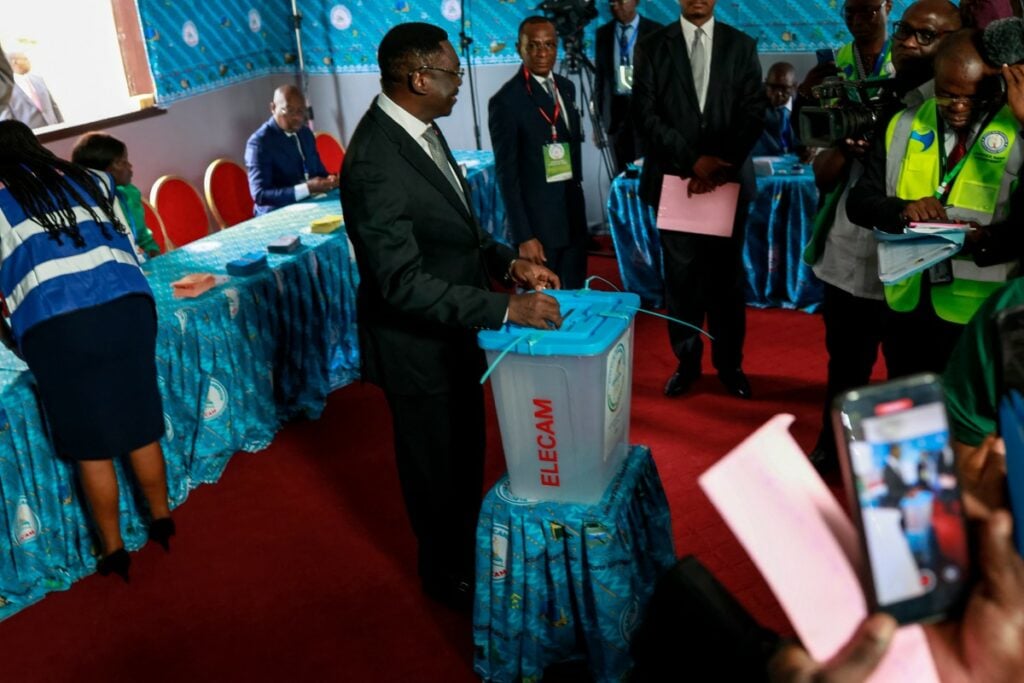
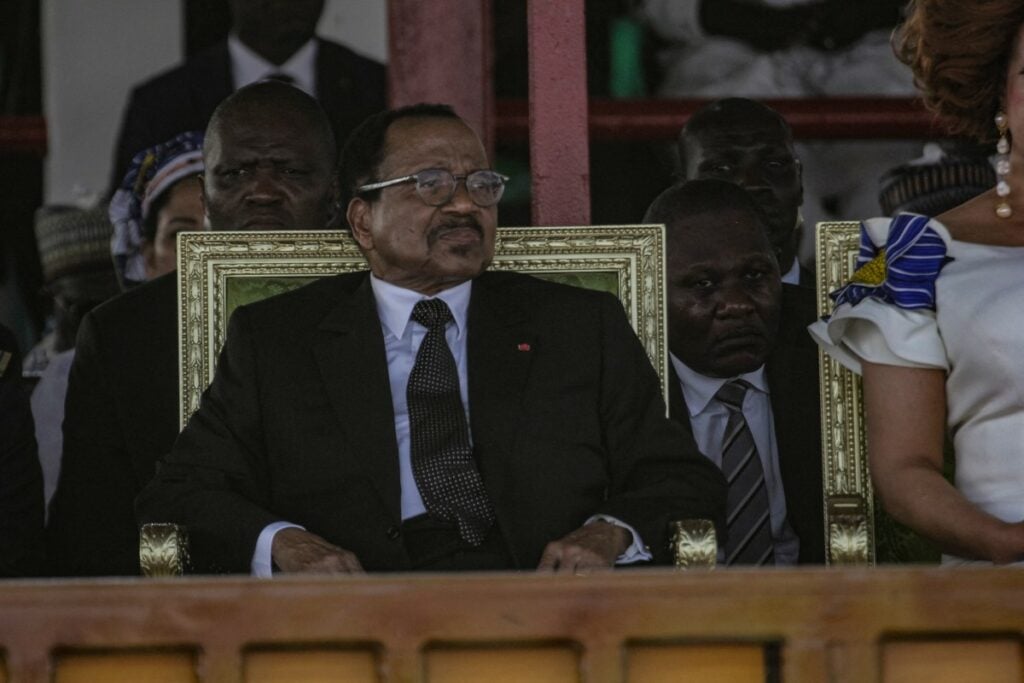
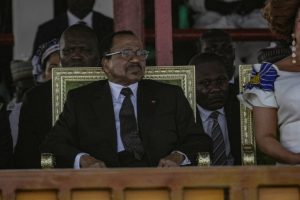
Voting began Sunday as Cameroon holds presidential elections, which 92-year-old Paul Biya, the world’s oldest serving head of state, is expected to win, extending his already 43-year grip on power.
Biya faces 11 opponents, including former employment minister Issa Tchiroma Bakary, 79, who has generated unexpected enthusiasm among voters in the central African nation, where half the population is under 20.
Polling stations opened at 8:00 am and will close at 6:00 pm (0700 to 1700 GMT).
The eight million Cameroonians who are eligible to vote in the one-round election have, for the most part, only known one ruler in their lifetime.
Biya has been in power since 1982 and has won every election in the past 20 years by more than 70 percent of the ballot.
“We shouldn’t be naive. We know full well the ruling system has ample means at its disposal to get results in its favour,” Cameroonian political scientist Stephane Akoa told AFP.
But he said that the campaign in recent days had been “much livelier” than was usually the case at that stage.
“This poll is therefore more likely to throw up surprises,” he said.
Biya has kept his customary low profile during the campaign, appearing in public on Tuesday for the first time since May, looking visibly fit.
He held a rally in Maroua in the strategic Far North region, which has 1.2 million eligible voters and makes up the second largest voting bloc in the country.
For years, it was considered a Biya stronghold, but several former allies from the area are now running against him.
Youth vote
The 11 rival candidates have made numerous public appearances in recent weeks, each promising a new dawn for Cameroon in place of Biya’s entrenched hold on public life.
The president’s main rival, Bakary, also campaigned in the regional capital, Maroua, this week.
In stark contrast to Biya, whose appearance attracted a sparse crowd of just a few hundred people, Bakary was welcomed in the streets of his home region by thousands of supporters waving placards that hailed “Tchiroma the Saviour”.
Bakary—who resigned from the government in June to join the opposition after 20 years at Biya’s side—is the leading challenger after top opponent Maurice Kamto was barred from the race.
Kamto came second in the 2018 presidential election but was banned from standing this year by the Constitutional Council, a move that rights groups, including Human Rights Watch, said undermined the credibility of the electoral process.
Biya is only the second president Cameroon has had since its independence from France in 1960.
It is Central Africa’s most diversified economy, with an abundance of natural and agricultural resources.
However, around 40 per cent of the population lives below the poverty line, according to World Bank figures for 2024, and unemployment stands at 35 per cent in the major cities.
Young people hunger for change, Akoa said, but not yet to the point where they will take the risk of protesting en masse as in other countries in Africa and Asia.
‘Sign of change’
Cameroonians complain about the high cost of living, a lack of clean drinking water, healthcare and quality education.
But their frustrations remain confined to social media for the time being.
“Many young people intend to vote,” Akoa said.
“There is a positive sign of change, but perhaps not strong enough to bring young people out onto the streets, as we saw in Madagascar, Tunisia, and elsewhere.”
The government has authorised 55,000 local and international observers to monitor the vote, including representatives of the African Union.
The Constitutional Council has until October 26 to announce the final results.
But several internet platforms say they will compile the results independently, drawing criticism from the government, which says they are attempting to manipulate public opinion.
The vote takes place in the shadow of a conflict between separatist forces and the government that has plagued the English-speaking regions since 2016.
Turnout was particularly low in these areas in 2018.
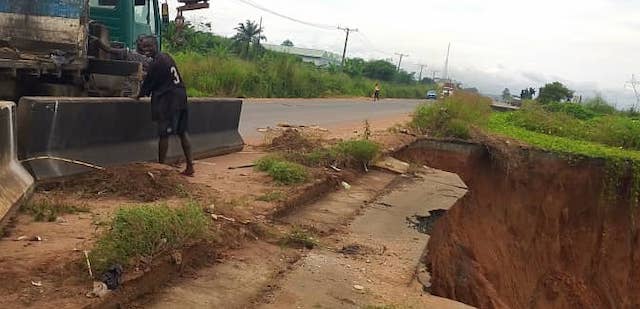
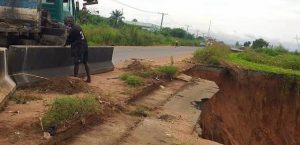
The Federal Road Safety Corps has alerted motorists plying the Onitsha-Owerri Road to be wary of a gully erosion that has eaten up the entire lane of the Ozubulu end, Ekwusigo LGA of Anambra State, axis of the ever-busy road.
It was gathered that the erosion, which started near the Sea Horse section of the road some months ago, has totally collapsed one lane of the road following the heavy rainfall recorded in the area on Tuesday, thereby posing danger to motorists.
A video circulating on social media showed the road totally taken over by the gully erosion, with the voice-over in the video calling the attention of motorists to be careful while driving on the road, especially at night.
However, reacting to the development in a press statement released on Saturday, the Sector Public Education Officer, FRSC Anambra State Command, Margaret Onabe, urged the motoring public to drive cautiously on the road.
Onabe said the road alert became necessary to ensure the safety of road users and prevent crashes while emphasising FRSC’s commitment to safety on the road.
According to her, the FRSC team, including the federal controller, the chairman of Ekwusigo LGA and a construction company, had visited the site to ensure safety and smooth flow of traffic.
She urged motorists to cooperate with safety officers and drive cautiously by following the laid-down guidelines, especially at the erosion site, adding that the construction company is helping to adjust barricades to prevent accidents.
The statement read in part, “The Federal Road Safety Corps RS5.36 Oraifite Unit Command has responded quickly to a distress call regarding the worsening condition of the erosion site in Ozubulu.
“Following directives from the Sector Commander, the Unit Commander and her team took immediate action to alert road users and key stakeholders.
“As of the time of this report, the FRSC team, in collaboration with Tamaic Construction Company Ozubulu, the Chairman, Ekwusigo LGA, and his team, are on-site to ensure safety and facilitate the smooth flow of traffic.
“The construction company is helping to adjust barricades to prevent further accidents.
“The Federal Comptroller of Works, Dr Emeka Okpara, is also present with his field office team to conduct an on-the-spot assessment of the situation.
“The state Sector Commander, Bridget Asekhaauno, emphasised the Command’s commitment to ensuring the safety of road users and preventing crashes.
“We appreciate the collaborative efforts of Tamaic Construction Company Ozubulu, the Ekwusigo Mayor and his team, as well as the Federal Comptroller of Works, for their prompt response to this emergency. We will continue to monitor the situation and work towards finding a lasting solution to this erosion issue.
“The motoring public is urged to pay attention to the ongoing road development. They should cooperate with safety officers and drive cautiously, especially at the erosion site. Following these guidelines is essential for everyone’s safety.”
Governor Chukwuma Soludo of Anambra State, on October 9 2025, reaffirmed his administration’s commitment to addressing erosion and flooding challenges affecting vulnerable communities across the state.
He pledged to intensify intervention efforts, particularly in flood-prone areas such as Ogidi in Idemili North Local Government Area, where residents continue to face severe environmental risks.
Soludo underscored the importance of comprehensive drainage and erosion control systems to safeguard lives, farmlands, and infrastructure from further damage. He noted that his administration remains focused on implementing practical, long-term solutions while collaborating with the Federal Government and development partners to scale up erosion mitigation projects across Anambra.
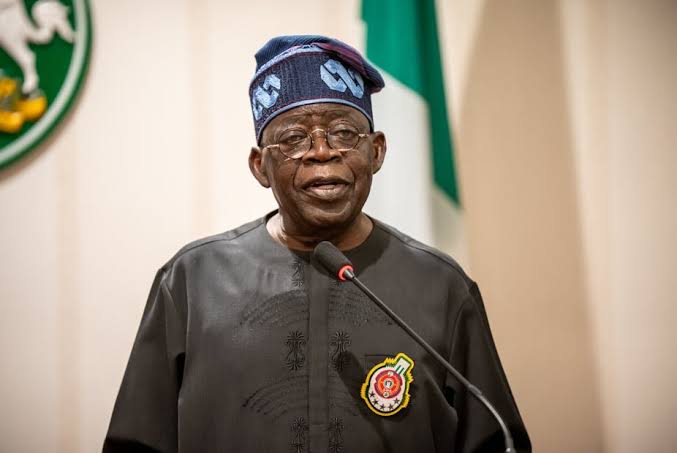
The Presidency on Saturday said President Bola Tinubu’s decision to grant presidential pardon and clemency to 175 Nigerians and foreigners, including late environmental activist Ken Saro-Wiwa, Major General Mamman Vatsa, and other members of the “Ogoni Nine”, was part of efforts to promote fairness, justice, and national unity.
The Presidency also revealed that the President corrected a historical injustice committed by British colonial authorities against Sir Herbert Macaulay, one of Nigeria’s foremost nationalists, who was banned from public office in 1913 after being convicted of misappropriation of funds.
PUNCH Online reports that Tinubu had signed off on pardons for Sir Herbert Macaulay and 174 others.
This marked one of the most expansive uses of the presidential prerogative of mercy, touching on high-profile historical cases.
In a statement signed by Bayo Onanuga, Special Adviser to the President on Information and Strategy, the Presidency explained that the exercise was guided by the recommendations of the Presidential Advisory Committee on the Prerogative of Mercy, chaired by the Attorney-General of the Federation and Minister of Justice, Prince Lateef Fagbemi (SAN).
According to Onanuga, Tinubu’s gesture was extended to individuals who had either demonstrated remorse, exhibited good conduct, acquired vocational skills, or shown evidence of reformation during incarceration. Others, he said, benefited due to old age, ill health, or historical injustice.
“Illegal miners, white-collar convicts, remorseful drug offenders, foreigners, Major General Mamman Vatsa, Major Akubo, Professor Magaji Garba, capital offenders such as Maryam Sanda, Ken Saro Wiwa, and the other Ogoni Eight were among the 175 convicts and former convicts who received President Bola Ahmed Tinubu’s mercy on Thursday.
“President Tinubu granted clemency to most of them based on the reports that the convicts had shown remorse and good conduct. He forgave some due to old age, the acquisition of new vocational skills, or enrolment in the National Open University of Nigeria (NOUN). President Tinubu also corrected the historic injustice committed by British colonialists against Sir Herbert Macaulay, one of Nigeria’s foremost nationalists,” the statement read.
Among the beneficiaries of the presidential pardon were Major General Mamman Vatsa, executed in 1986 for alleged coup plotting, and Ken Saro-Wiwa alongside eight other Ogoni activists who were executed in 1995 under the Abacha regime. Their posthumous pardon, Onanuga said, was part of Tinubu’s effort to “heal old wounds and promote national unity.”
A total of 175 convicts and former convicts benefited from the President’s mercy. These included two inmates and 15 former convicts (11 of whom are deceased) granted full pardon, 82 inmates granted clemency, 65 who had their sentences commuted, and seven inmates whose death sentences were reduced to life imprisonment.
Prominent among the living beneficiaries are Farouk Lawan, former lawmaker convicted for corruption; Professor Magaji Garba, former Vice-Chancellor of the Federal University, Gusau; and Maryam Sanda, who was sentenced to death in 2014 for killing her husband.
Sanda’s clemency, according to the Presidency, followed appeals citing her remorse, good behaviour, and the need to care for her two children.
Others pardoned or granted sentence reduction include convicted drug traffickers, illegal miners, and persons convicted of white-collar crimes, several of whom demonstrated good conduct or enrolled in rehabilitation and educational programmes while serving their terms.
The committee’s report, presented during Thursday’s Council of State meeting chaired by President Tinubu, also recommended that the sentences of some death row inmates be commuted to life imprisonment due to their remorse and long periods in confinement.
Onanuga said the exercise was consistent with Section 175 of the 1999 Constitution (as amended), which empowers the President to grant pardons and reprieves after consultation with the Council of State.
The Presidency emphasised that the decision was not taken lightly but was a product of extensive review and recommendations.
Previous reports had indicated that the move was part of a broader effort by the Tinubu administration to decongest custodial centres across the country and promote humane justice reforms.
The full list of beneficiaries, released by the Presidency, includes inmates convicted of drug trafficking, illegal mining, fraud, manslaughter, and other offences. Senator Ikra Aliyu Bilbis has also undertaken to oversee the rehabilitation and empowerment of all pardoned illegal miners.
A paediatrician, Ayobola Adebowale, known as Your Baby Doctor, has explained that some newborn girls may experience light bleeding shortly after birth, a condition medically known as pseudo menstruation or neonatal menstruation.
Adebowale in a video obtained by our correspondent on Saturday said the condition occurs due to hormonal changes after delivery and is usually harmless.
She said,”Your newborn baby can actually menstruate and this is what we call pseudo menstruation or neonatal menstruation, and it occurs because your baby inside your womb was exposed to a lot of your hormones.
“When you bring them out suddenly at time of delivery, they have what we call withdrawal bleeding, which is basically menstruation, and this happens in newborn babies and it’s essentially normal.”
Adebowale advised parents not to panic when they observe such discharge in their baby girls.
“You have no reason to be scared. You have nothing to be worried about. Just observe the discharge and after a few days it will resolve by itself.
“You really don’t have to do anything and you have no reason to be worried and that child is not a witch,” she said.
She, however, added that if the bleeding persists, parents should consult a doctor for a proper check-up.
According to medical research, some newborn girls experience what’s called “neonatal menstruation” or “pseudomenstruation.”
It usually occurs within the first week after birth and is caused by a sudden drop in the mother’s oestrogen levels after delivery.
While the baby is still in the womb, she is exposed to high levels of maternal hormones.
After birth, those hormones quickly fall, and the baby’s uterus may respond by shedding a small amount of blood or mucus, just like a mini period.
Doctors advise parents to seek medical attention if the bleeding is heavy, lasts more than a few days, or occurs after the first week of life, as it could signal an infection or another medical issue.
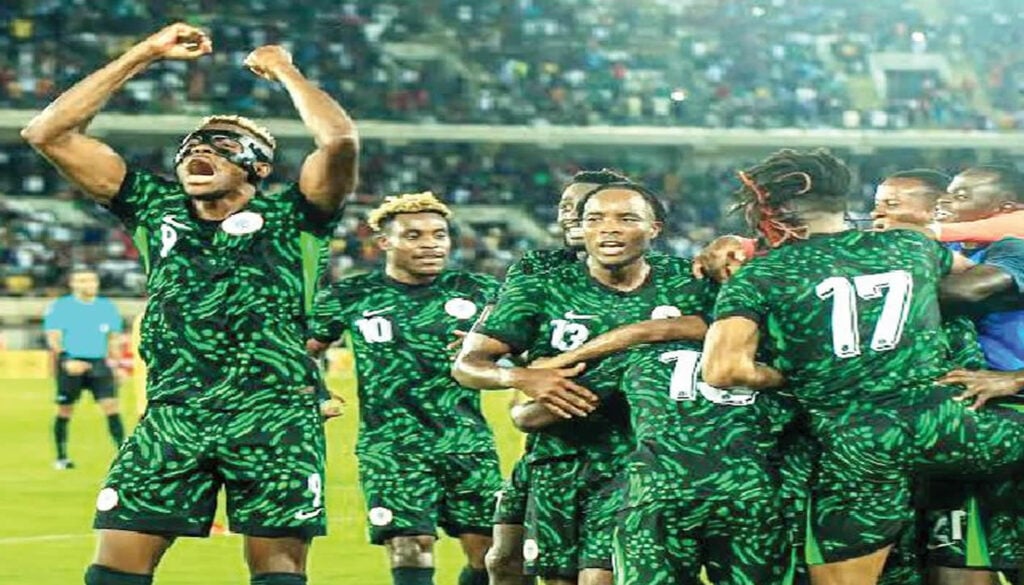
Nigeria’s hopes of reaching the 2026 FIFA World Cup remain alive after a narrow 2-1 victory over Lesotho on Friday, but the Super Eagles face a challenging path to qualification.
Nigeria sit third in Group C with 14 points despite their win. South Africa are second with 15 points after drawing with Zimbabwe, while Benin Republic lead the group with 17 points.
The race for automatic qualification now goes down to the last group matches.
To keep their 2026 World Cup dream alive, Nigeria must beat Benin Republic by at least two goals when they meet in their final group game on 14 October. This is because Benin Republic leads on goal difference with five goals, while Nigeria and South Africa are both on three goals.
A strong win is essential, as goal difference could decide the group winner.
The Super Eagles will also need some help. South Africa must either lose or draw against Rwanda in their last match. If South Africa wins, Nigeria’s chances of qualifying automatically would be very slim.
Only the group winners secure direct qualification to the World Cup, while the four best runners-up go to the play-offs. This means every goal and point is now crucial.
The Nigerian Supreme Council for Islamic Affairs has called on the Federal Government to take a firmer stance against what it described as false and misleading claims of religious persecution in Nigeria, urging authorities to identify and address the sources of such narratives.
In a statement signed by its Deputy National Legal Adviser, Imam Haroun Muhammad Eze on Friday, the Council said it had observed “the avalanche of refutations by many agencies of the Federal Government of Nigeria, well-meaning Nigerians across religious divides and the National Assembly of the recent false allegation circulating on some international platforms and the social media that there is a systematic genocidal campaign against Christians in Nigeria.”
The NSCIA commended the Federal Government and other stakeholders who had publicly rejected the claims but expressed concern that their responses did not go far enough.
It said, “Council wondered why the government could not, at least for once, go the whole hog by calling a spade a spade, by speaking the whole truth.”
The Council maintained that insecurity in Nigeria affects citizens of all faiths and should not be portrayed as targeted at any single group.
It cited the US State Department’s 2023 Report on International Religious Freedom, noting that “terrorists, bandits and armed criminal groups target mosques and churches indiscriminately in Nigeria.”
The statement added, “In the first half of 2025 alone, terrorists and bandits are reported to have killed at least 2,266 civilians across Northern Nigeria, where Muslims are predominant, leaving over 2 million people displaced and over 7.8 million others in need of urgent aid.”
It also referenced findings by the US Commission on International Religious Freedom 2025 Annual Report, which acknowledged that both Muslims and Christians had been victims of attacks, stressing that the situation “does not take any pattern.”
The council said its decision to remain restrained in the face of allegations and misrepresentations was motivated by its commitment to national unity.
“Council wishes to place on record that its decision to be quiet in the face of all the attacks, innuendos and insults being hurled at Muslims in this country is as a result of the necessity of protecting the corporate existence of this nation,” it stated.
The NSCIA also referred to a comment by the Director of National Issues and Social Welfare of the Christian Association of Nigeria, who observed that insecurity affects all Nigerians, saying: “If they open fire in a marketplace, the bullets don’t look for a Christian or spare a Muslim or even spare a baby.”
Expressing concern about policies it believes could deepen divisions, the Council drew attention to a recent circular by the National Insurance Commission restricting co-insurance between conventional insurers and Takaful operators.
It stated, “This circular of exclusivity, which clearly violates the Nigerian Insurance Industry Reform Act (NIIRA 2025), is intended to further create a divide between the Muslims and the non-Muslims in the country.”
Reaffirming its commitment to peace and coexistence, the council said, “Council strongly believes in one and indivisible Nigeria, and it shall continue to work to preserve this ideal even in the face of the greatest provocation.”
It urged the Federal Government to strengthen public communication and ensure that misinformation capable of fuelling religious tension is swiftly addressed through accurate, evidence-based engagement.
The NSCIA’s statement comes amid growing international attention on religious freedom in Nigeria. Western advocacy groups and international media outlets have accused Nigerian authorities of failing to protect Christians from attacks, allegations which the Federal Government and local religious leaders have repeatedly dismissed as exaggerated and politically motivated.
In September, US Senator Ted Cruz introduced S.2747 — the Nigeria Religious Freedom Accountability Act of 2025, a proposed law seeking to compel the US Secretary of State to list Nigeria as a Country of Particular Concern for alleged breaches of religious freedom and to impose sanctions on certain Nigerian officials.
The bill builds on long-standing recommendations from the US Commission on International Religious Freedom, which has consistently urged Washington to apply the CPC designation to Nigeria, citing what it describes as federal and state-level shortcomings in safeguarding religious minorities.
In a plenary debate on Thursday, Senate President Godswill Akpabio warned against the framing of Nigeria’s security challenges in strictly religious terms, cautioning that doing so could distort the reality on the ground and deepen sectarian tension. https://punchng.com/akpabio-warns-against-framing-insecurity-along-religious-lines/
He urged that foreign narratives—particularly from Western media and legislators—should not be allowed to define Nigeria’s security discourse.
Akpabio insisted that terrorists and bandits do not discriminate by faith when launching attacks.
He emphasized that attacks in states like Borno, Kaduna, Benue, and elsewhere have victimized both Christians and Muslims alike, and thus must be approached as national security issues, not religious conflicts.
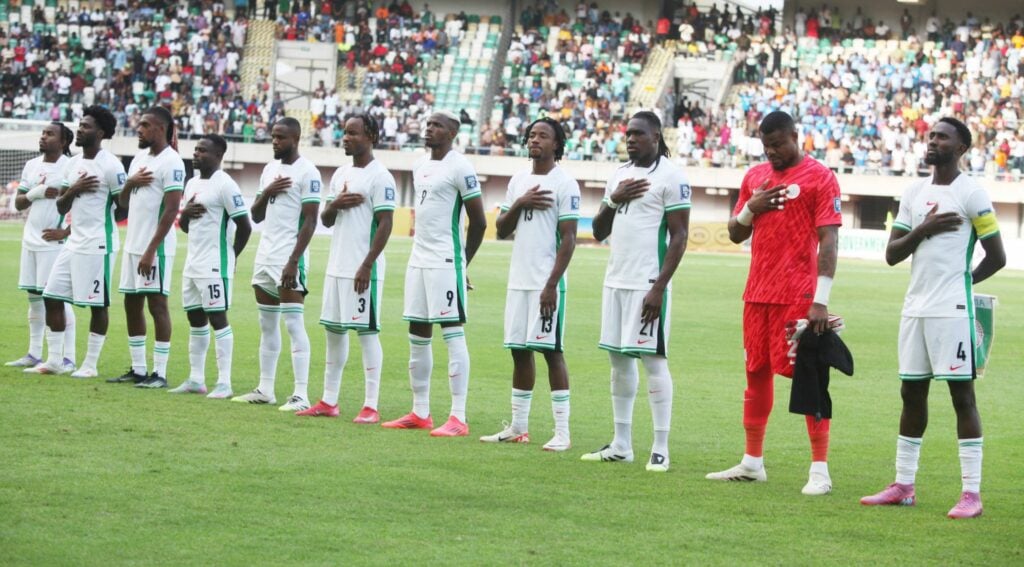
All eyes are on the New Peter Mokaba Stadium, South Africa, on Friday as the Super Eagles lock horns with the Crocodiles of Lesotho in what promises to be a last-chance match for Nigeria in the 2026 FIFA World Cup qualifiers.
The Super Eagles were almost certain to miss out on consecutive World Cup finals after their September 1-1 draw against South Africa’s Bafana Bafana.
However, they were handed a lifeline when South Africa were docked points for fielding an ineligible player, narrowing the gap at the top of Group C.
The ruling left Nigeria three points adrift of Benin and South Africa with two games remaining, reshaping the qualification race and keeping Nigeria’s hopes alive.
Decisive game for the Super Eagles
Nigeria cannot afford to lose either of their remaining two matches, starting with Friday’s fixture against Lesotho.
They must also hope South Africa slip up in their remaining games against Zimbabwe and Rwanda.
With several teams still mathematically capable of topping the group, a win in Polokwane is essential if the Super Eagles are to keep their campaign alive.
Group standings
Benin top the group with 14 points and a +4 goal difference, while South Africa are second on 14 points with a +2 goal difference. Nigeria sit third on 11 points and a +2 goal difference, followed by Rwanda on 11 points and a neutral goal difference.
Head-to-head
Since 2019, the sides have met three times: they have drawn once and Nigeria have won twice.
Lesotho held Nigeria to a 1-1 draw in the reverse fixture at the Godswill Akpabio Stadium, Uyo, on November 16, 2023, and will be looking to cause another upset in Polokwane.
Record so far
The Super Eagles’ World Cup qualifying campaign has been patchy. To date, they have recorded two wins, five draws and one defeat, while Lesotho have two wins, three draws and three losses.
Optimism, ready
Ahead of the crucial tie, head coach Éric Chelle and some Super Eagles stars have expressed optimism about their chances.
Speaking at a press conference in Polokwane on Thursday, Chelle said the team must begin the game aggressively and with full focus.
Chelle warned that football is unpredictable, considering factors such as weather, refereeing errors, and individual mistakes can influence outcomes.
But he insisted the squad’s attention must remain on securing three points.
Match details
Matchday nine will take place on Friday (today), October 10, at the New Peter Mokaba Stadium, Polokwane, with kick-off at 6:00 p.m. local time (5:00 p.m. Nigeria time).
Fans can watch on DStv’s SuperSport, SportyBet TV and AfroSport.
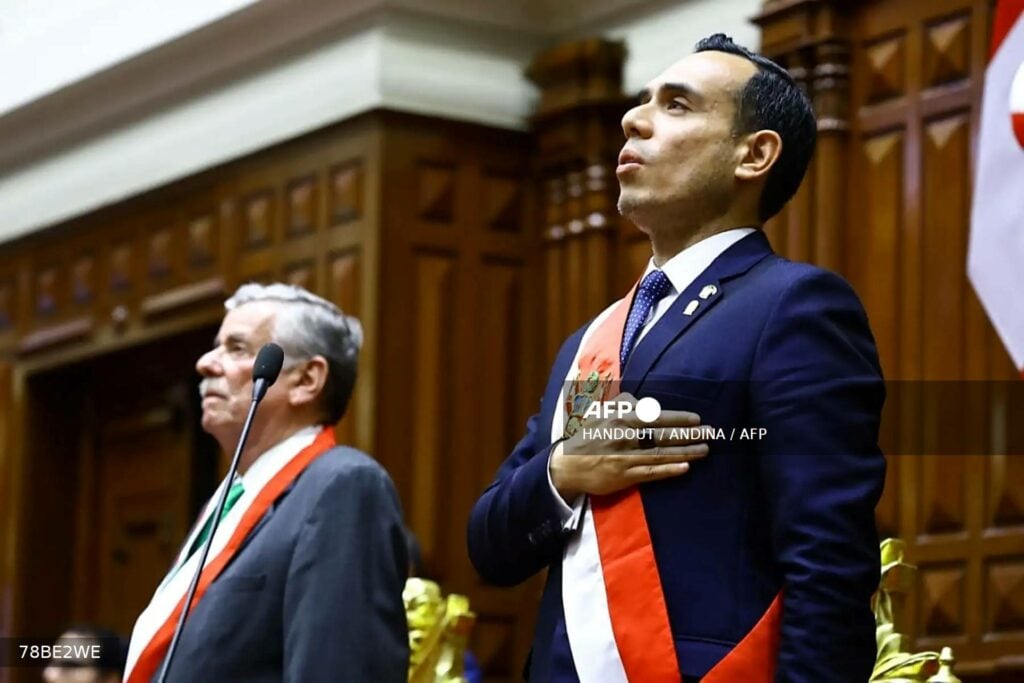
Lawmakers in Peru voted Friday to remove President Dina Boluarte, whose term has been marked by protests and accusations of failing to stem crime.
Boluarte refused to appear before Congress for an overnight hearing, after a majority of lawmakers, including some once loyal to her, voted to initiate impeachment proceedings.
They summoned Boluarte to appear before Congress at 11:30 pm (0430 GMT Friday), but she skipped the proceedings, which ended with 118 lawmakers voting for her impeachment.
“The president’s impeachment has been approved,” announced Congress leader Jose Jeri, who could take over as interim president until elections in April 2026.
Protests have marked Boluarte’s presidency, along with various scandals, investigations and a surge in gang violence.
She had already faced down multiple attempts to remove her from office.
The latest effort cited her “permanent moral incapacity” to carry out her duties since assuming office in December 2022.
Peru has had six presidents in about nine years.
Boluarte, who took office after her predecessor, Pedro Castillo, was impeached over a crackdown on protests that killed at least 50 people, had seen her approval rating plummet.
She is the subject of multiple probes, including one for her alleged failure to declare gifts of luxury jewels and watches, a scandal dubbed “Rolexgate.”
She also gave herself a large pay increase in July.
Anti-government protests have mounted in recent weeks after the government passed a law on September 5 requiring young people to contribute to private pension funds, despite job insecurity and an unofficial employment rate of more than 70 per cent.
Protests have also escalated over the past six months in the wake of a wave of extortion and murders by organised crime groups.
Cameroon’s Paul Biya, already the world’s oldest head of state, is the favourite to win Sunday’s presidential election, handing him an eighth term in power in the central African country.
A fractured opposition of 11 candidates is standing against the 92-year-old in the vote, whose credibility and fairness rights groups have called into question.
Most of the 7.8 million Cameroonians called to the ballot box can remember no leader other than Biya, who has held onto power with an iron fist since 1982.
Questions over the state of his health have only grown louder since he entered his 10th decade. Should Biya win, he would be nearly 100 by the end of his eighth term.
Though the opposition hopes to entice voters with promises of a new face and an end to the cost-of-living frustrations of the long Biya epoch, its most credible candidate, Maurice Kamto, had his candidacy barred by the courts.
Theophile, an artist in the economic capital Douala, branded the vote a “scam”.
The 24-year-old had hoped to vote for Kamto, who came second to Biya in the 2018 election.
“As long as the system remains in place, there is nothing that can be done. There has to be a change,” he told AFP.
Others value the veteran’s decades of experience in a country where half the population is under the age of 20.
“I say Paul Biya still has something to offer,” said Giovanni, a 20-year-old student in Douala.
“Even though some of his promises haven’t been kept, I’m counting on him. He’s a wise man with a wealth of experience and a long track record.”
– ‘Determination intact’ –
The longtime president was noticeably absent from the campaign trail.
He had taken a trip this month to Switzerland, his favoured destination for overseas jaunts, fuelling fresh speculation over the state of his health.
But he made a rare outing on Tuesday, holding a rally at a stadium in the town of Maroua in the Far North region, a key electoral battleground with 1.2 million registered voters.
It was his first public appearance since May.
“My determination to serve you remains intact,” he told the crowd in a 25-minute speech, which touched on youth, women and infrastructure.
Though his entourage expected nearly 25,000 people at the event, AFP reporters present estimated only a few hundred showed up.
Biya became Cameroon’s second president since independence in the 1960s in the 1984 election, when he ran unopposed and won 100 per cent of the vote.
He had already taken over two years earlier when his predecessor Ahmadou Ahidjo resigned suddenly.
He was re-elected in similar style in 1988 but after the introduction of multi-party politics only narrowly overcame challenger John Fru Ndi in 1992 by a four-per cent margin.
Biya turned to a mix of repression, regional alliances and overtures to his former rivals to curtail threats to his rule, Arrey Ntui, the International Crisis Group’s senior analyst for Cameroon, said.
His strategy bore fruit: he was re-elected with 93 per cent of the vote in 1997, 71 per cent in 2004, 78 per cent in 2011 and 71 per cent in 2018.
– ‘Protect the vote’ –
Human rights groups have spent years condemning Biya’s stranglehold on Cameroon’s institutions and election process.
“The electoral charade is unlikely to signal any potential change in the immediate future but rather the consolidation of the status quo,” said David Kiwuwa, who heads the School of International Studies at Nottingham University’s campus in China.
With four-in-10 Cameroonians living under the poverty line in 2024, according to the World Bank, economic fears have long loomed large in voters’ minds.
The high cost of living, as well as the lack of drinking water, quality schooling and healthcare, have long frustrated Cameroonians.
“I keep hoping for a better Cameroon where young people can find work,” Boris, a computer engineer in the coastal city of Buea, told AFP.
“I imagine a day when Cameroon looks like Paris, with accessible and affordable education, where we can drive safely on our roads.”
Yet those recurring complaints, widely shared on social media, have not led people to take to the streets in protest.
Several citizens’ associations have set up networks of observers at polling stations to “protect the vote” by counting ballots independently.
The government has slammed these as attempts to “manipulate public opinion” and “produce skewed results”.
The vote will be held in the shadow of a deadly conflict between separatist forces in Cameroon’s English-speaking regions and the government.
During the last vote in 2018, turnout was particularly low in anglophone Cameroon, where the fighting is fiercest.