Ex-French president Sarkozy found guilty in Libyan money scandal


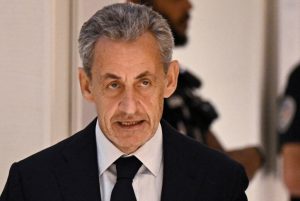
A Paris court on Thursday convicted former French president Nicolas Sarkozy on charges of criminal conspiracy but acquitted him of corruption and accepting illegal campaign financing in his trial into accusations late Libyan dictator Moamer Kadhafi helped fund his victorious 2007 presidential run.


The trial is the latest in a string of legal troubles for the right-wing ex-leader, 70, who denies the charges.


Sarkozy, who was president from 2007 to 2012, has already been convicted in two separate cases and stripped of France’s highest honour.


Judge Nathalie Gavarino said Sarkozy,as a serving minister and party leader at the time, had “allowed his close collaborators and political supporters over whom he had authority and who acted in his name”, to approach the Libyan authorities “in order to obtain or attempt to obtain financial support”.


The court’s ruling however did not follow the conclusion of prosecutors that Sarkozy was the alleged beneficiary of the illegal campaign financing. He was acquitted on a separate charges of embezzlement of Libyan public funds, passive corruption and illegal financing of an electoral campaign.

Sentencing is due to be announced later in the hearing, with prosecutors requesting a seven-year prison term for Sarkozy.


He was present in court for the verdict, accompanied by his model and musician wife Carla Bruni-Sarkozy.


Two former close aides were also convicted. His former right-hand man Claude Gueant was found guilty of passive corruption and falsification while former minister Brice Hortefeux was found guilty of criminal conspiracy.


Eric Woerth, Sarkozy’s 2007 campaign treasurer, was acquitted.


In a dramatic coincidence, the judgement was issued by the Paris court two days after the death on Tuesday in Beirut of Franco-Lebanese businessman Ziad Takieddine, a key accuser of Sarkozy in the case.


Takieddine, 75, had claimed several times that he helped deliver up to five million euros ($6 million) in cash from Kadhafi to Sarkozy and the former president’s chief of staff in 2006 and 2007.


He then spectacularly retracted his claims before contradicting his own retraction, prompting the opening of another case against Sarkozy and also Bruni-Sarkozy, on suspicion of pressuring a witness.

Prosecutors argued that Sarkozy and his aides devised a pact with Kadhafi in 2005 to illegally fund Sarkozy’s victorious presidential election bid two years later.


Investigators believe that in return Kadhafi was promised help to restore his international image after Tripoli was blamed by the West for bombing a plane in 1988 over Lockerbie, Scotland and another over Niger in 1989, killing hundreds of passengers.


Kadhafi was ultimately overthrown and killed by opponents in 2011 during the Arab Spring as NATO military intervention — in which France under Sarkozy played a key role — enforced a no-fly zone.


The prosecution’s case is based on statements from seven former Libyan dignitaries, trips to Libya by Gueant and Hortefeux, financial transfers, and the notebooks of the former Libyan oil minister Shukri Ghanem, who was found drowned in the Danube river in Vienna in 2012.


Sarkozy has faced a litany of legal problems since his mandate and has been charged separately with corruption, bribery, influence-peddling and campaign finance infringements.

He was first convicted for graft and sentenced to a one-year jail term, which he served with an electronic tag for three months before being granted conditional release.


Separately, he received a one-year jail term — six months with another six months suspended — in the so-called “Bygmalion affair” for illegal campaign financing. Sarkozy has gone to France’s top appeals court to appeal that verdict.


He has faced repercussions beyond the courtroom, including losing his Legion of Honour — France’s highest distinction — following the graft conviction.


Legal woes aside, the man who styled himself as the “hyper-president” while in office still enjoys considerable influence and popularity on the right of French politics, and is known to regularly meet with President Emmanuel Macron.

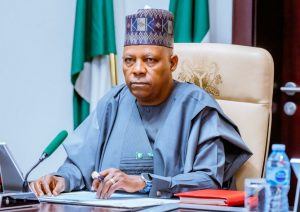
Shettima harps on Nigeria’s case for UN security council seat


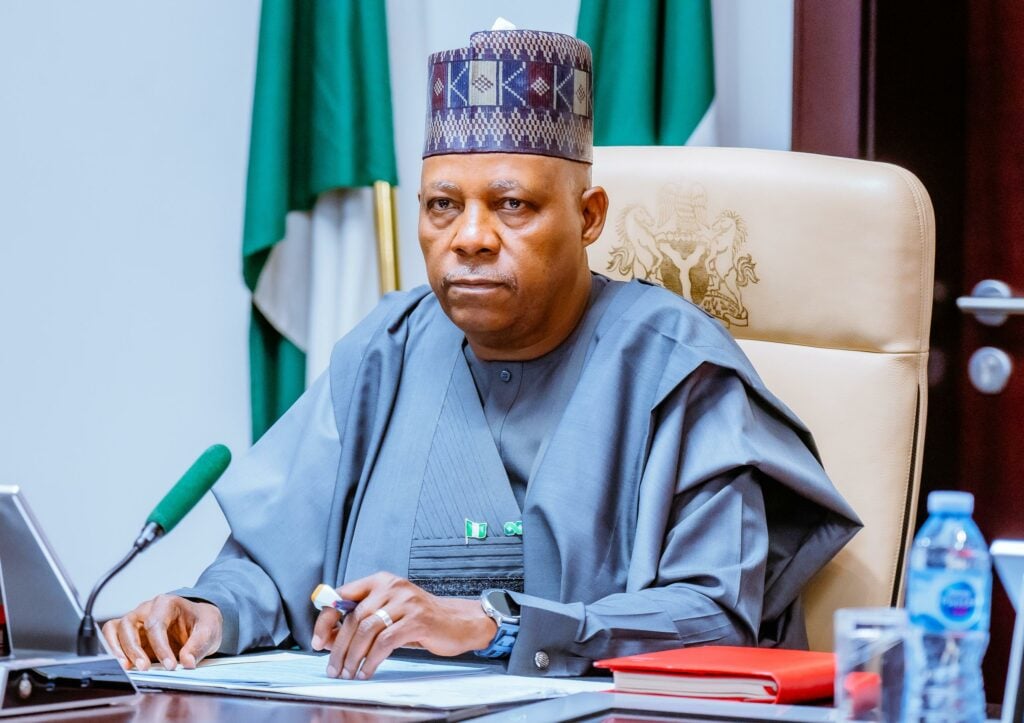
The Vice President, Kashim Shettima, has listed steps to strengthen peace, development, and human rights across the globe.


Speaking at the general debate of the 80th session of the United Nations General Assembly in New York on Wednesday, he said that to achieve peace and development, Nigeria must have a permanent seat at the UN Security Council. This should take place as part of a wider process of institutional reform.


He also stated that the urgent action ⁠⁠to promote sovereign debt relief and access to trade and financing, adding that countries that host minerals must benefit from those minerals.


Over the years, Africa, despite being rich in natural and human resources, has remained underrepresented in global decision-making platforms like the United Nations Security Council.

Nigeria, as Africa’s most populous nation and a regional power, has long advocated for permanent representation to correct this imbalance.


He stressed that the digital divide must close, maintaining that A. I must stand for ‘Africa Included’.


“On my first point: the United Nations will recover its relevance only when it reflects the world as it is, not as it was. Nigeria’s journey tells this story with clarity: when the UN was founded, we were a colony of 20 million people, absent from the tables where decisions about our fate were taken; today, we are a sovereign nation of over 236 million, projected to be the third most populous country in the world, with one of the youngest and most dynamic populations on earth.


“A stabilising force in regional security and a consistent partner in global peacekeeping, our case for a permanent seat at the Security Council is a demand for fairness, for representation, and for reform that restores credibility to the very institution upon which the hope of multilateralism rests.

“This is why Nigeria stands firmly behind the UN80 Initiative of the Secretary-General, and the resolution adopted by this Assembly on 18 July 2025, a bold step to reform the wider United Nations system for greater relevance, efficiency, and effectiveness in the face of unprecedented financial strain.


‘We support the drive to rationalise structures and end the duplication of responsibilities and programmes, so that this institution may speak with one voice and act with greater coherence,” he added.


According to him, no country can achieve a peaceful world in isolation, saying that this is the heavy burden of sovereignty.


“Sovereignty is a covenant of shared responsibility, a recognition that our survival is bound to the survival of others. To live up to this charge, we must walk hand in hand with our neighbours and partners.


“We must follow the trails of weapons, of money, and of people. For these forces, too often driven by faceless non-state actors, ignite the fires of conflict across our region.


“Nigeria’s soldiers and civilians carry a proud legacy. They have participated in 51 out of 60 United Nations peacekeeping operations since our independence in 1960. We have stood with our partners in Africa to resolve conflicts, and we continue that commitment today through the Multinational Joint Task Force.

“At home, we confront the scourge of insurgency with resolve. From this long and difficult struggle with violent extremism, one truth stands clear: military tactics may win battles measured in months and years, but in wars that span generations, it is values and ideas that deliver the ultimate victory,” he averred.

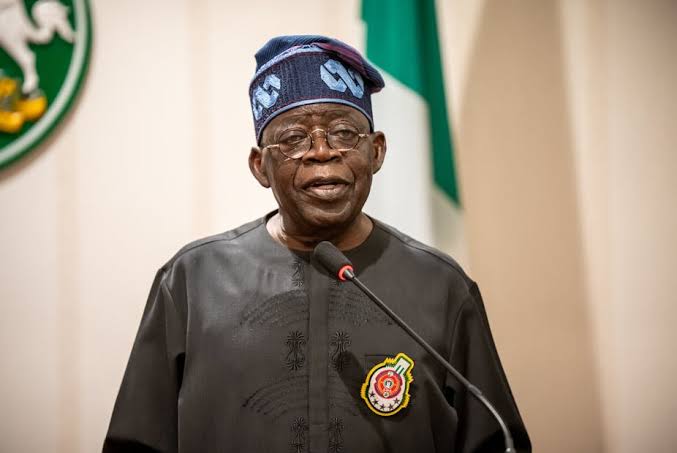
Tinubu orders BOA to clear N30bn agro-dealers debt


President Bola Tinubu has directed the Bank of Agriculture to clear outstanding arrears of N30bn owed to agro-dealers and input suppliers under the National Agricultural Growth Scheme and Agro-Pocket.


According to a statement issued on Wednesday by the bank’s External Media Relations Lead, Judith Ekwebelem, the directive followed the release of funds from the African Development Bank.


The bank explained that the move was aimed at strengthening support for farmers and stabilising the country’s food supply chain.


The Federal Government has also designated BOA as the custodian of all agricultural financing programme funds.

Ekwebelem said, “The move (the directive ) is seen as a turning point for the sector, with BOA tasked to ensure smooth and timely disbursement of funds to critical stakeholders in food production.


“The bank has, however, pledged to execute the approved payment schedule with urgency using its robust electronic wallet system to achieve payment to all complying agro-dealers within 24 hours, while also providing weekly progress updates until completion.”


She noted that the N30 billion represented the second tranche released by AfDB for the implementation of NAGS-AP, saying, “the funds are targeted at settling outstanding obligations from the 2024 dry and wet season programmes.


“Minister of Finance and Coordinating Minister of the Economy, Wale Edun, O.F.R., directed that the process be treated with the highest priority.”


“Accordingly, the NAGS-AP Secretariat and BOA formally kicked off the exercise on 18th September 2025 with the handover of beneficiary data.”

According to the statement, the Managing Director/Chief Executive of BOA, Ayo Sotinrin, described the appointment as a historic responsibility, saying, “This is a truly defining moment for our agricultural sector. This is more than just a fund; it is a bold commitment to ensuring our nation’s food security.


“By working hand-in-hand with the NAGS-AP team, we are cutting through bureaucratic delays to get payments directly to agro-dealers and suppliers.


“We are unlocking opportunities for farmers to move beyond subsistence farming into sustainable and profitable agribusiness.”


It added that BOA had outlined conditions for pre-qualified and registered agro-dealers and suppliers eligible for payment under the scheme, which include opening a BOA account, a mandatory step for claim processing.


Registration is free and can be completed online.

Sotinrin, who lauded the President and other stakeholders over the funds, urged all beneficiaries to comply without delay, warning that failure to do so could result in processing setbacks.


Tinubu, during a recent meeting with the Brazilian President, Luiz Inacio Lula Da Silva, has expressed assurance to remove all bottlenecks hindering the realisation of the agricultural sector’s potential to enable food sovereignty and export.


The President, in a bilateral meeting held with the Brazilian President, noted that bureaucracy contributes to delays in realising the agricultural sector’s potential.


He informed the Brazilian leader and delegation that Nigeria was already undergoing reforms to reposition the economy for global competitiveness, particularly in agriculture, where it already had a competitive advantage.

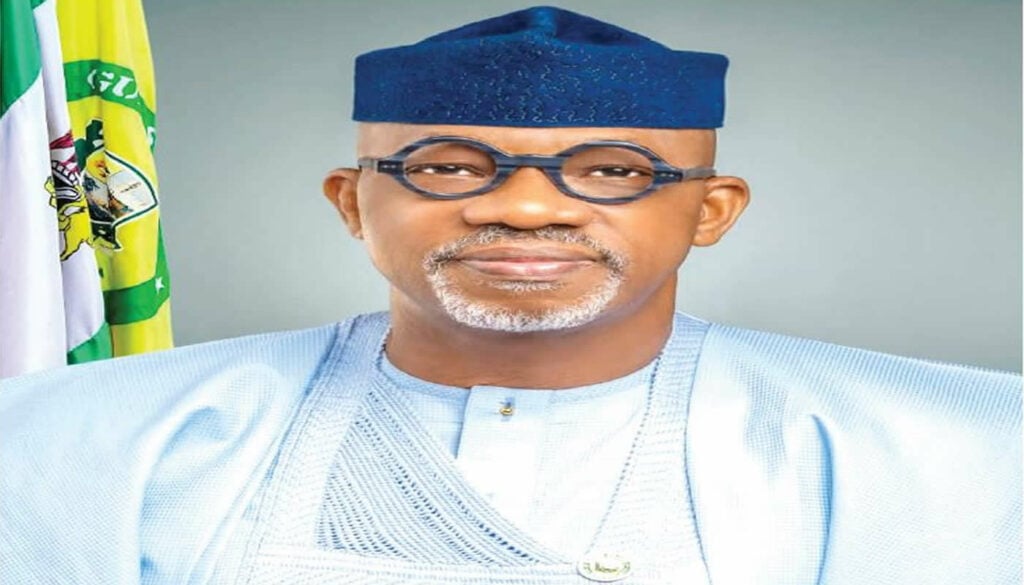
Governance burden too heavy for govt alone — Abiodun


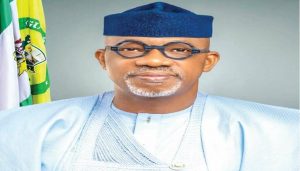
The Ogun State Governor, Dapo Abiodun, has said the fight against poverty and the pursuit of national development cannot be left to the government alone, stressing the need for collective responsibility by faith-based organisations, the private sector and individuals.


Abiodun made the call in Lagos on Tuesday while chairing the 12th Annual Public Lecture of The Foursquare Gospel Church Nigeria, themed “Poverty Alleviation, Economic Development and Stability of the Nigerian Economy,” held at The Marquee, Harbour Point, Victoria Island.


According to him, the complexity of governance makes it impossible for the government to carry the burden of development single-handedly.


“The burden of governance cannot be shouldered by government alone, and the church has effectively demonstrated this belief through its initiatives,” he said.

He commended Foursquare Gospel Church for going “beyond the pulpit” to provide social interventions through schools, hospitals, humanitarian outreaches and empowerment programmes that had impacted countless lives.


Abiodun added, “The problem of poverty requires economic stability which must be anchored on inclusive growth where opportunities are extended to all citizens, especially the vulnerable.


“Economic development and stability are two sides of the coin. Without stability, the economy is short-lived. Without development, poverty persists. As leaders, whether in the government, church or private sector, we must collaborate to break the cycle because poverty is not just an economic statistic, it is a human reality. We must care for the vulnerable.”


Earlier in his welcome address, the General Overseer of Foursquare Gospel Church Nigeria, Rev. Sam Aboyeji, said no nation could achieve development and stability without deliberately tackling poverty.

“Poverty is one of the greatest challenges confronting Nigerians today, and it can only be removed or minimised through a collective battle by government, faith-based organisations, committed parastatals, and individuals,” he said.


Aboyeji noted that with 70 years of continuous presence in Nigeria, the church considered it a “sacred duty” to contribute to national progress, hence its commitment to the annual lecture as a platform for intellectual discourse and policy engagement.


Delivering the lecture, Senior Fellow and Associate Professor at Lagos Business School, Dr Doyin Salami, lamented the volatility of the Nigerian economy, warning that the current 3.2 per cent growth rate was inadequate for poverty reduction.


According to him, Nigeria needed sustained growth of at least 6.5 per cent annually for a decade to achieve meaningful results.


“Recent data shows that increases in investment in Nigeria are not strong enough to stimulate growth. We must avoid the mistakes of the past and ensure that our investments are the kind that stimulate, support and drive development,” Salami said.

He recalled that Nigeria was ahead of China in poverty indices as far back as 1992, but by 1996 China had reversed its fortunes while Nigeria lagged behind.

He also warned that Nigeria’s reliance on services over industry was deepening its de-industrialisation and undermining prospects for sustainable growth.

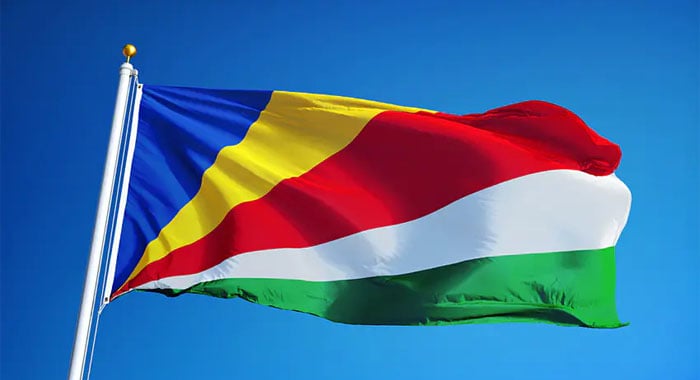
Five things to know about Seychelles ahead of September elections


The Indian Ocean archipelago of the Seychelles boasts one of the highest standards of living in Africa, driven in part by high-end tourism and fishing, but the island nation is also plagued by drug use and trafficking.


It will hold presidential and legislative elections on September 25-27.


– 115 islands –


The 115 mostly uninhabited islands and islets that make up the Seychelles represent a total of 455 square kilometres (280 square miles), barely the size of the principality of Andorra.


But, spread across an area of more than 388,000 square kilometres, the islands and their surrounding waters make up a vast economic exclusive zone of more than one million square kilometres, twice the size of France.


The islands and their waters are a paradise of biodiversity, home to a rich variety of fauna and flora, and are an important nesting site for birds and turtles.


At the heart of the Indian Ocean, the archipelago occupies a strategic position between Madagascar, Africa, and India.

Three-quarters of its roughly 120,000 citizens live on the Mahe island, where the capital, Victoria, is located, according to 2024 World Bank data.


The archipelago is vulnerable to climate change, and is facing rising sea levels, the deterioration of the marine ecosystem — particularly its coral reefs — as well as landslides, flooding, and drought.


– Young democracy –


The islands were occupied in the 17th century by the French, and then in the 19th century by the British under their rule in nearby Mauritius.


The Seychelles became a colony in its own right in 1903 and achieved independence in 1976 under the presidency of James Mancham.


In 1977, a coup brought to power France-Albert Rene, who established a single-party state and survived multiple coup attempts.


The first multi-party elections took place in 1993 after a new constitution was adopted.

United Seychelles had provided every head of state until the 2020 election, which was won by opposition leader Wavel Ramkalawan.

Ramkalawan is seeking a second term against Patrick Herminie, of the United Seychelles party.


Herminie was charged in late 2023 with “witchcraft”, which he said was politically motivated, and the charges were later lifted.


– Tourism and fishing –


Known for its white beaches and high-end tourism, the Seychelles has Africa’s highest GDP per capita income, according to the World Bank.


However, its economy is vulnerable to price fluctuations for imported products, including food and petrol, which increase the cost of living.


The employment rate is low and while extreme poverty has been almost entirely eradicated, it faces issues such as drug use and trafficking, according to the World Bank.


– Heroin, the dark side of paradise –


Government figures show between 5,000 to 6,000 Seychellois consume heroin, data based on those on a methadone substitution programme.


Other estimates suggest up to 10,000 users, equivalent to roughly 10 percent of the population.


Critics say Ramkalawan has failed to fulfil campaign promises on fighting corruption and drug trafficking.


– ‘Coco bottom’ –

Synonymous with the Seychelles and commonly known as the sea coconut, or coco de mer, is the world’s largest seed — and is shaped like a woman’s bottom.


It became popular when tourism took off following independence.

Authorities limited trade in 1978, but the restrictions were ignored by nut poachers, and since 2011, it has been on the International Union for Conservation of Nature’s “red list”.


AFP

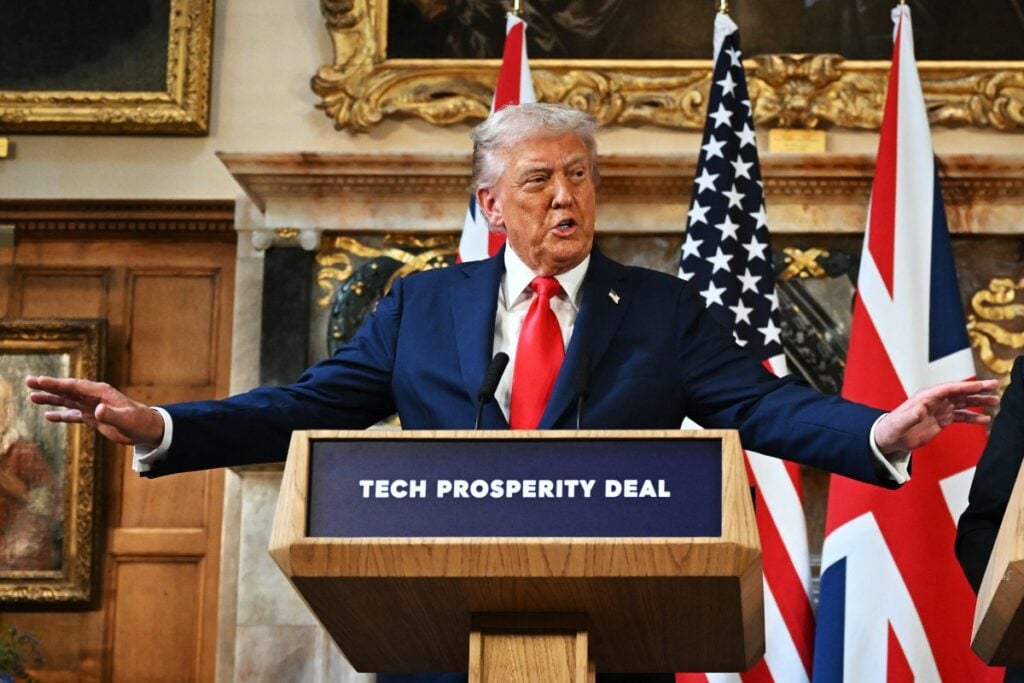
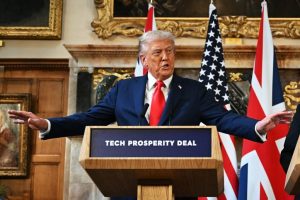
Trump to headline opening of 80th UN General Assembly


A speech by U.S. President Donald Trump will mark the opening of the 80th session of the annual General Debate of the UN General Assembly in New York on Tuesday.


Other speakers on the agenda for the first day are Brazilian President Luiz Inácio Lula da Silva, Turkish President Recep Erdoğan, and French President Emmanuel Macron.


The speeches are scheduled to start at 9 am (1300 GMT).


UN Secretary General António Guterres and General Assembly President Annalena Baerbock are also to speak.

A session of the UN Security Council on the Ukraine war, which Ukrainian President Volodymyr Zelensky is expected to attend, is also scheduled.

Around 150 heads of state and government are set to speak over the week ahead, with the Middle East conflict and the war in Ukraine.


The UN’s precarious finances would not be left out, along with the changing geopolitical role of the United States under Trump.


Nigeria’s Vice-President, Sen. Kashim Shettima, who is leading the country’s high-powered delegation to the annual global event, has since arrived in New York.


The News Agency of Nigeria reports that Shettima is representing President Bola Tinubu at the UN epochal event.


(dpa/MAN)

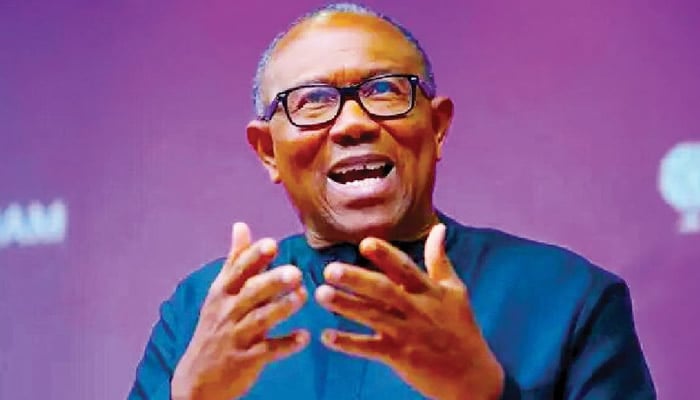
Obi condemns killing of security personnel, urges support for families


The Labour Party presidential candidate in the 2023 general elections, Peter Obi, has expressed concern over the rising cases of attacks and killings of security personnel across the country.


Obi, in a post via his official X (formerly Twitter) handle on Tuesday, described the spate of violence against soldiers, policemen, members of the Nigeria Security and Civil Defence Corps, and vigilante groups as tragic and unacceptable.


The former Anambra State Governor stressed that the sacrifices of security operatives to the nation must not go unappreciated.


“The country has been thrown into mourning yet again with the reported tragic killings of our security personnel. Our men and women in uniform have paid the ultimate price in the line of duty, dedicating their lives to the safety and stability of our dear nation,” Obi said.

He urged leaders at all levels to take urgent steps to better equip and motivate security operatives, insisting that security must form the foundation of governance.

According to him, Nigeria cannot continue to bury its security personnel while abandoning their families. He stressed the need for adequate compensation and support for the dependents of fallen officers.


“Our government must rise to the responsibility of ensuring that the wives, children, and parents of these fallen heroes are fairly compensated and supported. That is the least a grateful nation can provide. It is not charity, it is justice,” Obi added.


The former governor offered prayers for the repose of the souls of the slain operatives and assured their families of solidarity and support.


“To every fallen hero, may your soul rest in perfect peace. Your sacrifice and patriotism will never be forgotten. And to the families left behind, you are not alone. May God continue to provide you with strength and comfort,” he concluded.

Monarch donates court, health centre to Ogun govt


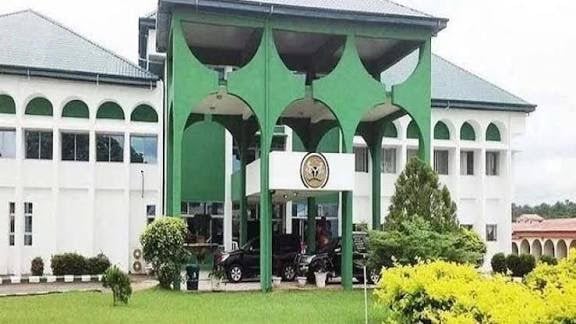
The Olofin of Isheri, Oba Sulaiman Bamgbade, Ayodele III, has handed over a newly built Isheri High Court to the Ogun State Government, in what he described as a contribution to strengthening the state’s justice delivery system.


The monarch said the gesture was driven by a desire to promote quicker access to justice and ease the workload of existing courts.


During the official handover, Oba Bamgbade explained that the judicial facility, which he singlehandedly built, represents his commitment to strengthening access to justice and ensuring that the people of Isheri and environs are better served by the rule of law.


In a statement on Friday signed by the Palace’s Office of Media and Publicity, the monarch stressed that a functional justice system was key to peace, order, and development in any society.

“Justice and healthcare are the twin pillars of a thriving society. By handing over the Isheri High Court to the Ogun State Judiciary, we are strengthening access to justice for our people, who previously had to travel as far as Itori and Ifo,” the monarch said.


Aside from the PHC, the traditional ruler also inaugurated the 20-bed Renewed Hope Primary Healthcare Centre in Isheri Olofin as part of efforts to boost access to quality healthcare for residents.


The monarch said that the project was conceived to address the pressing medical needs of his people, particularly women, children, and the elderly.


Speaking at the unveiling as part of events to mark his 4th coronation anniversary, the monarch explained that the facility would provide affordable and accessible healthcare services, noting that primary healthcare remained the foundation of any functional health system.

He stressed that strengthening grassroots health facilities was critical to reducing avoidable deaths and the burden on tertiary hospitals.


According to him, the center would reduce the long distances my people travel to access medical care, while also creating a safer environment for maternal and child health in the area.


“With the commissioning of the Primary Healthcare Center, we are also prioritising the health and well-being of our people, because only a healthy community can truly prosper.


“This brings an end to our people having to leave their community in search of medical attention,” the monarch said.


Dignitaries at the event include the First Lady of Ogun State, Mrs. Bamidele Abiodun; the Chief Judge of Ogun State, Justice Mosunmola Dipeolu, Senior Special Assistant to the President on Sustainable Development Goals, Adejoke Orelope-Adefulire; the Deputy Governor of Ogun State, represented by the Commissioner for Women Affairs and Social Development, Hon. Adijat Adeleye, and the Ogun State Commissioner for Health, Dr. Tomi Coker.

Others are Member, House of Representatives (Ado-Odo/Ota Federal Constituency), Hon. Tunji Akinosi, Member, Ogun State House of Assembly (Ifo II), Hon. Folawewo Salami, and the Executive Chairman, Ifo Local Government, Hon. Idris Kusimo. Also present were numerous traditional rulers, community leaders, and illustrious sons and daughters of Isheri.

On May 24, 2025, Oba Bamgbade appealed to the Lagos and Ogun State Governments, as well as the Federal Government, to support heritage initiatives that protect and promote the Awori history and identity.


The monarch also urged the government to support the kingdom in turning Isheri Olofin into a cultural tourism destination and a hub for economic empowerment.

Rivers’ emergency rule not about Fubara – Ex-presidential candidate


The presidential candidate of the defunct Nigeria for Democracy in the 2019 election, Asuquo Archibong, has said that the emergency rule imposed on Rivers State and subsequently suspended is not about Governor Siminalayi Fubara.


This is as he commended President Bola Tinubu for ending the six-month emergency rule and reinstating Fubara to office.


Recall that Tinubu declared a state of emergency in the oil-rich state on March 18, following a frosty relationship between Gov Fubara and members of the State House of Assembly.


The development made it impossible for the governor to present the Rivers State 2025 Appropriation Bill before the legislature for its input.

The Federal Government swiftly waded in and appointed retired Vice Admiral Ibok-Ete Ibas as Sole Administrator to oversee the running of the state for an initial period of six months, which elapsed on Thursday, September 18, 2025.


In a statement issued on Friday in Abuja, Archibong described Fubara’s return to office as “A respect for the rule of law and democracy in Rivers State.”


He added, “The return of democracy in the state will promote peaceful co-existence. Everything that played out will strengthen democracy.

“Anytime we have an aberration in terms of governance or the rule of law, it’s a painful experience. The emergency rule was not particularly pleasant. We should naturally welcome the reinstatement of democracy in River State.


“It’s not really about Fubara, but the experience of democracy so that we can have uninterrupted dividends of democracy in the state.”


While urging the relevant stakeholders to put the past behind them and give peace a chance, Asuquo stated that the good thing is that Fubara has stepped into the office he was elected into by the Rivers electorate and urged the three arms of government to work together.


“That’s why we have the three arms of government, and they are all equal arms.


“The executive branch is at the same level as the legislature and is at the same level as the judiciary, and they all have to work together for the betterment of the people. This is the principle of democracy,” he added.


He urged the Rivers State House of Assembly to be cordial with Governor Fubara in the interest of the state.

He also commended the Minister of the Federal Capital Territory, Nyesom Wike, for his role in the reinstatement of Gov Fubara after six months of emergency rule in the state.

Insecurity: Seven Kwara LGs order closure of cattle markets


Local government chairmen in the Kwara South Senatorial District have ordered the immediate closure of all Kara (cattle) markets in the area over security concerns.


The decision, announced on Thursday, was taken under the aegis of the Forum of Seven Local Government Chairmen in Kwara South after what they described as “extensive stakeholders’ engagement and reviews.”


The chairmen said the shutdown, which takes effect from Friday, September 19, would remain in place until further notice.


They added that all other produce markets in the senatorial district must also close by 6pm on market days.

In a jointly signed statement, the council bosses said the measure was part of efforts to protect lives and property in the zone, which has witnessed a series of violent attacks in recent months.


“While the invading criminals have been operationally decimated in the last few weeks, clean-up operations by the military and hybrid operatives are still ongoing. Therefore, all Kara markets have been ordered to shut down with immediate effect,” the statement read in part.


They acknowledged the economic impact of the closure on residents but maintained that security must come first.

“We’ve chosen to prioritise the safety of lives and property and adhere to long-term coordinated and structured security advisement over and above short-term inconveniences,” the chairman added.


The leaders assured residents that the state government and security agencies were working with local councils to restore peace, urging communities to cooperate with security operatives.


The statement was signed by the executive chairmen of Ifelodun, Isin, Irepodun, Ekiti, Oke-Ero, Offa and Oyun Local Government Areas.


Earlier on Friday, PUNCH Online reported that the National Youth Service Corps has relocated its orientation camp in Kwara State from Yikpata, Edu Local Government Area, to the Kwara State Polytechnic, Ilorin, over rising insecurity.


State Coordinator, Mr Onifade Olaoluwa Joshua, confirmed the relocation to our reporter in Ilorin, saying the approval came from the state government after concerns were raised about the safety of corps members.


He said, “We are fully prepared to host the orientation course, and the welfare of participants will be safeguarded. Soldiers and other security personnel will be deployed to guarantee the safety of corps members during the three-week exercise.”


Exit mobile version