

Ecobank Group Announces N143.7bn Profit Before Tax in 9 Months

Ecobank Group Announces N143.7bn Profit Before Tax in 9 Months
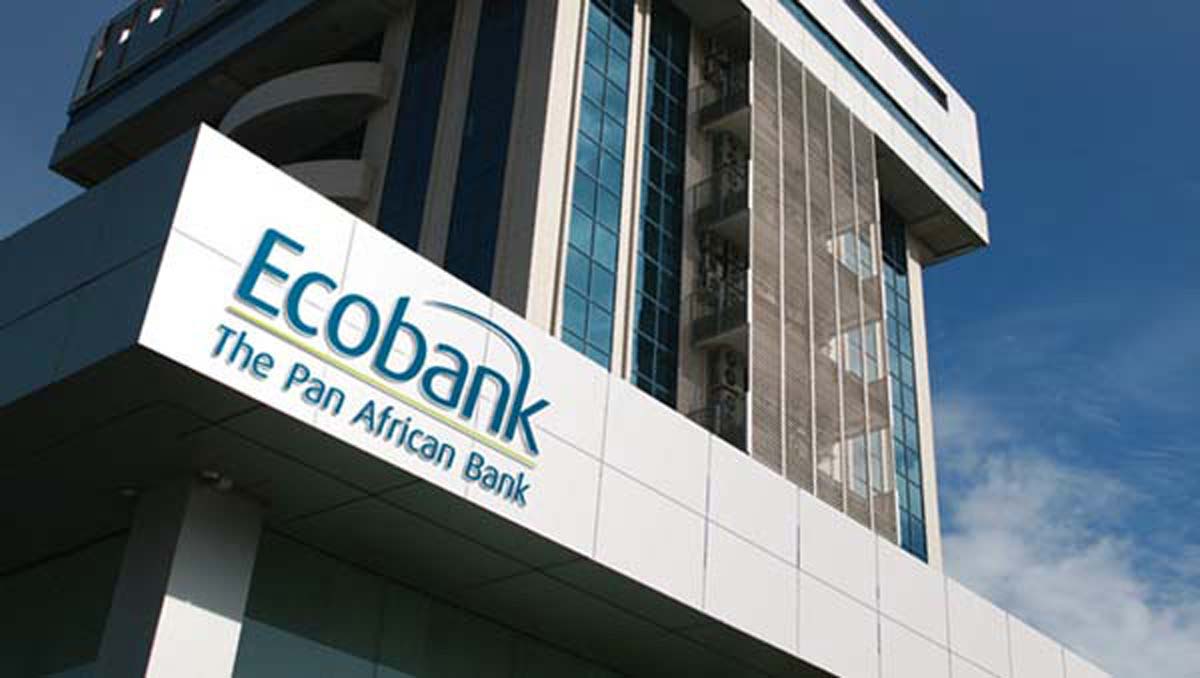
Ecobank Transnational Incorporated (ETI) has announced N143.7 billion profit before tax in its audited nine months ended September 30, 2021, an increase of about 316 per cent from N34.5billion reported in nine months ended September 30, 2020. By the results filed with the Nigerian Exchange Limited (NGX), the bank triple-digit growth has resulted in earnings per share of over N3.01 kobo during the period under review.

Profit after tax also grew by 916 per cent to N104.51billiion from N10.28billion reported in prior nine months of 2020. Growth in gross earnings, net investment income, Other operating income and decline in operating expenses were major financial parameters that contributed to the Group’s significant increase in profits amid macro economy challenges where it has branches.

Gross Earnings for the period grew by 12 per cent to N686.8billion from N614.5billlion reported in 2020. As net investment income rose by 523 per cent to N5.56billion from loss of N1.3billion in 2020; Other operating income closed at N11.59billion from N3.3billion reported in 2020. The group’s total assets grew by five per cent to N10.9trillion as at September 30, 2021 from N10.38trillion in full year ended December 31, 2020.

In his comment, Group CEO, Ecobank, Ade Ayeyemi said: “We reported strong results, reflecting the continued diligence of Ecobankers in putting our customers first and ensuring that we meet their respective needs.

“For the nine months period up to September 2021, we earned $352 million in pre-tax profit, a 41per cent increase compared to the prior year and revenues of $1.3 billion, a four per cent growth. Hence return on tangible equity increased to 17.9per cent, and we grew the per-share value of our shareholders’ equity by 11per cent to 5.52 US dollar cents.

“These results also demonstrate the hard work invested in driving efficiency in all our businesses in line with our deliberate focus on driving down our cost-to serve, sustain improvement in the quality of our credit portfolio, and strengthen liquidity and capital buffers.”

“As a result, our cost-to-income ratio has been declining consistently quarter on quarter, currently 58.3 per cent. In addition, the stock of nonperforming loans as a percentage of loans outstanding is now at 6.9 per cent compared to 9.9per cent a year ago. We have boosted the firm’s liquidity profile, thanks to growing customer deposits fueled by an acceleration in digital channel adoption, partnerships with Fintechs, Telcos, and businesses in the Payments Ecosystem,” Ayeyemi added.

“Finally, we continue to invest in new digital and mobile capabilities to enhance customer experience, alongside the investments we are making in our people, processes, and controls, to ensure the continued resilience of our business and service delivery to our clients. I am deeply grateful to all our customers and the Ecobank team for the remarkable job,” Ayeyemi added.


AfCFTA: We are well-positioned to make payments smooth for our customers – Ecobank Group CEO

The Group Chief Executive Officer, Ecobank Transnational Incorporated (ETI), Ade Ayeyemi, has affirmed that the pan-African banking group is facilitating smooth and instant payments across Africa as countries start the implementation of the African Continental Free Trade Area Agreement (AfCFTA). Ayeyemi who made this assertion during an interview with the media recently pointed out that Ecobank has been able to effect international payment across the 33 countries where it operates on the continent through its Rapid Transfer platform. He reiterated that the bank’s platform can be scaled to accommodate other African countries under the AfCFTA based on their respective regulations.

According to the Ecobank Group Chief, the banking group  is one of the key supporters of the AfCFTA which he believes will be of great benefit to both the continent and customers of the bank. “With this Pan-African exposure, the governments and our customers will re-evaluate their businesses to efficiently take charge of bigger opportunities. So, if you manufacture goods in Aba for the Nigerian market, you can now start thinking of how to expand your manufacturing capacity to be able to export across West Africa and also other African countries, not just looking at Nigeria as a market alone. And as you change your demand forecast, you need to now improve your capacity to produce and that will mean importing new machinery to expand your manufacturing base, develop bigger market and hire more people.”

He is optimistic that the introduction of the AfCFTA would curb the regulations and government policies limiting the flow of foreign exchange. “Banks will work with other banks like Afrexim Bank to provide a swift payment platform as Africa will be the first market for most African products. For instance, there is no need for Nigeria to import rubber from Malaysia when rubber is being exported by Côte d’Ivoire.  It is better within the African space. So, there is a whole range of businesses that we are having conversations with our customers, the governments and the African Union, because of our pan-African presence.”

The AfCFTA which came into effect this January, aims at creating a single African wide market for goods and services. It will pave the way for rapid dismantling of impediments to cross-border trade leading to free movement of business, persons and investments across the continent, thus leading to the establishment of the Customs Union. It will bring together all 55 AU member states, covering a market of more than 1.2 billion people. It is set to be the world’s largest free trade area since the formation of the World Trade Organization In terms of numbers of participating countries.

Exit mobile version