When Power Meets Privilege: Controversy Trails the Rise of NNPC Gas Czar Lekan Ogunleye

When Power Meets Privilege: Controversy Trails the Rise of NNPC Gas Czar Lekan Ogunleye
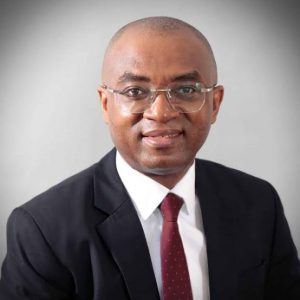
Among many of Abraham Lincoln’s popular saying is that “If you want to test a man’s character, give him power.” This saying suggests power and affluence reveals a person’s true nature rather than changing it.


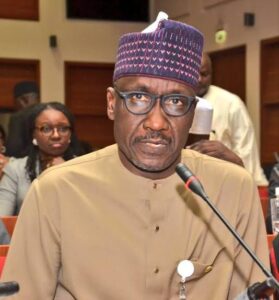
The saying might rightly describe one of NNPC limited eggheads, Lekan Ogunleye, who is the Executive Vice President, Gas, Power & New Energy.


It’s a matter of stating the obvious saying that the former Deputy Managing Director of Nigeria LNG Limited is a brilliant chap. He’s been  equipped with significant industry experience in various aspects of the gas value chain, he was made the Managing Director and Chief Executive Officer of Gas Aggregation Company Nigeria Limited (GACN),a firm set up by Federal Government of Nigeria to implement the Nigerian Gas Master Plan and manage domestic supply of gas.


But with all of these achievements, many alleged that a thorn in the flesh that lives with Mr Ogunleye is his fondness for the other gender. Sources close to him alleged that he invests millions in satisfying his cravings to invite them from around the world in different sizes and shapes on regular basis.


Information gathered has it that like many of his class, he has a permanent suite in a luxurious hotel on Lagos Island where he entertains them, it was alleged that his arrangements even provides luxurious treatment for them even when he’s not in town. A recent case of such was when he travelled to UAE during last year December with his family, sources close to him alleged that while he was away,  ladies invited from Indonesia and Rwanda were receiving royal treatment in this permanent suite which cost over half a million Naira per night.


The sources also alleged that he’s known to relish his fetish practices with two ladies at the a time, and to watch them play with themselves before joining in the fun.


While his personal life may not be that important, how he was able to sustain such an expensive lifestyle, was scrutinize and it was alleged that he regularly receives kickbacks from NNPC vendors and contractors, especially the foreign partners who have been awarded contracts worth millions of dollars through his assistance.


Some of his close allies alleged that power that his privileged office brought was responsible for his insatiable desires for the opposite sex a situation that led to the collapse of his first marriage before he remarried a few years ago.


In other to establish the true state of things, a query was sent to him especially about the allegation of financial irregularities and the abuse of power and privileges for personal enrichment, the query was left unanswered after more than two weeks even when receipt was confirmed.

NNPC Boss, Kyari Names Four Firms As Culprits Of Adulterated Fuel


The Group Managing Director of the Nigerian National Company Limited (NNPC), Mele Kyari, has disclosed that four companies were responsible for the importation of adulterated fuel into the country.
Speaking on Wednesday during a media briefing at the NNPC Headquarters in Abuja, Kyari said MRS, Emadeb/Hyde/AY Maikifi/Brittania-U Consortium, Oando and Duke Oil brought the substandard fuel into Nigeria.

He disclosed that the investigation carried out by the company revealed that the presence of Methanol which was above Nigeria’s specification was detected in four petrol cargoes imported by the listed companies

Kyari said the Methanol blended petrol was imported into the country by the four oil suppliers through its Direct-Sales-Direct-Purchase arrangement.

The NNPC GMD, however, said he has since ordered the withdrawal of all the affected products in transit (both truck and marine), disclosing that the adulterated fuel was imported from Antwerp in Belgium.

Kyari disclosed that the NNPC had ordered the quarantine of all un-evacuated volumes of the contaminated fuel that led to the disruption of the petrol distribution value chain, in order to prevent further distribution.

He stressed that the NNPC and other stakeholders were making serious efforts to resolve issues generated by the supply and discharge of methanol blended fuel in some Nigerian depots.

He said: “In order to prevent the distribution of the petrol, we have ordered the quarantine of all un-evacuated volumes and the holding back of all the affected products in transit (both truck & marine).

“All defaulting suppliers have been put on notice for remedial actions and NNPC will work with the authority to take further necessary actions in line with subsisting regulations.

“NNPC wishes to reassure Nigerians that we are currently sourcing additional cargoes to ensure product sufficiency.”

The NNPC boss asserted that petrol brought into Nigeria usually does not include the test for the level of methanol content, adding that cargoes’ quality certificates issued at the loading port in Belgium, by AmSpec Belgium, indicated that the product complied with Nigerian specifications.

However, Kyari disclosed that the NNPC first received a report on January 20, 2022, from its quality inspector of the presence of “emulsion particles” in petrol cargoes shipped to Nigeria from Belgium.


NNPC: Refineries shut for 15 straight months cost Nigeria N152.08bn

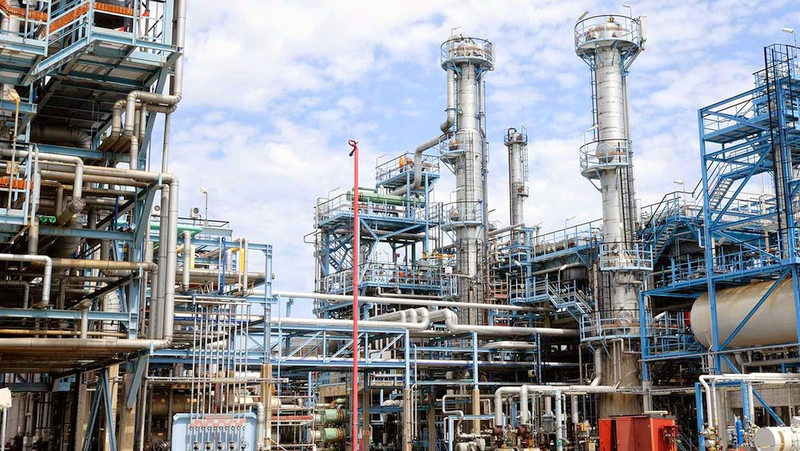
The nation’s refineries lost a total of N152.08bn in 15 consecutive months of being idle, the latest data from the Nigerian National Petroleum Corporation have shown.

Analysis of data collated from NNPC monthly reports revealed that all the refineries did not refine crude oil from July 2019 to September 2020.

The refineries, which are located in Port Harcourt, Kaduna and Warri, have a combined installed capacity of 445,000 barrels per day but have continued to operate far below the installed capacity.

The country relies largely on importation of refined petroleum products as its refineries have remained in a state of disrepair for many years despite several reported repairs.

In 2019, Kaduna Refining and Petrochemical Company only processed crude in one month, June; Port Harcourt Refining Company in two months (February and March); and Warri Refining and Petrochemical Company in four months (January, February, March and May).

The Kaduna refinery incurred an operating deficit of N57.99bn from July 2019 to September 2020, according to the NNPC data.

Port Harcourt refinery lost N48.99bn in the period under review while the Warri refinery lost N45.10bn.

The NNPC said in its latest monthly report that the declining operational performance of the refineries ‘is attributable to ongoing revamping of the refineries, which is expected to further enhance capacity utilization once completed’.

The Group Managing Director, NNPC, Mallam Mele Kyari, has reiterated its plan to revamp the refineries and end fuel importation by 2023.

Bloomberg reported on January 15 that a year after shutting down all of its dilapidated refineries to figure out how to fix them, Nigeria still could not say how much it would cost to do the work or where the money would come from.

According to the report, the NNPC said it had finished the appraisal of its largest facility, but hadn’t completed the process at two others.

The international news agency quoted refining experts as saying that the extended halt meant the plants were at risk of rotting away and unlikely to restart on time.

It noted that the NNPC had totally shut all three plants down by January 2020 to do a comprehensive appraisal, and set the ambitious target of having them all back up and running at 90 per cent of capacity by 2023.

The NNPC spokesman, Dr Kennie Obateru, was quoted as saying that the appraisal of the 210,000-bpd Port Harcourt refinery had been completed and the NNPC had called for bids for the necessary repairs.

“It is when we close the bids, everything is analysed and presented that we will know how much we need,” he said.

He said the diagnosis was underway at the 125,000bpd Warri facility and should be complete before the end of the year, adding that after that, the study of the 110,000bpd Kaduna plant would commence.


Exit mobile version