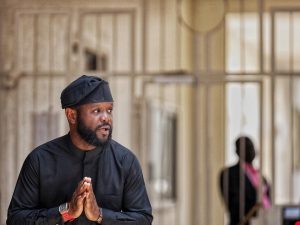
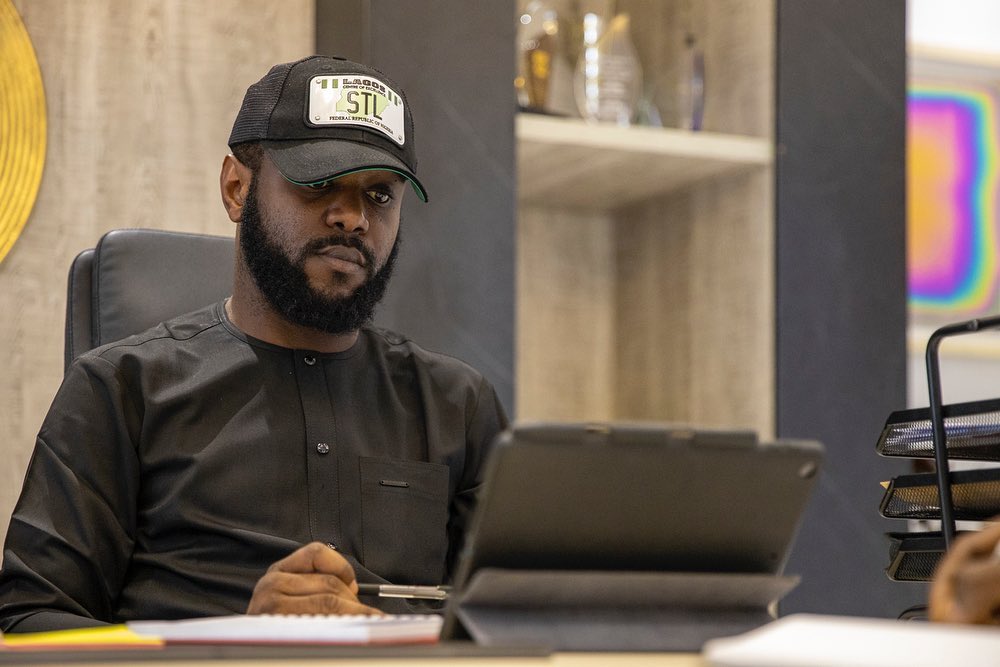
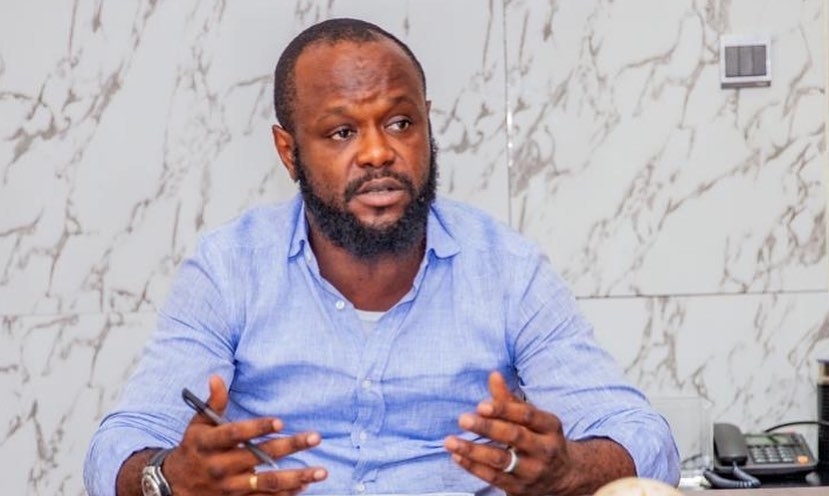
Seyi Tinubu: Building Success Beyond the Family Name
General Colin Powell once said, “Success is the result of perfection, hard work, learning from failure, loyalty, and persistence.” Few modern Nigerian entrepreneurs embody this more than Oluseyi Afolabi Tinubu popularly known as Seyi Tinubu. While the son of President Bola Ahmed Tinubu enjoys the encouragement of his parents, his career path proves that his achievements are built on personal ambition, resilience, and strategic innovation — not inheritance.
Contrary to popular belief, Seyi’s rise is not simply a product of political influence. Driven by a desire to earn his father’s respect, he charted his own course early, venturing into industries far from his father’s political sphere — especially marketing communication and digital enterprise.
After graduating from the Nigerian Law School and being called to the Bar, Seyi faced a choice: pursue law or carve a path in business. Choosing the boardroom, he partnered with his childhood friend Adenrele Olusoga to explore entrepreneurial opportunities. Their early venture — an online movie streaming platform — failed, but it sparked Seyi’s interest in the digital space.
That interest gave birth to Loatsad Promomedia, a leading Nigerian digital and out-of-home advertising company, co-founded with Olusoga and supported by his then-fiancée (now wife), Layal. Without financial backing from his father, they pooled resources from previous ventures, secured licensing, and quickly positioned Loatsad as a formidable player in the advertising industry.
Over the years, Seyi expanded operations with SDM Communications, pioneering several firsts in Nigeria’s digital advertising sector:
Exclusive partner for Truecaller after-call and in-app ads (2016–2018), selling over 85% of national ad inventory to top banks, FMCG brands, and real estate firms.
Among the first agencies to run Snapchat ad campaigns in Nigeria from 2015.
Exclusive reseller for Shazam Ads in Nigeria (2014–2018), facilitating high-impact campaigns for musicians and consumer brands until Apple’s acquisition ended the deal.
Strategic collaborations with WeTransfer, Admaxim, Rocketfuel, and Airpush to deliver innovative ad solutions nationwide.
Through calculated risk-taking, a willingness to learn from failure, and an unshakable determination to excel, Seyi has grown Loatsad/SDM into an industry leader with ambitions to dominate African advertising and compete globally.
His story underscores a universal business truth: success comes from vision, courage, disciplined financial planning, and a touch of divine favour — not merely from a famous name.
I hate praise-singing or flattery, because I believe they are traits and habits of sycophants. But every writer is also, by nature, a reporter; we always love to document our experiences, either good or bad. Hence, this piece is about my encounter with Seyi Tinubu, son of APC Presidential candidate, Asiwaju Bola Ahmed Tinubu. It is about what stood out for me and, of course, my general impression of the young, successful businessman.
Economist and author, Tope Fasua once narrated how Asiwaju Bola Tinubu sought him out after reading some of his commentaries on the article he (Asiwaju) had written about some economic policies. My path to Seyi followed a similar pattern. I had written an article in which I observed that Seyi was doing a good job of upholding his father’s legacy of human cultivation which, for me, has been the biggest secret of Asiwaju’s humongous political network and powerbase.
I sent a link to the writeup to one of the closest guys around Seyi Tinubu, who also happens to be a personal friend. He obviously shared the article with Seyi and requested him to see me when next he was in Abuja. He granted his request and when, on Tuesday, my friend confirmed that he was in town, he asked me to come with him to the ‘Youth House’ to meet a man I had always admired for his breathtaking and compelling entrepreneurial success in marketing communications, a sector I also happen to have more than a passing interest.
I am, by nature, an observer rather than a researcher. Most of my writings are personal commentaries on events and people. And having observed how deeply invested Seyi Tinubu had been in his father’s campaigns for the country’s topmost job, the Presidency, I had initially planned to write about how his active involvement in the electioneering process is changing the almost established narrative of children of politicians not joining political struggles.
With captions such as “Seyi Tinubu inaugurates youth campaign office in Kano,” “Seyi Tinubu leads one million man march for Tinubu,” “Seyi Tinubu plans youth engagement forum for Tinubu,” etc dominating newspaper headlines; then you know that when the story is written about those who make Asiwaju’s victory possible, none would arguably deserve more praises and commendation than his own son. Possibly for the first time in our nation’s political history, the biological son of a politician is joining the campaign fray, jettisoning the ‘Ajebota’ practice of having children of political candidates hide away while others work their hearts out for the victory of their parents.
But beyond what is being reported in the media, what I saw on Tuesday at The Youth House clearly validated the claims Seyi made in some of his interviews, about working hard to be his own man, and how he was determined to create his own legacy and not tie himself to his “father’s apron.” I now know that those were not just mere talks. On that Tuesday, as I saw Seyi Tinubu working his hearts out, subjecting himself to a most hectic and grueling schedule and enjoying the thrill of the struggles of life which must have made his father into the accomplished political enigma he is today; I concluded that it would be most unfair for anyone to belittle the achievements of this hardworking man simply on account of his surname.
I am sure many of us must be familiar with stories of rich kids who are totally disinterested in their own progress, not to talk of those of others, parents or not. But Seyi is one of the few exceptions, he has shown that he has a large dose of fighting spirit in him, and he is working hard to take charge of his life, fully secure in the knowledge that he is not responsible for what happened before he was born. He must have resolved not to let the judgements of others, about whether or not his success was a consequence of his family name, get him down.
In one of his recollections of the lessons he learnt from his parents, Seyi once told a reporter: “That’s how my dad raised us to be. We were all told from day one: once you are done with school, that’s all we can give you.” But in truth, Seyi did get more than a good education from his father, the Jagaban. He learnt the secret of loyalty cultivation and the benefit of investing in people.
As every good student of business and management should know, the best investment, one which yields the greatest return, is in people. This is the skill that is hardest to cultivate, but one which represents the greatest source of strength for every powerful individual; and one whose core foundation is the exclusive focus on what matters which, to most people, is their welfare and wellbeing.
It is said that for a leader to earn the loyalty of his followers, he must be able to show that if they (the followers) are ready to die for him, he would at least also be willing to faint for them. A leader focuses not so much on what matters to him as a person, but rather on what matters to those who follows him. By showing concern about the wellbeing of his followers, a leader is able to cultivate loyalty and dedication. This is one secret Seyi Tinubu has mastered.
I visited him the same day he arrived Abuja, so the crowd of people I saw was quite expected. There were quite a number of groups waiting to see him, aside those with individual appointments. The Youth House witnessed a beehive of activities on the day in question, and Seyi was obviously looking very tired and overworked. When it was my turn to see him, he first explained why the meeting would have to be brief, almost apologizing that he was filling sick. But in spite of the ‘crazy’ schedule he had ran for the day and the telling effect it was having on his physical appearance; Seyi still remember to ask me, after we were done talking, whether “everything was fine with me.” I couldn’t believe someone that stressed out, and who still had a lot of people waiting to see him, would care to know how someone was faring at that busy moment. I was impressed!
I left The Youth House with the impression that Seyi is, indeed, an unusual silver spoon kid. While most rich kids are brash and arrogant, Seyi is courteous, polite and friendly. He also has one of the strongest work ethics I have seen in any young man of my generation. No doubt, beyond his success as a politician, I believe Jagaban has done a wonderful job in the home front as well, raising a man like Seyi who treats every man with dignity while living a life of inspiration and meaning.
The advertising industry in Nigeria: Maximising the post-COVID reality – Seyi Tinubu
Since the launch of the first news outlet in Nigeria in 1859, Nigeria’s advertising industry has grown to become a flourishing self-sustaining ecosystem valued at a whopping 425 million U.S. dollars as of 2017 and a projected foreseeable exponential growth in the coming years as a result of the dominance of internet revenue. While many other industries are gradually recovering and working to bounce back from the impact of the COVID-19 pandemic, this economic powerhouse is set to remain on an upward trajectory Post-covid.
Amidst several months of grounded airplanes, closed churches and empty streets, several countries and global economies have experienced the shock waves of the COVID-19 pandemic. From real estate to finance and healthcare – especially healthcare – almost every sector of the economy has been touched in one way or another. One industry, however, has remained unshaken, resilient, withstanding all the knocks and shocks and continuing to thrive despite oppositions – advertising.
This is not to say that commercial advertising did not experience its fair share of economic downturn, even taking a significant plunge during the pandemic year. In fact, many brands reordered their priorities entirely, choosing to engage in COVID-19 awareness campaigns across social media. Some others took to leveraging collaborations with non-governmental organizations (NGOs) as well as the government to consolidate efforts and flatten the curve of COVID-19 spread, and provide relief packages to vulnerable target groups within the society – although, in hindsight, this may have been a strategic move to ensure that brands are projected positively continuously.
In any case, the advertising industry globally is fast rising back to pre-pandemic levels and even experiencing exponential growth— a vast contrast from the diminishing returns that it had begun to experience a few years back — and the reason is not far-fetched. Several factors are responsible for this drastic turn of events. Firstly, it goes without saying that advertising thrives on consumer behavior. And if there’s one thing we can be certain about post-pandemic, it’s that consumer behavior has changed significantly. What thriving and innovative advertising companies did during the pandemic was to change with the times and seasons that consumers were in. This meant changing from regular TV and radio advertising to digital advertising. This switch was to align with the fact that consumers spent more time at home in front of screens. Commuting time was allocated to binge-watching videos online, and as a result, digital reigned supreme.
Today, COVID-19 has definitely expedited the process of transforming legacy marketing structures and practices for the digital economy. In Nigeria especially, the pandemic served as an exponential accelerator for connected TV and E-commerce marketing- which though were already in place, were struggling to gain widespread popularity. By dwelling more on social media and direct response selling, retailers were able to sell their goods to a wider audience due to shifting consumer behavior to online trade channels, thereby promoting the growth of Nigeria’s e-commerce industry.
This wasn’t the case in the last decade. Just a few years back, advertisers in Nigeria spent a large chunk of their time, effort and resources trying to encourage consumers to buy something they haven’t seen or tried on. Brands across all industries struggled to use the power of their online presence to engage potential customers and drive them down the marketing funnel through video adverts, blogs, email newsletters, or other types of digital lead generation activities. Even before the pandemic, converting that online presence to actual sales was a difficult feat.
However, COVID-19 has drastically altered the rules of the game.
With the pandemic keeping everyone at home, time spent on convincing was less, and many more consumers became more inclined to buy things and use services they needed online. As a result, several mega-companies across Nigeria took advantage of this, leaving advertisers no choice but to keep up with the times, spending about $350 million on advertising and marketing. Whilst there was no dominant sector, the likes of telecommunications giant MTN and beverage colossus, Nigerian Breweries led the table as the highest spenders in the year.
The influencer niche is one area that has been cemented fully into the world of advertising. If there’s one thing that took the internet by storm in 2020, it was influencers. With the rise of social media, apps like TikTok, Instagram and Facebook (Now Meta) became entertainment hotspots for millennials and Gen Zs, more and more people rose to the influencer status, making the position crucial to Nigeria’s advertising industry. In fact, a survey carried out by the Nigeria Influencer Marketing Report (NIMReport) revealed that over 30% of advertisers now value influencer marketing as part of their marketing strategy.
Although we are no longer in the heat of the pandemic, it is incontrovertible that the pandemic brought a lasting shift to Nigeria’s advertising ecosphere. We may have coined the term “post-covid era”, but in actual fact, the pandemic has ushered us into a new age, a new season that we may never return from. This means that the bar has permanently risen for advertising agencies and businesses across Nigeria as consumers are now holding them to higher standards. What they demand nowadays are tactful and mindful marketing strategies. They’re no longer asking if you have what they want but rather expect you to have what they want.
To navigate this new terrain, advertising in Nigeria will need to be more data and technology focused, with advertisers working to integrate some form of artificial intelligence or machine learning into the mix. With the right data, advertising companies will be fully equipped to create the right consumer experiences across one or more dimensions of the four Cs of marketing: Commerce, Community, Content, and Convenience. Rather than a one-size-fits-all approach to these four areas, consumers require a more personalized experience.
Experts such as PWC have predicted that Nigeria’s entertainment market is poised to reach $10.8 billion (N4.4 trillion) in 2023, having reached $4.5 billion in 2018. With the interconnectedness of advertising and entertainment and the recent tactic of presenting advertising as entertainment, it is imperative that relevant stakeholders properly harness the immense benefits available for the advertising sector. This can be done in several ways, with collaboration being paramount. Partnerships between sectoral groups in marketing and communications will expand the advertising landscape of the Nigerian market and will bring world-class advertising opportunities and a broader reach to the target audience, clients and agencies. Advertisers Association of Nigeria (ADVAN), Media Independent Practitioners of Nigeria (MIPAN), Association of Advertising Agencies of Nigeria (AAAN), Broadcasting Organizations of Nigeria (BON) and other Industry leaders should consolidate their cooperations expertise on growth-focused activities that will cause the advertising industry to skyrocket in the coming years.
The pandemic has undoubtedly elevated the status of advertising and marketing, with both taking their rightful places as drivers of digital transformation, a key leader of the customer experience journey, and the voice of the consumer — all of which are of utmost importance to C-suite executives. This means that advertising now has the opportunity to seize an ongoing critical role in high-level dialogue and decision-making processes, thereby driving the company’s broader objectives and innovation agenda.
For brands willing to be creative and experimental with their advertising strategies, the post-COVID-19 reality is a unique moment to aim for higher market share.
Seyi Tinubu is a Nigerian entrepreneur. Seyi is the Chairman/CEO of Loatsad Promomedia and a member of the advertising practitioners council of Nigeria