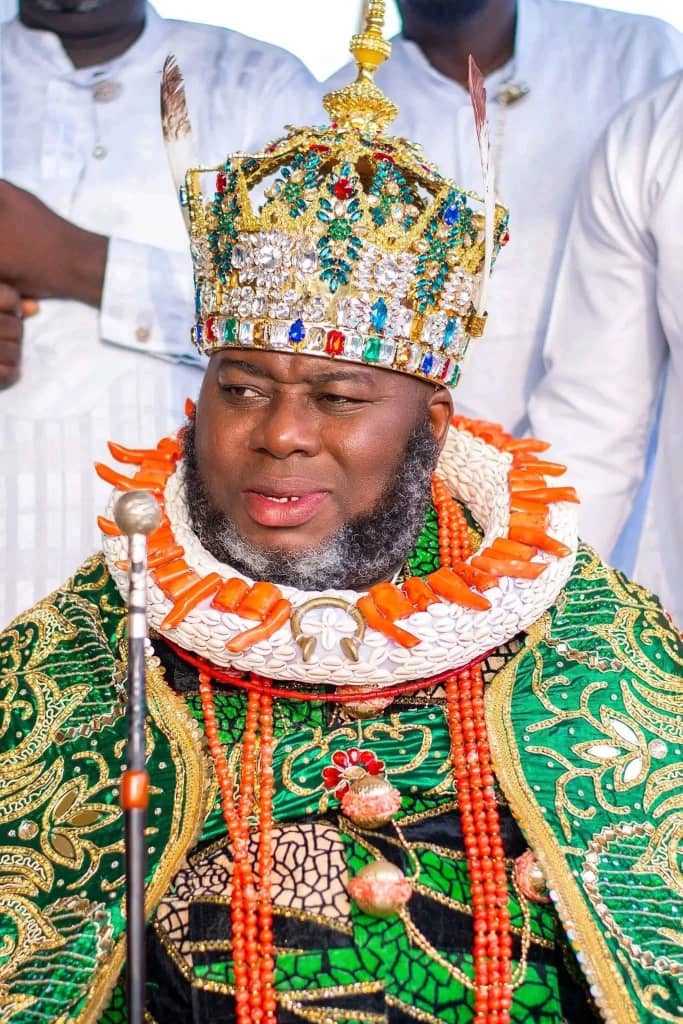
BEYOND THE CONTROVERSY; DA-AMAKIRI TUBO: THE JOURNEY OF AMANYANABO MUJAHID ABUBAKR DOKUBO-ASARI

BEYOND THE CONTROVERSY; DA-AMAKIRI TUBO: THE JOURNEY OF AMANYANABO MUJAHID ABUBAKR DOKUBO-ASARI

From the Niger Delta struggle to the throne of Elem Kalabari: a life shaped by conviction, sacrifice and service By Al Humphrey Onyanabo
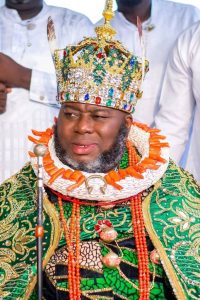
Some men are known for the battles they fight. Others are remembered for the positions they occupy. A few live lives that traverse so many different worlds that no single title, controversy or newspaper commentary can adequately explain who they are.

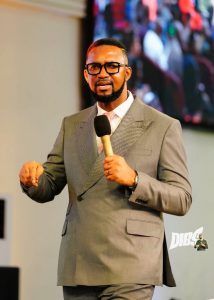
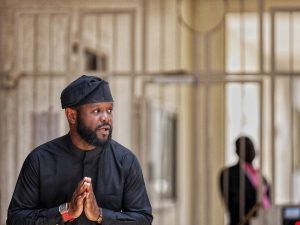
Da Amakiri Tubo, Alhaji Mujahid Abubakr Dokubo-Asari, Amanyanabo of The Source, Elem Kalabari, Torusarama Piri, is one such figure. His journey has taken him through religion, political agitation, imprisonment, entrepreneurship, community security and natural leadership. His name has featured prominently in the Niger Delta struggle, particularly in conversations about the rights of the Ijaw people, resource control and the relationship between Nigeria’s oil wealth and the communities from which it is extracted.

Today, he occupies a natural leadership deeply rooted in Kalabari history. Yet his public life continues to attract attention, debate and controversy. To understand the man, one must look beyond the headlines and examine the experiences, convictions and responsibilities that have shaped his journey.

THE BOY CALLED KALA AMAKIRI

Born Melford Dokubo Goodhead Jr. to Hon. Justice Melford Dokubo Goodhead Snr. and Mrs. Bekinwari Melford Dokubo Goodhead, he came from the royal Amakiri dynasty of the Kalabari Kingdom in present-day Rivers State.

He lost his mother at an early age and was raised by his paternal grandmother, Princess Nene Okukuba Wilkinson Goodhead, whose influence remained central to his upbringing. She gave him the name Kala Amakiri, meaning Little Amakiri, in reverence to the historical legacy of King Amakiri I, a figure remembered in Kalabari history for his place in the formation of the kingdom.

His grandmother instilled in him a strong consciousness of his cultural heritage and royal ancestry. Growing up in a Christian family and the riverine environment of the Niger Delta, he experienced the traditions, values and social realities of his people.

His early years coincided with growing awareness of the contradictions between the enormous wealth extracted from the Niger Delta and the difficult conditions confronting many oil-producing communities.
Those contradictions would later become central to his political convictions.

EDUCATION, FAITH AND THE SEARCH FOR IDENTITY

His education began at Baptist Day School, Buguma and Township Primary School, Port Harcourt before he proceeded to Baptist High School, Port Harcourt. He later attended the University of Calabar and the University of Science & Technology, Port Harcourt, now Rivers State University.

His formative years were marked by independence of thought, an outspoken disposition and a willingness to question established assumptions. His search for identity and meaning eventually extended to religion. After a period of personal and intellectual exploration, he embraced Islam and adopted the name Mujahid Abubakr Dokubo-Asari.
He has described Islam as an important source of peace, discipline and spiritual direction in his life.

This journey reflected a defining feature of his character: a willingness to make personal choices according to his convictions, even when those choices differed from the expectations of his early environment.

THE NIGER DELTA STRUGGLE:

Amanyanabo Dokubo-Asari’s national prominence grew during a period of heightened political agitation in the Niger Delta.
Communities across the oil-producing region had long raised concerns about environmental degradation, inadequate infrastructure, economic marginalisation and their share of the benefits derived from petroleum resources.

He became associated with the struggle for resource control and greater political and economic autonomy for the region. He was involved in the Ijaw National Congeess ( INC) and became one of the founding figures associated with the Ijaw Youth Council (IYC) later serving as its president.

He subsequently emerged as the leader of the Niger Delta People’s Salvation Front( the Political wing) NDPSF, and the Niger Delta People’s Volunteer Force, NDPVF, becoming one of the most prominent and controversial figures of the Niger Delta region.

His activities brought him into direct confrontation with the Nigerian state. For his supporters, he represented a forceful voice for a region whose grievances had too often been neglected. His critics questioned his methods and political positions.

His was arrested and put on trial for treason. His imprisonment became a defining episode in his public life. He was released in July 2007 after spending twenty two months and ten days in detention. The experience did not end his engagement with the Niger Delta question. It became another chapter in a journey that would eventually take him from political agitation into natural leadership, enterprise and community development.

A RETURN TO ANCESTRY

Amanyanabo Dokubo-Asari’s journey to the throne of Elem Kalabari unfolded through a series of natural and community milestones.
He had his personal chieftaincy stool in Edi Abali war canoe houses in 2004 from his maternal, maternal lineage.
He presented himself to Bugama Council of chiefs in 2007 and Se Diye on his personal stool in 2013. He went through all the stages of Kalabari chieftaincy creating his personal Chieftaincy to be the head of a major Kalabari war canoe house.

On 1st November 2023, he became Head of the Edi Abali Group of war canoe Houses of Kalabari. The Edi Abali stool is one of the most prominent war canoe houses, founded by the first Prime Minister of the kalabari State, Inabioboari Harry Braide ( Edi Abali)
On 9th November 2023, he performed Se Diye as Alabo Edi Abali of the Kingdom of Kalabari.

On 23 May 2024, the King Amachree Royal House in accordance with kalabari royal convention through the King Abbi House chose him as Amanyanabo of Elem Kalabari. On the same day, the Kalabari Se Kobiri chose him as Amakiri Ekpeke ( meaning the shield and protector of the Kalabari Kingdom) Adding to his earlier title of Sebromabo of The Kingdom of Kalabari conferred on him by King T.J.T. Princewill , Amachree X1, Amanyanabo of The Kingdom of Kalabari.

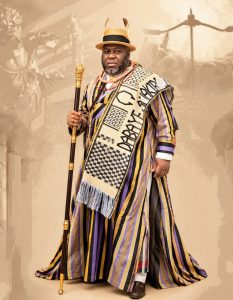
The Rivers State Government subsequently recognized and gazetted him as Amanyanabo of Elem Kalabari on the 8th October 2024. On 31 December 2024, the Governor of Rivers State, His Excellency, Sir Siminalayi Fubara presented him with the staff of office as Amanyanabo of The Source, Elem Kalabari, Torusarama Piri.

He adopted the revered name of the founder of modern kalabari, Dabaye Amakiri I, connecting his reign to the historical personalities of Daba and of his son, King Amakiri 1. His emergence as a natural ruler marked a significant transition. The man who had spent years challenging established authority was now entrusted with the responsibilities of a natural institution that demands stewardship, preservation of heritage, community cohesion and development.

The throne is not simply a title. It is a responsibility to history and to future generations.
ELEM KALABARI: STRATEGIC OIL AND GAS ASSETS, NEGLECTED COMMUNITIES

Da Amakiri Tubo Alhaji Mujahid Abubakr Dokubo-Asari, The Amanyanabo of The Source, Elem Kalabari, Torusarama Piri, presides over a chiefdom in the Kalabari Kingdom of considerable strategic importance to Nigeria’s energy economy.

The wider area is associated with OML 18, an oil and gas block containing fields including Cawthorne Channel 1,2,3, Buguma Creek, Orubiri, Akakiri, part of Krakrama fields and Akaso oil and gas fields.

The region also hosts oil and gas infrastructure, including pipelines, flow stations and crude oil evacuation facilities.

The Cawthorne Channel’s importance to oil production and evacuation further underscores the strategic position of this part of the Niger Delta. Yet, despite these valuable assets, communities in Elem Kalabari and Torusarama piri chiefdom continue to contend with poverty, environmental degradation, inadequate infrastructure and limited economic opportunities.
In February 2026, women from the community protested at Cawthorne Channel 2 Jetty, demanding environmental justice and greater participation in the oil economy.

For Amanyanabo Dokubo-Asari, this contradiction is deeply personal. His people inhabit a landscape that contributes to Nigeria’s energy economy, yet many continue to struggle with the consequences of neglect and environmental damage. He feels their pain and carries the responsibility of advocating for their welfare. His position places him at the intersection of Nigeria’s national economic interests and the aspirations of the Niger Delta. Protecting energy infrastructure must go hand in hand with environmental responsibility, community security and meaningful economic opportunities for the people who host these assets.

The economic importance of Elem Kalabari and Torusarama Piri must be reflected in the wellbeing of its people, not measured only by the resources extracted from their homeland.

ENTREPRENEURSHIP AND COMMUNITY SECURITY

Beyond his political and natural roles, Amanyanabo Dokubo-Asari is an entrepreneur whose interests through the King Amachree Group of Companies include educational institutions, oil and gas, construction, dredging and reclamation, trading, logistics and consultancy.

His involvement in private security through Royal Fouche Services Ltd. represents another significant dimension of his public life. His company is in the forefront front of the battle against insurgency, working side by side with security agencies, they have left footprints in Abuja, Niger, Plateau, Zamfara, Anambra, Imo and Abia states.

In the Niger Delta, insecurity affects more than the movement of people. It disrupts fishing, commerce, education, investment and the relationships that sustain riverine communities.

For about five years, Amanyanabo Dokubo-Asari has personally sponsored security operations along the Kalabari–Emohua road. His private military contractor company, Royal Fouche Services Ltd, also know as Amama and Apapa Soldiers have secured the length of the road , night and day.
The reported monthly expenditure on salaries and logistics is approximately about ₦250 million. He foots this bill personally without any sort of support from the State Government or the six local governments of Emohua, Asari Toru, Akuku Toru, Degema, Bonny and Okrika who enjoy the service.

I have personally travelled this road during the day and at night and spoken with drivers and passengers about their experiences. I have also visited Elem Kalabari several times and witnessed security personnel conducting patrols on the waterways.
These experiences have given me firsthand insight into the security activities taking place in the area.

The significance of the initiative lies in the practical needs it addresses. Roads and waterways must be safe enough for people to travel, conduct business and sustain their livelihoods. Security is a necessary foundation for development.

In May 2025, Royal Fouche Services Ltd. rescued 19 passengers which included students who were on their Way to write WAEC Examination, military personal and others after they had been held captive for 21 days which resulted from a pirate attack along the Rivers State waterways. In late September, 2025, personnel of Royal Fouche Services Limited destrupted a grand Plot to stop oil production by blowing up pipelines and mass kidnapping of oil workers to press for the release of Mr Henry Okah who is in a South African prison for his part in the October 1st 2010 bombing of the Eagle Square, Abuja, with the seizure of large cache of arms and ammunition’s which were subsequently handed over to security agencies

These activities represent an evolution in Amanyanabo Dokubo-Asari’s public engagement: from confronting the state over the conditions of the Niger Delta to participating in private-sector and community efforts to address insecurity.

THE CONTROVERSY SURROUNDING PIPELINE SURVEILLANCE CONTRACTS

It is against this background that Da Amakiri Tubo, Alhaji Mujahid Abubakr Dokubo-Asari. Amanyanabo of the Source, Elem Kalabari, Torusarama Piri ‘s recent comments to Joel Omoshere Agho aka Mr Common Sense on pipeline surveillance contracts should be understood.

Da-Amakiri Tubo, Alhaji Mujahid Abubakr Dokubo-Asari was on his own planning Se Diye, The final coronation billed for December 19th, 2026 when video by Mr Common, Sense Joel Omoshere Agho painting him in bad light went viral on social media. The video had the hand of Esau and the voice of Jacob behind it. In a widely circulated live video, Amanyanabo Dokubo-Asari averred that he is not Linked to any of the companies awarded the pipeline surveillance and protection contract.

He went to argue that Tantita and its Chairman Tom Polo, his fellow ijaw brother
should not be singled out while other figures associated with the surveillance business escaped comparable public questioning.
He stated categorically that Piprline Infrastructure Company ltd, associated with the Olu of warri and Osahon Osunbor earns far more than Tantita owned by Tom Polo

In a subsequent articles, writers have criticised Amanyanabo Dokubo-Asari’s remarks, questioning the evidence for the figures cited and arguing that public contracts should not be treated as the entitlement of any ethnic group.
The articles raises questions about transparency and accountability that deserve consideration. Public contracts should be open to scrutiny, and specific allegations must be assessed against documentary evidence.

But there is another dimension to Amanyanabo Dokubo-Asari’s intervention: his concern about what he sees as unequal treatment of Ijaw interests and the tendency to single out Tompolo’s Tantita without applying comparable scrutiny to others involved in pipeline surveillance.

His position, as conveyed in the account underlying this profile, is that defending an Ijaw brother against what he perceives as selective criticism does not amount to declaring anyone above scrutiny.
It is a distinction worth understanding.

Tompolo is entitled to scrutiny like any other contractor. So are other companies and individuals involved in public contracts. The central questions are who received the contracts, under what terms, for what value, what payments were made and what services were delivered. For this, there is no need for name calling. The Freedom of Information Act clearly requires that individuals involved should made public amounts that they have received so far from our Common wealth.

But accountability should also be consistent. It should not become a selective exercise in which one individual is persistently questioned while comparable arrangements receive less attention.

The Niger Delta’s history of economic exclusion makes questions about access to opportunities particularly sensitive. That history does not establish that any specific contract belongs to an ethnic group. It does, however, explain why the participation of Ijaw businesses and the equitable distribution of economic opportunities remain important public concerns.
Amanyanabo Dokubo-Asari’s intervention must be understood within that wider context.

THE 2023 ASO ROCK MEETING: A QUESTION OF PERSONAL INTEREST

There is another part of this story that deserves attention.
Following President Bola Ahmed Tinubu’s inauguration in 2023, Amanyanabo Dokubo-Asari visited him at the Presidential Villa in Aso Rock. Amanyanabo Dokubo-Asari and President Bola Ahmed Tinubu share a friendship and bond dating over 25 years.

During their conversation at Aso Rock Villa, the President reportedly asked whether he wished to have a share of the pipeline surveillance contract.

Dokubo-Asari’s reported response was no.
The account is significant because it introduces a personal dimension to the present controversy. It suggests that, at the time of the meeting, he was not seeking a share of the contracts for himself.

The exchange also provides context for his subsequent public position on the treatment of Tompolo and the distribution of opportunities associated with pipeline surveillance. Its relevance lies in the distinction Amanyanabo Dokubo-Asari has drawn between seeking a personal commercial benefit and speaking out over what he perceives as unequal treatment of his fellow Ijaw people.

From the very beginning, he was among those who applied for the contract but was not given. He fought against it, requesting it be distributed but he backed down when the Ijaw National Congress, INC and the Bayelsa State Government led by H.E Duoye Diri intervened.

His reason being that it is the ijaw platform that gave him all that he has become today and he cannot go against them. He gave his word that henceforth he would no pursue the matter . That neccesitated his response of no to the President because he could not go Back on his word to the ijaw nation. And since then, he has maintained that position.


BEYOND THE HEADLINES

Da Amakiri Tubo’s life cannot be reduced to one video, one allegation or one newspaper article. He has been a religious seeker, political activist, Niger Delta agitator, prisoner, entrepreneur, security-sector participant and a natural ruler. His critics are entitled to question his statements, just as he is entitled to express his views and defend the positions he considers important. Neither criticism nor public advocacy should exempt anyone from the discipline of evidence.
His emergence as Amanyanabo of The Source, Elem Kalabari, Torusarama Piri, places him within a natural institution whose significance extends beyond his individual life.

What ultimately defines this phase of his life will be the institutions he strengthens, the culture he preserves, the opportunities created for the next generation and the tangible improvements his people experience.
His political history will remain part of his biography. So will the controversies surrounding him. But neither should prevent a serious examination of his activities and responsibilities.

Da Amakiri Tubo’s journey belongs within that fuller understanding.
Beyond the controversy lies a life that deserves to be examined in its entirety.

Beyond the crown lies the responsibility of service. And beyond the struggles of yesterday lies the enduring question of what can be achieved for the people of tomorrow.

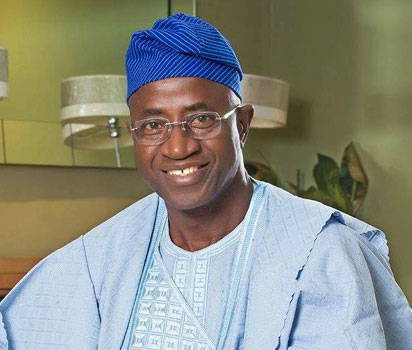
SEGUN ODEGBAMI AT 74: THE MARRIAGE HE LOST, THE WOMAN HE ALMOST MARRIED

SEGUN ODEGBAMI AT 74: THE MARRIAGE HE LOST, THE WOMAN HE ALMOST MARRIED

At 74, the stadium roars have faded into the quiet of a solitary existence. Odegbami rarely replays old matches in his head, nor does he long for the multi-million-dollar European salaries of contemporary football. Instead, as his body ages, reminding him of his mortality, Odegbami looks forward with a striking, urgent clarity to a more fruitful, selfless twilight. From the profound lessons of unconditional fatherhood to his enduring, post-romance alliance with Oyindamola Adeyemi, Nigeria’s ultimate Number 7, aka ‘Mathematical Odegbami’ proves that his greatest victory isn’t a silver trophy, but his unshakeable grip on his own integrity.

You recently turned 74. When you look in the mirror today, who do you see, the footballer millions of Nigerians remember, or a completely different Segun Odegbami?

People remind me constantly about my relationship with football on a daily basis to the extent that I look at most of life through the prism of football. Even in maturing to the person that I am today, football (as a part of sport) has been at the core of my life’s journey – my work, my pastime, my social engagements, my projects, most things around me.

You recently described this stage of your life as the “evening” of your journey and every additional day as a bonus. Has turning 74 made you think differently about mortality, legacy and the things that truly matter?

As I get older, and refuse to acknowledge the increasing numbers in my age that stare at me, physically, my slowly ‘withering’ body makes me acknowledge mortality, the increasing aches and pains, the small health conditions, more aging and dying colleagues around. There is no ‘whole lifetime ahead’ any more, as I used to think in my younger days. Getting things done NOW, not prevaricating over issues, seeing the positives and opportunities in most things around me now, have become my response to the constant reminder of the inevitability of mortality.

If the Segun Odegbami of 1980 were playing today, with European salaries, endorsements and modern sports marketing, how big do you think “Mathematical” would have become?

Ah, very big, I believe.
I could have approached my football career differently, not just as an object of passion and for national service, but as one that had the power to take care of me for the rest of my life! I would have given it my all deliberately, and played more intentionally, packaged and marketed myself better. I ‘sold’ my career too cheaply!

People know almost everything about Segun Odegbami the footballer, but surprisingly little about Segun Odegbami the husband, companion and lover. Was that deliberate?

No, that aspect of me is just a reflection of the life I lived after sports.

You were married to Jumoke Tejumola Odegbami. Looking back today, what happened to that marriage, and what did its breakdown teach you about yourself?

I don’t like to look back at that period.
My young family moved abroad and started to live there. I did not move abroad with them. The time spent apart from family expanded to several years. It created irreversible damage. Living alone in Nigeria, with all the fame I had, created a gap that I could not fill as the years rolled by.

Let me ask you very simply: were you a good husband?

No, I was not.
I could not manage the situation I created for myself well enough.

Could you please clarify when your first marriage ended and when the divorce was officially finalized?

I married Jumoke Tejumola in February 1978. We were together for many years, but somewhere along the line, the marriage broke down and we started living apart. Eventually, I had to take the legal steps to formally bring that chapter of my life to a close. On June 21, 2012, the High Court in Ibadan granted the decree nisi for the dissolution of the marriage. It was a long and important chapter of my life, but sometimes relationships simply run their course. You accept it, learn from it and move on with your life.”

Football gave you extraordinary fame while you were still relatively young. Did fame make marriage and perhaps fidelity more difficult?

It was more the separation by distance that did the most damage. Not the game. I learned to live alone and by myself, and got used to it. That ‘freedom’ allowed me to endure all the hardships I encountered because I was by myself, accountable to no one. I had to pay a high price for that for the rest of my life.

You once publicly clarified that you are a monogamist and not a polygamist. Why was correcting that perception important to you?

Because, I was never a polygamist. There may be the perception out there in public that I have been married more than once. Since my divorce I have not remarried. I was going to try again, but it never happened.

Having experienced marriage and relationships, do you think you understand women better today than you did 30 or 40 years ago?

No. I can’t claim such authority. Women are complex. My life is complicated too.

At 74, what does companionship mean to you? Do you still believe in marriage?

Companionship to me now is having a friend you can share good times with.
I do not see marriage in the picture. I cannot cope with the complexities of multiple relationships in the family. So, no marriage for me again.

Chief, let me take you somewhere a little more personal. For years, your name and that of businesswoman Oyindamola Adeyemi were romantically linked, with different accounts of exactly what the relationship was. So, let us hear it from Segun Odegbami himself: what exactly was Oyindamola Adeyemi to you?

My best friend. Then, when we first met, till now.
She was very young and very innocent. She did not even know that I was famous, or anything like that. Because of my outdoor life style and because she was really a very private person, It took a long time for her to realize the implications of a serious relationship with me and to run away.
We became so close that we even had a family introduction ceremony that probably would have led to marriage. But it never did.
When our son came, it was like a wake-up call for her.
You know, she is a sure-footed person, strong-willed and very focused. She knew what she wanted in life and went after it. I was a distraction for her, away from where she was heading.
That’s why she is such a very successful woman succeeding so well in a man’s world. She has always been a deep thinker and scholar, very knowledgeable and very well-read academically. On top of that she is very beautiful.
So, we just became very good friends with some romance. A son came wonderfully into the picture.
We are not married. We will not be married. We settled that matter over a decade ago.

There were reports at one point that the relationship was heading towards marriage. How close did the two of you actually come to getting married?

It could have ended in marriage but obviously it would not have worked out well. We were better off at been just very good friends.
In a way, we complimented each other.
Opposite ‘poles’ attracting.

What was it about Oyindamola that first attracted you to her?

She was (and still is) a very beautiful woman. Most men will salivate on seeing her. At the same time, she is very intelligent and very smart. Don’t listen to her talk on any subject because you will be enamored with the depth of her knowledge and intellect.
And she is a very very private person.
She blew my mind the first time I met her.

Two highly accomplished and strong-minded people can love each other deeply and still discover that building a life together is another matter entirely. Was that ultimately what happened between you and Oyin?

You can put it that way.
I understand her very well.
I don’t know if she understood me that well, but we complimented each other at the time because we were very different on almost all counts.
Yet, she is an amazing person.
Our wide age difference was also a hindrance, I think. She makes fun of me always with it!

Reports subsequently suggested that the relationship ended. Without intruding unnecessarily into her privacy, what happened between the two of you?

We just ended the romantic relationship a long time ago, well over 10 years now. But we kept our friendship. Nothing happened. It was as if we both knew that we had to give up the romance for the friendship to survive and with a son we both love deeply, in between.

Was losing that relationship painful for you?

We are still very good friends.

People naturally concentrate on what went wrong when relationships end. Let me turn that around: what went right between Segun Odegbami and Oyindamola Adeyemi? What beautiful memories remain?

It was a beautiful relationship. There is no romantic relationship between us anymore, but we are still the best of friends. That’s the kind of person she is. She is steely on the outside, but soft and tender inside. A great mother to our son.

Do you and Oyindamola still speak today?

Of course. We are still very good friends.

If Oyindamola were sitting opposite you now; not the businesswoman, not the woman people wrote about, just Oyindamola; and you had one completely private minute with her, what would you say?

Thank you for everything you have being to me, and done for me.

Did loving her change anything about your understanding of women, relationships or marriage?

Everybody is different. She is a different being completely. She does not fit the profile of the women that have I encountered in my life.

And perhaps the question that finally settles years of speculation: who occupies Segun Odegbami’s heart today?

No one, romantically. My children!

Strip away “Mathematical,” the national honours and the celebrity for a moment. What kind of father do your children say Segun Odegbami is?

The best father in the world. Every single one of them, bar none, would say that. We are all very close friends.

Is that different from the father you believe yourself to be?

No. My children are my best friends.

Is there anything you wish you had done differently when your children were younger?

I wish I had spent more time with them.

What has fatherhood taught you that football never could?

To love unconditionally. In football, you have to ‘hate’ your opponent a little to inflict the pain of defeat on them. And then you make up after. Unreal!

When people discuss Segun Odegbami, football inevitably dominates the conversation. Is there another part of your life you fear history may overlook?

My life is an open book.
The modern search engines in the information super highway will reveal things about me that I may not even realize are a part of my story. That’s how much the world has changed. Nothing is hidden any more.

If you were permitted to live your life again from the age of 18, knowing everything you know today, the triumphs, mistakes, heartbreaks and consequences, would you still choose football?

That’s all I really know, seeing the world through the lens of football. What I see is virgin territory of opportunities in a vast wilderness of football waiting to be discovered and exploited to make the world a better place for everyone.

If you could sit beside the young Segun Odegbami for five minutes before he became “Mathematical,” what would you warn him about?

Fame is sweet, fleeting, and ephemeral. Education is the key and a security. The two are paradise.

When the final whistle eventually blows and hopefully many years from now, what would you like Nigerians to say Segun Odegbami stood for?

He stood for integrity and good name. He came, he saw, and he made the world around him a better place!

ADEKUNLE SUNDAY SHOBOLA “ELELE”: THE GRASSROOTS CATALYST NEEDED TO TRANSFORM IFAKO-IJAIYE COMMUNITY

ADEKUNLE SUNDAY SHOBOLA “ELELE”: THE GRASSROOTS CATALYST NEEDED TO TRANSFORM IFAKO-IJAIYE COMMUNITY

Ifako-Ijaiye Local Government Area, one of the largest and most densely populated LGAs in Lagos State and Nigeria, stands at a critical point in its political and developmental journey. With a population of over 1 million residents, diverse communities, and growing socio-economic challenges, the LGA requires visionary, experienced, and grassroots-driven leadership to unlock its full potential.

For the dividends of democracy to be felt in every street, market, and household, constituents agree that Ifako-Ijaiye needs a formidable, dedicated, and tested representative — someone who understands the people, speaks their language, and walks with them.

THE SEARCH FOR DEPENDABLE LEADERSHIP

This informed the decision by concerned community leaders and stakeholders to set up a fact-finding Machinary. The mandate was clear: to identify a dependable, reliable, and accessible leader who can bridge the gap between government and the people, and who has a proven record of service.

After months of consultations, town hall engagements, and background checks across wards in Ifako and Ijaiye, the committee came to one conclusion. The name that kept coming up from youth groups, market women, artisans, religious leaders, and community elders was Mr. Adekunle Sunday Shobola, popularly and fondly called “Elele.”


WHO IS “ELELE”?

Adekunle Sunday Shobola better known as Elele is not new to the streets of Ifako-Ijaiye. For over two decades, he has been a visible grassroots mobilizer, democrat, philanthropist, and community peace-maker.

“Elele” is a Yoruba name that conlates to “one who comes to the aid of others.” And that is exactly what constituents say he has been doing.

According to the fact-finding report, Elele is described as:

A Philanthropist:

Known for paying school fees, supporting widows, and providing medical assistance to the less privileged without regard for party lines.

A Community Peace-maker:

Instrumental in resolving community disputes, youth clashes, and market crises through dialogue and mediation.

A Grassroots Mobilizer:

A man who attends naming ceremonies, funerals, and community meetings. He is accessible — his door is open to anyone who comes his way, regardless of tribe, religion, or political affiliation.

A youth leader in Ijaiye said: _“We don’t see Elele only during elections. We see him every day. When there is trouble in the community, he is there. When a student needs help, he responds. That is leadership.”

WHY IFAKO-IJAIYE NEEDS HIM NOW

Ifako-Ijaiye faces unique challenges: Education development, drainage and flooding, youth unemployment, inadequate healthcare facilities, and the need for more inclusive governance.

Stakeholders believe these challenges require a leader who is not a “visitor” to the community, but one who has lived the realities with the people.

Experience:

Elele understands the structure of local government and how to interface with state and federal agencies to attract projects.

Democratic Values:

As a democrat, he believes in consultation, inclusion, and accountability. He has consistently advocated for peaceful elections and issue-based politics.

Track Record:

Over the years, he has facilitated empowerment programs for artisans, skills acquisition for women, and scholarship support for students.

A market leader in Ifako noted: _“Politics should be about service. Elele has been serving us without a title. Imagine what he can do with the mandate of the people.”_

THE PATH TO TRANSFORMATION

Community leaders say that electing a grassroots man like Adekunle Sunday Shobola will be the catalyst needed to transform Ifako-Ijaiye. The vision, according to stakeholders, includes:

Youth and Women
Empowerment

Expanding vocational training, providing startup grants, and creating platforms for young entrepreneurs.

Healthcare and Education:

Supporting primary health centers and advocating for more classroom blocks and learning materials.

Security and Peace

Strengthening community policing and dialogue platforms to sustain the peace Ifako-Ijaiye is known for.

The belief is that a representative who is already trusted at the grassroots will find it easier to mobilize the people for government programs and also hold government accountable on their behalf.

THE PEOPLE’S CALL

As the political space begins to shape up ahead of future elections, there is a growing call across the 11 wards of Ifako-Ijaiye for Elele to answer the call to serve.

“This is not about party. This is about the people,” said a community elder.

“We need someone who has been tested and trusted. Someone who will not abandon us after election. Elele fits that description.”

The fact-finding committee concluded that the time has come for Ifako-Ijaiye to choose competence over popularity, service over rhetoric, and grassroots connection over political godfatherism.

REMARK

Ifako-Ijaiye deserves leadership that is present, practical, and people-centered. In Adekunle Sunday Shobola “Elele,” constituents say they have found a grassroots politician and democrat with the heart to serve, the experience to deliver, and the humility to listen.

As the conversation around the future of Ifako-Ijaiye continues, one message is clear from the streets: Elele is the catalyst needed to transform and represent Ifako-Ijaiye1 at the Lagos State House of Assembly under the ADC Political Platform Come 2027 General Election.

Watch out for Part 2

Wisdom: The Principal Catalyst for Breaking Evil Patterns — Dr. Chris Okafor

Wisdom: The Principal Catalyst for
Breaking Evil Patterns — Dr. Chris Okafor

…“Demonic patterns persist until someone
rises to confront and change them.”

+ Grace Nation Global also used the occasion to celebrate mothers with special prayers and thanksgiving

Understanding how to break negative cycles requires more than desire—it demands insight, discipline, and the right spiritual principles. This formed the foundation of the teaching delivered by the Generational Prophet of God and Senior Pastor of Grace Nation Worldwide, Christopher Okafor, during the Divine Intervention and Breakthrough Service held at the church’s international headquarters in Ojodu Berger, Lagos, Nigeria.

Understanding Ungodly Patterns

Preaching in the ongoing series “Patterns,” with the subtitle “Ungodly Patterns,” Dr. Okafor explained that recurring negative experiences within families are often sustained by underlying spiritual forces and long-standing practices.
According to him, covenant practices, consistent spiritual discipline, and kingdom commitment are among the channels through which individuals can break free from such patterns.
“Demonic patterns do not end on their own,” he said. “They remain until someone rises with understanding and takes responsibility to change the narrative.”
The Role of Prayer and Spiritual Discipline
The cleric emphasized that strategic and intentional prayer is central to rewriting one’s life story. He described prayer as giving God the legal ground to intervene in human affairs.
However, he cautioned that prayer without corresponding action may delay results.

“When you pray without enforcement, results may be slow,” he noted. “But when prayer is backed by commitment, sacrifice, and alignment with God’s principles, answers come swiftly, and long-standing patterns are broken.”
Breaking Curses and Negative Cycles

Dr. Okafor further described curses as spiritual forces that keep individuals trapped in repeated cycles. He stressed that breaking such patterns requires spiritual awareness, obedience to divine instruction, and alignment with godly authority.

He also highlighted the importance of honouring both biological and spiritual guidance, noting that such alignment can play a role in overcoming entrenched limitations.

“When you follow divine instruction and remain committed,” he said, “you position yourself for freedom, and what once held your family bound begins to lose its grip.”

Service Highlights
The Divine Intervention and Breakthrough Service featured moments of deliverance, healing, miracles, restoration, and testimonies from attendees who reported positive changes in their lives.

Celebration of Mothers

The service also included a special segment dedicated to celebrating mothers across Grace Nation Global.
In his remarks, Dr. Okafor described women as pillars of society and emphasized the need to honour and appreciate their sacrifices.

He prayed for all women in the ministry, declaring that they would live to enjoy the fruits of their labour and witness the fulfillment of their destinies.

“None will die before their glory manifests,” he declared. “Every woman who has laboured will reap in joy.”
He further pronounced blessings on expectant mothers, expressing faith that by the same time next year, many would return with testimonies of fulfilled desires.

– Sunday Adeyemi

From Construction Sites to Community Service: Temitope Akinyemi Emerges as a Model of Leadership and Impact

From Construction Sites to Community Service: Temitope Akinyemi Emerges as a Model of Leadership and Impact

In an era where integrity, excellence and strong moral values appear to be diminishing among many young professionals, Temitope B. Akinyemi has carved a niche for himself as a disciplined professional, visionary entrepreneur and committed political stakeholder whose influence continues to grow across multiple sectors.

Temitope Akinyemi currently serves as the Group Chief Executive of several thriving companies operating within the building, civil engineering construction and procurement sector. Known for his result-driven leadership and strategic foresight, Akinyemi has built a reputation for delivering value, fostering organisational success and driving competitive growth within Nigeria’s built industry.

With close to two decades of professional experience, Akinyemi’s career reflects a blend of technical competence and managerial excellence. He honed his professional skills while working with reputable organisations including Portland Renovations and Construction Limited, Leadway Assurance, and Pixels Digital Systems Limited.

These experiences not only sharpened his expertise but also enabled him to nurture and mentor a team of young professionals within the construction and engineering ecosystem.

Akinyemi is an alumnus of Obafemi Awolowo University, Ile-Ife, where he laid the academic foundation for his career.

His commitment to continuous learning has taken him across some of the world’s most respected institutions. He attended the Owner Management Programme (OMP) jointly delivered by the Lagos Business School and Strathmore Business School in Kenya, while also earning certifications in Construction Project Management and Investment Management from the University of Cape Town.

Further strengthening his academic and professional credentials, Akinyemi obtained a Public Policy Certificate from the Harvard Kennedy School of Government in the United States, alongside certifications in Construction Management and Construction Estimation from George Brown College, Toronto, Canada. He is also currently concluding a Master of Business Administration (MBA) in Energy and Sustainability at Universidad Católica San Antonio de Murcia (UCAM), Spain

His professional affiliations reflect his deep engagement with the industry.

Akinyemi is a member of the Nigerian Institute of Building, the Lagos Chamber of Commerce and Industry (LCCI), the Nigerian Institute of Management (NIM) and the Institute of Management Consultants (IMC).

Socially, he is also an active member of elite recreational institutions including the Ikoyi Club and the Ikeja Golf Club.

Beyond business and professional accomplishments, Temitope Akinyemi has steadily built a reputation as a grassroots-oriented political figure within the All Progressives Congress (APC).

His political journey gained significant visibility in 2018 when he contested the APC House of Assembly ticket, using the opportunity to engage extensively with party members across wards while presenting a vision centred on improved welfare and holistic community development.

Although the primary contest did not culminate in electoral victory, Akinyemi’s engagement left a lasting impression within the political structure of the local government. His dedication and influence earned him a role in the Lagos State APC Campaign Committee in 2018, and later a more strategic appointment in 2022 as a member of the Presidential Campaign Committee that contributed to the emergence of President Bola Ahmed Tinubu.

Driven by a passion for community service, Akinyemi has consistently supported vulnerable members of society through various empowerment and welfare initiatives. He regularly distributes food items, relief materials and financial assistance to elderly citizens, widows, youths and indigent children within his community, demonstrating a practical commitment to social responsibility.

In preparation for the 2023 general elections, Akinyemi also launched the Temitope Akinyemi Political Empowerment Programme, a strategic initiative designed to strengthen party structures and motivate grassroots members.

Through the programme, 183 party faithful, ward chairmen and elderly party members received financial support as recognition for their loyalty and dedication to the party.

The initiative not only reinforced party unity but also inspired new members to actively participate in the political process.

Today, Temitope B. Akinyemi stands as a blend of professional excellence, political engagement and humanitarian service a leader whose journey from the construction sector to community development initiatives reflects a consistent commitment to impact and progress.

As Nigeria continues to seek forward-thinking leaders capable of bridging business innovation with public service, Akinyemi’s trajectory offers a compelling example of how professionalism, education and grassroots connection can combine to shape meaningful leadership.

FirstHoldCo sustains growth momentum as gross earnings rise 17% to N2.6trn By Chima Nwokoji

FirstHoldCo sustains growth momentum as gross earnings rise 17% to N2.6trn

By Chima Nwokoji

FirstHoldCo Plc has sustained its growth momentum across core business segments, reporting a 17.1 percent year-on-year increase in gross earnings to ₦2.64 trillion for the nine months ended September 30, 2025, compared to ₦2.25 trillion in the corresponding period of 2024.

According to the unaudited results released by the Group, interest income rose sharply by 40.4 per cent to ₦2.29 trillion from ₦1.63 trillion in September 2024, reflecting improved asset yields and loan book expansion. Net interest income also climbed 71.7 per cent year-on-year to ₦1.5 trillion, buoyed by stronger core banking operations.

However, non-interest income declined 49.2 percent to ₦296.9 billion, while impairment charges for credit losses surged 68.6 percent to ₦288.9 billion, reflecting prudent risk provisioning in a volatile operating environment.

Operating income rose 23.2 percent to ₦1.80 trillion, though profit before tax slipped 7.3 percent to ₦566.5 billion, down from ₦610.9 billion a year earlier. Profit after tax also fell by 15.5 percent to ₦450.9 billion, largely due to reduced fair value gains and higher operating costs, which jumped 39.3 percent to ₦942.7 billion.

Despite the profit decline, the Group maintained balance sheet stability, with total assets at ₦26.4 trillion, marginally lower than ₦26.5 trillion as of December 2024. Customer deposits rose 4.2 percent year-to-date to ₦17.9 trillion, while net loans and advances increased by 9 percent to ₦9.6 trillion.

Key performance ratios show that FirstHoldCo maintained a post-tax return on average equity of 19.9 per cent and a post-tax return on assets of 2.3 percent. The Group’s cost-to-income ratio stood at 52.4 per cent, compared with 46.4 percent a year earlier, while the non-performing loan (NPL) ratio improved to 8.5 per cent from 10.2 percent in December 2024.

Group Managing Director, Adebowale (Wale) Oyedeji, described the results as a reflection of the Group’s underlying resilience and commitment to sustainable growth.

“FirstHoldCo has once again demonstrated solid earnings capability,” Oyedeji said. “Our interest and operating income grew strongly by 40.4 percent and 23.2 percent, respectively, supported by a 26.9 percent rise in fees and commission income. The decline in profit before tax was due to the normalisation of fair value gains and balance sheet strengthening initiatives.”

He noted that the Group’s strategic risk management measures were already yielding results, as seen in the improved asset quality.

On the recapitalisation of FirstBank, Oyedeji disclosed that the first phase of its private placement capital raise had been successfully executed and is awaiting final regulatory approvals.

“We expect to conclude this phase in November 2025, ensuring FirstBank’s full compliance with the new minimum capital requirements by year-end,” he said. “Subsequent capital raising rounds will further enhance our financial solutions and support value-accretive initiatives.”

Oyedeji reaffirmed the Group’s commitment to achieving its 2029 financial targets, noting that FirstHoldCo remains well-positioned to deliver stronger shareholder value through operational scalability and prudent capital management.

Seyi Tinubu: Building Success Beyond the Family Name

Seyi Tinubu: Building Success Beyond the Family Name

General Colin Powell once said, “Success is the result of perfection, hard work, learning from failure, loyalty, and persistence.” Few modern Nigerian entrepreneurs embody this more than Oluseyi Afolabi Tinubu popularly known as Seyi Tinubu. While the son of President Bola Ahmed Tinubu enjoys the encouragement of his parents, his career path proves that his achievements are built on personal ambition, resilience, and strategic innovation — not inheritance.

Contrary to popular belief, Seyi’s rise is not simply a product of political influence. Driven by a desire to earn his father’s respect, he charted his own course early, venturing into industries far from his father’s political sphere — especially marketing communication and digital enterprise.

After graduating from the Nigerian Law School and being called to the Bar, Seyi faced a choice: pursue law or carve a path in business. Choosing the boardroom, he partnered with his childhood friend Adenrele Olusoga to explore entrepreneurial opportunities. Their early venture — an online movie streaming platform — failed, but it sparked Seyi’s interest in the digital space.

That interest gave birth to Loatsad Promomedia, a leading Nigerian digital and out-of-home advertising company, co-founded with Olusoga and supported by his then-fiancée (now wife), Layal. Without financial backing from his father, they pooled resources from previous ventures, secured licensing, and quickly positioned Loatsad as a formidable player in the advertising industry.

Over the years, Seyi expanded operations with SDM Communications, pioneering several firsts in Nigeria’s digital advertising sector:

  • Exclusive partner for Truecaller after-call and in-app ads (2016–2018), selling over 85% of national ad inventory to top banks, FMCG brands, and real estate firms.
  • Among the first agencies to run Snapchat ad campaigns in Nigeria from 2015.
  • Exclusive reseller for Shazam Ads in Nigeria (2014–2018), facilitating high-impact campaigns for musicians and consumer brands until Apple’s acquisition ended the deal.
  • Strategic collaborations with WeTransfer, Admaxim, Rocketfuel, and Airpush to deliver innovative ad solutions nationwide.

Through calculated risk-taking, a willingness to learn from failure, and an unshakable determination to excel, Seyi has grown Loatsad/SDM into an industry leader with ambitions to dominate African advertising and compete globally.

His story underscores a universal business truth: success comes from vision, courage, disciplined financial planning, and a touch of divine favour — not merely from a famous name.

Tinubu receives class of 1999 govs in Aso Villa


President Bola Tinubu, on Friday, hosted members of the 1999 class of governors at the Presidential Villa in Abuja.


The former governors were led to the State House by a former Governor of Delta State, James Ibori.


Details of the meeting were not disclosed as of the time of filing this report, but the visit is believed to be part of ongoing consultations by the President with key political stakeholders.


The Special Assistant to the President on Social Media, Dada Olusegun made this known in a post via his X handle on Friday.

The class of 1999 governors, who assumed office at the return of democratic rule, played significant roles in shaping Nigeria’s Fourth Republic politics.


PUNCH Online reports that Tinubu was the Governor of Lagos State from 1999 to 2007.


More to come…

Israeli strikes kil 29 in Gaza – Civil defence


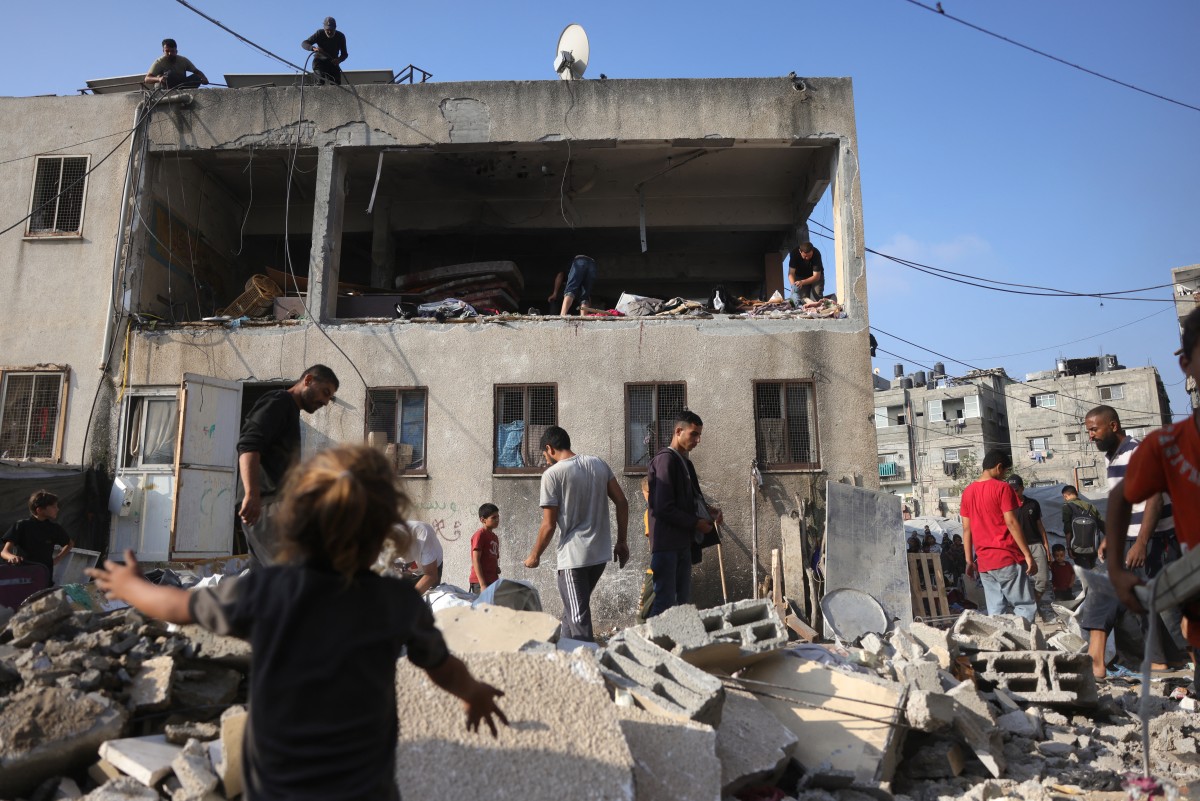
Gaza’s civil defence agency said Israeli air strikes on Sunday killed at least 29 Palestinians, including six children, near a water distribution point.


The attacks came with apparent deadlock in a week of indirect talks in Qatar between Israel and the Palestinian militant group Hamas for a ceasefire in the territory.


Civil defence spokesman Mahmud Bassal told AFP that Gaza City was hit by several strikes overnight and in the early morning, killing eight, “including women and children” and wounding others.


An Israeli air strike hit a family home near the Nuseirat refugee camp, south of Gaza City, resulting in “10 martyrs and several injured”, Bassal said.


In central Gaza, six children were among eight people killed when a drone “hit a potable water distribution point in an area for displaced people” in the Nuseirat camp, he added.


Several other people were wounded, he said.

In the territory’s south, three people were killed when Israeli jets hit a tent sheltering displaced Palestinians in the coastal Al-Mawasi area, according to the civil defence spokesman.


There was no immediate comment from the Israeli military, which has recently intensified its operations across Gaza, more than 21 months into the war triggered by Hamas’s October 2023 attack.


On Saturday, the military said fighter jets had hit more than 35 “Hamas terror targets” around Beit Hanun in northern Gaza.


The vast majority of Gaza’s population of more than two million people have been displaced at least once during the war, which has created dire humanitarian conditions in the territory.


Media restrictions in Gaza and difficulties accessing many areas mean AFP is unable to independently verify tolls and details provided by the civil defence agency and other parties.

All Political Stalwarts in Oshodi/Isolo Endorse Kendoo for Second Term

All Political Stalwarts in Oshodi/Isolo Endorse Kendoo for Second Term

As the July 12 chairmanship election draws near in Lagos State, the political atmosphere in Oshodi/Isolo Local Government Area is charged with optimism and unity as all major political stakeholders have thrown their weight behind the incumbent chairman, Kehinde Almoroof Oloyede, popularly known as Kendoo.

The resounding endorsement from across party lines, community leaders, youth organizations, market associations, and residents is not just a political gesture—it is a statement of confidence in a leader whose first term has transformed one of Lagos’s most volatile and neglected areas into a symbol of progress and hope.

When Kendoo assumed office, Oshodi bore the reputation of a chaotic and unsafe zone—a place where miscreants and touts harassed residents and visitors alike, and where filth had become a daily burden. However, under his stewardship, that narrative has changed dramatically. Roads that were once riddled with potholes and impassable during rainy seasons have now been tarred and opened up for smooth movement. Major arteries in the local government, critical to commerce and daily life, have been reconstructed, boosting trade and easing transport.

More importantly, security, long absent in the area, has been restored. Through a strategic partnership with law enforcement and the introduction of community-based initiatives, Kendoo has taken back Oshodi from the hands of street gangs and criminal elements. The once-infamous hub of unrest is now a safer, more welcoming space for businesses and families alike.

Environmental sanitation, too, has received unprecedented attention. The filth that plagued markets and streets has been tackled head-on, thanks to the chairman’s aggressive clean-up campaigns and infrastructural interventions. Markets are now more organized, cleaner, and conducive for traders and customers, with improved waste management systems ensuring a healthier environment.

This is why the chorus of support for Kehinde Almoroof Oloyede’s re-election is not just political rhetoric—it is an endorsement rooted in visible transformation and tangible change. Residents now live with a renewed sense of pride in their community, and many who once avoided Oshodi now do business there with confidence.

With his achievements speaking louder than any campaign slogan, Kendoo is not just the favored candidate; he is the proven choice. As July 12 approaches, the message from Oshodi/Isolo is clear: progress must not be paused. Voters are being urged to come out en masse and re-elect a leader who has delivered on his promises and who represents continuity, stability, and sustained development.

Kehinde Almoroof Oloyede has earned another term—not through words, but through results.

Exit mobile version