Just like the proverbial cat of many lives, corruption in Nigeria seems to possess several lives as it will not just die despite the current administration’s claim that it has reduced the despicable act to the barest minimum. It was reliably gathered that the Civil Servants saddle with the responsibility of employing and confirming workers has turned their position to money making venture, to the chagrin of many Nigerians that truly deserve the job.
Sources revealed to www.societygazetteng.com that employment into the Federal Civil Service Commission in Nigeria is no longer based best suited in terms of qualification, but on who you know and how much you can cough out, insiders squeak that you must know somebody well placed or ready to pay between N500,000 (Five Hundred Thousand Naira) to N800,000 (Eight Hundred Thousand Naira) depending on who your link to the recruitment office is to get employment into the federal civil service in Nigeria.
This sad occurrence is not restricted to a particular ministry as it cut across ministries and parastatals of the Federal Government, since all employments are done in the Abuja head office of various ministries, the act usually take place under the nose of different organisations saddled with the responsibilities of stamping out corrupt practices in the country.
Our sources also revealed that for years now the civil service commission compulsory confirmation examinations, which is supposed to be the last step of completely absolving the new recruits into the civil service has also been bedeviled with allegations of large scale corrupt practices which will see the new recruits being asked to pay a certain compulsory amount of money which is meant to be use in settling those who will be marking their exams, has unconfirmed story claimed those who decided not to pay the previous times end-up failing the confirmation exams.
This has allegedly been the way of doing things in all ministries and parastatals, with none of the agencies saddled with the responsibility of tackling such looking the other way.
It would be recalled that earlier in the year, the Head of Service, Mrs. Winifred Ekanem Oyo-Ita, had resigned her position after the Economic and Financial Crimes Commission (EFCC) had grilled her over an alleged contract scam to the tune of N3billion with about N600million traced to the account of one of her key aides.
It was reported that she came into the picture when the EFCC were investigating a former minister whose ministry she had worked as a Permanent Secretary. This has forced her to call it quit and since her decision to resign no charges has been brought against her. A decision many said is feeding the fuel into the fire of unending corruption consuming the Nigerian Civil Service.
It is the general declaration that human life is priceless and it is expected to be treated as such in every condition. This believe was also at the fore-front of governments’ order to both private and public hospitals that every effort must be put into use should anybody needs urgent treatment to preserve their lives. It is however sad that some supposedly big brands in the country are acting as if the life of some members of their staffs count for nothing.
This discussion was raise in Mushin axis of Lagos State recently and some traders and residents of the town pointed fingers of guilt at one of the leading banks in the country the Guaranty Trust Bank (GTB).
In their argument they claimed that years back, a vehicle belonging to the GTBank allegedly suffer break failure while in motion and in an effort to steer the car away from running into the pedestrians and the roadside traders along the ever busy Mushin/Oshodi road, the car ran into the median demarcating the road and in the process knocked down a pedestrian who was standing to cross to the other side killing the young man in the process.
They continued in their narrations that even while the driver who suffered broken leg and some other degree of injury that sees to him not being able to fend for himself and his family was still struggling to get out the money approved for him to pay for his medical expenses, the bank had made sure their car involved in the accident has been cleared and fixed for use.
Though going after such is not the main issue the speed at which they go about it according to the people was so fast and it seems they put so much value on the car even more than the driver whose condition they said cannot be ascertained as at that period. That incident has been years back now and the bank presently are not employing drivers on their own as such has been outsourced.
If one thinks that the story will be different now that the bank is not directly involved with their drivers now one may have to have a rethink.
The story now is like the Yoruba proverbial witch who had an all girl children, the condition of service of their drivers is suicidal. We were reliably informed that drivers attached to the bank are treated like they are expendable wares some drivers in the pool of the bank narrates how the nonchalant attitude of those in their transport department toward fixing the cars wherever it is faulty is generally responsible for nearly all incident of accidents involving GTBank drivers.
One of the two companies handling recruitment of drivers was given as Ademakinwa Ademiluyi & Co, though information available said FedEx Express has been added but that cannot be confirmed as at the moment we are writing this story. Insider revealed that Ninety-five percent (95%) of the drivers in the bank’s driver’s pool were employed through outsourcing and were prohibited from Union activities as this will contravene the contract signed by their respective employers with the bank.
We further gathered that there is also no provision for health insurance while all the cars they are driving are given premium insurance even though their fixed take home is Forty-Five Thousand naira (N45,000) with no pension plan or any form of gratuity not minding the years spent working for the bank.
It is even worse as the source also stated how faulty vehicles are after it has been reported are forced on the drivers without it being fixed, in a situation our source explained that a vehicle with bad break after it was reported was left unrectified for 4 months with the driver being forced to run errand with it all these while till it got involved in a crash.
With the condition of service which runs through 7 days a week, no pension plan, no health insurance scheme, no chance of becoming a permanent staff, abolishing of trade union activities among the drivers and many other deliberate shortcomings in the treatment of the drivers while all the cars they are driving are given premium insurance is invariably saying the cars to the bank holds more value than the human driving it and this may be the reason faults like that of the car breaking system are scarcely attended whenever such was reported to those in charge of that department in the bank.
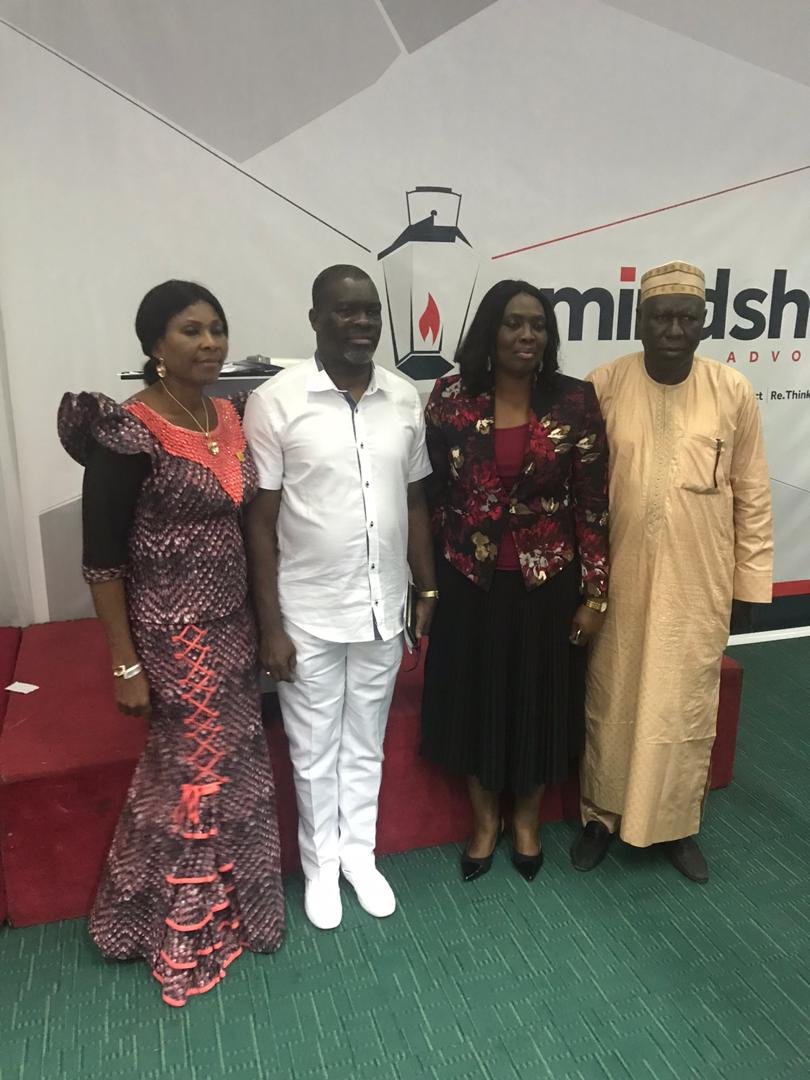
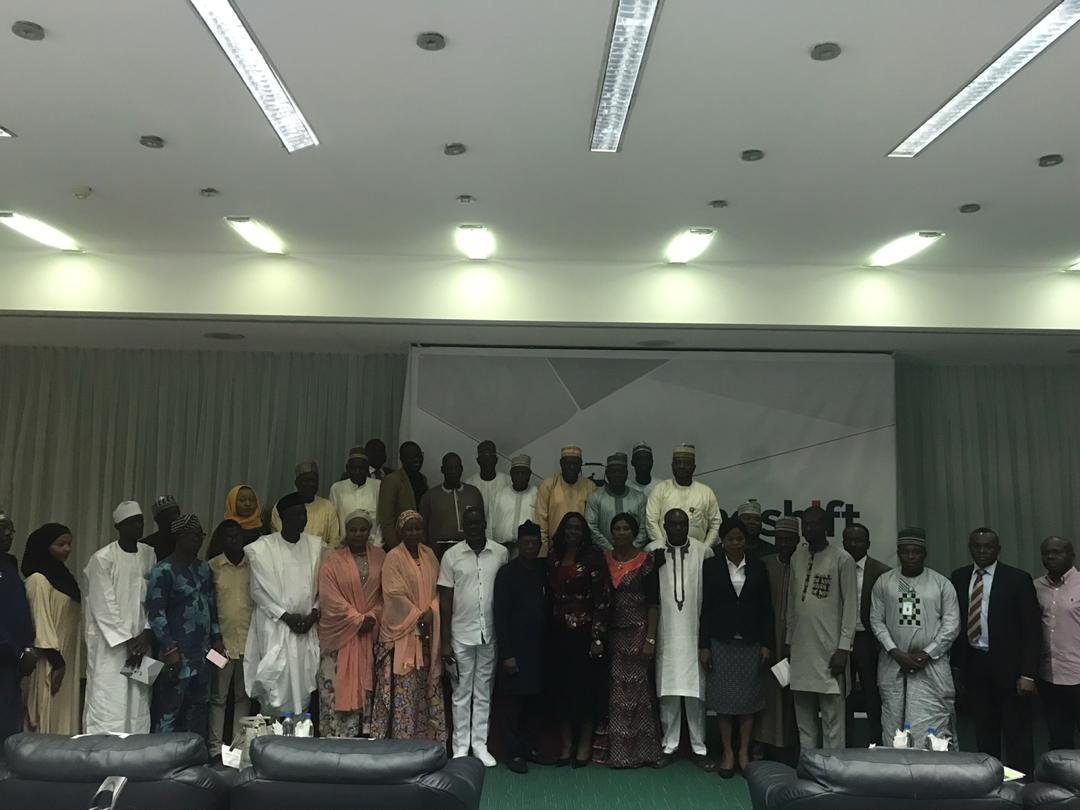
In its determination and resolve to foster a new mindset among Nigerians, the Mindshift Advocacy for Development Initiative has unveiled a new blue print to get Nigerians to think differently, believe differently and to act differently, so as to generate a mindset geared towards development. The event which was attended by dignitaries and the media held Thursday, October 17, 2019, at the prestigious Benue Hall of the International Conference Centre, Abuja.
In his address Mr. Joko Okupe, the Founder and Board of Trustee member of the Mindshift Advocacy for Development Initiative said that “the bane of Nigeria and by extension Africa’s problems is the mindset of Africans as individuals, communities and nations, about themselves and the mindset of the rest of the world about Africa. The wrong mindset of Nigerians and Africans in general which influences the way we do things, has created problems such as lack of visionary and purposeful leadership, bad governance standards, erosion and loss of good value systems, corruption, poor understanding of global issues and how it impacts their lives; unprecedented never-ending poverty, heavy debt burdens, over dependence on international aids, endless conflicts, inadequate education etc.” According to him, the Initiative was incorporated on November 28, 2016 as a non-partisan, non-governmental organization aimed at re-directing citizens’ mindsets from negative mindsets in private lives, societies and nations to positive mindsets that foster meaningful holistic personal, social and national development. The initiative also seeks to activate a radical and positive change in the mindset of the Nigerian youth – and by extension, African youth.
According to Mr. Okupe, the Mindshift Advocacy is actually focused on shifting mindsets from negative to positive. The movement is focused on redirecting the mindset of Nigerians from negative, unproductive and unprogressive mindsets to positive, productive and progressive mindsets. A destructive person has a destructive mindset and a destructive thinking pattern. There is so much capacity in the power of the mind that the way and manner that the mind is directed, determines the outcome of a man’s action. When you look at the great nations of the world, you will discover that their people have mindsets of greatness. The average Nigerian’s mindset is anti-progress and anti-development. How can we have progress and development when majority of our citizens have the wrong mindset? We cannot achieve any meaningful transformation without a re-orientation of the citizens’ mindsets. Even when Government decides to run a campaign on changing attitudes, the success will depend on whether the mindsets of the citizens have changed or not. We cannot but pay attention to how people think. We must have that clear understanding. That essentially is the crux of the Mindshift Advocacy.
He stressed that every effort geared at re-orientating the citizens with a view to making them develop positive and progressive mindsets as individuals, society and at national levels, would put us on the road to meaningful and effective transformation of the continent for sustainable growth and development. This is why: “The changes we wish to make have more to do with how we think than what we actually do, because thinking patterns ultimately influence actions. We need to get our citizens to embrace positive mindsets that can impact thought and action for our progress and development. We must also lead by example by thinking and acting differently.”
He cited Mr. Paul Kagame, the President of Rwanda, who once said that Africa’s transformational change will first happen at the level of mindsets before it is translated into concrete actions. Okupe firmly believes that Africa’s journey of transformation starts with changing how people think. “It is vital for citizens of all ages and social classes to have the right mindset because they are the ones who would be actively involved in the day-to-day actions that bring about sustainable transformation.”
In order to achieve these, the initiative has in place well-articulated key focus areas toward its agenda. These areas are: family and society, government and politics, education, business and economy, media, arts and entertainment, innovation and technology, religion, culture, and health and wellness. Additionally, it will approach this systematically through social research, targeted issues campaigns, action-oriented initiatives, knowledge sharing, events, and public discourse platforms.
Fielding questions to reporters at the launch event on what methods Mindshift Advocacy will deploy to achieve its goal, Joko responded, “It is all a matter of approach and method. Our initiatives would be determined by research and insight. There is a reason or rationale behind every mindset. How much have we researched into why we behave the way we do? Why do we think the way we do? We will make efforts to dig into the foundation to understand the issues and gain necessary insights before we develop initiatives. A man whose mind is conditioned to darkness tends to acclimatise to the situation and live in it. People’s eyes can only be opened through enlightenment which will serve as an illumination to the thick, engulfing darkness and ignorance around us. Adequate exposure to realities will compel them to see and think differently. If we continue at the current pace, we are definitely on a suicide mission as a nation, though we may be fully aware of this”.
Earlier in her welcome address Mrs. Debo Onabowale, a core member of the Mindshift Advocacy for development Initiative said that “Mindshift Advocacy for Development Initiative is set to do a new thing in Nigeria by approaching the Nigerian problem from a different perspective. We believe that Nigerians, both leaders and followers, rich and poor, young and old need a different orientation to be able to chart a new direction and behaviour to propel peace and development.”
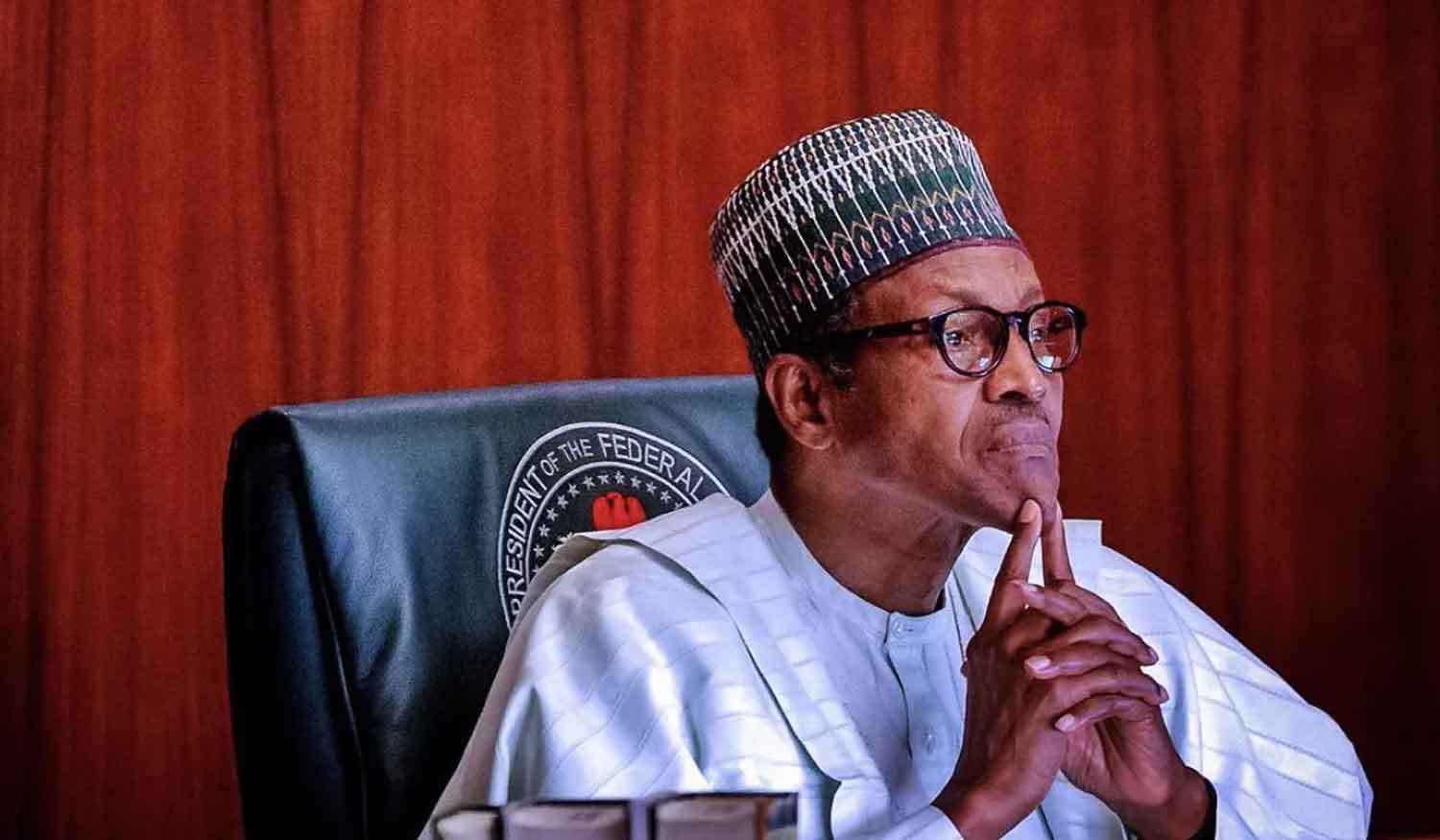
PRESIDENT Muhammadu Buhari has a plan to spend N4.5 billion to repair State House buildings in 2020.
The Federal Government intends to spend a total of N58,446,014,724 in the presidency during the year, according to details of the Appropriation Bill he presented to the National Assembly on Tuesday.
A perusal of the document showed that of the amount, rehabilitation and repairs of State House office buildings alone will gulp N4.451 billion.
Rehabilitation and repair of residential buildings will cost N69,693,262, while a curious sub-head noted that rehabilitation and repairs of “housing” will take N10,575,702.
Chefs in the Presidential Villa will also in 2020 prepare food for the first family and their guests with cooking gas worth N18.5 million.
Fuel for generator has a vote of N45,678,552; refreshment and meals will cost N135,668,651, and welfare packages N240,730,180.
The president will also spend N91.6 million to purchase bullet-proof tyres for the many bullet-proof vehicles and plain vehicles in the fleet.
Further scrutiny of the document revealed that the Ministry of Finance, Budget and National Planning will spend 43.6 per cent of the N9.4 trillion Federal Government’s main budget for the year.
The ministry will spend N4.1 trillion or 43.6 per cent of the MDAs vote made up of N748,602,309,977 for personnel; N3,063,398,998,775 for overhead; N3,812,001,308,752 for recurrent and N362,791,562,425 for capital expenditure.
The Debt Management Office (DMO) got an allocation of N2.749 trillion while N1.4 trillion was allocated to Service Wide Votes.
Other big spenders include the Ministry of Defence with an allocation of N878.4 billion; Interior, N254.8 billion; National Assembly, N125 billion; Police Affairs, N409.1 billion; National Security Adviser, N138.4 billion and the Ministry of Transportation, N135.6 billion.
Others are the Ministry of Power, N133.4 billion; Ministry of Works and Housing, N287.1 billion; judiciary, N110 billion; Ministry of Youth and Sports Development, N171.0 billion; Ministry of Niger Delta, N106.7 billion; Humanitarian Affairs and Disaster Management, N444.2 billion; Ministry of Education, N652 billion; Ministry of Health, N427.2 billion and Aso Rock, N58.4 billion.
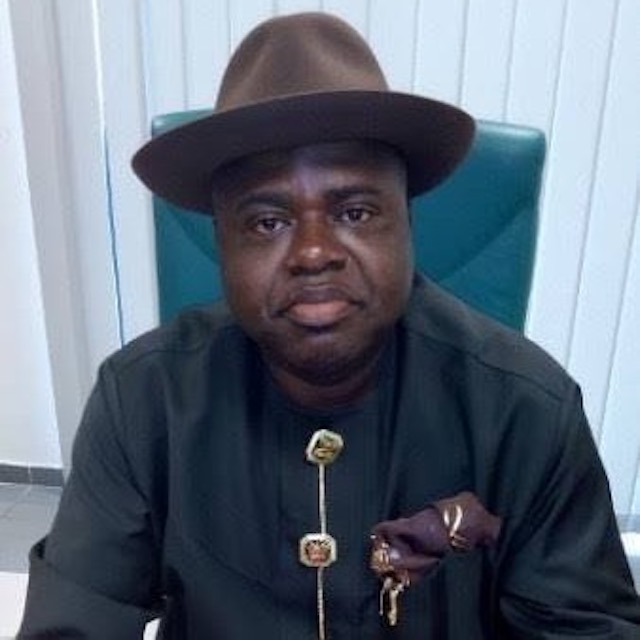
The leadership of the Peoples Democratic Party (PDP) in Bayelsa State is in a fix on how to handle a petition against its governorship candidate, Senator Douye Diri, over his failure to declare his assets before the Code of Conduct Bureau (CCB) while he served as Deputy Chief of Staff and Principal Executive Secretary in Government House between 2013 and 2014
Tribune Online investigations revealed that Senator Diri is expected to appear before the CCB on Monday 14th of October, 2019, in response to the said petition filed against him by an anti-corruption group known as the Bayelsa Coalition for Good Governance and Accountability.
Tribune Onlinefurther learnt that the PDP flag bearer has since been duly served the CCB summon through the clerk of the National Assembly, but that he has allegedly refused to acknowledge receipt of the summon.
According to a source in the PDP, “Senator Douye Diri was evading service. When the summon was sent to his governorship campaign office, nobody was willing to accept it. That was when the summon was sent to him through the Clerk of the Natiional Assembly and served.”
Confirming the development in a chat with newsmen, the Executive Director of the Bayelsa Coalition for Good Governance and Accountability, Mr Joseph Ambakederimo, who filed the petition said they filed the petition and that they have appeared before CCB to defend their claims in the petition.
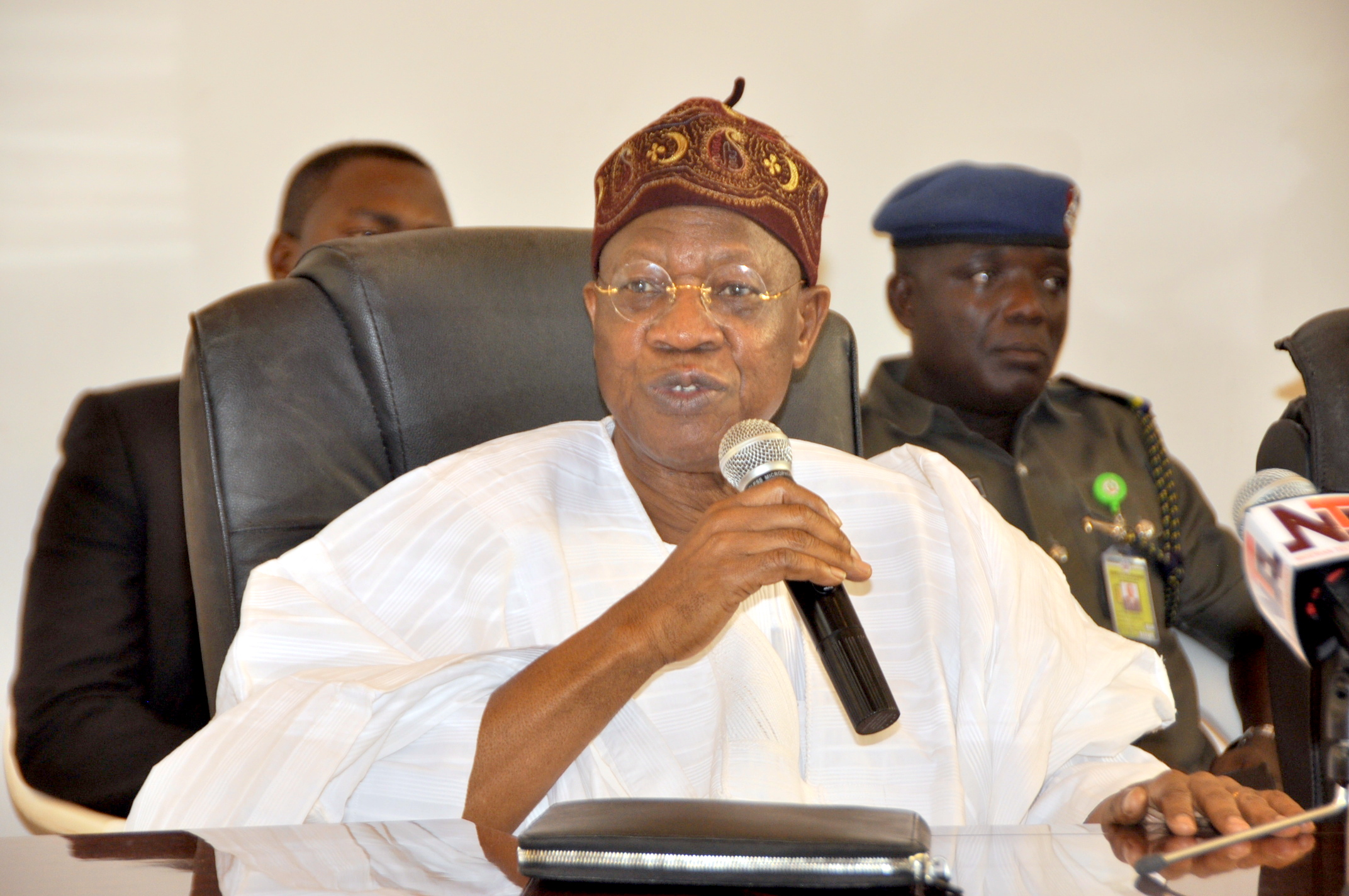
Lai Mohammed, minister of information and culture, says online news platforms will soon be regulated.
The minister said this on Thursday in Abuja when he inaugurated a seven-man committee set up to implement reforms in the National Broadcasting Commission (NBC).
Mohammed said the reforms that will be implemented by the committee are recommendations approved by President Muhammadu Buhari.
He said Buhari approved an amendment to the NBC act to enable it to license WebTv and radio stations, including foreign broadcasters beaming signals into the country.
“The terms of reference of the committee are as follows; To establish and publish a new regulation for the licensing of web and internet broadcasters/international broadcasters in Nigeria,” he said.
“To immediately commence work on all statutory, legal and regulatory framework for further legislative action on the review of the NBC act by the national assembly.
“To work out the modalities for a competitive and reasonable salaries, wages and other welfare needs of the staff of the commission.
“To establish necessary protocols for the establishment or appointment of professionals or technocrats (non-partisan personality) to run the agency, and appointment into the board of the NBC.”
The minister said the president also approved the upward review of fines from N500,000 to N5 million for breaches relating to hate speeches, and the upgrade of political comments relating to the same to ”Class A” offence in the broadcasting code.
“I have no doubt that this committee, which comprises highly-experienced professionals and administrators, will carry out a thorough job that will reposition the NBC as an effective and efficient regulator,” he said.
Members of the committee are: Armstrong Idachaba, NBC director of monitoring (chairman); Godfrey Ohuabunwa, acting chairman of the Broadcasting Organisations of Nigeria (BON); J.K. Ehicheoya, director, legal services, ministry of information and C
culture; Binta Adamu Bello, secretary, Association of Local Governments of Nigeria (ALGON); Ibrahim Jimoh, director of administration, FRCN; Agbo Kingsley Ndubuisi, NBC board member and Joe Mutah, chief press secretary, ministry of information and culture (secretary).