
Elon Musk’s Space X launches 4 astronauts to Space on recycled rocket and capsule


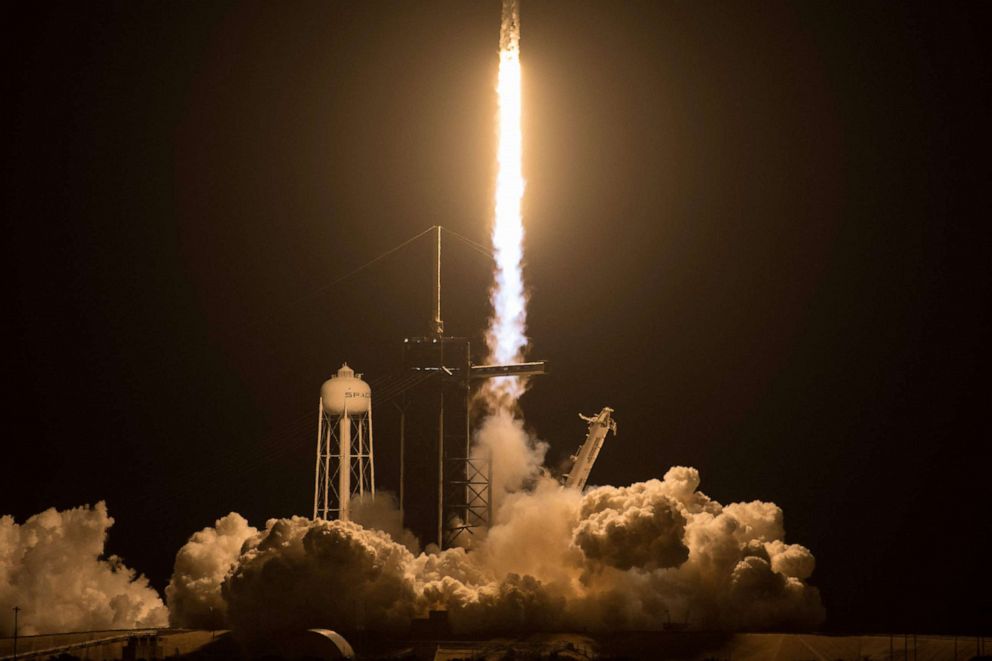
The Falcon 9 rocket blazed across a black sky just before sunrise and NASA confirmed shortly after liftoff Friday that the astronauts had safely reached orbit.


After about a 23-hour ride, the Crew Dragon spacecraft is scheduled to dock at the ISS around 5:10 a.m. ET on Saturday.


“Watching a launch from Kennedy Space Center never gets old for me. I’ve watched many launches and watching a pre-dawn launch is especially exciting and just visually stunning,” NASA’s acting administrator, Steve Jurczyk,​​ said at a post-launch news conference Friday morning. “I could not be more proud of the team.”

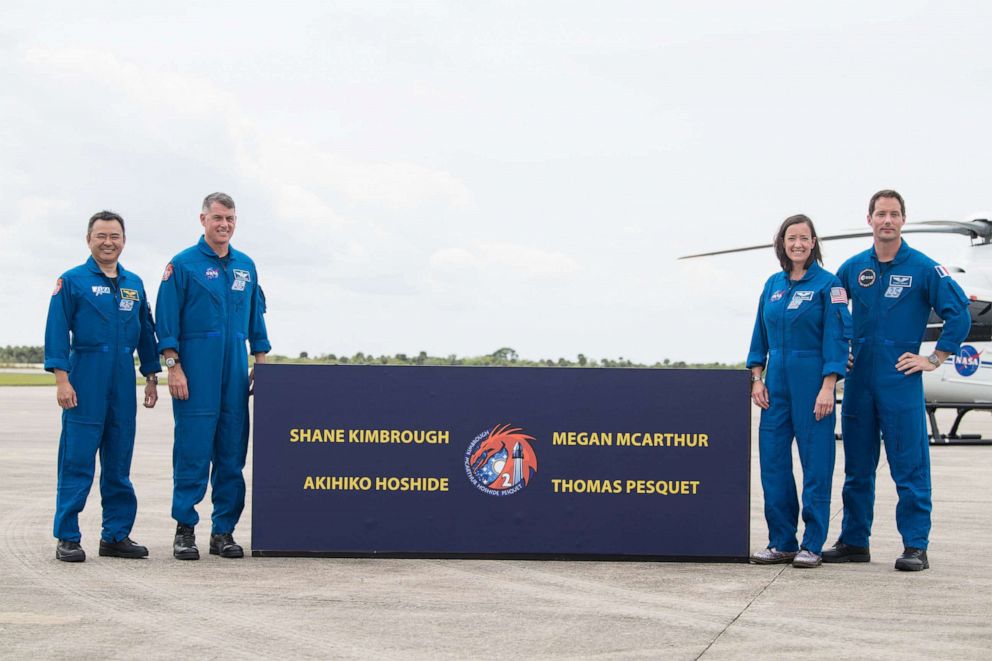
The crew is composed of NASA astronauts Shane Kimbrough and Megan McArthur as well as Japan Aerospace Exploration Agency (JAXA) astronaut Akihiko Hoshide and European Space Agency (ESA) astronaut Thomas Pesquet.

“What an incredible launch, hopefully you guys got to watch it this morning, right as the sun was rising we took off,” Kimbrough said from the Crew Dragon “Endeavor” capsule shortly after the astronauts reached orbit.

“We chased the sun pretty quickly and caught up just a few minutes after we took off. That was really special to see the sunlight coming in shortly after liftoff,” the mission’s commander added.

McArther said, “The ascent was incredible, the ride was really smooth. We couldn’t have asked for anything better.”

Friday’s launch marked only the third time that Elon Musk’s private space-faring firm has flown astronauts.

It also ushered in a new era of reusability in human space exploration, as the mission uses the same Falcon 9 rocket that sent four astronauts to the ISS last November and the same Crew Dragon spacecraft that sent and returned two astronauts during the first crewed SpaceX flight last May.

“I met with the crew last night, they are ready to go,” Jurczyk​​ said at a pre-launch news conference from the Kennedy Space Center on Wednesday. “I asked them what they look forward to most in the mission, and they said launching and getting up on station and getting to work.”

This marks the “third launch in less than a year” for NASA’s Commercial Crew program, he said.

The launch was originally scheduled for early Thursday morning but was moved to Friday due to downrange inclement weather. Liftoff occurred at 5:49 a.m. ET on Friday from the historic Launch Complex 39A at NASA’s Kennedy Space Center in Florida.

Prior to liftoff, the U.S. Space Force 45th Weather Squadron had forecast a 95% chance of favorable weather conditions in the area for a launch.

NASA’s live coverage of the launch kicked off at 1:30 a.m. ET on its website and social media accounts.

Jurczyk said Wednesday that NASA’s Jet Propulsion Laboratory team received a call earlier this week from U.S. President Joe Biden, who congratulated the researchers on their success in conducting the first controlled flight on another planet.

“He told the team that his grandson asked him when was he going to travel to Mars,” Jurczyk said. “So that’s something really important that we do.”

“We enable commercial activities in space, we demonstrate leadership, and we inspire the next generation,” he said.

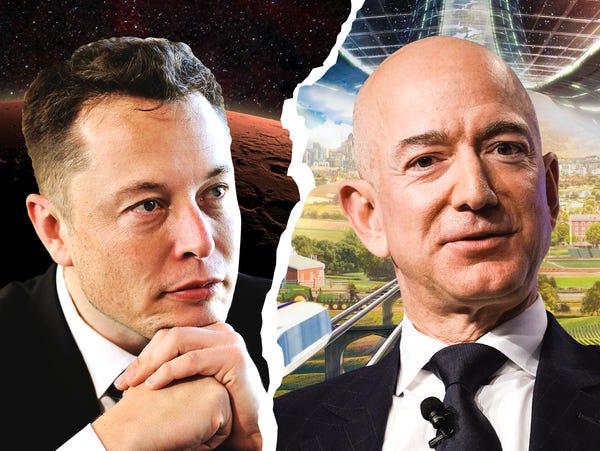
Elon Musk’s SPACE X and Jeff Bezos’ Blue Origin Battles for Supremacy

Is it a coincidence that the two wealthiest individuals on the planet are both nursing space transport dreams? Elon Musk and Jeff Bezos are both front runners in the two foremost and advanced space programs on the planet at the moment.


Although their motive, which is to kickstart some sort of backup civilization for human beings, align, both billionaires disagree on how to go about it. Before we dive into the disparity in Elon Musk and Jeff Bezos’ space visions, let us quickly examine their space programs.


Space Exploration Technology Corps (SPACE X) 

Space X was founded by Elon Musk in 2002 and is headquartered at Hawthorn California. The goal of the company is to make Space travel affordable to ordinary people. It hopes to kickstart human colonization and inhabitation of planet Mars.

Space X manufactures two of its foremost space vessels the Falcon 9 and Falcon Heavy launch vehicles. It also manufactures other components that make space travel easy and affordable.

Space X is by far the more advanced of the two space programs. It has already put 700 Starlink satellites in space with over 120 being manufactured every month.

According to Business Insider, Space X is worth $33bn dollars

Blue Origin 

Blue origin was founded in 2000 by Jeff Bezos and is headquartered in Kent, Washington DC. Blue Origin aims to make access to space cheaper and more reliable through reusable launch vehicles. It believes it can put 1 trillion people in space making use of hanging colonies on space. Blue Origin is the less successful of the two programs having failed to launch a single satellite into space.

Elon Musk’s Vision 

Elon Musk envisions a life outside the planet Earth. He strongly believes human beings can inhabit Mars in Mega Cities and it can serve as a backup to earth should World War 3 or any major global disaster occur.

According to Business Insider, Elon Musk hopes to create the first sustainable city in Mars by 2050. The Company hopes to commence launching cargoes with building equipment in 2024 and hopefully, a permanent city would begin to take shape by the 2030s.

Elon Musk’s space company is valued at $33bn with its initial funding coming from his big payout from selling PayPal. He funds his SpaceX by getting contracts and investors for it.

Jeff Bezos’ Vision 

Jeff Bezos’ vision for his space program is slightly different from that of Elon Musk. Jeff Bezos does not agree with the Mass Inhabitation of Mars by Elon Musk. He rather believes his Blue Origin company can come up with “floating cities” on space that can house 1 trillion people. Jeff Bezos funds his Blue Origin project by allocating a certain percentage of his Amazon shares for it. Last year he allocated a whopping $3.1bn to his Blue Origin project.


Billionaires at play 

Jeff Bezos and Elon Musk are the two richest individuals on the planet. Little wonder they can afford to pursue these ambitions. Elon Musk is clearly leading the space race with a more Robust SpaceX and cutting-edge drive, while Jeff Bezos, the older and richer of the duo seems to be taking his time. Jeff Bezos puts in more funds into his blue Origin Project while Elon Musk struggles a bit with funding Space X, relying on contracts and investors to get by.


Elon Musk is the younger of the two billionaires and exudes a youthful aura which sort of gives him an edge over Jeff Bezos. He is seen as the exciting youthful tech billionaire who was once smoking pot on live TV.

Both Space X and Blue Origin enjoy subtle help from NASA, America’s authoritative Space Body.


Culled Nairametric

Exit mobile version