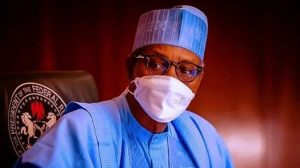
A former Special Adviser on Media and Publicity to ex-President Muhammadu Buhari, Femi Adesina, has said the former Nigerian leader may have not survived his health challenges if he had relied solely on Nigerian hospitals for treatment.
Adesina stated this on Tuesday during an interview on Channels Television ahead of the state funeral for the late ex-president.
Responding to criticisms over Buhari’s repeated medical trips to the United Kingdom while in office, Adesina defended the decision, saying it was a matter of survival.
“Buhari always had his medicals in London, even when he was not in the office. So it was not about the time he was president alone. He had always had it there,” Adesina explained.
According to him, the UK doctors had been managing Buhari’s health before his election in 2015 and were well acquainted with his medical history, making it unwise to change medical teams mid-treatment.
He argued that the decision to continue treatment abroad was based on professional expertise and the limitations of Nigeria’s healthcare system at the time.
“One has to be alive first to get certain things corrected or changed in the country. If Buhari had said he would do his medicals here as a show of patriotism or something, he could have long been dead because there may not be the expertise needed in the country,” he said.
Adesina added that Buhari’s survival and ability to lead the country were directly linked to the quality of care he received abroad.
He maintained that the former president’s choice of overseas treatment should be seen within the context of necessity rather than luxury or disregard for local healthcare.
“He needed to be alive to be able to lead the country to a point where we would have that expertise. So those who complained about his frequent medical trips abroad don’t know that the man needed to be alive first before you can make a change,” he stated.
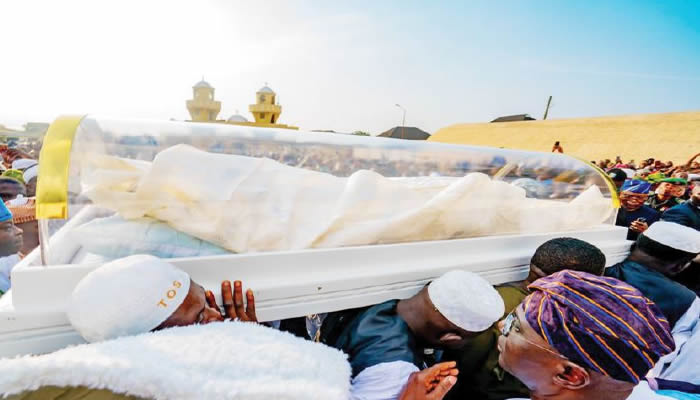
On Sunday, July 13, 2025, a chapter closed in Ijebu royalty, as 91-year-old Awujale and Paramount Ruler of Ijebu land, Oba Sikiru Adetona, passed on, after reigning for 65 years.
On Monday, the deceased monarch was buried according to Islamic injunction at his Igbeba GRA residence.
Oba Adetona, who ascended the throne on April 2, 1960, at barely 26 years of age, succeeded Oba Daniel Adesanya, Gbelegbuwa II.
He was from the Anikilaya family, one of the royal ruling houses in Ijebu Ode.
With his passage after a very successful reign and his interment on Monday, attention shifted to the Fusengbuwa ruling house, which is the next ruling house to produce the successor to the late Awujale.
It was gathered that many members of the ruling house eyeing the exalted throne have been making moves to enhance their visibility within their respective royal family.
The PUNCH gathered that the next ruling house, which is the Fusengbuwa, consists of four ruling houses: Jadiara, being the eldest followed by Fusengbuwa, Bubiade and then Tunwase.
The four royal families have the right to present candidates to contest for the Awujale’s throne as soon as the government gives the green light.
The royal families were said to have waited for this time to produce the next custodian of the Ijebu land cultural heritage.
Speaking with our correspondent on Monday after the burial of Oba Adetona, the Secretary of Tunwase ruling house and Under-Secretary of Fusengbuwa ruling house, Prince Kazeem Ahmed, confirmed that some members of the family were already warming up to start from where the late monarch left it off.
Prince Ahmed said that even before the demise of the Awujale, some members of the ruling family who had shown interest in the throne never hid their intentions.
“We have four royal houses and they are Jadiara, being the eldest followed by Fusengbuwa, Bubiade and then Tunwase.
“After the mourning of our highly revered king who has just been interred, this could be three months or more, people who have an interest in becoming the next Awujale from the four ruling houses of Fusengbuwa, Jadiara, Tunwase and Bubiade will begin to make known their intentions.
“We shall then take a look at those who have shown their intentions, check out their characters and influence in the community before we recommend them to the kingmakers.
“We have been seeing some of them showing interest before the demise of the king. Many people don’t want interregnum, so, left for me, I would suggest that maybe after we mourn the king for four months, then the floor can be declared open in preparation for the next king.
“We will have many people who will declare interest, but the family committee will prune and screen them down to a sizeable number of candidates to be presented to the kingmakers,” he said.
Another ranking chief from the palace, whose reaction was sought on the selection of the next Awujale, said it was too early to begin to talk about getting a replacement for the late monarch when the entire Ijebu land was still mourning the passage of the highly revered traditional ruler.
The palace chief who spoke anonymously to our correspondent, however, said the next Awujale would have the challenge of matching up to the exemplary leadership shown by Oba Adetona.
He added that he was sure that the system would not be allowed to throw up just anybody who would not consolidate on several developmental strides and efforts of the late monarch.
Pending the emergence of the new Awujale, the Ogbeni Oja of Ijebu land, Olorogun Sunny Kuku, is to hold forth as the reagent and temporary Awujale.
He would see to the day-to-day administration of Ijebu land and help coordinate and midwife the process of emergence of the next Awujale.
Senior eye care experts have cautioned Nigerians against the use of breast milk and cow urine as remedies for eye infections and diseases, warning that such practices could lead to serious complications, including blindness.
The ophthalmologists described the trend as unsafe, noting that applying unverified substances into the eyes introduces harmful bacteria, worsens infections, and delays access to proper treatment.
They stressed that breast milk, though nutritious for infants, is not sterile and is unsuitable for ocular use, while cow urine carries even greater risks due to its high microbial load.
A Chief Consultant Ophthalmologist, Dr. Festus Oshoba, said the use of such harmful remedies persists due to cultural myths and misinformation.
Oshoba made this known at the 26th Annual Faculty of Ophthalmology Lecture of the National Postgraduate Medical College of Nigeria, where stakeholders in Nigeria’s eye care sector gathered to deliberate on the challenges and solutions to achieving universal eye care in the country.
He described the practice as “force majeure” factors, adding that the usage of harmful substances often worsens avoidable conditions.
The eye expert urged individuals experiencing eye discomfort or infections to seek prompt medical attention from certified eye care providers.
“People should stop dangerous and unscientific eye care practices, such as the use of breast milk, cow urine, or the use of camphor in treating common eye ailments.
“People should protect their eyes from the sun’s harsh rays using sunshades or photochromatic lenses to prevent cataracts and other ocular damage,” he advised while speaking on the theme ‘Force Majeure, Masquerades and The Attainment of Universal Eye Care in Nigeria’.
He also warned against violence or corporal punishment involving the face, especially for children, noting that even a slap could cause internal bleeding and blindness.
Beyond physical safety, Oshoba stressed regular eye screening, adding that screening is key to early diagnosis and treatment of preventable and curable conditions.
“Use a calendar or chart at home to self-check your vision daily. The moment you can’t read what you used to see clearly, visit your doctor,” the ophthalmologist said.
Oshoba referenced cultural misconceptions and spiritual interpretations of blindness and eye diseases, such as attributing loss of vision to curses.
“Many of these cases are due to conditions like glaucoma, diabetes, or brain tumours, not spiritual attacks,” he explained.
He further advocated for increased computer vision care, especially for digital device users, and encouraged workers to get regular eye tests and corrective lenses to improve productivity.
Addressing a pressing systemic challenge, Oshoba lamented the acute shortage of trained ophthalmologists in Nigeria.
“We currently have just 454 ophthalmologists for over 220 million Nigerians. That’s grossly inadequate for universal eye care,” he said.
A Professor of Ophthalmology at University College Hospital Ibadan, Professor Charles Bekibele, raised concerns about Nigeria’s brain drain crisis, popularly dubbed the “Japa” syndrome.
According to him, the economic downturn is driving young doctors away, stalling training, and weakening the future of ophthalmic care in the country.
“Five years ago, we had 30 residents at the University College Hospital, Ibadan. Today, we barely have five. They finish and leave the country. Some don’t even apply anymore,” Bekibele, who is also the chairman at the Faculty of Ophthalmology, National Postgraduate Medical College of Nigeria, said.
He explained that the lack of modern training equipment, such as surgical simulators for cataract surgery, the most common cause of blindness in Nigeria, has hindered skill development.
“We currently have no simulator in Nigeria for cataract surgery. It’s like training a pilot without a flight simulator. You can imagine the risk,” he lamented.
The don, however, called on government and private stakeholders to invest in training tools and offer incentives that encourage young doctors to stay. “If Nigeria fixes its economy, I believe many of our professionals will return. But until then, we must invest in what we have.”
Meanwhile, the Chancellor of Ekiti State University, Dr. Olatunji Olowolafe, while reinforcing the need for innovation, announced a donation of $9,800 to acquire a surgical simulator.
This simulator, he said, would be vital in training future ophthalmologists and ensuring diagnostic excellence.
“It’s about globalising our training methods. With simulation labs, we can produce world-class ophthalmologists who are not only capable but confident before handling live surgeries. This will position Nigeria as a center of excellence in eye care and training,” Olowolafe said.
He expressed hope that with better infrastructure, Nigeria could attract medical tourism and reduce the emigration of healthcare professionals.
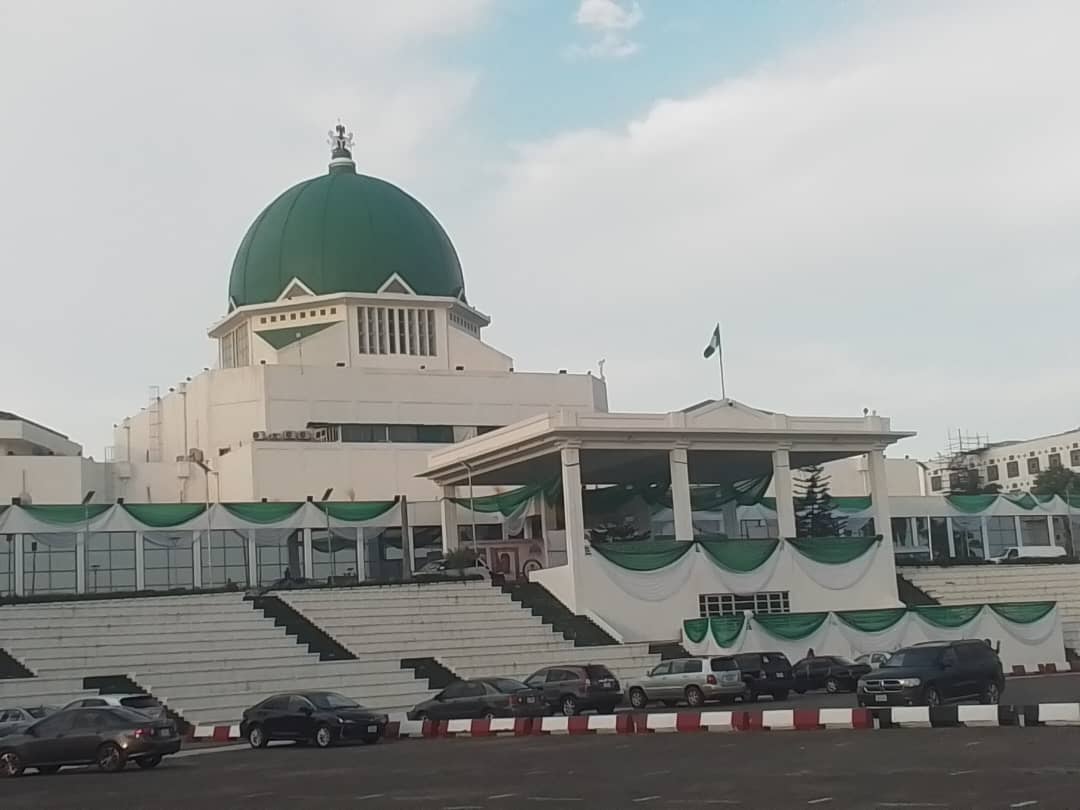
The National Assembly has suspended all legislative activities in honour of former President Muhammadu Buhari, who passed away on Sunday in London at the age of 82.
In a statement signed by the Clerk to the National Assembly, Kamoru Ogunlana, the Senate President and Speaker of the House of Representatives directed the suspension of plenary sessions and all related activities until Tuesday, July 22.
According to the statement, the decision was made to pay tribute to Buhari’s legacy of integrity and dedicated service to the nation. Lawmakers have also been encouraged to adjust their schedules to participate in the late president’s burial rites.
The leadership extended condolences to President Bola Ahmed Tinubu, the Buhari family, the government and people of Katsina State, and Nigerians at large.
Senate Leader, Senator Opeyemi Bamidele, paid tribute to Buhari and the late Awujale of Ijebuland, Oba Sikiru Adetona, describing both as steadfast champions of national unity and moral leadership.
In a statement issued in Abuja on Monday, Bamidele said the deaths of Buhari (82) and Oba Adetona (91), both of whom passed on July 13, mark the loss of two towering figures in Nigeria’s political and traditional spheres.
He praised Buhari’s legacy of discipline, integrity, and commitment to justice — from his tenure as Military Head of State (1984–1985) to his democratic leadership as President (2015–2023). Bamidele highlighted Buhari’s efforts to realign Nigeria’s political structure through progressive coalitions that led to the formation of the All Progressives Congress (APC) and its 2015 electoral victory.
The senator extended condolences on behalf of the Senate and the South-West caucus to former First Lady Aisha Buhari, the Buhari family, the Daura Emirate, the Katsina State government, and President Tinubu.
On Oba Adetona, Bamidele described the monarch’s 65-year reign (1960–2025) as one of inclusive governance, peace-building, and selfless leadership. He commended the Awujale’s apolitical stance and his unifying influence across religious and ethnic lines.
He also condoled with the Anikilaya Ruling House, the people of Ijebuland, and the Ogun State government, acknowledging the monarch’s lasting contributions to national development.
The House of Representatives also mourned the passing of Buhari, describing him as “a towering figure in Nigeria’s history.”
In a statement signed by House spokesman Akin Rotimi, lawmakers highlighted Buhari’s unique legacy as both a former Military Head of State (1983–1985) and a two-term civilian President (2015–2023).
“His passing marks the end of an era defined by discipline, national service, and an unwavering commitment to Nigeria’s democratic development,” the statement read.
A new report by the World Health Organisation and the United Nations Children’s Fund has shown that 14.3 million children worldwide have never received a single dose of any vaccine.
The figure is four million more than the 2024 target needed to stay on track with Immunisation Agenda 2030 goals, and 1.4 million more than in 2019, the baseline year for measuring progress.
The report released on Tuesday noted that in 2024, 89 per cent of infants globally – about 115 million – received at least one dose of the diphtheria, tetanus and pertussis (DTP)-containing vaccine, and 85 per cent – roughly 109 million – completed all three doses, according to new national immunisation coverage data.
“Compared to 2023, around 171,000 more children received at least one vaccine, and one million more completed the full three-dose DTP series.
“While the gains are modest, they signal continued progress by countries working to protect children, even amid growing challenges.
“Still, nearly 20 million infants missed at least one dose of DTP-containing vaccine last year, including 14.3 million ‘zero-dose’ children who never received a single dose of any vaccine. That’s 4 million more than the 2024 target needed to stay on track with Immunisation Agenda 2030 goals, and 1.4 million more than in 2019, the baseline year for measuring progress,” the joint data stated.
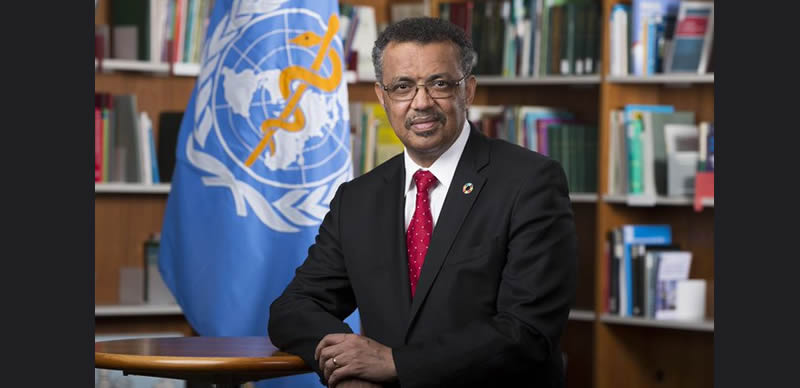
The WHO Director-General, Dr Tedros Ghebreyesus, said, “Vaccines save lives, allowing individuals, families, communities, economies and nations to flourish.
“It’s encouraging to see a continued increase in the number of children being vaccinated, although we still have a lot of work to do. Drastic cuts in aid, coupled with misinformation about the safety of vaccines, threaten to unwind decades of progress.
“WHO remains committed to working with our partners to support countries to develop local solutions and increase domestic investment to reach all children with the lifesaving power of vaccines.”
It noted that children often remain un- or under-vaccinated due to a combination of factors, such as limited access to immunisation services, disrupted supply, conflict and instability, or misinformation about vaccines.
“Data from 195 countries show that 131 countries have consistently reached at least 90 per cent of children with the first dose of DTP vaccine since 2019, but there has been no significant movement in expanding this group.
“Among the countries that reached less than 90% in 2019, only 17 managed to increase their coverage rates in the past five years. Meanwhile, in 47 countries, progress is stalling or worsening.
“This includes 22 countries that achieved and surpassed the 90% target in 2019 but have since declined.
“The data shows conflict and humanitarian crises can quickly erode vaccination progress. A quarter of the world’s infants live in just 26 countries affected by fragility, conflict, or humanitarian crises, yet they make up half of all unvaccinated children globally. Concerningly, in half of these countries, the number of unvaccinated children has expanded rapidly from 3.6 million in 2019 to 5.4 million in 2024, underscoring the need for humanitarian responses to include immunisation.
“Immunisation coverage in the 57 low-income countries supported by Gavi, the Vaccine Alliance, has improved in the past year, reducing the number of un- and under-vaccinated children by roughly 650,000. At the same time, signs of slippage are emerging in upper-middle- and high-income countries that have previously maintained at least 90 per cent coverage. Even small declines in immunisation coverage can dramatically raise the risk of disease outbreaks and place additional strain on already overstretched health systems,” it highlighted.
“The good news is that we have managed to reach more children with life-saving vaccines. But millions of children remain without protection against preventable diseases, and that should worry us all. We must act now with determination to overcome barriers like shrinking health budgets, fragile health systems, along with misinformation and access constraints because of conflicts. No child should die from a disease we know how to prevent”, said UNICEF Executive Director Catherine Russell.
Despite these challenges, countries – especially those supported by Gavi – continue to introduce and scale up vaccines, including against human papillomavirus (HPV), meningitis, pneumococcal disease, polio, and rotavirus.
For example, large national scale-ups of the HPV vaccine and revitalisation efforts in countries that have previously introduced the vaccine have boosted global coverage by four per cent in the past year. In 2024, 31 per cent of eligible adolescent girls globally received at least one dose of the HPV vaccine – most doses were administered in countries using a single-dose schedule. While far from the 90 per cent coverage target by 2030, it represents a substantial increase from the 17 per cent coverage in 2019.
“In 2024, lower-income countries protected more children than ever before, with coverage rates increasing across all Gavi-supported vaccines,” said Dr Sania Nishtar, CEO of Gavi, the Vaccine Alliance. “Yet population growth, fragility and conflict present major hurdles to achieving equity, leaving the most vulnerable children and communities at risk. Continued commitment from governments and partners will be critical to saving lives and protecting the world from infectious disease threats.”
The data revealed that coverage against measles also improved, with 84 per cent of children receiving the first dose and 76 per cent receiving the second dose, which shows a slight increase from the previous year.
“An estimated two million more children were reached in 2024, but the overall coverage rate is far below the 95 per cent needed in every community to prevent outbreaks.
“This results in more than 30 million children remaining under-protected against measles, leading to more large or disruptive outbreaks. In 2024, the number of countries experiencing large or disruptive measles outbreaks rose sharply to 60, nearly doubling from 33 in 2022.
“Although the community demand for childhood vaccination remains high and protection against more diseases is expanding, the latest estimates highlight a concerning trajectory. National and global funding shortfalls, growing instability worldwide, and rising vaccine misinformation threaten to further stall or even reverse progress, which would risk increases in severe disease and deaths from vaccine-preventable diseases,” it emphasised.
Meanwhile, the WHO and the UNICEF called on governments and relevant partners to close the funding gap for Gavi’s next strategic cycle (2026–2030) to protect millions of children in lower-income countries and global health security; strengthen immunization in conflict and fragile settings to reach more zero-dose children and prevent deadly disease outbreaks; and prioritize local-led strategies and domestic investment, embedding immunization firmly within primary healthcare systems to close equity gaps.
They also urged governments to counter misinformation and further increase vaccine uptake through evidence-based approaches, and invest in stronger data and disease surveillance systems to guide high-impact immunisation programmes.
Suspected kidnappers have reportedly abducted a government contractor, Mr Lucky Ugbo, in Ogwashi-Uku, Aniocha South Local Government Area of Delta State.
PUNCH Metro was informed on Monday that the victim was kidnapped around 8.45 pm over four days ago at his residence, along Isah Road in the community and was said to have made contact on Sunday, demanding N100m ransom.
Community sources, who lived close to Ugbo’s house, told our correspondent that the operation was carried out by heavily-armed gunmen, who invaded Ugbo’s residence and took him away at gunpoint.
“The gunmen were heavily armed and were dressed like security agents. They laid siege in an uncompleted building close to his house and waited.
“He went out and was just entering his house when they stopped him as his wife came out to open the front door for him.
“The gunmen fired shots into the air indiscriminately, before marching their victim into the darkness on foot.”
Also, he said, “Many of us who live close by watched the incident from afar. We thought the gunmen were security agents.
“Since the incident, the kidnappers have called his wife twice, they called on Sunday and demanded N200 million ransom, and today, Monday morning, they called again and demanded N100 million as ransom.”
When contacted, the Delta State Police Public Relations Officer, SP Bright Edafe, confirmed the incident.
He said, “Yes, it’s confirmed. The police are intensifying efforts to track down the kidnappers and rescue the victim.”
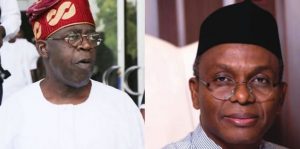
As Nigeria gets ready for another presidential election in 2027, the race is not just between political parties but also between old friends who have now turned against one another
President Bola Tinubu, who became famous for saying “Emi lo kan” before winning the 2023 election, is now facing strong opposition from people who used to support him.
These include former political allies, protégés and even those who quietly helped build his success.
When Tinubu announced that he wanted to be president ahead of the 2023 elections, many governors, ministers, and former political rivals supported him. Even social media influencers helped sell his ambition to Nigerians.
But just two years into his presidency, some of these people have now turned against him.
They openly criticise his government, his leadership, and his policies.
Nasir El-Rufai: From backer to critic-in-chief
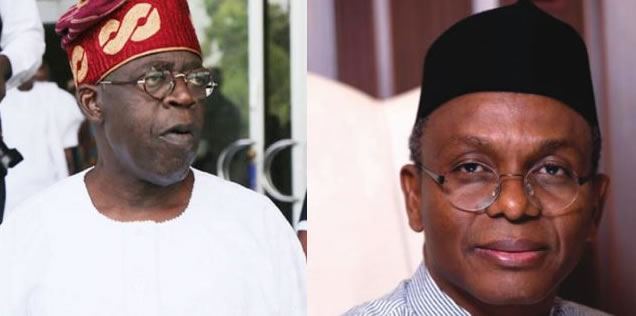
Former Governor of Kaduna State, Nasir El-Rufai, was one of the northern All Progressives Congress governors who supported the zoning of the presidential ticket to the South, supporting Tinubu’s rise.
El-Rufai often praised Tinubu during the campaigns.
During one of the campaigns, El-Rufai said, “Asiwaju Bola Ahmed Tinubu is our candidate whom we all supported to get the ticket and we are sure we will not regret it.”
However, this support did not last long.
In March 2025, El-Rufai left the APC for the Social Democratic Party. He said the APC no longer shared his values.
He explained, “As a founding member of the All Progressives Congress (APC), I have fond memories of working with other compatriots to negotiate the merger of political parties that created the APC. Since 2013, I have hoped that my personal values and those of the APC will continue to align until I choose to retire from politics.
“Developments in the last two years confirm that those who currently control and run the APC do not desire to acknowledge, much less address, the party’s unhealthy situation. I have raised concerns in private and, more recently, in public regarding the party’s capricious trajectory. Therefore, at this point in my political journey, I have come to the conclusion that I must seek another political platform to pursue the progressive values I cherish.”
El-Rufai has become one of Tinubu’s loudest critics.
He has called some of Tinubu’s ministers “clowns” and accused the government of incompetence.
Many believe his anger stems from his failed bid to become a minister and the growing division in the APC.
He even said Tinubu’s re-election in 2027 is impossible.
He claimed anyone who thinks otherwise is not in touch with Nigeria’s reality.
El-Rufai said Nigerians have lost confidence in Tinubu and the APC and will not vote for them in 2027.
Rauf Aregbesola
What once looked impossible has now happened. A week ago, former Osun State Governor, Rauf Aregbesola officially joined Atiku Abubakar’s coalition ahead of 2027. His goal is to defeat Tinubu.
Aregbesola’s breakaway from Osun State APC through his Omoluabi Progressives group, which has loyalists in Osun and Lagos, didn’t surprise many. Their relationship had been falling apart for years.
Their bond started in 1999 when Aregbesola served as Tinubu’s Commissioner for Works in Lagos. Even after Tinubu left office, Aregbesola still controlled the ministry while he fought to become Osun State governor. Back then, they seemed inseparable.
But things fell apart during the 2022 Osun governorship election. Tinubu’s nephew, Gboyega Oyetola, wanted re-election. Aregbesola’s camp refused to support him. Oyetola lost to Ademola Adeleke of the Peoples Democratic Party. Before the election, Aregbesola openly criticised Tinubu. He accused Tinubu of betrayal and said Oyetola would face the same political fate as former Lagos governor, Akinwunmi Ambode.
Analysts believe this marked the final break between them. Some even blamed the rift for Tinubu’s loss to Peter Obi in Lagos during the 2023 presidential election.
Now, Aregbesola has joined Atiku and other opposition leaders. Many believe this could change the 2027 elections.
Rotimi Amaechi
Rotimi Amaechi, former Minister of Transportation and ex-Governor of Rivers State, was very active during the APC’s 2023 presidential campaign. Although he lost the APC presidential ticket to Tinubu, he still helped the party win, especially in the South-South.
He told his supporters to vote for the APC in 2023 despite any anger they felt.
Amaechi said, “Please, the contest for the presidency; we should know that we must go and vote for our party, no matter how angry you are. They have chosen, let’s go and vote for our party. For the stories you hear about the people who are gossiping, how they are having meetings in France, let this be your own France.”
But ahead of 2027, Amaechi has criticised Tinubu’s handling of Nigeria’s economy. In May 2025, he said Nigerians were suffering and should be protesting. This shocked many because of his past loyalty to the APC.
He said the only way to stop Tinubu in 2027 is for Nigerians to take action themselves.
He added that change cannot happen by simply wishing for it.
He said, “The only way you can stop Tinubu from being the president of Nigeria in 2027 is to run an election of Nigerians versus the bandits.”
Abubakar Malami
Former Minister of Justice and Attorney-General, Abubakar Malami, openly supported Tinubu’s 2023 election. He said Tinubu and Buhari shared many things in common. He also said Tinubu would build on Buhari’s achievements.
But Malami is now singing a different tune. He has joined those working against Tinubu’s re-election.
In May, he criticised APC leaders for taking turns endorsing Tinubu’s re-election.
Babachir Lawal
Babachir Lawal, a former Secretary to the Government of the Federation and northern Christian leader, used to support the APC. But when APC picked a Muslim-Muslim ticket, he changed his mind.
During the 2023 elections, his support for the APC was unclear in some areas.
Now, Lawal is helping opposition leaders plan for 2027. He has been very critical of Tinubu. He blames Tinubu for Nigeria’s insecurity, economic hardship, and favouritism.
He said Tinubu’s supporters are pretending not to see the government’s failures.
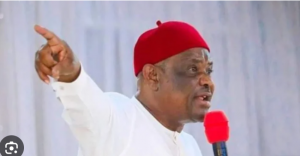
The Minister of the Federal Capital Territory, Nyesom Wike, has warned Governor Monday Okpebholo of Edo State against embarking on a probe of his predecessor, Godwin Obaseki, urging him instead to focus on the development of the state.
Okpebholo, last Friday, said that his administration will set up a commission of inquiry to look into ex-Governor Godwin Obaseki’s records.
The governor made the disclosure while speaking to party leaders, youths, market women, civil servants, professional bodies and groups during a victory parade held at the Government House, Benin City, the state capital.
Speaking in Benin City on Sunday evening, Wike said that probing Obaseki would yield no meaningful results and could distract the governor from the task of governance.
“If there is someone who would have encouraged Okpebholo to probe and prosecute Obaseki, that person should be me, but what I suffered in ensuring that he returned for a second term and how he paid me back is now in the past,” Wike said, according to a statement issued by his Senior Special Assistant on Public Communications and Social Media, Lere Olayinka, on Monday
“We must pass through this process in life, move on for the development of Edo State. Don’t do it, I’m the one who should have told you to pursue this man, I know what I’ve gone through,” he added.
The FCT minister said personal grievances should not cloud the mission of governance, even though he admitted that Obaseki had treated him unfairly.
“I should be the one to prosecute Obaseki, but what is it in life when God has given you a position? If it were to be his power, you won’t be here, but God has told him, you don’t have it, and I have given it to whom I want to give,” he said.
Addressing former Edo State Governor and chieftain of the All Progressives Congress, Senator Adams Oshiomhole, Wike publicly acknowledged past tensions between them and tendered an apology.
“Leader, I know how pained you are and what you passed through, I know the sufferings you suffered, and it was like a humiliation to you. I was part of it because I humiliated you,” Wike admitted. “I apologised on national TV to you, sorry for what I did to you, leave it and let them carry their wahala and go, focus on the development of Edo, and you will see what you will achieve at the end of the day.”
Wike had visited Benin to commission the New Edo Line Terminal, the second phase of the Edo State Benin Central Bus Terminal.
However, the event was cancelled following the death of former President Muhammadu Buhari.
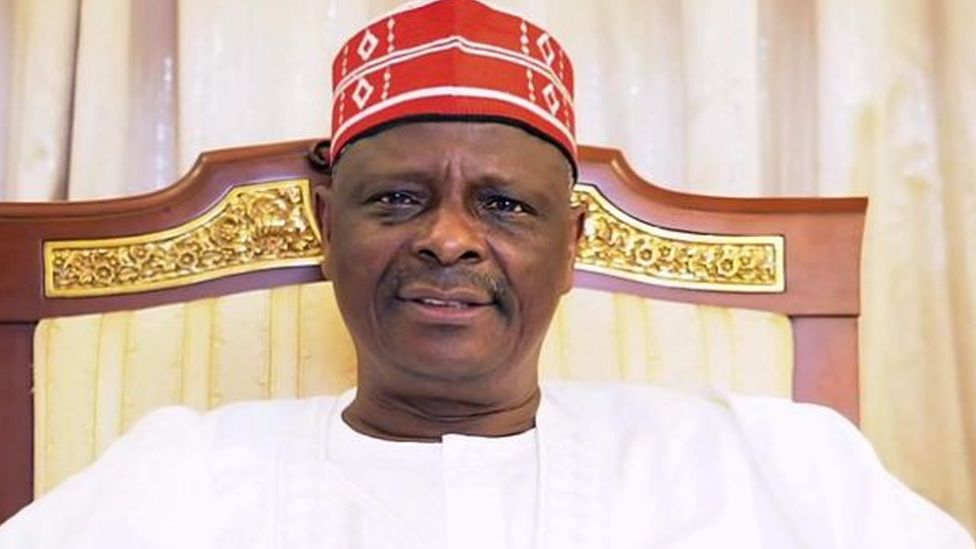
The Kano State Chairman of the New Nigeria People’s Party, Hashimu Dungurawa, has debunked the rumours going round that the party’s 2023 presidential candidate, Rabiu Kwankwaso, is defecting to the African Democratic Congress.
Dungurawa, who was speaking to journalists on Monday, noted that Kwankwaso is not one of those pushover politicians who make decisions without appraising and thinking deeply about their consequences.
“The question of Kwankwaso joining ADC or any other party is just a miscalculation of politicians who are afraid of the leader of Kwankwasiyya Movement, but I know Kwankwaso too well; he is not in a hurry to show where he is going.
“Don’t forget, Kwankwaso today is the political leader of Northern Nigeria, and every politician specifically in this region, is looking up to him, so it will be malicious to say he is decamping out for now,” he said.
He added, “Why are Nigeria politicians panicking about Kwankwaso movements? Let them calm down, the time of decision is yet to come, we are people who are too calculative, we don’t just take actions without due consideration.”
On speculations that Kwankwaso was seen in places talking to other camps, Dungurawa said, “As a politician who has a PhD in the field, do you expect him to hide himself or desert people? No way. He can talk to anybody, but it does not mean anything, it is a normal thing.
“Those so-called followers and supporters of Kwankwaso who are jittery of where he is going, they are pretenders followers, but the genuine ones know that Kwankwaso doesn’t take any decisions without consulting them and seeking advice from as low as a ward supporter.”
On the performances of Governor Abba Kabir Yusuf in the last two years, the NNPP Chairman said the opposition is today overwhelmed by the works of the governor to the extent that they don’t talk again.
“Governor Yusuf’s heavy infrastructural development overwhelmed the opposition. They can’t even show their presence anywhere in Kano, that is why we are proud of what he is doing,” he said.
The Minister of State for Petroleum Resources (Gas), Ekperikpe Ekpo, has said that the Federal Government, under the leadership of President Bola Tinubu, is committed to making Nigeria a gas-powered economy, having declared a decade of gas utilisation.
Ekpo said in Uyo on Monday while giving his remarks at the South-South Gas Utilisation Forum 2025, organised by Gas Aggregator Company Nigeria, with the theme: “Utilising Gas as a Catalyst for Sustainable Growth.”
The Minister who highlighted the benefits of a gas-powered economy called on participants to see the workshop as a turning point, where ideas are not just discussed, but implemented.
He said, ”Let us remember that this is not just a South-South agenda, it is a national imperative. The Federal Government, under the visionary leadership of President Bola Ahmed Tinubu, has declared the Decade of Gas and is committed to making Nigeria a gas-powered economy.
”The task before us is clear. The opportunities are vast. The tools are in our hands. Let this workshop be a turning point, where ideas are not just discussed, but implemented; where partnerships are not just promised but forged; and where we commit, collectively, to utilising gas as a true catalyst for sustainable growth in the South-South Region and Nigeria, as a whole.
”Let us move boldly from gas potential to gas prosperity: To move from gas potential to industrial hubs and innovation centres; To turn gas revenue into tangible impact for our communities; And to ensure that the people of the South-South region, especially our host communities, are not left behind, but carried along every step of the way, in line with the provisions of the Petroleum Industry Act (2021).”
The Minister, who noted that the South-South region remains the powerhouse of Nigeria’s natural gas production, providing the resource that fuels industries, powers homes, and earns us foreign exchange, however, lamented that the region is yearning for the full benefit of the resource it produces
According to him, “The South-South region remains the powerhouse of Nigeria’s natural gas production, providing the resource that fuels our industries, powers our homes, and earns us foreign exchange.
”Yet, paradoxically, it is a region that still yearns for the full benefits of the resource it produces. This workshop is, therefore, not just another meeting; it is a call to action.”
He urged participants to use the platform to forge practical solutions that will move the region from being a region of resource extraction to one of value addition, innovation, and inclusive growth.
In his remarks, the Governor of Akwa Ibom State, Umo Eno, who was represented by the Deputy Governor, Senator Akon Ayakenyi, acknowledged that the submit has not only deepened government’s understanding of the immense opportunities in the gas development across the South South region but has reinforced it shared commitment to collaborate actions, sound policy alignment and sustainable resource management.
Eno said the state government remains resolute in its belief that the gas sector, if properly harnessed ,can serve as a “catalyst for industrialisation, environmental innovations and inclusive prosperity for our people.”
In his welcome remarks, the Managing Director and Chief Executive Officer of Gas Aggregator Company Nigeria, Chijioke Uzoho, expressed commitment to partner with all stakeholders to ‘unlock the potential of gas commercialisation in the South-South region.”
He said the South-South region has the potential to be the driving force of Nigeria’s economic transformation, adding that real progress will come from effective partnership between the public and private sector actors and between the federal government and sub-national.
Uzoho restated the resolve of Gas Aggregator Company Nigeria to ‘partner with all stakeholders to unlock the gas commercialisation in the region.”