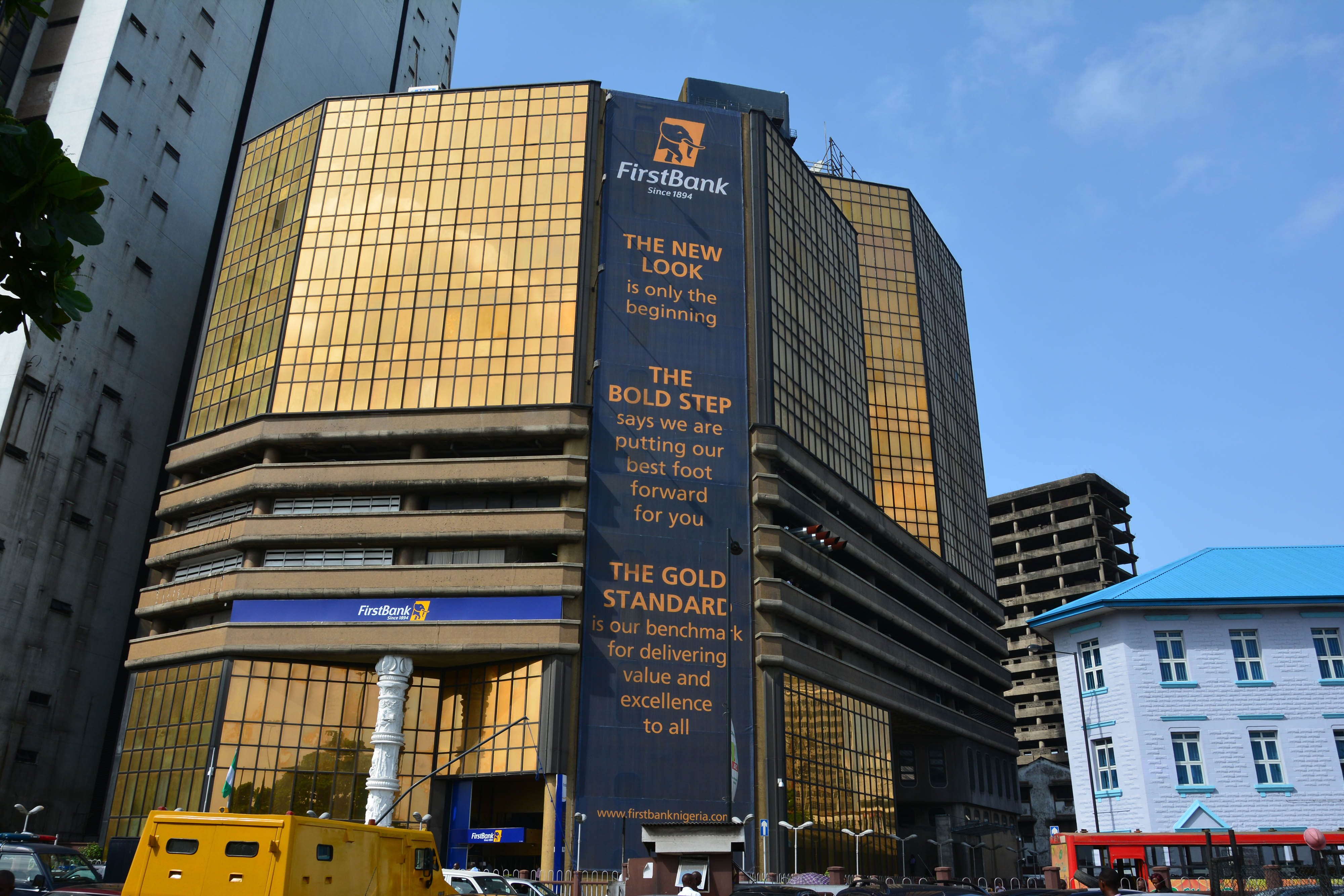
Revenue Generation: CBN imposes additional charges on transactions on individual bank accounts

Effective Wednesday, September 18, cash deposits and withdrawals from individual bank accounts are to attract addition charges, the Central Bank of Nigeria said on Tuesday.

In a circular to all deposit money bank (DMBs), the Director, Payments System Management Department at the CBN, Sam Okojere, said henceforth 3 percent processing fees would be paid for withdrawals and 2 percent for deposits of amounts above N500,000 for individual accounts.

Similarly, corporate accounts will attract 5 percent processing fees for withdrawals and 3 percent processing fee for lodgments of amounts above N3 million.

The CBN said the charges would be in addition to already existing charges on withdrawals, and will be aimed at encouraging it’s cashless policy.

The statement, however, said the charge on deposits shall apply in Lagos, Ogun, Kano, Abia, Anambra, and Rivers States as well as the Federal Capital Territory.

To further promote a cashless economy and enhance the collection of applicable government revenues, the CBN also announced a review of the process for merchant settlement by bank customers.

With the review, which takes effect from Tuesday September 17, the CBN said it gave approval for banks to unbundle merchant settlement amounts and charge applicable taxes and duties on individual transactions as stipulated by regulations.

The financial sector regulator announced a downward review of the Merchant Service Charge (MSC) from 0.75 percent capped at N1,200 to 0.50 percent capped at N1,000.

The nationwide implementation of cashless policy will take effect from March 31, 2020, it said.

In June, the CBN announced the takeoff of the third and final phase of the cashless policy in 30 states.

The apex bank said the decision followed the successful completion of Phases 1 and 2 in six pilot states and Abuja.

Phase 1 of the scheme took off in Lagos on January 1, 2012, while additional states, namely Abia, Anambra, Kano, Ogun and Rivers States, as well as Abuja, were involved in Phase 2, which commenced on October 1, 2013.

Alleged Youngest Billionaire, Tunde Biletiri challenges Huspuppi, Mompha

Young and wealthy publisher Of Black celebrity Magazine, Tunde Biletiri has set the social media on Fire with his claim that he is richer than Huspuppi and Mompha.
The young publisher who called himself the youngest billionaire said both of them are broke and can’t be compare with the real wealth he controlled.
In an Instagram post on his official page,@biletiri he claimed that while they are eager to meet Governors, he is busy sponsoring elections behind the scene.

“Billionaires don’t make noise, don’t be deceived by what @huspuppi and @mompha display on the internet they are broke niggas… Dangote won’t pose with his bag of cement … #1 billion well spent….

I get money to the extent that I Dey  busy some Governors calls,they wanna meet the Governors but we sponsor Governors election…”

All Set as Lagos awaits Zenith Bank’s Aspire Music Festival

All is now set for the “Zenith Bank Aspire Music Festival” holding on Saturday, September 21, 2019 at the Harbour Point Event Centre, Victoria Island, Lagos by 5pm.

Dubbed as the most anticipated entertainment event of the year, the breathtaking festival promises to be a night to remember, as it will feature captivating and thrilling musical performances by some of Nigeria’s biggest artistes including Olamide, Flavour, Phyno, Niniola, Mayorkun and Rema.

Also on hand to anchor the event and trill the audience with rib-cracking jokes is Kenny Black, while celebrity hypeman, Do2dtun, will be revving up the crowd throughout the night.

The Festival, which is a must attend event for music lovers, tourists and fun seekers, is one of a series of events lined up by Zenith Bank to usher in “Style by Zenith 2.0”, the bank’s annual lifestyle fair which will take place towards the end of the year.

Attendance at the music festival is exclusively reserved for Zenith Bank customers. However, non-Zenith customers can still participate by simply opening a Zenith Bank account and registering to attend at www.zenithbank.com/style.

Zenith Bank Plc is recognized as one of the most innovative financial institutions in Nigeria and was voted the most customer-focused bank in Nigeria for the Retail and SME segments in the 2018 KPMG Annual Banking Industry Customer Satisfaction Survey (BICSS).

74th UNGA: Nigeria’s Muhammad-Bande takes over as president

Maria Espinosa, the President of the 73rd UN General Assembly, on Monday handed over to Nigeria’s Muhammad-Bande, who will lead the 74th session of the assembly in the next one year.

The ceremony, held inside the General Assembly Hall of the UN headquarters in New York, marked the end of the 73rd session.
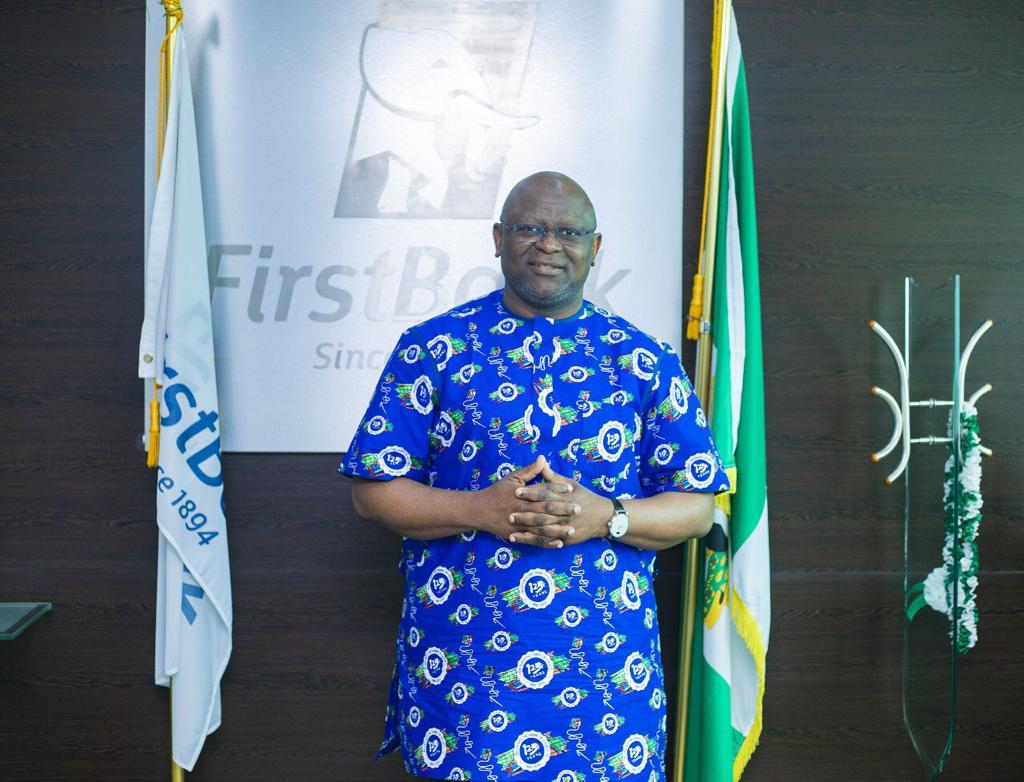
The 74th session will formally begin on Tuesday with the inauguration of Mr Muhammad-Bande, who is the Permanent Representative of Nigeria to the UN.

The handover ceremony was witnessed by top officials of the UN-led by the Secretary-General, Antonio Guterres.

Nigerian officials, including a presidential team, comprising the Director-General, National Intelligence Agency (NIA), Ahmed Abubakar, and presidential spokesman, Garba Shehu, also witnessed the ceremony.

In a short address, Mr Guterres lauded Ms Espinosa for her strong leadership, describing her as a “champion for multilateralism”, who made the UN “relevant to all”.

“I commend her ambitious priorities for this session, which addressed crucial matters of international impact and concern.

“These include gender equality, migration and refugees, decent work for all, environmental protection, the rights of people with disabilities, promoting the voices of young people to advance peace and security, and revitalising the work of the United Nations.
 

“The commitment of Espinosa to the environment especially ending plastic pollution also stands out,” he said.

The UN chief said he looked forward to working with Mr Muhammad-Bande to advance the organisation’s mission of building a more peaceful and prosperous world.

Earlier in a valedictory press conference, Espinosa said she was satisfied with her achievements within her one-year tenure.

She said her practice of formally reporting back to member states every three months, was very useful, especially for the smaller missions that could cover all the agenda items.

Ms Espinosa said during the 73rd Session, no fewer than 341 resolutions were adopted, making it the highest number in several years.

She reiterated her call on member states to “read the resolutions we have adopted again and let´s deliver and implement them using this norm-setting power of the General Assembly”, she said.

$11m Fraud Allegation: Obinwanne (Invictus) Okeke Pleads not Guilty, Remanded in Prison till February 2020

Obinwanne Okeke, the 31-year-old Nigerian held by American authorities for alleged fraud, entered a plea of not guilty to two counts of wire and computer fraud at his first hearing on Monday.

The presiding judge at the Newport News, Virginia, federal courthouse, declared the case as “complex,” but said Mr Okeke should be remanded in prison until February 18, 2020 when the trial would continue. He appeared in court at about 2 p.m. and waived his right to a speedy trial.

The appearance came a week after a federal grand jury examined the evidence gathered by the F.B.I. and presented by the United States Department of Justice and found Mr Okeke guilty as charged and recommended him for trial.

Upon conviction, the jury also said Mr Okeke should be made to forfeit at least $11 million in asset and an emerald shaped diamond engagement ring found on him when he was first arrested by federal agents as he was about leaving the U.S. on August 6.

The Monday’s appearance marked the commencement of Mr Okeke’s criminal trial since he was arrested and remanded in custody of the U.S. Marshals Service more than a month ago.

He had made previous appearances before separate judges for preliminary hearings in his bail applications — all of which were declined.

Mr Okeke, known in Nigeria as ‘millionaire entrepreneur’ Invictus Obi, was accused by the F.B.I. of orchestrating the theft of $11 million from a foreign subsidiary of American heavy equipment manufacturer, Caterpillar.

Using the infamous business email compromise scheme, Mr Okeke and his alleged accomplices spoofed Unatrac officials into making illicit transfers of about $11 million over several weeks in the first half of 2018.

Investigators said those who worked with Mr Okeke remained at large, and continued to seal crucial references to them in the case.

Dozens of other Nigerians have been arrested in largely unconnected fraud busts by American authorities since Mr Okeke was taken into custody.

Many of those cases were also traced to business email compromise, a process of targeting unwary business executives now commonly deployed across intricate networks of cybercriminals.

He faces up to 30 years in prison if convicted, as well as the possibility of forfeiting any ill-gotten acquisitions traced to him. Officials familiar with the trial told PREMIUM TIMES the evidence against Mr Okeke was compelling enough to elicit a guilty plea from him.

But since he had decided to go through the lengthy trial road, he could face maximum sentences with additional punitive liabilities if ultimately found guilty.

Nigeria’s domestic revenue among world’s lowest —Bill Gates

American billionaire and philanthropist, Bill Gates, has said that Nigeria has one of the lowest domestic revenues at just six per cent of GDP compared to 15 per cent in some other countries.

This, he said, is perhaps one of the reasons why the largest black nation has a problem with providing basic health infrastructure.

Gates said this via a teleconference with select journalists ahead of the release of the Bill and Melinda Gates Foundation’s Goalkeepers report 2019.

Responding to a question on how Nigeria could address some of its challenges, he said, “One challenge that Nigeria has is that the amount of money that the government raises domestically is quite small compared to other countries.

“A lot of countries at that level will be raising closer to 15 per cent of GDP and Nigeria is one of the lowest in the world down at about six per cent.  And so, it is a huge challenge that when you want to fund infrastructure, health, education, all those things, that over time the tax collection, the domestic resources are going to have to go up quite a bit.”

The Microsoft co-founder said the government also needed to do more to gain the confidence of the people because the citizens could be discouraged from paying taxes if they see that taxes are not being properly utilised.

He added, “That’s a long-term effort and I think partly by making sure the current resources are spent well like on primary health care, you gain the credibility that the citizens will say, okay, we want more of these things.  If we don’t raise the quality, you can get into a trap where they don’t feel like paying the taxes actually has that much impact, and so they’re not supportive of that.”

Gates lamented that many countries that were not as wealthy as Nigeria had better health care systems.

“If I had one wish for Nigeria, it would be that the quality and funding of the primary health care system would achieve the level of some other countries that are lower income but have done a better job with the primary health care system.  So, it definitely is doable,” he said.

The philanthropist said now that the country had virtually defeated polio, his foundation would look at strengthening health care centres.

He said his foundation had been collaborating with Aliko Dangote in helping Nigeria to address some of its challenges.

Gates said he holds video conferences with at least six northern governors regularly, adding that there were some things northern Nigeria could learn from the South.

Nigeria and other African nations had in 2001 signed the Abuja Declaration which seeks to allocate at least 15 per cent of their annual budget to improve the health sector and urged donor countries to scale up support.

Over 18 years later, Nigeria has failed to do so.

The country still has one of the world’s worst health indicators

The Federal Government had last week announced plans to increase Value Added tax from 5 per cent to 7.5 per cent, a move that has sparked outrage especially among the organised labour.

Doctors’ exodus now more alarming – NMA

  • 60 doctors dump Lagos hospitals every six months – NMA

  • 700 doctors leave Nigeria annually, says 1st Vice-President

  • All my mates have left Nigeria – United States-based doctor

Hindered by poor conditions of Nigeria’s health care, bad remuneration and deteriorating hospital facilities,   many medical doctors are abandoning the country for greener pastures abroad.

The PUNCH’s investigations revealed that although the exodus of doctors was not new, it had been on the increase in the last two years with countries such as the United States, the United Kingdom, Canada, Saudi Arabia and Kuwait as their destinations.

It was learnt that the exodus had increased the workload of those who were still in government service, as many states had not been employing doctors.

The Nigerian Medical Association, which expressed concern in an interview with The PUNCH, said in urban centres a doctor attended to 100 patients daily.

50 to 60 doctors leave Lagos  hospitals every six months – NMA

In Lagos State,  which has the highest number of doctors in the country, the state NMA  says no fewer than between 50 and 60 doctors leave the service of the state government every six months.

The Chairman of the state NMA, Dr Saliu Oseni, who disclosed this in an interview with The PUNCH, lamented the failure of the state government to replace doctors, who had left its service for greener pastures abroad.

Oseni said the failure to replace the doctors and employ new ones was affecting the service delivery of the NMA members in the state.

He stated, “It will be difficult to give a total figure of doctors that have left the service of the  Lagos State Government since 2017, but to be conservative, no fewer than 50 to 60 doctors left the system every six months. Some of them leave for greener pastures abroad. Some of them take offers from the Federal Government and some retire. Not replacing such doctors is a big challenge to us.”

Our members are being overworked – NMA

“The situation is affecting our members as they are being overworked. Although we have a lot of doctors that have left the country, we still have a lot of unemployed doctors. Some of the hospitals have not employed or replaced doctors that have left the system in the last two years,” Oseni said.

In Lagos, a doctors see 100 patients in eight hours – state NMA

“The work that is supposed to be done by junior officers is being done by senior officers and currently in Lagos State hospitals, you see a doctor attending to close to 100 patients per eight-hour work in a clinic which is not good for the doctor and the patients.

“The ideal patient-doctor ratio is supposed to 1:500, but what we have currently in Lagos State-owned hospitals is one doctor to over 5000 patients. You cannot create an ideal environment and you want to judge the environment by the ideal standard. If I am going to see 80 patients in eight hours, there is no way I’ll follow the routine properly.

“By standard, a doctor needs 15 to 30 minutes to attend to a patient very well. This  means in eight hours, I would only be able to see 15 patients and in between that time if I need to do some procedures that means I will see less than that. By labour law, we are even entitled to a one-hour break, but most doctors in Lagos State-owned hospitals don’t even have time for a break,” Oseni said.

A medical officer at the General Hospital Ifako-Ijaiye, who spoke on condition of anonymity,  said doctors’ workload was too much, adding that it had made many of his colleagues to seek greener pastures.

Conditions of work made us seek greener pastures

He stated, “At times when people hear that doctors go abroad for greener pastures, all they think is the money, but I tell you money is not everything.  Conditions of our work are overwhelming. That is why suicide and depression are common among those of us that are still in the system.”

Doctors’ exodus ‘ll continue unless… – NMA Chair

In  Kaduna State, investigations  revealed that   doctors were  leaving the service of the state government, with hospitals in rural areas mostly affected.

A source at the Gwamna Awwan General Hospital, Kakuri, told one of our correspondents  that poor remuneration,  insecurity and work progression had   forced  doctors and other health workers out of the state.

“Who wants to be killed? or who wants to be stunted in terms of career progression?” he asked.

The source noted that in a survey carried out in January  2018, no fewer than 21 doctors left  at least one hospital for  other countries or greener pastures elsewhere in the country as a result of bad conditions of service.

He  added that the situation was similar in all the state-owned hospitals, except  the Barau Dikko Specialist Hospital in the state capital.

The state Chairman of the NMA, Dr. Stephen Kache, in an interview with The PUNCH, put  the exodus of medical doctors from  the state civil service at  60 per cent.

33 medical doctors employed by govt, only eight reported – Kaduna NMA

The NMA chairman  noted that no fewer than 33 medical doctors were recently  employed in the state,  but only eight had reported so far.

The NMA said,  “The current  exodus of doctors we have is over 60 per cent. They left between six months and one year. Many  factors are responsible for the exodus of  doctors, but chief among them is poor remuneration and this alone constitutes a significant proportion of reasons  doctors leave. Other  factors are insecurity  and poor work conditions.

 “13 out 21 doctors left hospital in eight months”

“In 2018, we did a  survey in some hospitals within the state and in one of the hospitals as of January, there were 21 doctors and by August of the same year,  there were  eight doctors remaining. We went round  other hospitals and the picture was similar.

“Recently, the state government tried to replace those that had left and 33 doctors were employed. I am aware that out of the 33 that were employed, only eight of them have reported.”

Better pay, work environment fuelling doctors’ exodus

In Rivers State, findings show  that many doctors and other medical workers  have left  the state.

A medical doctor at the Okomoko General Hospital in the Etche Local Government Area,  Dr Young Kale, stated that he was aware of about two doctors who had travelled abroad.

Kale  said, “Each year, we hear of several doctors leaving hospitals and travelling abroad to take  better offers. I don’t blame them. Doctors here are overworked. If you check the halls, you’ll see hundreds of patients waiting to see a doctor.  That alone will show you that doctors are not enough.”

The NMA  in Rivers State also decried the situation, attributing it to poor remuneration and hospital facilities.

The Chairman of the  NMA in the state, Dr Obelebra Adebiyi, said that the trend,  if not checked, would make patients patronise quacks, as doctors would no longer be enough in the hospitals.

She noted, “I don’t know how many doctors have travelled abroad and how many are remaining in Rivers State because we have not done a study to get the statistics, but a lot of doctors are leaving the country and a lot more are still planning to leave for myriad reasons. Most of them (doctors) are going out for better training and exposure now that the world is a global village.”

Adebiyi, however, stated that once health facilities and wages were improved in the state, doctors and other health workers who were still considering leaving the country would  have a rethink and stay back.

The Oyo State Commissioner for Health, Dr Bashir Bello, who assumed office about two weeks ago,  said the ministry was compiling a list of doctors who had left the service of the state for greener pastures abroad.

Bello,  in a chat with one of our correspondents,  admitted that a sizeable  number of doctors  had left the state,  but believed that health sector repositioning was one of the cardinal programmes of Governor Seyi Makinde.

Brain drain alarming – Enugu NMA chair

In Enugu State, the NMA  said the brain drain known as human capital flight had reached an alarming level.

The state Chairman of the NMA, Dr Ike Okwesili, told The PUNCH that the reasons behind brain drain were  usually bad remuneration, the poor quality of life in the country and poor job satisfaction arising from ill- equipped public hospitals.

Okwesili  said  Enugu like other states   did not implement the Consolidated Medical Scale  or the Consolidated Health Salary Scale.  This, he said, caused the migration of workers from state to federal jobs, which he described as “internal brain drain.”

Doctors leaving Enugu on a daily basis – State NMA

Okwesili, who said that it would be difficult to give an accurate number of doctors that left the  state for other countries or move from the state- owned hospitals to federal hospitals, explained that doctors were leaving the state on a daily basis.

He said that the problem could be resolved by identifying the magnitude of the problem. “This has to come by way of full implementation of the National Health Act. The National Council on Health in Section 41of the Act has the responsibility of identifying the human resource requirements of the health sector across all levels of care.

“Doing this will give a quantitative assessment of the cumulative loss. Section 46 of the Act prohibits sponsorship of public servants with public funds for medical checkups, investigations and treatment abroad, except in special cases where there should be authorisation by the health minister or the commissioner for health as the case may be.

“The enforcement of these will help all of us improve the budgetary allocations to health in line with the Abuja declaration.”

All my mates have left Nigeria – US-based doctor

A medical doctor in Huntsville, Alabama in the United States, Mrs Olaoluwa Odofin,  lamented the high level of infrastructural decay in Nigeria’s health sector.

Speaking with The PUNCH, in Huntsville, on Sunday, Odofin urged government at all levels to ensure a quick rehabilitation of the health sector, saying “health is wealth.”

Odofin said poor health infrastructure and inadequate welfare for practitioners in Nigeria were responsible for the exodus of doctors.

The internist said all her classmates, who graduated with her from the University of Ilorin over a decade ago, had left Nigeria for greener pastures abroad.

She said, “You can’t compare the level of medical infrastructure here in the US with what obtains back home in Nigeria.

“It’s like comparing day and night. I came to the US for my residency between 2009 and 2012, and I began practising in 2012.

“Our government’s back home should do the right thing by fixing the health sector so that nobody would need to travel here for medical treatment.

“Nigeria has the medical personnel needed to put smiles on the faces of the masses. It’s up to the government to live up to their electoral promises.”

In the same vein, another medical doctor in Houston, Texas, Samuel Adesoba,  said poor remuneration and inadequate facilities were some of the reasons why Nigerian medical doctors travelled  abroad for greener pastures.

Adesoba, who graduated from the Obafemi Awolowo University, Ile-Ife, in 1987, is an internal medicine specialist, family doctor and general practitioner.

He explained that poor welfare package and shoddy infrastructure were a hindrance to self- actualization by Nigerian medical doctors.

This, he said, should compel government to invest in infrastructure across the country.

He said, “Nigeria has competent professionals across various medical fields. So, personnel aren’t the problem. The problem is the structure. The structure affects so many things such as equipment, drugs and insurance.”

Commenting on the development, the NMA through its First Vice-President, Dr  Mingeh Tijo, listed countries such as the US and the UK as the destinations of Nigerian doctors.

He added, “What is even worrisome is the fact that the Arabian countries such as Saudi Arabia and Kuwait have now opened up their spaces for Nigerian doctors. These countries are becoming new destinations for our doctors.

“In the last three years, the trend is increasing, nothing is really happening in the health care space in the country. There is no recruitment and the infrastructure is still the same.”

700 doctors leave Nigeria annually – NMA

“On the average, studies have shown that about 700 doctors leave the country every year.  During the recruitment Saudi Arabia did recently, thousands of our doctors were struggling to leave the country.”

Heavy workload making doctors  to commit suicide – NMA

“The effects are so enormous that some of our doctors are now committing suicide because of the pressure of work. Poor service delivery is imminent because we are overworked, and then the patents are the ones suffering for this.

He stated, “Patient-doctor ratio is approximately 1:5000. The number of patients a doctor sees per day depends on the locality the doctor is operating from. Some see 70 patients in a day;  some 100, but in some tertiary institutions, the ratio may not be as high as that. Again, it depends on whether the doctor is practising in a rural or urban area.”

50 per cent of Nigerian doctors are in SW – NMA

Some northern states have less than 30 doctors.

“About 50 per cent of the doctors are in the South-West; even at that, about 40 per cent of the doctors in the South-West are in Lagos. The remaining 50 per cent are spread in the six geopolitical zones.  Some states in the Northern Nigeria have less than 30 doctors in their service.”

According to him, the number of graduate doctors per year is less than 3000, adding  “the new ones are the ones that want to run out of the country.

“The government must prioritise health care in the country, policies should be implemented, infrastructure should be improved upon, and recruitment must be done to fill the void among the health workers.”

FG’s Livestock Plan, Fulani Herdsmen from Chad, Niger to benefit

Fulani herdsmen from Chad, Niger and other neighbouring countries will benefit from the National Livestock Transformation Plan, the Bauchi State Governor, Bala Mohammed, has said.

Mohammed, who was a guest on Channels Television’s Sunrise Daily on Monday, said since Fulani herdsmen are nomadic, it would be inappropriate to deprive them from benefitting from the livestock plan just because they are not from Nigeria.

The initiative will be 80 per cent funded by the Federal Government while the states would provide 20 per cent counterpart funding and the grazing land.

The governor, whose state is among those that will be part of the initiative, said Fulani exist in many countries across Africa and share a brotherhood which transcends boundaries.

When asked how the government would ensure that only Nigerians benefit from the livestock plan, Mohammed said, “I think there is a lot of mistrust and misconception as regards the Fulani man. The Fulani man is a global or African person. He moves from The Gambia to Senegal and his nationality is Fulani.

“As a person I may have my relations in Cameroon but they are also Fulani. I am a Fulani man from my maternal side, we will just have to take this as our own heritage, something that is African. So we cannot just close our borders and say the Fulani man is just a Nigerian.

“In most cases, the crisis is precipitated by those outside Nigeria. When there is a reprisal, it is not the Fulani man within Nigeria that causes it. It is that culture of getting revenge which is embedded in the traditional Fulani man that attracts reprisal.”

When asked if it was right to allow foreigners to benefit from Nigerian taxpayers’ money, the governor said it was proper.

He said Fulani don’t actually have one single nationality since they are nomadic in nature.

Mohammed said “We are already accommodating them. Do you delineate and really know who is not a Nigerian Fulani man?

“They are all Nigerians because their identity, their citizenship is Nigerian even though they have relatives from all over the world. So, presumably they are Nigerians because they move all over and have relations all over. That is why our population in Nigeria is fluid.”

When asked if there would be any form of documentation for the Fulani herdsmen coming into Nigeria from other countries, the governor said, “Yes. This will give Nigeria the opportunity of having proper documentation and knowing the demography because the Fulani man settles anywhere he can feed his cattle.”

The livestock plan which is being championed by Vice-President Yemi Osinbajo seeks to put herdsmen and their livestock in designated colonies which will give them the opportunity of exploiting the livestock value chain.

While many northern states have embraced it, their southern counterparts have rejected it.

Update: BudgIT Co-Founder Seun Onigbinde Resigns Govt Appointment

Following public criticisms that have greeted his appointment to the budget ministry, Seun Onigbinde has now turned down the appointment.

Mr Onigbinde, co-founder of BudgIT, a civic group committed to government financial transparency, announced his resignation on Monday.

Mr Onigbinde had last week announced his decision to accept a technical adviser position at the budget ministry.

Many Nigerians, particularly on social media, however criticised the appointment.

Some supporters of the Muhammadu Buhari administration, like the Buhari Media Organisation, also criticised the appointment based on Mr Onigbinde’s past criticism of the Buhari government.

See the post by Mr Onigbinde announcing his resignation below.

AN UPDATE ON MY RECENT APPOINTMENT

Friends,

Kindly recall that I sent out a note recently on my interest to seek new experiences and that I would be working as a Technical Adviser to the Minister of State for Budget and National Planning for a short period.

It is clear that recent media reports about my appointment have created a complex narrative, which I believe would engender an atmosphere of mistrust, as I planned to proceed.

Upon further reflections on the furore that has been generated by my new role as the Technical Adviser to the Minister of State for Budget and National Planning, I humbly resign the appointment.

I am very grateful to the Honourable Minister, Prince Clem Ikanade Agba, for believing in my expertise and I also thank everyone who sent his or her congratulations to me in the short period. I have also been humbled by the faith and belief that numerous persons have expressed in me.

My sincere interest is to see a Nigeria that grows and optimises resources for the benefits of all Nigerians.

My loyalty to the good cause of our nation, Nigeria compelled me to accept the call to provide technical skills and this experience has more than strengthened it.

I also want to wish the Nigerian Government, led by President Muhammadu Buhari, well. I will always be of help to the federal government in my capacity as the Director of BudgIT, a critical fiscal transparency group, as I have been to several agencies. I would also work to ensure that BudgIT continues to build civic awareness on the right of every Nigerian to know how public resources are managed.

Thank you all.

God bless the Federal Republic of Nigeria

Exit mobile version