
The Tony Elumelu Foundation (TEF), Africa’s leading philanthropy empowering young African entrepreneurs from all 54 African countries, has successfully trained over 200,000 entrepreneurs in core business management skills as part of its 2021 TEF Entrepreneurship Programme.
The Business Management training was conducted exclusively on TEFConnect, the Foundation’s proprietary digital platform that provides capacity-building support, advisory and market linkages to over 1 Million Africans and counting.
The TEF Entrepreneurship Programme Business Management Training equips entrepreneurs with critical skills required to launch and run their businesses at the early growth stage. With a unique curriculum that encompasses topics on Starting Your Business, Business Management & Fundamentals, Leadership & Business Growth, Selecting and Building a Team, amongst others, entrepreneurs are effectively armed to achieve business growth, profitability, and sustained success.
Entrepreneurs were hosted to weekly information sessions, as part of the training, to address relevant concerns and share vital programme updates. All entrepreneurs received active support from coaches and mentors who provided technical guidance, counsel and one-one interaction throughout the duration of the training programme.
The training, which is one element of the 7 pillars of the Tony Elumelu Foundation Entrepreneurship Programme, was carried out in the official African languages including English, French, Portuguese and Arabic, and over 40 percent of trained participants were women.
Commenting on this milestone, Ifeyinwa Ugochukwu, CEO of the Tony Elumelu Foundation, said “Every year, our commitment to transform Africa is further strengthened with the passion, resilience and talent of the high-calibre entrepreneurs who onboard our flagship programme. Our curricular provides a holistic opportunity for entrepreneurs to learn, grow and contribute to the development of their communities.”
The Chief Executive Officer added: “Furthermore, it is a testament to the eagerness and readiness of African entrepreneurs across all of Africa to make themselves available to transform the continent for good. I would like to commend these entrepreneurs for their discipline, dedication and hard work throughout the training and look forward to the immense impact of their businesses across diverse sectors in Africa. We remain committed to empowering African entrepreneurs with the required resources and support that will ensure that their businesses can scale and drive sustainable change on the continent”.
The TEF Entrepreneurship Training is immediately followed by a Business Plan review process for each entrepreneur. The top-performing entrepreneurs subsequently participate in the Pitching phase of the Programme after which successful entrepreneurs receive a non-returnable seed capital of US$5000 each.
The leading African philanthropy also hopes to train and empower thousands more across the African continent as part of its commitment to catalyze economic growth, drive poverty eradication and ensure job creation.
In 2020, the Tony Elumelu Foundation marked ten years of impact, having empowered and funded nearly 10,000 African entrepreneurs from all 54 African countries as part of its US$100 million TEF Entrepreneurship Programme. The Tony Elumelu Foundation is inspired by Tony Elumelu’s economic philosophy of Africapitalism, which positions the private sector, and most importantly entrepreneurs, as the catalyst for the long-term social and economic development of the African continent.
To learn more about the Tony Elumelu Foundation, please visit TonyElumeluFoundation.org; and to receive the Foundation’s free business training, please visit TEFConnect.com.
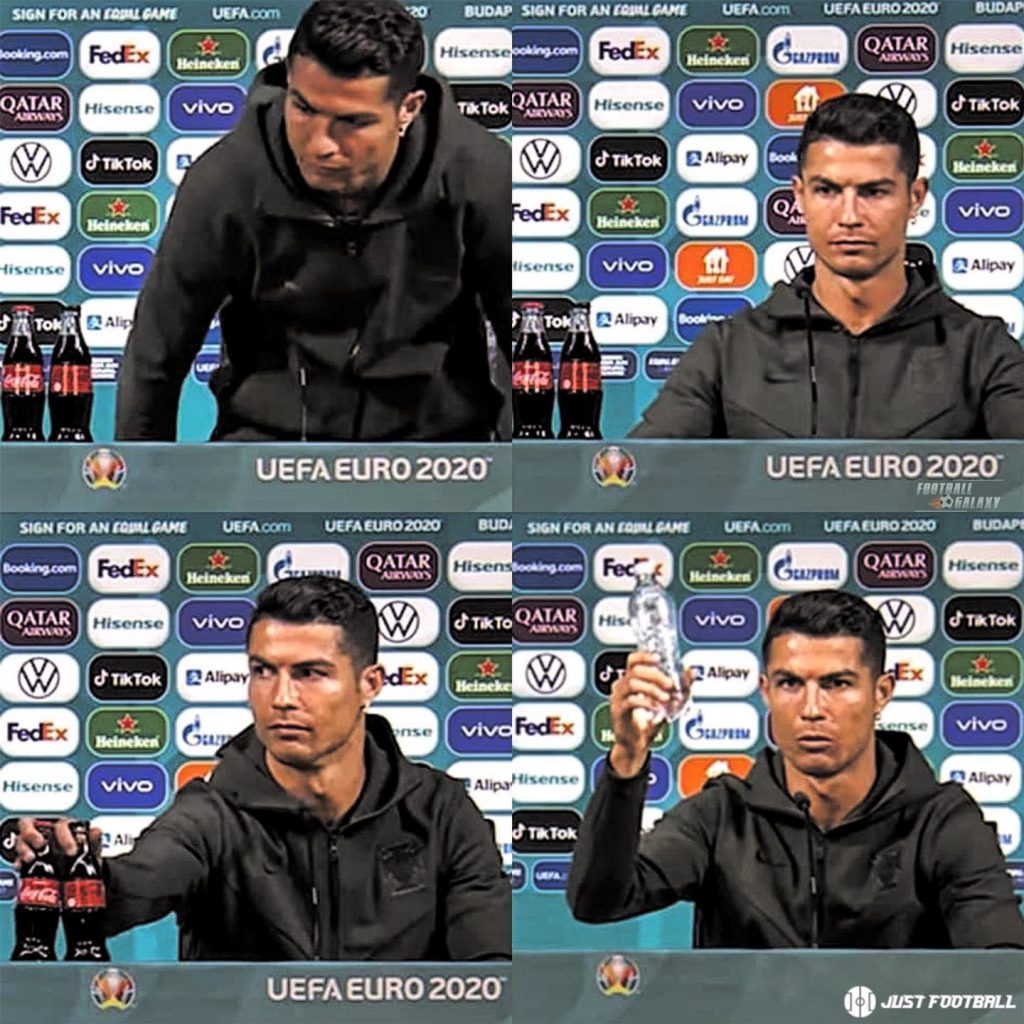
Cristiano Ronaldo’s recent gesture towards bottles of Coca-Cola may have adversely impacted the share price of the company.
Ronaldo removed two bottles of Coca-Cola from his region during Monday’s news conference ahead of Portugal’s game against Hungary. The Portuguese star sat down and spotted the two bottles of the carbonated drink and pushed them aside. Unfortunately, the gesture had a big negative influence on the brand.
The Portuguese international has even said in some interviews that it is important for children to have a healthy and healthy diet, away from sugar and fats. Being asked on one occasion about his relationship with his son on this issue, Ronaldo was clear. “I’m tough on my son. Sometimes he drinks Coke and Fanta and eats chips and he knows I don’t like it,” he said.
According to The Athletic, Coca Cola’s shares were worth $56.1 each when the market opened in Europe on Monday. But by the end of the press conference, they had fallen to $55.2 each. The 1.6% drop in share price meant a loss of $4 billion dollars in terms of company worth. At the time of writing this article, the stock price has seen some recovery to $55.44.
It is important to note that Coca-Cola shares were on a bearish trend on Monday trading session with a dropped by -1.09%. Investors are expectant of a strong bullish recovery as regards their next earnings release.
The Managing Director, Ecobank Nigeria, Patrick Akinwuntan has said the decision to partner with the media entrepreneur and blogger, Linda Ikeji to host the latest edition of her yearly popular empowerment programme, ‘Selfmade Woman Conference (SMWC) 2021’ is in line with the bank’s empowerment policy for women, stressing that the challenges facing the nation has made it more imperative to recognize the potentials in women and develop it.
According to Mr Akinwuntan, Ecobank recognizes women as the bedrock of most families and entrepreneurship in society, and if we must succeed as a nation, it is imperative that we recognize their unique potentials and support them sufficiently.
“Our decision to support Linda Ikeji conference aligns with our women empowerment policy. As a bank, we have been playing a leading role in this respect. Like you know, we have a long standing partnership with Tera Kulture, that is Bolanle Austen Peters who has come out with various movies such as ‘Bling Lagosians’, ‘Moremi The Musical’, ‘Fela and the Kalakuta Queens,’ ‘The Oluronbi Musical’ and others. Recently, we also supported ‘The Wait’, a movie inspired by the popular book from renowned lawyer and entrepreneur, Yewande Zaccheaus.
We are also currently working with the Ogun state government to promote the Adire industry which is also primarily women driven. In the agric industry, we have supported the Anchor borrowers programme of the Central Bank of Nigeria across the six regions of the country to reach out to farmers, especially the women folk to support them financially to increase their farm size and yield capacity through the introduction of new techniques. Let me also add that Ecobank has a women empowerment programme “Ellevate” for women in Business; this will be publicly launched across the country in July. With Ellevate, we want to ensure we raise and recognize our women for the significant role they have always played to ensure a better society for us all”.
The Linda Ikeji Self-Made Woman, which debuted in 2013, is an advocacy project with the sole aim to mentor and provide financial empowerment to young female entrepreneurs or aspiring ones. it is essentially to build stronger economies and improve the quality of life for women, men, families and communities. Speakers for this year’s conference scheduled for Saturday, June 19th at the Federal Palace Hotel, Victoria Island, include Tara Durotoye, renowned beauty and make-up entrepreneur; Dr. Ola Brown, Founder of the Flying Doctors Healthcare Investment Company; and Dr. Nancy Nnadi, Serial Entrepreneur & CEO of Telecom Distribution Company. They will provide actionable strategies and hope to women who would like to start their own businesses, enhance their impact in various industries or broaden their creative roles in traditional industries.
Other guest speakers will include Tomie Balogun, Investment Expert & Fin-tech Entrepreneur; Sola Adesakin, Finance Coach & Chartered Accountant; Kemi Adetiba, Film Maker and content creator; and TV star Dorathy Bachor.
FirstBank of Nigeria Limited announces its lead sponsorship of the movie titled ‘Ayinla’, which is billed to premiere on Sunday, 13 June 2020.
The movie is suspense-driven, narrating the life of Ayinla Yusuf, popularly known as Ayinla Omowura (an Apala musician), his rise to fame, his identity, the depth of his craft and music, and the basis for his relevance after his tragic death forty years ago as a result of a stab from his manager, Bayewu, during a bar fight on the 6th of May, 1980 in Abeokuta.
Ayinla is directed by multiple award-winning and globally acclaimed Nigerian filmmaker and director, Tunde Kelani, and produced by Jadesola Osiberu.
According to Tunde Kelani, filmmaker and founder, Mainframe Opomulero Productions,” the making of Ayinla allows us to throw a glance over our shoulders to our often-neglected intangible heritage. Nigeria is blessed with huge cultural diversity and locked away are thousands of stories we can share with a global audience.
FirstBank’s partnership with us at this stage is not a mere coincidence, owing to its over hundred years of historical contribution in unlocking the huge potentials in Nigeria which can offer continental and global audiences”.
With the sponsorship of similar socio-cultural initiatives in the creative arts industry like Moremi, Makaliki, Oba Esugbayi stage drama, October 1st (a movie) and the Calabar Festival. The Bank’s sponsorship of ‘Ayinla’ affirms the Bank’s support for the development of arts in Nigeria under its First@arts initiative.
First@arts is FirstBank’s platform for consolidating all its efforts in the arts, supporting the entire value chain of the creative arts, providing much-needed financing and advisory support, showcasing and facilitating the successes of the industry, and enabling customers to explore and access the wealth of opportunities the creative industry has to offer.
Achieving these and a host of many others have been implemented through strategic partnerships with organizations like the British Council, Duke of Shomolu Productions, Live Theatre Lagos, Freedom Park, Terra Kulture, and the Cross Rivers State Government (Calabar Festival), amongst many others.
Ayinla appeals to a multifaceted audience that cuts across fans of highlife and afrobeat music, the youth, and the elite Yoruba demography. It features some of Nollywood’s favorite stars including Adedimeji Lateef who played the role of Ayinla Omowura, Kunle Afolayan, Bimbo Ademoye, Mr. Macaroni, Omowunmi Dada, Ade Laoye, Jumoke Otedola, and Bimbo Manuel.
Speaking on the movie, Jadesola Osiberu, Movie Producer & Founder, Greoh Studios said, “Working with the great Tunde Kelani is something I have wanted to do for a long time, and I am so glad that we were able to do it on a project like Ayinla. This collaboration was an interesting experience, and I am glad everyone finally gets to see the film we made in the cinemas nationwide from 18 June 2021. I’d like to thank the management of First Bank of Nigeria Limited for choosing to come on this journey with us.”
Expressing her delight on the movie, Folake Ani-Mumuney, Group Head, Marketing & Corporate Communications, FirstBank said; “For over 127 years, FirstBank has been at the forefront of nation-building; enabling Nigeria and Nigerians through resourceful partnerships to build the Nigerian creative industry value chain, especially the arts and entertainment sub-sectors. We remain proud of this sponsorship that creates an excellent platform to showcase Nigeria to the world as being part of a collective goal to continually keep dreams and hope alive; holding strong to our commitment to reignite cultural heritage.”
“Without a doubt, the movie industry remains part of the creative and entertainment industry value-chain across the globe and indeed a powerful channel to drive our heritage and culture, which resonates with our legacy of being woven into the fabric of society.”
According to research disclosed in PWC’s recent Entertainment & Media Outlook report, Nigeria’s entertainment is expected to rise from $4.46 billion in 2018 to a $10.5 billion market by the end of 2023. In addition, with this initiative and other sponsored event, FirstBank is committed to strengthening its contribution to the development of the entertainment industry in the country.
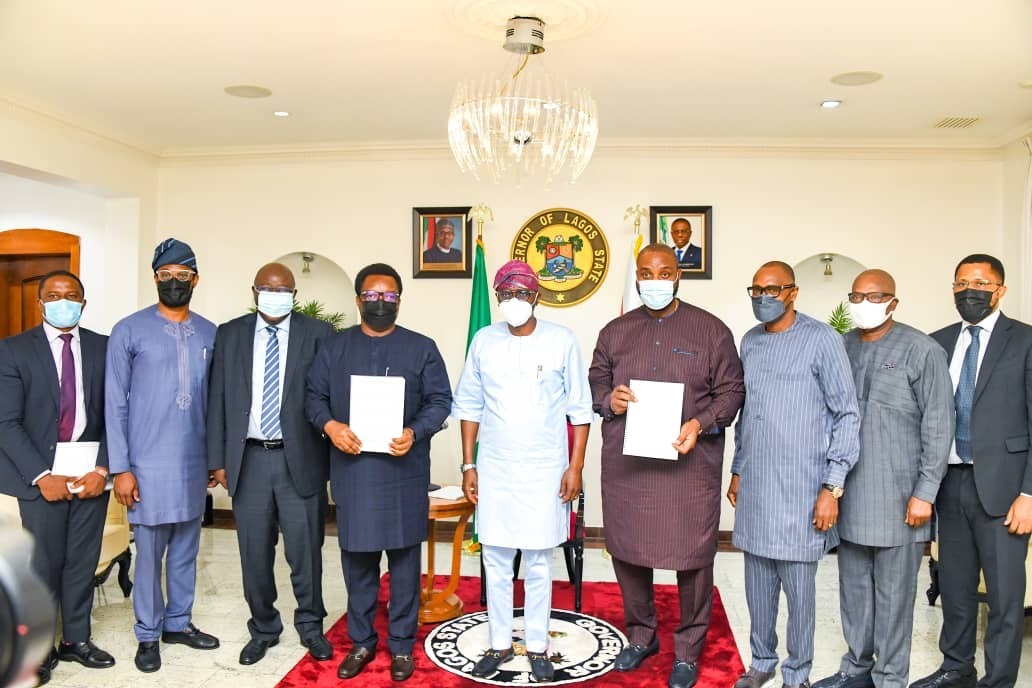
In order to improve electricity supply around Ibeju-Lekki area in Lagos and Agbara Industrial area in Ogun State, the Niger Delta Power Holding Company (NDPHC) and Eko Electricity Distribution Company Plc (Eko Disco), have signed a bilateral agreement for the sale of up to 300MW of power from NDPHC’s power plants to customers in these areas within Eko Disco’s franchise areas.
The Lagos State Governor, Mr. Babajide Sanwo-Olu who hosted the signing of the agreement for these projects at Lagos House, Marina recently, commended the initiative by NDPHC and Eko Disco, and stated that “he will monitor the implementation of the agreement.” The Governor expressed his confidence that the collaboration between NDPHC and Eko Disco will complement the current policies of the state government in economic and infrastructure development.
NDPHC and Eko Disco have committed to work together to deliver safe, reliable and steady supply of power to customers in the areas of collaboration. The project will be structured to remove the commercial and technical inefficiencies in the Nigerian electricity market and will mobilise significant capital investment in transmission/distribution infrastructure and metering technology.
In his remarks, the NDPHC Managing Director/CEO, Mr. Chiedu Ugbo stated that the challenges in the industry inspired NDPHC to “source alternative means to sell and ensure dispatch of its stranded power generation capacity and explore innovative ways to unlock investment in infrastructure for improved supply to customers.”
In turn, the MD of Eko Disco, Engr. Adeoye Fadeyibi said that the partnership aligns with the efforts of the Eko Disco to bridge the metering gap and improve the quality of electricity supply to customers. He appreciated customers for their continued support for the Company in its quest to continue to empower the quality of lives of all stakeholders.
The agreement signed between NDPHC and Eko Disco is only the latest milestone in NDPHC’s innovative and ambitious programme to tackle the industry-wide challenges in the Nigerian power sector. These challenges have resulted in the inability of the operators in the industry to fulfil their investment and industry payment obligations, and a continuing low access to reliable power for industry, businesses and homes.
Despite a significant installed generation capacity – estimated to be more than 13,000 MW – access to electricity remains acutely low because much of this installed capacity is stranded and cannot be conveyed to customers because of inadequate transmission and distribution capacity. Operators insist that tariffs remain at a level that cannot guarantee returns for investors in the sector and as a result, an estimated $20 billion capital investment required to upgrade the transmission and generation infrastructure is not available. Insufficient investment in metering, collection and surveillance, among other factors, has also made collections by the distribution companies inefficient, thereby causing revenue loss across the value chain. A combination of these factors has led to severe liquidity shortfalls and a ballooning deficit in the market, and there simply is not enough collections from customers to cover the cost of power generation and delivery. The Federal Government has on several occasions intervened with financial bailouts to the sector, but this solution is only short term and is becoming an increasingly heavy burden on a cash-strapped government struggling with low oil prices and a struggling national economy.
The operators in the industry have had to innovate or go out of business. It is in this regard that NDPHC is blazing a trail in structuring deals that are solving many of the industry-wide challenges affecting its business. NDPHC, holds a portfolio of 10 power plants with aggregate installed capacity of more than 4,000MW and growing. To ensure that much of its capacity does not remain idle, NDPHC, with support from Electric Utilities Nigeria Limited, is now targeting to work with discos and other project developers to, in the first phase, sell more than 1,000MW from its power plants in manner that resolves the current commercial and technical inefficiencies in the market without a need for government funding intervention.
In addition to the agreement signed with Eko Disco, NDPHC has executed similar agreements with Port Harcourt Electricity Distribution Company Plc, Enugu Electricity Distribution Company Plc, Kaduna Electricity Distribution Company Plc and Benin Electricity Distribution Company Plc. In each case, the parties will mobilise investment in the expansion of the distribution network of the discos to enable increased offtake of power and in metering technology including smart meters in order to increase the collection rate of the discos.
For NDPHC, these collaborations will lead to greater offtake of power from its under-dispatched power plants, thereby increasing the company’s revenue. For the industry generally, these collaborations will attract the requisite investment in the industry and increase liquidity that enables higher payment receipts across the value chain. Now that NDPHC has executed the agreements with 5 discos and more in the pipeline, it is projected that the impact on the Nigerian power sector will be massive in improving electricity access, market payments and attracting more investments to the industry.
While the age-old saying and philosophy of virtue being its own reward (or seeing doing good has its own reward) remains a strong motivating factor in doing good persistently, it helps when virtue gets recognition from time to time. Even though anyone or organisation committed to doing good will keep doing so with or without recognition, recognitions for virtue tend to act like a catalyst for such people or organisations, spurring them to commit even more to doing good, such is the story of Dr Adeduntan.
The recent award of “Retail Banking CEO of the Year Nigeria” to Dr Adesola Adeduntan, CEO of First Bank of Nigeria Limited, is to both him and the bank he leads a shot in the arm of this foremost CEO of Nigeria’s most enduring financial institution that is also the pioneer in retail banking development in Nigeria, the premier bank in West Africa and the leading financial inclusion services provider in Nigeria for over 127 years, to keep steering the bank in the right direction, energising and expanding retail opportunities for all Nigerians in the process. It is a well-deserved recognition for a man and the institution he leads that would rather keep off the spotlight and focus exclusively on attending to Nigerians’ banking needs as best as they can – which is what has kept them going for 127 years and counting.
This critical role is one FirstBank is better suited to lead than any other lender given the robust retail banking framework that the bank has in place, that is riding on its innovative technology-driven operations, over 750 branches across the continents and 100,000 Firstmonie Agent banking network spread across 772 local government areas in Nigeria. It is little wonder that FirstBank, which is intricately woven into the fabric of the Nigerian society, has been an essential player in the retail space, empowering Nigerians of all walks of life by providing them bespoke and innovative financial products and services that address their multidimensional needs. The bank has been at the forefront of bridging the financial exclusion gap and enabling customers and the general public to carry out both individual and corporate financial activities which contribute to the growth and development of the national economy.
The award by Global Banking and Finance Magazine, according to Dr Adeduntan, “speak[s] to the investments we [as FirstBank] have made over the past years in…enhancing financial inclusion….” It is a loud testament to the incredible strides FirstBank has made and continues to make in the retail space under the able and dynamic leadership of the management team led by Dr Adeduntan.
The strides are in turn underpinned by the bank’s resolute commitment to putting the customer and other stakeholders at the heart of its business. Dr Adeduntan reiterates this view when he wasted no time in dedicating the award to all the bank’s “customers, as the trust they reposed in us being their bank of first choice in meeting their business and financial needs has been instrumental to the success we have achieved in our existence of over 127 years.” “We remain committed,” he continued, “to putting you, our customers, first as we contribute to the growth and development of our host communities.”
Organised to identify the banks across the world that have excelled across a number of areas, including corporate governance, sustainability and innovation, and have played a key role in the industry’s growth, the Global Banking and Finance Awards reflect the innovation, achievement, strategy, progressive and inspirational changes taking place within the global financial community. The awards were created to accord recognition to companies of all sizes which are prominent in their areas of expertise and excellence within the financial world. For Dr Adeduntan and FirstBank, the award is further proof of FirstBank’s enduring commitment to providing excellent retail banking services to all its customers as reflected in the bank’s strategic vision, diverse and inclusive workforce and performance-oriented organisational structure.
The Managing Director, Ecobank Nigeria, Patrick Akinwuntan has said the bank will support the establishment of agriculture technology hubs across the country, stressing that it will further generate activities in the entire value chain and also provide a base for exporting agriculture technology services to other parts of the Africa.Mr. Akinwuntan who was speaking at the 2nd edition of the Ecobank Agribusiness virtual Summit organised in association with Vanguard Economic Forum Series with the theme: “Digitizing the agricultural value chain for unlocking productivity, economic growth and food security”, said he “finds the idea of agriculture tech hub quite exciting. I can directly say Ecobank will support this initiative because it brings the efficiency of a solution factory that is not only available in Nigeria but can also be a base for exporting agric-technology services to drive agriculture in the whole of Africa. I put Ecobank forward as a partner to bring this to reality. “
Earlier, the Co-Founder, Corporate Farmers International, Mr Akin Alabi had disclosed that his organization has initiated an agric technology hub to attract youths participation in the agric sector, noting that access to technology and innovations will further drive activities in that segment of the economy. “We have developed a big platform, called a hub to serve both government and private institutions. The hub is generating interests and solutions. And now, we are in partnership with Lagos and Kebbi state governments. We are also working with series of agricenterprenures in the country. We have also used the power of technology, mobile phones to bring agric products from the farm gate to the market. We need the support of the private sector to develop the agric tech hub. A lot of Fintech hubs are developing different solutions, we also need that in the agric space. In Nigeria today, we can use digitalization to change the narrative and get younger ones to be interested in agriculture. At corporate farmers, we also created an e-learning academy during the covid 19 lockdown to bridge the gap between agriculture and education”. He stated.
In his contribution, the Vice President, Nigeria Agricbusiness Group (NABG), Emmanuel Ijewere noted that digitization in agriculture must be brought to the actual people in the field who might not be well educated, noting that through technology one can buy food from vendors from wherever they are in any part of the country. Further, Mr Ijewere noted that we can build a warehouse and make them efficient with the support of technology. According to him “Commodity exchanges cannot thrive unless the goods are there. How we move these goods with the support of digitization and enabling us provide a sufficient market is very strategic”.
The 2nd edition of the Ecobank Agribusiness Summit organised in association with Vanguard Economic Forum Series had its primary content objective to discuss the role of technology and digitisation across the agricultural value chain. The virtual summit had strategic partners such as the Nigeria Incentive-Based Risk Sharing System for Agricultural Lending (NIRSAL) and Nigeria Agribusiness Group (NABG). The speakers and panelists included Kenton Dashiell, Deputy Director-General, Partnership for Delivery, at International Institute of Tropical Agriculture (IITA); Aliyu Abdulhameed, MD/CEO, NIRSAL; Ndidi Nwuneli, Co-founder/Managing Partner, Sahel Partner; Akin Alabi, Co-founder, Corporate Farmers International and Ayodeji Balogun, Country CEO, AFEX Commodities Exchange.
This virtual conference is part of Ecobank’s Digital Series which is in line with the bank’s vision to consolidate a modern Pan-African market, contribute to the economic development and financial integration of the continent. The summit examined the potential impact of agriculture technology investment in fixing low productivity in Nigeria’s food production; evaluate existing traditional agriculture finance models in Nigeria and the role and impact of technology-enabled commodity exchange trading across the agriculture value chain amongst others.
As the world gears up to celebrate the World Environment Day (WED), Brand Communicator’s focus on Eco-Friendly Brands in the Nigerian market falls on Nigeria’s premier and perhaps the strongest financial institution, FirstBank of Nigeria Limited. The focus is on the Bank’s environmental policies and its impact on the global environmental issues.
This brings to fore the importance of environmental sustainability in our world today. Environmental sustainability is one of the biggest challenges and most important targets of the present times. Stakeholders (researchers, academicians, scholars, governments and non-government organizations involving individuals, communities, countries, and the continents, are increasingly focusing their attention on how to tackle the challenges associated with driving environmental sustainability. Key stakeholder concerns include the constant exploitation of the environment due to economic development. While the current generation is enjoying the fruits of economic development, they tend to be oblivious of the uncertainty and dangers that future generations would confront as a result of scarce natural resources and polluted environment. It is therefore, our responsibility to leave the planet as a self-sustainable system providing equal opportunities of survival not only to our future generations but also to all other species co-habiting with us.
In Nigeria, studies have shown that various sectors of the economy are vulnerable to climate change. These include human settlements and health; water resources, wetlands and freshwater ecosystems; energy, industry, commerce and financial services; agriculture, food security, land degradation, forestry and biodiversity; coastal zone and marine ecosystems.
Because of the seriousness of climate change and the impact it poses to the environment, an organization like FirstBank of Nigeria Limited is leaving nothing to chance in ensuring an eco-friendly society. Its recognition of the environmental and social impacts of its operations has made it adopt policies and procedures that minimize negative environmental and social impacts.
In doing business, the Bank, which is Nigeria’s first and arguably its most prestigious, takes cognizance of potential environmental risks with a view to nipping them in the bud. This it has done by constant interactions with stakeholders, driving sustainable insurance and putting necessary frameworks in place towards ensuring that its actions as a corporate entity does not impact negatively on the environment.
As such, the sustainability of the societies and physical environments in which the Bank operates are critical to its own sustainable success. Therefore, the Bank has shown over the years that it is committed to making positive contribution wherever it does business while avoiding or minimising any direct or indirect negative impact on communities and the environment resulting from its activities, beyond its responsible lending and investment efforts.
The acknowledgement of the fact that its environmental impacts can be indirectly linked to climate change and its global effects has led the bank to adopt an approach to environmental sustainability which is two-fold based on its direct and indirect impacts. The approaches to reducing the direct impacts of its operations include approach to minimising carbon footprints and carbon offsetting; work towards carbon neutrality as well as promote wildlife and biodiversity conservation and preservation.
In minimising waste, the Bank works to improve energy efficiency in its data centres and offices as well as reduce air travels and implement safe paper use initiatives. It also increased the use of conference calls for meetings as against attending physical meeting schedules thereby minimizing fuel consumption and carbon emission from vehicles. Its ‘Going Green’ efforts have also seen the Bank purchase renewable energy; promote tree planting initiatives and the indirect impact of its activities focuses largely on responsible lending.
The Bank’s key objectives of minimizing carbon footprints through the planting of trees, creating awareness among school children of the need to preserve wildlife and biodiversity, developing and educating environmentally conscious students through partnerships with reputable NGOs and institutions, are huge. The challenge in implementing this project is not just in identifying suitable locations with the right soil and climatic conditions for tree planting, but also ensuring students’ participation.
These objectives and FirstBank’s responsible approach to protecting the environment has seen it partner with Nigerian Conservation Foundation (NCF), Nigeria’s premier non-governmental environment conservation foundation dedicated to nature conservation and sustainable development in Nigeria. Its on-going partnership with the NCF has seen it actively support annual activities promoting conservation and preservation of wildlife and biodiversity.
The FirstBank Conservation Initiative is part of our long-term approach to promoting sustainability, which involves minimising our direct and indirect impacts on the environment. And the success of this initiative is dependent on our meaningful engagement with our stakeholders.
With its huge expertise in environmental issues, the Bank found a worthy and perfect partner in the NCF to help implement this programme successfully. The NCF used its experience and influence to engage the various stakeholders to support the programme. This included utilising its conservation clubs, which provided educational sessions for the students on the importance and benefits of conservation and supporting biodiversity. The subsequent enthusiastic participation of the students, and the encouragement they received from the Ministry of Education and school authorities, enabled the programme’s objectives to be achieved.
So far, 240 trees have been planted at the Lagos State Civil Service Model College Igbogbo in Ikorodu, and Evboesi Mixed Secondary School, Benin City. More than 1,000 environmental sustainability champions have also been appointed in these locations. These champions are young people who look after the trees and ensure that they are adequately cared for to help the bank achieve its afforestation goals. “The planting of trees is just part of our efforts to contribute to Nigeria’s green economy and to combat deforestation/desertification, while recognising the key role of children and young people in the sustainability agenda,” the Bank in a statement disclosed.
Through its partnership with Junior Achievement Nigeria (JAN), FirstBank sponsored the National Company of the Year (NCOY) Competition. The competition is an extension of the COY programme that brings secondary students together to form a company, choose a business name and elect officers to oversee operations of the company for the programme duration. It teaches students to put theory into practice in order to fully understand what financial literacy and entrepreneurship is. At the end of the programme, the students that complete the programme successfully, compete in the regional competition and represent their school in the National Company of the Year competition in Lagos. In 2020, the New Phase from Brookstone Secondary School, Port-Harcourt, Rivers state emerged winner, producing an eco-friendly block. The eco-friendly construction blocks were made from plastic waste. These sustainable blocks are the next wave of sustainable construction.
Beyond the initiatives above, responsible lending remains one of the strategic pillars in delivering the sustainability goals of the FirstBank Group. FirstBank has put in place an Environmental, Social and Governance Management System (ESGMS) to help the Bank integrate environmental social and governance considerations into its decision-making processes. This includes an ESG policy and procedures for screening transactions. The ESG policy is based on existing policy documents and international best practice, while procedures to screen transactions are aimed at conducting ESG due diligence on potential transactions. These are based on Central Bank of Nigeria’s Sustainable Banking Principles, IFC Performance Standards, and international best practice and are tailored to FirstBank’s procedures, risk management framework, risk appetite and tolerance, and adapted to its strategic objectives
The key objective of this policy is to ensure that all the transactions that FirstBank is considering funding, include adequate provision for actions necessary to prevent, control and mitigate negative impacts on the environment and communities, and improve environmental quality.
With this, FirstBank has shown its commitment to integrating social and environmental principles in all its operations; promoting good corporate governance and ensuring social and environmental considerations are included in the business decision making; reviewing and managing potential social and environmental risks in its lending and investment processes and activities and reviewing all borrowers against the criteria like exclusion list; the International Finance Corporate Performance Standards, and other applicable international standards as well as the Nigeria Sustainable Banking Principles (NSBP) requirements.
Others initiatives are, providing constant education and training for all staff on issues of environmental and social responsibility relevant to the business; regularly communicating to all stakeholders on progress of commitments including achievements, challenges and future direction; continuous improvement on the way in which it identifies, assesses and manages Environmental, Social, and Governance (ESG) risks within its businesses.
The successful and productive implementation of the ESGMS has propelled the bank to integrate the associated checklist (which is usually completed by a relationship manager and verified by an analyst against the EIA report), into the bank’s credit application platform designed for reviewing credits. The goal is to ensure efficiency through automation as relevant implementation documents such as the environmental, social and governance risks screening checklist will be fully automated.
These initiatives over the years and activities have shown that environmental sustainability remains a key corporate responsibility & sustainability focus for FirstBank.
Great visions attract the best people, and so is the case at Ecobank Nigeria. The Nigerian franchise of the Pan-African financial institution is making good on its mission to empower Nigerians with all the tools to take control and make the most of their finances. With the recent revamp of its full-stack mobile banking solutions – *326#, Ecobank Mobile app, OmniLite, Omni Plus, EcobankPay and NQR, the Bank’s Marketing and Corporate Communications department is being built up to connect customers to greater value in banking and to ensure that the innovative products are effectively articulated to the public.
Led by the seasoned Pan-African financial services expert Mr. Patrick Akinwuntan, Ecobank Nigeria has been bolstering its digital capabilities and human capital with the goal of delivering optimum value for clients and shareholders across several value chains. It is in this line that Mr. Babajide Sipe was recently appointed to Head the Marketing and Corporate Communications department for Ecobank Nigeria. An experienced Marketing & Brand Manager, Mr. Sipe’s multi-faceted career, which cuts across several fields, industries and regions within the country and abroad will come to play in leading and enriching the Bank’s Marketing and Communications efforts with in-depth expertise, top-notch creativity and an extensive breadth of value-adding networks.
Under Mr. Akinwuntan, who is both the Managing Director and Regional Executive for Ecobank Nigeria, the Bank has strongly positioned itself as a key stakeholder and supporter in the growth of the real sector of the Nigerian economy. Recently, Ecobank announced that it would be empowering MSMEs with N100 Billion Naira, a special fund set aside for business growth and to reduce unemployment in Nigeria; and also the Ecobank Female Entrepreneurship Initiative (EFEI) targeted at boosting female entrepreneurship, amongst others.
Ultimately, Ecobank’s goal is to remain the go-to bank for Pan-African trade facilitation and payments. This would mean leveraging the full value of its unrivalled Pan-African footprint covering 33 African countries to create greater market access and financing opportunities. The Marketing and Corporate Communications department, under the leadership of Mr. Sipe thus has a huge task to position the Bank for the future. With the fine blend of experience, expertise and cutting-edge solutions, growth seems certain, if not near.
In a bid to foster positive business relationships, Fidelity Bank makes concerted efforts aimed at collaborating with the private and public sectors. The Bank had in the past paid courtesy visits to industrialists and top government officials such as the Governors of Ogun State, Lagos State, Oyo State, Imo State and Osun State, as well as the Founder of BUA Group, Abdulsamad Rabiu.
Just recently, EXCO members of the Bank led by Managing Director/CEO, Mrs. Nneka Onyeali-Ikpe paid a courtesy visit to the Office of the Senate President of the Federal Republic of Nigeria, His Excellency, Distinguished Senator (Dr.) Ahmad Ibrahim Lawan. The purpose of the visit was to strengthen the existing relationship and support government’s economic initiatives.
L –R. Senator representing Katsina South Senatorial District, Senator Bello Mandiya; Executive Director, North, Fidelity Bank Plc, Alhaji Hassan Imam; President of the Senate, Dr. Ahmad Ibrahim Lawan, CON.; Managing Director/CEO, Fidelity Bank Plc, Mrs. Nneka Onyeali- Ikpe; and Senator representing Jigawa North West Senatorial District, Senator Abdullahi Gumel when EXCO members of Fidelity Bank led by Mrs. Nneka Onyeali –Ikpe paid a courtesy visit to the Office of the Senate President of the Federal Republic of Nigeria, His Excellency, Distinguished Senator (Dr.) Ahmad Ibrahim Lawan…recently