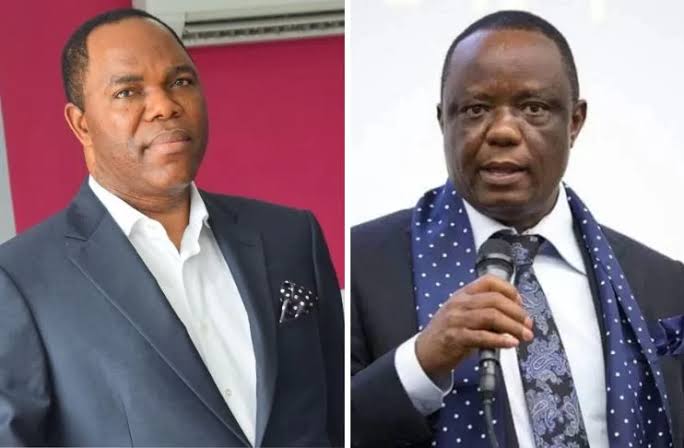
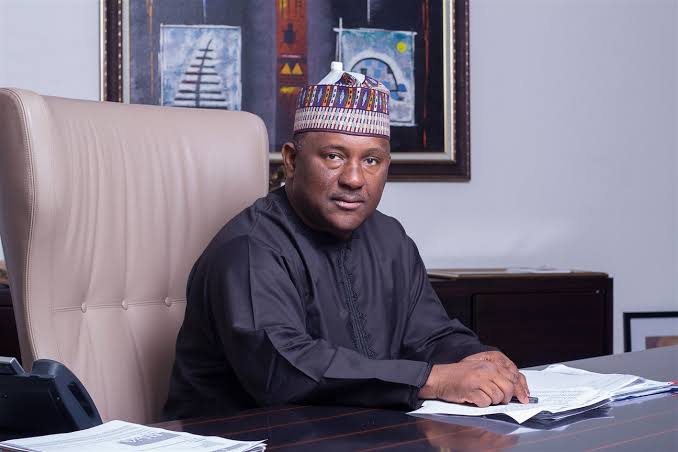
The allegation by a former director of Ocean Marine Solutions (OMS) Limited, Mr Tunde John Ayeni, that the company was hijacked by Captain Hosa Okunbo has been contradicted by a series of validly-executed company resolutions and other documents was obtained by our reporter which he (Ayeni) signed, transferring his shares in OMS and its other associated companies to Wells Property Limited.
Ayeni had, through his lawyer, Femi Falana (SAN), petitioned the Economic and Financial Crimes Commission (EFCC) on the matter and had also raised issues of alleged financial misappropriation by his erstwhile business partner, Captain Okunbo.
His narratives including the allegations most of which were not substantiated or backed up by documentary evidence, were contained in the nine-page petition dated December 7, 2020 and titled: “Request for investigation of stealing and criminal diversion of company fund”.
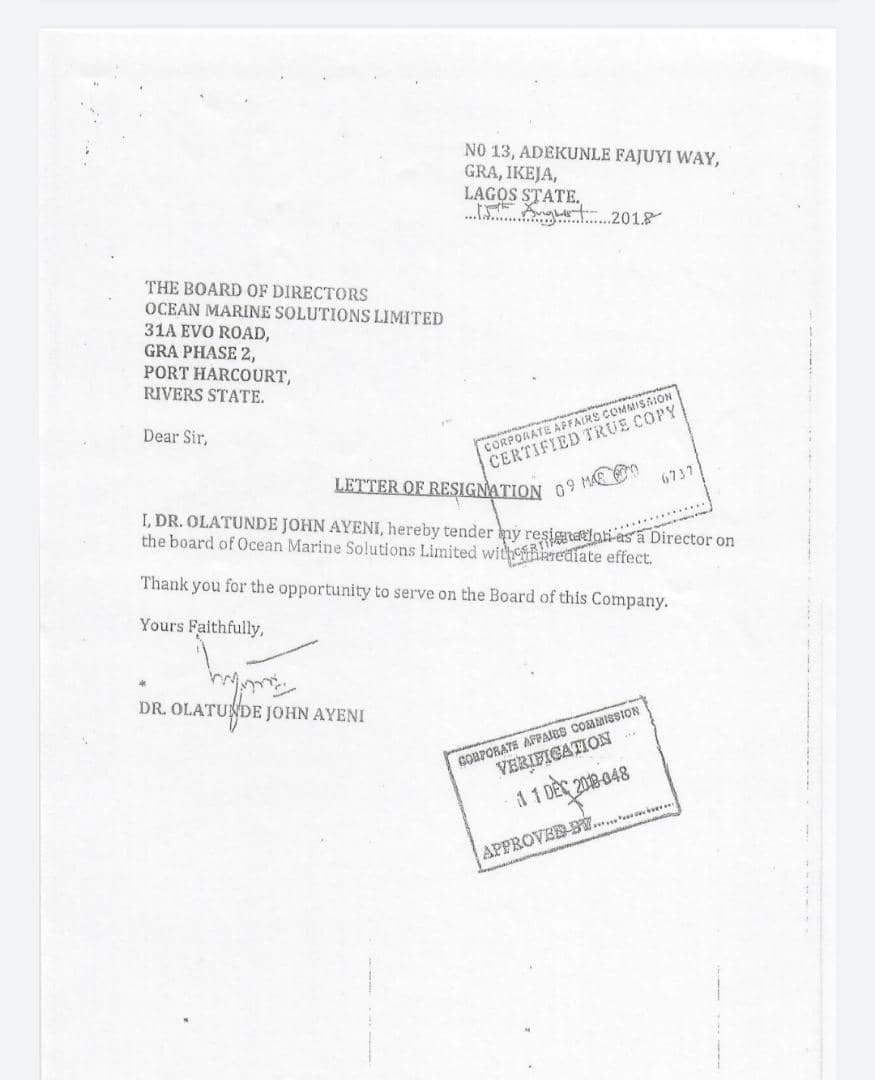
All the documents made available by the management of OMS in its defence clearly showed that Ayeni was part of the processes and meetings that culminated in his transfer of all his shares in OMS and its associated companies to Wells Property Development Company Limited.
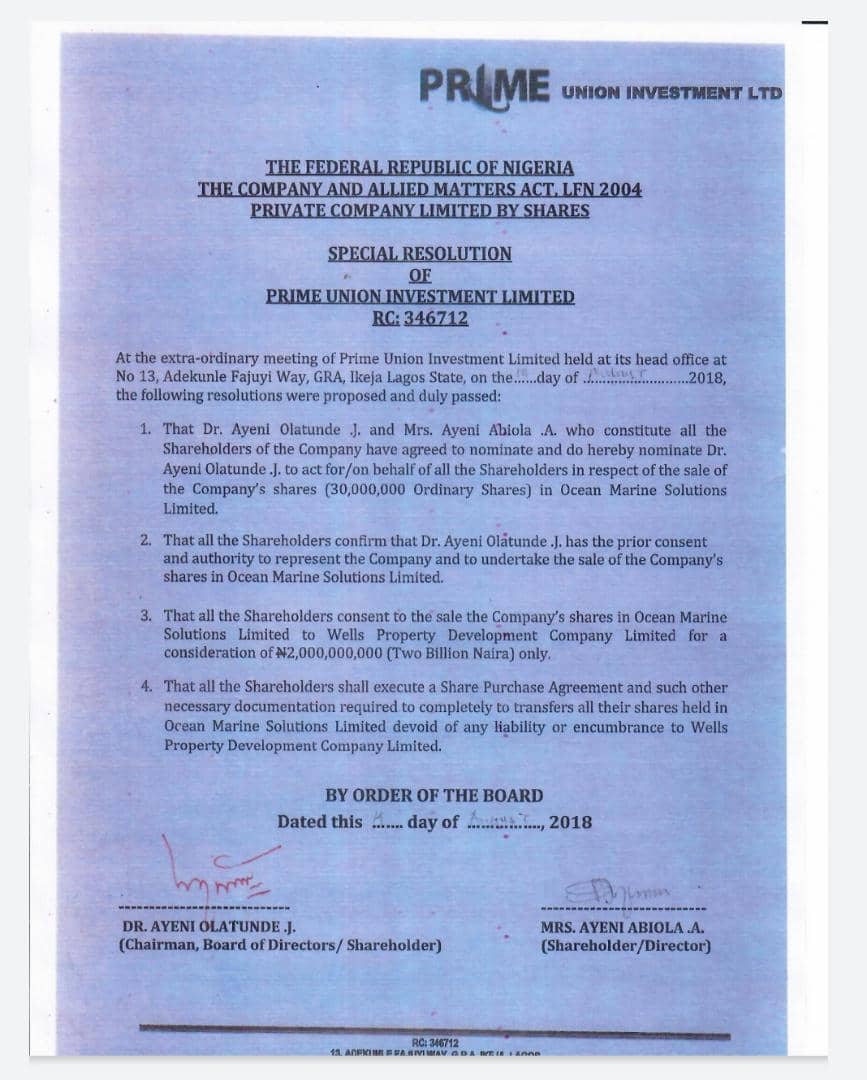
Significantly, he and his wife, Abiola Ayeni, duly signed the special resolution of their Prime Union Investment Limited where he is Chairman Board of Directors/shareholder and with wife as Director/shareholder in respect of the sale of 30,000,000 ordinary shares in OMS to Wells Property Development Limited for a consideration of N2 billion only.
The special resolution was dated August 14, 2018. All the shareholders had subsequently executed a share purchase agreement and other necessary documentations required to completely transfer all the shares held in OMS devoid of any liability or encumbrance to Wells Property Development Company Limited.
The documents confirmed that as far back as 2018, Ayeni had ceased being a director and shareholders in OMS, having sold his entire shares in the company.
The claim by OMS management is that Ayeni who is neither a director nor a shareholder in the company cannot allege financial misappropriation in a manner as to claim he was affected by its administration as he is just a meddlesome interloper in the affairs of the company.
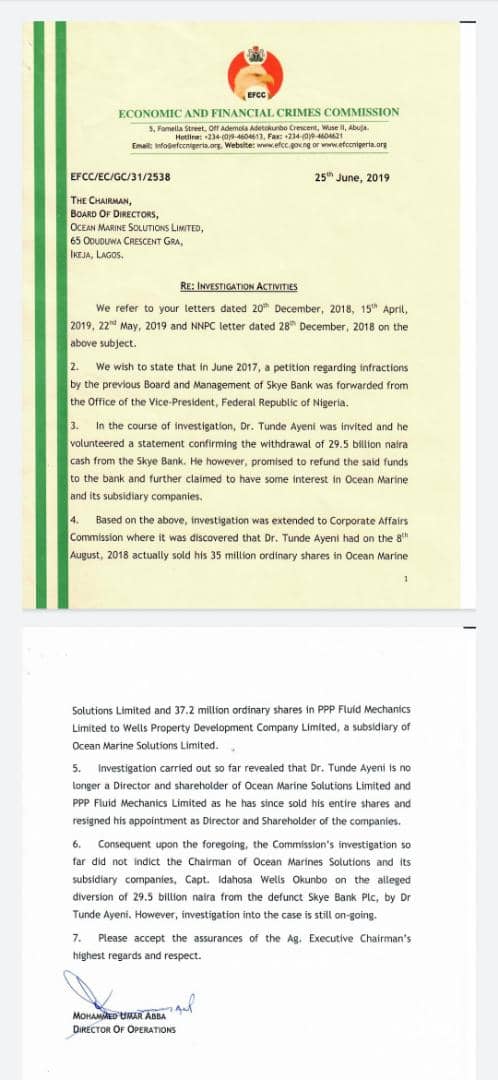
Besides, the EFCC had, in a letter to the Chairman and Board of Directors of OMS on June 25, 2019, confirmed with the Corporate Affairs Commission (CAC) that Ayeni had sold his entire shares and resigned as Director and shareholders of the company(Documents attached).
The letter signed by EFCC’s Director of Operations, Mohammed Umar Abba, was tilted: “Re: Investigation Activities”.
It read in part: “We refer to your letters dated 20th December 2018, 15th April 2019, 22nd May, 2019 and NNPC letter dated 28th December 2018 on the above subject.
“We wish to state that in June 2017, a petition regarding infractions by the previous Board and Management of Skye Bank was forwarded from the Office of the Vice President, Federal Republic of Nigeria.
“In the course of investigation, Dr Tunde Ayeni was invited and he volunteered a statement confirming the withdrawal of 29.5 billion naira cash from the Skye Bank. He, however, promised to refund the said funds to the bank and further claimed to have some interest in Ocean Marine and its subsidiary companies.
“Based on the above, investigation was extended to the Corporate Affairs Commission where it was discovered that Dr Tunde Ayeni had on the 8th August, 2018 actually sold his 35 million ordinary shares in Ocean Marine Solutions Limited and 37.2 million ordinary shares in PPP Fluid Mechanics Limited to Wells Property Development Company Limited, a subsidiary of Ocean Marine Solutions Ltd….”
The EFCC had said that its investigation so far did not indict the Chairman of OMS and its subsidiary companies, Capt Okunbo(a copy attached).
Recall that Ayeni was once a non -Executive Chairman of defunct Skye Bank.
Other documents directly relevant and/or ancillary to the validation of the legitimate acquisition of Ayeni’s shares in OMS are published hereunder, including a letter by Mr Ned Nwoko who Ayeni’s lawyer, Femi Falana (SAN) mentioned in his petition to the EFCC.
Nwoko, in the letter to the Inspector General of Police, on the funding for Paris Club litigation said he did not know Ayeni and that he related directly and on personal basis with Capt. Hosa to the exclusion of OMS(Document included).
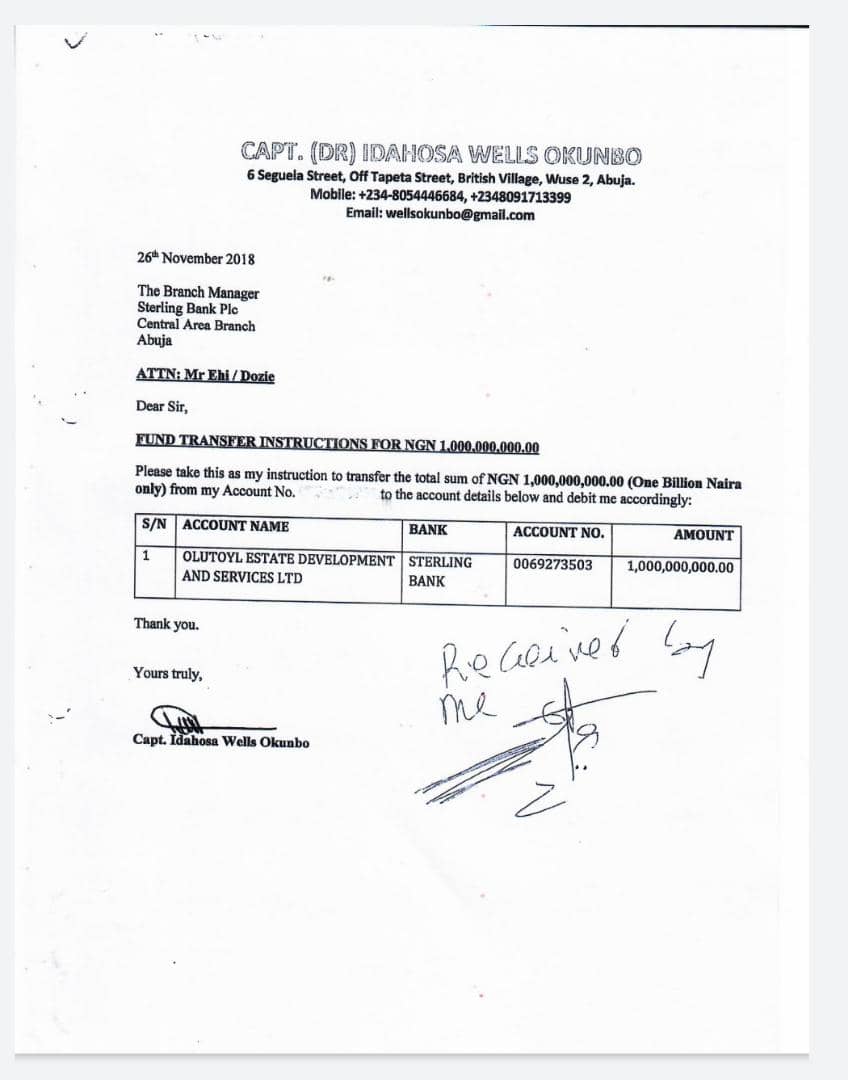
Also our Reporter obtained a payment instructions document from office of the Chairman, Ocean Marine Solutions Limited to effect #1 billion transfer to Ayeni’s company Olutoyl estate development and services Ltd owned on 26th November, 2018 and the balance was paid over a period of 2 years installment.
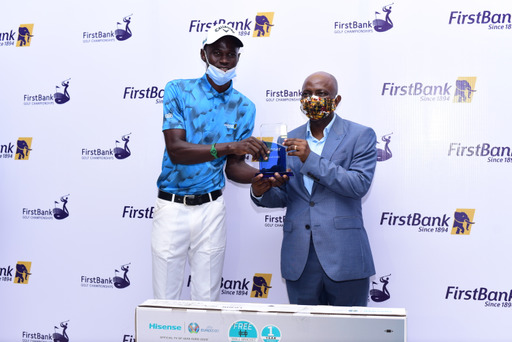
Mr. Tajudeen Ajayi, winner of the 59th FirstBank sponsored Lagos open golf championship receiving the award from Mr. Olusegun Alebiosu, Chief Risk Officer, FirstBank and representative of the Bank’s CEO at the prize presentation and award night of the 59th edition of the annual FirstBank sponsored golf tourney, recently held at the Ikoyi Club, Lagos.
Ikoyi Club based category-1 amateur golfer, Ajayi Tajudeen has emerge winner of the 59th edition of the FirstBank sponsored Lagos Open Golf Championship. Ajayi closed with 1-under par 70 for a total of 7-over the course par to win the Championship by two-shots after 56-holes.
Happy at the recently held golf tourney, Ajayi adduced his success to hard work, saying “I practiced a lot”.
“There is no short cut to success which is why I take the sport very seriously. I was well prepared for this tournament because I practiced a lot”, he said in a chat with newsmen shortly after being declared the Champion.
With his victory, Ajayi replaces Peter Eben-Spiff on the FirstBank Open winners list.
Playing 4-shots adrift going to the final round, Ajayi recorded bogey free 18-holes to steal the show ahead of overnight leader, Gabriel Ejembi who carded a closing 76 for 9-over the course par over 56-holes to beat clubmate Ejembi to the second position.
Coming in the third position was Tochukwu Emuwa at 14-over. Emuwa opened his game with 76, a second-round score of 75 and a closing 74 to duck in the third position.
Olusegun Emmanuel came fourth while Junior Champion; Osiregbeme Egbakhumeh completed the top five in the R&A and USGA sanctioned championship.
Satisfied with the outcome of the competition, Olusegun Alebiosu, the Chief Risk Officer of FirstBank, who represented the Bank’s Chief Executive Officer, reiterated the banks continuous support for the championship.
The competition was organised in full compliance with Federal Government Covid-19 protocols
The New year started on an amazing note for staff and distrubutors of fledgling bakery, City Tasty Confectioneries, as the management of the company doled many gifts to them, at the end of the year party of the company held days back, at the headquarters on Remi Olagunju drive, Aboru, Iyana Ipaja, on the outskirts of Lagos state.
It was a well-attended event, that attracted friends and distributors of the company; it was also an interactive session where distributors and customers laid bare complaints while the management threw light on many of their concerns.
The event, which was anchored by ace on air personality Yemi Sonde, climaxed with the presentations of gifts to many distributors, of the company for their loyalty to the company, since it started operation in April, 2019.
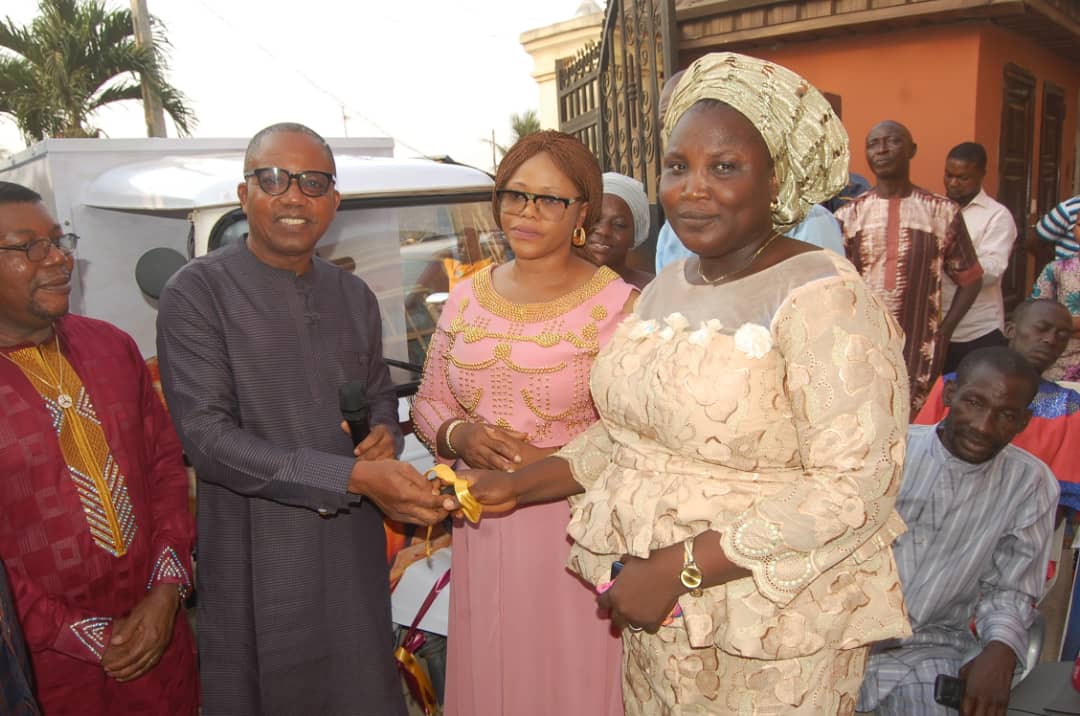
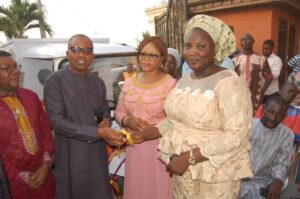
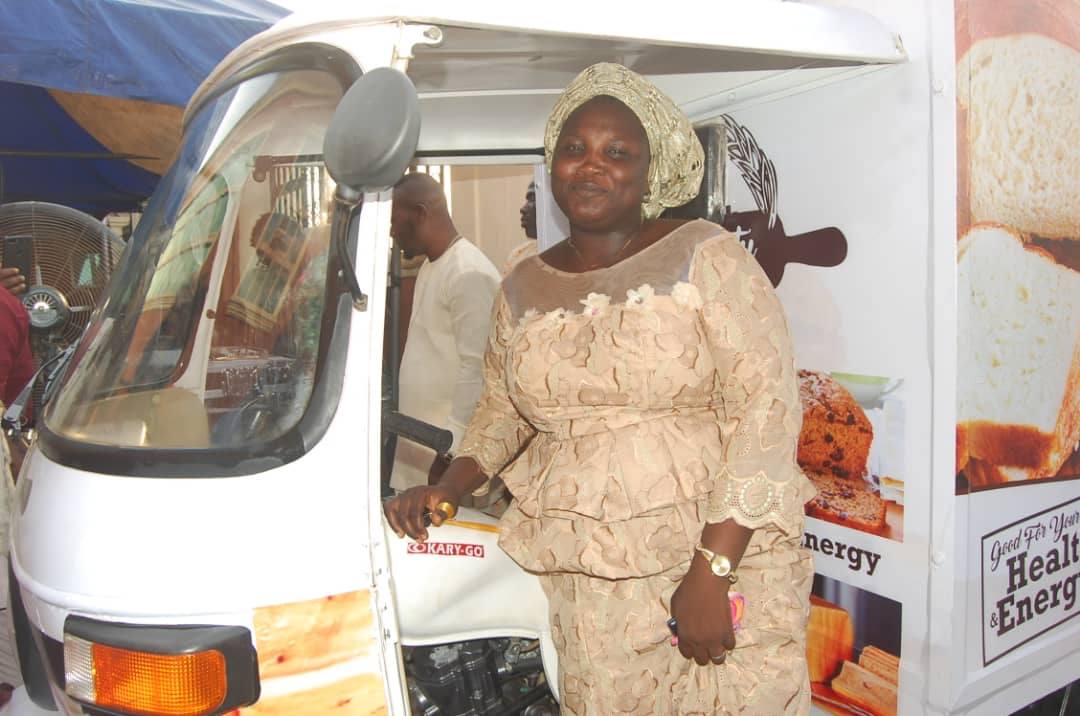
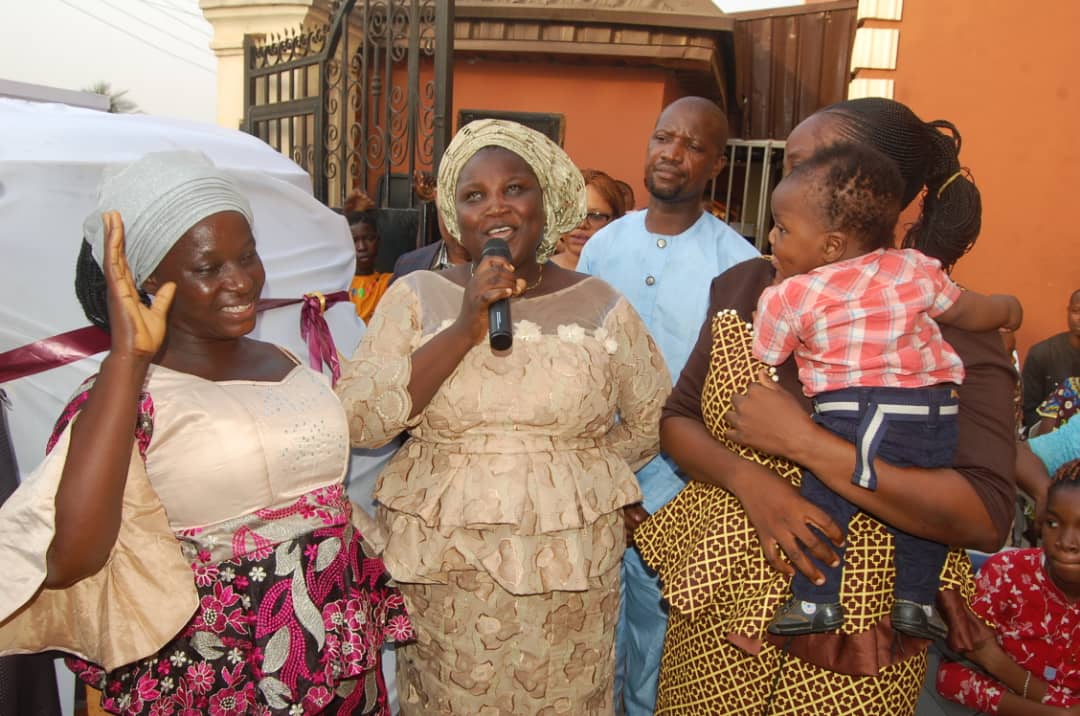
The grand price was Keke Marwa made for bread distribution was won by Ayeni Omowunmi for her diligence and loyalty to the company. Other gift were TV sets, Electrics Kettles, Standing fans, Washing Machines, Generators, and many more.
The grand gift was presented to the ecstatic winner by the Managing Director Mrs Olushola Kolade,along with Pastor Roland Oluwole and Dr Yomi Ogunmola, amongst the many dignitaries. In the vote of thanks,delivered by Taiwo Rosanwo,the company’s accountant,City Tasty Confectioneries,promised better gifts for the distributors, in the emerging year.
Ecobank Nigeria has launched a radio programme – “Ecobank Business Hour” targeted at empowering small and medium enterprises (SMEs) in the country. Emeka Agada, Head, SME, Ecobank Nigeria, says the programme which is being syndicated across 10 radio stations in Nigeria is one of the several initiatives the bank is deploying to empower its SME customers with the right resources to thrive. He stated that the programme will also enlighten the public about the various solutions designed by the bank to help businesses.
He explained that the radio programme being produced by Royal Roots, one of Nigeria’s leading production companies, has already commenced and will be aired for an initial period of 13 weeks. He added that the rich content will help entrepreneurs and business managers to upskill and reskill for growth in the new digital landscape. According to him, “This further underscore our unwavering commitment to supporting and sustaining the development of SMEs in all sectors of the economy. The radio programme promises to be an impactful series. I encourage all small business operators including their customers, friends and family members to set aside time to listen to the programme and get tips on how to grow their businesses.”
Also speaking, Greg Odutayo, Managing Director, Royal Roots, said the program will enable aspiring entrepreneurs understand how to set up and manage successful businesses. He commended Ecobank for supporting a programme of this nature, capable of generating positive activities in the SME space.
The Business Ecobank Hour is being anchored by the duo of Greg Odutayo, a presenter, producer and director with over 28 years of professional experience and Helen Ese Emore, an international facilitator, seasoned MSME project development and business coach. The programme will run in 10 radio stations including, Inspiration 92.3FM, Lagos, RayPower 106.5FM, Kano, Odenigbo 99.1FM, Obosi, Liberty 91.7FM, Kaduna and PH Family Love 97.7FM, Port Harcourt and of others. Some of the topics and issues lined up for the broadcast include- starting a new business, structuring your business and business planning, company registration, funding your business, creating markets for your products, taxes and taxation, digital payments and collections, how to obtain SONCAP and NAFDAC registration for all products and many other relevant topics, in addition to tips on how to access Ecobank’s bouquet of offerings for SMEs.
Only recently Ecobank Nigeria was named Among 2020 Customer Experience Leaders in Nigeria by Leading audit and professional services company, KPMG Nigeria. Specifically, the report stated that respondents were impressed with the interaction between Ecobank and its customers during the COVID-19 pandemic lockdown, stressing that the bank was able to provide personalized service to its respective customer segments. KPMG’s Nigeria banking industry customer experience survey measures the performance of lenders in the country in terms of their relationship with their account holders and other users of financial services.
Gates’s Cascade Investment LLC, the No. 1 shareholder in Signature Aviation, and Blackstone are in advanced discussions with the London-based firm on a $5.17-a-share cash offer, they said Friday in a statement. Signature had said in December it would accept an approach from Blackstone if a firm offer were made at that level.
The involvement of Gates means Blackstone becomes the firm favorite to purchase Signature after Carlyle Group Inc. said Thursday it was also considering a potential offer. A third suitor, Global Infrastructure Partners, said in December that it was considering its options after its lower bid was rejected.
Shares of Signature were trading 4.8% lower as of 8:10 a.m. in London as prospects for a bidding war faded. The stock was priced at 397.90 pence, equivalent to $5.40, still above the offer mooted by Blackstone.
Private flying is one of the few travel sectors to have benefited from the coronavirus pandemic, offering the well-heeled the opportunity to continue traveling while minimizing potentially risky contact with other passengers.
Under the Blackstone plan, Microsoft Corp. founder Gates, who owns 19% of Signature, would contribute his shareholding and top it up with cash to become a 30% owner. Blackstone owns 70% of the bidding entity.
Signature, which changed its name from BBA Aviation last year, traces its origins to a Scottish industrial company founded in 1879. It’s had several names since and has focused on private aviation in recent years, selling parts distributor Ontic last year for $1.4 billion.
The company has also made several acquisitions, buying rival Landmark Aviation for $2.1 billion from Carlyle in 2016, and acquiring Epic Fuels for $88 million in 2018. Gates became an investor in 2009 and holds his stake through Cascade Investment LLC.
Signature had become a more likely takeover target since simplifying and selling its Ontic unit, according to Citi analyst Charles Mortimer.
Carlyle is working with Bank of America Corp. and Morgan Stanley on its approach, people familiar with the matter said, asking not to be identified because the information is private.
Signature confirmed the Carlyle approach and set Feb. 4 as a deadline for a firm offer. It set a Jan. 14 deadline for formal proposals from the Blackstone and GIP.
Elon Musk just became the richest person in the world, with a net worth of more than $185 billion.
Thursday’s increase in Tesla’s share price pushed Musk past Jeff Bezos, who had been the richest person since 2017 and is currently worth about $184 billion. Musk’s wealth surge over the past year marks the fastest rise to the top of the rich list in history — and is a dramatic financial turnaround for the famed entrepreneur who just 18 months ago was in the headlines for Tesla’s rapid cash burn and his personal leverage against the company’s stock.
Musk started 2020 worth about $27 billion, and was barely in the top 50 richest people.
Tesla’s rocketing share price — which has increased more than ninefold over the past year — along with his generous pay package have added more than $150 billion to his net worth.
Meanwhile, Amazon’s share price has remained more subdued due to the potential for increased regulation from Washington.
Elon Musk passed Warren Buffett in July to become the seventh-richest person. In November, Musk raced past Bill Gates to become the second-richest person. Musk has gained more wealth over the past 12 months than Bill Gates’ entire net worth of $132 billion.
Tesla’s shares closed Thursday at $816.04, up nearly 8%. The company’s market value has grown to more than $760 billion.
While the Bloomberg Billionaires Index had Musk within $3 billion of Bezos’ net worth on Wednesday, before Thursday’s trading, the Forbes Real Time Billionaires List had Musk about $7 billion behind Bezos after the market close Thursday. Forbes pegged Bezos’ net worth at $184.6 billion and Musk at $177.2 billion. Forbes, however, may not be including the value of Musk’s options, which he received as part of his pay package, to buy more than 33 million shares of Tesla.
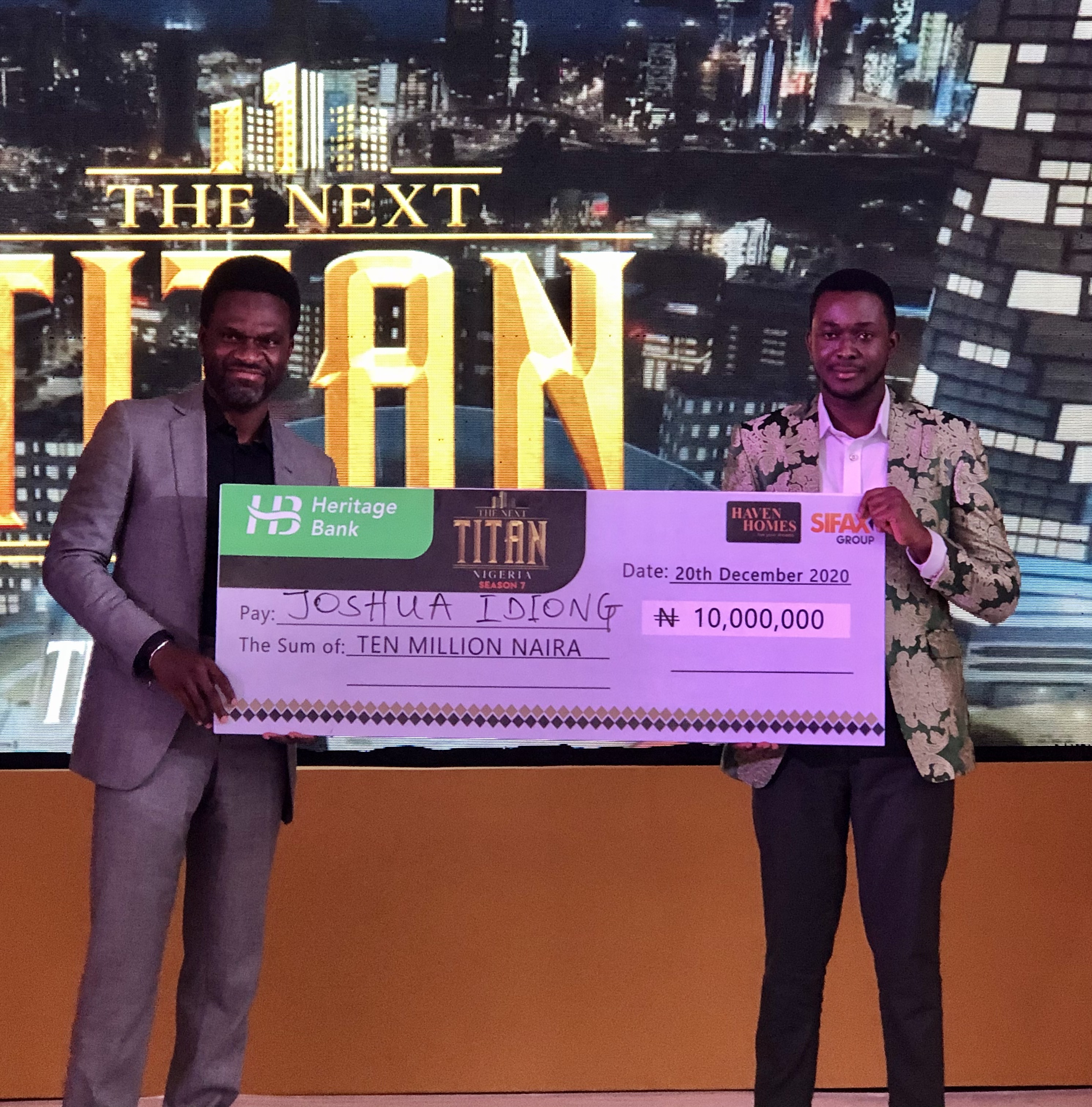
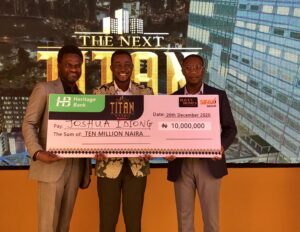
R-L: Fela Ibidapo, Divisional Head, Corporate Communications, Heritage Bank; Kyari Bukar, Lead Judge of The Next Titan; Lilian Olubi, Judge; Joshua Idiong, Winner, The Next Titan Season-7; Tonye Chris Parkes; Mide Kunle Akinlaja, Executive Producer, The Next Titan and Cole, Judge, Judge, Titan, during the presentation of N10million prize at the grand finale of The Next Titan Entrepreneurial Reality TV show Season-7, headline sponsored by Heritage Bank Plc, held in Lagos recently.
Heritage Bank Plc, Nigeria’s Most Innovative Banking Service provider, in its continued bid to support Micro, Small and Medium Enterprises (MSMEs), has again empowered the winner of The Next Titan Season-7 with whooping sum of N10million.
An entrepreneur, Joshua Joseph Idiong who is the CEO of Josult Oil Processing Company, a palm oil processing company in Akwa Ibom State emerged the winner of the Next Titan Season-7, themed: The Unstoppable.”
The graduate of Federal University of Technology Owerri with Bachelor Degree in Environmental Science emerged winner after competing with Ifeanyi Nkwonta, Chidinma Eriobu and Ifeoma Benjamin at the grand finale in Lagos.
Idiong’s entry on the show was amongst the 18, 000 entries, followed by online auditions before the top 16 moved into the Titan House for 10weeks to compete against top notch young entrepreneurs in real-life entrepreneurial tasks.
The programme paneled by technocrats with perfect blend of entrepreneurial requisite skills trained each participant on enriching, rigorous and intellectually learning journey to equip them with the fundamental competencies required of seasoned entrepreneurs.
The frontline Panel of Judges from different spectrum of entrepreneurial fields were Kyari Bukar Co-Founder/CEO Trans-Sahara Investment; Lilian Olubi, CEO, Primera Africa Securities Ltd; Chris Parkes, Chairman/CEO, CPMS Africa and Tonye Cole, Co-Founder, Sahara Group.
The winner, who highly commended the headline sponsor-Heritage Bank Plc for its continued supports to entrepreneurs and sponsorship of the Next Titan, said, “Heritage Bank is an amazing bank that has stood strong on this show. My love for Heritage Bank stems from the fact that this is my second time on this show but before I came in, I have learnt so much from the show.
“This means that Heritage Bank is truly affecting the lives and businesses of entrepreneurs positively, alongside the viewers. This is a bank that has differentiated itself from other banks in boosting the strength of SMES in Nigeria.”
Speaking at the grand finale, MD/CEO of the Bank, Ifie Sekibo stated that the programme easily aligns with the primary focus of the management of Heritage Bank to promote every laudable entrepreneurial idea meant to broaden economic horizon of the country for the benefit of citizens and other residents of Nigeria.
L-R: Fela Ibidapo, Divisional Head, Corporate Communications, Heritage Bank; Joshua Idiong, Winner, The Next Titan Season-7 and Mide Kunle Akinlaja, Executive Producer, The Next Titan presenting the 10million prize to the winner, at the grand finale of The Next Titan Entrepreneurial Reality TV show Season-7, headline sponsored by Heritage Bank Plc, held in Lagos recently
Sekibo who was represented by the Divisional Head, Corporate Communications, Fela Ibidapo further affirmed, “as a catalytic institution in the empowering of entrepreneurs in the micro, small and medium enterprises (MSME) sector, Heritage Bank has continued to make relentless efforts in this space to empower entrepreneurs in Nigeria through championing several empowerment schemes like the HB Innovation Lab Accelerator programme (HB-LAB), Ynspyre Account, Youth Innovative Entrepreneurship Development Programme (YIEDP), Centre for Values in Leadership (CVL) on Young Entrepreneurship Business Training Programme (YEBTP), Young Entrepreneurs and Students (YES) Grant and Nigerian Youth Professional Forum (NYPF), Big Brother Nigeria, Lagos Comic Con, amongst others.”
The Executive Producer of the entrepreneurial Reality Show, Mr. Mide Kunle-Akinlaja in his address explained that the project was created and designed as a deliberate attempt to provoke the spirit of entrepreneurship of young Nigerians, not only the contestants on the show, but other multitude of aspiring entrepreneurs who can watch the show on TV.
He said that the Season-7 was designed to search for business ideas that are immune to any pandemic, innovations that break boundaries and technologies that can survive any lockdown.
“It does not matter what your business idea is all about or its focus, but you must be able to prove that your business has what it takes in terms of ideas or technologies to survive any future pandemic or lockdown,” the Next Titan Producer stated.
First Bank of Nigeria Limited, Nigeria’s premier and leading financial inclusion services provider has announced its ongoing digital campaign “Mask Up, Stay Safe” as part of its advocacy to encourage everyone to consciously protect one another against the COVID-19 pandemic.
The digital campaign which is designed to employ a fun approach to urge and engage its stakeholders on the need to observe the safety and precautionary guidelines during the festive season is implemented using the Bank’s customised face mask filter on instagram, that is made of the bespoke FirstBank 125th Anniversary pattern in Ankara fabric giving a distinct African contemporary an consistent look.
The “Mask Up, Stay Safe” digital campaign is part of the FirstBank’s December activities which kicked off on the 7th December 2020 themed: “12 Days of Christmas and 12 Days of Kindness”.
The activities are structured in part to increase public awareness and participation in the Bank’s SPARK (Start Performing Act of Random Kindness) initiative with the central goal of reigniting the societal moral values by encouraging people to choose to do the right thing and reinforcing a consciousness/mindset of showing compassion, empathy; as well as giving to others aimed at inspiring people to make a difference.
Speaking on the campaign, Dr. Adesola Adeduntan, the CEO of FirstBank said “In the spirit of walking the talk, I have uploaded my Instagram story with the virtual face mask and I crave your indulgence to join me in doing the same.”
“This campaign is targeted at informing our customers and the general public that staying safe and protected through face mask wearing is paramount now, more than ever, as it is a way of mitigating the unforeseen tragedy of the second wave of the COVID-19 Pandemic. Stay Safe First!” he concluded.
I would like to thank the Institute of Directors Nigeria for deeming it fit to admit me as a Fellow of this esteemed institution. It is indeed a great honour.
I remember when I was invited last year as a special guest of honour during the 2019 IOD Dinner; I announced that BUA Cement was preparing to list on the NSE. Since you all began this journey with me, please allow me to report back that BUA Cement listed afterwards and is now one of the most capitalized companies on the Nigerian Stock Exchange.
With a market capitalization of 1.9trillion Naira, EBITDA of N82bn and PAT of N60bn Naira as at FY2019, we are on course to hit EBITDA of 100billion Naira by the end of 2020 despite the dire conditions brought about by the COVID-19 pandemic this year.
Our outcomes are very significant because BUA Cement is a manufacturing and mining outfit and is currently one of the most profitable manufacturing entities on the Nigerian Stock Exchange. Our successes are exceptional because in mining, you are expected to add a lot more value compared to many other industries due to the use of locally sourced raw materials in your operations. Regardless of the hurdles posed by this global pandemic, we continued to create jobs and sustainable wealth for our workers, investors and by extension, our customers.
I must add that with the presence of resources needed across the country, we have been able to stabilize prices irrespective of where anybody lives in Nigeria and as a result, the price of cement in Lagos is similar or the same as the price of cement in Maiduguri, Yenagoa, Sokoto or Onitsha. In addition to this, only 5% of our revenues are used for imports in FX; this has freed up necessary funds to pursue further expansion and development across our brand portfolio, particularly in the field of innovative manufacturing.
The cement industry in Nigeria is currently producing about 28 million metric tonnes of cement per annum, which translates to about 120kg per head in terms of consumption per capita. This is lower than consumption per head in the rest of Africa. Based on this, it is very clear that we are not even producing enough cement. Where others see low consumption figures, I see opportunity; it means Nigeria and the surrounding region is still home to huge opportunities in housing, infrastructure, and allied industries.
Demand and consumption currently outstrips supply; our population is increasing, logistics remains a huge challenge, coupled with reduced production amongst some players. This is why the price of cement in the market is currently about 20% higher than the price of cement ex-factory. Plants are aging and BUA is one of the few that have new plants. We have therefore taken it upon ourselves to tangibly bridge the demand gap by 2022. The potentials exist because ideally, Nigeria should be producing at least 300kg per head or about 60million metric tonnes per annum – which is double our current production capacity.
Imagine with me for a second, if we were still importing cement. The cost of logistics alone would have made the price of cement out of the reach of many – especially those in far-flung states. As I said earlier, and many of us have experienced, the retail price of cement is currently high. However, at about $120/ton ex-factory this is still lower than the price of cement per ton in many African countries. This equally means the market is big enough for new investments and unless we all come out to face these challenges as leaders, development will be difficult to achieve.
In view of these challenges, I am happy to announce that our 3rd cement line of 3mmt per annum in Sokoto is expected to be commissioned in the middle of 2021, and I am also pleased to inform you that we are commencing the construction of 3 more cement plants of 3 million tonnes each in Sokoto, Edo and Adamawa at the cost of $1.050billion which should be completed by the end of 2022. The contract signing is expected to happen this week.
However, I am also of the strong belief that it is not only in Cement that these large-scale projects are possible. Nigeria hosts other huge mineral deposits waiting for us to add value, to extract maximum benefits. Iron Ore is one of them.
Our country is one of only 11 countries in the world that is sitting on iron ore, coal and even gas and yet, we appear to be the only ones yet to take full advantage. It is estimated that we spend about 3 billion dollars a year importing steel, which we can produce locally using our resources thereby saving billions of dollars in foreign exchange every year.
In fact, if we can have a two-million-tonne, fully integrated steel plant at the cost of about 2 billion dollars, we will be saving about 2 billion dollars every year. By fully integrated, I mean processing from Iron ore to Beneficiation, Pelletizing, DR Plant, SMS, Steel, Long products, sheets, angles – all aspects of the value chain. If we even decide to undertake beneficiation alone, this would be more lucrative than processed limestone, which is the raw material for cement. I daresay if we are able to take full advantage of this – then we can firmly place our sector and country on the road to sustainable development.
As business leaders, we are not exploring and exploiting these opportunities enough and the few of us who are doing it, definitely cannot do it alone. I say this because there are huge opportunities in mining, manufacturing, and the agricultural value chain – just as there are in the services space. Agriculture is a prime area in need of serious intervention, and we need more Nigerians to step up here.
Do you know that, 60% of the world’s arable land resides in Africa? And as is often said, “if potential were edible, Africa will be the best fed continent in the world.” The same applies here to Nigeria. I flew last week from Lagos to Sokoto and could see the fertile plains from Kwara, Niger, all the way to Sokoto, waiting for us to take advantage of. How long will we continue to rely on importing food? Our continued inability to grow what we eat exposes us to various shocks, the most debilitating being the 2020 pandemic. This is one of the reasons why at BUA we are renewing our focus on the agriculture and foods space.
Just like I said last year for cement, BUA is also looking to combine our foods businesses – from sugar, flour, pasta to list as BUA FOODS on the NSE by the end of 2021. In sugar, we have our integrated plantation in Kwara State set to produce 200,000tonnes of refined sugar, 20million litres of ethanol annually and 35MW of power – all utilizing the by-products of cane sugar. We also have a refinery in Lagos and Port Harcourt. In flour and pasta, we have also started looking at backward integration for Nigerian-grown wheat to reduce our dependence on imported wheat and revive production in the sector. Nigeria currently imports over 5million tonnes of wheat and this places a huge strain on our scarce FX as a country.
The opportunities in the agriculture and agribusiness space are endless. How are we as leaders looking to take advantage of this space? How can we work together, and what examples – or opportunities are on the horizon?
In terms of our plans, we recently announced that BUA will be building a Refinery and Petrochemicals complex. Why? Because we saw an opportunity even though there is another big project in that space, coming on stream. Local consumption is quite huge and estimated at 800,000barrels per day. This is in addition to the huge regional market that exists for petroleum products. Alongside the refinery, we are building a polypropylene plant, which will answer the demand for polypropylene in the region. It is common knowledge that about a third of our country’s FX earnings go towards the importation of petrol and petroleum products. More strange is the fact that the cost of logistics for transporting these products to Nigeria could instead be deployed to significantly revamp the refining space and therefore, at BUA, we couldn’t just sit back – we knew we had to take action and I am certain we have made the right call yet again.
On a final note, I want to say again that we NEED MORE PEOPLE TO COME AND INVEST in various sectors of the Nigerian economy. We have the Climate, People, Land, Water, Mineral Resources – we have almost everything. The final piece is we must begin to produce what we consume and consume what we produce. Where we cannot do either, we must become a regional powerhouse in value-addition – if not for anything, but to take advantage of the benefits of the AfCFTA. The African Continental Free Trade Area presents a massive opportunity for us as a country and unless we take full advantage, we may become a dumping ground due to Nigeria’s unique position of being Africa’s largest economy, and our huge population. We must begin to look at a cross-pollination of our industries amid economic integration and finally, as Nigerian business leaders, we need to be less shy and more bullish in taking advantage of opportunities. This is my charge to us all, and I humbly expect to cheer on, and learn from your successes in the coming financial year.
Rabiu, Founder & Chairman of BUA Group, delivered this speech last Sunday when he was admitted as a Fellow of the Institute of Directors (Nigeria)
First Bank, NAOSRE & Internal Security is a contextual analysis of NAOSRE’s commitment to a safer Nigeria and the supporting role of First Bank through a philosophical approach to the relationship between media and corporate institution. Andy Ennette, a NAOSRE member, writes from Lagos.
Unarguably, the year 2020 has particularly been very contending for Nigeria as a country. The year has been a very tough one for citizens, businesses and indeed, the security operatives. For a country like Nigeria that has to daily contend with other variables, this could be worrisome.
Aside the problem of kidnapping, banditry, and armed robbery, which the people have been subjected to across the nation, Covid – 19 pandemic added to the dimension and took toll on the people.
There was the issue of ASUU strikes. There was the threat of Labour unrest. The culmination of these crises was the #ENDSARS Protests which recently took the country by storm.
However, when the country is faced with myriads of challenges, ranging from insecurity, food scarcity and infrastructural deficit, the role of the media as the fourth estate of the realm for objective presentation of facts and the banking system in providing financial succour for small and medium enterprises, SME cannot be over emphasized.
These two institutions are very central in the quest for solutions and ameliorating the problem. First Bank Nigeria Plc, for instance, has, since the beginning of the pandemic, offered several financial succour to the banking public. The bank has shown uncommon responsiveness and compassion towards customers and communities through various offerings. Amongst them are the e learning for children in school when the foremost financial institution discovered that the recent lock down was going to negatively affect school children.
In like manner, First Bank , through its financial inclusion initiative, FirstAdvance, has disbursed over N17 billion as loans to individuals, across the country. Just last Friday, December 11, 2020, First Bank made a remarkable showing at a security dinner summit organized by the National Association of Online Security Reporters, NAOSRE which held at Oriental Hotel, Lagos.
The security dinner was organized by NAOSRE to aggregate options for a secured Nigeria. The physical presence of its staff and financial support were the needed convictions that First Bank’s commitment to the growth of Nigeria’s economy is proportionate to the efforts it deploys to the security of its personnel, deposits and assets. These financial offering and innumerable Corporate Social Responsibility, CSR, projects across the country and beyond have earned the bank, with over a century banking experience, many awards and rewards home including overseas.
Moreso, media anywhere in the world is central to the resolution of peace and tranquility necessary to the success of national development efforts. The Media must be very responsible and responsive to the needs of the populace in information gathering, processing and dissemination to avoid spreading false and dangerous information referred to as ” Fake News” , which are capable of compromising national security.
Therefore, the choice of theme by the National Association of Online Security Reporters known as NAOSRE, for this year’s Annual Dinner Night Discourse which is tagged: 2021 Nigerian Security Issues, Funding and Prospects” is apt, and the ideas generated from the deliberations would no doubt assist greatly in finding lasting solutions to the security challenges which the country is currently facing.
Interestingly, NAOSRE has successfully established a sustainable working relationship with key security players in the corporate world and security agencies in the country, including but not limited to Nigeria Army, Nigerian Navy, Nigerian Airforce, Nigeria Police Force, Nigerian Civil Defence Corps, Nigerian Customs Service, Federal Road Safety Corps, the Executive/ Legislative Arms of government as well as the traditional institution across the country.
This, we hope, would organically shape policy direction in 2021 for a safer Nigeria.