Super Eagles arrive Uyo after aircraft scare


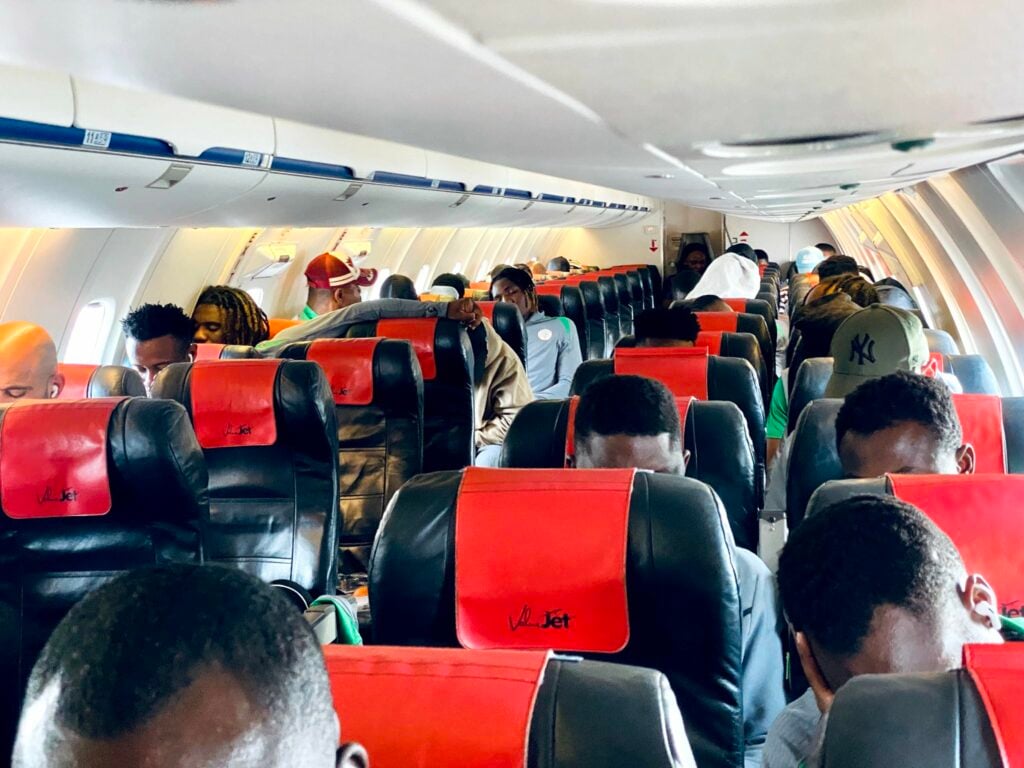
Nigeria’s Super Eagles have arrived safely in Uyo, Akwa Ibom State, following an unexpected delay to their flight from South Africa caused by a technical fault, PUNCH Online reports.


The team, who are preparing for their decisive 2026 FIFA World Cup qualifier against Benin Republic on Tuesday, touched down at the Victor Attah International Airport, Uyo, at 8:05 am on Sunday, according to team media officer Promise Efoghe.


“Finally, Super Eagles arrive in Uyo, Akwa Ibom. The team touched down at 8.05 a.m. Sunday morning,” Efoghe confirmed in a statement issued to the media.


A video later released by the team’s media department showed players and officials disembarking from the ValueJet aircraft, signalling the end of a tense and delayed journey that had begun in Polokwane, South Africa.

The Super Eagles had departed Polokwane late on Saturday, shortly after their match preparations in South Africa. However, what was meant to be a routine journey turned anxious when the ValueJet aircraft, which had earlier stopped in Luanda, Angola, for refuelling, developed a technical fault mid-air.


About 25 minutes after take-off, the pilot made an emergency U-turn back to Luanda after a loud crack appeared on the aircraft’s windscreen.


The Nigeria Football Federation confirmed in an official statement that the cracked windscreen forced the flight to return to Luanda, where all players, officials, and accompanying government delegates safely disembarked.

The federation noted that the incident occurred after a routine refuelling stop, with the pilot “guiding the airplane safely back to the airport in Luanda”.


Following the incident, the NFF disclosed that ValueJet Airline worked closely with relevant Nigerian government authorities, including the Ministers of Aviation and Foreign Affairs, and the Chief of Staff to the President, to secure flight permits for a replacement aircraft to continue the journey to Nigeria.


“The ValueJet Airline and the relevant Federal Government of Nigeria authorities are working assiduously to get the necessary overflying and landing permits for another aircraft to fly from Lagos, pick the delegation in Luanda, and fly them to Uyo,” the statement read.


The replacement aircraft eventually completed the journey on Sunday morning, ending nearly 12 hours of travel disruption for the team.


Eric Chelle’s men will now turn their attention to the all-important World Cup qualifier against the Benin Republic.


The match, scheduled for Tuesday at the Godswill Akpabio International Stadium, is a crucial one for Nigeria, who are aiming to seal qualification for the 2026 FIFA World Cup after a challenging qualifying campaign.

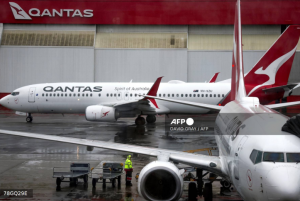
Australian airline Qantas confirms data breach, 5.7 million customers affected


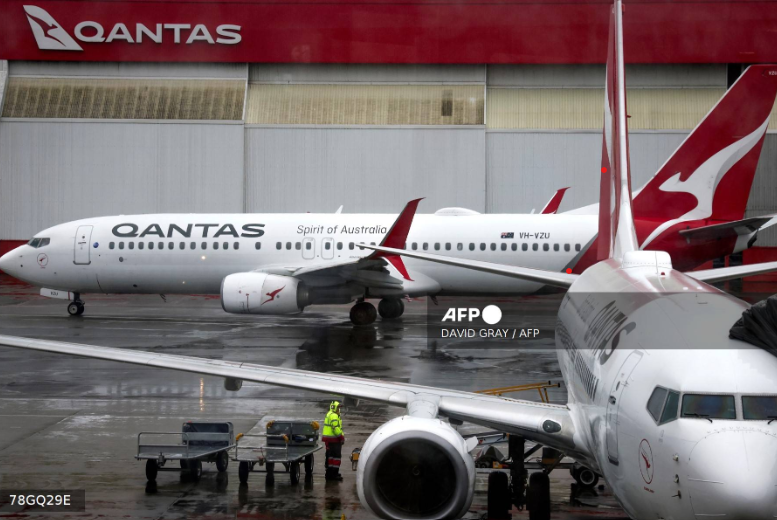
Australian airline Qantas said Sunday that data from 5.7 million customers stolen in a major cyberattack this year had been shared online, part of a leak affecting dozens of firms.


Disney, Google, IKEA, Toyota, McDonald’s, and fellow airlines Air France and KLM are also reported to have had data stolen in a cyberattack targeting software firm Salesforce, with the information now being held to ransom.


Salesforce said this month it was “aware of recent extortion attempts by threat actors”.


Qantas confirmed in July that hackers had targeted one of its customer contact centres, breaching a computer system used by a third party now known to have been Salesforce.

They secured access to sensitive information such as customer names, email addresses, phone numbers and birthdays, the blue-chip Australian company said.


No further breaches have taken place since, and the company is cooperating with Australian security services.


“Qantas is one of a number of companies globally that have had data released by cyber criminals following the airline’s cyber incident in early July, where customer data was stolen via a third-party platform,” the company said in a statement.


Most of the data leaked was names, email addresses and frequent flyer details, the firm said.


But some of the data included customers’ “business or home address, date of birth, phone number, gender and meal preferences”.


“No credit card details, personal financial information or passport details were impacted,” Qantas said.


It also said it had obtained a legal injunction with the Supreme Court of New South Wales, where the firm is headquartered, to prevent the stolen data from being “accessed, viewed, released, used, transmitted or published”.


Cybersecurity expert Troy Hunt told AFP that it would do little to prevent the spread of the data.


“It’s frankly ridiculous,” he said.


“It obviously doesn’t stop criminals at all anywhere, and it also really doesn’t have any effect on people outside of Australia.”

In response to questions about the leak, tech giant Google pointed AFP to an August statement in which it said one of its corporate Salesforce servers had been targeted. It did not confirm if the data had been leaked.


“Google responded to the activity, performed an impact analysis and has completed email notifications to the potentially affected businesses,” Melanie Lombardi, head of Google Cloud Security Communications, said.


Cybersecurity analysts have linked the hack to individuals with ties to an alliance of cybercriminals called Scattered Lapsus$ Hunters.


Research group Unit 42 said in a note that the group had “asserted responsibility for laying siege to customer Salesforce tenants as part of a coordinated effort to steal data and hold it for ransom”.


The hackers had reportedly set an October 10 deadline for ransom payment.


The hackers stole the sensitive data using a social engineering technique, referring to a tactic of manipulating victims by pretending to be a company representative or other trusted person, experts said.


The FBI last month issued a warning about such attacks targeting Salesforce.


The agency said hackers posing as IT workers had tricked customer support employees into granting them access to sensitive data.


“They have been very effective,” expert Hunt said.


“And it hasn’t been using any sophisticated technical exploits… they have exploited really the oldest tricks in the books.”


The hack of data from Australia’s biggest airline comes as a string of major cyberattacks in the country has raised concerns about the protection of personal data.


Qantas apologised last year after a glitch with its mobile app exposed some passengers’ names and travel details.


And major ports handling 40 per cent of Australia’s freight trade ground to a halt in 2023 after hackers infiltrated computers belonging to operator DP World.


AFP

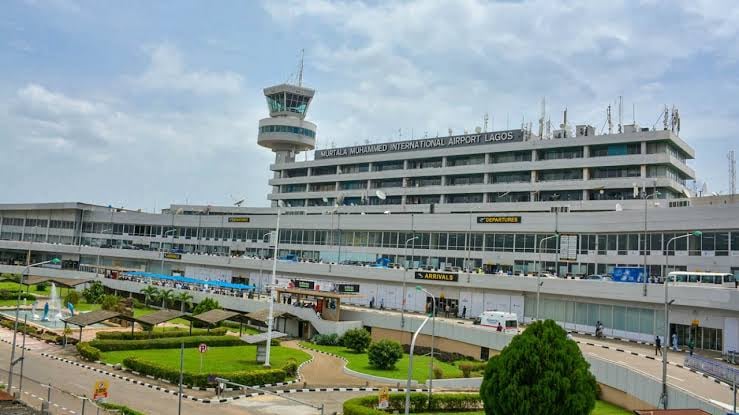
Security officials trying to fly with $6m arrested at Lagos airport


Security operatives attempting to board a flight with over $6.1 million in cash were intercepted and arrested on Saturday at the domestic wing of Murtala Muhammed Airport Terminal 2 in Lagos.


The suspects, whose exact number was not disclosed, were reportedly caught during routine checks while trying to board an Aero Contractors flight.


Sources who pleaded anonymity to prevent official sanctions at the airport because they were not empowered to speak on the matter, confirm that the passengers were found with multiple boxes loaded with undeclared U.S dollars.


PUNCH Online gathered that the personnel had initially passed through airport security units before they were apprehended at the foot of the aircraft after Aero Contractors security noticed the heavy luggage.

The matter was then escalated and was reported to Aviation Security, who later handed it over to the Department of State Services.


A senior FAAN official who spoke under the condition of anonymity said the DSS later transferred the suspects to the Economic and Financial Crimes Commission, where they are currently being held for further investigation.


Another airport source told The PUNCH that the suspects had claimed to be security agents escorting a suspect and exhibits, but failed to declare the cash or follow due procedures for transporting suspects on commercial flights.


Meanwhile, the source said this claim may have helped the suspects bypass the initial security screening. However, their activities raised suspicion at the boarding gate when AVSEC officers noticed the oversized boxes.

Speaking with our correspondent over the phone, the Managing Director of Aero Contractors, Ado Sanusi, confirmed the incident, saying his airline’s security team grew suspicious after the individuals refused to check in their heavy bags.


Sanusi explained that the bags contained money, and when asked if it had been declared, the suspects said no.


He explained, “What happened was that our security noticed some passengers trying to board our aircraft with bags that were quite heavy. Our security team advised them to check the bags in, as they could not be carried into the cabin.


They refused to check the bags, and later they said it was money. When asked if the money had been declared, they said no. At that point, our security personnel discovered that the individuals were either police officers or some form of security agents, who claimed they were escorting a suspect along with exhibits. That was why they resisted checking in the bags.


“We then informed them that if they were transporting a suspect, they were required to notify us in advance. There are standard procedures for moving suspects; we don’t mix them with regular passengers. There are boarding, deboarding, and in-flight protocols that must be followed in such cases. Since they failed to follow these procedures, they were not allowed to board, and they eventually left.”


Repeated calls and messages to the spokesperson of the Federal Airport Authority of Nigeria, Henry Agbebire, and the Director of Aviation Security, Igbafe Afegbai, were unsuccessful, as they neither replied to the messages nor picked up their calls.

The same for the Head of Corporate Communications, Ajoke Yinka-Olawuyi, of Bi-Courtney Aviation Services Limited, operators of the MM2.

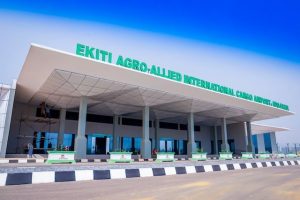
Ekiti airport will be a ‘critical economic gateway’ – Engineer


Chartered engineer and founder of Tite Knox Pty Limited, Olaoluwa Dawodu, has said that the commencement of commercial operations at the Ekiti Agro-Allied International Cargo Airport will enhance commerce, tourism, and job creation across the state.


Dawodu, reacting to the Nigerian Civil Aviation Authority’s approval for the start of commercial flights, said the development had “set the state’s economic landscape for transformation.”


The Australia-based engineer, in a statement made available in Ado Ekiti on Saturday, described the approval as “a laudable development that will open up the state to various economic growth elements.”


He said, “Inter-state and eventual international access to the numerous economic potentials of a state can only be optimally explored via safe air access. The approval will not only boost commerce and tourism but also stimulate job creation, enhance connectivity, and position Ekiti among Nigerian states with viable air transport infrastructure.”

Dawodu noted that, like other airports in developed nations, the Ekiti facility would contribute significantly to the state’s gross domestic product, create employment opportunities, and attract trade and tourism.

“The Ekiti Agro-Allied International Cargo Airport has the potential to become a critical economic gateway for the state, serving as a catalyst for agricultural exports, investment inflows, and industrial development,” he added.


He commended Governor Biodun Oyebanji and his administration for their vision and commitment to sustainable infrastructure development and urged Ekiti indigenes both at home and abroad “to heed the call, return home, add value, and support the governor on everything that will help Ekiti to progress as the state ushers in a new era of air connectivity and economic expansion.”


The NCAA, in a letter to Governor Oyebanji dated October 3, 2025, approved the airport to commence commercial operations from October 4, 2025, for an initial period of six months.


The letter stated that a validation inspection conducted between June 16 and 19, 2025, revealed that the airport had “significantly complied with the basic operational requirements for scheduled flight operations,” while the Nigeria Airspace Management Agency’s flight check validation report showed “satisfactory compliance with regulatory requirements.”

2026 Hajj: NAHCON hails Tinubu, Shettima’s directive to cut fares


The Chairman, Board, management and entire staff of the National Hajj Commission of Nigeria have commended President Bola Tinubu and Vice President Kashim Shettima for their recent directive to reduce the cost of the 2026 Hajj, describing the gesture as a thoughtful and timely move that brings great relief to intending pilgrims across the country.


The commendation is contained in a statement by the Deputy Director, Information and Publication, NAHCON, Fatima Sanda Usara, a copy of which was made available to The Punch on Tuesday.


“The Commission regards this as a thoughtful and timely move that brings great relief to intending pilgrims across the country.


“The President’s instruction to review Hajj fares downward shows a government that listens and responds to the people’s concerns. It also reflects genuine empathy for the financial strain faced by many Muslims who dream of performing the sacred pilgrimage,” the statement said.

NAHCON equally hails the government’s call on pilgrims and State Muslim Pilgrims Welfare Boards to take advantage of the current appreciation of the Naira by making early remittances. Acting promptly, as mentioned by the Deputy Chief of Staff, Alhaji Ibrahim Hadeja, after the meeting at the Villa, would help Nigeria lock in the benefits of the stronger currency.


The directive and recommendation for early remittances show a deep understanding of both NAHCON’s operational challenges and the economic realities of our pilgrims. It is another clear example of a responsive and people-focused administration that steps in with practical solutions, especially to the Commission.

According to the statement, this directive reinforces President Tinubu’s steady support for improving Hajj management in Nigeria through interventions that make the exercise more affordable, transparent, and well-coordinated.


It said, “NAHCON will work closely with all stakeholders to ensure the full implementation of the directive and to deliver a smooth and rewarding 2026 Hajj for Nigerian pilgrims.


The commission, therefore, called on intending pilgrims to hasten and make payment in sequence to the disclosure of the new fare, which will be announced soon.


“This will enable their boards to make early remittances that will enable the Central Bank of Nigeria to use the favourable exchange rate for the Hajj services,” the statement added.


Recall that the Federal Government had on Monday directed the National Hajj Commission of Nigeria to immediately reduce the cost of the 2026 Hajj fares it had recently announced.


The commission had announced over N8.2 million as the final fares for the 2026 Hajj.

NCAA urges youths to explore careers in aviation beyond cabin crew


The Nigeria Civil Aviation Authority has urged young Nigerians to explore broader career opportunities in the aviation sector beyond the popular choice of becoming cabin crew members.


The NCAA, through a post on X on Monday by its spokesman, Michael Achimugu, said this while speaking on the growing interest among Nigerian youths in cabin crew training with a vision of being a flight attendant.


The cabin crew encompasses all flight attendants, while the air hostess specifically refers to female attendants. Both genders are vital to the smooth operation of flights, safety and comfort of passengers.


Achimugu acknowledged the appeal and glamour associated with the role, adding that, “It’s a beautiful line of work. You wear smart uniforms, travel the world, and interact with people from all walks of life. It builds patience and character.”

He, however, emphasised that other critical areas within aviation are in high demand and offer even greater opportunities for growth and employment, both locally and internationally.


“Many young Nigerians are investing in cabin crew training. They love the glamour of that career. It is a beautiful line of work. You get to serve people from all walks of life. Your patience gets tested as much as your character. You learn to smile whether you are happy or not. You wear cute uniforms and travel freely, ” he advised.


Achimugu also urged aspiring aviation professionals to conduct thorough research into the areas with greater demand and potential for career advancement.

“There is more to aviation than the visible front-line roles. Find the gaps, where there is scarcity and fill that space. That’s how you truly add value,” he added.


With a global aviation workforce shortage looming, the NCAA believes that redirecting attention toward technical and operational roles could help Nigeria’s youth tap into a wider range of job opportunities and contribute meaningfully to the aviation industry.


Listing other focuses which are in high demand, Achimugu said, “ There are other careers in aviation that add value and probably have more work openings. I would strongly recommend/encourage more young people to train to become any of the following: Aircraft maintenance technician, Aerospace engineer, Flight instructor, Flight dispatcher, Marshaller, Air traffic controller, among others.”


He further appealed to Nigerians to engage in proper research before choosing a career in aviation.


He stressed, “If you want to go into aviation, research, beyond just your passion, the areas where there are more needs for operators and other service providers. Where is the scarcity? Fill that space and add value.


“All of the above-mentioned also get job opportunities outside Nigeria. Give it a thought. Aviation is a satisfying industry where all of the parts working together make an excellent whole. Start that training today.”

Germany’s Lufthansa to slash 4,000 jobs by 2030


German airline group Lufthansa said Monday it will cut 4,000 jobs, nearly four percent of its workforce, underscoring the slump gripping Europe’s largest economy.


Lufthansa said the majority of the job cuts would be in Germany and take place by 2030, targeting administrative rather than operational positions.


The group, which employs around 103,000 people, includes Eurowings, Austrian, Swiss and Brussels Airlines, as well as the recently acquired Italian flagship airline ITA Airways.


Germany is facing a second straight year of recession, with unemployment at a decade high.

The downturn has hit some of the country’s corporate giants hard, squeezed by Chinese competition, high energy costs and slow adoption of new technologies.

Lufthansa’s announcement comes just days after another major German company, industrial giant Bosch, said it would cut 13,000 jobs, or three percent of its global workforce.


“The Lufthansa Group is reviewing which activities will no longer be necessary in the future, for example due to duplication of work,” the company said in a statement.


“In particular, the profound changes brought about by digitalization and the increased use of artificial intelligence will lead to greater efficiency in many areas and processes,” it said.


Lufthansa set new financial targets for 2028-2030, including an adjusted operating margin of eight to 10 per cent.


AFP

NAHCON announces final 2026 Hajj fares, reduces cost by ₦200,000


The National Hajj Commission of Nigeria has announced the approved fares for the 2026 Hajj.


In a statement signed by the management, NAHCON said the announcement followed “due consultations with all the relevant stakeholders, including the Forum of States leadership, and obtaining the approval of the Federal Government.”


The announcement comes shortly after top management staff of the Commission, led by the Chairman, Prof. Abdullahi Usman, embarked on a trip to Saudi Arabia to inspect facilities, negotiate service arrangements, and sign agreements with key service providers ahead of the 2026 exercise.


Earlier this year, NAHCON had announced a tentative fare of N8.5 million for the 2026 Hajj, clarifying that the amount was provisional and subject to review after negotiations with Saudi service providers and approval from the Federal Government.

The 2025 Hajj fares were fixed at N8.31 million for the Maiduguri-Yola Zone, N8.44 million for other northern states, and N8.76 million for the southern states.


However, the management said the 2026 fares have been reduced by N200,000 across all categories.

“The National Hajj Commission of Nigeria wishes to announce the Hajj Fare for the 2026 Hajj season. After due consultations with all relevant stakeholders, including the Forum of States leadership, and obtaining the approval of the Federal Government, the Chairman/CEO of the National Hajj Commission of Nigeria, Professor Abdullahi Sale Usman, hereby announces the 2026 Hajj Fare as follows: Maiduguri-Yola Zone (Yobe, Borno, Adamawa, Taraba) will pay N8,318,336.67; other Northern States will pay N8,244,813.67; Southern States will pay N8,561,013.67.”


“Compared to what was charged last year, each pilgrim is to pay an average of two hundred thousand naira less,” the statement partly read.


The Commission also revealed that its delegation currently in Saudi Arabia has finalised service arrangements with major providers.


“The NAHCON delegation, currently in Saudi Arabia, met and signed agreements with the 2026 Hajj Service Provider Company (Mashareeq Al-Zahabiyya) and the Transportation Company (Daleel Al-Ma’aleem),” the Commission stated.


The Chairman stressed the importance of timely payments, urging intending pilgrims to complete payments before December 31, 2025.

Airline Operators Opposes NAMA push for Tariff Hike

Airline Operators Opposes NAMA push for Tariff Hike

The Director-General of the Nigerian Airspace Management Agency, Farouk Umar, has declared that the current charge of N11,000 per flight imposed on airline operators is no longer sustainable, given prevailing economic realities and the rising cost of maintaining aviation infrastructure.

Umar made this known in Abuja on Tuesday while addressing stakeholders at a summit organised by the House of Representatives Committee on Aviation. The event focused on the theme: “Emerging Trends in Global Aviation: Sustainability, Technology and Digital Transformation.”

Umar explained that the N11,000 fee, which has remained unchanged since 2008, is charged per flight rather than per passenger. He cited an example of a Lagos-to-Abuja flight where airlines pay only N11,000 to NAMA, regardless of the number of passengers carried.

“In 2008, NAMA was collecting N11,000 per flight. From then till now, airfares have risen significantly, with economy tickets now ranging between N150,000 and N200,000, yet we are still charging the same N11,000,” Umar said.

He stressed that the agency is a cost recovery organisation, not a charity, and must recoup the money invested in procuring and upgrading critical aviation infrastructure, including landing, surveillance, and communication systems.

NAMA has invested heavily in state-of-the-art facilities to ensure safety in Nigerian airspace. These include upgraded Instrument Landing Systems, modern radar surveillance technologies, and enhanced communication systems that align Nigeria’s aviation sector with global safety standards.

Umar warned that the cost of procuring, installing, and maintaining these facilities has grown exponentially due to inflation, exchange rate pressures, and global supply chain disruptions.

“We keep modernising to ensure Nigeria is not left behind in global aviation development. Yet, the airlines are still paying us peanuts. The world needs to know, and the airlines need to face reality. We cannot continue this way,” he insisted.

Airlines resist

According to Umar, NAMA has made several attempts to engage airlines on the need for a fee review, but operators have resisted the idea. He argued that this resistance is unfair, especially as airlines frequently increase ticket fares to reflect rising operational costs.

“The airlines have not been fair to the agency. They respond to economic circumstances by raising ticket prices, but they do not want to understand that we also operate in the same economy. We go to the same markets to procure equipment. Safety is at stake if we cannot recover costs,” he said.

He emphasised that the agency’s charges are not designed for profit-making but strictly for cost recovery to ensure safe, reliable, and modern air navigation services.

Speaking earlier, the Chairman of the House Committee on Aviation, Abdullahi Garba, stressed the importance of collaboration in developing a stronger aviation sector. Represented by his deputy, Festus Akingbaso, Garba described the summit as a critical step toward strengthening the sector’s foundation.

“Our goal is to develop actionable plans and reinforce priorities that enhance aviation safety, infrastructure, and regulatory compliance,” he said. Garba emphasised that parliament remains committed to supporting NAMA and other aviation agencies in addressing funding challenges, provided they can demonstrate transparency and efficiency in their operations.

Nigeria’s aviation sector faces a unique dilemma: airlines struggle with high operational costs, while regulators face shrinking budgets to maintain critical infrastructure. Unlike in many advanced economies, where airspace management agencies charge rates reflective of operational costs, Nigeria’s charges have remained stagnant for 16 years.

For instance, in countries such as the United States, Canada, and across Europe, en-route and terminal navigation charges are pegged to aircraft size, distance covered, and other operational parameters, ensuring that airspace management agencies recover the full cost of services.

By contrast, Nigeria’s flat N11,000 charge per flight severely undercuts the real cost of providing air navigation services. Aviation analysts argue that the disparity not only undermines NAMA’s sustainability but also poses risks to safety if the agency cannot reinvest in its systems.

Airline operators, however, argue that increasing regulatory charges could worsen their already fragile financial situation. With rising fuel costs, foreign exchange shortages, and multiple taxes across different tiers of government, many airlines claim they are operating on thin margins.

Operators fear that higher charges could translate into even higher ticket prices, further burdening Nigerian travelers who already pay some of the highest airfares in Africa. Industry stakeholders therefore call for a balanced approach—one that ensures NAMA recovers its costs without pushing airlines or passengers to breaking point.


Nigeria, Jamaica to begin direct flight 12th March 2025

Nigeria and Jamaica are set to explore the possibility of a direct flight route as both countries strengthen the Bilateral Air Service Agreement.

This was contained in a statement signed by the Special Adviser on Media and Communications to the Ministry of Aviation and Aerospace Development, Tunde Moshood, on Wednesday.

Aviation Minister, Festus Keyamo, welcomed the Jamaican Ambassador to Nigeria, Lincoln Downer, and his Consular, Andre Hibbert, to his office in Abuja for this engagement.

Downer emphasised the potential for mutually beneficial diplomatic engagements between Jamaica and Nigeria.

He highlighted the importance of improving and enhancing bilateral relations, including reviewing the existing Bilateral Air Services Agreement.

“I have been tasked by my country to review and improve on the diplomatic engagements between Jamaica and Nigeria, especially concerning air services,” said Downer.

The Jamaican ambassador also shared the growing interest in Nigerian culture, particularly Afrobeat music and Nollywood films, which are trending in Jamaica.

This cultural exchange, he noted, further reinforces the need for enhanced diplomatic and air connectivity.

“There is no reason why we should not have a direct flight between our countries. Nigerians love Jamaica, and there is a rising demand for Jamaican spices in Nigeria,” Downer added.

Keyamo in his response, welcomed the ambassador’s proposals and expressed his eagerness to take the next steps.

“I am delighted to start the BASA arrangements. To ensure a swift resolution, we will set up a committee to expedite the process,” said Keyamo.

He further committed to visiting Jamaica if necessary, stating that he would be willing to travel to Jamaica to finalize and sign the BASA agreement in person.

It was noted that Downer disclosed that Jamaica currently lacks a national carrier, relying on neighbouring Trinidad and Tobago for air transport.

He proposed the idea of combining the BASA between Jamaica and Trinidad and Tobago to address the air services gap, underscoring the increasing demand for travel from Nigeria to Jamaica.

Downer expressed his deep appreciation for Nigeria, revealing an intriguing discovery from his four months as the Jamaican envoy to Nigeria.

“I have since discovered that Nigeria might be my ancestral home after all,” said the ambassador

Exit mobile version