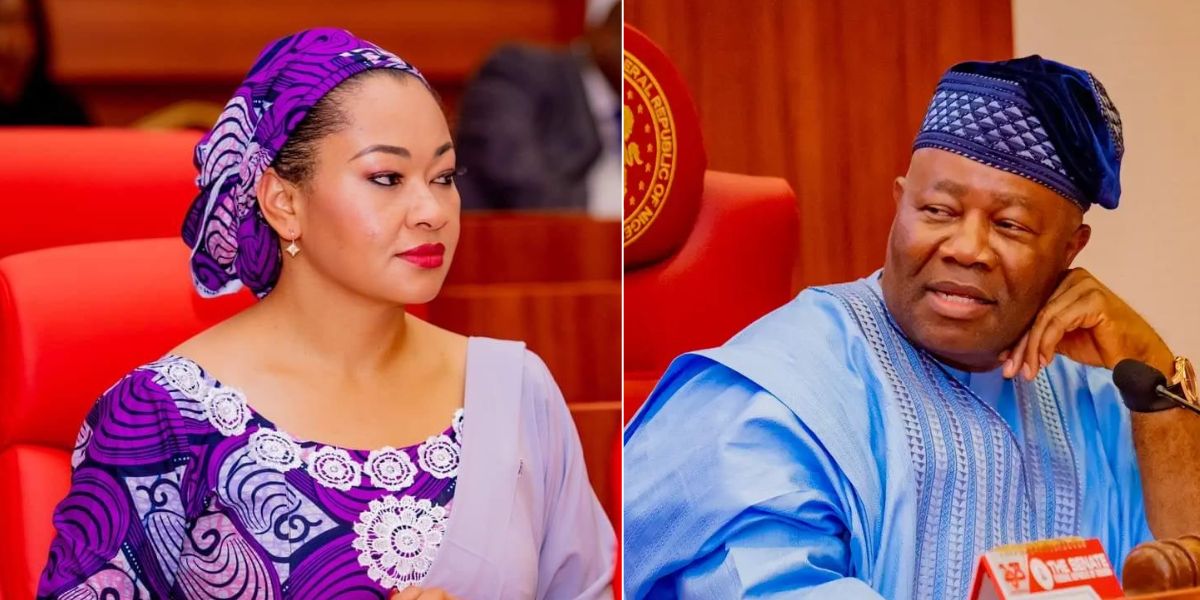
NCDMB Commends Heritage Energy, Pledges Support for OML 30 Projects


NCDMB Commends Heritage Energy, Pledges Support for OML 30 Projects

The leadership of Heritage Energy & Oil Services Limited and its joint venture partners recently visited the Executive Secretary of Nigerian Content Development and Monitoring Board (NCDMB), Engr. Felix Omatsola Ogbe, and received assurances of support for their operations on oil mining lease (OML) 30.


The meeting held at NCDMB’s Lagos liaison office, and the oil company visited with their JV Partners, Shoreline Natural Resources, and NNPC Exploration and Production Limited (NEPL). Heritage is the operator of OML 30 on behalf of Shoreline/NEPCL JV, and the discussions focused on the short, medium, and long term plans around their asset.

The group thanked NCDMB for supporting their operations and solicited for accelerated approval of documents relevant to their tenders for drilling and other projects. The documents include: Technical Invitations to Tender, Technical and Commercial Evaluation Template, Nigeria Content Compliance Certificates, Letter for approval of Human Capacity Development Trainings and other support to enable the company comply fully with the provisions of the Nigerian Oil and Gas Industry Content Development (NOGICD) Act.

The group’s plan is to grow production from the current 45,000 barrels per day (bpd) to 100,000 barrels per day (bpd) by 2030. This growth projection would require substantial investment, including drilling several new wells, the officials said.

The officials confirmed that their consortium has kicked off a four-rig campaign to boost production, focusing on underdeveloped fields, gas development, which would support Nigeria’s gas master plan, and exploration. The company officials added that

“we anticipate a significant production increase in oil production over the next five years from these initiatives. It’s not just about increasing output; it’s about local economic development, job creation, and sustainable resource utilization. We are also investing in produced water disposal to enhance operational efficiency and optimize production. Our strategic investment also includes flare gas gathering/gas development and monetization, unlocking a new value stream for the Asset. Additionally, we are revamping and investing in the Trans Forcados Pipeline (“TFP”) to support the expected increased production from OML 30 and other assets that leverage the TFP for crude evacuation.

In his remarks, the Executive Secretary commended Heritage and the entire OML 30 team for the strides they have achieved with their operations. He assured that NCDMB would support their investment plans, which would lead to increased oil and gas production, job creation, and economic enhancement in line with President Bola Tinubu’s renewed hope agenda for the country.

The NCDMB helmsman highlighted several initiatives the agency was championing, as well as its partnership with international and indigenous oil producing companies to accelerate oil and gas projects and crude oil production, in line with Mr. President’s charge to the oil industry.

Senior officials of the NCDMB team at the meeting included the Director Planning, Research and Statistics, Mr. Isaac Yalah, Director Project Certification & Authorisation, Engr. Abayomi Bamidele, General Manager Corporate Communication and Zonal Coordination, Mr. Esueme Dan Kikile, Esq and General Manager, Strategy and Transformation Projects, Ms. Amanda Yekorogha.

OML 30 lies onshore within the Niger Delta, in one of the most prolific oil and gas provinces in the world. The licence covers 1,097 square kilometres and includes eight producing fields such as Olomoro, Oleh, Uweh, Uzere, Ewvreni, Eremu, Oroni, Kokori and several other partially appraised fields with oil and gas contained in numerous stacked reservoirs.

Corporate Communications

March 8, 2025


NCDMB Rallies NNPC, oil producers to boost in-country manufacturing of line pipes 

NCDMB Rallies NNPC, oil producers to boost in-country manufacturing of line pipes


The Nigerian Content Development and Monitoring Board (NCDMB) on Thursday achieved a much-needed consensus among critical oil and gas industry stakeholders and manufacturers to ramp up in-country production and utilisation of line pipes in oil and gas operations, as part of the strategy deepen local content, and conserve foreign exchange and create jobs.

The Oil Producers Trade Section (OPTS), comprising all international oil companies, and their indigenous counterparts under the aegis of the Independent Petroleum Producers Group (IPPG) met with the leading pipe manufacturing companies and pipe coaters as well as the NNPC Upstream Investment Management Services (NUIMS) at the instance of the NCDMB to take stock of progress made since 2011.

In Opening Remarks at the one-day “Stakeholders Workshop on Manufacturing of Line Pipes in Nigeria: Processes, Challenges, and Opportunities,” which held at the Nigerian Content Tower (NCT), Yenagoa, the Executive Secretary of the NCDMB, Engr. Felix Omatsola Ogbe, described line pipes as “a major driver in oil and gas industry operations,” adding, “without line pipes you cannot evacuate products.”

He said the Nigerian Oil and Gas Industry Content Development (NOGICD) Act, 2010, envisages 100 per cent in-country manufacture of line pipes (seamless and welded pipes) and that the Board, in conjunction with the OPTS, had agreed on an initiative in 2011 to work towards attainment of that target.

The NCDMB boss noted that a lot still has to be done and that status reports of projects on line pipes would have to be presented and discussed at the workshop so as to determine appropriate measures by all stakeholders to intensify efforts to overcome teething problems if any.

Engr. Ogbe, represented by the Director of Monitoring and Evaluation, Alhaji Abdulmalik Halilu, disclosed that in realisation of the potential of in-country manufacture of line pipes for retention of significant revenue and job creation, the Board had introduced different policies and remains determined to work with industry players for meaningful progress.

In setting the tone for the workshop presentations and deliberations, he posed six questions to which he sought answers from the participants: Should we continue to focus on making line pipes in Nigeria? Where are we on the ‘Made in Nigeria’ line pipes projects? Are there still opportunities for Made-in-Nigeria line pipes? What should be the main considerations for ‘Made-in-Nigeria’ line pipes (infrastructure imperatives, investment incentives, etc.)? Who should invest and who are the buyers? What policies would drive the delivery of ‘Made-in-Nigeria’ line pipes?

In his own remarks, the Director, Capacity Building, NCDMB, Dr. Ama Ikuru, explained that the Board and the entire oil and gas industry are focused on Made-in-Nigeria line pipes, because it is “the key to Nigeria’s industrial development and a critical requirement of the NOGICD Act, 2010, and the Presidential Executive Order on Local Content.”

He noted that Made-in-Nigeria line pipes are a “reputation driver for the NOGICD Act” and are “central to the attainment of the 70 per cent objective of NCDMB’s [Nigerian Content] 10-Year Strategic Road Map.” In addition, the initiative would reduce costs and eliminate mark-up by middlemen.

Dr. Ikuru pointed out that there are major oil discoveries across Africa as well as opportunities in Nigeria and other parts of the continent, supported by the African Continental Free Trade Area (AfCFTA). Line pipe opportunities in Africa highlighted include the Trans-Saharan Gas Pipeline, African Renaissance Pipeline and Transmed Gas Pipeline.

On interventions by the NCDMB toward establishment of pipe mills in the country, he said the Board, among other things, introduced the Equipment Component Manufacturing Initiative (ECMI) and issued guidelines on it, which “birthed issuance of the Nigerian Content Equipment Certificate (NCEC).”

The NCEC scheme of the Board is designed to promote and enforce the utilisation of locally manufactured goods, services, and equipment in the oil and gas industry.

Before presentations by key manufacturers of line pipes, representatives of the leading IOCs and Independents, all industry holders in attendance had to state their individual responses and viewpoints regarding the six posers earlier raised by the NCDMB Executive Secretary.

In unison, all declared that Nigeria should continue to focus on making line pipes in-country to meet the target of 100 per cent. Key manufacturers then proceeded to explain where they are in their respective projects, highlighting status reports as well as challenges (in some cases), and what should be main considerations.

The Managing Director, Brentex Petroleum Services Limited, Mr. Chidi Nzerem, disclosed that his company has made appreciable progress in developing an LSAW Line Pipe Mill in Calabar, Cross River State, but has faced difficulties in securing long-term funding from the banks after investing over US$64 million. To take the project to completion stage, an additional US$176 million would be required.

He pointed out that “Nigeria sits on oil and gas and there must be commitment to manufacture line pipes” to eliminate capital flight through importation of pipes. He assured stakeholders that “within the next 36 months, line pipes will start rolling out from the mill if the required funds become available.”

For another industry player, Frigate Pipe and Tubulars Limited, whose seamless pipe mill plant has progressed without hiccups, status report was that the bulk of the manufacturing line has been acquired and that installation of the facility would be completed within the next 24 months.

The Chief Financial Officer of the company, Mr. Bankole Olugbile, said industry demand for seamless line pipes in Nigeria is 120,000 metric tonnes per annum, which could be easily met, but he pointed out that “projects like this require long-term cheap funding.” He called for incentives, such as pioneer status, among others, from government.

From Yulong Steel Pipes Limited, a pioneer in the industry that had suspended production operations in Nigeria for five years after supply of 2,000 metric tonnes of line pipes to Dangote Refinery, Lekki, Lagos, was news of its reentry into the country. Its representative declared that the company is looking forward to business from Trans-Saharan Gas Pipeline and Shell Petroleum Development Company’s Bonga North, among others.

Pipe coating companies, including Solewant Group, Monarch Alloy, and Tenaris, also gave their respective status reports and highlighted what they expect from oil and gas industry operators.

International oil companies affirmed that there are opportunities for Made-in-Nigeria line pipes and expressed keenness to do business with manufacturers in the country. Mrs. Chioma Okpoechi, Supply Chain Manager (Production and Logistics) of Shell Petroleum Development Company, provided procurement data on line pipes from her company indicating that US$43 million was spent between 2019 and 2014.

According to her, “steadily our operational requirements are growing” and that US$115 million is to be spent in the next four years. Mrs. Okpoechi expressed hope that “this should encourage Made-in-Nigeria manufacturers,” although she cautioned that quality and timeliness of delivery cannot be compromised.

Assurances were also received from Exxon Mobil, which urged local manufacturers to strive for cost competitiveness and ensuring that they understand what the oil and gas industry upstream needs. TotalEnergies also gave assurance of support for local manufacture.

Seplat Energy Plc, a leading Independent operator from among the indigenous upstream players, represented by its Nigerian Content Development Manager, Mr. Simeon Ogari, declared “We are 100 per cent in support of Made-in-Nigeria line pipes,” stating that the company is “a product of local content.” Another leading indigenous oil company, First Exploration & Production (First E&P), represented by its Project Manager, Engr. Soyemi Ayodeji, also pledged total support.

In rounding off presentations and deliberations, Dr. Ikuru, reminded participants that responsibilities for advancement of the programme for Made-in-Nigeria line pipes needed to be assigned.

Manufacturers commended NCDMB for its practical role as business enabler, citing a number of the Board’s interventions that have facilitated the emergence of many big indigenous companies, but said the Board could do more by helping to eliminate illegal importation of coated line pipes, particularly by marginal field operators. Also that the Board should play a role in facilitating access of manufacturers to credit facilities from banks.

Dr. Ikuru acknowledged that the suggestions made were appropriate but advised that the manufacturers could employ whistleblowing as a way to bring such illegal importation to the knowledge of the Board and Government. “We’ll follow up,” he assured.

Also contributing, the Director, Project Certification and Authorisation Department (PICAD), of NCDMB, Engr. Abayomi Bamidele, said the Customs and Excise Department has a role to play, and that manufacturers and coaters of line pipes could team up and prepare a draft bill, which should be submitted to the National Assembly for a law to bring in the Customs Department to play a role.

The NCDMB and all stakeholders agreed that platforms like the Stakeholders Workshop should hold regularly, and that it would be desirable for similar platforms where financial institutions could participate, given the critical importance of funding.


Ilaji Management reacts to Akinyefa’s resignation

Ilaji Management reacts to Akinyefa’s resignation


Akinyefa’s inefficiency and pride influenced his resignation.

Every organization has set standards, processes, and procedures that shape its operations and administration.

The radio is a unit within the conglomerate of businesses that constitute Ilaji Hotels and sports resort.

Every unit is administered and managed with diligence, competence and strict adherence to professional ethics without compromise or any form of disregard to constituted authority or act of dishonesty. The hallmark of our corporate culture as a group includes discipline, teamwork and sense of ownership.


Mr. Akinyefa exited voluntarily from the company not because of any intimidation as claimed by him. He simply discovered that his flagrant disregard to the constituted authority, self destructive pride and inflated ego would have no place in our well structured establishment.


A change of name in designation from GM to HOS done in good faith for his development in management having failed woefully in the discharge of his duties was the main reason for his decision.

Let us remember that every position requires a duty, and every duty,a responsibility, and every responsibility an obligation. At Ilaji, anything short of this is unacceptable.

We ask you all to disregard any news or information contrary to this. Thank you,
Management

GRACE EFOBI: A Voice Of Worship, Passion, And Purpose


“Gospel music is all I know!”

Fifteen years is a long time, and Grace Efobi has spent it using her voice as a vessel of worship. The Jigidem crooner consistently weaves melodies that uplift, inspire, and draw hearts closer to God.

A contemporary singer-songwriter and recording artist based in the United Kingdom, Grace’s music is more than just a profession—it’s a calling, a ministry deeply rooted in her faith and passion for God’s kingdom.

Born and raised in Ogbunike, Anambra State, Nigeria, Grace’s journey into music began in the most humble of places—the church choir. It was here that she discovered the depth of her gift, harmonizing with voices that would shape her own unique sound.

What started as Sunday service ministrations soon evolved into something greater. These experiences refined her gift and helped carve out a distinct sound, ultimately fueling her transition into professional music— a journey that has now spanned over a decade and a half.

Grace has steadily built a repertoire of music that speaks to the soul, with ten recorded songs to her credit. Her music carries messages of hope, devotion, and gratitude—an extension of her unwavering commitment to spreading the gospel through song.

Her recent release, Jigidem, featuring Rheta Ritche Jacobs, is a powerful song that speaks of hope and unwavering dependence on God, serving as a tool for deep spiritual connection.

Beyond the stage and recording booth, Grace Efobi embodies the beauty of a well-balanced life. She is not just an artist but also a wife, mother, and grandmother—roles she cherishes just as deeply as her music.

Stay connected with Grace Efobi across all social media platforms to experience her music and ministry:

📌 Instagram: @graceefobi
📌 Facebook: @graceefobi
📌 TikTok: @graceefobi
📌 YouTube: gefobi7@googlemail.com

Grace’s music reflects her personal walk with God and serves as an encouragement to others on their spiritual journeys.

Oniponda-elect, Prince Dr. Adedotun Adeboyejo, Celebrates Osun Commissioner, Rev. Bunmi Jenyo, on His Birthday

Oniponda-elect, Prince Dr. Adedotun Adeboyejo, Celebrates Osun Commissioner, Rev. Bunmi Jenyo, on His Birthday

The Oniponda of Iponda-Ijesa (Elect), Prince Dr. Adedotun Adebola Adeboyejo, has joined numerous friends and well-wishers in celebrating the Honourable Commissioner for Commerce and Industry in Osun State, Reverend Bunmi Jenyo, on the occasion of his birthday.

In a statement, Prince Dr. Adeboyejo described Reverend Bunmi Jenyo as a man of dignity, integrity, and deep passion for humanity. He lauded his unwavering dedication and loyalty as an executive cabinet member in the administration of His Excellency, Senator Ademola Adeleke, acknowledging his immense contributions to governance and development in Osun State.

Reflecting on his personal journey, Prince Dr. Adeboyejo expressed profound gratitude for Rev. Jenyo’s invaluable support in his path to kingship, noting that his impact has been immeasurable and commendable.

Furthermore, the Oniponda-elect highlighted Reverend Bunmi Jenyo’s steadfast loyalty to the Peoples Democratic Party (PDP) and Osun State. He praised the Commissioner’s dedication to public service, emphasizing that his role in the Commerce and Industry sector has spurred remarkable transformation, fostering growth, development, and economic progress across the state.

As he marked this special occasion, Prince Dr. Adeboyejo offered fervent prayers for Reverend Bunmi Jenyo, asking God to grant him more wisdom, divine favor, and unending joy. He also prayed for continued good health, strength, and prosperity for the Commissioner and his family.

OORBDA boss, Otunba Engr. Dr. Adedeji Asiru visits Iponda Ijesha, pledges sporadic Transformational Development

OORBDA boss, Otunba Engr. Dr. Adedeji Asiru visits Iponda Ijesha, pledges sporadic Transformational Development

The Managing Director/CEO Ogun-Osun River Basin Development Authority, Otunba Engr. Dr. Adedeji Asiru, alongside his management team paid a courtesy visit to Iponda Ijesha community in Osun State.

Ably received by Oniponda designate Prince Dr. Adedotun Adebola Adeboyejo, on behalf of the good people of the sprawling town, Otunba Ashiru was given a befitting hero’s welcome by sons and daughters of Iponda.

While speaking on the purpose of the visit, the OORDBA topshot affirmed that the landmark visit of his management to Iponda town is aimed at fostering and attracting sustainable development in the community.

During the visit, Dr. Asiru, a long-time friend and associate of the Oniponda designate, Prince Dr. Adedotun Adebola Adeboyejo, made a firm commitment to supporting Iponda-Ijesa’s growth and infrastructural advancement through several impactful projects which are in concomittant with the developmental agenda of His Excellency President Bola Ahmed Tinubu GCFR. Otunba Engr. Ashiry highlighted the need to enhance agricultural productivity, improve access to clean and drinkable water, and boost community security, outlining the following key initiatives:

1. Dam Construction with Irrigation System

Recognizing the importance of agriculture to the local economy, Dr. Asiru pledged to construct a dam equipped with an irrigation system. This project will ensure a steady and reliable water supply for all-year-round farming, significantly boosting agricultural productivity, food security, and economic empowerment for the people of Iponda-Ijesa.

2. Industrial Power Boreholes

Access to clean and safe water remains a critical challenge for many rural communities. To address this, Dr. Asiru committed to installing industrial power boreholes, providing a sustainable and dependable water source for the people of Iponda-Ijesa. This initiative aims to enhance public health and improve daily living conditions.

3. Solar-Powered Street Lights

To enhance safety and security, Dr. Asiru promised to install solar-powered streetlights across strategic locations in Iponda-Ijesa. This initiative will not only improve nighttime visibility but also foster a safer and more secure environment for residents, promoting economic activities even after dark.

A Commitment to Progress

While expressing his appreciation for the warm reception, Dr. Asiru reaffirmed his dedication to the development of Iponda-Ijesa and Osun State as a whole. He assured the Oniponda-elect and the community that these promises will be fulfilled in due course, marking a new era of progress and prosperity.

In response, the Oniponda designate, Prince Dr. Adedotun Adebola Adeboyejo commended Dr. Asiru’s visionary leadership and generosity, emphasizing that these projects will have a lasting impact on the lives of the people. He further expressed confidence that such collaborations will transform Iponda-Ijesa into a model community, setting a precedent for other regions.

With these commitments, the future of Iponda-Ijesa, Osun State looks brighter, as the community eagerly anticipates the implementation of these transformational projects.

USAID Funded Boko Haram, other Terror Groups – US Congressman

USAID Funded Boko Haram, other Terror Groups – US Congressman

US Congressman, Scott Perry, has said that US aid agency, United States Agency for International Development, funded terrorist organisations, including Boko Haram.

Perry, a Republican representing Pennsylvania, made the claim during the inaugural hearing of the Subcommittee on Delivering on Government Efficiency on Thursday.

The session, titled “The War on Waste: Stamping Out the Scourge of Improper Payments and Fraud,” focused on alleged misappropriations of taxpayer funds.

“Who gets some of that money? Does that name ring a bell to anybody in the room? Because your money, your money, $697 million annually, plus the shipments of cash funds in Madrasas, ISIS, Al-Qaeda, Boko Haram, ISIS Khorasan, terrorist training camps. That’s what it’s funding,” Perry said.

According to the subcommittee’s website, it will “actively work with President Trump’s Department of Government Efficiency to root out waste, shore up vulnerable payment systems, and fully investigate schemes to defraud taxpayers.”

Perry further cited USAID’s reported funding of $136 million for building 120 schools in Pakistan, alleging that there was “zero evidence” of the schools’ construction.

Perry added, ” If you think that the programme under Operation Enduring Sentinel entitled Women’s Scholarship Endowment, which receives $60 million annually, or the Young Women Lead, which gets about $5 million annually, is going to women who, by the way, if you read the Inspector General’s report, is telling you that the Taliban does not
allow women to speak in public, yet somehow you’re believing, and American people are supposed to believe, that this money is going for the betterment of the women in Afghanistan. It is not.

“You are funding terrorism, and it’s coming through USAID. And it’s not just Afghanistan, because Pakistan’s right next door.

“USAID spent $840 million in the last year, the last 20 years, on Pakistan’s education-related programme. It includes $136 million to build 120 schools, of which there is zero evidence that any of them were built. Why would there be any evidence? The Inspector General can’t get in to see them.

“But you know what? We doubled down and spent $20 million from USAID to create educational television programs for children unable to attend the physical school. Yeah, they can’t attend it, because it doesn’t exist. You paid for it.

“Somebody else got the money. You are paying for terrorism. This has got to end.”

US President Donald Trump has previously called for the closure of USAID, accusing the agency of corruption in a post on his Truth Social platform.

The move is part of Trump’s–and his billionaire ally Elon Musk’s–drive to shrink the US government.

Musk, whom Trump appointed to lead the Department of Government Efficiency, has also criticised USAID, alleging that it engages in rogue operations.

Musk has called USAID “a viper’s nest of radical-left Marxists who hate America” and has vowed to shut it down.

Among other criticisms, which Musk has claimed that USAID does “rogue CIA work” and even “funded bioweapon research, including COVID-19, that killed millions of people.”

Trump said DOGE would “dismantle government bureaucracy, slash excessive regulations, cut wasteful expenditures, and restructure federal agencies — essential to the ‘Save America’ movement. This will send shockwaves through the system, and anyone involved in government waste, which is a lot of people!”


Culled from Punch 

Afenifere Chieftain Ayo Adebanjo Dies at 96

Afenifere Chieftain Ayo Adebanjo Dies at 96

Elder statesman and chieftain of the pan-Yoruba socio-cultural organisation, Afenifere, Pa Ayodele Adebanjo, has died at the age of 96.

PUNCH Online gathered that Adebanjo died on Friday morning at his residence in Lekki, Lagos State.

The family confirmed his death in a statement made available to our correspondent on Friday.

The statement was jointly signed by his children, namely, Mrs. Ayotunde Atteh (nee Ayo-Adebanjo), Mrs. Adeola Azeez (nee Ayo-Adebanjo), and Mr. Obafemi Ayo-Adebanjo.

“With a heart full of gratitude for a selfless life spent in the service of God, the nation and humanity, we announce the passing on of our beloved patriarch, Chief Samuel Ayodele Adebanjo.

“He died peacefully this morning, Friday, February 14, 2025, at his Lekki, Lagos, Nigeria home at the age of 96,” the statement reads.

“His belief and struggle for a truly independent and progressive Nigeria was total, and this he fought for until he breathed his last breath.”

The family also disclosed that consultations are ongoing with Adebanjo’s friends, associates, and various interest groups across the country and beyond to finalise plans for a befitting funeral.

According to the statement, details of the funeral arrangements will be announced in due course, adding that a condolence register has been opened at his residence in Lagos and his country home in Isanya Ogbo, near Ijebu Ode, Ogun State.

The former organising secretary of the Action Group is survived by his 94-year-old wife, Chief Christy Ayo-Adebanjo, along with children, grandchildren, and great-grandchildren.

Adron Homes Celebrates 13 Years of Transforming Nigeria’s Real Estate Landscape

Adron Homes Celebrates 13 Years of Transforming Nigeria’s Real Estate Landscape

Adron Homes and Properties, Nigeria’s leading real estate development company, proudly marks its 13th anniversary today, celebrating over a decade of groundbreaking achievements in the real estate sector. Since its inception, Adron Homes has remained committed to providing affordable and luxurious housing solutions, making homeownership accessible to Nigerians across all socioeconomic classes.

With a vision to bridge the housing deficit in Nigeria and beyond, Adron Homes has consistently set new industry benchmarks. The company has developed and delivered thousands of quality homes in strategic locations nationwide, including Lagos, Ogun, Oyo, Abuja, and Nasarawa, expanding the frontiers of modern real estate development.

Speaking on the milestone, Adron Homes’ Chairman/CEO, Aare Adetola EmmanuelKing, expressed gratitude to clients, stakeholders, and staff for their unwavering support. “This 13-year journey has been one of resilience, innovation, and an unrelenting commitment to excellence. We are proud of our achievements and even more excited about the future as we continue to revolutionize the real estate industry with world-class housing projects.”

Adron Homes’ success is anchored on its unique flexible payment plans, ensuring that individuals and families can own properties without financial strain. The company has also pioneered infrastructure development in its estates, providing residents with top-notch amenities, security, and sustainable environments in the last thirteen years.

As part of its anniversary celebration, Adron Homes has lined up various customer appreciation initiatives, including exclusive discounts, giveaways, and a series of corporate social responsibility (CSR) projects to give back to the community.

Looking ahead, Adron Homes remains steadfast in its mission to redefine the real estate landscape through strategic expansions, innovative housing solutions, and unwavering dedication to customer satisfaction.

Naira appreciates by N63 against Dollar in January to seven-month high

Naira appreciates by N63 against Dollar in January to seven-month high

Nigeria’s exchange rate appreciated significantly in January 2025, gaining N63.72 against the dollar to close at N1,474.78 per dollar on January 31 at the Nigerian Foreign Exchange Market.

According to data from the FMDQ Securities Exchange Limited and the Central Bank of Nigeria, this increase of 4.14 per cent pushes the local currency to the highest level it has reached in seven months, with the last time the currency traded at a similar rate being June 11, 2024, when it stood at N1,473.88/$ in the official market.

The sharp increase has been attributed to policies implemented by the CBN, which have influenced market dynamics and contributed to the currency’s strengthening.

Authorised currency dealers quoted the dollar as high as N1,495.01/$ and as low as N1,447.50/$ at the NFEM.

The naira opened the year at N1,538.50/$ on January 2, 2025, and steadily gained value throughout the month.

By January 3, it had dipped slightly to N1,535.00 before fluctuating within a range that saw it hit N1,560/$ on January 16, marking its highest point for the month.

However, the currency embarked on a more sustained appreciation from the third week of January, closing at N1,531/$ on January 24 and further strengthening to N1,520/$ on January 28.

It continued its climb, settling at N1,506/$ on January 29 and N1,493/$ on January 30 before reaching N1,474.78/$ on the last trading day of the month of January.

The naira also appreciated against the US dollar in the parallel market on Friday, closing at N1,610/$, compared to N1,630/$ recorded on Thursday, representing a N20 increase within a day.

This latest movement reflects the impact of recent monetary and foreign exchange measures introduced by the CBN to stabilise the currency and improve market confidence.

The introduction of the Electronic Foreign Exchange Matching System in December 2024 has played a significant role in this development.

The platform, which operates through Bloomberg’s BMatch system, allows authorised dealers to place anonymous orders into a central limit order book, ensuring transparency and efficient price discovery in the foreign exchange market.

This system has helped reduce market distortions and provided the CBN with enhanced oversight capabilities, making it easier to manage fluctuations in the exchange rate.

Another crucial factor influencing the naira’s recent appreciation is the introduction of the Nigeria Foreign Exchange Code, launched on January 28, 2025.

“The FX Code marks a new era of compliance and accountability. It is not just a set of recommendations; this is an enforceable framework. Under CBN Act 2007 and BOFIA Act 2020, violations will be met with penalties and administrative actions,” CBN Governor Olayemi Cardoso said during the launch of the FX Code.

The FX Code establishes principles for ethical conduct, governance, execution, information sharing, risk management, and settlement processes among market participants.

By aligning Nigeria’s foreign exchange operations with global best practices, the initiative has strengthened investor confidence and contributed to the recent improvements in the currency’s performance.

At the end of 2024, the naira stood at N1,535.00 per dollar on December 31, reflecting the challenges that had persisted in the forex market.

However, the policy interventions introduced by the apex bank in early 2025 have helped stabilise the market, allowing the currency to make significant gains over the past month.

The improved transparency in the foreign exchange system has reduced speculative activities, ensuring that exchange rates better reflect actual market conditions.

However, while the local currency is improving, Nigeria’s foreign exchange reserves experienced a significant decline in January 2025, dropping by $1.11bn over the course of the month.

According to data from the CBN, the country’s reserves stood at $40.88bn on January 2, but by January 30, they had fallen to $39.77bn.

This represents a 2.72 per cent decrease within the one month.

The decline in reserves follows ongoing interventions by the CBN in the foreign exchange market, as well as external debt servicing obligations and capital outflows.

While the naira appreciated significantly within the same month, the reduction in reserves seems to suggest that the CBN may have deployed part of its FX stockpile to stabilise the local currency and manage liquidity in the official market.

At the start of January, reserves remained above the $40bn mark, recording $40.88bn on January 2 and fluctuating within that range for the first half of the month.

By January 10, reserves stood at $40.75bn, and they peaked at $40.96bn on January 6 before beginning a gradual decline.

By mid-month, reserves had dropped to $40.42bn on January 15, further sliding to $40.05bn by January 22.

The steepest declines occurred in the last week of January when reserves fell below $40bn for the first time in months, hitting $39.99bn on January 23 and $39.77bn by January 30.

With the FX reserves at a three-month low, the consistent drawdown indicates heightened FX demand and possible interventions by the monetary authorities to maintain exchange rate stability.

The current decline is similar to the significant drop recorded in April 2024, when reserves plunged by $2.16bn within 29 days.

Exit mobile version