Reps order probe into $18bn spent on ailing refineries


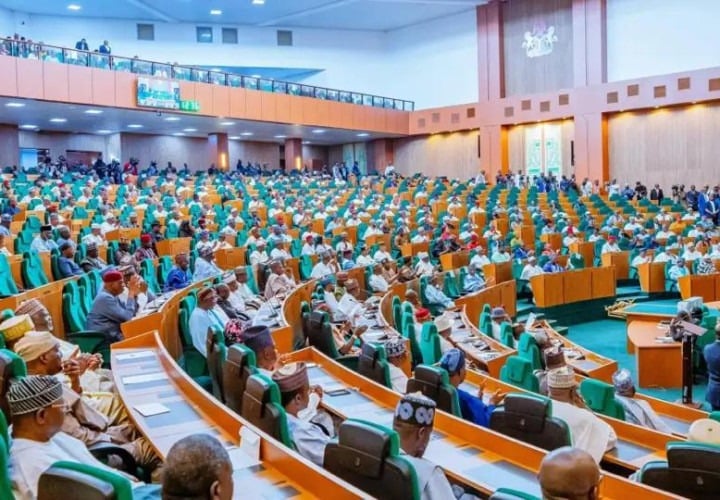
The House of Representatives on Thursday mandated its relevant committees to investigate the non-functionality of state-owned petroleum refineries in Port Harcourt, Warri, and Kaduna, despite the reported expenditure of about $18bn on their rehabilitation over the past two decades.


The resolution followed the consideration and adoption of a motion on notice moved by Lagos lawmaker, Oluwaseun Whinghan, during a plenary session presided over by the Deputy Speaker, Benjamin Kalu.


The Federal Government owns four petroleum refineries — two in Port Harcourt and one each in Warri and Kaduna.


Managed by the Nigerian National Petroleum Company Limited, the refineries have suffered perennial decline due to poor administration and vandalism — a situation that has left the country dependent on imported refined products.

Recently, billionaire businessman Aliko Dangote argued that the chances of the refineries returning to optimal operation were slim, even as the Group Chief Executive Officer of NNPCL, Bayo Ojulari, stated that selling off the national assets would not be ruled out.


Moving the motion, Whinghan, who represents the Badagry Federal Constituency of Lagos State, said the House was worried about the persistent non-functionality of Nigeria’s state-owned refineries in Port Harcourt, Warri, and Kaduna.


This, he noted, is despite over two decades of rehabilitation efforts and an estimated $18bn spent on turnaround maintenance, with no tangible results to show.


He said, “The House is worried over the recent public statements by Nigeria’s foremost industrialist, Aliko Dangote, and former President Olusegun Obasanjo, expressing doubts about the viability of these refineries and describing the multi-billion-dollar investments as futile, sparking widespread public concern and outrage over potential mismanagement.

“We recall that in 2007, during the administration of President Olusegun Obasanjo, Alhaji Dangote and other private investors acquired the refineries, but the succeeding administration of President Umaru Yar’Adua reversed the transaction, opting instead for rehabilitation using public funds — a decision that has yielded no significant operational improvement.


“The House is concerned that on Thursday, July 10, 2025, the Group Chief Executive Officer of NNPC Limited, Bayo Ojulari, in an interview published by The PUNCH, sought to distance the current administration from the monumental mismanagement of Nigeria’s state-owned refineries in Port Harcourt, Warri, and Kaduna.


“He confirmed their continued non-functionality despite significant investments estimated at $18bn and proposed the potential sale of these assets, thereby raising critical questions about fiscal responsibility, strategic asset management, and the long-term implications for Nigeria’s energy security and economic stability.”


According to the Lagos lawmaker, Nigerians are worried that despite consistent annual budgetary allocations over the years, “there is no verifiable evidence of substantial rehabilitation outcomes, representing a gross misuse of public funds and a betrayal of public trust.”


He added, “We are aware that Nigeria’s economic stability and energy security are inextricably linked to a functional and accountable downstream petroleum sector, particularly following the removal of the petrol subsidy by the current administration, which underscores the urgent need for operational refineries to mitigate economic hardship.


“We are convinced that a comprehensive, transparent, and time-bound investigation is essential to ascertain the current operational and structural status of the Port Harcourt, Warri, and Kaduna refineries; examine the utilisation of all allocated funds and the effectiveness of rehabilitation efforts; identify any infractions, mismanagement, or corrupt practices in the management of these assets; and propose actionable reforms to safeguard future public investments and ensure the sustainability of Nigeria’s oil and gas infrastructure.”

Following the adoption of the motion, the House urged its Committees on Petroleum Resources (Upstream, Downstream, and Midstream), Gas Resources, and Public Assets “to investigate funds appropriated and disbursed for the rehabilitation of the Port Harcourt, Warri, and Kaduna refineries between 2010 and 2024.”


The committees are to “ascertain the status of the refineries, examine how public funds were utilised, identify agencies responsible for infractions or mismanagement, and report within four weeks for further legislative action.”

Rhodes-Vivour petitions police, alleges threat from NURTW chairman


The governorship candidate of the African Democratic Congress in Lagos State, Gbadebo Rhodes-Vivour, has petitioned the Lagos State Police Command over alleged intimidation and threats to life by the Chairman of the National Union of Road Transport Workers in the state, Mustapha Adekunle, popularly known as Sego.


The petition, dated October 8, 2025, and signed by human rights lawyer, Inibehe Effiong, was addressed to the Commissioner of Police, Lagos State Command. It accused Adekunle and other members of the union of issuing violent threats against political opponents ahead of the 2027 general elections.


According to the petition, a viral video recorded on September 25, 2025, allegedly showed Adekunle warning Lagos residents against supporting any political candidate opposed to President Bola Tinubu in the next election.


Sego is heard issuing menacing statements, in a mix of Yoruba and English, interpreted as threats against opposition and dissenters. The lawyers described these statements as “chilling” and capable of inciting violence or panic.

PUNCH Online reports that before the petition, Sego had publicly denied that he made any inciting remarks, stating that he also complied with a summons from the Department of State Services.


Sego also insisted that his comments were misconstrued and not intended to threaten anyone politically.


Effiong, writing on behalf of Rhodes-Vivour and the Lagos leadership of the ADC on Wednesday, described Adekunle’s remarks as “chilling” and capable of inciting violence, noting that the conduct amounted to “criminal intimidation and a threat to life.”

Rhodes-Vivour, who was the Labour Party’s governorship candidate in the 2023 election, is expected to contest again in 2027 under the ADC.


Reacting to the development in a post on his X page on Wednesday, Rhodes-Vivour said the petition was filed to put on record that his party had chosen lawful means to resist intimidation.


“Earlier today, the ADC submitted our petition to the police against Mustapha Adekunle of the NURTW. We did this for public record, so that in future it will not be said that we did not pursue civilised recourse to their aggression and intimidation,” he wrote.


He accused the All Progressives Congress-led administration in Lagos of using state-backed gangs to suppress opposition voices.


“For over twenty-four years, the President and his Lagos APC allies have controlled this state. After more than two decades in power, they have no credible record of achievement to run on.


“Violence is the last refuge of incompetence. We are the many and they are the few. In due course, Nigerians will demonstrate that we are not cowards,” he added.


Cameroon election: World’s oldest leader, Biya, poised to win eighth term


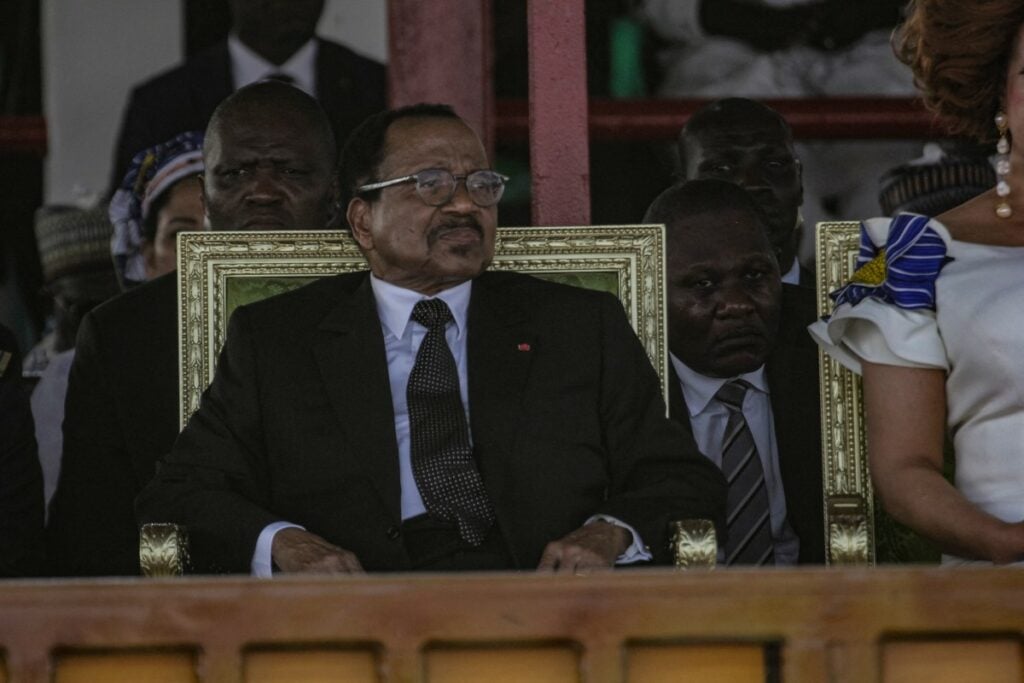
Cameroon’s Paul Biya, already the world’s oldest head of state, is the favourite to win Sunday’s presidential election, handing him an eighth term in power in the central African country.


A fractured opposition of 11 candidates is standing against the 92-year-old in the vote, whose credibility and fairness rights groups have called into question.


Most of the 7.8 million Cameroonians called to the ballot box can remember no leader other than Biya, who has held onto power with an iron fist since 1982.


Questions over the state of his health have only grown louder since he entered his 10th decade. Should Biya win, he would be nearly 100 by the end of his eighth term.


Though the opposition hopes to entice voters with promises of a new face and an end to the cost-of-living frustrations of the long Biya epoch, its most credible candidate, Maurice Kamto, had his candidacy barred by the courts.


Theophile, an artist in the economic capital Douala, branded the vote a “scam”.


The 24-year-old had hoped to vote for Kamto, who came second to Biya in the 2018 election.


“As long as the system remains in place, there is nothing that can be done. There has to be a change,” he told AFP.


Others value the veteran’s decades of experience in a country where half the population is under the age of 20.


“I say Paul Biya still has something to offer,” said Giovanni, a 20-year-old student in Douala.


“Even though some of his promises haven’t been kept, I’m counting on him. He’s a wise man with a wealth of experience and a long track record.”


– ‘Determination intact’ –


The longtime president was noticeably absent from the campaign trail.


He had taken a trip this month to Switzerland, his favoured destination for overseas jaunts, fuelling fresh speculation over the state of his health.

But he made a rare outing on Tuesday, holding a rally at a stadium in the town of Maroua in the Far North region, a key electoral battleground with 1.2 million registered voters.


It was his first public appearance since May.


“My determination to serve you remains intact,” he told the crowd in a 25-minute speech, which touched on youth, women and infrastructure.


Though his entourage expected nearly 25,000 people at the event, AFP reporters present estimated only a few hundred showed up.

Biya became Cameroon’s second president since independence in the 1960s in the 1984 election, when he ran unopposed and won 100 per cent of the vote.


He had already taken over two years earlier when his predecessor Ahmadou Ahidjo resigned suddenly.


He was re-elected in similar style in 1988 but after the introduction of multi-party politics only narrowly overcame challenger John Fru Ndi in 1992 by a four-per cent margin.


Biya turned to a mix of repression, regional alliances and overtures to his former rivals to curtail threats to his rule, Arrey Ntui, the International Crisis Group’s senior analyst for Cameroon, said.


His strategy bore fruit: he was re-elected with 93 per cent of the vote in 1997, 71 per cent in 2004, 78 per cent in 2011 and 71 per cent in 2018.


– ‘Protect the vote’ –


Human rights groups have spent years condemning Biya’s stranglehold on Cameroon’s institutions and election process.


“The electoral charade is unlikely to signal any potential change in the immediate future but rather the consolidation of the status quo,” said David Kiwuwa, who heads the School of International Studies at Nottingham University’s campus in China.


With four-in-10 Cameroonians living under the poverty line in 2024, according to the World Bank, economic fears have long loomed large in voters’ minds.


The high cost of living, as well as the lack of drinking water, quality schooling and healthcare, have long frustrated Cameroonians.

“I keep hoping for a better Cameroon where young people can find work,” Boris, a computer engineer in the coastal city of Buea, told AFP.


“I imagine a day when Cameroon looks like Paris, with accessible and affordable education, where we can drive safely on our roads.”


Yet those recurring complaints, widely shared on social media, have not led people to take to the streets in protest.


Several citizens’ associations have set up networks of observers at polling stations to “protect the vote” by counting ballots independently.


The government has slammed these as attempts to “manipulate public opinion” and “produce skewed results”.


The vote will be held in the shadow of a deadly conflict between separatist forces in Cameroon’s English-speaking regions and the government.


During the last vote in 2018, turnout was particularly low in anglophone Cameroon, where the fighting is fiercest.


AFP

Key reactions to Israel-Hamas ceasefire deal


World leaders on Thursday welcomed the announcement of a ceasefire and hostage-release deal between Israel and Hamas, which could help end the two-year war in Gaza.


Palestinian Territories


Palestinian president Mahmud Abbas said he hoped that the deal “would be a prelude to reaching a permanent political solution”, leading to the establishment of an independent Palestinian state.


United Nations

UN Secretary General Antonio Guterres called for all hostages to be released “in a dignified manner” and for a permanent ceasefire to be secured.


“The fighting must stop once and for all,” he said, urging the immediate, unimpeded entry of humanitarian aid into Gaza.


World Health Organisation


The Director-General Tedros Adhanom Ghebreysus called the announcement a “big step towards lasting peace”.


The WHO “stands ready to scale up its work to meet the dire health needs of patients across Gaza, and to support rehabilitation of the destroyed health system”, he added.


“The best medicine is peace,” he said.


Egypt


The foreign ministry called the deal after indirect talks between Israel and Hamas in the Egyptian Red Sea resort of Sharm El-Sheikh “a pivotal moment in the war in Gaza”.


Saudi Arabia


Saudi Arabia said it hoped the deal would “lead to urgent action to alleviate the humanitarian suffering… achieve a full Israeli withdrawal, restore security and stability, and initiate practical steps to achieve a just and comprehensive peace based on the two-state solution”.

Turkey

President Recep Tayyip Erdogan singled out his US counterpart Donald Trump for praise, thanking him for demonstrating “the necessary political will to encourage the Israeli government toward the ceasefire”.


European Union


European Commission chief Ursula von der Leyen and the head of the European Council, Antonio Costa, both praised the diplomatic efforts of the United States, Egypt, Qatar and Turkey and called it an opportunity for lasting peace.


EU foreign policy chief Kaja Kallas called the deal “a significant breakthrough”.


Among European leaders, Trump ally Prime Minister Giorgia Meloni of Italy called it “extraordinary news”, while French President Emmanuel Macron said he hoped it would pave the way for a “political solution”.


Germany’s Chancellor Friedrich Merz said the developments were “encouraging” and he was “confident” of a solution this week.


Spain’s Prime Minister Pedro Sanchez, one of Europe’s most vocal critics of Israel’s offensive in Gaza, said the civilian population should now be supported and “the atrocities experienced… never repeated”.


Ireland, which has also strongly criticised Israel’s military response, said the deal, “if grasped by all, can finally end the unconscionable human suffering”.


“It can stop the dreadful bombing, silence the guns, end the famine and genocide, and allow a surge of humanitarian aid into Gaza,” deputy prime minister Simon Harris said.


UK


Prime Minister Keir Starmer praised the “tireless” diplomatic efforts of mediating countries and called the deal a “crucial first step”.


“This agreement must now be implemented in full, without delay, and accompanied by the immediate lifting of all restrictions on life-saving humanitarian aid to Gaza,” he added.


China


Foreign ministry spokesman Guo Jiakun said Beijing hoped for a “permanent and comprehensive” ceasefire in Gaza as soon as possible, adding: “China advocates adhering to the principle that ‘Palestinians should govern Palestine’.”

Atiku backs Sowore’s campaign for Nnamdi Kanu’s release


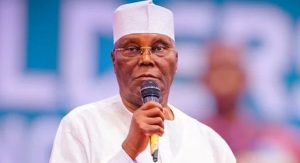
A former Vice President, Atiku Abubakar, has called for the immediate release of the detained leader of the Indigenous People of Biafra, Nnamdi Kanu, describing his continued detention as a “stain on Nigeria’s belief in the rule of law.”


Atiku made this known in a post shared on his X handle on Thursday, expressing full support for the campaign launched by human rights activist and the 2023 African Action Congress presidential candidate, Omoyele Sowore, demanding Kanu’s release.


He wrote, “The continued detention of Mazi Nnamdi Kanu remains an open sore on our nation’s conscience and a stain on our belief in the rule of law. Defying court orders that granted him bail is an abuse of power and an assault on justice.


“I, therefore, lend my voice in full support of the campaign led by @YeleSowore for his immediate release or due prosecution. We fail as patriots if we allow Kanu’s case to fester as yet another wound this nation refuses to heal.”

Sowore, on Wednesday, had urged South-East governors, lawmakers, traditional rulers, and religious leaders to join the planned demonstration for Kanu’s release.


He disclosed that he had contacted several prominent Igbo leaders, including Anambra State Governor, Prof. Chukwuma Soludo; Abia State Governor, Dr. Alex Otti; Senator Enyinnaya Abaribe; and Labour Party’s 2023 presidential candidate, Peter Obi, to join the movement.


The activist also revealed that he reached out to Atiku through his team, noting that the former vice president’s support would give significant weight to the campaign.

“I have tried reaching out personally to Dr. @alexottiofr, Prof. Charles Chukwuma Soludo @CCSoludo, and Mr @PeterObi (through his team) today. Alex Otti and Soludo neither took my calls nor responded to my messages. They promised to tell Mr. @PeterObi about our plans, although he is currently travelling.


“I also reached out to Alhaji @Atiku through his team, while Senator @SenatorAbaribe said he would return my call. I spoke with Obinna Agwuocha of the House of Representatives. He was receptive and encouraging.


“The Abia State House of Assembly members informed me that they plan to travel to London next week and then return directly to Abuja for further action. They mentioned they intend to visit the Attorney General of the Federation first to lodge a complaint; they didn’t anticipate a “placard” protest. I told them, That’s fine; what matters most is that we agree on a unified date for action.


“This is not the time for hesitation. If we genuinely believe that @MaziNnamdiKanu deserves freedom, then every leader of conscience must act, now, not later,” he wrote.


Kanu had remained in the custody of the Department of State Services since his re-arrest in 2021 following his controversial extradition from Kenya.


Despite multiple court rulings ordering his release, including an October 2022 Court of Appeal judgment that discharged and acquitted him of all charges on the grounds that his extradition violated international laws, the Federal Government has yet to comply.


The IPOB leader faces charges bordering on terrorism, treasonable felony, and incitement before the Federal High Court in Abuja, all of which he has consistently denied.

ASUU faults FG’s last-minute appeal as ‘too late’


The Academic Staff Union of Universities has faulted the Federal Government’s last-minute appeal for the union to suspend its proposed warning strike, saying the intervention came “a little too late.”


ASUU President, Prof. Chris Piwuna, stated this on Thursday while speaking on Channels Television’s The Morning Brief, accusing the government of failing to act promptly on the union’s long-standing demands.


“The problem we have with this government and this Ministry of Education is that they are slow in responding to our demands,” Piwuna said.


He recalled that the union had given the government three weeks to address its grievances after a previous meeting in Sokoto, but received no communication during that period.

Piwuna stated, “We went for a meeting in Sokoto, and at that time we were about to embark on a strike action.


“They gave us three weeks, we accepted the three weeks, but we never heard a word from them until the three weeks elapsed — not a word from them, courtesy to even say, ‘Oh gentlemen, we think we are running short, three weeks is around the corner, we are unable to meet with you on so-and-so date.’ Nothing, until we threatened action.”


Piwuna said the government only reached out two working days before the proposed strike, appealing for it to be suspended.

“Yesterday, they appealed to us not to embark on action. Our 2009 agreement — which is still being renegotiated after eight years — remains undone. We have not concluded on it, and two working days before a strike action, you come to appeal to us. I think the appeal has come a little too late,” the ASUU President added.


Meanwhile, Piwuna insisted that the union would proceed with its planned industrial action at the expiration of its ultimatum on Sunday unless the government takes urgent steps to address its demands.


He said, “Their ultimatum expires on Sunday, and after that, there will be a warning strike unless something substantial comes out from the government. So, in the next 48 hours, we expect to receive something substantial from the government.


“Then, we can go back to our members and ask, ‘Do you think this is sufficient for us to hold on?’ and we will do what our members ask us to do.”


ASUU had directed its branches to prepare for a two-week warning strike expected to begin on October 13.


The latest standoff between ASUU and the Federal Government comes despite ongoing negotiations aimed at averting another round of industrial action in the nation’s tertiary institutions.


On Wednesday, the Minister of Education, Dr Tunji Alausa, disclosed in Abuja that the government had entered the final phase of talks with ASUU and other unions to resolve lingering disputes over welfare, funding, and the implementation of the 2009 ASUU-FGN Agreement.

ICYMI: Innovation minister Nnaji resigns amid allegations


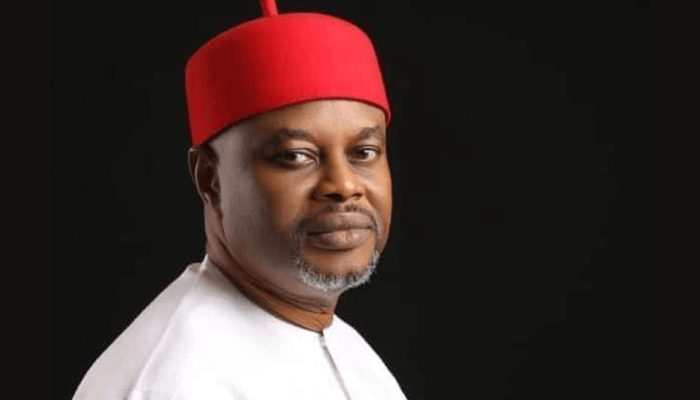
The Minister of Innovation, Science, and Technology, Geoffrey Nnaji, has resigned from President Bola Tinubu’s cabinet amid controversies surrounding his academic records and allegations of certificate forgery.


Nnaji, who was appointed in August 2023, announced his resignation in a letter to the President on Tuesday, expressing appreciation for the opportunity to serve.


Confirming the development in a statement on Tuesday, the Special Adviser to the President on Information and Strategy, Bayo Onanuga, said, “President Bola Ahmed Tinubu has accepted the resignation of Geoffrey Uche Nnaji, the Minister of Innovation, Science, and Technology, following some allegations against him. President Tinubu appointed Nnaji in August 2023.


“He resigned today in a letter thanking the President for allowing him to serve Nigeria. Nnaji said he has been a target of blackmail by political opponents. President Tinubu thanked him for his service and wished him well in future endeavours.”

Nnaji’s resignation comes amid a lingering controversy over alleged certificate forgery and questions surrounding his academic qualifications from the University of Nigeria, Nsukka.

Nnaji and the Enugu State Government had traded words over allegations that he presented forged certificates.


The dispute intensified after the Federal High Court in Enugu rejected Nnaji’s bid to stop the University of Nigeria from releasing his academic records.


The court had ruled that the institution was within its rights to release the minister’s academic details in response to a freedom of information request, a decision that fuelled further public scrutiny.


Nnaji, however, maintained that he was being blackmailed by political opponents determined to tarnish his reputation.

ICYMI] 2026 World Cup qualifier: Osimhen, Lookman, others arrive South Africa


At least 17 Super Eagles players, including star forwards Victor Osimhen and Ademola Lookman, have arrived in Polokwane, South Africa, as Nigeria intensifies preparations for Friday’s crucial 2026 FIFA World Cup qualifying clash against Lesotho.


The players joined camp on Tuesday, a day after the technical crew and backroom staff arrived to officially open the team’s base.


Among those already in camp are William Troost-Ekong, Wilfred Ndidi, Bruno Onyemaechi, Terem Moffi, Moses Simon, Calvin Bassey, Alex Iwobi, Samuel Chukwueze, Frank Onyeka, and Tolu Arokodare.

Also present are returnee defender Semi Ajayi and goalkeepers Stanley Nwabali, Adebayo Adeleye, and Amas Obasogie, who have all linked up with the coaching staff ahead of full team training sessions.


Nigeria currently sit third in Group C of the CAF World Cup qualifying series with 11 points from eight matches. The Super Eagles must win their remaining two fixtures and hope for favourable results from South Africa and Benin Republic to keep their qualification hopes alive.


The three-time African champions will face Lesotho on Friday in Polokwane in what is expected to be a decisive, must-win encounter.

SSANU, NASU mobilise for Thursday protest


The Senior Staff Association of Nigerian Universities and the Non-Academic Staff Union of Educational and Associated Institutions have declared a one-day protest for Thursday over the Federal Government’s failure to meet their demands.


Acting under the Joint Action Committee, both unions have directed all their branches to hold joint emergency meetings on Wednesday to mobilise members for protest activities.


These will include marches on campuses, placard displays, and press briefings.


The decision followed a comprehensive review of government actions at JAC’s meeting on October 6, after several ultimatums had expired without resolution.

Among the contentious issues are the alleged inequitable disbursement of the N50bn earned allowances; delays in renegotiating the 2009 FGN/NASU/SSANU agreements; non-payment of two months’ outstanding salaries; arrears of 25 and 35 per cent salary increments; and non-remittance of third-party deductions for May and June 2022.


JAC had earlier issued a seven-day ultimatum to the government on September 15, later extending it by another 14 days — which expired on Monday, October 6.


In a circular dated October 6 and titled “Commencement of Protest Actions”, signed by NASU General Secretary, Prince Peters Adeyemi, and SSANU National President, Comrade Mohammed Ibrahim, the unions directed full participation by all members.

The memo read in part, “Following the inauguration of the Joint Consultative Committee by the Honourable Minister of Education to look into the demands of JAC of NASU & SSANU, the committee met twice — on Friday, 19th September 2025, and Monday, 6th October 2025 — with little progress, as our demands remain unresolved despite the extension of the ultimatum.


“In light of this development, the National JAC hereby directs branch leadership in universities and inter-university centres nationwide to convene a joint congress on Wednesday, 8th October 2025, to mobilise for a massive and effective one-day protest on Thursday, 9th October 2025.”


It added that all members in both federal and state-owned universities “are expected to strictly comply with this directive,” stressing that unity and adherence were essential for success.


SSANU President, Mohammed Ibrahim, recently accused the government of insincerity, warning that the unions could declare an indefinite strike if their demands remain unmet.


“Ours will not be the ‘mother of all strikes’; it will be the grandfather of all strikes,” Ibrahim said. “When SSANU or NASU strikes, you know what it means. We must take our destinies in our hands.”


He lamented the poor welfare of non-academic staff in universities, describing them as “the worst hit financially, economically, and psychologically.”


Like the Academic Staff Union of Universities, both SSANU and NASU have been at loggerheads with the Federal Government over staff welfare and funding issues.

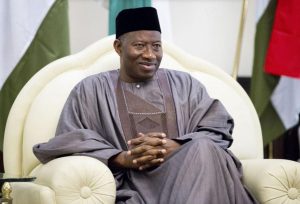
2027: Tinubu supporters warn Jonathan as kinsmen condemn lawsuit


A pro-President Bola Tinubu group in Ondo State, the Progressive Network for Tinubu, on Tuesday declared that President Tinubu has no serious opposition ahead of the 2027 presidential election.


The group also warned former President Goodluck Jonathan against returning to the race, saying doing so would “end in embarrassment.”


This follows social media reports suggesting that Jonathan is warming up to contest the 2027 poll under a yet-to-be-revealed political party.


Amid this rumour, a legal practitioner, Johnmary Jideobi, on Monday, filed a suit at the Federal High Court in Abuja, seeking a perpetual injunction to restrain Jonathan from contesting the 2027 presidential election.

Speaking on Tuesday during the inauguration of local government structures across the 18 local government areas of Ondo State, the PNT Director-General, Mr. Olumide Obadele, said beyond legal hurdles, Jonathan should uphold his reputation as a statesman by staying away from the 2027 race.


According to him, opposition parties, including the Peoples Democratic Party and the African Democratic Congress, are “on life support,” and any candidate contesting on their platform, including Jonathan, cannot defeat President Tinubu.


Obadele dismissed claims that the All Progressives Congress was jittery over Jonathan’s rumoured ambition, saying constitutional and legal constraints make his participation nearly impossible.


He said, “I can tell you that Jonathan will not run at the end of the day. The Constitution is clear about it, and there’s no need to twist it. If he insists, he will only end up embarrassed and rubbished.”


Obadele described the 2027 presidential election as “a done deal” for the APC, insisting that none of the existing opposition parties has the structure or clout to unseat President Tinubu.


“Political parties such as the PDP, Labour Party and ADC are in the ICU and lack the organisation and national appeal needed to challenge the ruling APC. I do not think any opposition party in Nigeria today can say it wants to run against Asiwaju. For me, 2027 is a done deal,” he said.


On the group’s mobilisation efforts for the President, the PNT convener said the group was working to expand grassroots participation, particularly in Ondo State, where only about 28 per cent of registered voters participated in the last general elections.


He lamented the growing voter apathy among elites who prefer to engage politics on social media rather than at the polls, saying civic engagement and political education were now the focus of PNT’s activities.


“Our goal is to awaken the remaining 70 per cent of voters who stayed home during the last polls. We’re engaging communities, civil groups and youth organisations to enlighten them about Asiwaju’s leadership and achievements. We want Yoruba land to stand solidly behind him,” he said.

Meanwhile, civil society organisations in Delta State have condemned the lawsuit against Jonathan, describing it as politically motivated and an abuse of judicial process.

The Director-General of the Young Nigerian Rights Organisation, Mr. Victor Ojei, called for the immediate dismissal of the suit, which he described as “a politically motivated distraction and a gross abuse of judicial process.”


In a statement made available to The PUNCH on Tuesday in Asaba, Ojei expressed concern over what he called “a growing pattern of weaponising the courts for political persecution.”


He said, “The suit, which seeks to bar Dr. Jonathan from contesting the 2027 presidential election, is not only legally baseless but also morally wrong and contrary to the spirit of democracy.


“Dr. Jonathan’s assumption of office in 2010 followed the tragic passing of President Umaru Musa Yar’Adua — a constitutional transition rather than an election. His initial tenure was incomplete and constitutionally distinct from a full presidential term.


“The framers of our Constitution did not intend for such a lawful succession to be counted as an ‘elected term.’ Any argument to the contrary is a distortion of both fact and law.”


Ojei further argued that the case suffers from a fundamental defect of locus standi, as the plaintiff lacks the legal standing to bring such an action.


“The individual who filed the suit neither represents any institution of state nor has suffered any direct injury that warrants judicial intervention. It is a speculative petition driven by political interests rather than constitutional principles,” he added.


The organisation stressed that democracy thrives on inclusion and the right of every citizen to participate, not on preemptive exclusion based on personal or partisan motives.


“To attempt to silence a citizen’s political right before he has even declared interest in the race is not only unconstitutional but a dangerous precedent for our democracy,” the statement added.


The group urged the judiciary to safeguard its integrity by resisting political manipulation, stressing that the courts are “the last hope of the common man, not a playground for political adventurers.”


It, therefore, called on the Federal High Court to dismiss the case without hesitation.

Exit mobile version