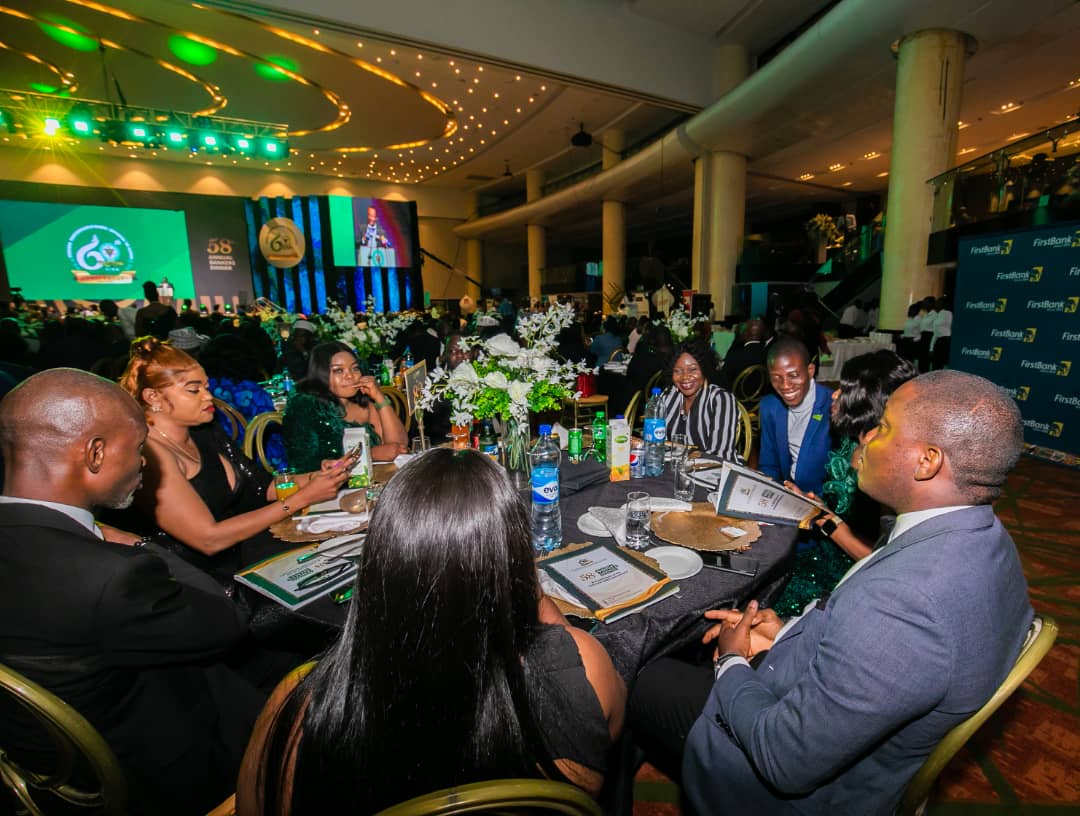
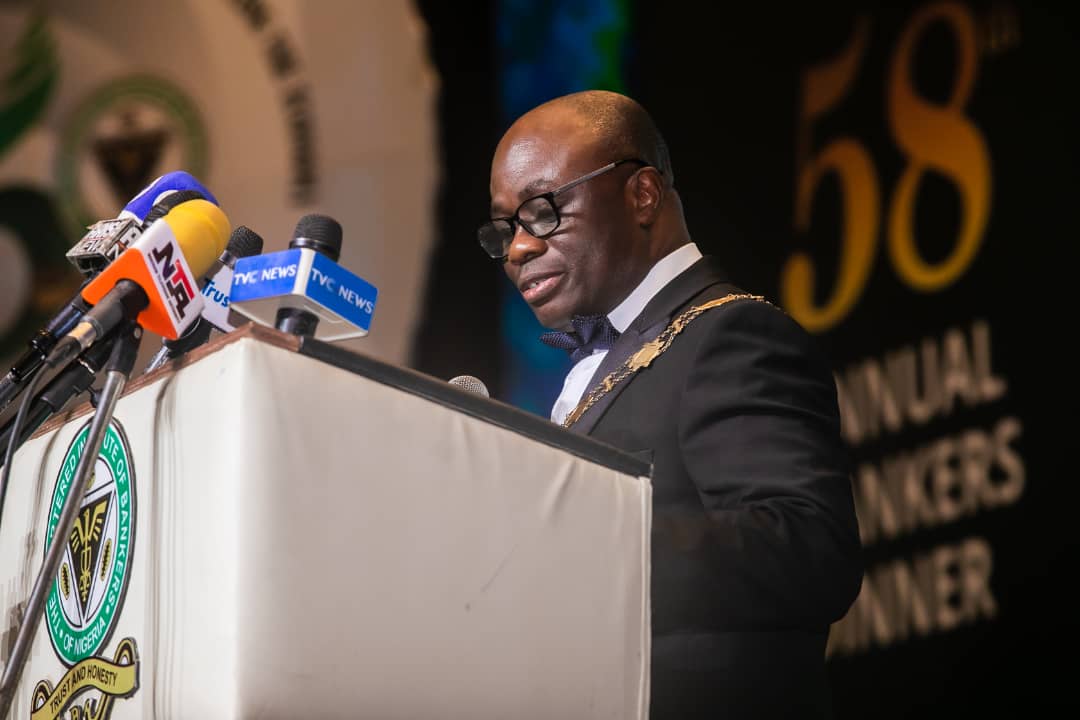
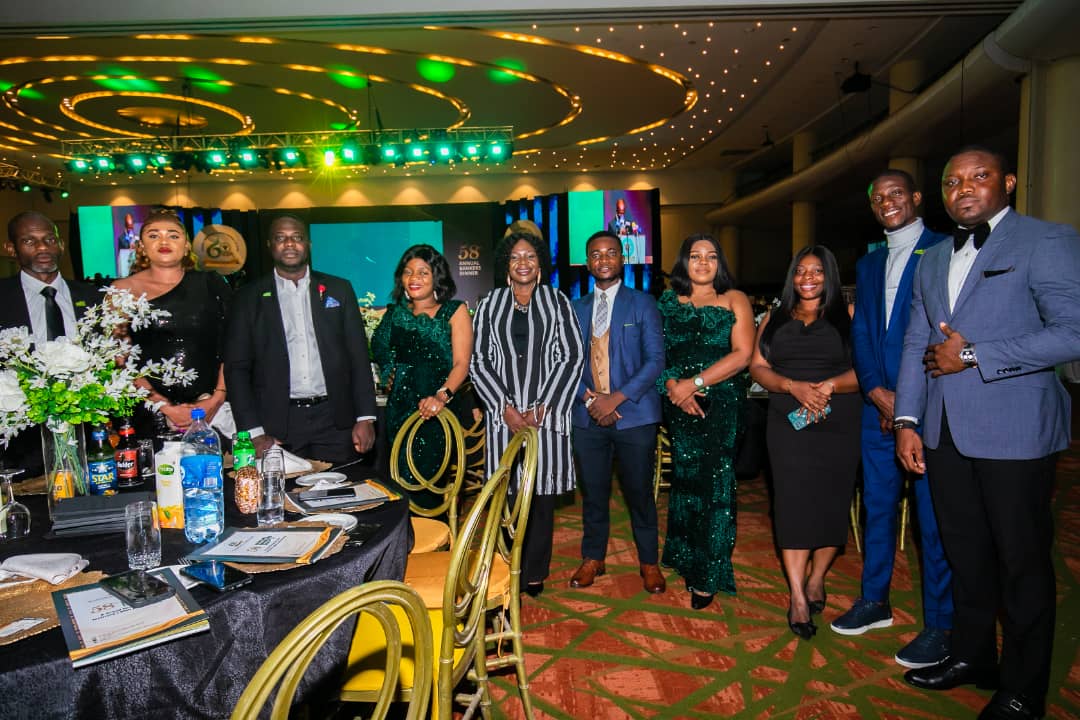
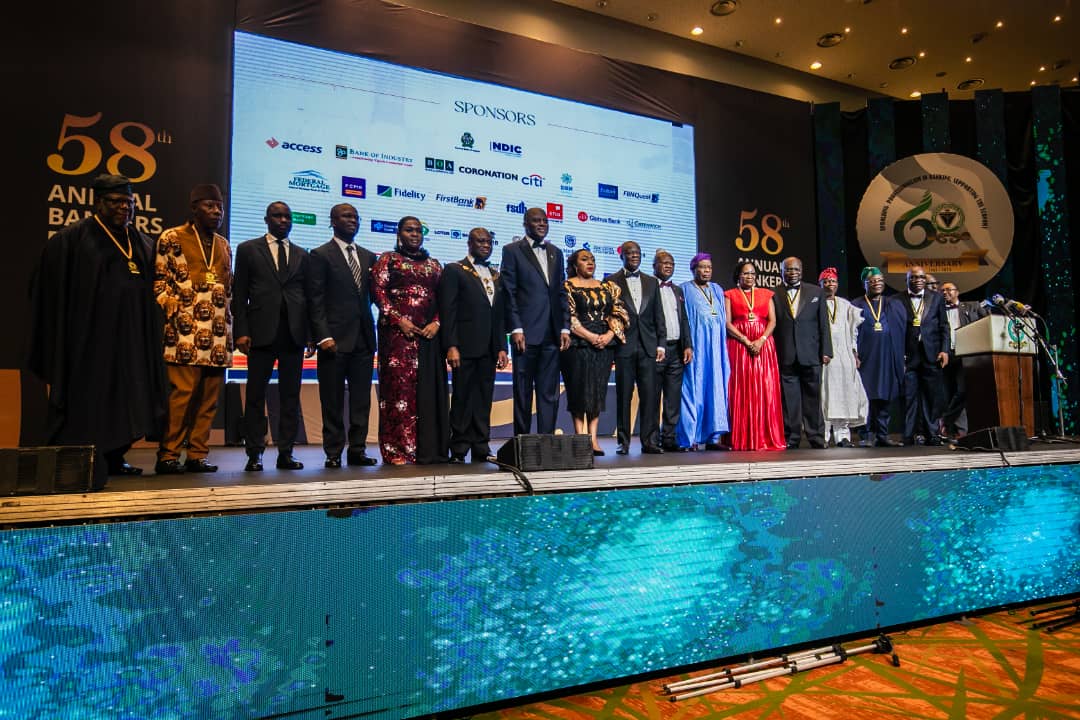
Photos: Adron Homes Grab the Headlines at 58th Annual Bankers’ Dinner











The training will cover plumbing and pipe fittings, electrical wiring and solar installation, painting and decoration, and mansory and tilling work, and will take place at the academy’s new centre in Monatan, Ibadan.
Speaking about the free training, Bldr. Samson Olukayode Akanni, the managing director of Honeytreat Academy said the training is for youths, especially those who are interested in making better income and living a meaningful life.
“For us, our path and destiny are tied with humanity. We know the path to achieve greatness is towards Human capacity development and improved industrialisation that sustains local productivity. That is the major reason we made the training free for all” he said.
Akanni added that “the benefits of the training include NSQ certificate,
Trade Tests 1,2 & 3 among other certifications made it different from all other vocational trainings. Though a free training you must register to be part of it. Click https://bit.ly/HTAIbadan and register other directive on the registration portal”.
It will be recalled that Honeytreat Trade Academy has partnered with notable organisations like the Lagos State Government through LSETF, ISHK Tolaram Foundation, GIZ, UNDP, and many more, and has trained more than 3000 youths over the last 5 years in basic construction skills at their Construction Skill Centre in Akilo, Lagos. The Academy had recently opened a Digital Skill center in Magodo to deliver skills to the teeming Nigerian youths.
Now in Ibadan, Honeytreat Trade Academy has opened a new Skill Centre in Monatan, Ibadan with the capacity to train 700 youths on a 3-floor edifice.
Honeytreat Trade Academy is committed to serving international standards and up-to-date construction trade training as well as empowering Nigerians with Digital Skills at the Monatan Skill Centre in Magodo.

Rising from a meeting that held last weekend at Agenebode, Etsako East Local Government Area, the Etsako Prosperity youths noted that Idumonza’s comprehensive “action plans to address longstanding challenges and propel Edo State into a new phase of growth, ” is the needed conviction that the Esan born media practitioner is the right man for Edo State transformation from November 2024.
In a statement signed by the president of the youth group, Momoh Ganiyu, they emphasized that Idumonza’s action packed plans are “Unparalleled. ”
The insightful document which offers clarity to Idumonza’s commitment to the people of Edo State, stressed that in the face of over two decades of rule by the Peoples Democratic Party (PDP) and the All Progressives Congress (APC), Edo State has unfortunately experienced economic stagnation.
Idumonza, therefore, aims to break away from this stagnation by introducing innovative policies and strategic initiatives.
His vision is rooted in fostering economic diversification, job creation, and infrastructural development that align with the aspirations and needs of the people.
Idumonza pledges to prioritize sectors such as education, healthcare and agriculture, recognizing the pivotal roles of these sectors in building a sustainable future for Edo State.
His proposed policies include robust investments in education to empower the youth, the establishment of modern healthcare facilities to enhance public health, and the implementation of agrarian reforms to boost food security and stimulate the agricultural sector.
Moreover, Idumonza emphasizes the importance of good governance, transparency and accountability as the foundation for effective administration.
He envisions an inclusive government that actively engages citizens in decision-making processes and ensures that their concerns are addressed frontally.
In electing Isidahomhen Idumonza, Edo State can anticipate a departure from the status quo, marked by economic revitalization and a commitment to the well-being of its residents.
His aspiration represents a beacon of hope for a brighter and more prosperous future, signaling a departure from the economic stagnation that has characterized the state’s recent history under PDP and
APC.

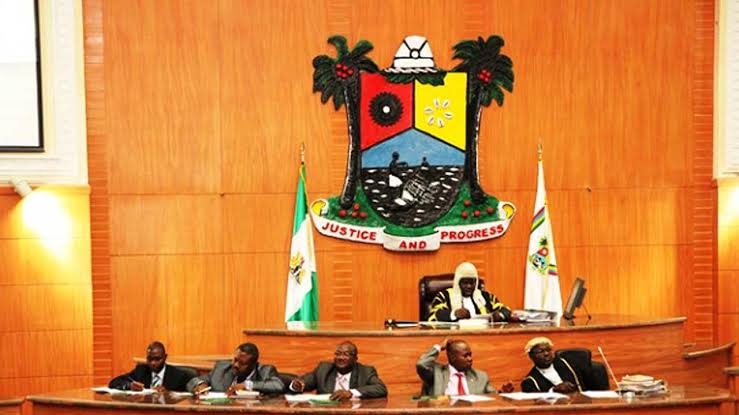
At a sitting presided over by Speaker Mudashiru Obasa, the Clerk of the House, Barr. Olalekan Onafeko, read the letter before the lawmakers quoting the governor as seeking the confirmation of a commissioner-nominee and five nominees in the position of special advisers.
However, the letter only named the commissioner-nominee as Mr. Abiodun Ogunleye, while the identities of the nominees for the position of special adviser were not mentioned making the House resolve to write back to the governor for the remaining identities.
Dr. Obasa, while agreeing with the lawmakers that names should be attached to the letter, said: “it is necessary for us to know who and who would become part of the cabinet.”
Reacting earlier, the Deputy Majority Leader of the House, Hon. Adedamola Richard Kasunmu, observed that the letter did not follow the usual procedure of revealing the identities of the nominees.
“Thus, the process of not mentioning the names seems like coming through the backdoor,” he said.
He was supported by his colleagues, Hon. Ladi Ajomale and Hon. Owolabi Ajani, who noted that the previous lists from the governor had details of the nominees and that this made the screening by the ad-hoc committee easy.
“But in this case, it is only the commissioner-nominee that had a name attached to it and this is surprising. Maybe we should also pass information to the governor that the names should be specified,” Ajomale said.
Meanwhile, the Lagos State House of Assembly has invited the state’s procurement agency over reports of alleged spendings by the Offices of the Governor and the Deputy Governor.
Dr. Obasa, while noting that the executive arm of government had made efforts to declare the story as untrue, it was necessary for the House to look into the issue so as the establish the facts behind the story.
“So we call on the committee in charge of procurement to invite the agency and others mentioned and do a thorough job on this in order to establish facts concerning the publications,” the Speaker said.
Eromosele Ebhomele
Chief Press Secretary to the Speaker of the Lagos State House of Assembly.

In the interim consolidated financial statement of June 30, 2023 of Herbert Wigwe led Holdings, it was recorded that Access Bank incurred a loss of N5. 46 billion to fraud and forgery incidents, a situation that places the bank on top of the list of most risky banks to save your money.
Findings shows the recorded loss were the money the owners were able to recover from the bank and this did not includ several billions whose owners were frustrated or bullied by the actions of Access Bank from recovering their money deposited from safe keeping with the bank that were somehow stolen.
The statement which was released by the Bank’s newly formed parent company Access Holdings reports that the N20.85 trillion asset company has been doing a shoddy job in securing the savings of their many customers which is primarily the bank’s responsibility and has only been able to prevent a loss of mere N975 89 million out of N6.44 billion which means they can confirm depositors with Access Bank incurred N5.46 billion debt due to the bank’s porous cyber security despite the several billions being earmarked for that purpose in the bank’s annual budget.
The report reveals the loss of N5.459 billion is as a result of fraudulent transfers, fraudulent withdrawals and reactivation of customers’ accounts, while N4.53 million loss was from cash theft, cash suppression, cash pilferage and dry posting.
If it would be recollected the bank was accused of practices that are not professional by Mr P of the singing duo of PSquare. The grouse of the musician is that the Bank and some other banks colluded with some individuals to use his name to perpetrate fraud on hapless Nigerians by allowing elements that are not him to use a combination of his stage and real names to open account to defraud the people.
He also accused the bank of not making moves to curbing the fraud months after he had reported the actions of the scammers to the bank over the anomaly of allowing such account to operate without the BVN.
It is important to note that the once proactive Access Bank seems to have been swimming in the deeps of banking security services for some times as there has been several incidents involving the bank that was at a time running the best secured online banking platform in the country to actions that has seen several depositors lose their life savings kept with the bank or use an account opened with the bank to steal.

At the end of the four-month promo, 1,240 new and existing customers would have been rewarded with N100,000.00 each as each month will have 310 new and existing customers winning N100,000. Up to 40,000 customers who reactivate their dormant account stand a chance to win free airtime as 10,000 customers will be rewarded with free airtime monthly for reactivating their dormant account.
6 customers will emerge lucky winners of N1,000,000 each in the grand finale draw. The promo is open to new and existing savings and current account customers.
To open a FirstBank account dial USSD code *894*0# and follow the prompt or visit the Bank’s website and click on “Open Account”. You can also visit any FirstBank branch near you to open account.
To qualify for the N100,000 monthly draw, customers will have to deposit and maintain a minimum amount of 5,000.00 in their account monthly and transact a minimum of 5 times transactions on any of the Bank’s digital channels: FirstMobile, LIT App, USSD, First Online as well as Debit Card transactions.
Customers who are eligible to win N1,000,000 must have a deposit of N50,000.00 monthly for four consecutive months or maintain a minimum deposit of N200,000.00 for four months and transact a minimum of 5 times on any of the Bank’s digital banking channels; FirstMobile, LIT App, USSD, First Online as well as Debit Card transactions to qualify for the grand finale draw.
Customers who reactivate their account(s) are also eligible to win. For reactivating their account, the first 10,000 customers to deposit N1,000.00 and transact on any of the Bank’s digital channels: FirstMobile, LIT App, USSD, First Online and Debit Card transactions will be rewarded with free airtime. Customers who reactivate their dormant account could also qualify for the monthly draw when they deposit and maintain a minimum amount of N5,000 monthly and transact a minimum of 5 times on any of the Bank’s digital channels. They could also emerge winners of N1,000,000 in the grade finale draw if they meet the criteria.
To reactivate account, the customers will have to dial USSD code *894*7# and follow the prompt to reactivate Tier 1 accounts or visit any nearest FirstBank branch for Tier 2 and 3 account reactivation.
“We are thrilled to launch this promo in appreciation of the patronage, trust and loyalty our customers have shown us over the years,” said Ms. Folake Ani-Mumuney, Group Head, Marketing & Corporate Communications, FirstBank Group. The exciting modalities of the promo reflect our commitment to enhancing the banking experience of our customers across any or all of our digital banking services.”
This is the season when FirstBank provides opportunities and platforms for the yearly memorable homecoming experience from across the world. The promo is an enabling opportunity for customers, their friends, and families to have exciting, fun-filled, memorable experiences. We encourage our customers to seize this opportunity and participate actively’ she concluded.
For more updates on the promo and other exciting offerings from FirstBank, follow the Bank’s social media handles on – Facebook: First Bank of Nigeria Limited, Instagram: @firstbanknigeria and X (formerly twitter): @FirstBankngr.

At the launch and official press briefing at the head office of the company on Omole Phase 1 Lagos on Friday, the 17th of November; the company’s representatives and sales team highlighted and unveiled the massive discount on their properties in a bid to follow the global trend and also follow top companies across the world that will be giving an amazing discount to customers at the upcoming Black Friday Sales coming.
The Adron Lemon Friday has become a way of encouraging customers to take an opportunity to secure landed properties at affordable prices while they also stand chances of winning mouth-watery prizes. At the unveiling; customers are encouraged to pay as low as 30k for a landed property and stand a chance of winning a Bag of Rice and chicken in a bid to celebrate the Yuletide season that is fast approaching.
While many would wonder why buying lands attracts prizes, it will be very open to clear the air that Adron has a track record of always delivering on what the promise. To buy land and pay as low as 30k gives the subscriber a double value for their money in landed property and gifts and also massive infrastructural investment within the estates across the country. It’s a roller coaster of opportunity for anyone who seizes the opportunity of the Lemon Friday promo. Some other categories include; Paying 60k and getting a gift like Rice, Oil, Electric Blender, Fan and cooking pots.
Customers can also pay 100k and stand a chance of winning prizes like; rice, cooking oil, double-faced gas burners, electric cooking pots and chicken.
Subscribers can also stay hooked to the pocket-friendly 200k plan and stand a chance of going home with Mouthwattery prizes like; a standing fan, air fryer, live Goat and a bag of rice.
There is also a category for 500k which not only qualifies customers for a plot of land but also allows the customer to go home with a chest freezer, Live Goat, washing machine, Microwave and rice.
For high-earning subscribers; the 1Million NAIRA down payment qualifies you to win amazing juicy prizes like; A smart TV, a Live Goat, a Cow, an Air conditioner, a Bag of Rice and a host of other gifts.
For customers who are making a down payment of 1.5 Million Naira; this increases their chances of going home with a twin-door standing freezer, a cow, a bag of Rice and a water dispenser.
For customers who are making a down payment of 2 million NAIRA on our lands, they stand a chance to go home with not only a plot of land they will also be gifted a Cow, Twin Door standing fridge with freezer and a Bag of rice.
According to the company; customers have the right to select the category of the gift they want and immediately they subscribe by filling out the necessary forms and also paying the amount required into a designated company account; they are entitled to the gift of their choice that falls within the category of the amount they paid. They also disclosed that a third party can also pick gifts on behalf of customers when they get written authorization or authorization via email which will enable them to verify authenticity to avoid giving gifts to the wrong person.
On payment method, the company emphasized customers who are willing to pay and enjoy the massive benefits of Lemon Friday to refrain from paying into any sales rep’s account and that the company will not be held liable if any customer pays into the account of a staff member rather than paying into the company’s account via bank transfer or bank Cheque. The company also advised customers to desist from bringing cash to avoid being a soft target for fraudsters or thieves which will also give room for customers’ safety.

For more information, visit any of their offices nationwide or contact them via their social media channels on Facebook Adronhomesofficial, Twitter @adronhomes and Instagram @adronhomesofficial or visit our website at www.adronhomesproperties.com to read more about Adron Homes and schedule an inspection to any of their lands in Lagos, Ogun, Osun, Oyo, Ekiti, Niger, Nasarawa and Abuja with their well-trained sales representative who is ready to take your round or facilities and answer every question to clear every curiosity. The company is also working on the latest AI tool with a 360 panoramic virtual tour of their properties which enables customers to take a virtual tour of their properties without even visiting there in person. The newest innovation will save time and also give clients an Avenue to make decisive decisions on the spot.
Apart from Lemon Friday; Adron is known for engaging in massive sales promo to encourage tenants to achieve their dreams of being landlords without breaking the bank. With a payment plan for 12-48 months, Adron has maintained its consistency in ensuring that customers pay in bits and after confirmation of payment allocation of lands is done for those who are building immediately. Their estates are well and taste fully built with modern roads and concrete pavements with recreational facilities and malls. It also boasts of the best street lighting, surveillance security cameras, solid road networks, perimeter fencing and a whole lot of amenities that make an estate habitable.
The dice have been cast and the floor of opportunities has opened for customers to take advantage of the Lemon Friday delay might be dangerous. Subscribing to any of the plans further solidified your opportunity to transition from being a tenant to a homeowner. Hurry and start paying because with Adron Homes you are sure of a community built with serenity, peace and tranquillity at am affordable prices.
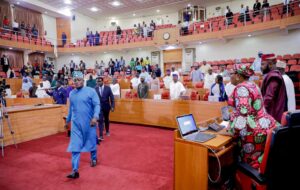
The lawmakers also said there was a need for the National Assembly’s electoral committee to work on issues of delay in voters registration as well as the high number of election cases handled by the Courts of Appeal.
This position of the lawmakers followed a letter read by the Clerk of the House, Barrister Olalekan Onafeko, informing the House that the National Assembly Committee on Electoral Act would have a three-day retreat in Lagos.
The Deputy Speaker, Hon. Mojisola Lasbat-Meranda, who presided over plenary on behalf of Speaker Mudashiru Obasa, agreed that registration of voters should be a continuous exercise in order to accommodate more eligible voters.
Lasbat-Meranda suggested that the Independent National Electoral Commission (INEC) can start requesting for means of identification in the course of registering voters to ascertain an electorate’s actual places of residence.
The Chairman, House Committee on Judiciary, Human Rights, Public Petition and LASIEC, Hon. Ajomale Oladipo, had earlier identified delay in voters registration and post-election legal matters as two challenges that the committee should tackle.
The lawmaker said that after general elections, Appeal Courts face the hurdle of attending to many cases leading to delayed judgements.
He added that the Electoral Act should accommodate state High Courts to handle some of the cases.
The Majority Leader of the House, Hon. Noheem Adams, said it was necessary for the National Assembly to create more awareness about the electoral review exercise while Hon. Sanni Okanlawon, representing Kosofe 1, suggested that the Electoral Act should accommodate diaspora voting.
On his part, Hon. Gbolahan Yishawu, representing Eti-Osa Constituency 2, urged the electoral committee to look into situations where people are mobilised to vote in areas where they are not resident.
“They occupy hotels during elections to sleep and leave for their states of residence after voting. Something should be done to address this,” he said.
Eromosele Ebhomele
Media Assistant to the Speaker of the Lagos State House of Assembly.
Last Sunday, November 12, like the Sundays before it, was a huge spectacle at the Zion Prayer Movement Outreach in Okota, Lagos.
Founded by Evangelist Chukwuebuka Anozie Obi, the ministry has become synonymous with stories of mind-boggling miracles of healings and deliverances occurring either at Zion City there or those witnessed in different parts of the world.
The testimonies come from people who say they were located during online prayers by Evangelist Ebuka or were healed after using Seraphic Water and Seraphic Oil blessed by the Spiritual Director of the ministry, Ebuka.
The people who testified to their healing last Sunday included a woman who had breast cancer; a US-based kidney disease patient (Onyedikachi), and Beatrice Obiozor from United Kingdom who had glaucoma for 40 years and was healed after surgery failed to rectify the problem.
There was also the story of Pirekina Anyanwu of Isiala Mbano, Imo State, who flew in from Florida, US, to testify to how the Seraphic oil and water healed his spinal chord injury and saved him from a highly risky surgery recommended by doctors.
Click on the link below to watch the testimonies:


For the past seven years, FirstBank colleagues and customers come together to participate in global annual volunteer (Start Performing Acts of Random Kindness) SPARK initiative, to give back to and foster positive change within the communities where they live and work. This has seen an impact of over 200,000 lives across eight countries, over 103 charities supported as well as over 121,015 volunteer hours achieved.
The activities of the 2023 edition, which is scheduled for 23 to 28 October 2023, include Tree Planting, Women Empowerment, SPARK Schools Engagement, Orphanage Homes, the less privileged engagement, and Kind Comments Day.
In partnership with Nigeria Conservation Foundation, FirstBank employees and partners will progress its planting activity which targets 50,000 trees over a three-year period from 2023. Tree planting is one of FirstBank’s initiatives to reduce its carbon footprints and promote environmental sustainability as part of its overarching sustainability and ESG (Environment, Social & Governance) strategy and in alignment with the Nigeria Conservation Foundation’s Forest Programme – Green Recovery Nigeria (GRN) which is designed to help increase Nigeria forest cover from its current state of about 4-7% to 25% by 2047.
Additionally, in line with FirstBank’s commitment to achieving the United Nations Sustainable Development Goal 5 (SDG) of women empowerment, the Bank will support cancer foundations focused on women and skills acquisition for women on 25 and 26 October 2023. As a member of UN Women, FirstBank employs the relevant women empowerment tools to empower women internally and externally as well as partner with International Women Society to drive skills acquisition.
The Kind Comments Day is an advocacy campaign encouraging staff, customers, and other stakeholders to say kind things about one another. It focuses on inspiring and encouraging people to be deliberate about the use of kind words in relation to others.
On 27 October 2023, staff of the Bank will visit schools for the SPARK School Engagement. This activity is aimed at engaging school students through the Bank’s employees on financial literacy and inculcating and equipping young people with entrepreneurship skillset and mindset to inspire self-belief despite the increasingly daunting economic challenges while preparing them for the future of work.
Rounding off the 2023 CR&S Week will be visits to Orphanage Homes, the less privileged engagement which will hold on 28 October 2023. Orphanages, including the Internal Displaced Persons (IDPs), will be visited in six geo-political zones in Nigeria as well as other SSA markets.
“At FirstBank, we are committed to promoting the culture of kindness as it continues to engender positive relationships with our host communities. By making kindness a way of life, we build stronger communities, foster empathy, and create a positive ripple effect that extends far beyond this week, said Ms. Folake Ani-Mumuney, the Group Head, Marketing and Corporate Communications for FirstBank.
It’s great to see our volunteers demonstrate their continued commitment to positively impact our communities. In the spirit of kindness, I encourage everyone to join us in celebrating the FirstBank Corporate Responsibility & Sustainability week as we make kindness a part of our daily lives, interacting with one another in impactfully memorable ways,” she concluded.
FirstBank has continued to receive awards and recognition for its consistent positive impact and performance from reputable companies globally. Amongst these awards and accolades are the Most Socially Responsible Bank (2018) (International Finance Banking Awards); CSR Bank of the Year (2020) Business Day Banking & Other Financial Institutions (BAFI) Awards; Market Leader Nigeria (CSR) Euromoney Market Leaders 2022; Best CSR Bank Nigeria (2021) (Global Banking and Finance magazine); Excellence in Women Economic Empowerment (2019) (Central Bank of Nigeria); Market Leader Nigeria (ESG) Euromoney Market Leaders 2022.