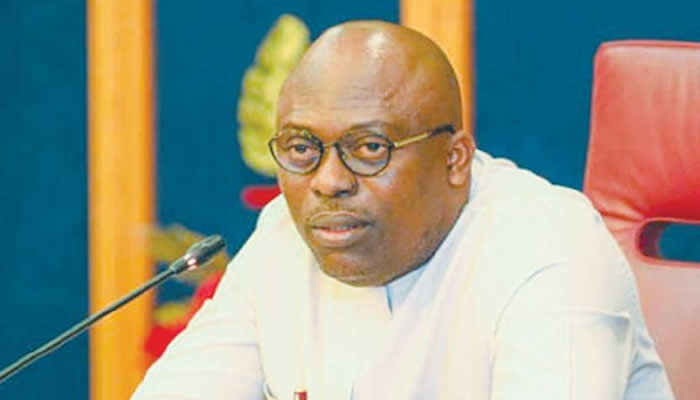
The Peoples Democratic Party in Lagos State has urged reinstated Governor Siminalayi Fubara of Rivers not to dump the party, but to do his best to make the state great again.
The News Agency of Nigeria recalls that President Bola Tinubu had on March 18 proclaimed an emergency rule in Rivers, following a lingering political crisis in the state.
The crisis, caused by a power tussle between Fubara and his predecessor,now Minister of the Federal Capital Territory, Mr Nyesom Wike, created political tension in the state,paralysing governance.
Tinubu, on proclamation of the emergency rule, suspended Fubara and the state’s lawmakers for six months ,and appointed retired Vice Admiral Ibok-Ete Ibas as Sole Administrator.
Meanwhile, the President on Wednesday announced an end to the emergency rule and directed all elected officials to resume their offices effective from Thursday.
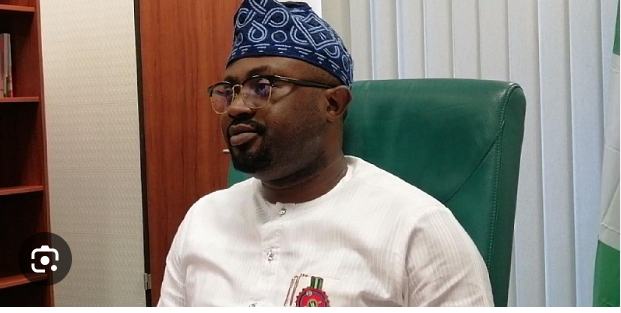
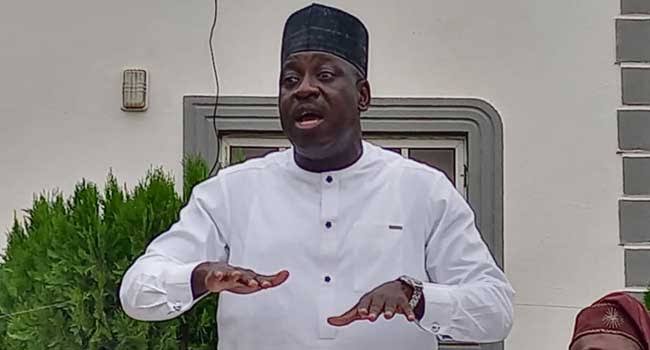
Reacting, the PDP Vice-Chairman (Lagos Central), Mr Hakeem Olalemi, in an interview with NAN urged Fubara not to entertain fear, but be “very courageous” to govern the state.
“The governor should not muster any fear, the deed has been done. He should continue strong and be faithful in doing what is expected of him as the governor of the state.
“Fubara must make Rivers great again. The governor should nurture the party that brought him to power into a bigger platform, he should not jettison that party. He should ensure the party becomes stronger in the state and region,” Olalemi said.
Olalemi also urged all Rivers political gladiators to consider the people and allow peace and harmony to reign.
“There is no need for us to clap, dance, jump, or celebrate that Gov. Fubara has been reinstated. He has gotten back the mandate freely given to him at the ballot but now weakened.
“Our advice to the legislative and executive arms is to work together and in harmony for the betterment of the good people of Rivers.
“These are the people that voted them and their interest should supercede all politics and politicking,” the PDP chieftain added.
Olalemi said that the electorate deserves to enjoy the dividends of democracy, saying “they should reap the fruit of their labour”.
The chieftain advised all lawmakers, especially those who had initially pledged allegiance to the All Progressives Congress, following the crisis, to return to PDP.
“I will advise those 27 lawmakers who initially pledged loyalty to APC, to retrace their steps back and come back to PDP fully to develop the party,” he said.
NAN reports that Fubara, his Deputy, Prof. Ngozi Odu and members of the state assembly on Thursday returned to office after the lifting of the emergency rule
The Nigeria Immigration Service has officially ended passport production at multiple centres, transitioning to a single, centralised system for the first time in 62 years.
Minister of Interior, Dr Olubunmi Tunji-Ojo, said this on Thursday while inspecting Nigeria’s new Centralised Passport Personalisation Centre at the NIS Headquarters in Abuja.
He stated that since the establishment of NIS in 1963, Nigeria had never operated a central passport production centre, until now, marking a major reform milestone.
“The project is 100 per cent ready. Nigeria can now be more productive and efficient in delivering passport services,” Tunji-Ojo said.
He explained that old machines could only produce 250 to 300 passports daily, but the new system had a capacity of 4,500 to 5,000 passports every day.
“With this, NIS can now meet daily demands within just four to five hours of operation,” he added, describing it as a game-changer for passport processing in Nigeria.
“We promised two-week delivery, and we’re now pushing for one week.
“Automation and optimisation are crucial for keeping this promise to Nigerians,” the minister said.
He noted that centralisation, in line with global standards, would improve uniformity and enhance the overall integrity of Nigerian travel documents worldwide.
Tunji-Ojo described the development as a step toward bringing services closer to Nigerians while driving a culture of efficiency and total passport system reform.
He said the centralised production system aligned with President Bola Tinubu’s reform agenda, boosting NIS capacity and changing the narrative for better service delivery.
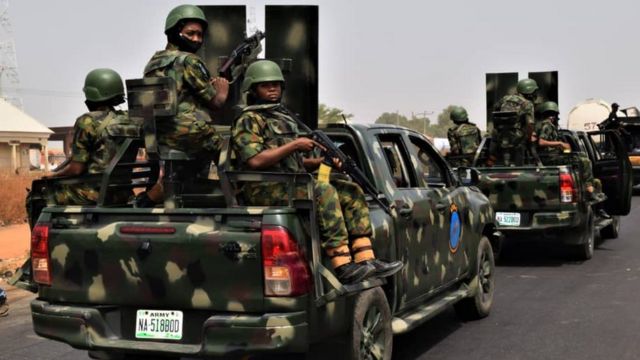
The military has arrested one person and recovered a significant cache of illicit arms and ammunition after bursting an illegal weapons manufacturing factory in Heipang District, Barkin Ladi Local Government Area of Plateau State.
Disclosing this in a statement on Thursday, the spokesman for the military Joint Task Force Operation Enduring Peace, Major Samson Zhakom, said the operation was intelligence-driven and took place on September 17, 2025.
According to him, troops raided the factory, arresting a weapon fabricator while others fled the scene.
Zhakom added that the arrested suspect and recovered items are in custody for further investigation and action, while the military is working to track and arrest the fleeing members of the illegal weapon manufacturing syndicate.
The statement read “In continuation of efforts to mop up illicit arms and ammunition in the Joint Operations Area (JOA), troops of 3 Division/Joint Task Force Operation Enduring Peace raided an illegal arms manufacturing factory at Heipang District in Barkin Ladi Local Government Area of Plateau State on 17 September 2025.
” During the intelligence-based operation, troops arrested a weapon fabricator while others fled the factory before troops arrived in the area.
“A thorough search of the illegal factory led to the recovery of the following items: twelve assorted fabricated weapons; One fabricated pistol; Nineteen round of PKT ammunition; twelve cartridges; ten rounds of 7.62 mm (Special) ammunition; ten rounds of 9 mm ammunition; Four rounds of 7.62 mm (NATO); one round of QJC ammunition; one smoke grenade; two fragmental jackets; One Motorola Hand Held Radio; one Jack knife; one bucket containing different medicines.
“The arrested suspect and recovered items are in custody for further action. Meanwhile, efforts are ongoing to track and arrest the fleeing members of the illegal weapon manufacturing syndicate”
The statement urged the public to continue providing timely and credible intelligence to support the ongoing efforts to eradicate illicit arms and ammunition in the joint operation areas in the state and environs
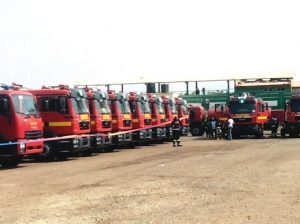
The Federal Fire Service has announced a nationwide fire safety compliance audit following Tuesday’s inferno at Afriland Tower, Lagos Island.
At least six additional deaths have been confirmed in the aftermath of the blaze at the six-storey commercial building.
The victims were employees of United Capital, a financial and investment services firm occupying the 3rd and 4th floors of the tower.
The confirmation came just hours after the Federal Inland Revenue Service disclosed that four of its staff members also died in the incident on Wednesday evening.
The PUNCH reported that the fire, which reportedly started in the inverter room in the basement, broke out around 1:30 p.m. on Tuesday.
In a statement on Thursday, the Service’s spokesman, Paul Abraham, said the Controller General, Samuel Olumode, explained that the audit will cover both public and private buildings nationwide, assessing their level of preparedness against fire disasters, enforcing safety standards, and sanctioning errant facilities.
The statement partly read, “The Controller General, on behalf of the Service, commiserates with the Executive Chairman of the Federal Inland Revenue Service, Dr. Zacc Adelabu Adedeji, the entire Management and Staff of FIRS, Chairman of the United Bank for Africa, Mr. Tony Elumelu, the entire Management and Staff of UBA Group, as well as the families of all those who lost their lives in this tragedy, praying for the repose of the departed and comfort for their loved ones.
“In a decisive move to prevent a recurrence, the Controller General announced that the Service will roll out a nationwide Task Force on Fire Safety Compliance to audit public and private buildings, enforce safety standards, sanction non-compliance, train facility managers and staff, and strengthen collaboration with regulatory agencies.”
Abraham said the CG has directed investigators to probe the September 16 inferno.
The investigation team has been tasked with examining maintenance records, the functionality of safety systems, and overall compliance with fire regulations at the tower.
He added, “Following initial reports indicating that the fire originated from the inverter room of the building, the CGF has directed the immediate deployment of a Federal Fire Service investigation team to establish the direct and remote causes of the incident, including the state of safety systems, maintenance practices, and compliance with fire safety regulations.
“The findings of the investigation will be made public and all recommendations will be implemented without delay.”
The service further urged facility owners, corporate bodies, and public agencies to immediately review their safety readiness, secure power rooms, unblock exit pathways, and ensure staff are trained in emergency response.
“The Federal Fire Service urges all facility owners, managers, corporate bodies, banks, and public agencies to immediately review their fire safety readiness, ensure inverter and generator rooms are secure, exit pathways unblocked, fire alarms functional, and staff trained.
“Members of the public are advised to observe safety protocols, report non-compliance, and cooperate with fire service inspections,” the statement added.
Olumode also commended the Minister of Interior, Olubunmi Tunji-Ojo, for supporting the enactment of the Federal Fire and Rescue Act, which is expected to usher in a new regime of fire prevention, safety audits, and accountability across Nigeria.
The African Democratic Congress has cautioned President Bola Tinubu against interfering in the affairs of state governments, declaring that the Nigerian Constitution does not empower the President to hire or fire elected governors.
ADC, in a statement by its National Publicity Secretary, Bola Abdullahi, on Thursday, emphasised that such actions undermine democratic principles and the autonomy of states.
Siminalayi Fubara has returned to his role as Governor of Rivers State, with the State House of Assembly also resuming its legislative activities.
This follows the lifting of the six-month emergency rule earlier imposed on the state by President Tinubu.
Tinubu officially ended the emergency rule on Wednesday, bringing to a close the special measures he had declared in Rivers State on March 18, 2025.
In a speech on the cessation of the emergency rule, the President said, “The Governor, His Excellency Siminalayi Fubara, the deputy governor, Her Excellency Ngozi Odu, and members of the Rivers State House of Assembly and the speaker, Martins Amaewhule, will resume work in their offices from September 18, 2025.
“It, therefore, gives me great pleasure to declare that the emergency in Rivers State of Nigeria shall end with effect from midnight today.”
Reacting, ADC accused Tinubu of masking politics as leadership, saying his actions in Rivers will define his legacy.
It stated, “On Wednesday, September 17, Nigerians witnessed a curious spectacle: President Tinubu directing the Governor, Deputy Governor, and members of the State Assembly in Rivers State to resume duties after serving his six-month suspension from office.
“The President’s decision to arrogate to himself the power to suspend and recall elected officials in Rivers State, as he had done, is whimsically autocratic and should be recognised and condemned as a threat to our democracy.
“The African Democratic Congress reiterates that what has happened in Rivers State over the last six months is a brazen manipulation of constitutional provisions to serve narrow political interests.
“We harbour no doubts that the situation that served as the pretext for the declaration of the state of emergency was a clear act of political contrivance that only demanded the President’s unbiased political intervention. Instead, the President chose to serve the will of demagogues in his government, deploying the power of the constitution to attack what he should have protected.”
The party decried that for six months, the will of Rivers people was ignored and their elected leaders sidelined not by a court, but by a fellow elected President.
It continued, “Now, with the wave of a hand and the ink from his pen, the same President has decided to ‘allow’ other duly elected officials back to work, as though they were his political appointees.
“Let us be clear: Governors and legislators in a democracy do not draw their legitimacy from Aso Rock. They derive it from the people who elected them. Only a competent court can remove or restrain them — not a press statement or presidential proclamation. The President is not a Headmaster, and Governors are not his pupils to be sent home and recalled at his discretion. Yet, we recall that this President once claimed to be a federalist who, as a state governor himself, fought to protect the relative autonomy of his state.
“However, with this action, the President and his men have achieved their goals, and that goal was not to restore peace to Rivers State. They now have a thoroughly pacified government in Rivers State, which has learnt its hard lessons that its primary loyalty is not to the people of Rivers State, but to Abuja. More importantly, the Rivers experience would now serve as a clear warning to other state governments in the country to behave themselves.
“In keeping with their well-worn propaganda, presidential aides announced that the President had cut short his vacation to attend to the worsening security situation in the country. This claim is indeed laughable. But it is now made clear: the President did not return because Nigerians are being killed, or because life has become unbearable for the majority. He returned for one reason only to personally oversee the return of Fubara to office and bask in the glory of the dictatorial powers that he had assumed for himself.
The ADC urged the judiciary, particularly the Supreme Court, to firmly address the issue, warning that it sets a troubling precedent.
It continued, “By removing a sitting governor and now personally directing his return, the message could not have been clearer: ‘I removed you, and I alone can bring you back.” This was not about law, or justice, or even governance. It was about control. It was about reinforcing the idea that, in today’s Nigeria, institutions may exist, but they remain subordinate to the will of one man.
“For avoidance of doubt, Section 305 of our Constitution, which provides for emergency power,s was never intended to be used as a tool for settling political scores or exerting unconstitutional control over a state. It exists for moments of genuine public danger, such as floods, epidemics, or insurrections, not for political convenience.
“The ADC, therefore, calls on the judiciary, especially the Supreme Court of Nigeria, to take a clear position on this matter, which has set a dangerous precedent. In moments like this, the judiciary cannot maintain silent indifference, or history will record them as collaborators in the subversion of our democracy.”
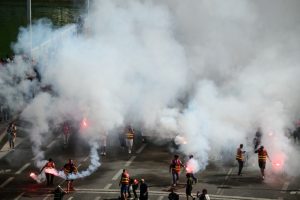
French protesters were on Thursday staging a day of nationwide protests and strikes in a show of anger over President Emmanuel Macron’s austerity policies, causing widespread disruption.
Public transport stalled, schools closed down and tens of thousands of people took to the streets for demonstrations marked by sporadic clashes with the police.
Prime Minister Sebastien Lecornu, Macron’s seventh head of government, vowed a break from the past in a bid to defuse a deepening political crisis after taking office last week.
But the appointment of the 39-year-old former defence minister and close Macron ally has failed to calm the anger of unions and many French people.
“Every day the richest get richer and the poor get poorer,” Bruno Cavalier, a 64-year-old protester carrying a placard reading “Smile, you are being taxed”, told AFP in Lyon, France’s third-largest city.
Protesters remain incensed about the draft 44-billion-euro ($52-billion) cost-saving budget of Lecornu’s predecessor, Francois Bayrou, despite the new premier’s pledges to abolish both life-long privileges for ex-prime ministers and a widely detested plan to scrap two public holidays.
More than 80,000 police officers and gendarmes have been deployed, backed by drones, armoured vehicles and water cannons.
Between 600,000 and 900,000 people are expected to take to the streets across France, according to interior ministry estimates ahead of the demonstrations.
As of Thursday noon, more than 76,500 people had taken to the streets, with the rallies so far “less intense than expected,” said Interior Minister Bruno Retailleau.
– ‘We are fed up’ –
With unions calling for strikes in a rare show of unity, around one in six teachers at primary and secondary schools walked out while nine out of 10 pharmacies were shuttered.
Commuters faced severe disruption on the Paris Metro, where only the three driverless automated lines were working normally.
Trade unions said they were pleased with the scale of the protests.
“We have recorded 260 demonstrations across France,” said Sophie Binet, leader of the CGT union. “There are thousands and thousands of strikes in all workplaces.”
Police in Paris and Marseille used tear gas to disperse early, unauthorised demonstrations. In Marseille, an AFPTV reporter filmed a policeman kicking a protester on the ground, though police said they had been confronted by “hostile” demonstrators.
In Lyon, a France TV journalist and a police officer were injured during clashes between police and a group of masked youths at the head of the rally.
On the outskirts of the northern city of Lille, protesters took part in an early morning union-led action to block bus depots.
“The aim is to show the government that we’re here, that we’re fed up with being taxed like crazy, that we’re fed up with having trouble making ends meet,” said Samuel Gaillard, a 58-year-old garbage truck driver.
Even schoolchildren joined the actions, with around 300 pupils blocking access to the Maurice Ravel secondary school in eastern Paris, brandishing slogans such as “block your school against austerity”.
– Macron, ‘source of chaos’ –
Officials said they expected Thursday’s action to be the most widely followed day of union-led protests and strikes since a months-long mobilisation in early 2023 against Macron’s widely reviled raising of the retirement age, which the government rammed through parliament without a vote.
While the day of protest represents an early test of crisis management for Lecornu, anger is crystallising against Macron, who has just one-and-a-half years left in power and is enduring his worst-ever popularity levels.
“The president is the source of chaos, and everything that has happened recently is the result of his actions,” hard-left firebrand Jean-Luc Melenchon declared in Marseille.
Paris Police Chief Laurent Nunez told AFP on Wednesday that he was “very concerned” about the risk that rioters intent on provoking fights and damage would infiltrate the union march in Paris, urging shops in the centre to close for the day.
A more informal day of action held on September 10, despite isolated disruption, did not deliver on its self-declared aim to “block everything”.
The Lagos State Police Command has begun a full-scale investigation into a viral video showing students of Excel College, Ejigbo, Lagos, smoking, drinking and dancing in a school hostel.
The incident, which reportedly took place in April 2025 at the boys’ hostel of the private school, resurfaced online this week, provoking outrage among parents and members of the public who criticised the lack of supervision in schools.
Reacting to the development, the Commissioner of Police, CP Olohundare Jimoh, ordered the State Criminal Investigation Department, Panti, to take over the probe from the Ejigbo Police Division, which had earlier invited the school principal for questioning.
Police spokesperson, SP Abimbola Adebisi, in a statement on Thursday, said the principal, who also serves as the proprietor of the school, confirmed that the students in the viral video had already graduated.
Adebisi said, “The Commissioner of Police has directed the SCID to take over the case for a comprehensive investigation. The principal, who is also the proprietor of the school, was invited, and he clarified that the students in the viral video had already graduated. Nonetheless, the school is cooperating fully with investigators to ensure that the circumstances surrounding this incident are properly addressed.”
He noted that the police were treating the matter seriously because of its potential implications for discipline and morality within schools.
“The Command calls on all secondary school authorities, both public and private, as well as parents and guardians, to take proactive steps in properly supervising and guiding their children and wards,” Adebisi added.
The police further warned that school owners must not overlook disciplinary lapses that could degenerate into criminal activities.
“The police will not tolerate negligence on the part of school authorities. Every stakeholder has a responsibility to instil the importance of good behaviour, moral values, and social discipline in young people. Misconducts of this nature, if left unchecked, can snowball into bigger problems that disrupt the peace of society,” the statement said.
While confirming that investigation was ongoing, Adebisi assured that the outcome would be made public.
He said, “The Command remains steadfast in ensuring peace, security, and orderliness across Lagos State. We encourage parents, guardians, and community leaders to work hand in hand with schools and the police to raise responsible youths who will contribute positively to society.”
The police appealed to members of the public to continue reporting suspicious or disturbing activities in schools to the authorities.
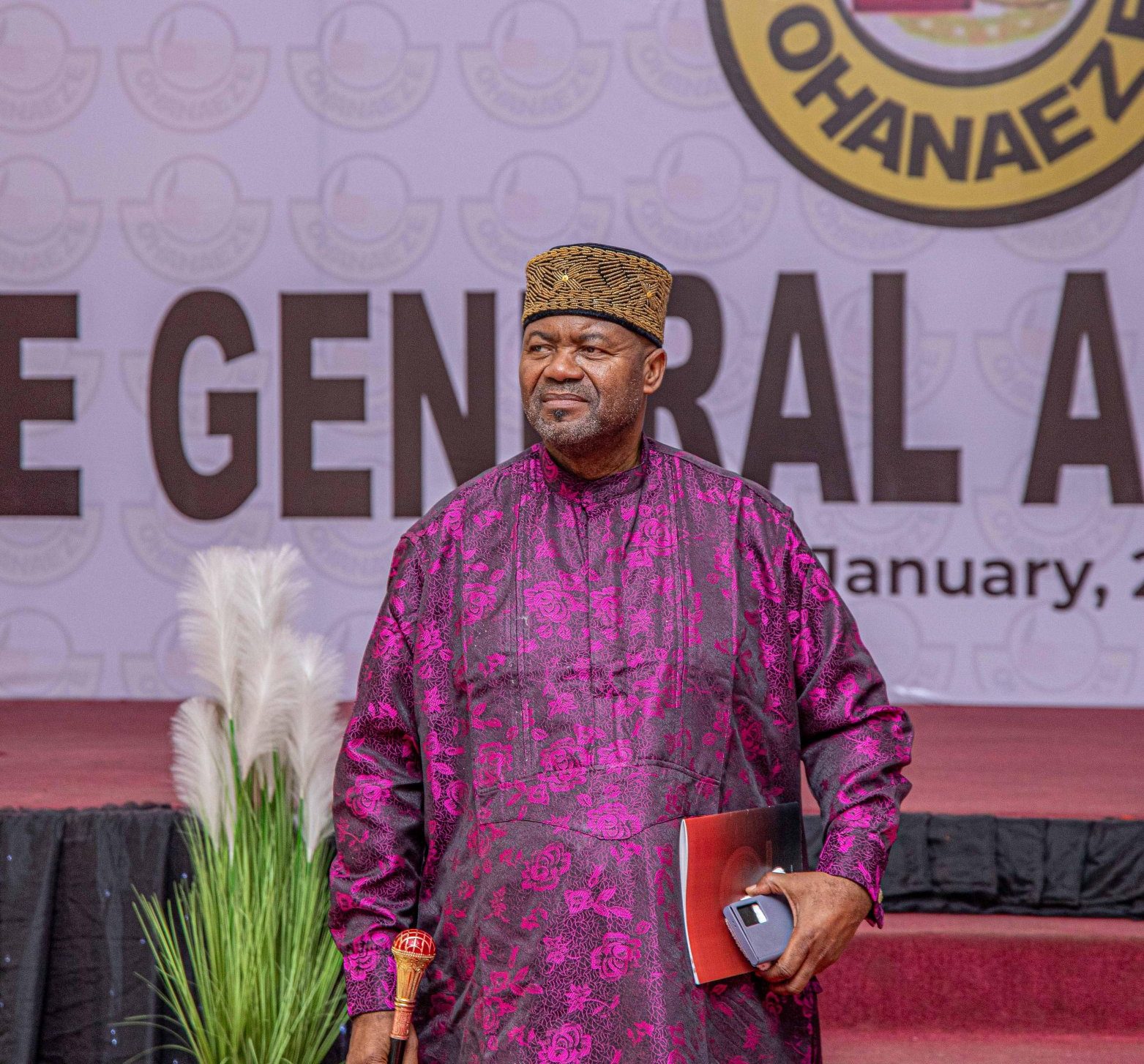
The President General of Ohanaeze Ndigbo Worldwide, Senator John Azuta-Mbata, has called on the Federal Government to release the detained leader of the proscribed Indigenous People of Biafra, Nnamdi Kanu, to enable him to seek proper medical attention.
This is as Azuta-Mbata called on Igbos across the country to ensure they register in the ongoing voters’ registration exercise and obtain their voter cards.
Azuta-Mbata said this in a short video message of himself speaking, which he sent to our correspondent on Thursday.
Kanu’s detention has remained one of Nigeria’s most contentious political and security issues in recent years. Kanu, who was first arrested in 2015 on charges bordering on treasonable felony, jumped bail in 2017 and fled the country.
He was rearrested in Kenya in June 2021 in a controversial operation by Nigerian security operatives and has since been held in the custody of the Department of State Services.
He also urged the government to explore a political solution in handling the issue of the detained IPOB leader, saying the apex government does not have any advantage in the continuous detention of the IPOB leader.
Azuta-Mbata stated, “I’m calling upon Ndigbo-nine (Igbos in general) wherever you are in Nigeria to quickly go and take advantage of the voter registration exercise that is going on right now. Go and get your cards as quickly as possible.
“Secondly, I would like to call upon the federal government of Nigeria to quickly release Nnamdi Kanu. The Government has no serious advantage in keeping him. It is important that the government ensures his safety and his welfare, and that the Government must allow him to go and get medical treatment as quickly as possible.
“The Government must adopt a political solution to this situation. I do not believe that the Government has any serious advantage in keeping him any further.”
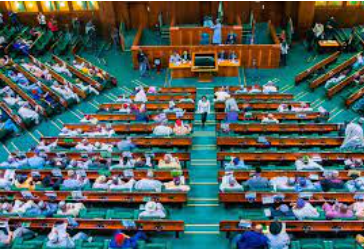
The Rivers State House of Assembly has scheduled 10 a.m. on Thursday to begin its post-emergency plenary.
The sitting follows the lifting of the emergency rule by President Bola Tinubu on Wednesday and the resumption of democratic governance in the state.
Our correspondent gathered that the plenary would be presided over by the Speaker, Martin Amaewhule, and would take place at the Conference Hall of the Legislative Quarters, Aba Road, where the lawmakers are sitting temporarily.
The Pan Niger Delta Forum has hailed the lifting of the state of emergency in Rivers State, effective midnight, Wednesday, September 17, 2025.
In a statement signed by Board members and National Executive Committee members on Thursday, PANDEF commended President Bola Tinubu for rectifying what they described as an anomaly.
The statement was co-signed by Co-Chairmen, PANDEF Board of Trustees, Alfred Diette-Spiff and Obong Victor Attah, National Chairman Ambassador Godknows Boladei Igali, and National Secretary, Beks Dagogo-Jack.
PUNCH Online reports that Tinubu declared a state of emergency in Rivers State on the 18th of March, 2025, suspending Governor Siminalayi Fubara, the Deputy Governor, and members of the state House of Assembly for six months in the first instance.
In place of the governor, the President appointed Vice Admiral Ibok-Ete Ibas (retd) as Sole Administrator.
However, Tinubu announced the suspension of the emergency rule on Wednesday, stating, “It therefore gives me great pleasure to declare that the emergency in Rivers State shall end with effect from midnight today (Wednesday).”
The Forum commended Fubara’s unwavering perseverance and “faith in the divine will of Almighty God,” while also commending the Deputy Governor, Professor Ngozi Odu, the Speaker, and members of the House of Assembly, who were equally affected by the suspension.
“The Board and National Executive Committee of the Pan Niger Delta Forum, the apex socio-political organisation representing the South-South geopolitical zone, joins millions of Nigerians in welcoming the lifting of the state of emergency in Rivers State, effective midnight, Wednesday, September 17, 2025.
“While PANDEF had expressed strong reservations regarding the erstwhile emergency rule, we commend His Excellency, President Bola Ahmed Tinubu, GCFR, for taking this bold step to rectify the anomaly.
“We welcome Governor Siminalayi Fubara back to his elected office and salute his unwavering perseverance and faith in the divine will of Almighty God. We extend similar commendations to the Deputy Governor, Professor Ngozi Oduah, the Speaker, and members of the House of Assembly, who were equally affected by the suspension,” the statement read.
Addressing Rivers people, the forum declared, “Light has returned to the state and a new glorious dawn has come. A moment in which the bitter pains of the past months will inspire all to rededicate themselves to true mutual forbearance, new alignments and forward movement.”
They urged political leaders and citizens to put the past behind them and work towards the collective good of the state, while pledging to support Rivers’ developmental trajectory under Fubara.
“All hearts and hands must therefore be joined together to put the past behind us and work towards the collective good of the state.
“We look forward to the State’s return to normalcy and the resumption of its developmental trajectory under the leadership of Governor Fubara and his team. PANDEF reiterates its commitment to supporting the government and people of Rivers State in their pursuit of progress and development,” the statement added