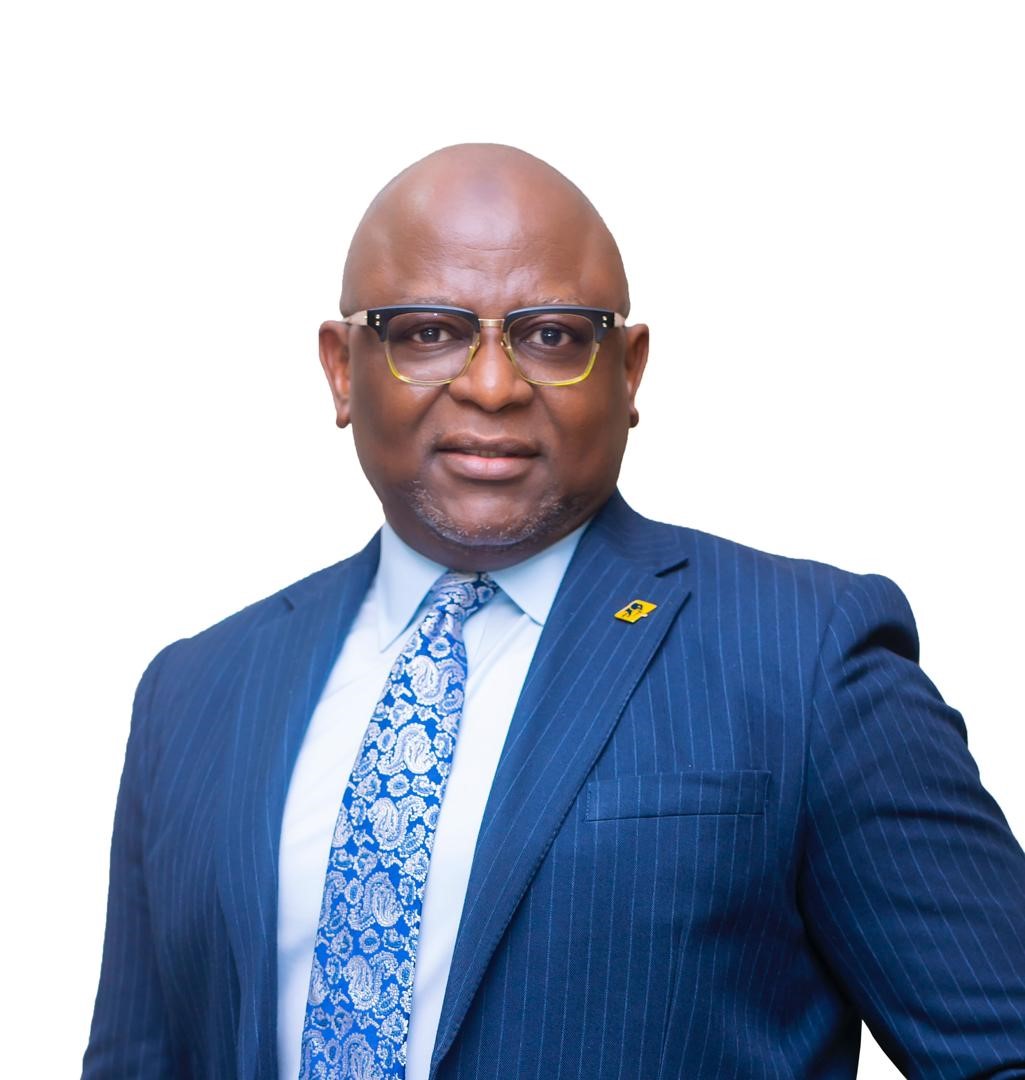

Adeduntan Wins As FirstBank Wins Global Banking And Finance’s Retail Banking CEO Award

While the age-old saying and philosophy of virtue being its own reward (or seeing doing good has its own reward) remains a strong motivating factor in doing good persistently, it helps when virtue gets recognition from time to time. Even though anyone or organisation committed to doing good will keep doing so with or without recognition, recognitions for virtue tend to act like a catalyst for such people or organisations, spurring them to commit even more to doing good, such is the story of Dr Adeduntan.


The recent award of “Retail Banking CEO of the Year Nigeria” to Dr Adesola Adeduntan, CEO of First Bank of Nigeria Limited, is to both him and the bank he leads a shot in the arm of this foremost CEO of Nigeria’s most enduring financial institution that is also the pioneer in retail banking development in Nigeria, the premier bank in West Africa and the leading financial inclusion services provider in Nigeria for over 127 years, to keep steering the bank in the right direction, energising and expanding retail opportunities for all Nigerians in the process. It is a well-deserved recognition for a man and the institution he leads that would rather keep off the spotlight and focus exclusively on attending to Nigerians’ banking needs as best as they can – which is what has kept them going for 127 years and counting.


This critical role is one FirstBank is better suited to lead than any other lender given the robust retail banking framework that the bank has in place, that is riding on its innovative technology-driven operations, over 750 branches across the continents and 100,000 Firstmonie Agent banking network spread across 772 local government areas in Nigeria. It is little wonder that FirstBank, which is intricately woven into the fabric of the Nigerian society, has been an essential player in the retail space, empowering Nigerians of all walks of life by providing them bespoke and innovative financial products and services that address their multidimensional needs. The bank has been at the forefront of bridging the financial exclusion gap and enabling customers and the general public to carry out both individual and corporate financial activities which contribute to the growth and development of the national economy.


The award by Global Banking and Finance Magazine, according to Dr Adeduntan, “speak[s] to the investments we [as FirstBank] have made over the past years in…enhancing financial inclusion….” It is a loud testament to the incredible strides FirstBank has made and continues to make in the retail space under the able and dynamic leadership of the management team led by Dr Adeduntan.


The strides are in turn underpinned by the bank’s resolute commitment to putting the customer and other stakeholders at the heart of its business. Dr Adeduntan reiterates this view when he wasted no time in dedicating the award to all the bank’s “customers, as the trust they reposed in us being their bank of first choice in meeting their business and financial needs has been instrumental to the success we have achieved in our existence of over 127 years.” “We remain committed,” he continued, “to putting you, our customers, first as we contribute to the growth and development of our host communities.”


Organised to identify the banks across the world that have excelled across a number of areas, including corporate governance, sustainability and innovation, and have played a key role in the industry’s growth, the Global Banking and Finance Awards reflect the innovation, achievement, strategy, progressive and inspirational changes taking place within the global financial community. The awards were created to accord recognition to companies of all sizes which are prominent in their areas of expertise and excellence within the financial world. For Dr Adeduntan and FirstBank, the award is further proof of FirstBank’s enduring commitment to providing excellent retail banking services to all its customers as reflected in the bank’s strategic vision, diverse and inclusive workforce and performance-oriented organisational structure.

Bandits Were Pushed Into Crime But They Now Want Peace — Sheikh Gumi


Sheikh Ahmad Gumi, a Kaduna-based Islamic cleric, has stated that bandits become involved in criminal activities as a result of the country’s unfavorable circumstances.

The controversial Islamic cleric who has been at the forefront of lobbying for bandit negotiations, however, has stated that the bandits are tired of fighting and would welcome peace.

Gumi said this in an interview with the DAILY POST on Tuesday, adding that the bandits are willing to hand over their weapons for peace to rule if they have a solid working relationship with the government’s handlers.

“Yes, it’s really real since robbers say they were pushed into banditry by circumstances,” Gumi remarked when asked if bandits were exhausted.

“If they have a genuine partner, they are ready to stop it; they are tired and want peace.

“As regards their ongoing activities, you realise that even when soldiers are fighting and a ceasefire is declared, it takes a long time before they stop fighting.

“We are able to see about 80 per cent of the big ones and then some small splinter groups which we could not meet because due to circumstances as we cannot go into the bush again.

“But generally, they are ready for peace, in fact, we have gathered their representatives, discussed with them, and they said they are ready but need a genuine partner. Politics is the cause of this issue.”


BREAKING: Armed Soldiers block Sunday Igboho from entering Igangan Forest


Popular Yoruba activist, Chief Sunday Adeyemo popularly called Sunday Igboho on Monday visited Igangan in Ibarapa North Local Government Area of Oyo state, a day after the town was attacked by Fulani herdsmen.

Igboho was in the town to access the level of damage in yesterday’s attack. During the visit, Igboho also tried to comb the forest with his boys in search of the killer herdsmen.

He was, however, prevented from entering the forest by a team of fully armed soldiers, who were trailing his convoy immediately they arrived the town.

About 8 trucks of the Nigerian Army behind Igboho’s convoy. It will be recalled that several Yoruba people were massacred by suspected herdsmen in Igangan, also the palace of the Asigangan, the paramount ruler of the area was also burnt.


FG Considers Death penalty for Railway Vandals in Nigeria


The Federal Government announced on Monday that railway track vandals in the country may face the death penalty.

Mr Rotimi Amaechi, Minister of Transportation, said this in Abuja during a Town Hall Meeting on “Protecting Public Infrastructure.”

Rail track vandalism is a capital offense, according to Amaechi, and the repercussions should be regarded as such.

“I am not quantifying the material cost; what I am quantifying is the lives that will be lost. Imagine that a driver of a rail track is driving and suddenly bumps into a track that has been severed, what happens? It will derail.

“Each coach in Nigeria carries about 85 passengers, sometimes we carry 14 coaches, sometimes 20. So, imagine you are carrying a train of 14 or 20 coaches with 85 passengers in each coach, if it derails, can you quantify how many passengers that would have died in the course of one man thinking he is making money.

“So, it is not about the cost, but the lives that would have been lost because of little interest. Some people have recommended that since these people are killing people, if an accident happens people will die; so, we should go back to the National Assembly and pass a law that does not only criminalise the action, but consequences should be death,” he said.

The minister further suggested that if armed robbery, whether successful or not, attracts life imprisonment, rail track vandalism should not be any less.

He said the track vandalism was being done in collaboration with foreign partners.

“In Jos, they arrested a Chinese company that bought those tracks from them, went to court and the court found them guilty and fined them N200, 000. So, there must be consequences as N200,000 is not enough.”

Amaechi commended residents along the Lagos-Ibadan rail track as no incident of vandalism has been recorded along the route.

“Lagos and the Western District recorded one, North Western 31, Northern District 10, North Eastern 43, Eastern 36 and North Central 50 incidents of vandalism. Abuja-Kaduna has 13, Warri-Itakpe two and Lagos -Ibadan nill.”


Daddy Freeze, Peter Okoye React As Ugandan Pastor Celebrates T.B. Joshua’s Death With His Members


Controversial media personality, Daddy Freeze and Peter Okoye of Psquare have reacted to the video of Ugandan pastor Jackson Senyonga celebrating the death of prophet T.B. Joshua with his members.
Naija News earlier reported that Nigerian televangelist and founder of the Synagogue Church Of All Nations (SCOAN), Prophet Temitope Balogun Joshua (alias TB Joshua) reportedly died in Lagos on Saturday evening after concluding a programme at his church in Ikotun.

The cause of death was not immediately disclosed but family sources said his remains had been deposited at the morgue and an autopsy would be performed forthwith.

In the video shared, the Ugandan pastor questioned the late prophet, saying ;“What makes you think that you can kill others because you want sacrifices”

Reacting to this, Freeze outrightly condemned the pastor’s action, saying; ”Are they rejoicing over TB Joshua’s death? Even if they were sworn enemies, is this what the Bible teaches?🙄◄ Proverbs 24 ►

New Living Translation

[17] Don’t rejoice when your enemies fall;

don’t be happy when they stumble.

[18] For the LORD will be displeased with you

and will turn his anger away from them.”

@Peter Of Psquare reacted to the video, he wrote; ‘This life just do you! Nobody send you’

IPOB/BOKO HARAM: See What Buhari Told Chief of Army Staff In Also Rock

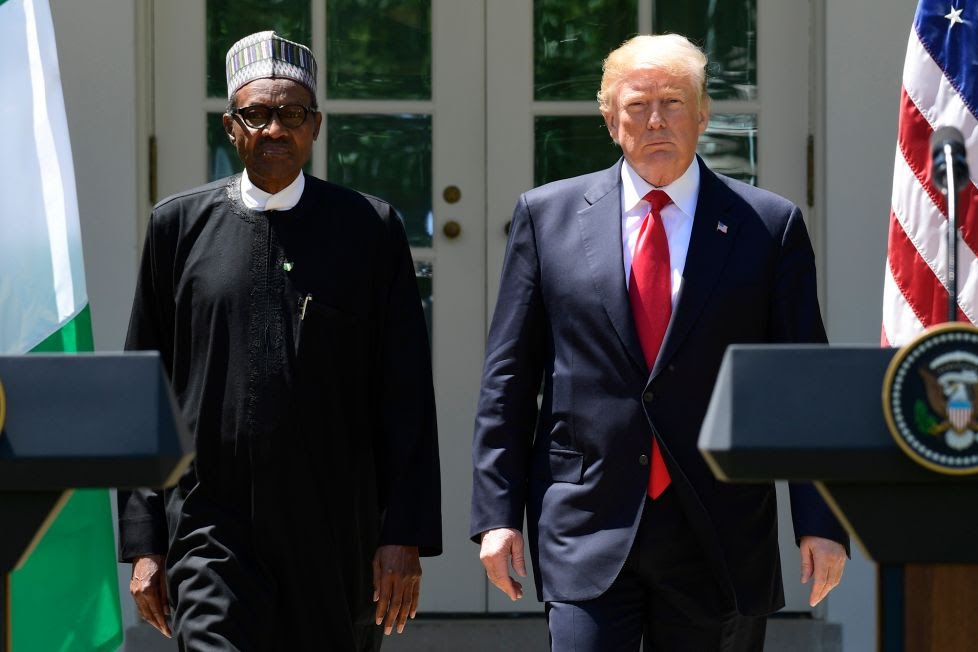
President Muhammadu Buhari on Monday ordered a lot of changes in the nation’s security operations during a meeting with the newly appointed Chief of Defence Staff (COAS), Maj.-Gen. Farouk Yahaya.

Newspot had earlier reported that Buhari met with Yahaya at the Presidential Villa, Abuja.

Speaking to State House correspondents after the meeting, Nigeria’s Minister of Defence, Major General Bashir Magashi (rtd), said Buhari shared his military experiences with the new COAS and reminded him of the current “pressure on security” in the country.

On what President Buhari told the new COAS, the minister said: “He told him that there’s a lot of pressure on security and being an actor, at one point or the other, he has given us a direction in which we can learn from his experiences and apply them to our modern operations and I think we have taken the advice seriously.

“The issue of synergy among the security forces was also stressed and I’m sure there will be a lot of changes as regards to the security operations in this country.”

On what the military was doing in the Northwestern part of the country, Magashi said: “In the northwestern part of the country you know that the more concern we have is the insecurity of banditry, kidnapping, and other criminalities.

“We are taking the challenge, but you know, really, this is the constitutional responsibility of the police, we are only an aid to the police and we are giving maximum cooperation to the police in order to see an end to this banditry and insecurity in the Northwest, otherwise I think it’s quite different from the Northeast.

“In the Northeast, it’s Boko Haram issue and we are up and doing to ensure that we bring an end to this Boko Haram issue, especially with this development of ISWAP.”


Forget Constitution, Arm Yourselves, War Has Been Declared On Us—Akintoye Alerts Yoruba People


The apex leader of the umbrella body of Yoruba self-determination groups, Ilana Omo Oodua, Professor Banji Akintoye, has raised the alarm that war had been declared on Yoruba people with the recent attack on Igangan area of Oyo State by suspected Fulani herdsmen.

He described the attack in which no fewer than people were killed as a declaration of war against peace-loving Yoruba people.

Accusing the Muhammadu Buhari-led Federal Government of backing terrorist herdsmen that have been maiming, killing and raping people in Yoruba land, Akintoye, in a statement personally signed by him and made available to journalists on Monday by his Communications Manager, Mr. Maxwell Adeleye, called on Yoruba people to arm themselves with whatever they can lay their hands upon to defend their land against external aggression.

While saluting Rotimi Akeredolu, the Governor of Ondo State who doubles as the Chairman of South-West Governors Forum for his bold stand on the Igangan massacre, Akintoye called on the governors to put aside constitutional objections to defend their people, saying “Yoruba land has been surrounded, and we must act now.”

The renowned historian said historically, the Yoruba people have never been conquered, while urging the younger generation of Yoruba people never to surrender to any form of intimidation or harassment.

He said, “The Alana and worldwide leader of Ilana Omo Oodua, Emeritus Professor ‘Banji Akintoye, on behalf of all patriotic and concerned Yoruba people, and in consultation, and collaboration with hundreds of self determination groups at home and in the Diaspora, express uttermost shock and horror at the news of the barbarous killings and destruction by Fulani and other terrorists upon our people at Igangan, Ibarapa area of Oyo State.
“While commiserating with our people in Igangan, we hereby issue a red alert to all Yoruba people at home and in the Diaspora.

“It must now be clear to all Yoruba people of all classes and economic circumstances that war has come in a big way to our homeland. This war has been coming relentlessly for five years, but some of our own people failed to understand the full intent and impact of it. Some have thought the answer is to do one constitutional or political thing to Nigeria and the war would go away. But we must now all know that such propositions concerning Nigeria are blatantly unrealistic.

“And indeed these endanger Yorubaland, the Yoruba people and the Yoruba civilization by diverting the attention of our people from the manifest reality of our time.

“We now call on all Yoruba people at home and abroad to focus on the danger of the moment in a manner that will be powerful enough to preserve our nation and civilization.

“First we call on our State Governors to push aside all the constitutional objections that have been constantly raised from certain quarters whenever our governors have taken measures to defend our people.
“We are particularly grateful to Governor Akeredolu of Ondo State and all other Governors who support him in the patriotic and manly statement that he has issued on the Igangan disaster.

“We repeat what we have said again and again that we will stand fully and powerfully behind our Governors in any measure that they may adopt to defend our people.

“We say to our state governors, your first constitutional duty is to ensure the security of life and property in our Yoruba states. In the face of that important task, constitutional and political finesse and obstructions are a danger to the lives and property of our people.

“The Federal Government of Nigeria has failed woefully to protect the Yoruba people, along with other indigenous peoples of the Nigerian South and the Middle Belt against these invading, marauding forces.

“In fact, when we consider all the behaviour of the federal government in the face of this danger to the indigenous peoples and citizens of Nigeria, we can not avoid the conclusion that the federal government is a sponsor of the terror in our land.

“The federal government started by saying and doing nothing about the terrorism while apparently instructing the security agencies to do nothing to confront the terrorism.

“The federal government persistently gives to the wide world a false picture of the situation by claiming that everything is a product of climate change even as the Fulani insistently issues statements that their mission is to conquer and subdue all the indigenous peoples of Nigeria and forcefully take their land for Fulani folks from all over West Africa. And even as international terrorist organizations such as ISIS, Al Qaeda and even Al-Shabab come to reinforce this Fulani terrorism all over Nigeria.

“While allowing the Fulani to move freely with and to import various categories of weapons into Nigeria, the Federal Government prohibited the possession of any kind of fire arms by any indigenous citizens of Nigeria, sending the police and army to seize such privately owned weapons including those for which these citizens had earlier been licensed for hunting and sports.

“In the light of all the foregoing,
we call on all our governors to stop letting objections by federal officials to obstruct the defence of our peoples.

“We call on all Yoruba people to rise up as one to defeat this danger. We Yoruba have a proud history that we have never been conquered.

“Let us not succumb to conquest now. Let us thank the countless young people of our land who have been standing up against the invasion of our land.

“But let us now rise to do more than merely thanking them and rise to give them all the support they need to clear our land of all terrorists of all kinds.

“Let us show to the world that though we are a civilized and life respecting people, we are nevertheless a people supremely capable of defending our people and our homeland.

“The persistent Ilana Omo Oodua calls to arms of all Yoruba people on their farms, hamlets, villages, towns, cities and other communities must now be urgently activated with communal self defence systems, around their abodes and places of work.

“You must urgently install early warning alarms; human, manual, scientific or spiritual.

“Also the traditional and hi-tech defensive mechanisms must come into place. Encourage and assist our young people to form dynamic teams that not only defend but attack the enemies wherever they have dug themselves into our forests and farmlands.

“Arm yourselves with whatever you can lay your hands upon, create or develop as individuals, and as communities to confront the enemy.

“Ensure they no longer succeed in their mission anywhere in Yorubaland. Our technology wizards are already putting together structures that will protect our land and destroy the enemy.

“To the elite of the Yoruba Nation, our businessmen and our professionals, we
now appeal that you decide and take action to assist all the efforts outlined above.

“We remember with gratitude that when the COVID-19 crisis loomed all over the world in 2020, our businessmen quickly put together a fund amounting to billions of naira to help fight the dreaded virus.

“We call on you now to do the same, to set up a large fund for the defence of our homeland and help with your expertise to set up the disbursement, management and auditing of the funds.

“The important goal must be that the funds be made to reach as quickly and adequately as possible all defensive and offensive groups and teams that demonstrate capabilities to produce quick and abiding results.

“We are Yoruba and we will prevail in this crisis. And then we will go forth and manage our own sovereign Oduduwa Nation to the admiration of all mankind- a land of security, opportunity and confident hope in prosperity for all our people and all peaceful and enterprising foreigners who come to our land.”

Ecobank To Support Creation of Agric Technology Hubs Across Nigeria

The Managing Director, Ecobank Nigeria, Patrick Akinwuntan has said the bank will support the establishment of agriculture technology hubs across the country, stressing that it will further generate activities in the entire value chain and also provide a base for exporting agriculture technology services to other parts of the Africa. Mr. Akinwuntan who was speaking at the 2nd edition of the Ecobank Agribusiness virtual Summit organised in association with Vanguard Economic Forum Series with the theme: “Digitizing the agricultural value chain for unlocking productivity, economic growth and food security”,  said  he “finds the idea of agriculture tech hub quite exciting. I can directly say Ecobank will support this initiative because it brings the efficiency of a solution factory that is not only available in Nigeria but can also be a base for exporting agric-technology services to drive agriculture in the whole of Africa. I put Ecobank forward as a partner to bring this to reality. “


Earlier, the Co-Founder, Corporate Farmers International, Mr Akin Alabi had disclosed that his organization has initiated an agric technology hub to attract youths participation in the agric sector, noting that access to technology and innovations will further drive activities in that segment of the economy. “We have developed a big platform, called a hub to serve both government and private institutions. The hub is generating interests and solutions. And now, we are in partnership with Lagos and Kebbi state governments. We are also working with series of agricenterprenures in the country.   We have also used the power of technology, mobile phones to bring agric products from the farm gate to the market. We need the support of the private sector to develop the agric tech hub. A lot of Fintech hubs are developing different solutions, we also need that in the agric space. In Nigeria today, we can use digitalization to change the narrative and get younger ones to be interested in agriculture.  At corporate farmers, we also created an e-learning academy during the covid 19 lockdown to bridge the gap between agriculture and education”. He stated.

In his contribution, the Vice President, Nigeria Agricbusiness Group (NABG), Emmanuel Ijewere noted that digitization in agriculture must be brought to the actual people in the field who might not be well educated, noting that through technology one can buy food from vendors from wherever they are in any part of the country. Further, Mr Ijewere noted that we can build a warehouse and make them efficient with the support of technology. According to him  “Commodity exchanges cannot thrive unless the goods are there. How we move these goods with the support of  digitization and enabling us provide a sufficient market is very strategic”.

The 2nd edition of the Ecobank Agribusiness Summit organised in association with Vanguard Economic Forum Series had its primary content objective to discuss the role of technology and digitisation across the agricultural value chain. The virtual summit had strategic  partners such as the Nigeria Incentive-Based Risk Sharing System for Agricultural Lending (NIRSAL) and Nigeria Agribusiness Group (NABG). The speakers and panelists included Kenton Dashiell, Deputy Director-General, Partnership for Delivery, at International Institute of Tropical Agriculture (IITA); Aliyu Abdulhameed, MD/CEO, NIRSAL; Ndidi Nwuneli, Co-founder/Managing Partner, Sahel Partner; Akin Alabi, Co-founder, Corporate Farmers International and Ayodeji Balogun, Country CEO, AFEX Commodities Exchange.

This virtual conference is part of Ecobank’s Digital Series which is in line with the bank’s vision to consolidate a modern Pan-African market, contribute to the economic development and financial integration of the continent. The summit examined the potential impact of agriculture technology investment in fixing low productivity in Nigeria’s food production; evaluate existing traditional agriculture finance models in Nigeria and the role and impact of technology-enabled commodity exchange trading across the agriculture value chain amongst others.

FirstBank: Nigeria’s Premier Eco-Friendly Financial Brand By Jeremiah Agada

As the world gears up to celebrate the World Environment Day (WED), Brand Communicator’s focus on Eco-Friendly Brands in the Nigerian market falls on Nigeria’s premier and perhaps the strongest financial institution, FirstBank of Nigeria Limited. The focus is on the Bank’s environmental policies and its impact on the global environmental issues.

This brings to fore the importance of environmental sustainability in our world today. Environmental sustainability is one of the biggest challenges and most important targets of the present times. Stakeholders (researchers, academicians, scholars, governments and non-government organizations involving individuals, communities, countries, and the continents, are increasingly focusing their attention on how to tackle the challenges associated with driving environmental sustainability. Key stakeholder concerns include the constant exploitation of the environment due to economic development. While the current generation is enjoying the fruits of economic development, they tend to be oblivious of the uncertainty and dangers that future generations would confront as a result of scarce natural resources and polluted environment. It is therefore, our responsibility to leave the planet as a self-sustainable system providing equal opportunities of survival not only to our future generations but also to all other species co-habiting with us.

In Nigeria, studies have shown that various sectors of the economy are vulnerable to climate change. These include human settlements and health; water resources, wetlands and freshwater ecosystems; energy, industry, commerce and financial services; agriculture, food security, land degradation, forestry and biodiversity; coastal zone and marine ecosystems.

Because of the seriousness of climate change and the impact it poses to the environment, an organization like FirstBank of Nigeria Limited is leaving nothing to chance in ensuring an eco-friendly society. Its recognition of the environmental and social impacts of its operations has made it adopt policies and procedures that minimize negative environmental and social impacts.

In doing business, the Bank, which is Nigeria’s first and arguably its most prestigious, takes cognizance of potential environmental risks with a view to nipping them in the bud. This it has done by constant interactions with stakeholders, driving sustainable insurance and putting necessary frameworks in place towards ensuring that its actions as a corporate entity does not impact negatively on the environment.

As such, the sustainability of the societies and physical environments in which the Bank operates are critical to its own sustainable success. Therefore, the Bank has shown over the years that it is committed to making positive contribution wherever it does business while avoiding or minimising any direct or indirect negative impact on communities and the environment resulting from its activities, beyond its responsible lending and investment efforts.

The acknowledgement of the fact that its environmental impacts can be indirectly linked to climate change and its global effects has led the bank to adopt an approach to environmental sustainability which is two-fold based on its direct and indirect impacts. The approaches to reducing the direct impacts of its operations include approach to minimising carbon footprints and carbon offsetting; work towards carbon neutrality as well as promote wildlife and biodiversity conservation and preservation.

In minimising waste, the Bank works to improve energy efficiency in its data centres and offices as well as reduce air travels and implement safe paper use initiatives. It also increased the use of conference calls for meetings as against attending physical meeting schedules thereby minimizing fuel consumption and carbon emission from vehicles. Its ‘Going Green’ efforts have also seen the Bank purchase renewable energy; promote tree planting initiatives and the indirect impact of its activities focuses largely on responsible lending.

The Bank’s key objectives of minimizing carbon footprints through the planting of trees, creating awareness among school children of the need to preserve wildlife and biodiversity, developing and educating environmentally conscious students through partnerships with reputable NGOs and institutions, are huge. The challenge in implementing this project is not just in identifying suitable locations with the right soil and climatic conditions for tree planting, but also ensuring students’ participation.

These objectives and FirstBank’s responsible approach to protecting the environment has seen it partner with Nigerian Conservation Foundation (NCF), Nigeria’s premier non-governmental environment conservation foundation dedicated to nature conservation and sustainable development in Nigeria. Its on-going partnership with the NCF has seen it actively support annual activities promoting conservation and preservation of wildlife and biodiversity.

The FirstBank Conservation Initiative is part of our long-term approach to promoting sustainability, which involves minimising our direct and indirect impacts on the environment. And the success of this initiative is dependent on our meaningful engagement with our stakeholders.

With its huge expertise in environmental issues, the Bank found a worthy and perfect partner in the NCF to help implement this programme successfully. The NCF used its experience and influence to engage the various stakeholders to support the programme. This included utilising its conservation clubs, which provided educational sessions for the students on the importance and benefits of conservation and supporting biodiversity. The subsequent enthusiastic participation of the students, and the encouragement they received from the Ministry of Education and school authorities, enabled the programme’s objectives to be achieved.

So far, 240 trees have been planted at the Lagos State Civil Service Model College Igbogbo in Ikorodu, and Evboesi Mixed Secondary School, Benin City. More than 1,000 environmental sustainability champions have also been appointed in these locations. These champions are young people who look after the trees and ensure that they are adequately cared for to help the bank achieve its afforestation goals. “The planting of trees is just part of our efforts to contribute to Nigeria’s green economy and to combat deforestation/desertification, while recognising the key role of children and young people in the sustainability agenda,” the Bank in a statement disclosed.

Through its partnership with Junior Achievement Nigeria (JAN), FirstBank sponsored the National Company of the Year (NCOY) Competition. The competition is an extension of the COY programme that brings secondary students together to form a company, choose a business name and elect officers to oversee operations of the company for the programme duration. It teaches students to put theory into practice in order to fully understand what financial literacy and entrepreneurship is.  At the end of the programme, the students that complete the programme successfully, compete in the regional competition and represent their school in the National Company of the Year competition in Lagos. In 2020, the New Phase from Brookstone Secondary School, Port-Harcourt, Rivers state emerged winner, producing an eco-friendly block. The eco-friendly construction blocks were made from plastic waste. These sustainable blocks are the next wave of sustainable construction.

Beyond the initiatives above, responsible lending remains one of the strategic pillars in delivering the sustainability goals of the FirstBank Group. FirstBank has put in place an Environmental, Social and Governance Management System (ESGMS) to help the Bank integrate environmental social and governance considerations into its decision-making processes. This includes an ESG policy and procedures for screening transactions. The ESG policy is based on existing policy documents and international best practice, while procedures to screen transactions are aimed at conducting ESG due diligence on potential transactions. These are based on Central Bank of Nigeria’s Sustainable Banking Principles, IFC Performance Standards, and international best practice and are tailored to FirstBank’s procedures, risk management framework, risk appetite and tolerance, and adapted to its strategic objectives

The key objective of this policy is to ensure that all the transactions that FirstBank is considering funding, include adequate provision for actions necessary to prevent, control and mitigate negative impacts on the environment and communities, and improve environmental quality.

With this, FirstBank has shown its commitment to integrating social and environmental principles in all its operations; promoting good corporate governance and ensuring social and environmental considerations are included in the business decision making; reviewing and managing potential social and environmental risks in its lending and investment processes and activities and reviewing all borrowers against the criteria like exclusion list; the International Finance Corporate Performance Standards, and other applicable international standards as well as the Nigeria Sustainable Banking Principles (NSBP) requirements.

Others initiatives are, providing constant education and training for all staff on issues of environmental and social responsibility relevant to the business; regularly communicating to all stakeholders on progress of commitments including achievements, challenges and future direction; continuous improvement on the way in which it identifies, assesses and manages Environmental, Social, and Governance (ESG) risks within its businesses.


The successful and productive implementation of the ESGMS has propelled the bank to integrate the associated checklist (which is usually completed by a relationship manager and verified by an analyst against the EIA report), into the bank’s credit application platform designed for reviewing credits. The goal is to ensure efficiency through automation as relevant implementation documents such as the environmental, social and governance risks screening checklist will be fully automated.

These initiatives over the years and activities have shown that environmental sustainability remains a key corporate responsibility & sustainability focus for FirstBank.

Exit mobile version