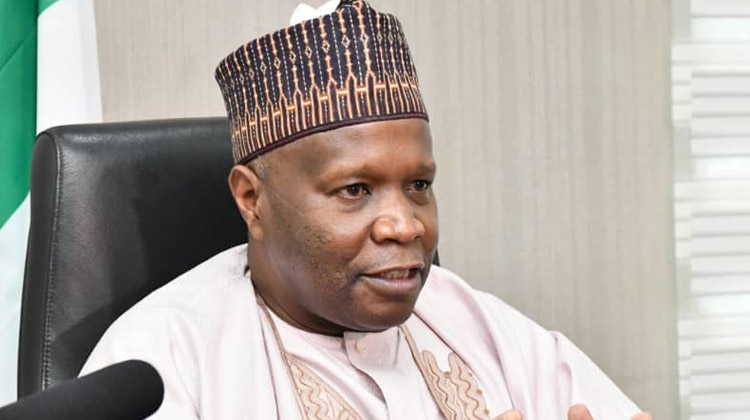
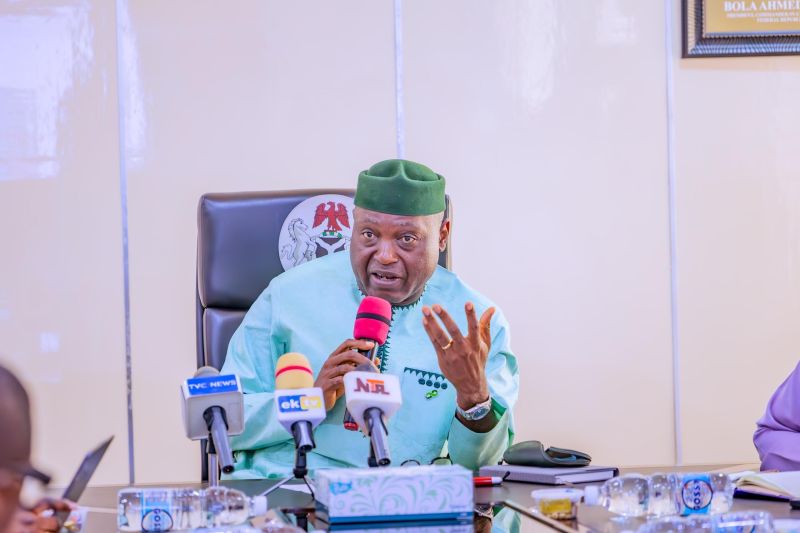
Gombe State Government has commenced the distribution of subsidised fertiliser across all 114 wards in the state, as part of efforts to support farmers during the 2025 wet season farming.
This development is in line with the directive of Governor Muhammadu Yahaya to ensure that agricultural inputs reach genuine farmers directly at the grassroots, right down to the polling unit level, without weighing them down with transportation or logistical burden.
Trucks have already been transporting the inputs to various Local Government Areas for onward distribution, following the Governor’s recent flag-off of the 2025 wet season farming activities.
Recall that Yahaya recently launched the sale and distribution of 10,000 metric tons of high-quality fertiliser, equivalent to 200,000 bags, at a heavily subsidised rate, reaffirming his administration’s commitment to food security and rural development.
Speaking on the progress of the exercise, on Sunday, the State Commissioner for Agriculture, Animal Husbandry and Cooperatives, Dr Barnabas Malle, confirmed that the distribution is proceeding smoothly.
He noted, “LGAs have already begun receiving their allocated shares, which are to be delivered directly to farmers at the ward level.”
Malle praised the quality of the fertiliser, describing it as one of the best produced in the country.
He emphasised that the timely distribution “will significantly enhance farm yields and overall agricultural productivity across the state.”
The commissioner urged farmers to “use the inputs judiciously and to remain vigilant against environmental risks by closely following weather advisories.”
He also reaffirmed the state government’s “continued support for the agricultural sector, which remains a key driver of economic growth and rural empowerment in Gombe State.”
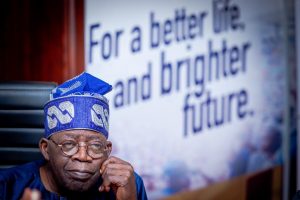
The African Democratic Congress has welcomed President Bola Tinubu back to Nigeria, while calling for clarity on his unexplained five-day absence following the 2025 BRICS Summit in Rio de Janeiro, Brazil.
In a statement issued by its National Publicity Secretary, Bola Abdullahi, the party stated that a president who vanishes without accountability cannot be relied upon to address the pressing challenges facing the nation.
PUNCH Online reports that Tinubu left Abuja on June 28, 2025, starting his journey with a state visit to Saint Lucia to deepen relations with Caribbean countries and promote South-South cooperation. The visit also coincided with Saint Lucia’s 45th Independence Anniversary.
He then travelled to Brazil on July 4 to attend the 2025 BRICS Summit, which took place in Rio de Janeiro from July 6 to 7. The President returned in the early hours of Sunday.
In response, the ADC questioned President Tinubu’s whereabouts during the five-day gap following the conclusion of the BRICS Summit.
The opposition leaders’ coalition platform stated, “The African Democratic Congress extends a weary welcome to President Bola Ahmed Tinubu for finally returning to the country five days after the end of the 2025 BRICS Summit, which was held in Rio de Janeiro, Brazil.
“Since the summit ended on Monday, July 7th, all the other world leaders who were in attendance returned home, briefed their citizens, and got back to work. But our President? He only reappeared in Abuja in the early hours of Sunday, July 13—without a word, without a briefing, or any explanation as to why his return to the country had been delayed.
“A whole five days is significant in the life of a country, especially a country like ours battling with several existential challenges of insecurity and a tottering economy that has made life increasingly difficult for the majority of Nigerians. The President was not on holiday; he was on official duty. We therefore cannot wish those five days away and we demand a clear explanation for them.
“The ADC also notes with concern that this disdain for accountability around the President’s overseas trip has become a distinct hallmark of this administration.”
The ADC stated that a president who disappears without offering any accountability lacks the moral ground to ask citizens to make sacrifices.
The statement added, “In January 2024, a so-called ‘private visit’ to France turned into a two-week disappearance. No photos, and no statements from our President.
“In April 2024, President Tinubu travelled to the Netherlands, and then to Riyadh, for the World Economic Forum. The summit ended on April 29th, 2024, but there was not a word from him until May 8th, 2024. Those were nine days of unexplained vacuum.
“In August 2024, President Tinubu flew to China via Dubai. After his engagements in Beijing, he vanished from public view on September 5th and mysteriously surfaced in London on September 11th. He was missing for six days—no explanations, no letter transmitted to the National Assembly, just silence.
“And in the same August 2024, the President also embarked on yet another “brief work stay” in Paris. He remained incommunicado for three days, then quietly returned, as if the nation did not deserve to know. Each episode of Mr. President’s mysterious disappearances has sparked all manner of speculations and rumours that are not only unhealthy to the polity, but also endanger Nigeria’s perception in the eyes of the world.”
The Kaduna State chapter of the Social Democratic Party has declared that it will not allow its platform to be hijacked by individuals allegedly seeking political rehabilitation, warning that only the duly recognised State Working Committee is authorised to conduct party affairs.
This was disclosed by the court-reinstated chairman of the party in the state, Adamu Idris, while addressing journalists at a press conference held at the NUT ENDWEL Secretariat in Kaduna on Saturday.
According to Idris, the SDP in Kaduna remains a principled and people-focused political platform and will not serve as a “sanctuary for those seeking to launder political legacies or stage comebacks.”
“Our duly elected State Working Committee, inaugurated after the 2022 State Congress and with a tenure valid until April 2026, was unconstitutionally dissolved earlier this year.
“This action was not only unjust but also a clear violation of the party’s constitution and the rule of law,” Idris said.
He, however, said the State High Court had since rectified the anomaly.
“Thankfully, the Kaduna State High Court, in Suit No. KDH/Z/280/2025, ruled in favour of justice and democratic order by restraining the so-called Caretaker Committee and affirming the legitimacy of the elected SWC under my leadership.
“This legal victory is a triumph not just for our members, but for democracy itself,” he declared.
Idris further lamented what he described as a growing trend of infiltration by political actors with no previous ties to the party, alleging that such individuals, some of whom only recently left public office, are attempting to hijack the party structure for “self-serving purposes.”
He said, “We wish to state, respectfully but firmly, that the SDP in Kaduna State is not available for such experiments.
“We are building a credible, principled, and people-oriented platform—not a vehicle for those seeking to reinvent themselves at the expense of the hard work of our loyal members.”
He emphasised that while the party remained open to new members, such individuals must align with the SDP’s ideology and respect the constitutional structure of the party.
“Engagement must be rooted in shared ideology, respect for the constitution of the party, and recognition of the existing, legally recognised leadership structures,” he stated.
As the party gears up for a by-election in the state, Idris cautioned potential aspirants and party faithful to avoid dealing with any unauthorised or parallel groups.
“Nomination forms and all electoral processes will be coordinated solely by the legitimate State Working Committee.
‘Any candidate engaging with unauthorised individuals or parallel structures does so at their own risk,” he warned.
The chairman also pledged the state chapter’s loyalty to the current national leadership under Acting National Chairman, Prof. Sadiq Umar, and National Secretary, Dr. Olu Ogunloye.
“We deeply appreciate their principled stance in defending justice, constitutional order, and internal democracy,” he added.
Reiterating the party’s vision, Idris said the SDP would continue to champion justice, equity, accountability, and genuine progress, not just in Kaduna State, but across Nigeria.
“We remain focused on offering a credible political alternative to the people of Kaduna State and Nigeria at large,” he said.
Ekiti State Governor, Biodun Oyebanji, has hailed the National Automotive Design and Development Council for training and empowering technicians in the state to be better citizens and properly placed to contribute to economic growth.
Oyebanji, who said that the exercise “marks a significant milestone in our state’s commitment to skills development, wealth creation, energy efficiency, and environmental sustainability”, assured that he would sustain such training to boost employment generation and economic growth.
He spoke in Ado Ekiti on Saturday during the closing ceremony of a five-day specialised mechatronics training on repair and maintenance of both Compressed Natural Gas and petrol-powered tricycles and motorcycles, organised for technicians in Ekiti State by NADDC in conjunction with Simba Group Nigeria.
The governor, who was represented by the state Commissioner for Wealth Creation, Kayode Fasae, said the training came at a time the government was scaling up in the areas of economic empowerment, poverty alleviation, wealth creation and provision of critical infrastructure.
He said, “The motorcycles and tricycles you see across our towns and communities are not just modes of transportation. They are lifelines. For countless families, these vehicles represent livelihood, access, and connection. Ensuring their proper maintenance and functionality is not a luxury; it is a necessity.”
The governor added that the programme, whereby the trainees received skills upgrade and specialised empowerment equipment, “Will lead to the creation of employment opportunities for our youths and stimulate economic growth”.
He assured that, “on our part as a government, we shall continue to work with NADDC and its partners to sustain this programme, ensuring more youths acquire these important technical skills, thereby promoting economic growth in our state. This is more so in view of the inherent benefits in the programme.”
NADDC Director General, Joseph Osanipin, who charged technicians to constantly upgrade their technical skills to remain relevant and boost their economy, said that a skill-gap analysis conducted by NADDC “revealed that many mechanics lacked the expertise or tools to effectively service modern vehicles.”
Osanipin added, “This initiative, driven by the NADDC, aims to continuously bridge the skills gap and upgrade technical knowledge of auto-technicians, thereby creating job opportunities for youths in the Nigerian automotive industry as well as ensuring job retention and wealth creation for auto technicians.”
He said that the Council, in a bid to redress the trend of lack of expertise and tools, began various training programmes for auto-technicians to equip them with modern skills on vehicle repairs and maintenance, and also empowering the beneficiaries with equipment.
Osanipin said, “The Council, in collaboration with relevant stakeholders, has so far trained over 15,000 technicians through the Simba Group Nigeria Repair and maintenance of Tricycle and Motorcycles Mechatronics Programmes.
“We believe that this industry has the potential to contribute significantly to our nation’s economic growth and development, and we are working tirelessly to create an enabling environment that will support its growth.
“Through initiatives like this specialised training programme, we are providing the necessary skills and knowledge to our youths, equipping them with the expertise required to compete in the global automotive industry. We are also supporting the development of local content, promoting entrepreneurship, and encouraging innovation in the industry.”
Osanipin, who lauded Simba Group Nigeria, makers of TVS motorcycles and tricycles, for its tireless efforts, expertise and dedication to ensure the success of the training programme, also thanked Ekiti State Government for support and collaboration in the course of implementing the programme.
The NADDC DG charged the members of Tricycles Owners’ Riders Association of Nigeria and Nigerian Automobile Technician Association (NATA), who benefited from the training, tools and cash empowerment, to use the skills to elevate their careers and propel Nigeria’s automotive sector forward, especially in CNG tricycles repairs and maintenance.
The Regional Manager, Simba Group Nigeria, Mr Sumit Panda, who said expertise in current trends in technology would boost technicians’ economy, assured that his organisation would continue to train them as technology advances.
TORAN State Chairman, Talabi Akinola, hailed NADDC and Simba Group for the training, which he said had increased their technical skills and further exposed them.
Akinola assured that the 50 beneficiaries would each train some other technicians in TORAN and NATA to expand the scope.
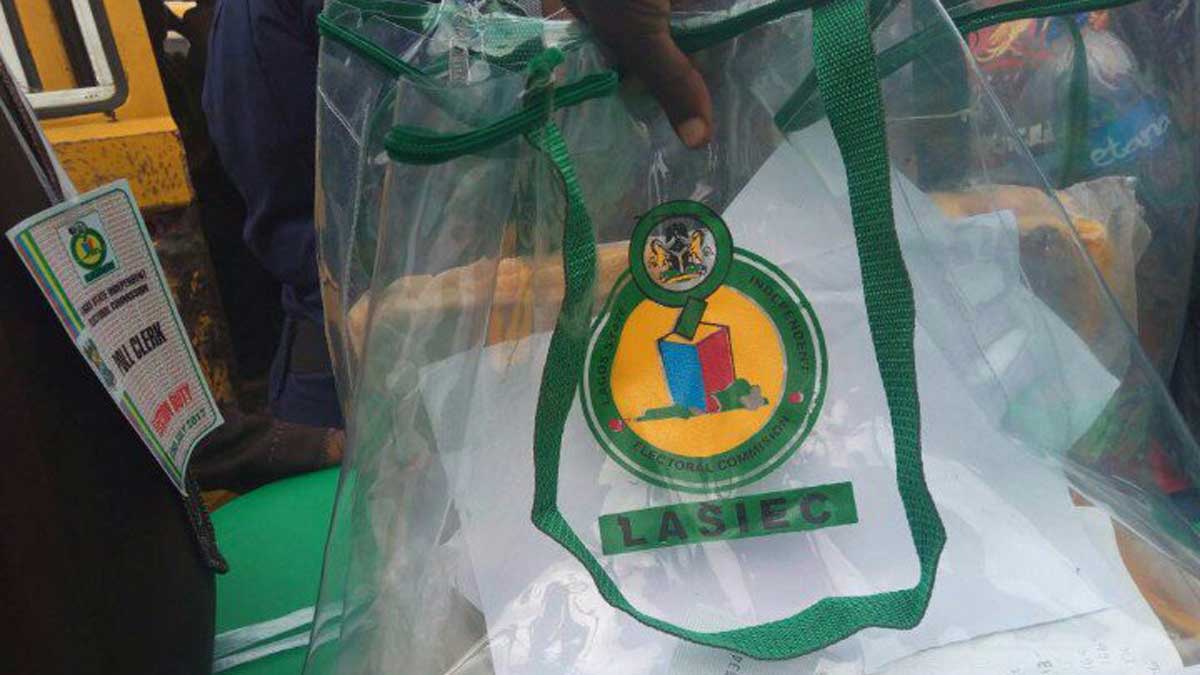
The Lagos State Independent Electoral Commission has declared the All Progressives Congress candidates as winners of the just-concluded chairmanship elections in Epe, Eredo, and Ibeju-Lekki Local Government Areas.
LASIEC officials made the announcement late Saturday night at about 11:55 p.m. at the local government secretariats in Epe, Eredo, and Ibeju-Lekki, respectively.
In Epe LG, the Returning Officer, Prof. Habeeb Sanni, announced at the collation centre that the APC candidate polled 34,819 votes, defeating the Peoples Democratic Party (PDP), which scored 1,535 votes, and the Labour Party, which garnered 675 votes.
“Having satisfied the requirements of the law and scored the highest number of valid votes, I hereby declare Ms Surah Animashaun as the duly elected chairman of Epe LG,” Sanni declared.
Similarly, in Eredo Local Council Development Area, the returning officer, Dr Afolabi Onasanya, announced that the APC polled 25,017 votes, defeating its closest rival, the PDP, which secured 424 votes.
“Having satisfied the requirements of the law and scored the highest number of valid votes, I hereby declare Mr Monsuru Akinloye as the duly elected chairman of Eredo LCDA,” Onasanya said.
Also, Mr Bankole Oduntan, the returning officer at the collation centre in Ibeju-lekki LG, announced that APC polled 59,342 votes, Labour Party polled 45 votes, while the PDP scored 740 votes.
“Having satisfied the requirements of the law and scored the highest number of valid votes, I hereby declare Mr Sesan Olowa as the duly elected chairman of Ibeju-lekki LG, ” Onasanya said.
A young boy named after former President Muhammadu Buhari, who impressed the audience at the book launch of a former media aide to the ex-president, Garba Shehu, has been awarded a scholarship covering his education from primary school to university.
According to a statement by Shehu on Sunday, the young Buhari was granted a scholarship valid for any school chosen by his family by the Chairman and CEO of Trobell Nigeria, Lawal Garba.
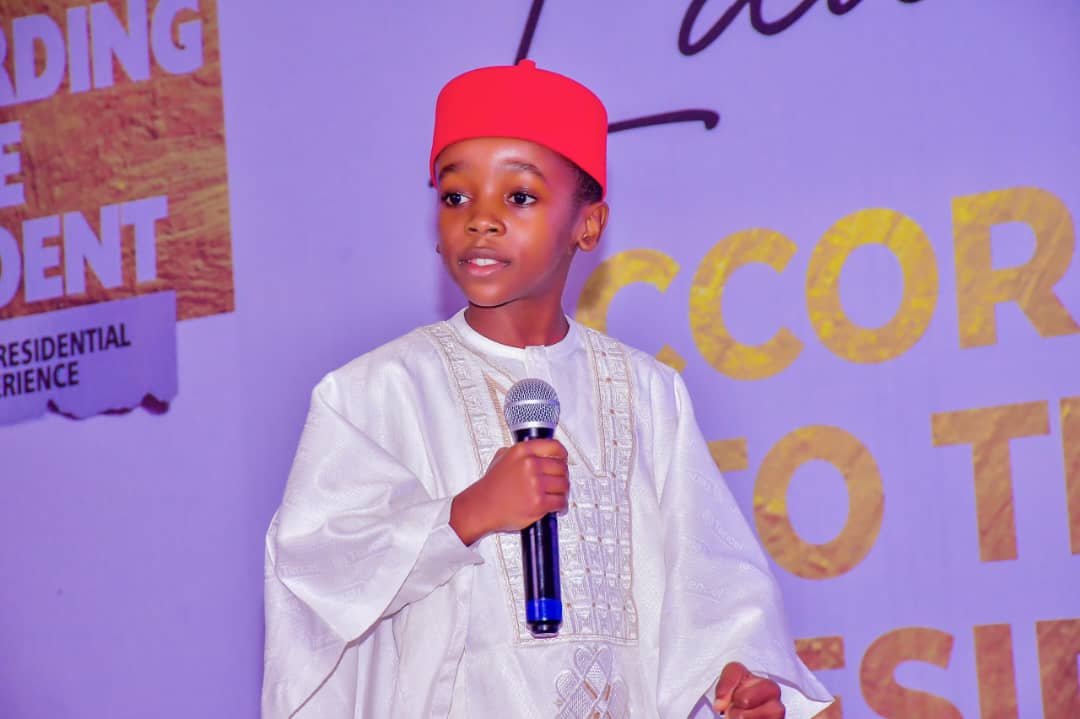
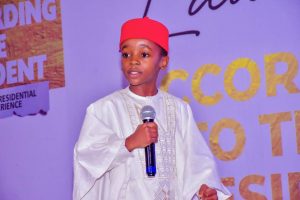
At the launch of Shehu’s book, ‘According to the President: Lessons from a Presidential Spokesman’s Experience,’ on July 9, in Abuja, a young boy named after former President Muhammadu Buhari captured hearts with his moving presentation titled “Buhari in Us.”
Dressed in a white agbada and a red cap, he stood confidently before the audience, radiating hope and sincerity.
In his speech, the young Buhari praised the former president’s virtues, trustworthiness, courage, and simplicity urging Nigerian leaders to embrace these values in their service to the nation.
His message drew warm applause and served as a reminder that even the youngest voices can inspire a call to integrity and nation-building.
The former presidential spokesperson described the scholarship a symbol of hope, talent, and a bright future for a child whose brilliance inspired a room full of leaders and citizens.
Shehu stated, “It was a moment that touched the soul and inspired many.
“At the public presentation of my book, ‘According to the President: Lessons from a Presidential Spokesman’s Experience,’ a young lad, aptly named Muhammadu Buhari, captured the hearts of all in attendance.
“Through his striking resemblance in mannerisms and diction to the former President whose name he bears, and with a poetic recital that echoed both depth and promise, he became the cynosure of all eyes.
“In what can only be described as a heartwarming aftermath to that moving moment, Alhaji Lawal Garba, Chairman and Chief Executive Officer of Trobell Nigeria, has graciously offered a full scholarship to this gifted child.
“Under the generous package offered by Alhaji Lawal Garba: the scholarship will cover the remainder of Muhammadu Buhari’s primary education.
“Trobell Nigeria will pre-pay in full the cost of six years of secondary education, to any school of the family’s choice.
“His parents have been advised to calculate and present the total fees required.
“And, God willing, a university sponsorship package will follow upon the successful completion of his West African Senior School Certificate Examination (WAEC).”
Shehu urged more well-meaning Nigerians to follow this noble example and support the aspirations of children.
The statement read in part, “This is more than a scholarship. It is a seed of hope, a recognition of talent, and an investment in the future of a child whose brilliance lit up a room of statesmen, diplomats, journalists, and citizens alike.
“We deeply commend Alhaji Lawal Garba for his noble gesture, one that reaffirms our shared belief that when you inspire, you must also support.
“As we reflect on the narratives shared in my book, it is profoundly rewarding to witness new chapters being written like that of young Muhammadu Buhari’s tales of promise, perseverance, and the limitless horizons that await.”
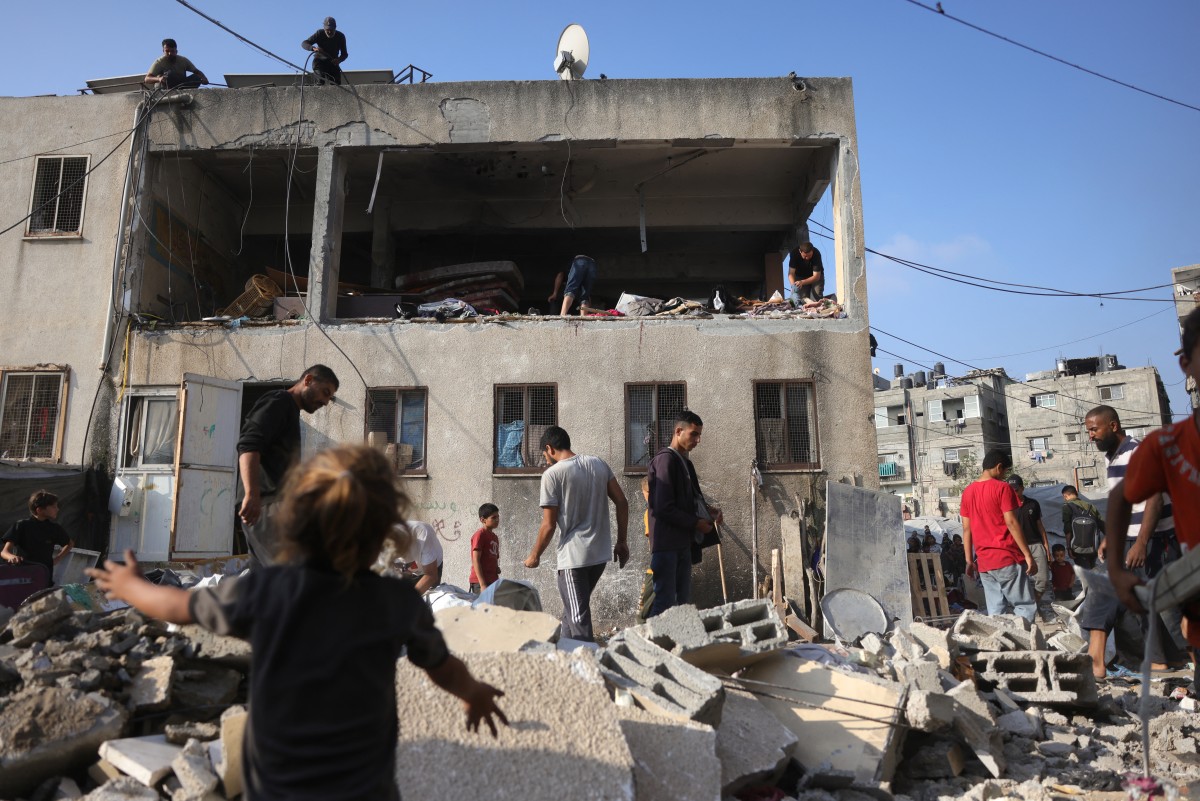
Gaza’s civil defence agency said Israeli air strikes on Sunday killed at least 29 Palestinians, including six children, near a water distribution point.
The attacks came with apparent deadlock in a week of indirect talks in Qatar between Israel and the Palestinian militant group Hamas for a ceasefire in the territory.
Civil defence spokesman Mahmud Bassal told AFP that Gaza City was hit by several strikes overnight and in the early morning, killing eight, “including women and children” and wounding others.
An Israeli air strike hit a family home near the Nuseirat refugee camp, south of Gaza City, resulting in “10 martyrs and several injured”, Bassal said.
In central Gaza, six children were among eight people killed when a drone “hit a potable water distribution point in an area for displaced people” in the Nuseirat camp, he added.
Several other people were wounded, he said.
In the territory’s south, three people were killed when Israeli jets hit a tent sheltering displaced Palestinians in the coastal Al-Mawasi area, according to the civil defence spokesman.
There was no immediate comment from the Israeli military, which has recently intensified its operations across Gaza, more than 21 months into the war triggered by Hamas’s October 2023 attack.
On Saturday, the military said fighter jets had hit more than 35 “Hamas terror targets” around Beit Hanun in northern Gaza.
The vast majority of Gaza’s population of more than two million people have been displaced at least once during the war, which has created dire humanitarian conditions in the territory.
Media restrictions in Gaza and difficulties accessing many areas mean AFP is unable to independently verify tolls and details provided by the civil defence agency and other parties.
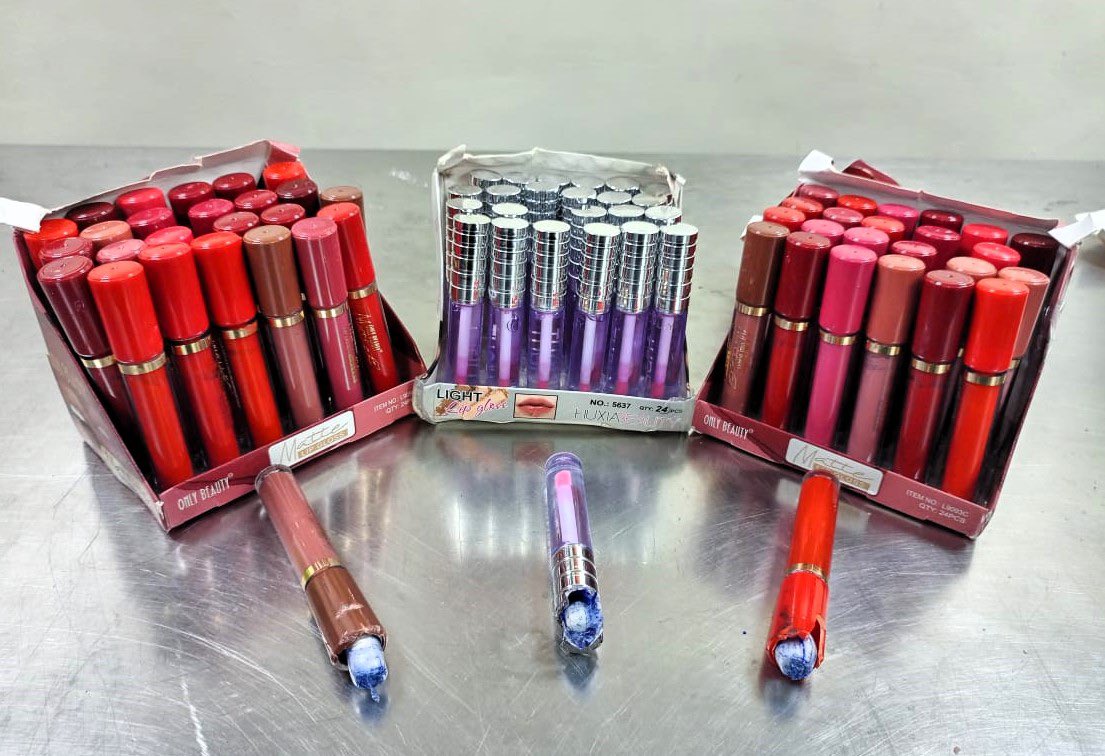
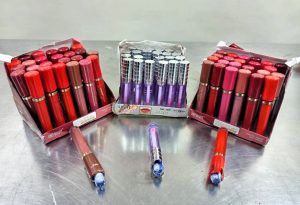
The National Drug Law Enforcement Agency has intercepted another shipment of factory-fitted female lipsticks packed with illicit substances at the Murtala Muhammed International Airport, Lagos.
The agency’s Director of Media and Advocacy, Femi Babafemi, disclosed this in a post shared via his X (formerly Twitter) account on Sunday.
NDLEA seizes lipsticks stuffed with drugs at Lagos airport. Credit: X | Femi Babafemi
NDLEA seizes lipsticks stuffed with drugs at Lagos airport. Credit: X | Femi Babafemi
Babafemi also warned Nigerians, especially women, to exercise extra caution when buying or receiving cosmetic products, particularly from unknown sources or questionable online vendors.
The statement said, “Ladies beware! It does appear like female lipstick is becoming attractive as an instrument for concealment and trafficking now with yet another consignment of factory fitted female lipsticks stuffed with illicit substances intercepted at MMIA barely a week after #ndlea_nigeria officers uncovered a similar cargo at a courier company in Lagos.”
The National Drug Law Enforcement Agency has intercepted another shipment of factory-fitted female lipsticks packed with illicit substances at the Murtala… pic.twitter.com/JhUAjgweOP
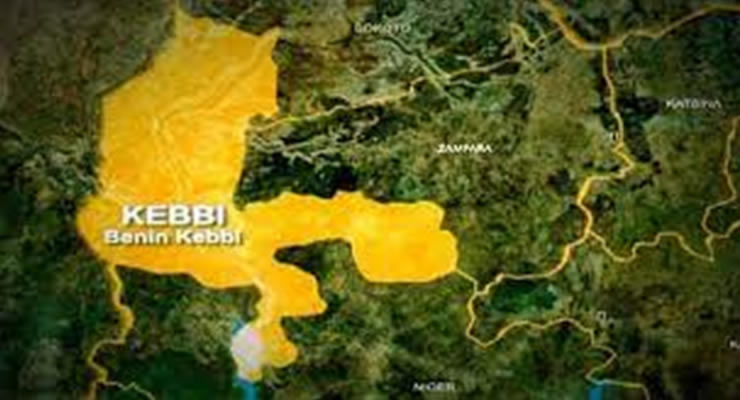
The Kebbi State Police Command has foiled an attempted attack by suspected Lakurawa bandits on commuters travelling along the Zogirma-Tilli road in the Bunza Local Government Area.
According to a statement issued by the Command’s spokesperson, CSP Nafiu Abubakar, and made available to newsmen on Saturday, the foiled attack occurred on Friday, July 11, 2025, at about 7pm, following intelligence that the armed bandits were sighted in the surrounding forest, allegedly plotting to kidnap travellers.
The statement said, “Acting swiftly on the report, the Divisional Police Officer of Zogirma mobilised a response team and engaged the criminals with the support of personnel from the No. 36 Police Mobile Force Squadron in Birnin Kebbi.
“The combined team of Policemen engaged the suspected Lakurawa bandits in a fierce gun battle. Several of the bandits were neutralised while others escaped with gunshot wounds into the forest.
“Tragically, the operation claimed the lives of three gallant police officers, who were hailed by the Commissioner of Police, CP Bello M. Sani, for their bravery and ultimate sacrifice”
While mourning the fallen heroes, CP Sani assured the public of the Command’s continued resolve to protect lives and property across the state. He urged residents to remain vigilant and to promptly report suspicious activities to security agencies.
“The Command will not relent in its efforts to ensure the safety and security of the people of Kebbi State,” the Commissioner emphasised.
The police authorities also prayed for the eternal repose of the souls of the officers who died in the line of duty.
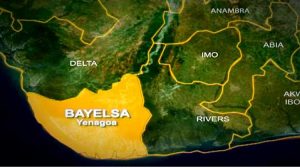
The Bayelsa State Government has resolved a dispute between Egweama Nembe and Elepa communities in Brass and Nembe local government areas over the ownership of Elepa 1 and 2 oil wells.
Both communities accepted a decision reached by the state government on Friday in Yenagoa to ensure peace and security in the area while awaiting the outcome of ongoing litigation over the dispute.
The Elepa oilfields are currently being operated by the Renaissance Africa Energy Company Limited after divestment of the facilities by Shell Petroleum Development Company of Nigeria.
Addressing leaders of both communities at a meeting, Bayelsa State Deputy Governor, Senator Lawrence Ewhrudjakpo, said the government had endorsed the sharing formula recommended by the Irorodamie Komonibo-led committee set up last year to mediate on the matter.
Ewhrudjakpo announced the allocation of 40 per cent of all royalties, employment chances and contractual jobs from Renaissance Africa Energy Company to Elepa, while Egweama and Nembe were allocated 30 per cent each.
He directed that the three contractors engaged under the company’s Free To Operate system for the supply of a tug boat, swamp buggy, and crew boat should come under one contract and share the profits accordingly based on the sharing formula.
Ewhrudjakpo commended the calmness of leaders and stakeholders of the area, explaining that the government’s position was informed by its overriding interest in ensuring peace among the feuding communities.
He urged them to talk to their people, especially the youth to maintain the existing peace, and patiently wait for the determination of the lawsuit over the ownership of the disputed Elepa 1 and 2 oil wells at the Court of Appeal.
He said, “We have carefully studied the recommendations in the report submitted by the committee we set up sometime last year to look into your dispute, chaired by the Deputy Chief of Staff, Government House, Irorodamie Komonibo. As a government, we have adopted the recommendation. So going forward, the Elepa community will have 40 per cent while Egwema and Nembe will get 30 per cent each, pending when the court will give judgment on the ownership case.”
He stated further: “This decision was reached after a thorough consideration of a lot of factors involved, and I believe it is in the best interest of the communities and that of the state to make this sacrifice.”
Responding separately on behalf of the communities, the Chairman of the Nembe Council of Chiefs, Chief Bright Ereware-Igbeta, the Paramount Ruler of Elepa Community, Chief Gelegukuma Apiri, and the CDC Chairman of Egweama Community, Mr. Tonye Yemoleigha, appreciated the relentless efforts of the state government to ensure that there is peace among the three communities despite their conflict of interest.
While thanking the government for the next parameters put in place in respect of employment opportunities and contracts, they agreed to remain peaceful, stressing there is no price too much to pay to enjoy peace.
The highlight of the meeting was the signing of a memorandum of agreement between the Bayelsa State Government represented by the deputy governor and representatives of the three communities.