Overcoming Property Ownership Fears with Adron Homes: Your Pathway to Affordable Real Estate
Embarking on the journey to becoming a property owner can be a daunting ambition. The fears of finding reliable, secure, and affordable real estate, coupled with the worry of paying a hefty lump sum and potentially missing out on your dream home, often hold people back. However, fear not! We at Adron Homes; are strategically positioned to provide solutions to these common concerns, ensuring that your path to homeownership is smooth, secure, and affordable.
Many individuals hesitate to invest in property due to financial concerns, worried about the burden of a large upfront payment. We understand the financial concerns associated with property acquisition, hence our affordable payment plans which are designed to ease this burden, making your dream property within reach without compromising your financial stability.
We understand that the real estate market can be unpredictable, causing concerns about the reliability and security of your investment. With over Eleven years of impact in the real estate industry, we at Adron Homes take pride in our reputation for reliability and security. With a diverse portfolio of estate locations across the country, we assure you that each property is carefully planned and developed to meet the highest standards. Your investment with us is backed by a track record of excellence, void of land disputes, land grabbers popularly known as Omo Oniles, encumbrances, and improper documentation.
Afraid of missing out on your preferred property or location due to the competitive nature of the real estate market? “We have got you covered!” Our extensive range of estate locations ensures that regardless of background, class, or occupation, everyone has options that cater to their dream. Whether you envision a home in the bustling city or a serene suburban retreat, Adron Homes has a property for you. With locations in Ibeju-Lekki, Epe, Badagry, Ede Osun, Ado Ekiti, Shimawa, Atan-Ota, Ikorodu, Shagamu, Papalanto, Ijebu Ode, Abeokuta, Ibadan, Abuja, Nasarawa, Jos and Niger, you’re sure to find the perfect place to buy land.
We understand that the intricacies of the real estate process can be overwhelming, sometimes leading to uncertainty. We recognize that the real estate journey can be complex, especially for first-time buyers. Our dedicated team of realtors is committed to guiding you through every step. Whether you prefer reaching out via social media platforms or a direct call via the contact numbers on our website, Adron Homes ensures personalized assistance, making the process transparent and accessible.
With our Lemon Friday Promo, it’s time to face your fears and take that step toward homeownership with confidence. Adron Homes is your trusted partner in making property dreams a reality. Don’t let fears hold you back – enjoy 30%, 40%, and 50% discounts on any of our landed properties across the country with 36 months, 24 months, and 12 months payment plans respectively.
Becoming a property owner is a significant milestone, and Adron Homes understands the fears that may accompany this journey. Through affordable payment plans, diverse locations, property options, and unwavering reliability, we are daily driven to alleviate these concerns. Trust us at Adron Homes to be your partner in turning the dream of homeownership into a seamless and enjoyable reality.
The Great Ifẹ̀ Empire and Its Legacy: A Blueprint for Mending Our Broken World- Akin Ogundiran
Excerpts of the Keynote Address Presented by Prof. Ogundiran at the Opening of the International Conference, “Ile-Ife and Yoruba Civilisation: The Nexus between Tradition and Modernity,” at Ojaja Arena, Ile-Ife, October 10, 2023
I pay homage to His Imperial Majesty, Ọ̀ọ̀ni Adéyẹyè Ẹniìtàn Babatúndé Ògúnwùsì, Ọ̀jájá II. I salute government representatives, all the Ọba, Olori, Chieftains, Princes and Princesses, Vice Chancellors, University Administrators, Fellow Scholars, and Conferees—distinguished Ladies and Gentlemen. I am honored to join you this morning. I commend the Imperial Majesty for his vision and generous support for this conference on Yoruba history. My commendation also goes to the conference conveners led by eminent historian Professor Siyan.
In the next three days, the conferees will explore different aspects of Ife history, ancient, recent, and contemporary. They will do so from several disciplinary angles. A multigenerational cast of speakers will showcase their recent discoveries from archaeology to archives, oral tradition to rituals. My contribution this morning focuses on answering the following questions: How can we use the past to guide our present? How can the true knowledge of our history, unmitigated by politics and ideology, set us free from the bondage of ignorance that has broken our world?
Distinguished ladies and gentlemen, I chose “The Great Ifẹ̀ Empire and Its Legacy: A Blueprint for Mending Our Broken World” as the title of my keynote address because of my sincere belief that history has a purpose. In our clime, the ultimate purpose of historical study is to uplift our spirit, explain how we got here, and use historical knowledge to restore and repair our broken selves. Like many of you at this conference, I am committed to studying history so I can use the knowledge of the past to create a new mirror that we can use to look at ourselves. Those who use other people’s mirrors to look at themselves are bound to see distorted images of themselves. The mirrors we create must give us a balanced view of who we are as a people and account for the brilliance and shortcomings that make us human.
The Yoruba believe that Ile-Ife is the origin of their civilization. A century of historical and archaeological research has confirmed this. It also shows that the origin of the civilization is different from the origin of the deep-time Yoruba-speaking people. Those ultimate Yoruba ancestors (proto-Yoruboid) originated from the western part of the Niger-Benue Confluence in the present-day Okun-Yoruba area as early as 2,500 BC. This research has also given us insights into how Ile-Ife spearheaded a revolution about 1000 AD that gave birth to the present-day Yoruba cultural identity. The name, Ile-Ife, hints at how special this city was over the past 1,000 years.
Contrary to the oft-repeated folk etymology, Ile-Ife does not mean “House of Love.” Rather, it means “House of Abundance” and “House of Expansion.” The ancient city also has several aliases, such as “City of Daybreak,” City of Sunrise,” and “The Source.” These names and monikers illustrate the Yoruba belief that Ile-Ife is the ground zero of humanity. It is the place where the earth and humanity were created. The Yoruba ancestors knew that what makes us human is not biology. It is culture and consciousness. So, these labels refer to Ile-Ife as the birthplace of classical Yoruba civilization as we know it.
Historical records show that Ile-Ife occupies a special place in African history. When Ibn Battuta, the Berber-Moroccan traveler, visited the Mali Empire in 1352-53, he was told about Ile-Ife as one of the biggest kingdoms in Africa and its king (the Ọ̀ọ̀ni) as one of the greatest kings in the Land of the Black People (Sudan). Duarte Pereira Pacheco, the Portuguese explorer and soldier, was informed in the court of the King of Benin in 1475 that the King of Ile-Ife was the mighty lord of the region, and the explorer likened the status of the Ọ̀ọ̀ni (Oghoni/Owoni) among the Blacks as similar to that of the Pope among the Europeans. The people of Oyo (Old Oyo) told Richard Landers in 1830 that it was in Ile-Ife where their first parents were created and from where all Africa was peopled. The Yoruba people that Leo Frobenius (German scholar) met in Timbuktu (Mali) in 1909 told him that their forebears originated from Ile-Ife and turned into stones which are to be found in Ile-Ife.
The accomplishments of Ile-Ife in arts, science, technology, commerce, statecraft, religion, and philosophy are the reasons for this fame. Based on archaeological research that several scholars and I have done in Ile-Ife and other parts of Yorubaland, we now know that Ile-Ife is the oldest continuously occupied city in West Africa. Its leaders developed one of the oldest urban planning systems in West African history.
Ile-Ife was one of Africa’s most powerful economic engines during its heyday, 700 to 1000 years ago. The city was famous for glass, iron, and steel production, and its products were sold as far as Ghana and Mali Empires during the eleventh through fourteenth centuries. The material scientists of Ile-Ife invented a unique glass technology, and the city’s political leaders and merchants used this technology to create a glass-bead currency system that integrated the economy of many parts of West Africa, from Igbo-Ukwu in present-day Nigeria to Walata in Mauretania. This is a feat that the Economic Community of West African States (ECOWAS) has yet to accomplish. Through its glass industry, Ile-Ife was a pacesetter in African history on the principle of technological independence. By 1200 AD, the political entrepreneurs of Ile-Ife had converted their vast networks of colonies, trading stations, and client states into the first empire in Yorubaland. It is also the first empire in all parts of Africa that lie south of the River Niger, from Lokoja (Nigeria) to Cape Town (South Africa).
Ancient Ile-Ife was also a centre of learning in all branches of science and arts, including philosophy, material chemistry, Ifa divination, and astronomy. This Yoruba city was a contemporary of other intellectual cities in the world, such as Oxford and Cambridge in the United Kingdom and Timbuktu in present-day Mali. As a centre of education, research, knowledge, pilgrimage, and high art, Ile-Ife was a tourist center, attracting visitors across West Africa.
Unfortunately, the above stories are not taught in Nigerian schools, from nursery to the university. There is hardly a home in Nigeria that is aware of these accomplishments. Even some of our elders and traditional rulers who should know better often mislead us with wrong stories that cater to their ego rather than scientific, historical information. This lack of knowledge about our past is a symptom of our broken world. It is a world beset with little regard for knowledge and innovation and the discipline that goes with it. No respect for human dignity and life. I’m talking of a world where the gaps between political leadership and common people widen daily. In this broken world, there is a lack of confidence and appreciation for African indigenous culture and history, and the priority of the general population is the consumption of imported goods over locally produced goods.
We can’t blame the poorly educated and ill-informed citizens for thinking their ancestors accomplished nothing and that their salvation lies outside the shores of their country, in the hands of those who look different from them. This conference must energize us to re-educate the youth and the old so they can become conscious of the depth and richness of African history. With that consciousness, we will understand that Ile-Ife anticipated and accomplished many aspects of modernity that we often erroneously attribute to the Europeans. In ancient Ile-Ife, respect for human dignity, including people with disabilities, was promoted as the foundational ethos of civilization. In Ile-Ife, it was required that citizens must be educated and become knowledgeable in history, philosophy, arts, and crafts. The Ife ancestors also developed indirect democracy, a system that curtailed and, for the most part, prevented autocracy. They reminded us that you cannot have a true democracy where there is scarcity, hunger, and insecurity. To this end, the philosophers and economic planners of classical Ile-Ife developed an economic theory that was based on the principle of abundance. This is opposed to the principle of scarcity that drives Western economic theories today.
To begin to mend our broken world, our political leaders, educators, teachers, and university administrators must be deliberate and strategic in integrating the accomplishments of the Ife Empire into the history curriculum, noting that these accomplishments are the pride of all Africans, not the Yoruba people alone.
This conference is the beginning of a long conversation and action plan that must be put in place. It cannot achieve everything our royal father and conveners have outlined as the rationale for this three-day gathering. There is so much we still do not know about the history of Ile-Ife and the Yoruba. Therefore, we must continue searching and studying. To convert our talk into action that will yield long-lasting desired results, I urge Ọ̀ọ̀ni Ogunwusi to use his vast social networks and influence to coordinate the setting up of a 100 Billion Naira Global Endowment Fund for Yoruba Historical and Cultural Research. The priority is to use the fund to create a Center for the Advancement of Yoruba Studies that will coordinate such research endeavors, build a top-notch ultra-modern Museum and Library of Yoruba Civilization in Ile-Ife, and provide year-to-year research grants and fellowships for the study of Yoruba archaeology and history.
Every Oba in Yorubaland must also take up the challenge to work towards establishing a Museum of History and Culture in their respective towns and cities. They should rally their sons and daughters at home and abroad to fund and establish these museums. This proposition is not an assignment for the federal, state, or local government. It must be solely a community effort. When you visit any European town or village, they will take you first to their museums. Sometimes, a European town of 5,000 people will have ten museums that tell different aspects of the town’s history. Yoruba towns and cities have as deep a history as those European towns if we can learn to tell our stories with imagination and historical evidence. This is a task we must pursue. We owe it as a duty to our ancestors and the unborn generations. Thank you.
Akin Ogundiran is a Professor of History and Cardiss Collins Professor of Arts and Sciences at Northwestern University (Evanston, USA), President-Elect of the Society of Africanist Archaeologists, and a Member of the Nigerian Academy of Letters. He is the author of The Yoruba: A New History (2020).
There is no Evidence Tinubu Forged Certificate – BBC Disinformation Team
There is no evidence that the diploma Nigeria’s President Bola Ahmed Tinubu submitted to the country’s electoral commission was forged, the BBC’s Global Disinformation Team has found.
Allegations that President Tinubu’s certificates were faked went viral on social media following the release by Chicago State University (CSU) of his academic records last week.
We have looked at some of the most widely circulated claims.
The release of the president’s academic documents is the culmination of a judicial case filed in August by one of his main rivals in February’s presidential election, Atiku Abubakar of the Peoples Democratic Party (PDP).
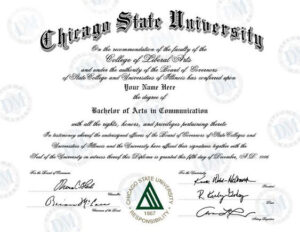
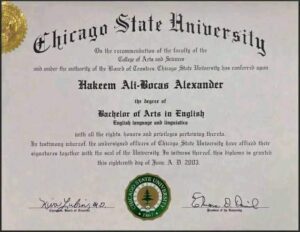
Mr Abubakar was hoping to have the victor disqualified after accusing him of falsifying the CSU diploma of Bachelor of Science in Business Administration awarded in 1979 that he submitted to the electoral authority (Inec).
To obtain evidence for his case in Nigeria, Mr Abubakar approached a US court in August, requesting it to compel CSU to release Mr Tinubu’s academic records through a process called discovery, where the parties exchange information including documents ahead of a trial.
Mr Tinubu’s lawyers opposed the discovery application, citing privacy concerns, but the US court decided it should proceed.
The documents requested by Mr Abubakar were:
A copy of any diploma issued by CSU in 1979
A copy of the diploma CSU gave to Mr Tinubu in 1979
Copies of diplomas with the same font, seal, signatures, and wording awarded to other students that are similar to what CSU awarded to Mr Tinubu in 1979
Documents from CSU that were certified by Jamar Orr, who was then a staff member of CSU, in the 12 months from 1 August 2022
In response to request one, CSU submitted seven diplomas covering different disciplines with the names of the students redacted. According to the university’s registrar, these diplomas had not been collected by the students.
In response to request two, CSU stated that it could not find the diploma they issued to Mr Tinubu in 1979, because they do not keep copies of diplomas already collected by students.
In response to request three, CSU stated that it produced for Mr Tinubu a replacement diploma dated 27 June 1979. It also released diplomas awarded to other students that bore similar font, seal, signatures and wordings as Mr Tinubu’s diplomas.
In response to request four, CSU submitted other academic documents initially attested to and released by Mr Orr.
In line with the judge’s ruling, Mr Abubakar’s lawyer Angela Liu last week questioned Caleb Westberg, CSU’s current registrar, in a deposition.
The BBC was given access to the deposition transcript by Mr Abubakar’s spokesperson, Phrank Shaibu.
Some social media users in Nigeria allege that the deposition and the diplomas released by CSU confirm that the diploma submitted to Inec by Mr Tinubu was forged. This claim was also repeated by one of Mr Abubakar’s lawyers, Kalu Kalu, at a press conference last week.
We found there was no evidence to support this claim.
The CSU released several diplomas issued between 1979 and 2003. We analysed all of them.
There are three different diplomas for Mr Tinubu that we refer to throughout our analysis:
The original one, from 1979, which he has said in the past was lost when he went into exile in the 1990s
The second one, that he submitted to Inec – supposedly a replacement diploma from CSU (it is similar to diplomas issued by CSU in the 1990s)
Additionally, CSU holds another replacement diploma for Mr Tinubu that they say is probably from the early 2000s that he never collected
The allegations on social media are based on a comparison between the document Mr Tinubu submitted to Inec and the 1979 diplomas released by CSU.
During Mr Westberg’s deposition, Mr Atiku’s lawyer focused on the copy of the diploma President Tinubu handed to the electoral commission and suggested that it was unlike any of the diplomas released by CSU.
However, while Mr Westberg agreed with Ms Liu that the diploma in question does not look like the samples from 1979, he stated that the certificate actually looks like three of the diplomas CSU released to Mr Abubakar. Our analysis confirms this.
It turns out that the discrepancy in the appearance of the diploma is down to it having been re-issued in the 1990s.
Mr Westberg said the template of CSU’s diploma has changed several times over the years. He said any request for a new diploma would resemble the current template at that time, no matter when the student graduated.
As such, if Mr Tinubu had reordered his diploma in the late 1990s, what he would have been given would look like what was obtainable then.
Three of the diplomas dating from the 1990s that CSU submitted were similar to Mr Tinubu’s.
One of them, which bears the date 18 December 1998, is identical (aside from the names, class of degree, and dates) to the diploma Mr Tinubu handed over to Inec.
Mr Westberg also stated that CSU does not keep notes of when a graduate asks for the reissuing of a diploma and therefore Mr Tinubu’s request for a copy of the diploma was not recorded.
The copy he gave to the election commission had part of the university logo missing, which Mr Westberg said in his deposition was possibly “cut off” when it was photocopied.
We analysed the diploma. It appears in fact that its bottom part was not included during the photocopy process.
The BBC reached out to Mr Tinubu’s team to get a copy of the diploma in question. They sent what they said was the only existing copy of the diploma. It is a black and white photocopy identical to what was submitted to Inec.
Another claim, made by a fact-checking organisation in Nigeria, was that the diploma Mr Tinubu submitted was not from CSU as its diplomas do not include the phrase “with honors” under the degree name.
But the BBC found that while this was not reflected in the other diplomas released by CSU, it does appears in Mr Tinubu’s diploma issued in the early 2000s, which was authenticated by Mr Westberg during his deposition.
It has the words “with honors” – a match with the diploma with the same detail submitted by the president to Inec.
Mr Westberg said that the school could authenticate this particular diploma because it was still in its possession as it was never picked up.
Not every student graduates from university with honours. Mr Tinubu, as attested to by CSU in several court documents seen by the BBC, did graduate from CSU with honours.
The BBC contacted CSU with questions about its diplomas and it referred us to a statement that read in part: “We are confident and always have been in the veracity and integrity of our records regarding Tinubu’s attendance and completion of graduation requirements”.
Another allegation making the rounds on social media is that the person who attended CSU with the name Bola A Tinubu is female.
Mr Tinubu attended Southwest College (now known as Richard J. Daley College) before transferring to CSU in 1976. In Southwest’s transcript, there is an “F” (for “female”) in the column where gender is indicated, leading to claims that it was a woman who attended the school and Mr Tinubu “stole her identity”. Mr Atiku’s lawyer, Mr Kalu, alluded to this in a press conference last week.
However, in his deposition, Mr Westberg stressed that there was no confusion about the gender of the person who attended CSU as he was a male named Bola A Tinubu. He said the university used other factors other than the name to authenticate the student’s identity.
According to him, the Social Security Number (SSN) in the transcript from Southwest College matches what it has in other documents in which the student’s gender is clearly marked as male.
However, the released documents did raise questions about Mr Tinubu’s birth date and the secondary school he attended.
One of the documents stated that Mr Tinubu attended Government College Lagos in 1970. However, information available on the school website stated that it was only founded in 1974.
Aside from the gender discrepancy, the birth dates in some of the released documents differ from the official birth date of President Tinubu, which is 29 March 1952.
His transcript from CSU has his date of birth as 29 March 1954. His undergraduate admissions application form has his date of birth as 29 March 1955.
Mr Atiku’s lawyer said during Mr Westberg’s deposition that on the forms submitted to Inec, Mr Tinubu had given his date of birth as 29 March 1952.
Mr Westberg, during cross-examination, responded that the discrepancies could have been due to human error.
We contacted Mr Tinubu’s team for comment about these discrepancies and a spokesperson directed us instead to his party – the All Progressives Congress. We then contacted Mr Tinubu’s presidential campaign spokesperson Festus Keyamo, who is also a minister in the government. He did not take our calls or respond to our text and WhatsApp messages.
We also sent questions to Mr Abubakar’s team. They did not respond.
ADRON HOMES TACKLING NIGERIA’S LEADING CHALLENGE OF HOUSING DEFICIENCY, GIVES SUCCOUR TO TINUBU INITIATIVE
As the economy continues to bite harder, Nigeria with an estimated population of over 250 million people and about 30 per cent of the entire population still grappling with the need to get quality shelter and affordable houses, there is a burning need for proactive steps to stem the housing deficits if we are serious about making any serious development as a nation.
One key issue affecting housing delivery in Nigeria is that the level of housing shortage has not been adequately presented. This is a result of inadequate and inappropriate statistics and data by the managers of housing in Nigeria. However, there have been attempts to estimate the magnitude of the housing shortage.
The National Housing Policy specified in detail that to achieve the goal of providing 15 million housing units, although President Tinubu has approved the construction of 1000 houses in Sokoto, Kebbi, Katsina, Zamfara, Kaduna, Niger and Benue states as part of a broad plan by the federal government to address the conflict in the North out of 1.2 Million Housing Units needed to be built each year in the whole country, which is the number necessary to compensate for the housing shortage in the country.
Although the exact reasons for the housing shortage vary across the country, the main problem in Nigeria is the low income of residents. The incidence and growth of these problems seem to outpace the capacity of the government to take them on, requiring massive private investments.
Tackling the housing deficit frontally, A reliable private investor, GMD/CEO of Adron Homes and Properties, Aare Adetola EmmanuelKing who is working assiduously to fulfill the mandate of his organisation in providing affordable housing for millions of Nigerians.
According to promotional programmes announced by Adron Homes, “we are out to slash the prices of all our estates across the country by 50 percent to encourage Nigerians to own their homes regardless of income”.
The discount is in line with the company’s dedication to continuously give customers opportunities to be homeowners through discounts, royalty rewards and friendly payment plans.
“Customers can enjoy up to 40 per cent and 50 per cent happy hour discount on all estates in Ikorodu, Epe, Ede, Ibadan, kajola, Atan-Ota, Ibeju Lekki, Badagry, Ijebu Ode, Shimawa, Abeokuta, Osun, Abuja and Nasarawa.
It is no doubt that Adron is the foremost and widely spread real estate company in Nigeria and that’s why they are constantly rolling out different offers to allow every Nigerian own a house with ease without breaking their income expenditure budget.
Customers can also pay as low as N25,000 initial deposit and enjoy up to 36 months payment plan on all properties. This means you could make payment at your pace and within your budget because at Adron Homes, for every budget; there is a piece of land for you in all their estates.
Adron encourages Nigerians to begin their journey to becoming a property owner and smile at what their income will fetch them in their our estates
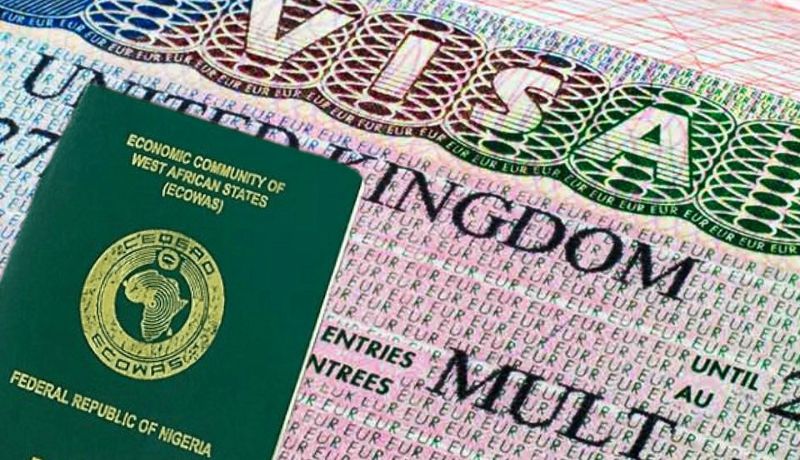
Your visa can last for up to 5 years before you need to extend it. You’ll need to apply to extend or update your visa when it expires or if you change jobs or employer.
If you want to stay longer in the UK
You can apply to extend your visa as many times as you like as long as you still meet the eligibility requirements.
After 5 years, you may be able to apply to settle permanently in the UK (also known as ‘indefinite leave to remain’). This gives you the right to live, work and study here for as long as you like, and apply for benefits if you’re eligible.
If you’re a doctor or nurse, or you work in health or adult social care, check if you’re eligible to apply for the Health and Care Worker visa instead. It’s cheaper to apply for and you do not need to pay the annual immigration health surcharge.
apply to settle permanently in the UK (also known as ‘indefinite leave to remain’) if you’ve lived in the UK for 5 years and meet the other eligibility requirements
You cannot:
apply for most benefits (public funds), or the State Pension
change jobs or employer unless you apply to update your visa
If your application is successful, you’ll get a full list of what you can and cannot do with a Skilled Worker visa.
How Way and Life Concepts Limited is Setting the Standard in the Real Estate Industry
Way and Life Concepts Limited is one of the real estate company that has been leaving indelible mark in the industry for its more than one decade of existence. Founded by Abraham Adebayo Shodiya an indigene of Ogun State, Abeokuta to be precise, though he was born and grew up in Agege, Lagos where he had his primary school at Bishop Oluwolel Memorial Primary School, after which he proceeded to Keke High School Ifako Ijaiye housing Estate and later Fstc Yaba where graduated studying Building Technology Programs.
He thereafter, ventured into Real Estate business with training from Realty Point Limited school of estate in 2008 from where he established his own real estate company, Way and Life Concepts Limited popularity known as “Money in Bush”.
Adebayo, registered the company as a business name “Way and Life Properties Concepts” in 2007 and it was later changed to Way And Life Concepts Limited when he upgraded it to a limited liability company.
The success of the company is attributed to their philosophy which set them apart from their competitors, according to the CEO, the philosophy of the Way and Life Concepts Limited is “the best way to live a real life is for us to pave way for investors to partner with us while we take care of their portfolio as a real estate manager, we also need to be open to customers and to tell them the nitty grity of the venture and how we are going to go about making their dream come through” he explained.
Reacting to stories making the rounds that many real estates Companies collect money but do not allocate land to their subscribers, Adebayo said it is quite unfortunate that business owners are not transparent. In his words “There is the need to be open in every business. There are challenges and if they have challenges allocating to subscribers they should call for a gathering to address them on what has transpired and the solution and plan to make sure the mess is taken care of, but their not allocating lands to the people and becoming silent or run away is not the solution. Doing that is bringing setbacks to the real estate business.
“Before parting with your money with any real estate agent or developer make sure you do your search to know if the company is registered and is a member of a government registered association. Verifications need to be done when it comes to real estate investment.”He stated.
Talking about the Omo Onile syndrome, Adebayo spoke about the solution to the albatross to the job of real estate. He explained that with his more than a decade experience in the real estate industry, he has been able to not only mastered how to manage the Omo Onile wahala but has also learnt how to relate with Governments simply by recognizing them as a player in the industry.
In his words, “In Nigeria real estate, Omo Oniles are also players in the industry but we have to come into understanding with them and so far this has been helping as they don’t come to disturb our customers”.
Adebayo also explained that they have been able to attract new customers and maintain old ones giving people the opportunity to live the real life and being transparent with their customers and their prospective buyers by exposing the nitty-gritty of the business to them to gain their confidence and thereby improving the real estate portfolio of the investors.
On how they handle issues with governments, he expressed his appreciation to the governments of Lagos, Ogun, Osun and Oyo State for their cooperation and the wonderful relationship they’ve been able to establish, he said their is synergy with these governments as they have good relationship with the Way and Life Concepts Limited from their ministry of Lands to the house committee that oversees land issue in the States.
Way and Life Concepts Limited is currently having housing estate projects available for subscriptions in Shimawa Ogun State, Imota-Ikorodu, Atan-Ota, Ifo and Ibeju Lekki, with a plan to spread the company tentacles to Oyo and Osun State, Adebayo Shodiya explained.
He explained further that one of the easiest ways to acquire land and houses in pocket friendly style is how the company fashioned its installment payment system while giving out heavy discounts to outright payers, he exposed that the company works closely with the clients to come up with a financial plan that will be suitable to both parties.
“We sit down with our customers and make payment plans that will not be difficult for them and us, we also help them build at affordable prices from the foundation level to D.P.C, from D.P.C level to roofing level, from roofing level to external finishings, internal finishings e.t.c. We do this to help our customers in becoming homeowners in the alternative to the cumbersome process of bank loans.
He also said in the case of any investor who dies in course of investment, before the proper handing over of the property to the family who is the next of kin, in his words
“All of our investors have a filled form with us. In the form there is a column for next of kin, this does not mean the property (s)/investment (s) will automatically be transferred to the next of kin but we will get some other details of the investor through the next of kin after which we shall request for an administrative letter from the concern people of the investor. This letter is supposed to be processed from the court of investment/investor’s jurisdiction. This will help us to do a proper investment handover.” He explained.
In dealing with fraudulent people parading themselves as realtors, Adebayo Shodiya calls for due diligence, according to him “You cannot loose totally in real estate investment especially if you have visited the said property site before or during the period of investment.
We presently have private regulatory body and Association who will not cover any fraudulent Estate Company. To avoid the repeat of such, investors need to do their due diligence before parting with their money.”
Responding to issues with allocation, he explained that the company allocates in batches, he stated that “For any of our new projects, we allocate in batches of minimum of 50 to 100 allottees while any of our developing projects produces immediate allocation to individual buyers.
“We have had some cases where we had allocated to so many subscribers while they were still paying in installment, some paid half of the property price, some paid 80% and were allocated. We still plan to repeat such as we kick off our new projects in Simawa, Mowe, Atan-Ota and Ifo areas.” Adebayo revealed.
Our role is to set up every possible mean that will make real estate investment convenient for our prospective customers while the role of our customers and prospects is to be up to date in their payment structure as no business will thrive without exchange of money and consistent activities, Shodiya concluded.
We Need A Nationalist, Not Southern Or Northern President — Jandor
By Abiodun Alade
In this interview, Dr Abdul-Azeez Olajide Adediran popularly known as Jandor, the governorship candidate of the Peoples Democratic Party (PDP), in Lagos State, speaks on his plans for the state as well as why Nigerians should elect a nationalist and not a regional president come February 25.
From what you have seen so far, do you believe we’re going to have a free and fair election?
Well, of course, with the preparation of INEC and expression of readiness by all the security formations, I believe that this time, Nigerians will make the choice of who will be the leader of the country. And I have no doubts that for the very first time, we will have an election that reflects the wishes of the people. We’re confident that barring any unforeseen situation, that INEC, if what has happened in off-cycle elections in Anambra, Ekiti and Osun is anything to go by, will get it right and our party is ready for the election.
There are calls by some politicians that INEC should jettison BVAS. And there have also been pockets of violence in some parts of the country as a result of naira scarcity, don’t you think this will affect the conduct of the polls?
Wherever the calls for cancellation of BVAS and the likes are coming from speak to the character of such a group of persons or organisation. If what we’re yearning for is an election that will be free, fair and credible; and we now have a technology to assist us in getting that right and you have some people calling for cancellation, it shows that these are the set of people that have been undermining democracy for a long while.
You also look at the issue of Naira redesign and the fact that we’re not going to have an election that will be monetized so to speak. And you see some set of people coming out to complain. It speaks volumes of who they are. And if you look at all of this sequence of happenings tilting to one side, the question you need to ask yourself is: “why the sudden love for Nigerian people?” ASUU was on strike for nine months, none of you came out to speak for ASUU and speak against the fact that our brothers and sisters were at home for nine months doing nothing.
But again, whatever it is that they feel they want to do or they’re trying to do, it will not change what is going to happen because the people of Nigeria now know where all of these are coming from. How come it is only one political party that is crying foul over this whole issue? How come it is just one presidential candidate as well as a set of governors of a particular political party that are crying foul? You can then understand that the pockets of violence that you’re talking about is from them.
People are wise enough to see all of these and they are not buying it. As far as we are concerned, we’re ready for the election.
Why should Nigerians vote for the presidential candidate of the PDP on February 25?
Because as we speak, nothing is working in our country. The economy is terrible, insecurities here and there, massive unemployment in this country. And we need someone with experience and preparedness to recover this country and get things done. If you look at his message, let me pick just one of his messages and you can see what that can do for the country.
He said when he comes to power, he is going to set aside $10 billion for youth and women empowerment. This will curb insecurity because the majority of the people involved in all of these things is because they have nothing to do. So, if we have that huge amount of money to empower our youths in making sure they have means of livelihood, it will resolve insecurity issues to a very large extent. And the issue of women empowerment will resolve the level of poverty that we have in the country. Now, let’s put that N10 billion aside. If he sells the moribund refineries that are not useful to anybody as we speak, at a rate of $10bn and the money is channelled into youth and women empowerment as he said; don’t forget the organised private sector or a consortium of companies that bought the refineries won’t just leave them like that. They would have another $5bn if not more set aside to invest into resuscitating the refineries. And in doing that, it will create jobs and you can imagine the number of employment opportunities it will generate as well as other benefits to the country. That alone will reduce unemployment, insecurity and poverty in the land. That is the man who’s got a plan and is always coming forward to provide solutions on how to revive the economy and recover Nigeria from those who have held it by the jugular.
There is agitation for a Southern presidency and some people are clamouring that Yorubas should support one of their own?
In the South West, we are very sophisticated. I’m sure you know we’re blessed at that. And we’ve looked at what we have in the country, the hardship that we have in the country, we’ve looked at it holistically, and we have been able to identify that it is a hardship that doesn’t even recognise your tribe. It doesn’t even know where you’re coming from.
On this presidential election, you need to look at each candidate based on their merits, integrity, character, track record, and see which one of them can actually take us out of the issues confronting us as a country. It is not about where you are coming from.
So, when people are shouting about a Southern president, I don’t want it and I don’t want a Northern president either. What I want is a Nigerian president. Let’s have a president that is a nationalist, and this is what Atiku Abubakar represents. He has tentacles spread across the country; he is one man that has roots everywhere, and he has the experience. This election is not your regular election (like what we’ve been having in the past). This will be the first popularity test of APC in the Southwest, especially in Lagos State.
How do you respond to the position of the ruling APC that you have not held any elective position in the past and so don’t have experience to lead a sophisticated state like Lagos?
It all depends on their definition of experience and the job at hand. What has their own experience given us in Lagos? The experience that has not been able to curb Lagos traffic for 24 years or the experience that has 4.2 million Lagosians living in extreme poverty under four years. Experience that has 1.8 million Lagosians unemployed as against what it used to be in 2019 or experience that has over 2 million of our children out of school? The experience that gave us collapsed buildings every now and then because the regulatory agency has no clue of what to do. Experience that has gotten our state ravaged with flood every time it rains. So, they are missing the point because they don’t understand the concept of experience.
What we’re bringing to the table that they don’t have is that we have experience on how best to run an economy unlike them. For close to two decades, I have been an employer of labour in this economy, contributing a whole lot in this economy. I’ve had cause to look for funds, turn it around, and make profit not to stay afloat but pay salaries and more. Same with my running mate, unlike the man there now, he has been a salary earner all his life and that is why he does not have what it takes to run an economy.
Your thinking, as a business owner, who has gone to a financial house to source for funds, invest it in business to be able to pay back the loan, pay salaries and make profit will be completely different from a man who waits every 30 days to get salary. So, it is the business-like experience that we are bringing to the table. So, they are inexperienced in this case because they have not had cause to employ five persons.
What will you do if elected as governor of Lagos State?
We’re first going to birth a government that people can call their own. We’re going to have a governor that people can beat their chest and say ‘we put this man there’.
It is about time we make Lagos a wealthy state indeed, not just on paper. What we hear today is that Lagos makes N51bn monthly but you can’t see it reflecting in our daily living. We are changing that by giving Lagos a breath of fresh air, where they can see the fortune of their state. Is it not troubling that with such monthly IGR, there are no iconic projects in Lagos?
We would look at issues that are currently giving us bad names and fix them. It is unacceptable that we have about 2 million out-of-school children. I don’t need to build new schools before I proffer solution to that. We will engage the private school owners – about 5,000 registered private schools in the state, and I will inform them that I have about 2 million children that I need to spread across your schools in exchange for tax holiday or incentives as the case may be. By doing so, I would have put some of my children in those schools. And I would also engage churches and mosques that have spaces they don’t use during school hours to let the government use them to put some of the children there. If I do this within three months of coming into office, we would have reduced the number of out-of-school children drastically. And I would do this pending when I can embark on aggressive infrastructural renewal across the local government areas.
Is Lagos PDP still one? Chief Olabode George has not been part of your campaign?
I have a rigorous campaign strategy of visiting every ward in the state. Our leader is close to 80. I can’t possibly be dragging such an old man to every ward. But we don’t have any problem, he is our leader and he is supporting us in everything we are doing.
If Tinubu Wins There will be Great Hopes For Heart Surgery Patients – Dr. Ariyo Idowu, Perfusionist
Perfusion is a rare and delicate Cardiovascular profession that has to do with handling and operating equipment that assists surgeons during an open-heart surgery or any other medical procedure in which it is necessary to artificially support or temporarily replace a patient’s circulatory or respiratory function.
It is a system where the experts use the equipment to temporarily put the heart to sleep (hibernate) and revives it after the surgery to safe the patient the frightening experience of pain during opening up of the heart or the lungs. It is a medical process to safe life which were in the past only available in the advance country.
However, it is interesting to learn that, Asiwaju Bola Ahmed Tinubu, the Presidential Candidate of the All Progressives Congress (APC), trained the first expert and pioneered the career of open heart surgery in the country when he was the governor of Lagos State.
Although, Idowu admitted that the heart operations used to take place in Enugu and Ibadan in the 1970s, the exercise stopped more than 20 years before Tinubu revived it in Lagos, expressing the conviction that, if he wins on February 25, Nigerians should expect revival of the medical exercise in a very larger scale across the country.
Dr. Ariyo Idowu, made the disclosure Tuesday during a scheduled Zoom meeting organized by the members of the APC Presidential Campaign Committee Media Directorate, Lagos, headed by the former Commissioner for Information and Strategy, Hon. Kehinde Bamigbetan.
Idowu discussed Asiwaju Tinubu’s intervention in the health sector when he was the state governor when young health professionals, including himself, were trained. The scheduled zoom meetings were some of the avenues created by the Kehide Bamigbetan led media Directorate to unveil Tinubu to the public to realise reasons he (Tinubu) should be voted for as the next president on the Saturday 25 election.
According to the Perfusionist, Tinubu, as a visionary administrator who searches for young talented materials to build for nation building spotted the potential in Ariyo Idowu when he was just 26 years old and sent him abroad to train as an expert in perfusion. After the training, Tinubu as governor then now established a medical centre where free heart surgeries were carried out.
While fielding questions from his zoom guests, Dr. Idowu confirmed that, at least 20 of such surgical operations were carried out during Tinubu’s tenure as the executive governor of Lagos State adding that minimum cost of an operation then was N5 million meaning Tinubu expended a whooping sum of N100million on the 20 patients.
Speaking further, Dr Idowu reasoned that, with Tinubu as the next president of the Federal Republic of Nigeria, the country would climb up the ladder of global medical rating while the youth would have field day as opportunity for their development and empowerment would be the priority of the new president going by his pedigree and antecedent.
What Tinubu did as just as governor of a state in the health sector just like in any other sectors would be replicated on a larger scale to the best interest of all Nigerians, asserting that, Asiwaju Bola Ahmed Tinubu is the best bet for the country at this point in time for rapid development and positive utilization of the raw energy deposited in the body of the youth by God for nation building.
“Tinubu is a visionary leader who knows the plights of the citizenry and ready to help. He has had the mind set to uplift humanity from the onset. The most important thing in governance is to be prepared to serve humanity selflessly like Tinubu. He is ready for the task ahead. And after reviving the free heart surgery through the Ministry of Health under Dr. Leke Pitan, his commissioner for Health after comatose for 20 years, the programme has continued since then nonstop,” Idowu submitted with great appreciation to his mentor, Tinubu.
“Kindly permit me to thank Asiwaju Bola Ahmed Tinubu for giving me the rare opportunity to acquire this unique knowledge that has put me where I am today as a globally recognised professional on the medical line. And I am sure the youth stand a similar chance if they vote for him en masse on February 25 to become president. With Tinubu as president, the sky would be too low to be their limit,” Idowu rounded off.
BBC: Tinubu got it right on territories reclaimed by Buhari – Buratai
Former Chief of Army Staff and Nigerian ambassador to the Benin Republic, Lt. Gen. Tukur Yusuf Buratai talked about the security situation in the country, he also lend his expert insight to the statement of the Presidential Candidate of the All Progressives Congress (APC) Asiwaju Bola Ahmed Tinubu during his recent BBC interview…
What is your take on the current military’s tactics in decimating banditry and terrorism in the country?
I’ll say, let them maintain it and keep up the aggressive assaults. Additionally, collaboration and synergy with other sister agencies is crucial. They must avoid being distracted and keep their attention on their task.
How would you describe the fight against terrorism in the country since you left office as the COAS?
Well, you must understand that the military is not a one man show; even when I was in service, I worked with a team, and I am happy to say that many of them are still in service. The current COAS served under me as Theater Commander of OP LAFIYA DOLE now OP HADIN KAI. By and large, I will say that they are doing well. Whatever little success we were able to achieve during my tenure, we did it together; it was a collective effort.
The 2023 general election is just by the corner; what advice do you have for the military to ensure a hit-free poll as far as security is concerned?
They must stick to their constitutional role and remain apolitical. I understand that the military may be called in to assist the civil police at some point, but only when things are about to get out of hand. I think the electorate must not succumb to fear or intimidation; they should come out and exercise their civic duty. At the same time, all of us must be vigilant; if you see something suspicious, try to say something to the right authorities.
According to PRNigeria the presidential candidate of the All Progressive Congress (APC), Bola Ahmed Tinubu created an impression that the Buhari-led administration had inherited seventeen local governments and about four states which were under the control of foreign Jihadists in 2015. What is your take on this?
The conclusion and verdict of PRNigeria is false, wrong, and inaccurate. I was the first COAS to serve under President Muhammadu Buhari, GCFR, and even before my appointment as COAS, I was the Force Commander, MNJTF, so I should have correct information and the situation of things in the North-East and Borno State, which is my state of origin. Asiwaju Bola Ahmed Tinubu got it right. As of July 2015, the following LGAs were under Boko Haram in Borno State: Dikwa, Marte, Gamboru Ngala, Kala Balge, Guzamala, Damasak, and in Yobe State, we have Gulani and Gujba. The terrorists also partially occupied Kukawa,Gajiram, Kaga , Mafa, Bama, Gubio, Chibok, Gwoza, Damboa, and Nganzai. The wrong impression created by PR Nigeria should be corrected. I understand that they were misinformed, but this is the correct information.
What is your reaction on the report by PRNigeria that foreign technical experts, including mercenaries, assisted greatly in the recovery of the occupied territories in North-East?
If it does in fact occur, it did not occur during the time that I was in charge.
You actively supported one of the candidates in the presidential primaries of the ruling party. And you are on the side of your party’s presidential candidate in this election. Yet, you have always insisted, “I am not a politician.” How do you explain this position?
Our lives are in phases and chapters. When I said, “I am not a politician,” that was the truth and nothing but the truth. I was not a member of any political party then. I was a soldier who was under oath to protect and defend the territorial integrity of Nigeria. But as you know very well, that phase of my life is now gone. There is a time to join the Army and serve as a soldier, and there is a time to leave the Army and return to civilian life. I am a democrat; that’s why, when I was in the Army, I tried to keep soldiers out of politics and allow the people to choose their leaders as they wanted. We also protected this democracy. So now that I am a civilian, I think it won’t be out of place if I heed the call of destiny and enter politics. That doesn’t mean I will run for political office. My plan is to form a government with some Nigerians who I believe have good intentions for the country. I initially supported Rotimi Amaechi because I believed in him, but we lost the primaries. However, since the party is supreme and God has willed that Asiwaju Bola Tinubu will be the flagbearer of the APC, it is expected that I should support him to win the elections. This is what I am doing. And this is not a new thing in Nigeria or the US. Generals Shehu Yar’adua, Obasanjo, and Ibrahim Babangida, as well as Aliyu Gusau, David Jemibiwon, Abdurahman Danbazau, and Dwight D. Eisenhower, all played politics after their service in the military. There is no doubt; stakeholders and imminent Nigerians thought that I could add value and so invited me to join them to move the country forward. One thing I want to tell Nigerians is that I will surely add value. There is no doubt about that.
Your name isn’t going to fade away anytime soon from the Nigerian Army, both in terms of exploits and enduring legacies. How do you feel about your stewardship?
Honestly, it humbles me. We wanted to achieve much more than we have, but, you know, things don’t always work out as planned. But it’s nice to hear soldiers and officers talk positively about us. We did what we thought was best for the army and the wellbeing of Nigeria. As COAS, I worked virtually around the clock daily. Sometimes I just sleep for a few hours.
What do you see as the place of regional cooperation in addressing the security challenges in Nigeria?
Regional cooperation is strategic in addressing security challenges because our borders are porous and our people are interconnected. Some people in south-western Nigeria have blood relatives in the Benin Republic. Those in the North East have relatives in Chad, Cameroon, and the Niger Republic, as well as in Sokoto and other places. So it is easy for criminals to move into Nigeria from these neighboring countries. What affects our neighbors can easily affect us. Not just us, but the entire ECOWAS membership. When the Boko Haram insurgency started, some people thought it was a Nigerian problem alone, but it has now spread to Burkina Faso and Mali. So, regional cooperation is needed to tackle the issue of small arms proliferation, help with intelligence gathering, and conduct COIN operations. For example, the MNJTF is helping to deal with Boko Haram and ISWAP in a good way.
There is the story of your long connection to President Buhari, beginning with his deployment as Military Governor of North East State. Can you help us recall this and its culmination during your time as Force Commander of MNJTF and COAS?
Yes, President Buhari and I have come a long way because destiny connected us in 1975, when he was the military governor of Borno State and I was a Form One student at Teacher’s College Maiduguri. He used to come to the school in the evenings to watch us play football. When I was running off the pitch to get the ball after hitting the ball so hard that it knocked down one of our classmates, the then-Colonel Buhari said to me, “You this boy! The army is what suits you best.
One thing led to another, and I was transferred to Teacher’s College Potiskum, while then-Col Buhari left Borno to serve as Petroleum Minister in the government of General Olusegun Obasanjo. I finished Teacher’s College, taught in a primary school at Buratai, and then joined the NDA in 1981. I got commissioned in December 1983 and heard that Major General Buhari was now the new Head of State. I proceeded to Elele in Rivers State, and that was it until sometime in 2015, when he visited Ndjamena as the newly democratically elected President of Nigeria. At that time, I was the Force Commander, MNJTF. When he returned to Nigeria and wanted to appoint his service chiefs, he appointed me as the 20th COAS. So he has been my leader and mentor in the past, now, and always.
What advice is best for the young officers and soldiers on the frontlines of service to the nation?
I have written and published a book known as Thoughts and Principles on Leadership. I am recommending it to all military officers to read. But that notwithstanding, my candid advice to young officers and soldiers is to remember the seven core Army values: their unit, the Army, God, and country. They must remain patriotic and keep on developing their skills and improving their competence.
Video: Tinubu’s Standout Tactics in Lagos + How He will better Nigeria
He needs no introduction, Asiwaju Bola Ahmed Tinubu is a man whose achievements speaks loud, but for those who are not in the know below is a few reel to show how he did it in Lagos and how he will positively impact Nigerians as president.